-
-
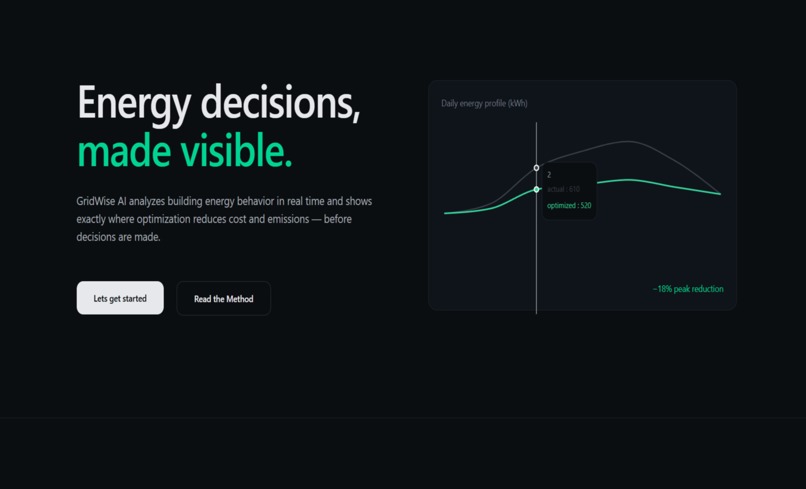
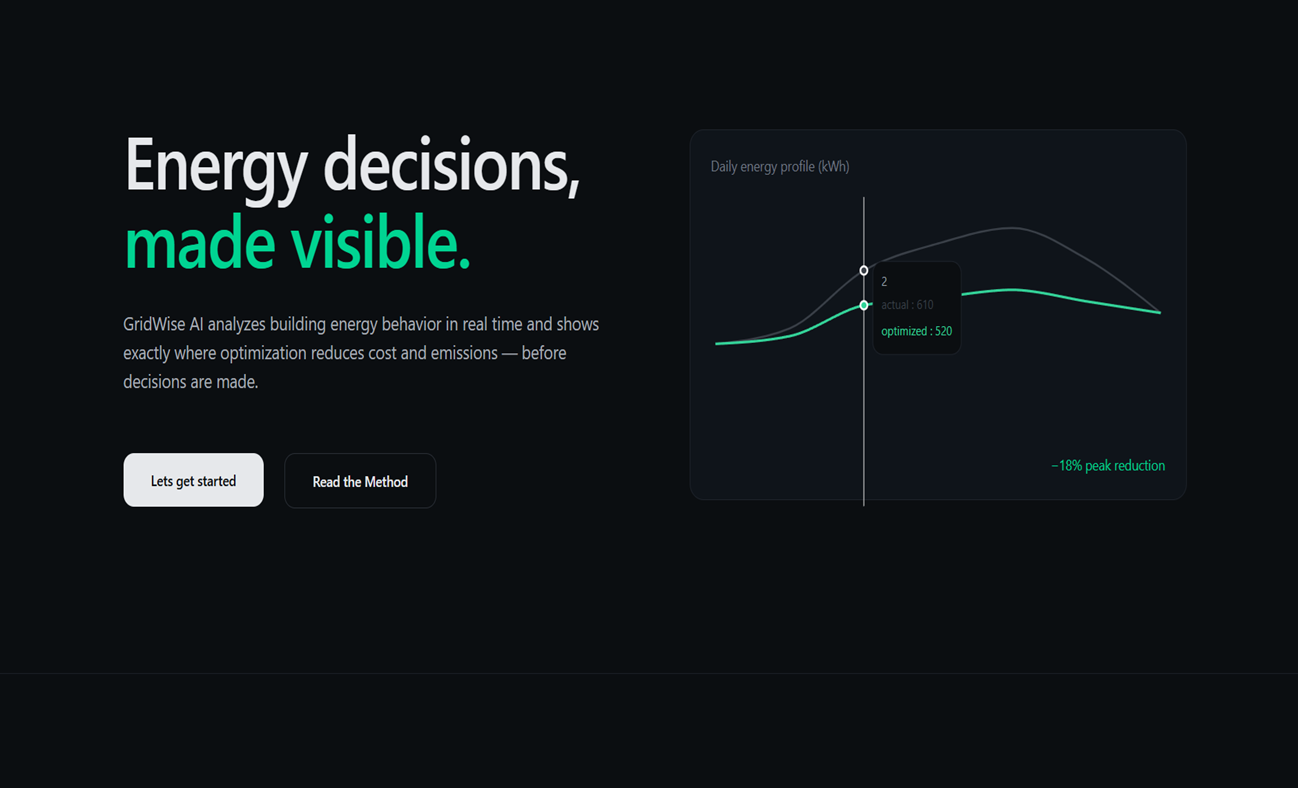
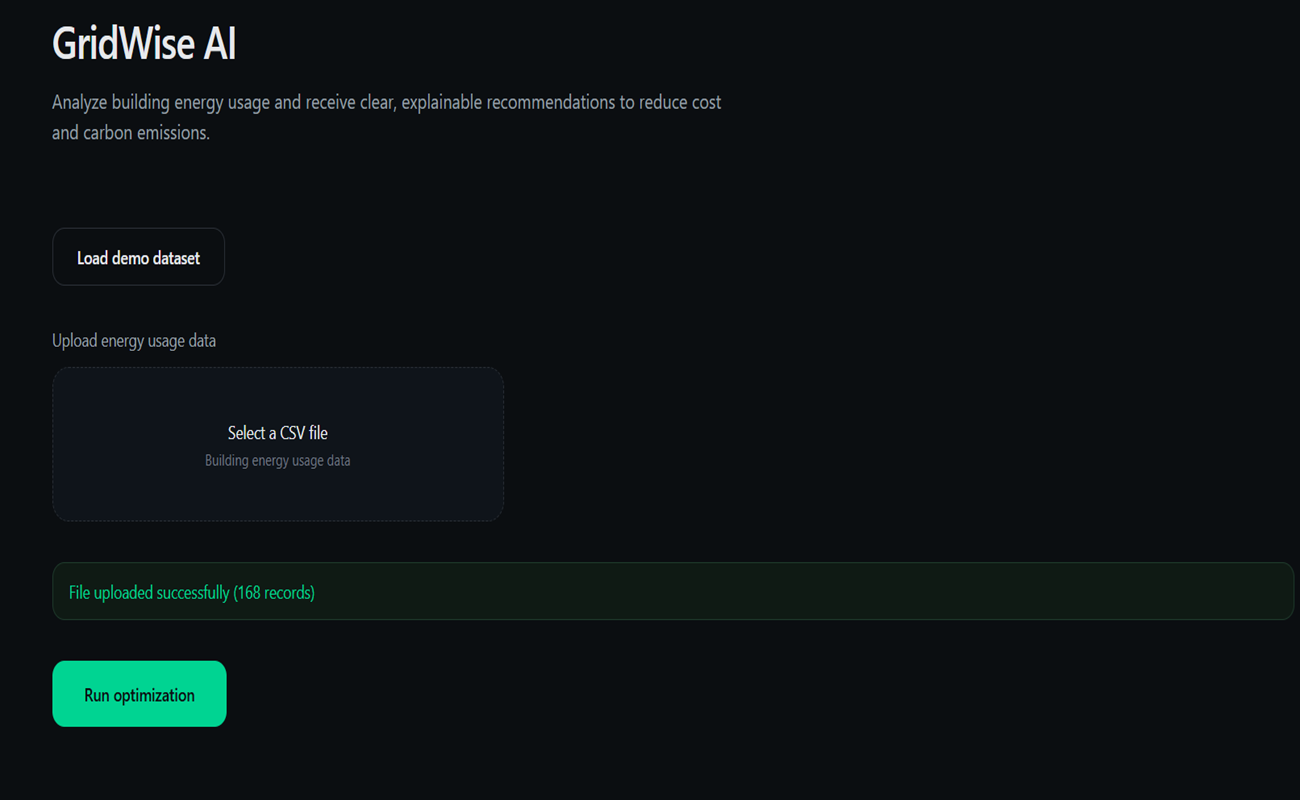
Landing Page
-
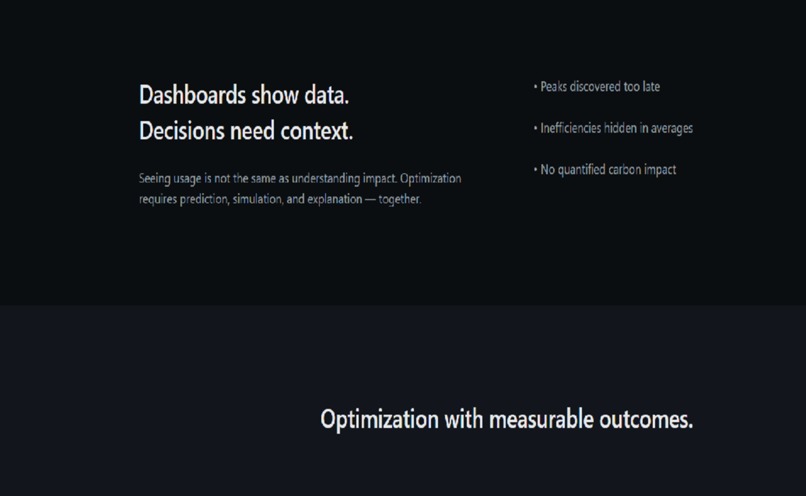
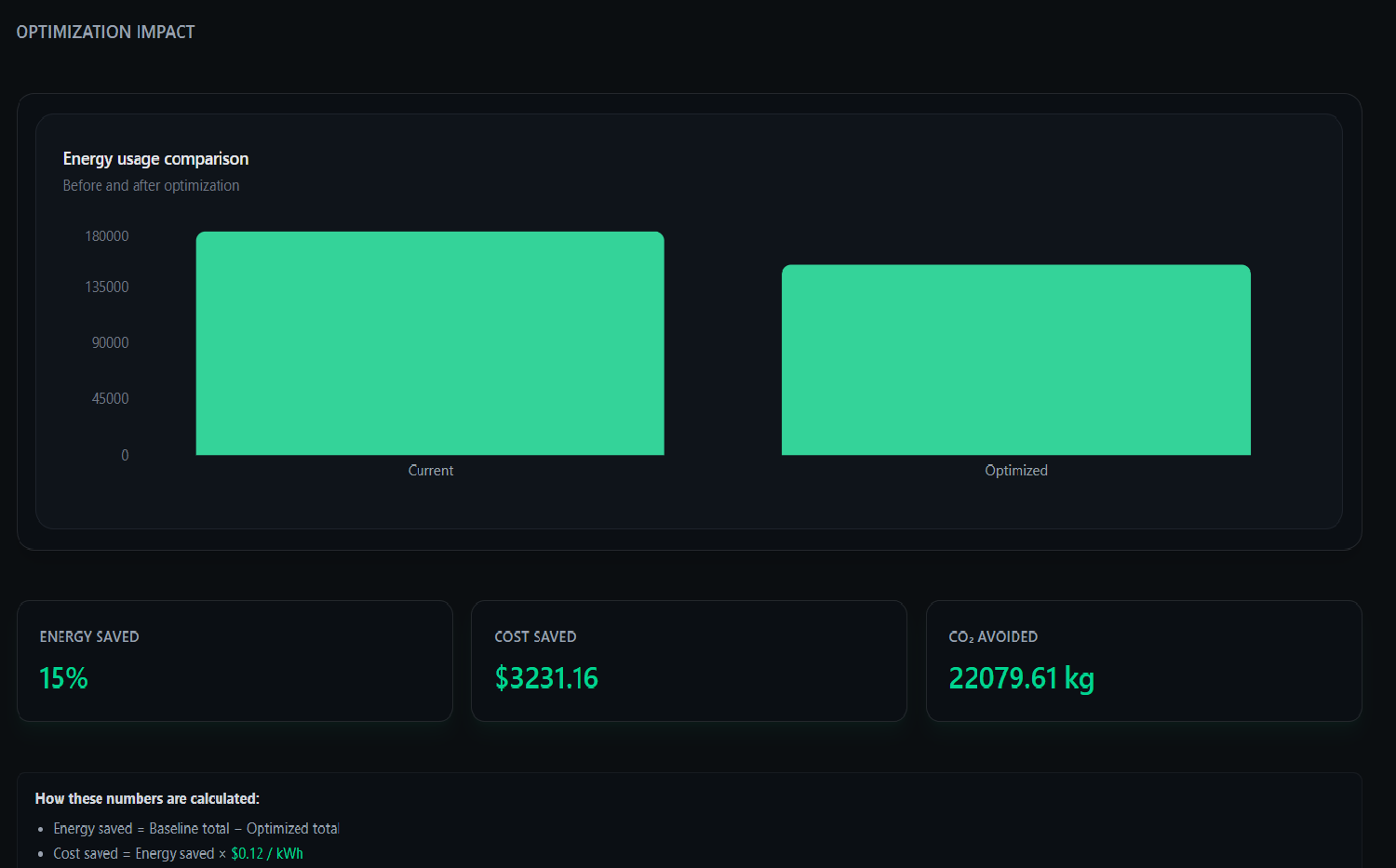
Stats
-

File Upload
-
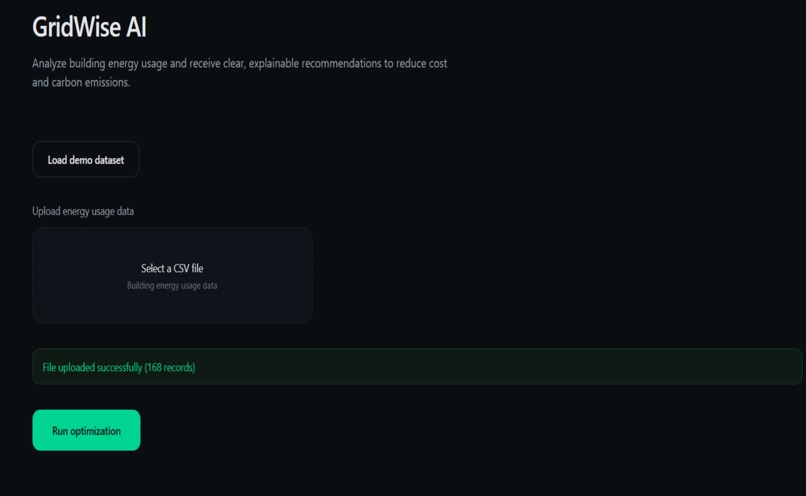
Run Optimization
-
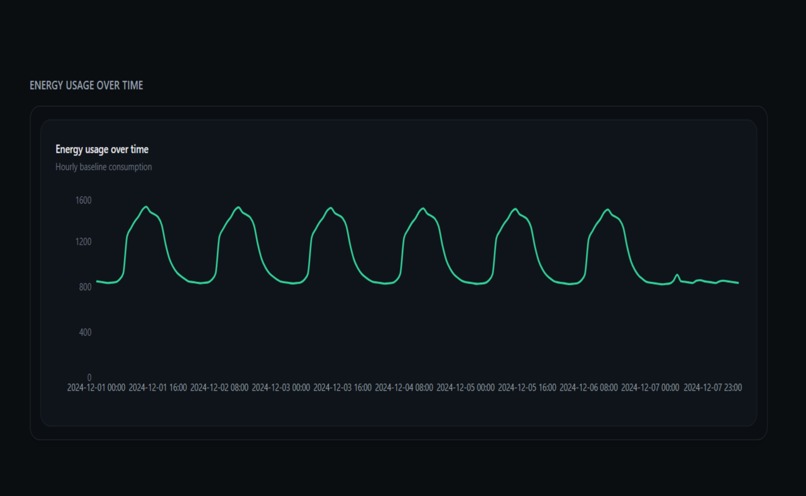
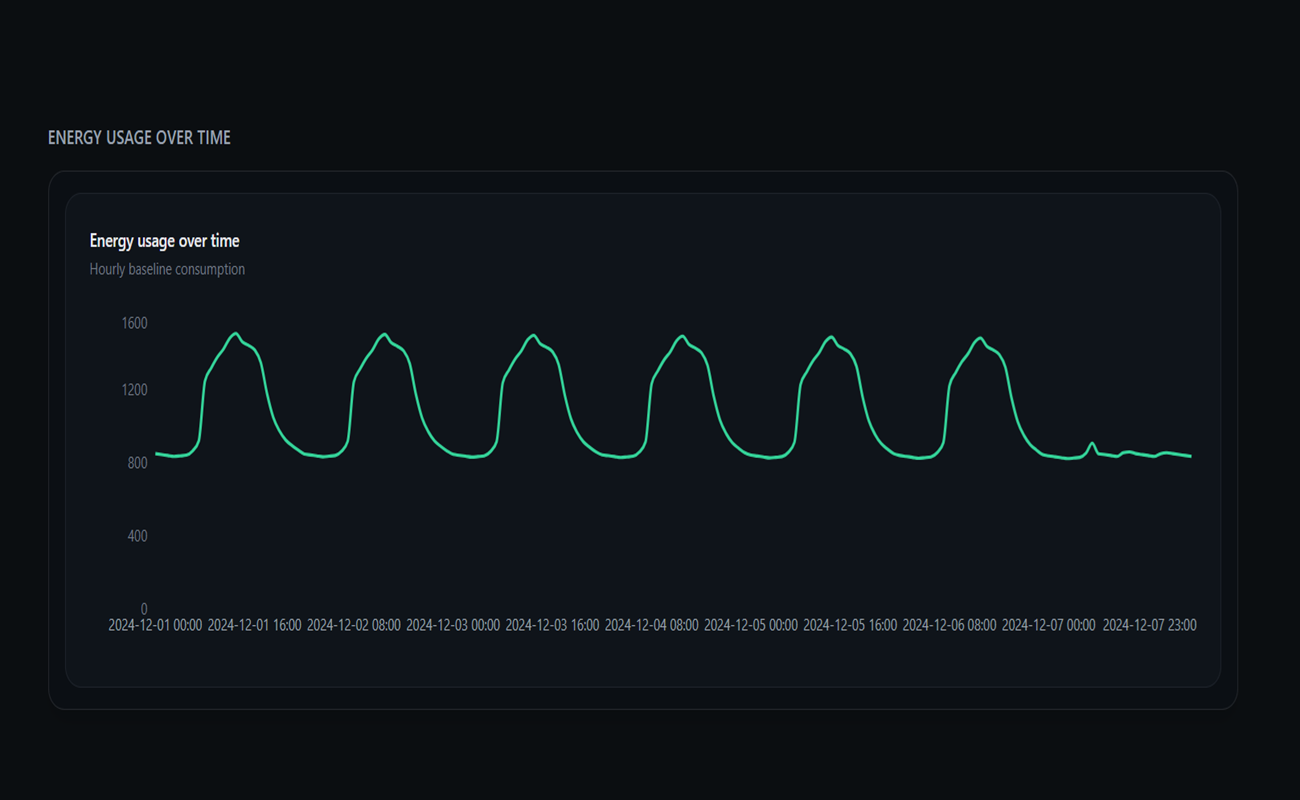
Baseline Graph
-
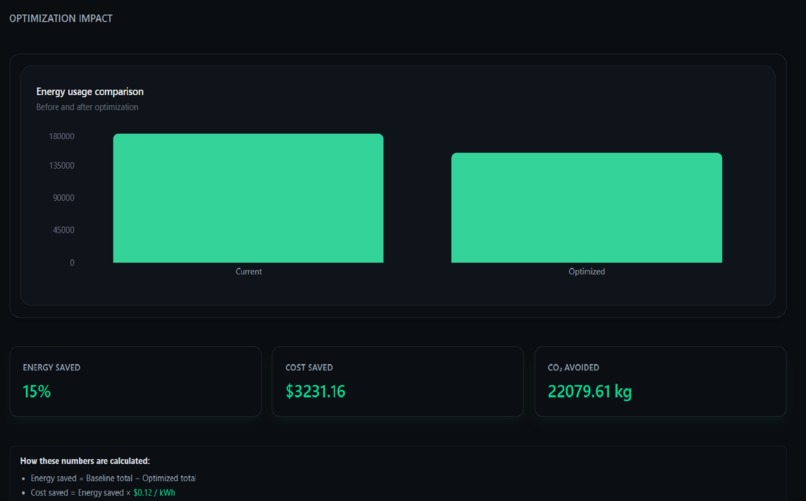
Optimized Scenario
-
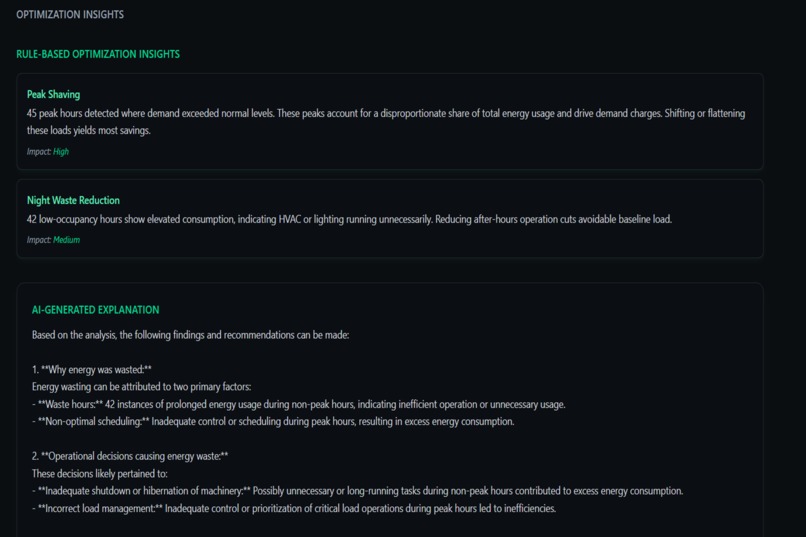
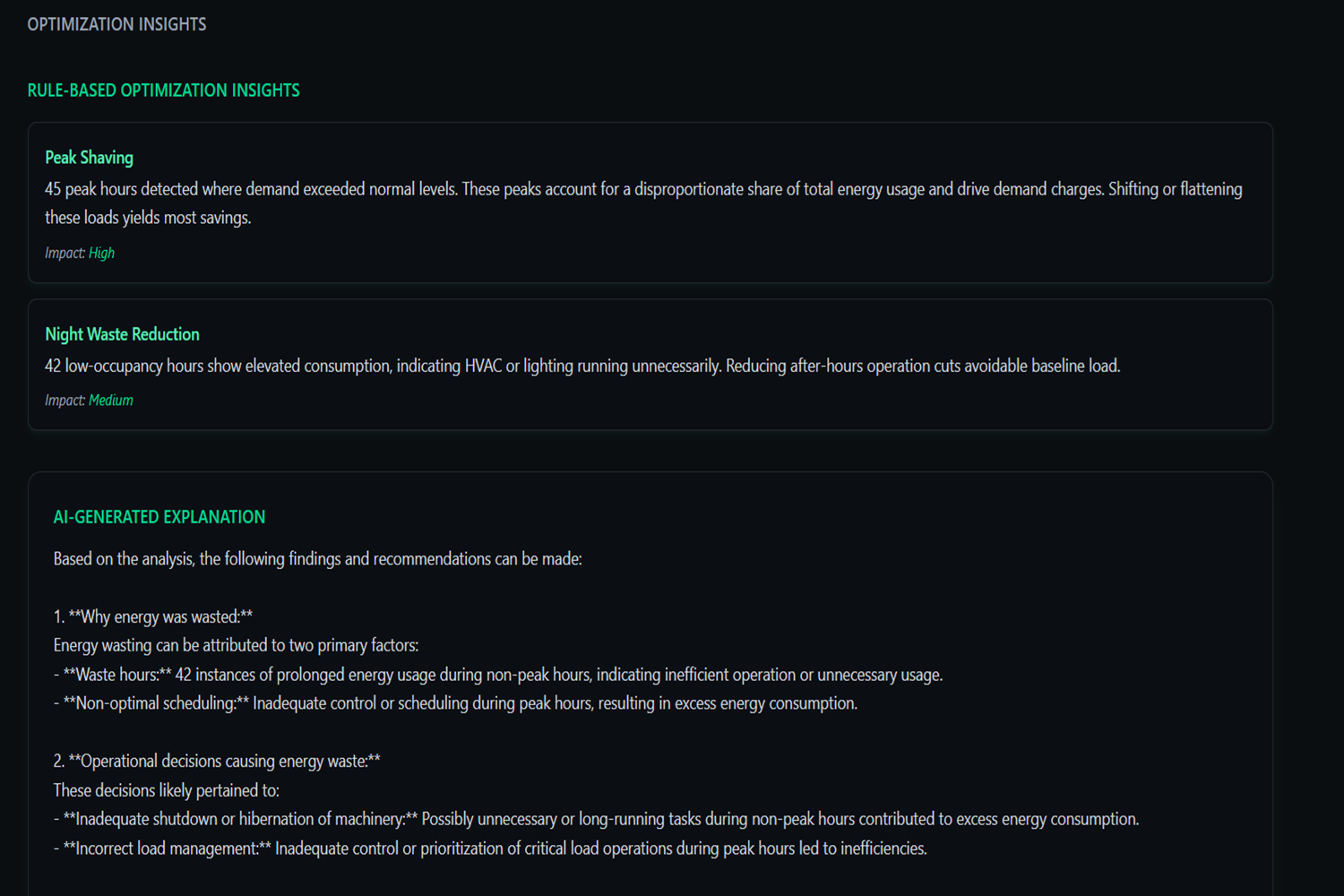
Actions Required

🌱 STORY
💡 Inspiration
Buildings consume a massive share of global energy, yet most energy tools stop at dashboards. They answer "What happened?", not "What should we do next?"
During research, we noticed that:
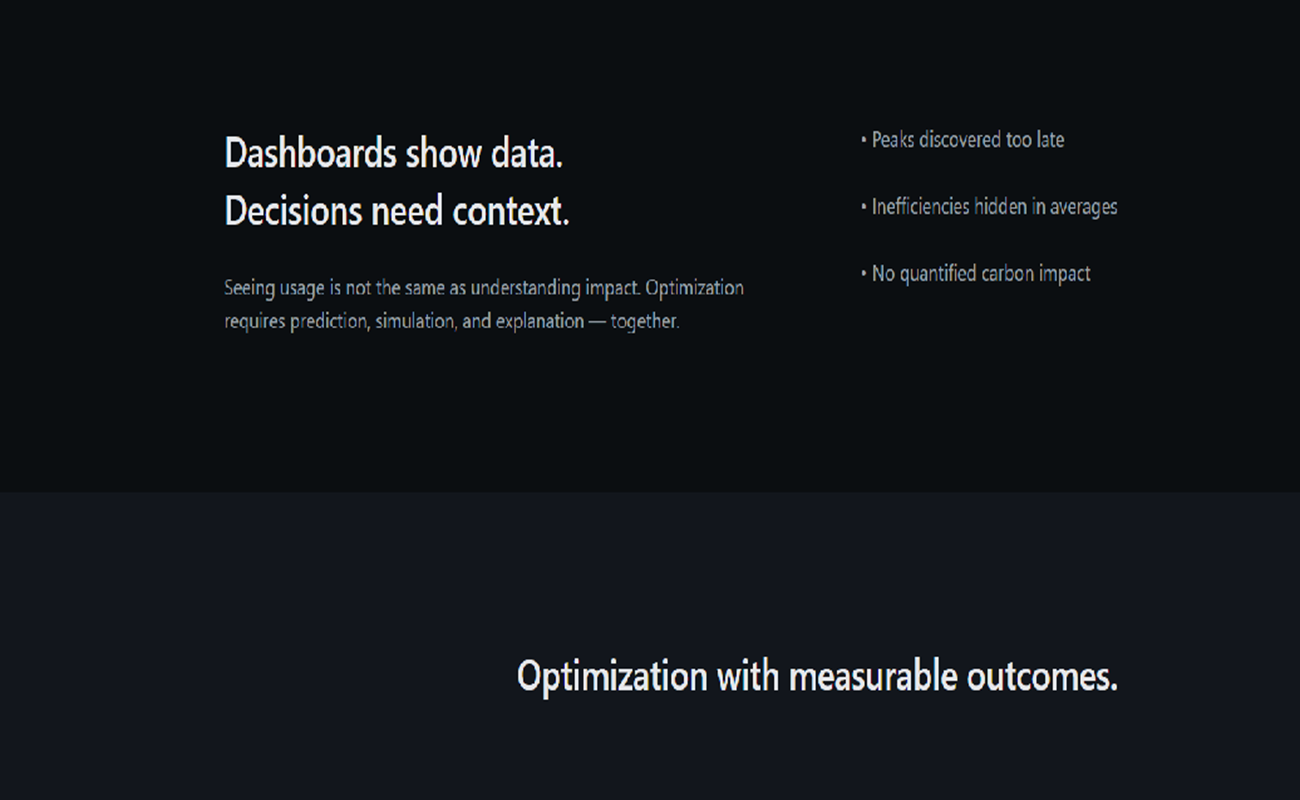
- Facility managers often know energy is being wasted
- But lack decision-ready insights
- And almost never get quantified environmental impact
GridWise AI was inspired by the need to move from monitoring → optimization → measurable impact.
⚡ What it does
GridWise AI is an AI-powered decision support system for sustainable buildings.
It:
- Analyzes building energy usage data
- Predicts peak demand and inefficiencies
- Simulates optimized scheduling scenarios
- Quantifies energy savings, cost reduction, and CO2 avoided
- Explains why each recommendation works in plain language
Instead of static charts, users get actionable, explainable recommendations.
🛠️ How we built it
System Architecture (High-Level)
Data Ingestion
- CSV-based building energy datasets (extensible to IoT streams)
- Stored in PostgreSQL via Supabase
AI Optimization Engine
- Time-series demand forecasting (lightweight LSTM / heuristics)
- Rule-based + data-driven inefficiency detection
- Scenario simulation for optimized schedules
Impact Analysis
- Energy savings (%)
- Cost reduction ($)
- Carbon emissions avoided (kg CO2)
Explainability Layer
- LLM generates human-readable reasoning
- Each recommendation is auditable and transparent
Frontend Dashboard
- Clean React + TypeScript UI
- Focused on clarity, not data overload
🚧 Challenges we ran into
- Designing AI that feels trustworthy, not "magic"
- Balancing accuracy vs speed for live demo constraints
- Making sustainability impact numerical, not vague
- Avoiding overfitting to a single dataset
- Explaining AI decisions clearly within a 2-minute demo window
Accomplishments that we're proud of
- Built a fully explainable AI system, not a black box
- Quantified real-world impact (energy, cost, carbon)
- Delivered a clear live demo flow judges can understand instantly
- Focused on decision support, not flashy automation
- Designed a system extensible to real smart-grid deployments
What we learned
- Explainability matters more than raw prediction accuracy
- Sustainability tools must speak the language of operations and finance
- Small efficiency gains scale into massive environmental impact
- AI is most powerful when paired with clear decision logic
- Judges value clarity and realism over buzzwords
What's next for GridWise AI
- Real-time IoT and smart meter integration
- Carbon-aware scheduling based on grid emission intensity
- Multi-building and campus-level optimization
- Automated ESG and sustainability reporting
- Integration with demand-response and utility pricing APIs
Built With
- ai
- groq
- javascript
- ml
- python
- react
- typescript
- vercel

Log in or sign up for Devpost to join the conversation.