Inspiration
I wanted to build something that solves a genuine, high-stakes infrastructure challenge without relying on generic AI wrappers or gimmicks. While researching electrical grid stability, I discovered that every building's electrical wiring hums at a sub-audible 50 Hz or 60 Hz frequency that fluctuates based on real-time grid load and micro-instabilities. I realized that instead of requiring expensive IoT sensors, a standard laptop or phone microphone could act as a scientific-grade power grid sensor using pure browser-based math. That inspired me to create GridWhisper to provide early blackout warnings and regional telemetry.
What it does
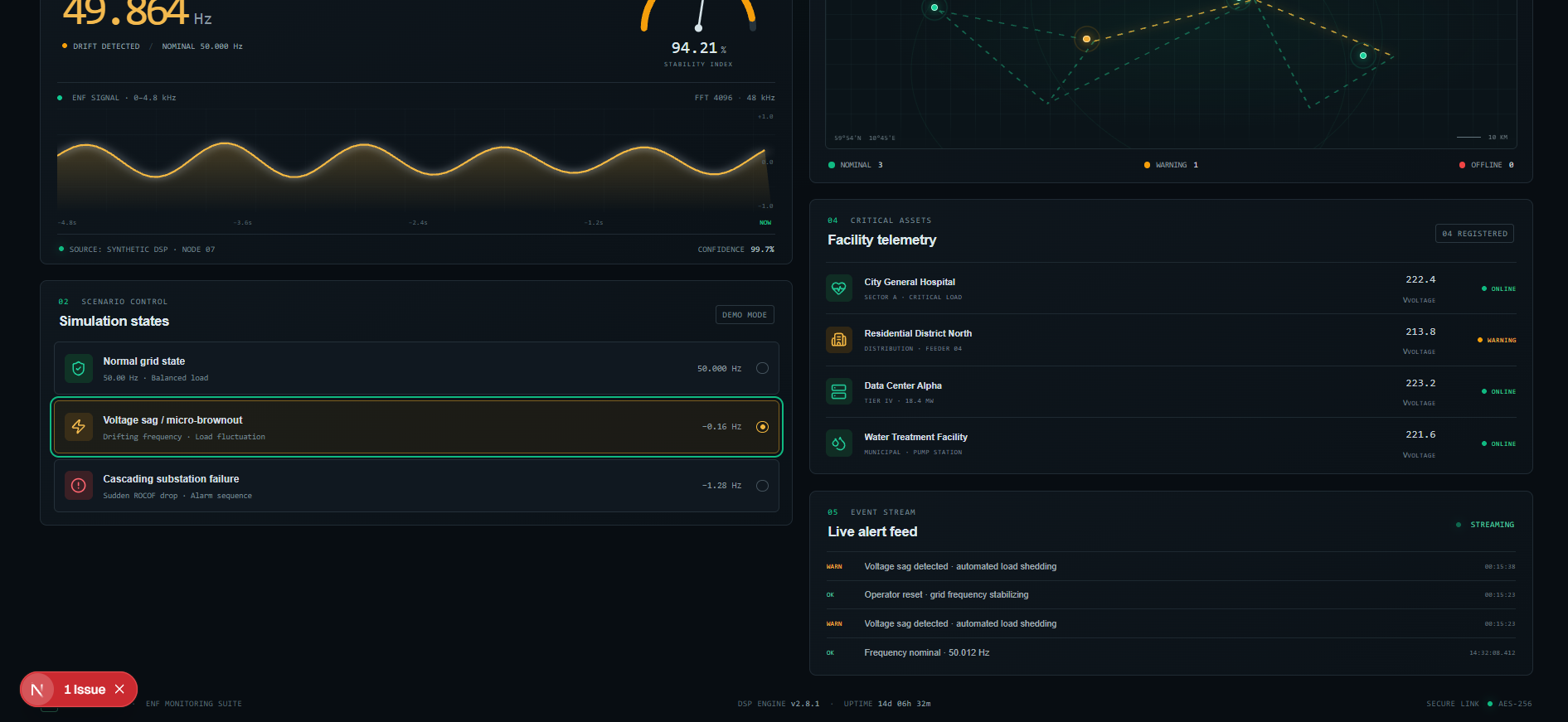
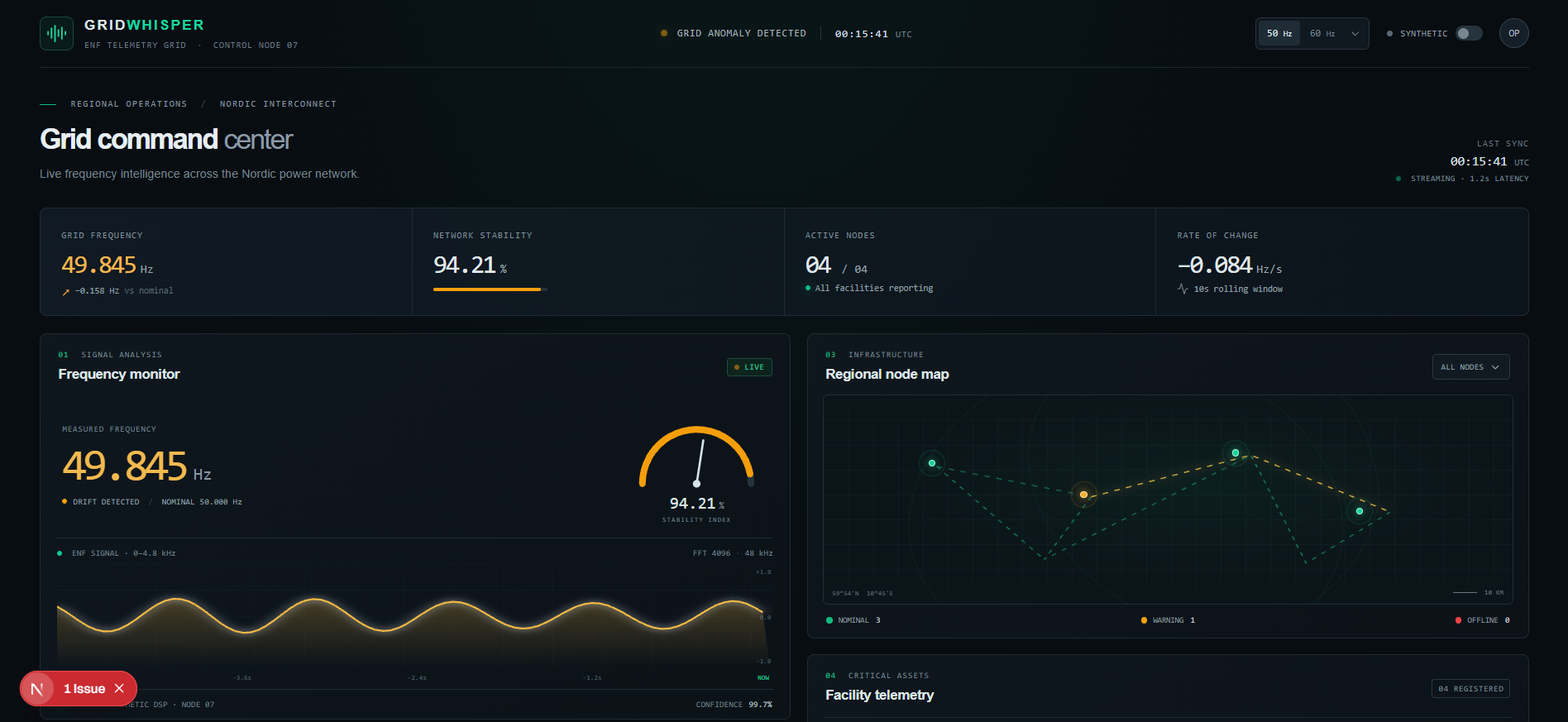
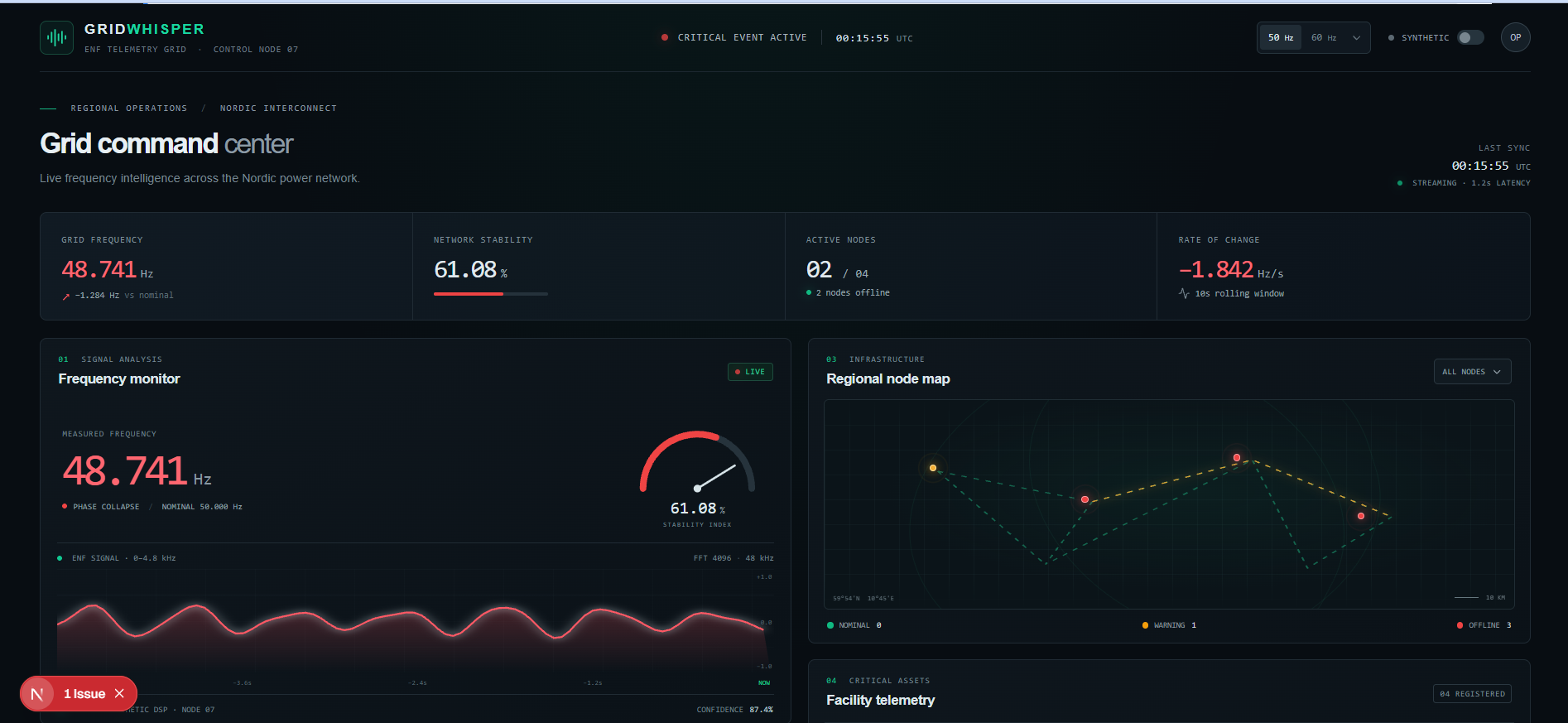
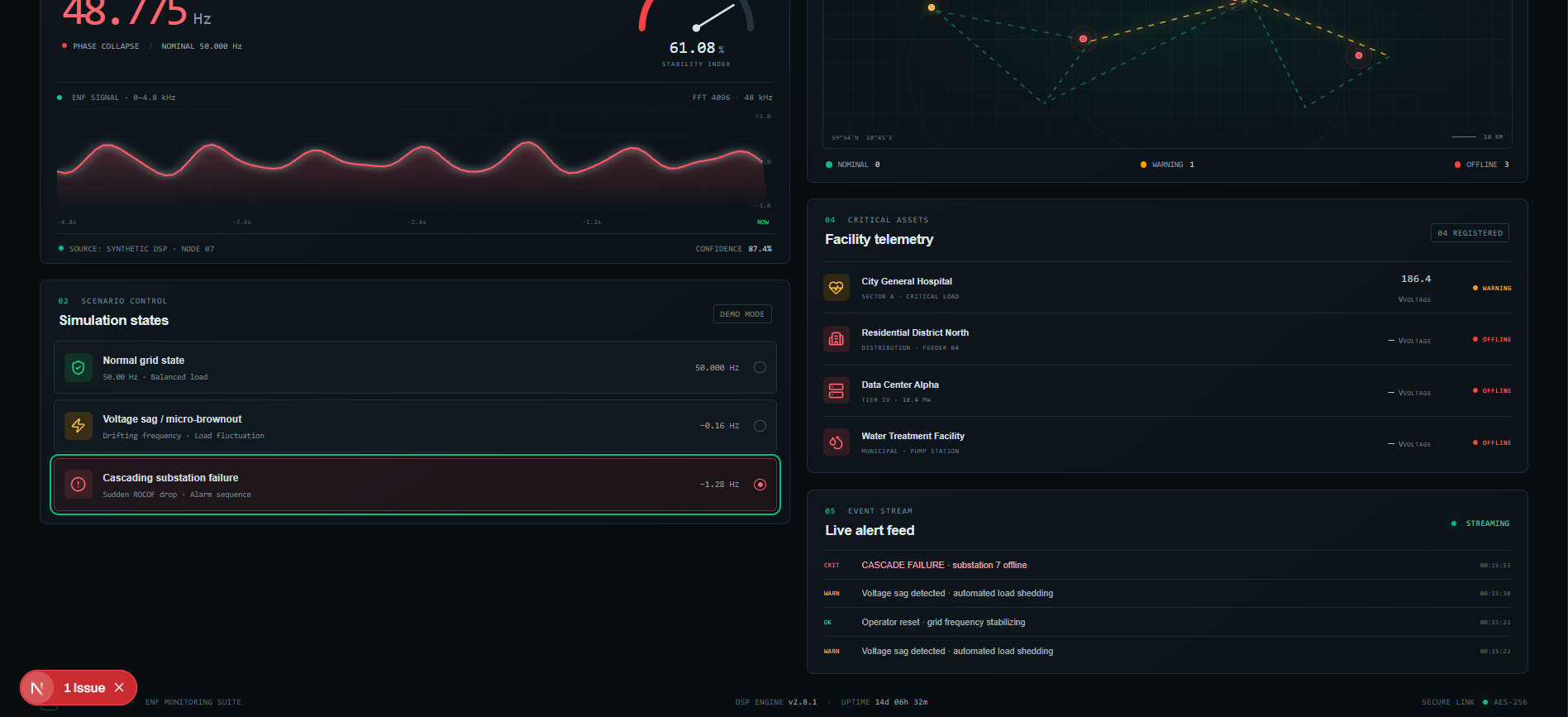
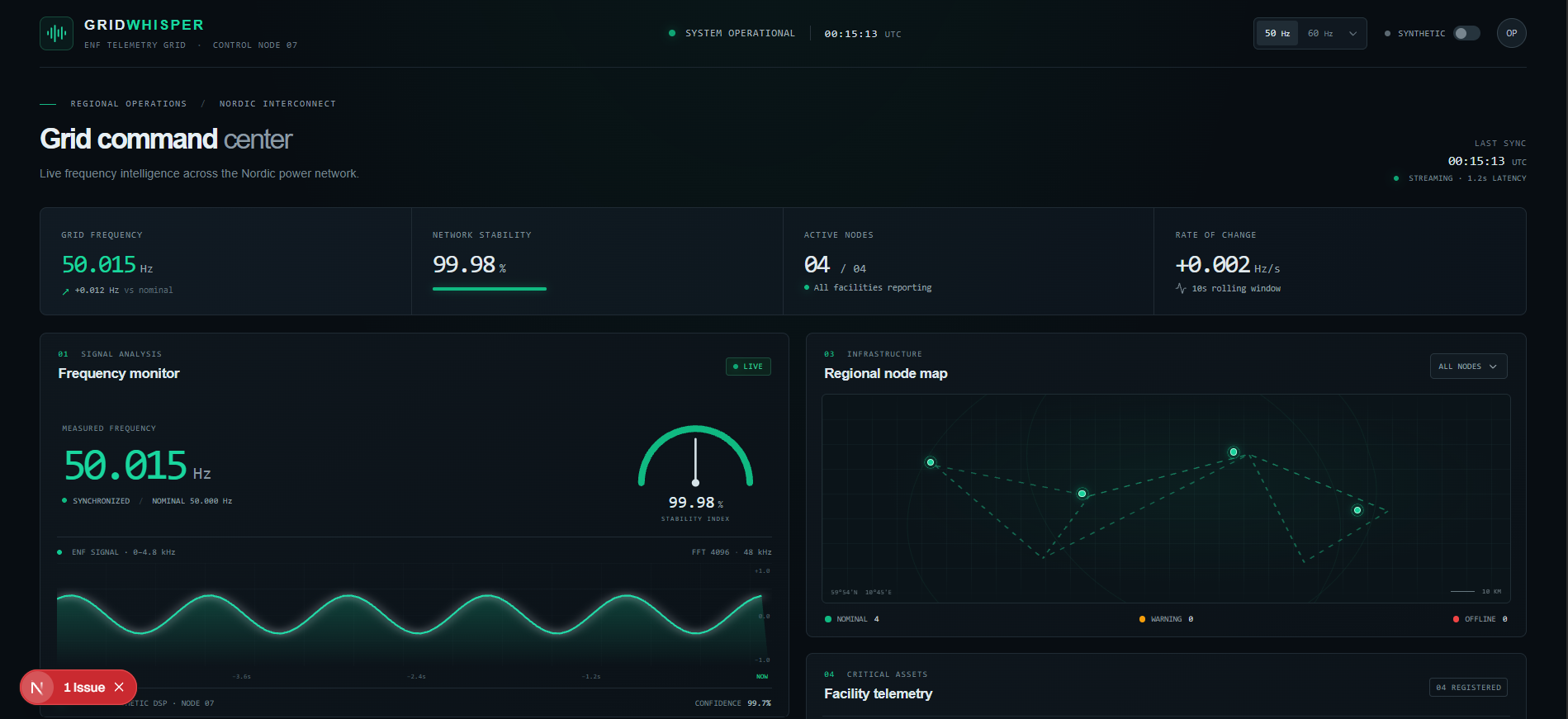
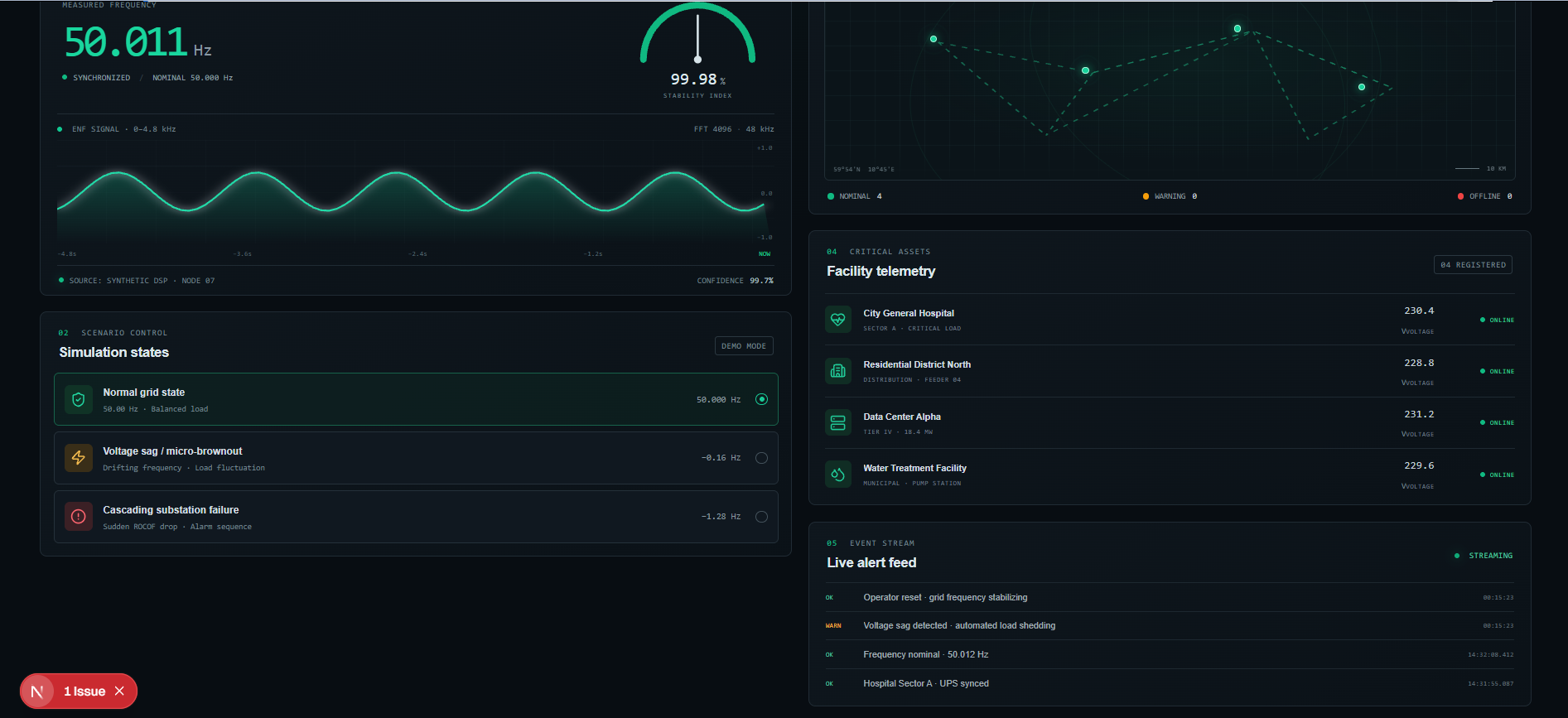
GridWhisper is a zero-hardware, browser-based Electrical Network Frequency (ENF) and blackout early-warning telemetry monitor. It hooks into browser audio input using the Web Audio API and an AnalyserNode with high FFT resolution to isolate the 50Hz/60Hz electrical hum. It applies a client-side privacy filter to strip out human speech frequencies completely, rendering only frequency telemetry. It also includes an interactive simulation control panel and a city command grid dashboard that maps regional nodes, voltage sags, and cascading outages in real time.
How I built it
I built GridWhisper as a high-performance single-page web application using React, Vite, and Tailwind CSS. For the core digital signal processing engine, I utilized the HTML5 Web Audio API to process microphone streams and Canvas to render real-time oscilloscope waveforms and frequency stabilization meters. To ensure smooth demonstrations under any environment, I engineered a robust synthetic fallback signal generator that simulates grid stability and cascading failure events instantly.
Challenges I ran into
Isolating a microscopic 50 Hz or 60 Hz electrical hum from background noise without capturing ambient human speech presented a major challenge. I had to fine-tune the Fast Fourier Transform (FFT) binning parameters and implement strict client-side frequency filtering. Additionally, because browser microphone permissions and raw room acoustics can be unpredictable during a live presentation, I had to design a seamless fallback simulation toggle so the live canvas and UI animations would remain fully responsive and reliable.
Accomplishments that I'm proud of
- Successfully engineering a client-side DSP pipeline in JavaScript that performs sub-audible frequency analysis without violating user privacy or recording speech.
- Creating a fully functional, highly polished command-center UI that turns complex electrical grid telemetry into an intuitive, high-impact live demonstration.
- Designing a bulletproof demo simulation architecture that guarantees a flawless presentation regardless of environment constraints.
What I learned
Working on this project deepened my understanding of digital signal processing (DSP), Fast Fourier Transform (FFT) mechanics, and browser-based audio node routing. I also learned how to architect high-performance real-time visualizations using HTML5 Canvas alongside React state management, and how to design resilient fallback mechanisms for live software demos.
What's next for GridWhisper
- Implementing cross-browser peer mesh networking via WebRTC so nearby offline browsers can share local frequency anomalies directly.
- Expanding the city telemetry mapping interface with real geographical vector tile integrations.
- Optimizing the DSP engine further to support ultra-low-power background mobile execution for community-wide resilience networks.

