-
-
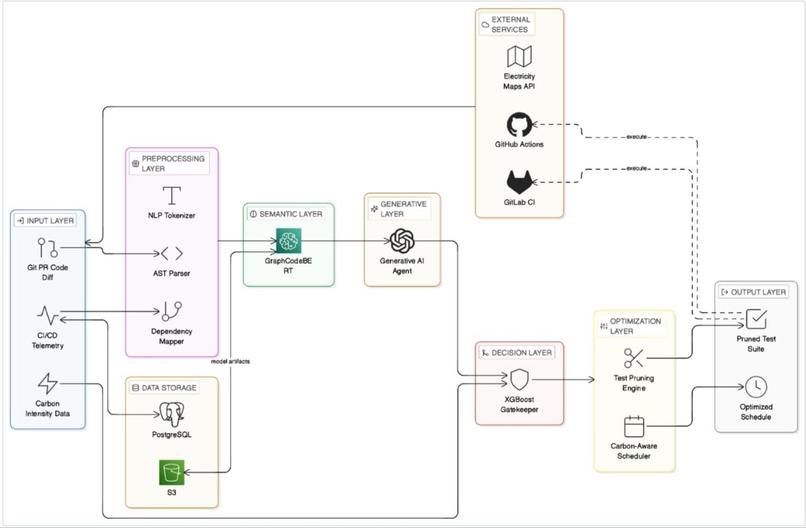
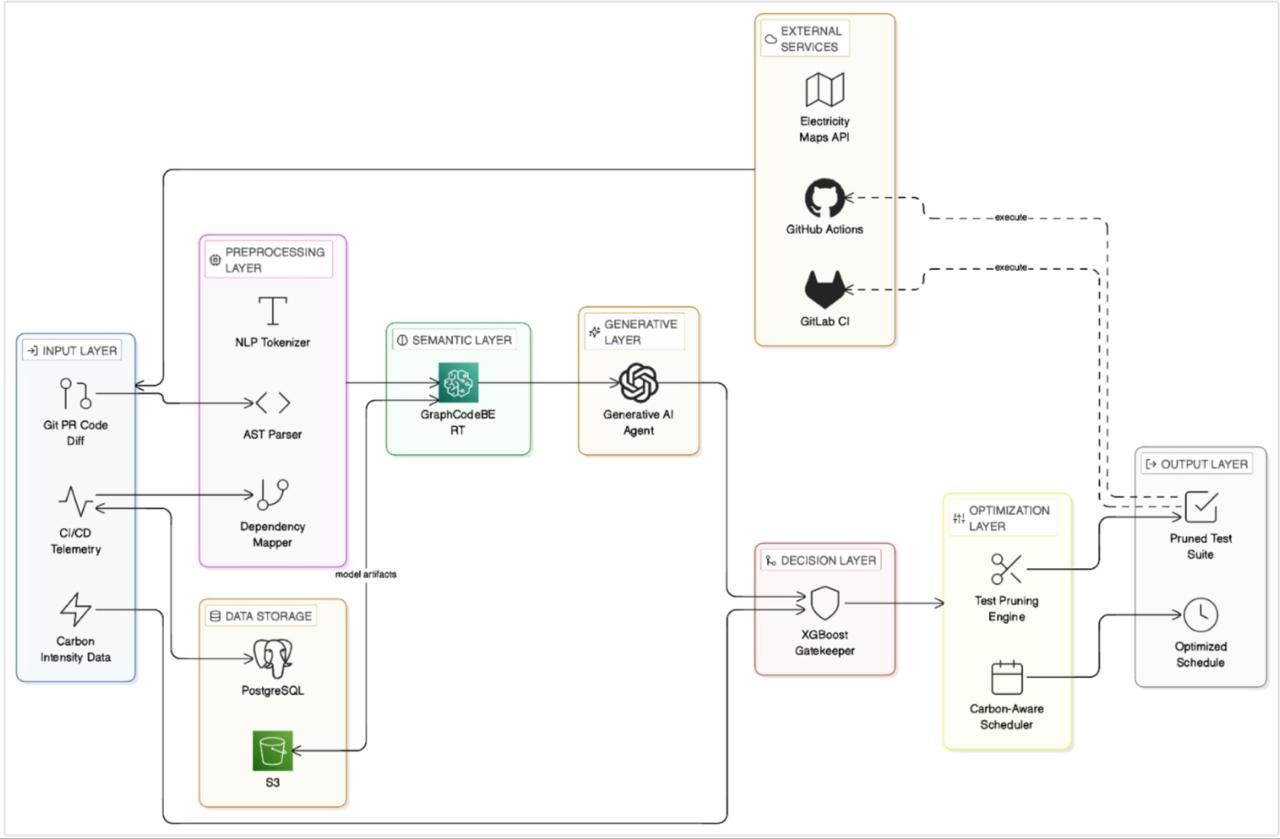
Architecture
-
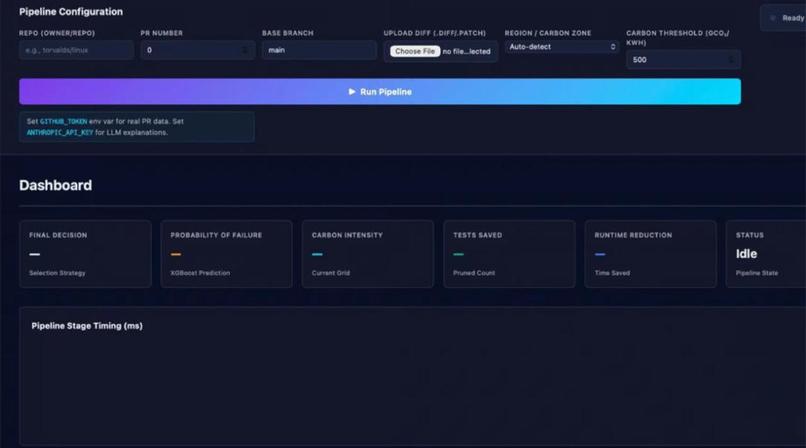
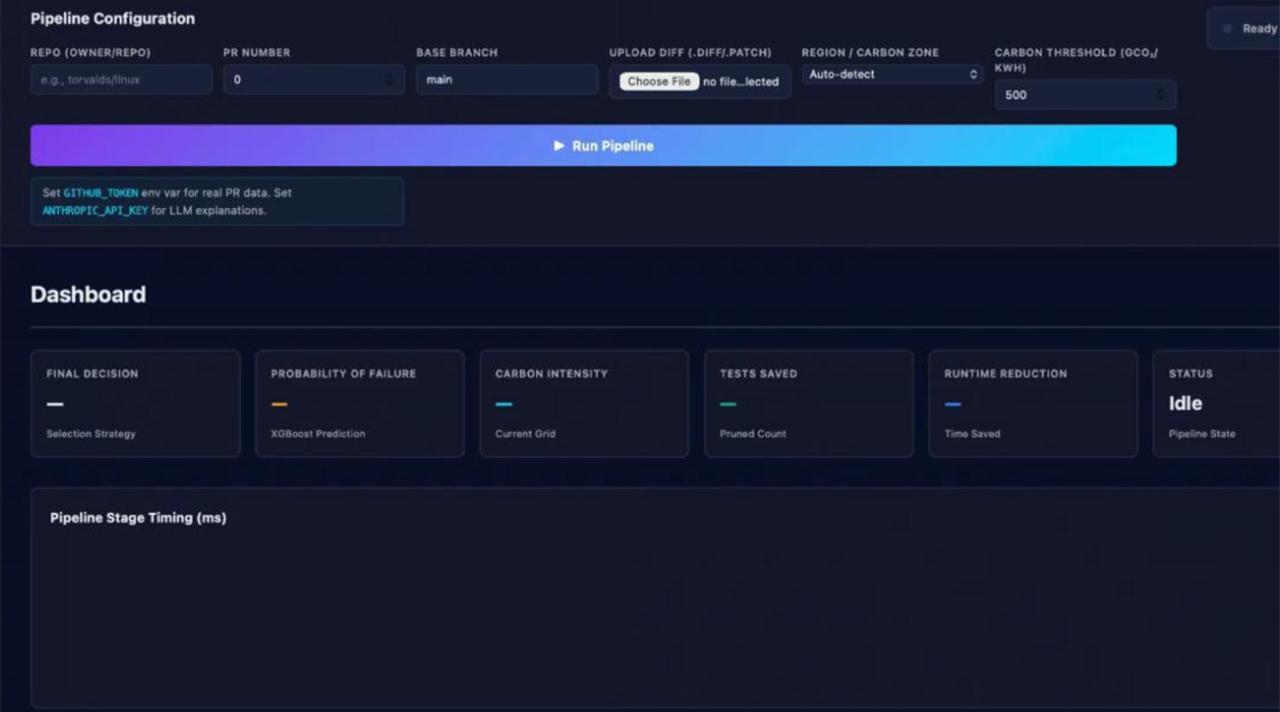
Dashboard
Inspiration
Every software build, test execution, and container deployment consumes electricity—and right now, CI/CD pipelines treat compute power as infinite and environmentally free. Millions of pipelines run globally every day, frequently firing up servers on dirty, fossil-fuel-heavy energy grids and executing redundant test suites for minor commits.
But what if pipelines were intelligent enough to route compute to wherever energy is cleanest, and smart enough to skip running code that doesn't actually need to be tested? That idea gave birth to GridShift AI.
What it does
GridShift AI is a carbon-aware CI/CD orchestration engine that slashes software engineering emissions without sacrificing developer velocity or test coverage. It operates on two distinct optimization layers:
Spatial Grid-Shifting (Where it runs): Integrates with real-time carbon intensity APIs to query global data center energy mixes on-the-fly. It dynamically routes compute workloads to whichever cloud region is currently powered by the cleanest, renewable-dominant grid (e.g., hydro, solar, or wind).
Semantic ML Pruning (What runs): Uses an ML-powered semantic code analysis engine to inspect incoming commits, mapping code changes against test suites. It intelligently identifies non-impacting changes and prunes redundant test cases so zero extra power is wasted.
How we built it
Carbon Telemetry Layer: Integrated real-time carbon intensity APIs (e.g., WattTime / CO2Signal) to poll live grid emissions data (CO2/kWH) across global AWS/GCP data center locations.Semantic ML Engine: Built an abstract syntax tree (AST) parser combined with code embedding models to map dependency graphs. The model predicts which tests are impacted by a PR and flags redundant, zero-impact test cases for safe pruning.Orchestration Bridge: Developed a lightweight CI plugin/wrapper that intercepts trigger events, evaluates grid telemetry and commit impact, and dynamically updates runner parameters before execution.Impact Dashboard: Built a real-time analytics panel that quantifies emissions saved (Co2 reduced, kilowatt-hours conserved, and pruned compute hours) per pull request and across the team.
AI-Assisted Development: Utilized Claude to accelerate boilerplate generation, assist with complex [AST parsing logic / API integrations], and optimize regex mapping for the semantic engine.
Challenges we ran into
Telemetry Latency vs. Build Speed: Polling real-time grid metrics added a slight overhead to pipeline startup. We solved this by building an edge-cached background worker that continuously maintains a lightweight map of global grid health.
Zero-Regress ML Tuning: Over-pruning tests risks letting bugs slip into production. Tuning our semantic ML models required strict confidence thresholds: if the impact score of a test case is ambiguous, the system defaults to running it—ensuring safety is never compromised for carbon savings.
Multi-Region Workload Routing: Abstracting CI runner scripts so they could smoothly spin up transient jobs in low-carbon regions without broken secrets or environment drift.
Accomplishments that we're proud of
30–50% CO₂ Reduction: Successfully demonstrated up to 50% carbon emission reductions in simulated pipeline runs through a combination of spatial shifting and semantic pruning.
Zero Developer Friction: Designed the platform so developers don't have to alter their existing workflow—it operates behind the scenes on standard git push triggers.
End-to-End Measurability: Built an exact, mathematical impact tracker rather than relying on abstract estimates.
What we learned
Energy Grid Volatility: Regional grid carbon intensity fluctuates dramatically—sometimes by over 300% within a single 24-hour window—making dynamic location-based shifting surprisingly effective.
Code Redundancy: A significant percentage of CI compute is spent re-testing isolated modules (like UI tweaks, documentation, or untracked assets) that have zero impact on back-end logic.
Green Software Momentum: Sustainability in tech is moving from an option to a requirement—and automation is the only way to scale it across engineering teams.
What's next for GridShift AI — Dynamic Carbon-Aware DevOps
Temporal Build-Shifting: Adding a non-urgent queue option that allows background builds or batch processing to wait up to 2 hours for local solar/wind grid peaks.Marketplace Plugins: Packaging GridShift AI into official turn-key plugins for GitHub Actions, GitLab CI, and CircleCI.Enterprise Carbon Budgeting: Providing engineering leaders with org-wide carbon limits, automated compliance badges, and team-level sustainability metrics.
Built With
- anthropic-api
- codebert
- electricity-api
- faiss
- fast-api
- github-actions
- postgresql
- python
- pytorch
- react.js
- xgboost

Log in or sign up for Devpost to join the conversation.