GridShadow
Inspiration
Every year, storms leave thousands of people without electricity. While weather forecasts can predict severe conditions, utility operators still have to make difficult decisions under pressure—deciding which areas are most at risk, where to send repair crews, and how to restore power as quickly as possible.
I wanted to build an AI system that doesn't just predict bad weather—it helps people decide what to do before the storm arrives.
That's how *GridShadow * was born.
What it does
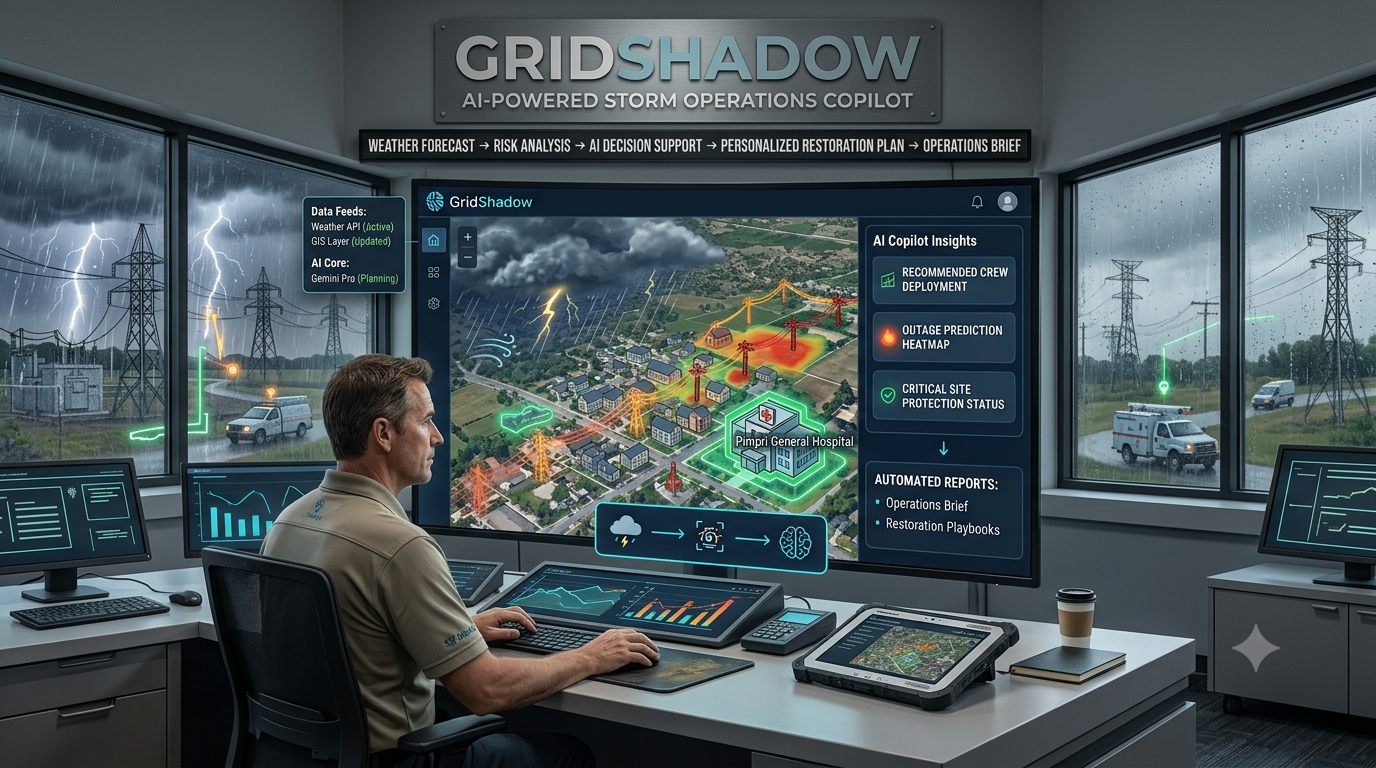
GridShadow is an AI-powered storm operations copilot that helps utilities and microgrids prepare for extreme weather.
Instead of overwhelming operators with weather data, GridShadow transforms forecasts into clear, actionable decisions.
The platform can:
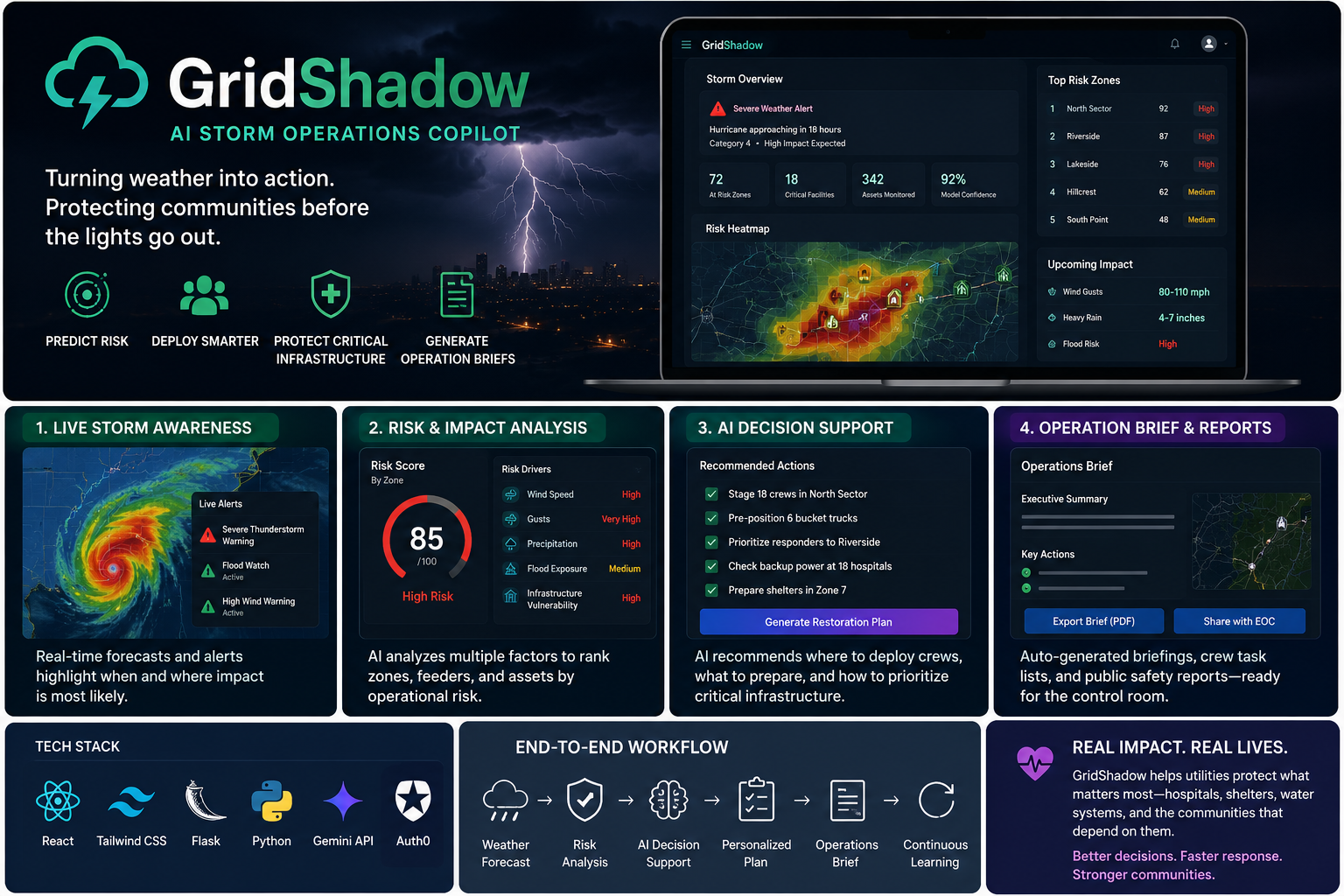
- Monitor live weather forecasts and severe weather alerts
- Identify which areas are most likely to experience outages
- Rank zones and infrastructure by operational risk
- Prioritize hospitals, emergency shelters, water systems, and other critical infrastructure
- Recommend where crews and equipment should be deployed before the storm arrives
- Generate restoration plans after outages occur
- Automatically create operational briefings and emergency reports
One of GridShadow's biggest strengths is personalization.
Every utility operates differently. By learning from uploaded operating procedures, restoration playbooks, previous incident reports, and internal documentation, GridShadow adapts its recommendations to each organization instead of providing generic advice.
How I built it
GridShadow combines several AI-powered components into one workflow.
Frontend
- React
- Tailwind CSS
Backend
- Flask
- Python
AI
- Gemini API for intelligent planning, summarization, and operational recommendations
Authentication
- Auth0
Data Processing
- Weather forecast APIs
- Risk scoring engine
- Document-based memory system
- Retrieval-Augmented Generation (RAG) for personalized recommendations
The overall workflow is:
Weather Forecast → Risk Analysis → AI Decision Support → Personalized Restoration Plan → Operations Brief
Challenges I ran into
One of the biggest challenges was moving beyond a simple weather dashboard.
Many existing solutions stop after displaying forecasts or alerts. I wanted GridShadow to answer the next question:
"What should operators actually do now?"
Designing an AI system that converts weather information into practical operational decisions while considering critical infrastructure, restoration priorities, and organization-specific procedures required multiple iterations.
Balancing customer restoration speed with protecting essential services was another interesting challenge.
Accomplishments that I am proud of
I am proud that GridShadow goes beyond predicting storms—it helps people respond to them.
Some highlights include:
- Personalized AI recommendations instead of one-size-fits-all advice
- Automatic prioritization of critical infrastructure
- AI-generated operations and emergency response briefs
- End-to-end workflow from forecast to restoration planning
- A practical solution with real-world impact during extreme weather events
What I learned
During this project I learned how difficult emergency decision-making becomes when information comes from many different sources.
I also explored how large language models can move beyond chatbots and become operational decision-support systems that help professionals work faster and more confidently.
What's next for GridShadow
Future versions of GridShadow could include:
- Live utility GIS integration
- Crew tracking and dispatch optimization
- Real-time outage prediction using historical outage data
- Satellite imagery for damage assessment
- Predictive maintenance recommendations
- Multi-agent AI collaboration for large-scale emergency response
My vision is to build an AI platform that helps utilities prepare for disasters before they happen—not just react after the lights go out.
Built With
- fastapi
- gemini
- javascript
- next.js
- python
- react


Log in or sign up for Devpost to join the conversation.