GridSentry
Distribution companies can lose a significant share of energy pushed through low-voltage networks. GridSentry asks a simple question: what if the network could report suspicious losses live instead of discovering them later?
What it does
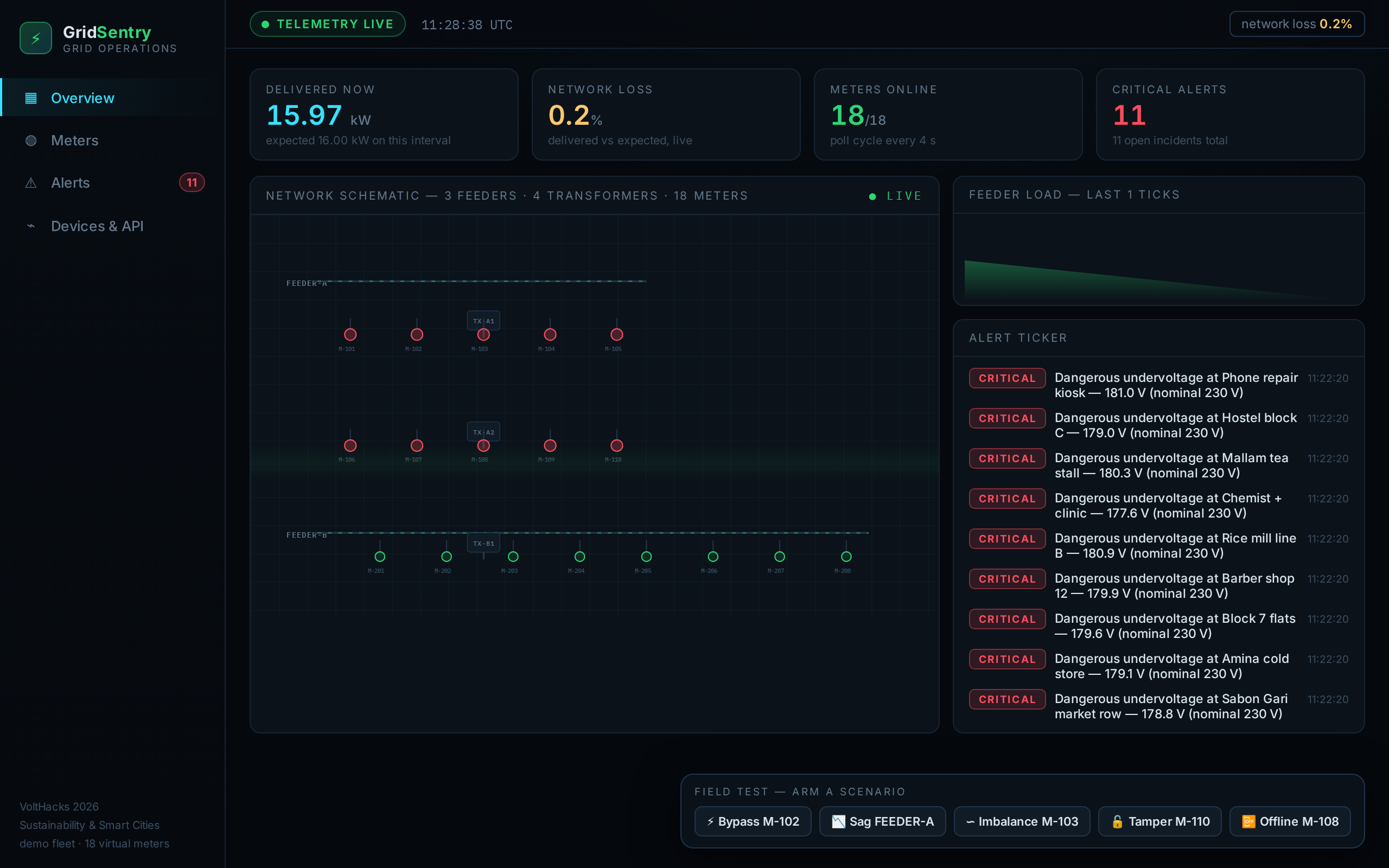
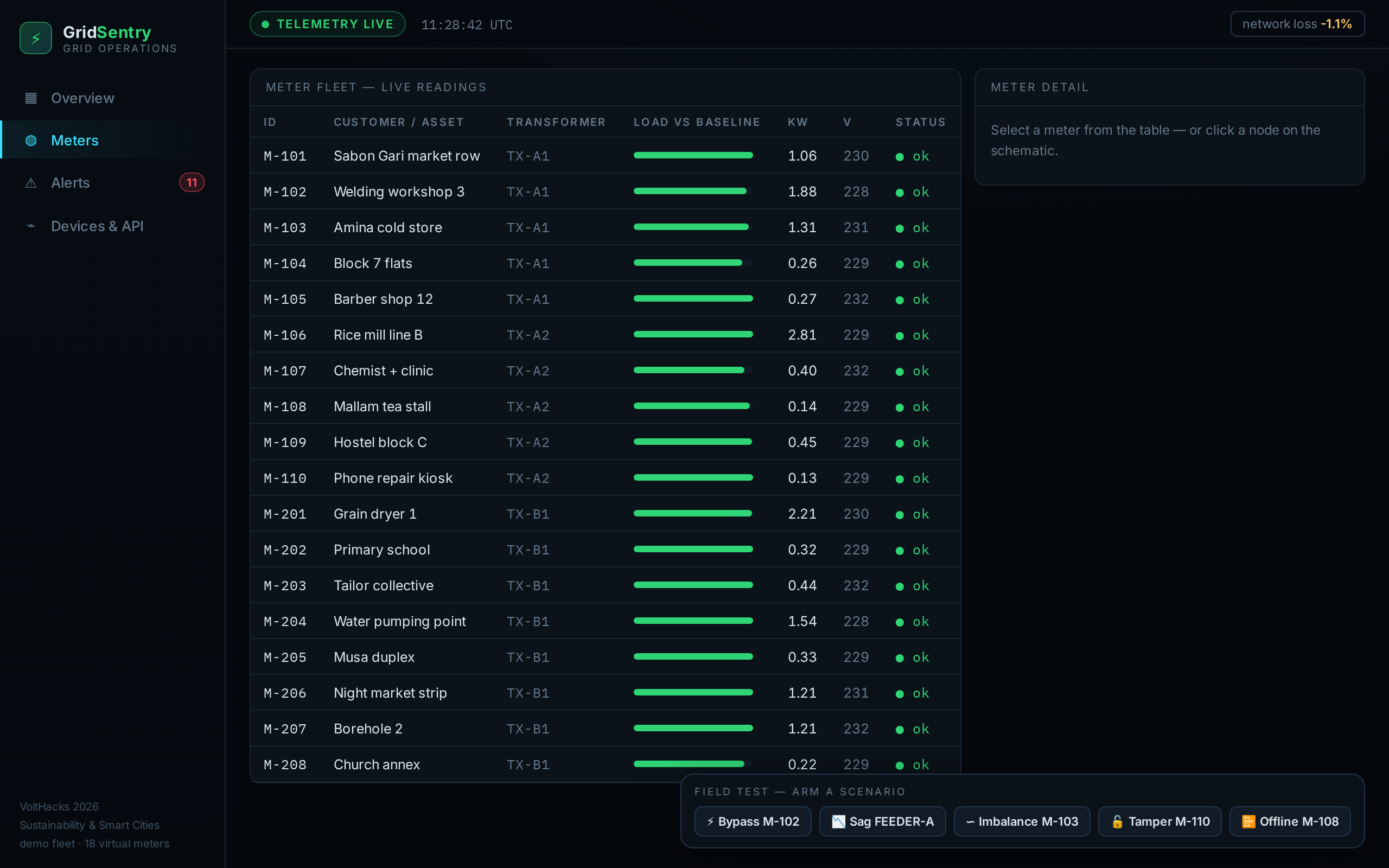
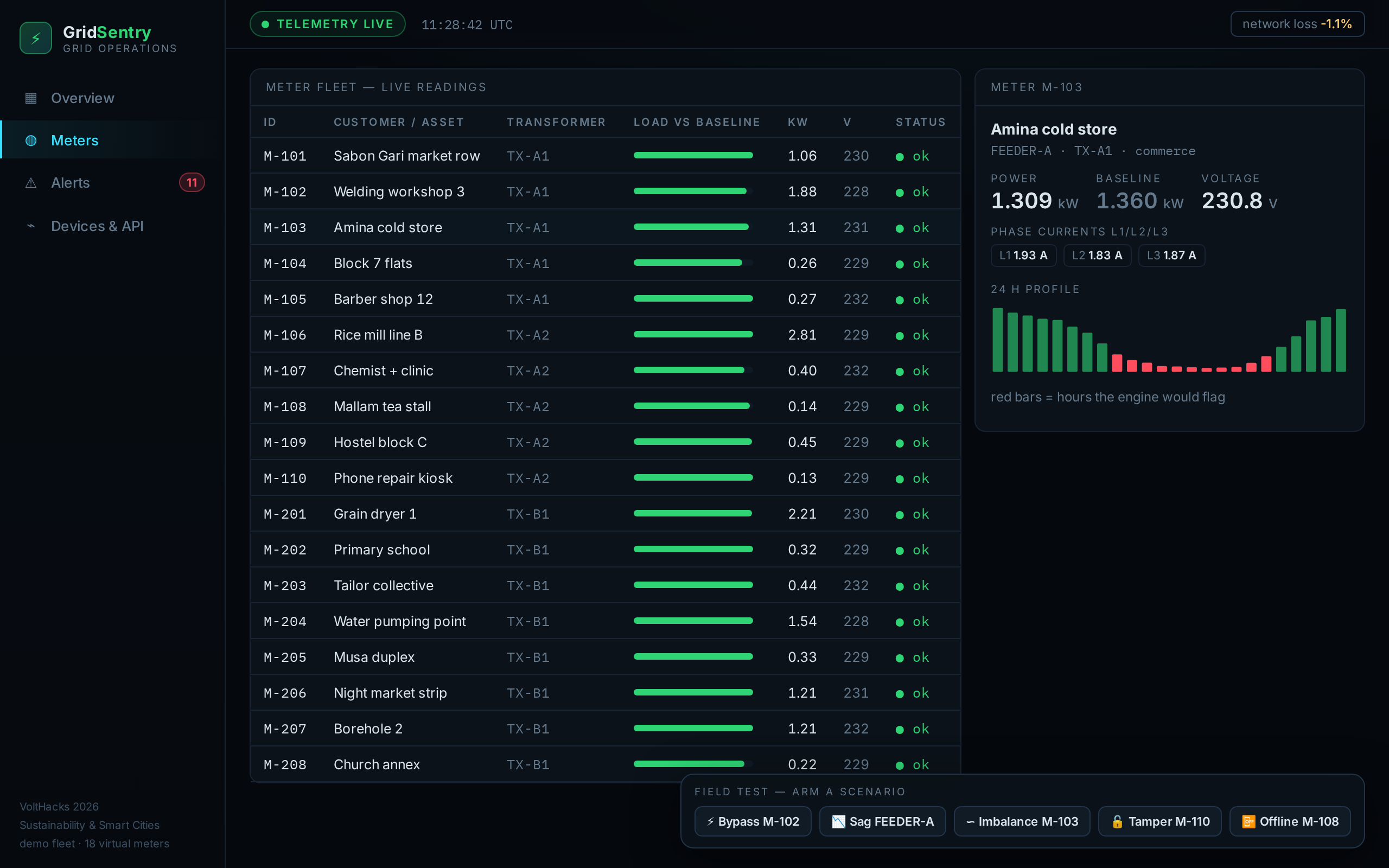
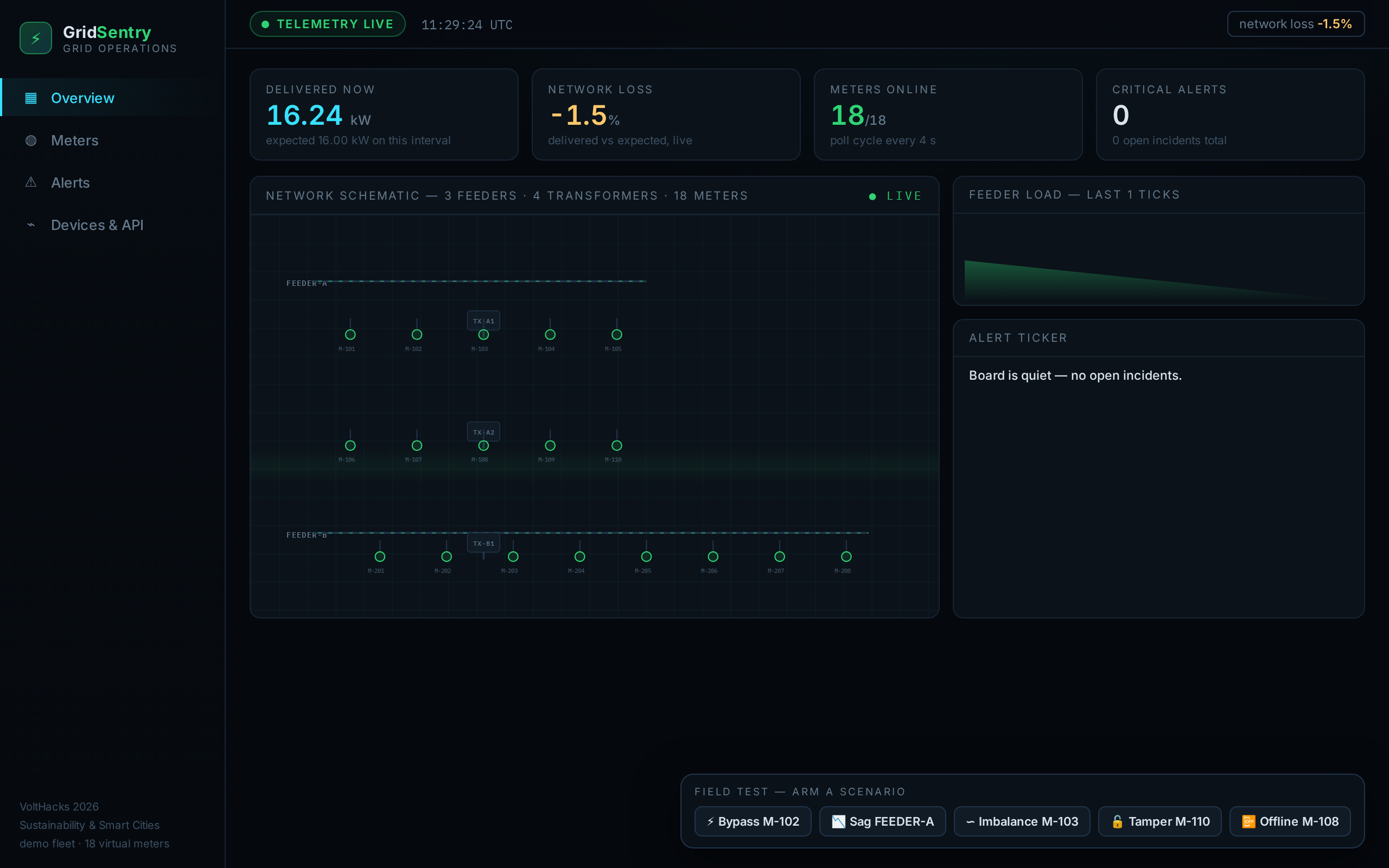
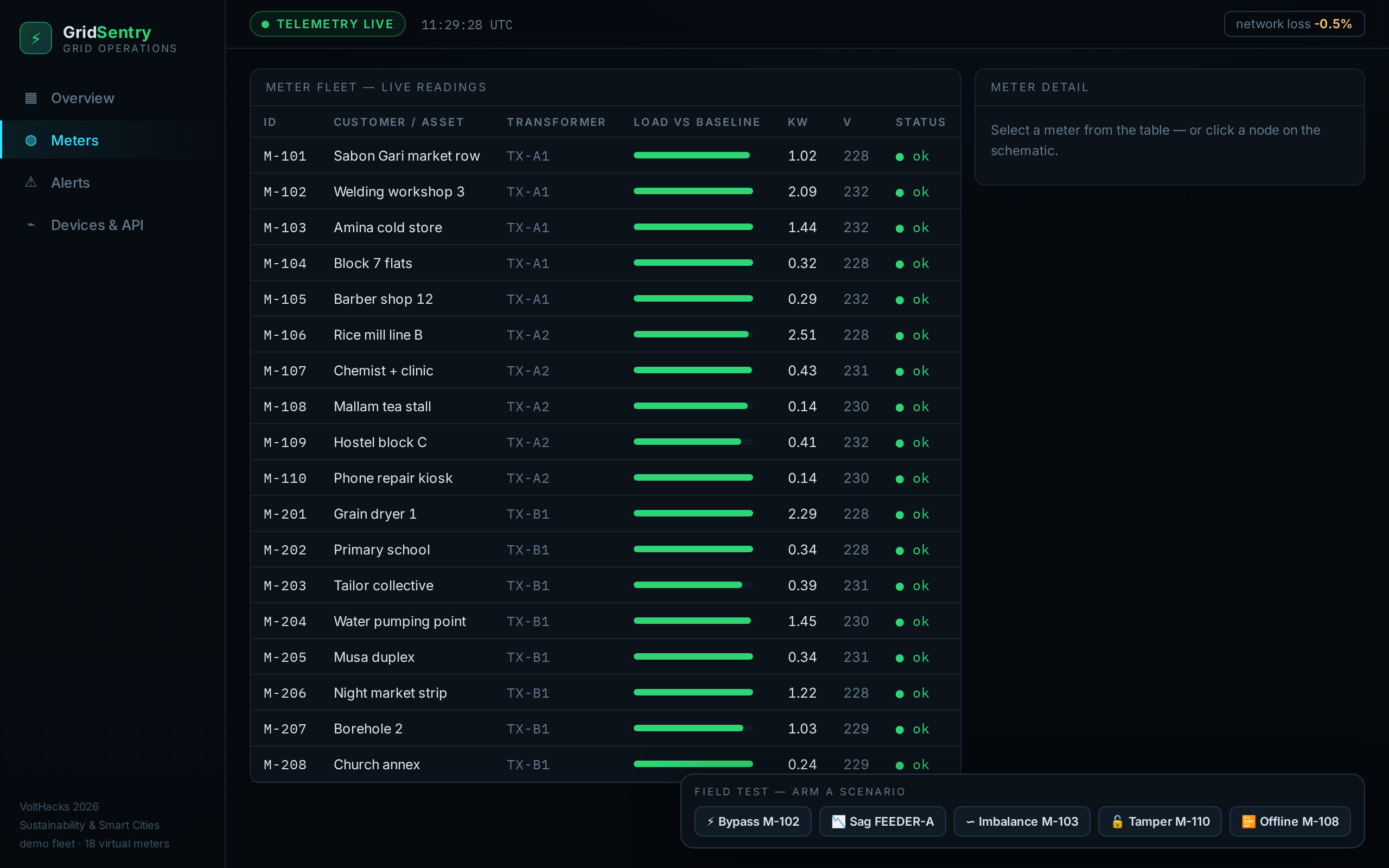
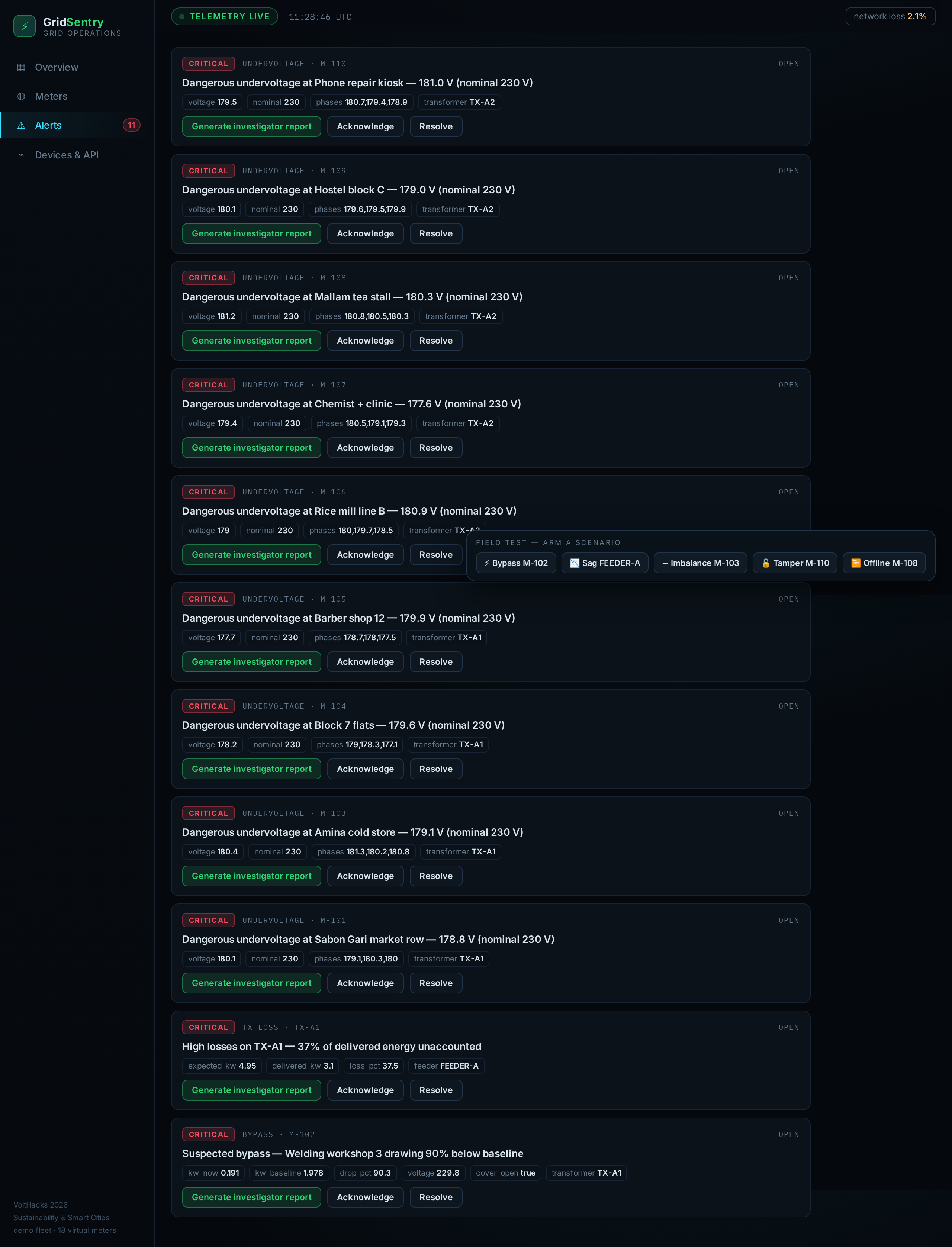
GridSentry is a smart-grid control-room prototype for monitoring 18 smart meters across two feeders. It combines live telemetry, deterministic detection rules, and AI-assisted investigation reports to help identify:
- Energy theft and suspicious consumption patterns
- Electrical faults
- Meter tampering
- Transformer loss and feeder accounting issues
- Fleet health problems
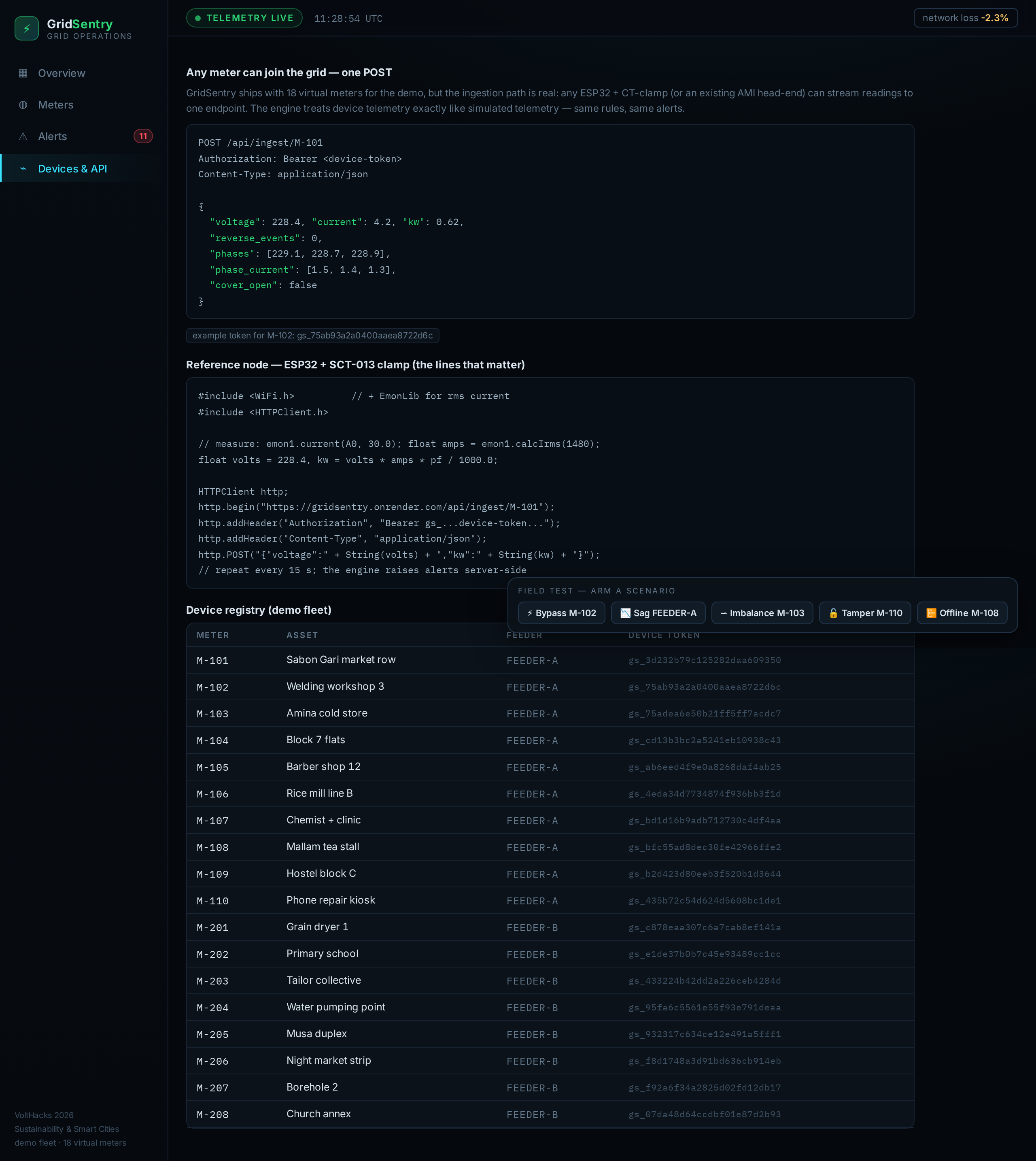
The system exposes a token-authenticated /api/ingest/{meter_id} endpoint and includes an ESP32 + CT-clamp wiring path for physical telemetry ingestion.
How it works
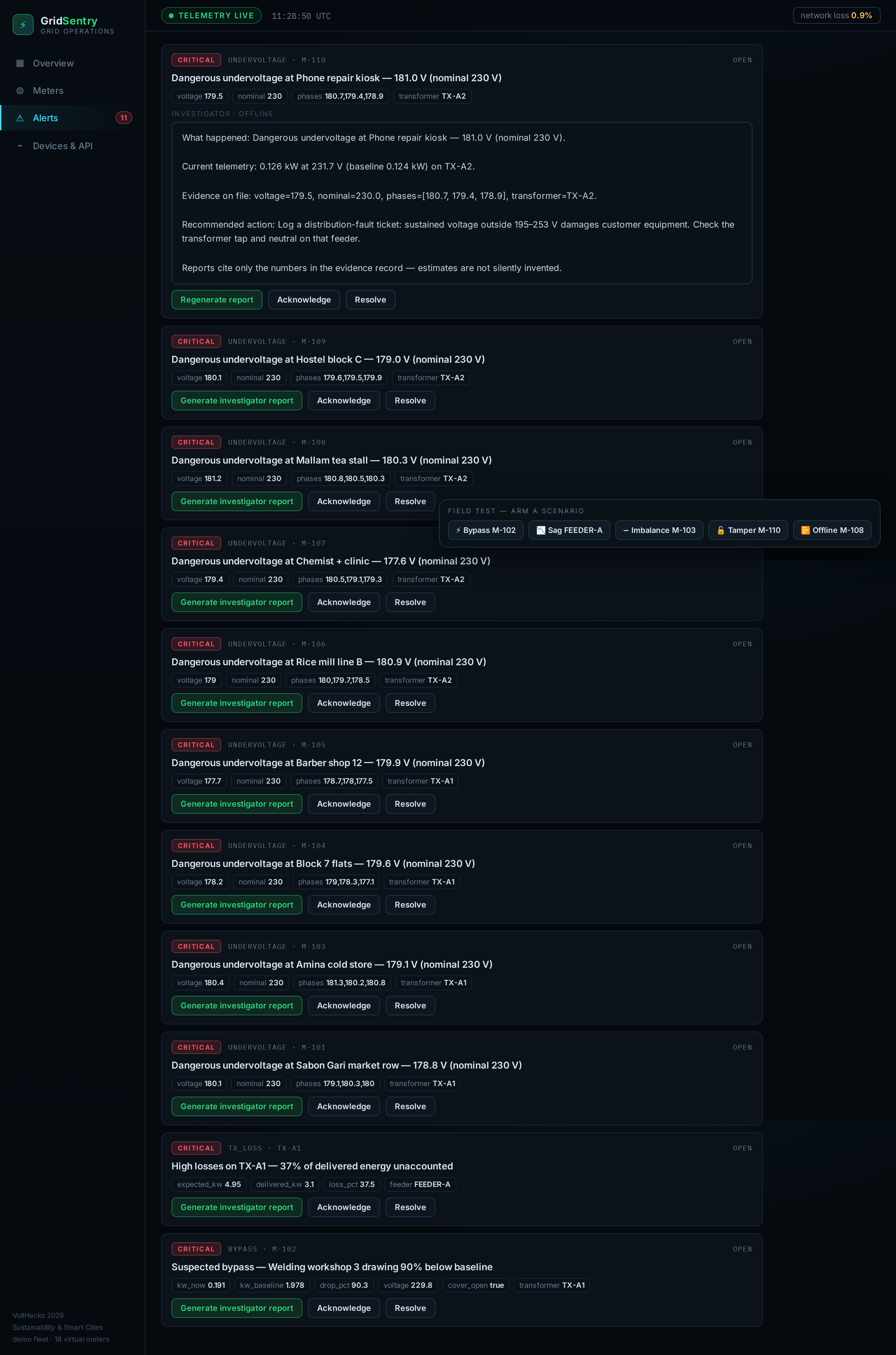
The Python/FastAPI backend receives or simulates meter telemetry, stores it with SQLAlchemy, and applies deterministic rules to detect anomalies. The React/TypeScript/Vite frontend presents the results as a control-room console. For investigation summaries, GridSentry can use Groq's openai/gpt-oss-20b model to generate grounded reports from the evidence produced by the detection engine, with a deterministic fallback when AI is unavailable.
Built with
Python, FastAPI, SQLAlchemy, SQLite/PostgreSQL (Neon), React, TypeScript, Vite, Groq (openai/gpt-oss-20b), Playwright, pytest, GitHub Actions, Docker, ESP32 + CT-clamp.
Quality and testing
The project includes 15 pytest tests, GitHub Actions CI, Docker support, and Playwright-based recording/QA.
Why it is different
GridSentry combines practical smart-meter telemetry, deterministic anomaly detection, and an AI investigator in one focused control-room workflow. The core detection logic remains explainable and deterministic; AI is used to help investigators interpret the evidence rather than replace the underlying detection system.
Challenges
The main challenge was making the system useful as both a realistic smart-grid prototype and an understandable hackathon demonstration. The project therefore focuses on a clear end-to-end flow: telemetry → detection → evidence → investigation report.
Next steps
Future work could include more physical meter integrations, richer feeder-level analytics, historical trend analysis, additional anomaly models, and deployment to utility-scale infrastructure.
AI disclosure
AI was used for the investigator-report layer. Groq's openai/gpt-oss-20b generates reports grounded in evidence supplied by the deterministic detection engine. The detection logic itself is deterministic.
Built With
- ct-clamp
- docker
- esp32
- fastapi
- github-actions
- gpt-oss-20b
- groq
- neon
- openai
- playwright
- postgresql
- pytest
- python
- react
- sqlalchemy
- sqlite
- typescript
- vite

Log in or sign up for Devpost to join the conversation.