-
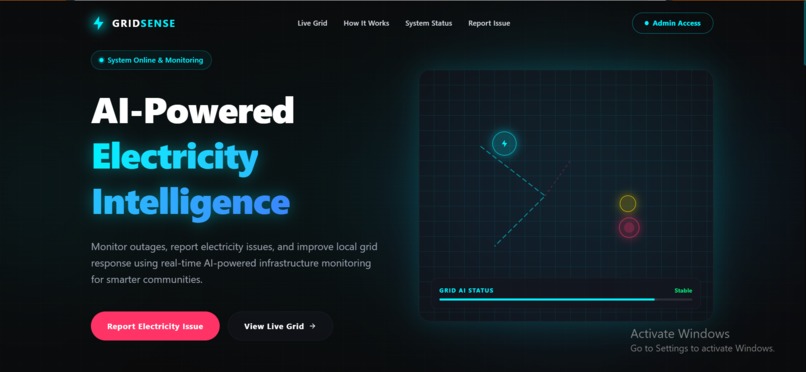
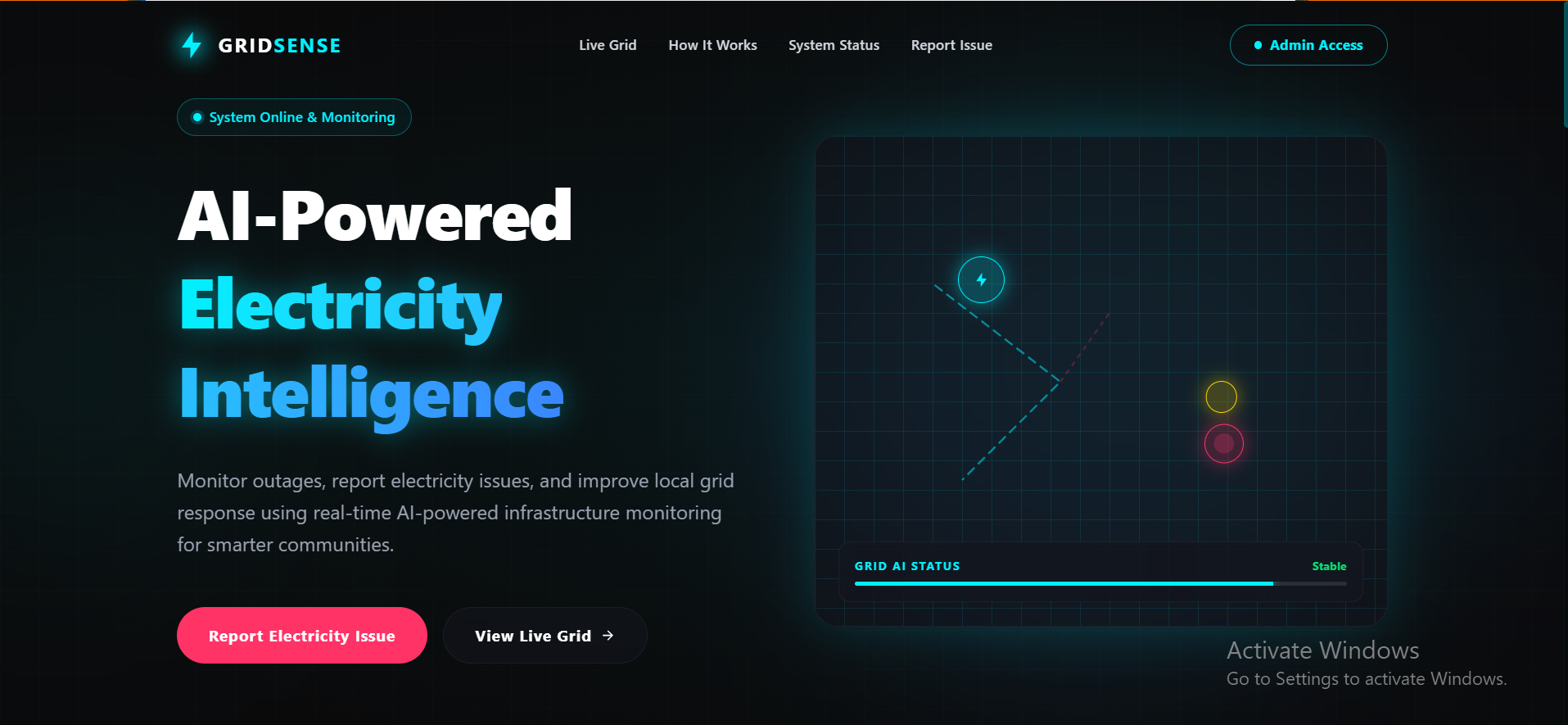
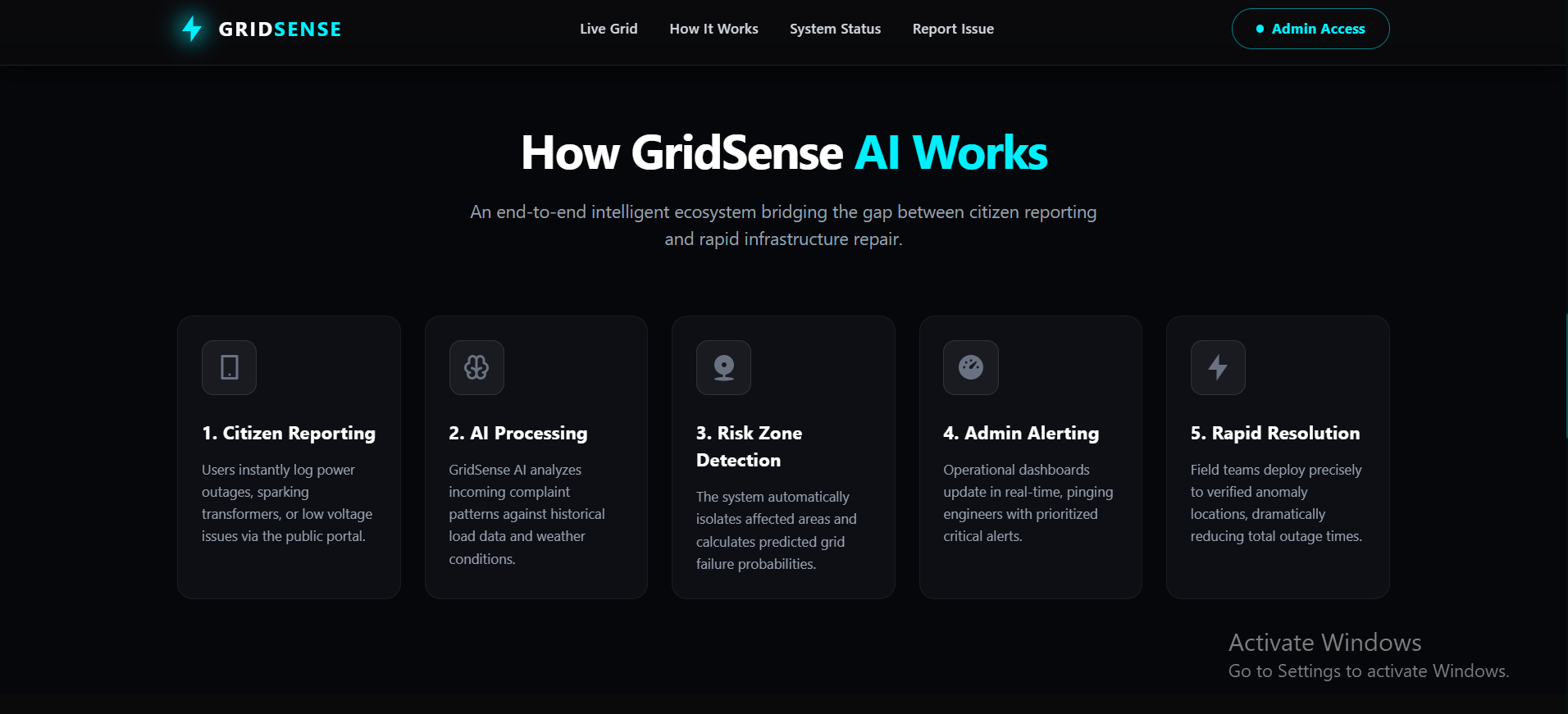
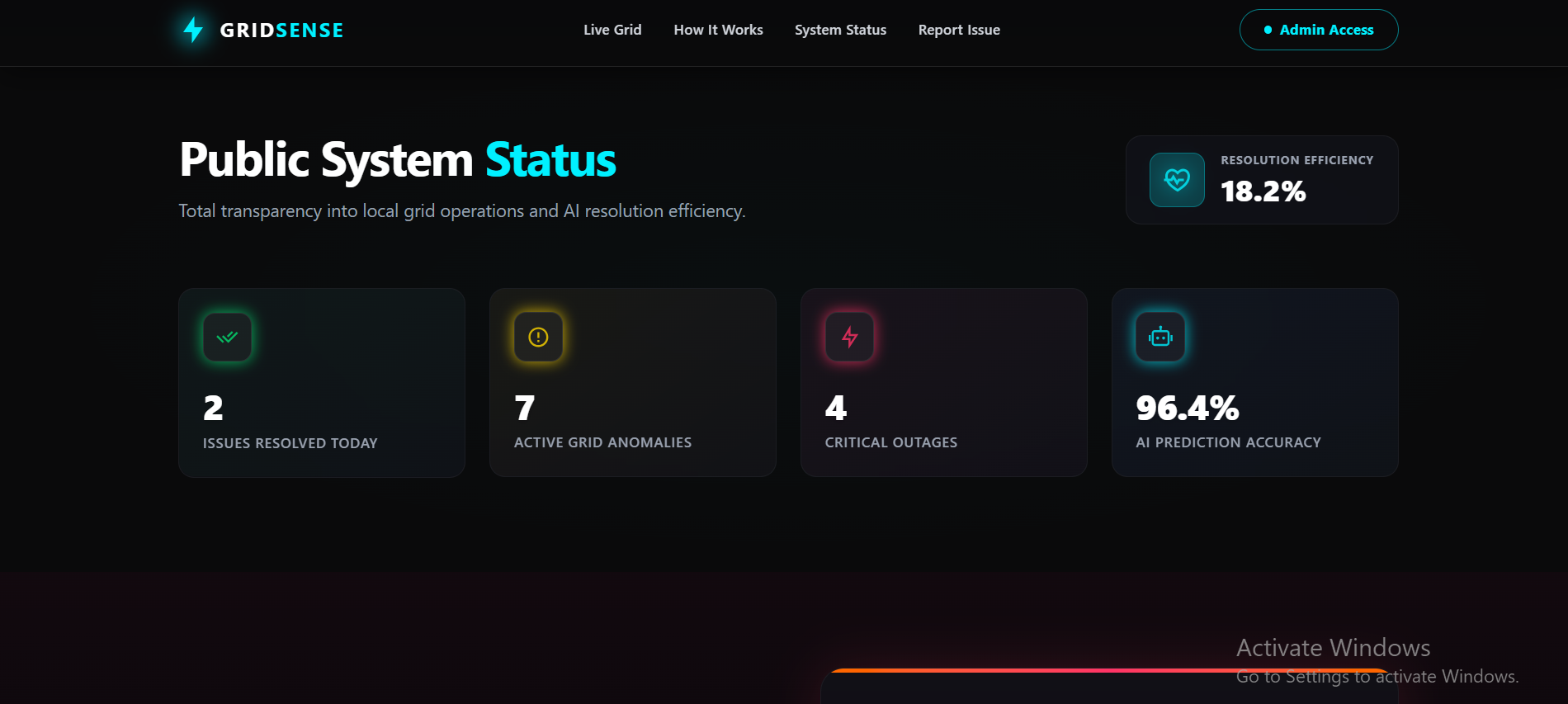
Home Page
-
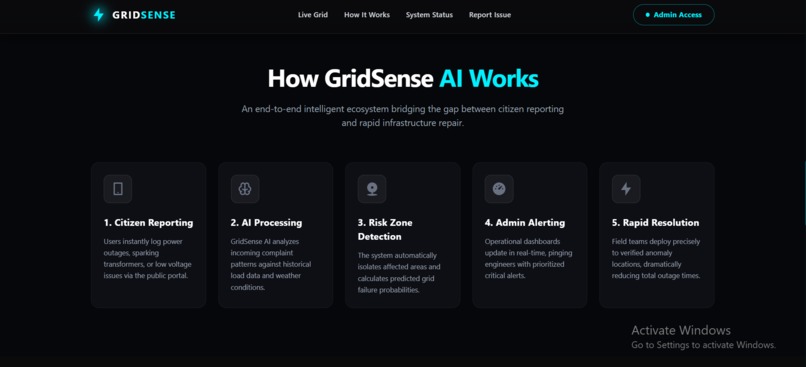
-
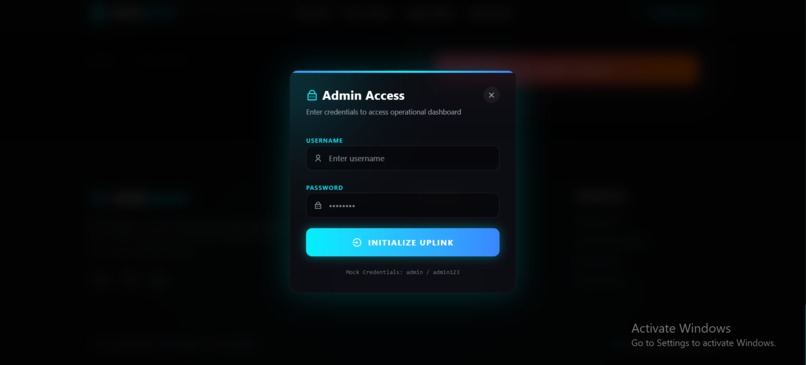
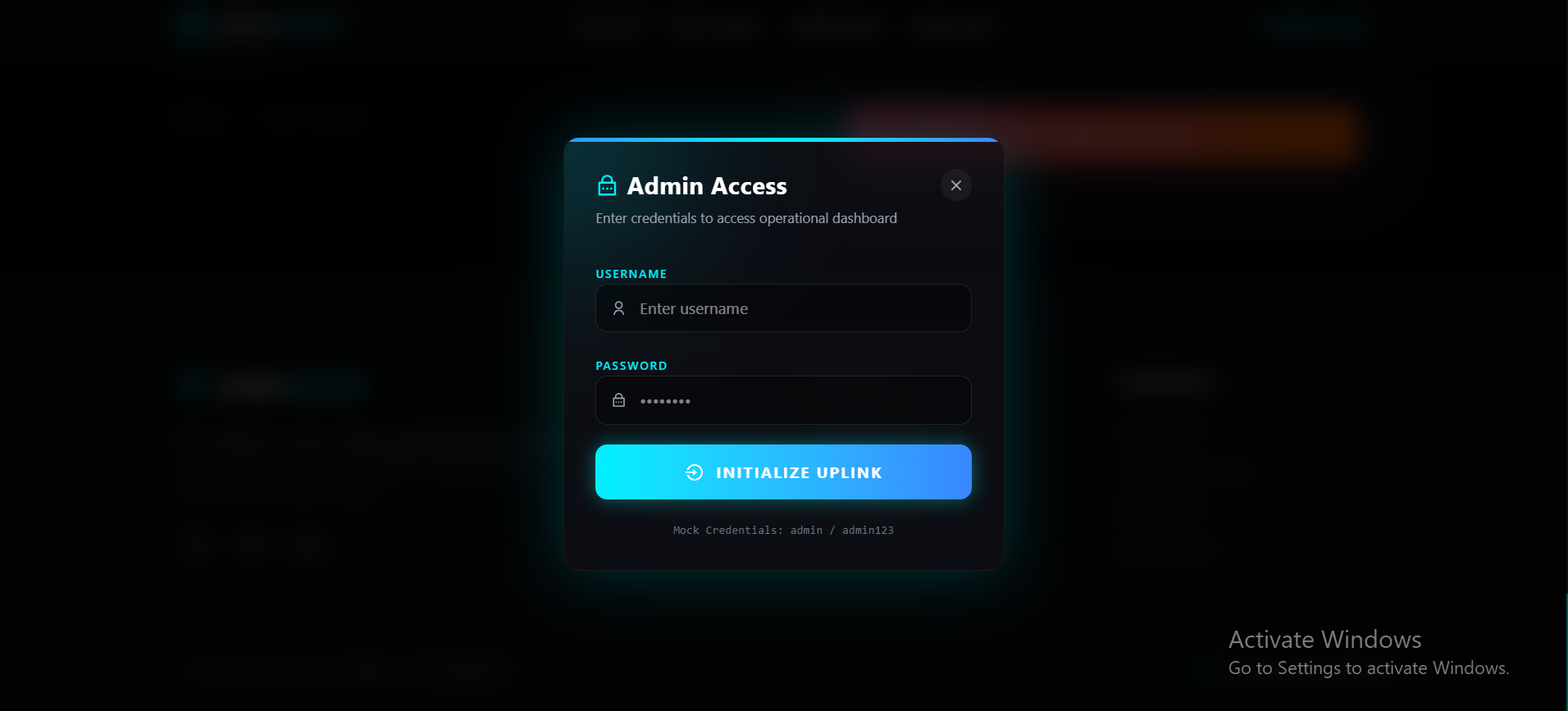
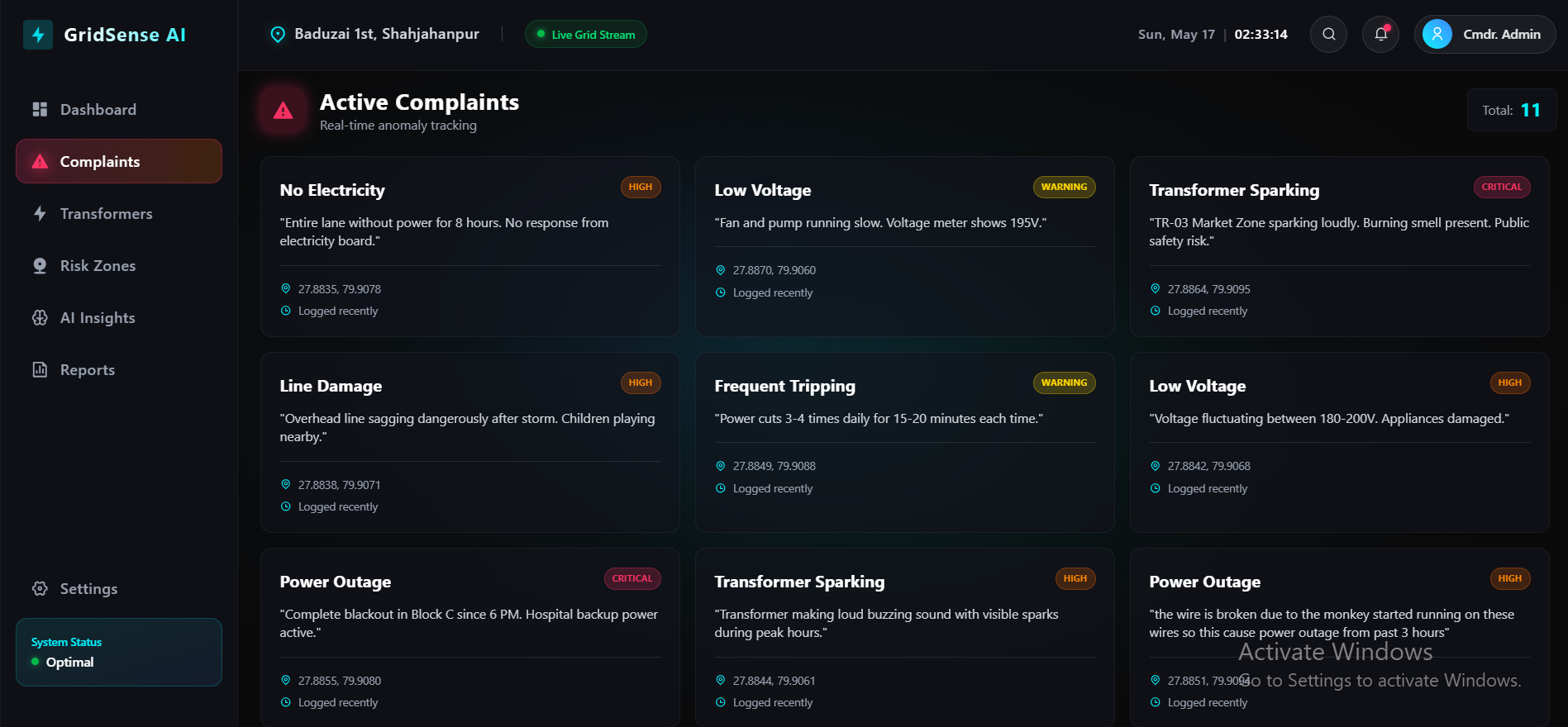
Admin Log in System
-
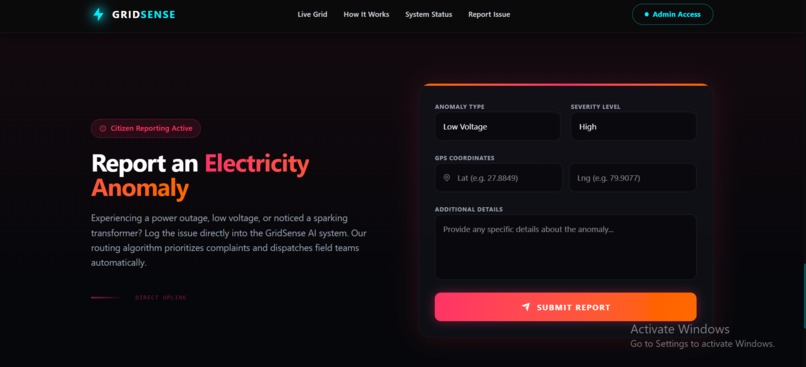
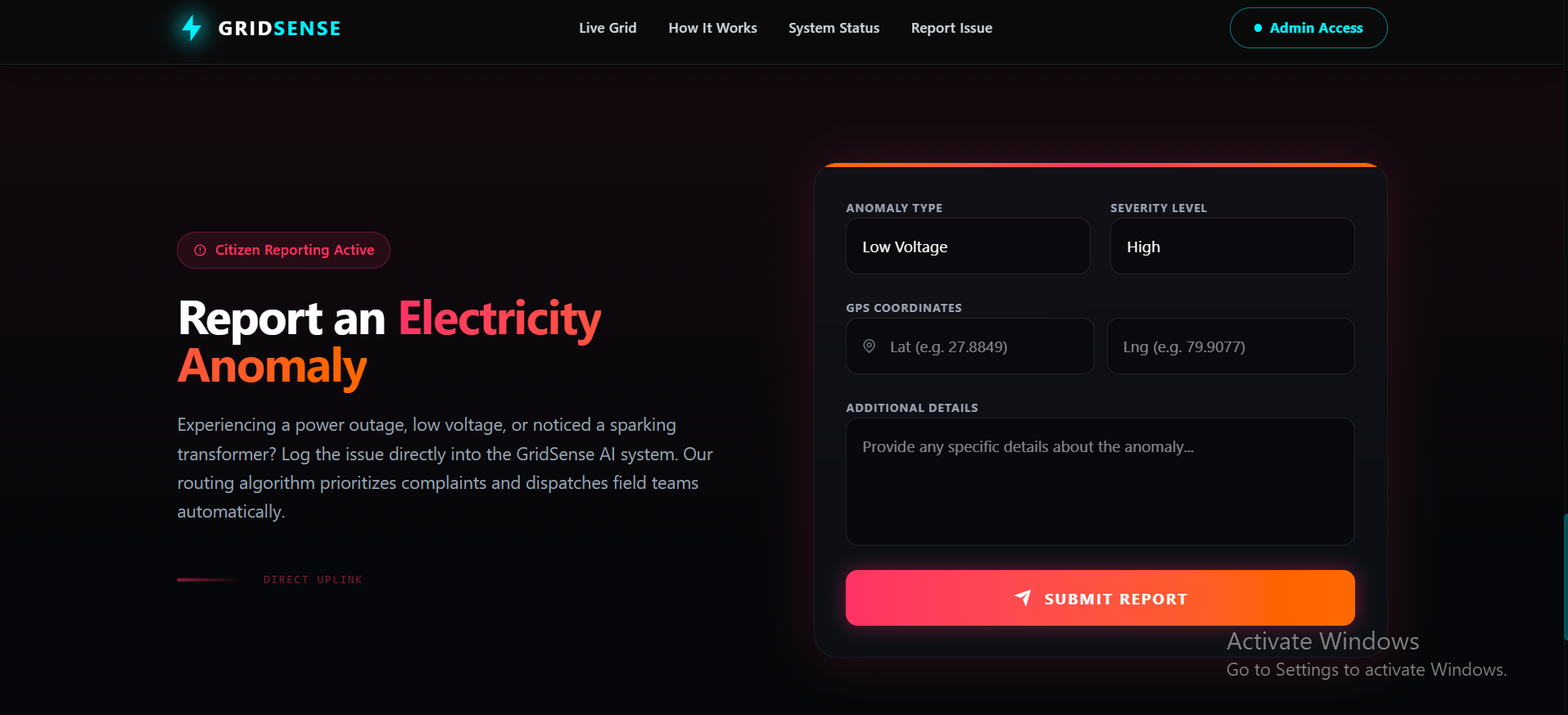
Report Form
-
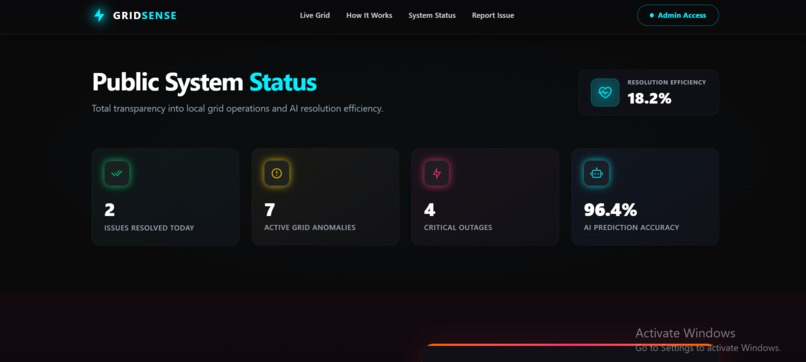
-
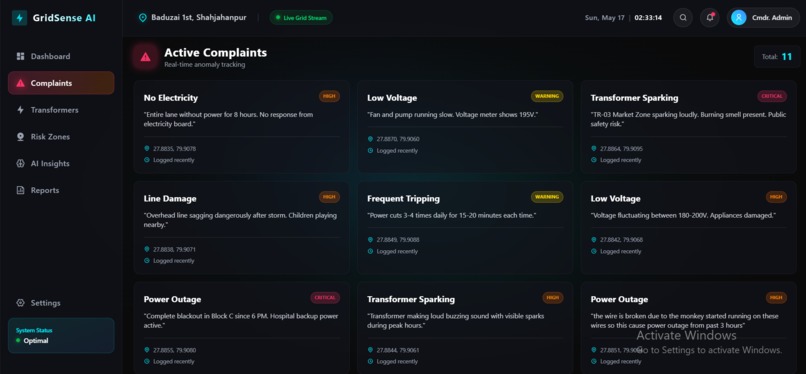
-
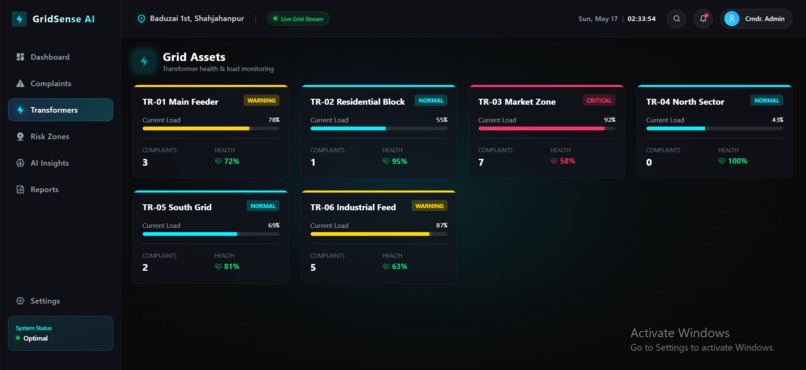
-
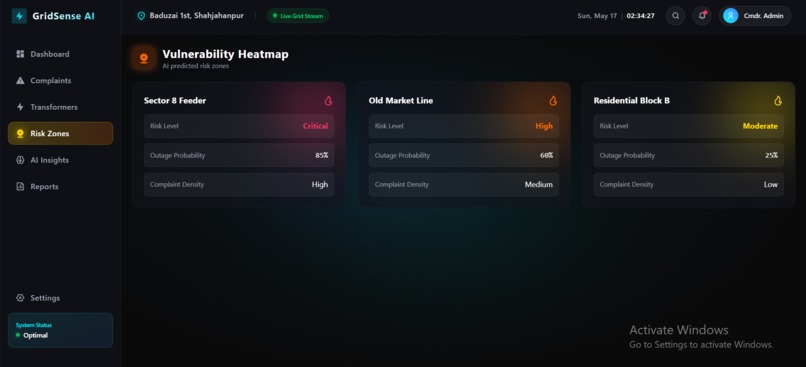
-
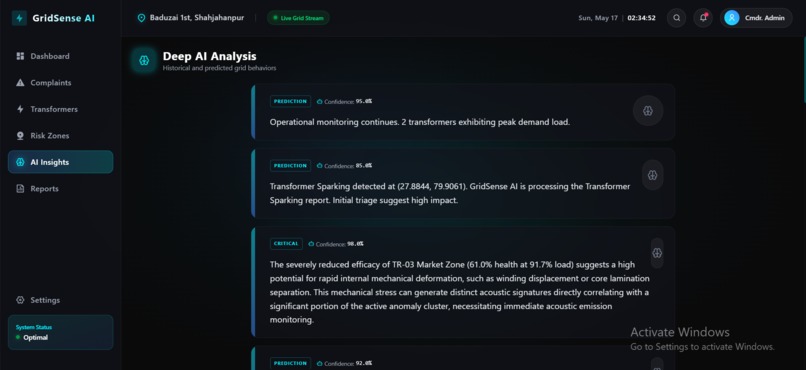
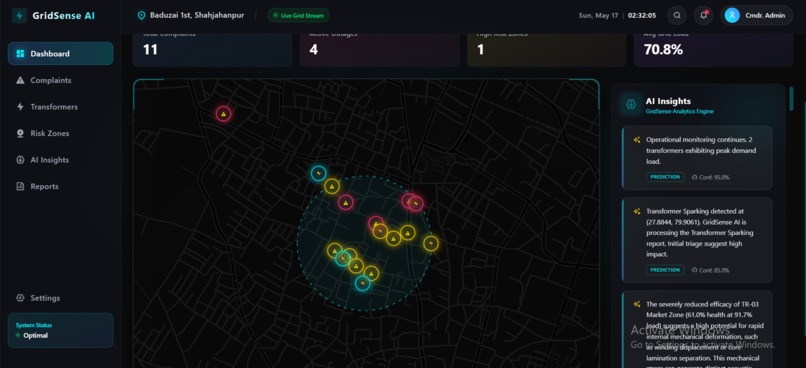
AI Insights
-
-
-
-
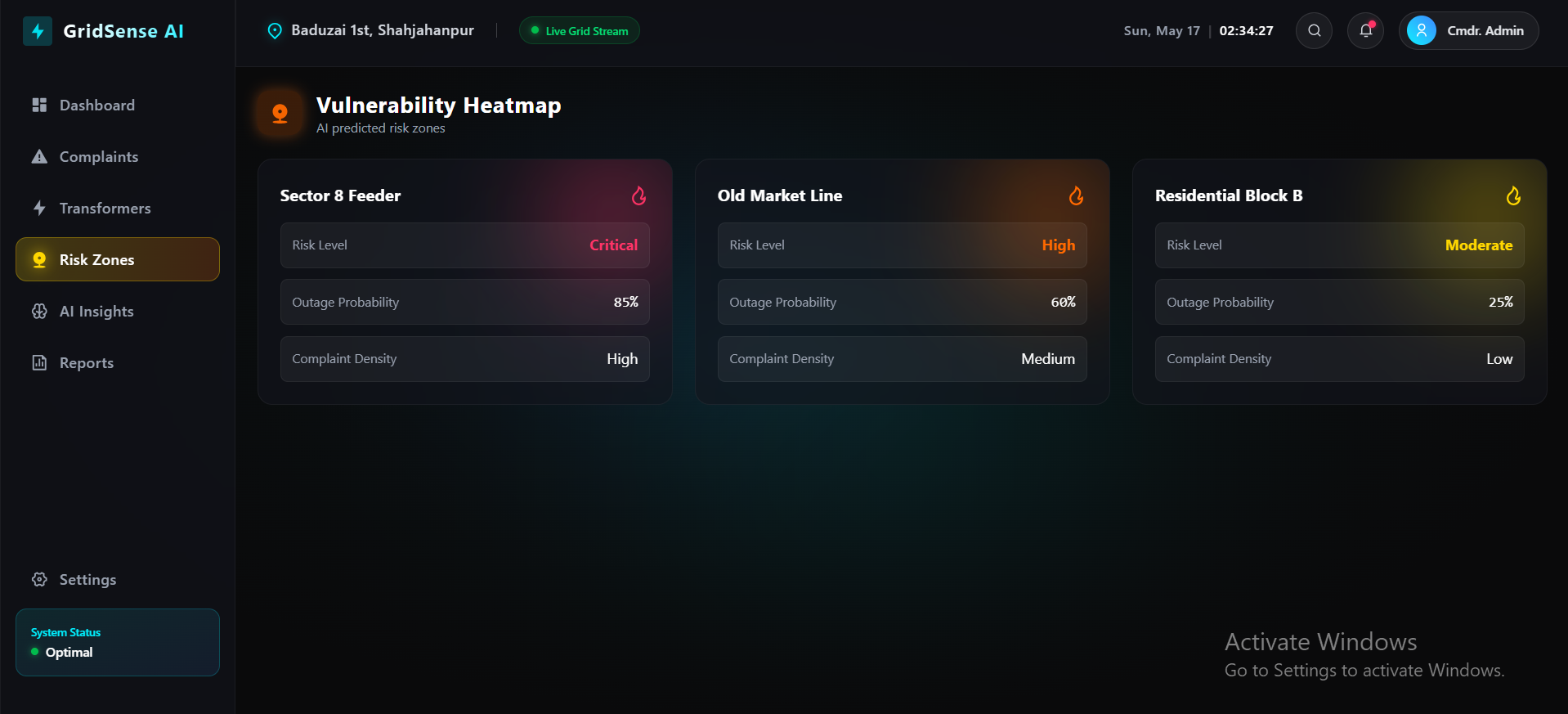
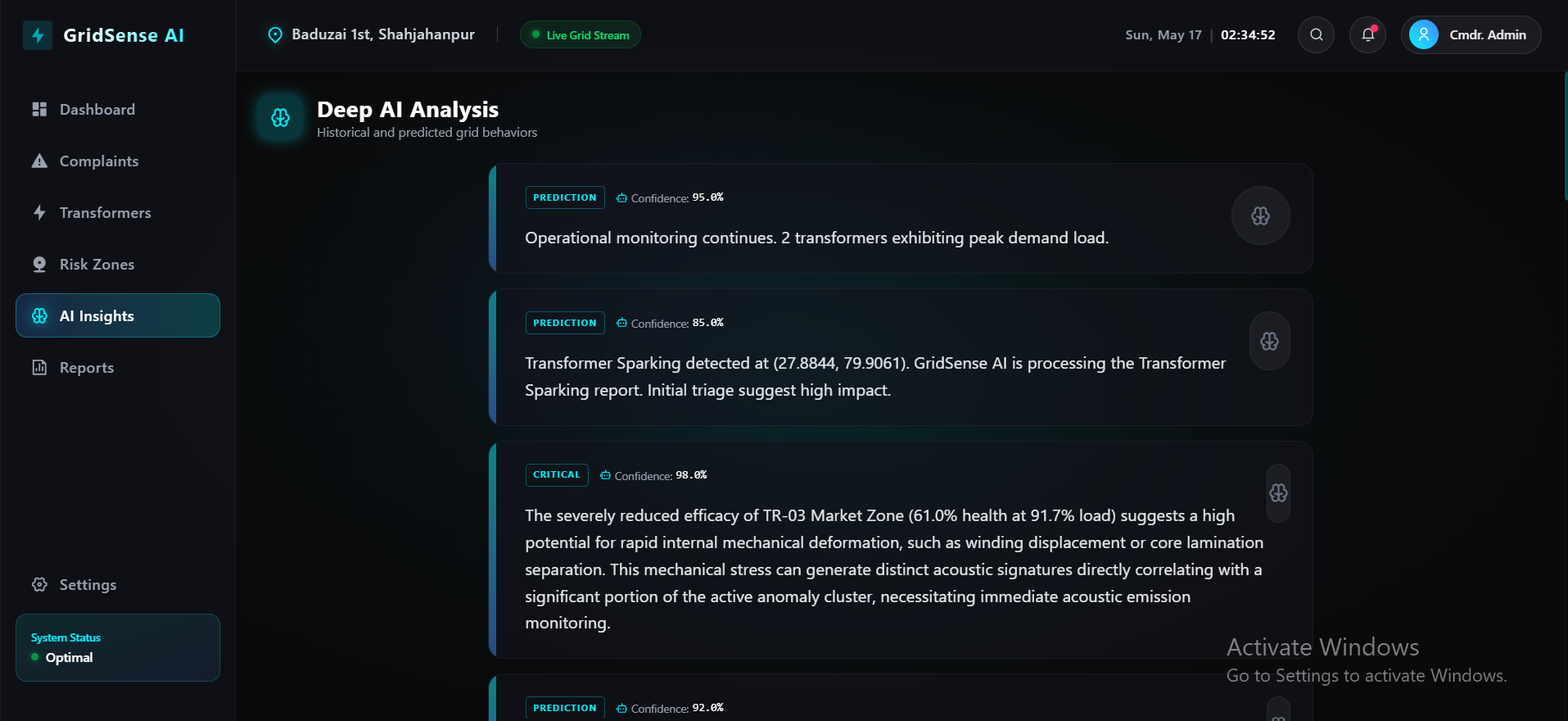
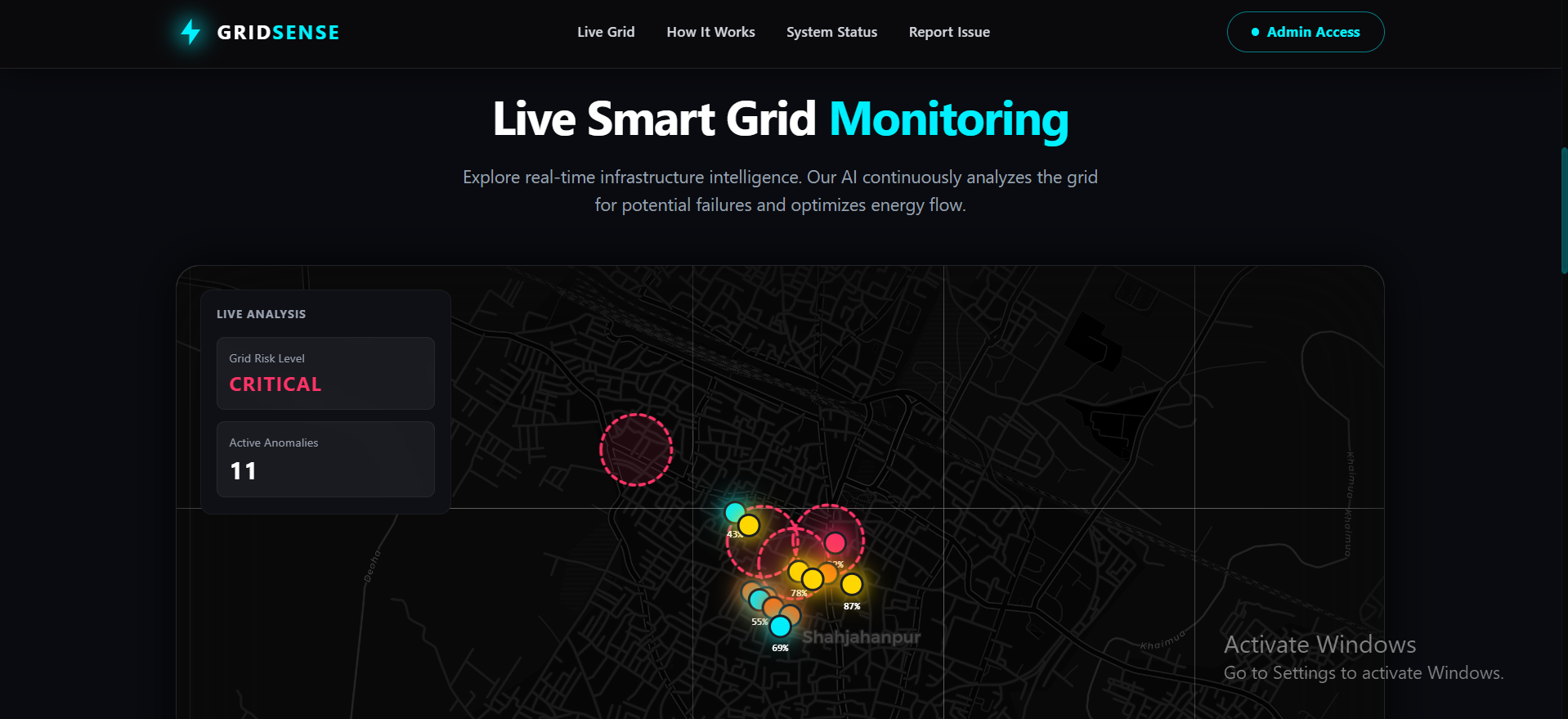
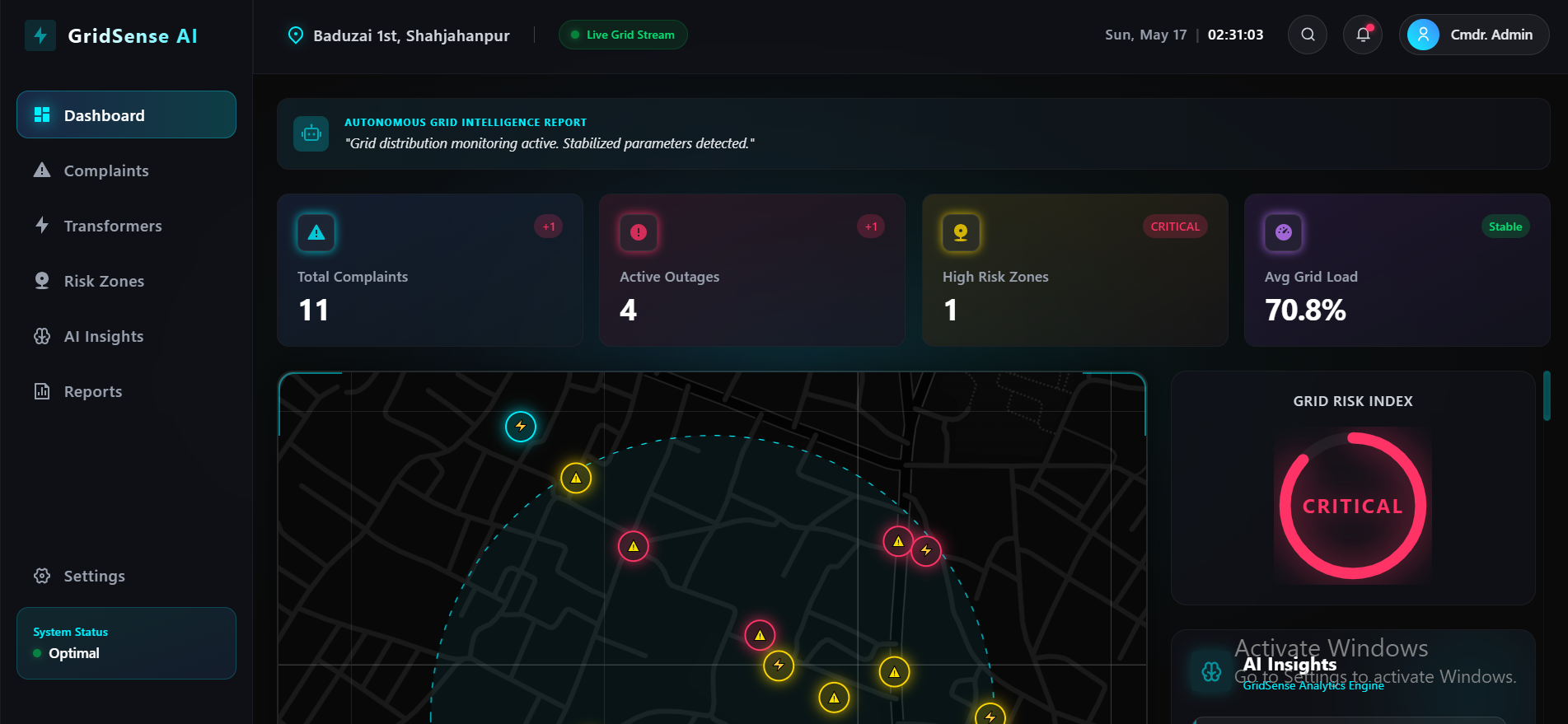
Inspiration
Power infrastructure issues are extremely common in many cities and local areas, especially in regions where transformer overload, voltage fluctuation, feeder imbalance, and delayed complaint resolution affect daily life. Most electricity complaint systems are still reactive and manual — citizens report problems, but there is very little operational intelligence behind the scenes.
We wanted to explore how AI could transform traditional electricity infrastructure monitoring into an autonomous operational intelligence platform.
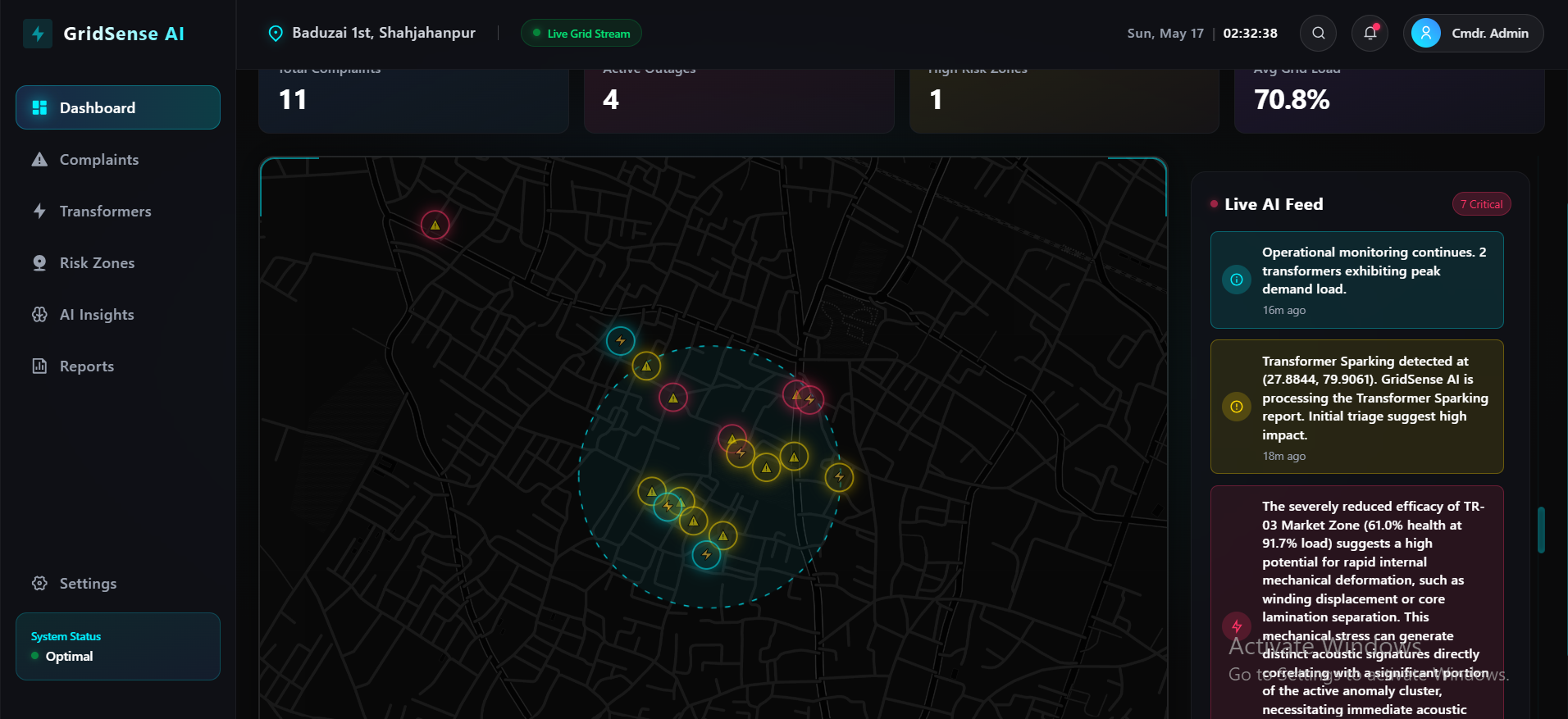
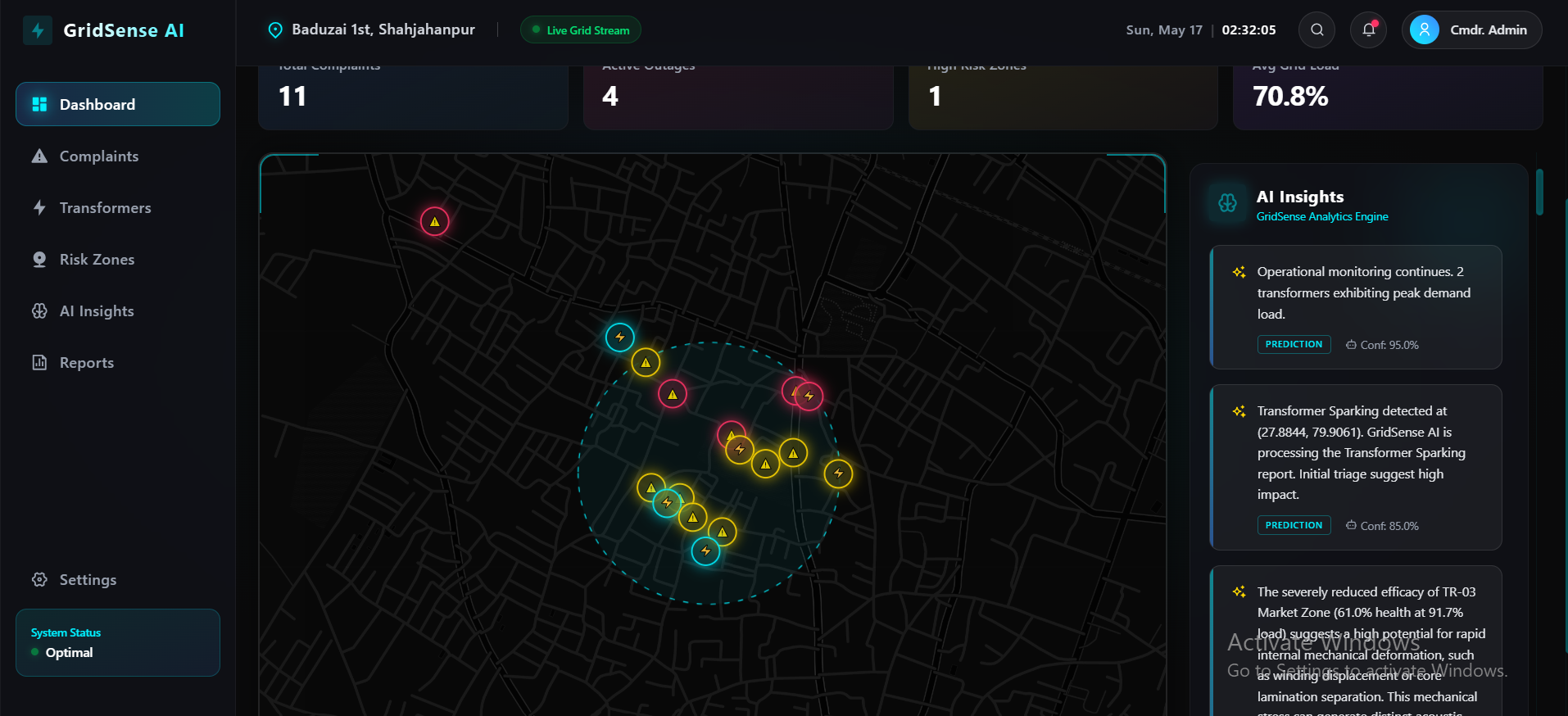
The idea behind GridSense AI was to simulate a smart-city electrical command center that continuously monitors transformer conditions, complaint density, outage trends, and infrastructure instability while using Gemini AI to generate predictive operational insights similar to enterprise utility monitoring systems.
Instead of building just another complaint management portal, we wanted to build a living AI-powered infrastructure intelligence engine.
What it does
GridSense AI is an AI-powered smart grid monitoring and operational intelligence platform.
The system provides:
- Real-time electrical complaint reporting
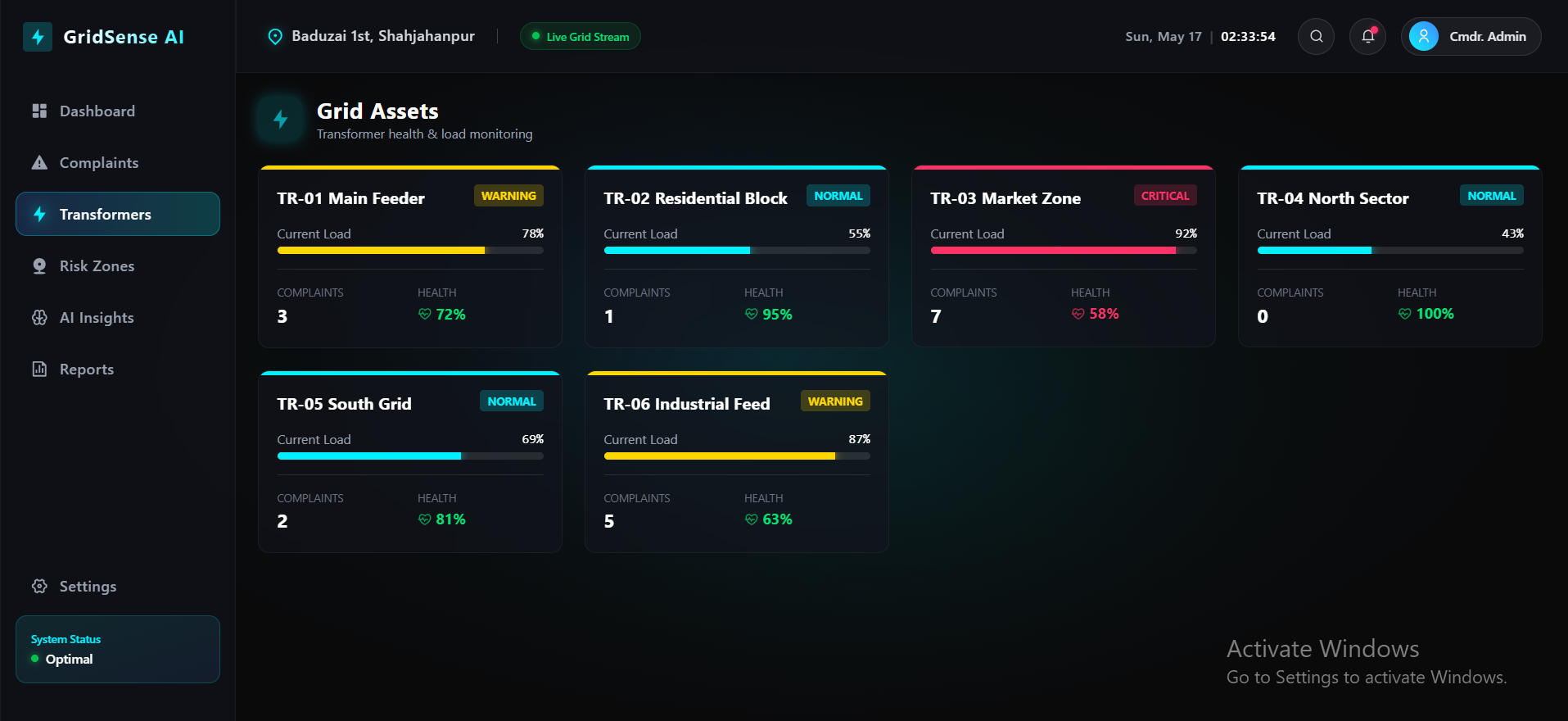
- Transformer monitoring
- AI-powered infrastructure analysis
- Autonomous operational intelligence generation
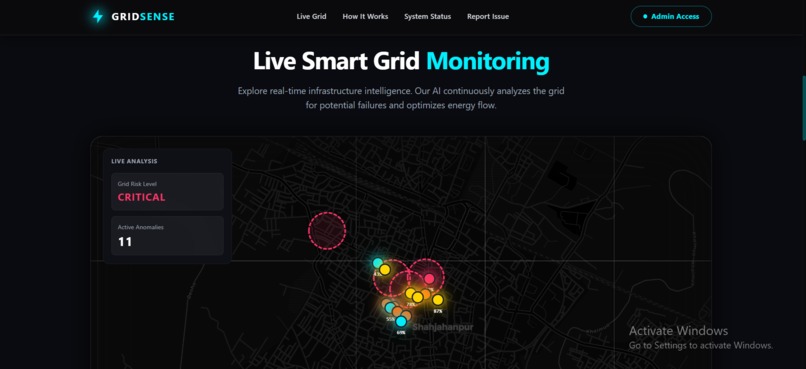
- Risk zone monitoring
- Predictive maintenance insights
- Outage trend analysis
- Load instability detection
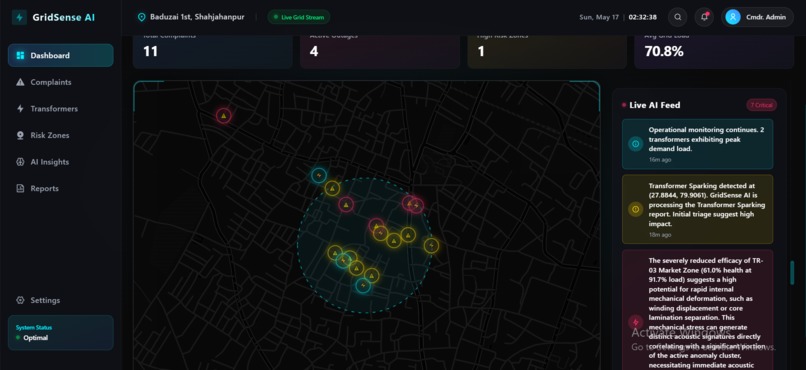
- Live AI operational feed
Citizens can submit electrical complaints such as:
- Power outages
- Voltage fluctuations
- Transformer sparking
- Overload issues
- Distribution instability
Once submitted, the backend uses Gemini AI to analyze:
- complaint severity
- transformer load
- historical complaint clustering
- outage density
- feeder imbalance
- operational risk escalation
The platform then generates contextual infrastructure intelligence such as:
- transformer overload predictions
- preventive maintenance recommendations
- outage propagation warnings
- feeder instability analysis
- grid recovery updates
GridSense AI also includes an autonomous AI monitoring engine that continuously analyzes the entire simulated grid every few minutes, even if no new complaint is submitted.
How we built it
Frontend
We built the frontend using:
- React
- Vite
- Tailwind CSS
- React Router
- Framer Motion
- Leaflet Maps
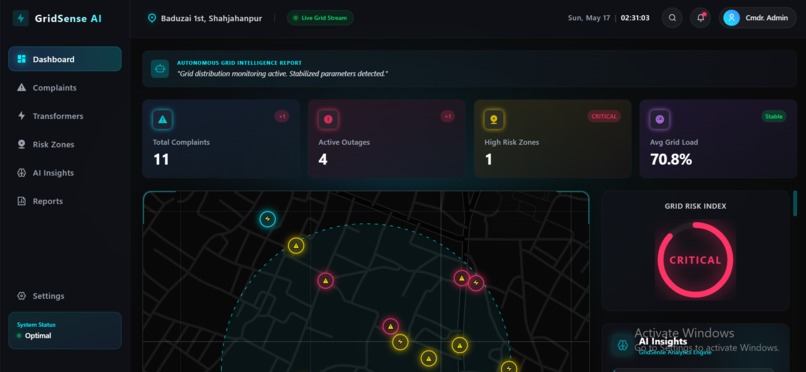
The UI was designed as a futuristic dark-themed smart-grid command center with:
- live dashboard analytics
- animated operational cards
- AI intelligence feeds
- transformer visualization
- public complaint portal
- operational monitoring pages
Backend
We built the backend using:
- FastAPI
- SQLite
- SQLAlchemy
- APScheduler
- Pydantic
The backend handles:
- complaint storage
- transformer state management
- AI insight generation
- autonomous scheduling
- operational analytics
- dashboard APIs
AI Integration
We integrated Google's Gemini API using:
- Gemini 2.5 Flash
Gemini acts as the operational intelligence engine of the platform.
The AI analyzes:
- transformer loads
- complaint density
- historical outages
- voltage instability
- operational risk escalation
- infrastructure degradation
We also implemented:
- AI memory buffering
- deduplication systems
- state hashing
- request throttling
- autonomous background intelligence cycles
to create a more realistic enterprise-style monitoring environment.
Challenges we ran into
One of the biggest challenges was preventing repetitive AI outputs.
Initially, the system generated repetitive template-based alerts like: "Power outage detected. Automated routing initiated."
To solve this, we redesigned the AI architecture using:
- contextual memory
- operational history
- semantic deduplication
- infrastructure-aware prompts
- rotating intelligence categories
Another major challenge was API quota management.
Because the autonomous scheduler continuously generated insights, we quickly encountered Gemini API rate limits and 429 errors.
We solved this by implementing:
- request throttling
- exponential backoff
- state comparison hashing
- cooldown logic
- cached intelligence reuse
We also faced challenges designing the frontend architecture because the platform required both:
- a public citizen-facing portal
- an enterprise-style operational dashboard
while maintaining a consistent futuristic UI experience.
Accomplishments that we're proud of
We are proud that GridSense AI evolved from a simple complaint system into a fully autonomous infrastructure intelligence platform.
Some accomplishments include:
- Building a complete full-stack AI system from scratch
- Creating an autonomous AI monitoring engine
- Integrating Gemini AI into operational workflows
- Designing a futuristic smart-grid dashboard
- Implementing AI memory and deduplication systems
- Simulating enterprise-style infrastructure monitoring
- Creating live operational intelligence feeds
- Building transformer-aware predictive analysis
- Implementing real-time dashboard synchronization
We are especially proud of how the AI system now generates contextual infrastructure reasoning instead of static chatbot-style responses.
What we learned
This project taught us that AI becomes significantly more powerful when combined with operational context rather than used only as a chatbot.
We learned:
- FastAPI backend architecture
- autonomous scheduling systems
- AI prompt engineering
- frontend-backend synchronization
- operational intelligence design
- API optimization techniques
- rate-limit handling
- state-based monitoring systems
- smart-grid infrastructure concepts
We also learned that creating realistic AI systems requires:
- memory
- contextual reasoning
- deduplication
- operational continuity
rather than simple one-time prompts.
What's next for GridSense AI
Future plans for GridSense AI include:
- WebSocket-based real-time synchronization
- GIS heatmap visualization
- Weather-aware outage prediction
- IoT transformer telemetry integration
- Role-based operational access
- Cloud deployment
- Mobile application support
- ML-based anomaly scoring
- Real transformer analytics
- Smart maintenance scheduling
- Infrastructure resilience scoring
- Historical outage forecasting
- AI-powered energy optimization
We also plan to integrate real-world electrical infrastructure datasets to make the platform even closer to actual smart-city utility monitoring systems.

Log in or sign up for Devpost to join the conversation.