-
-
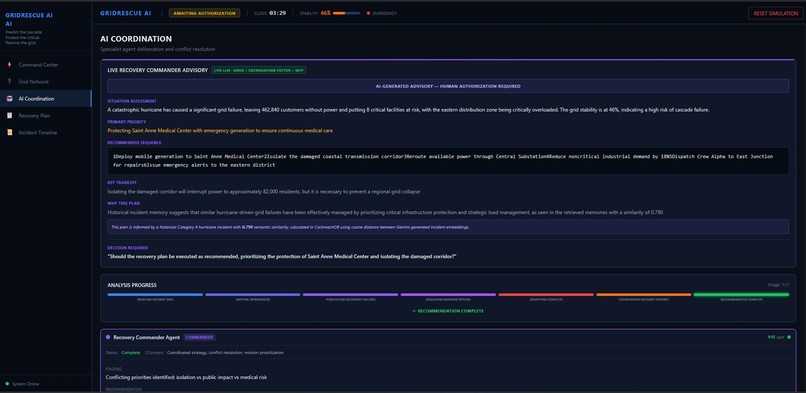
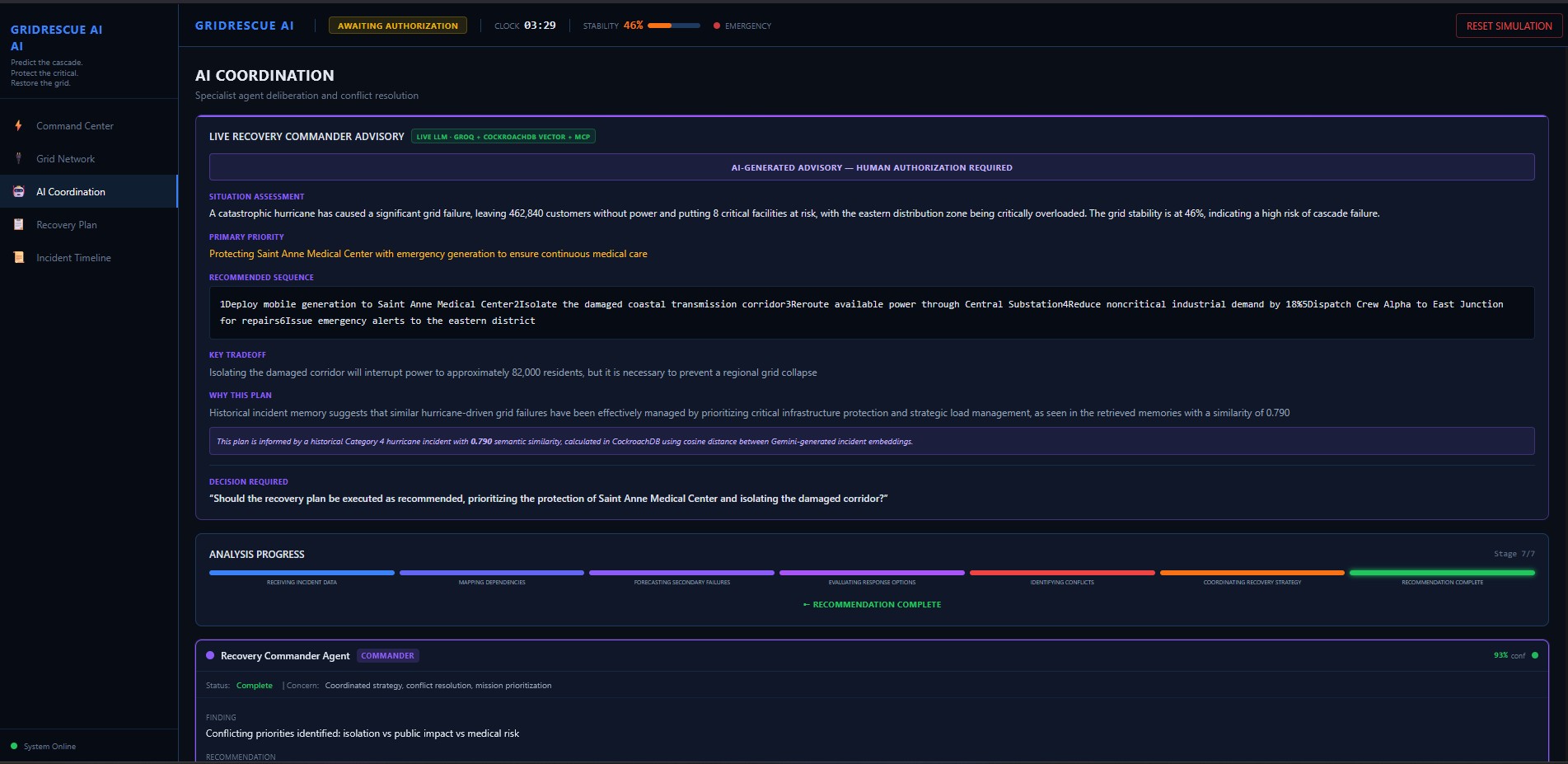
AI Coordination with Recovery Commander
-
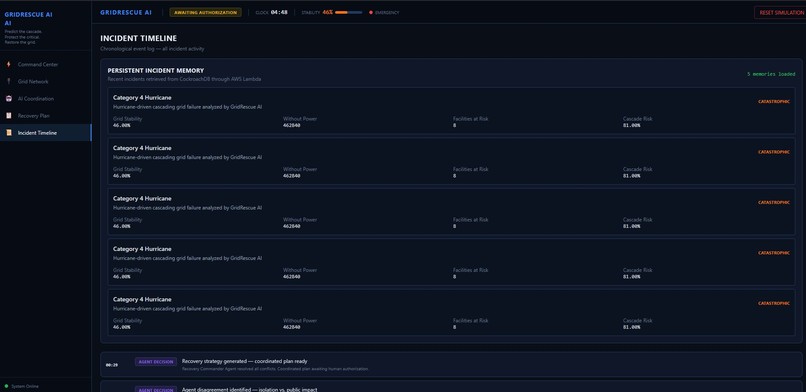
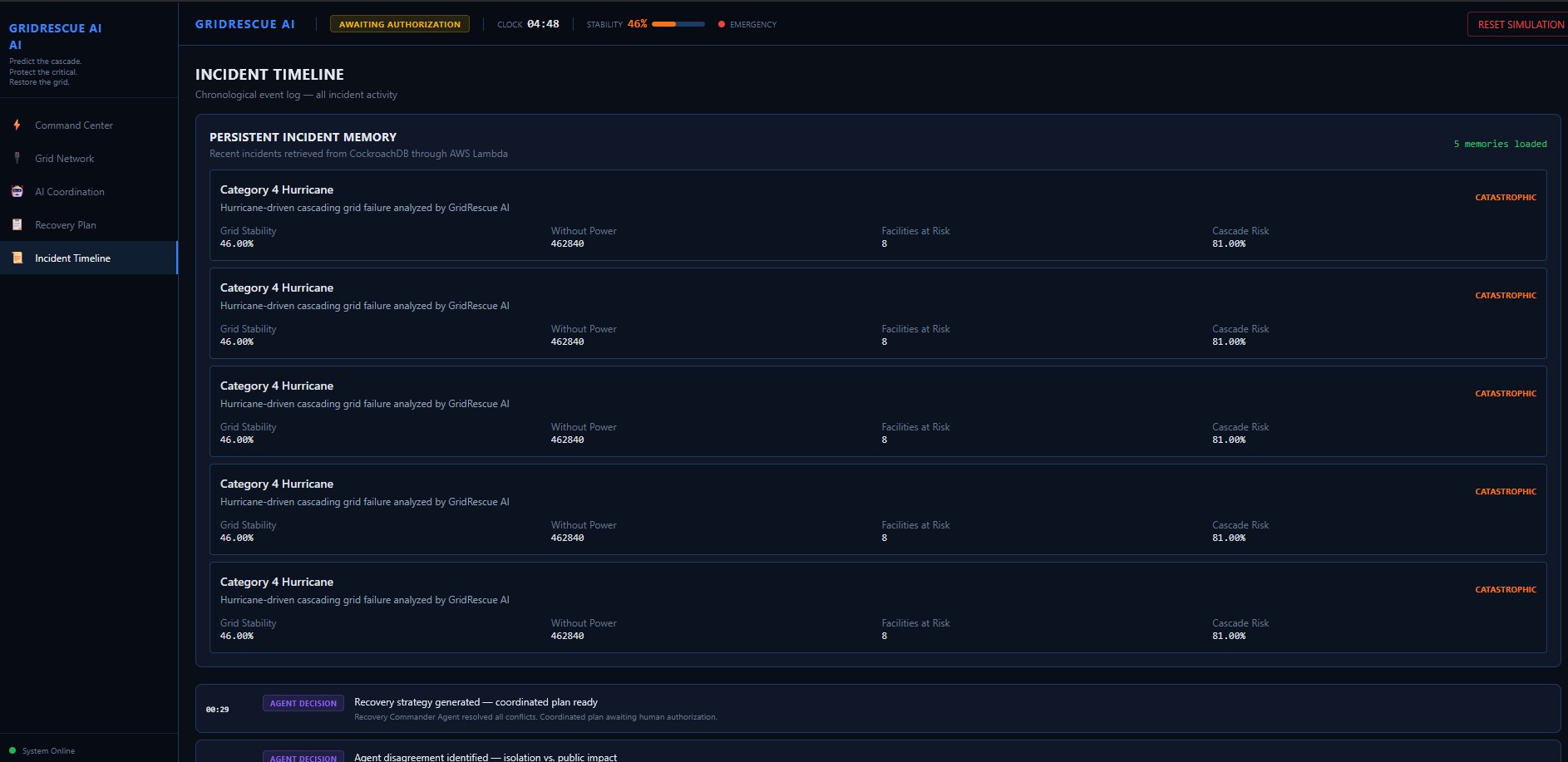
Incident Timeline showing persistent memory
-
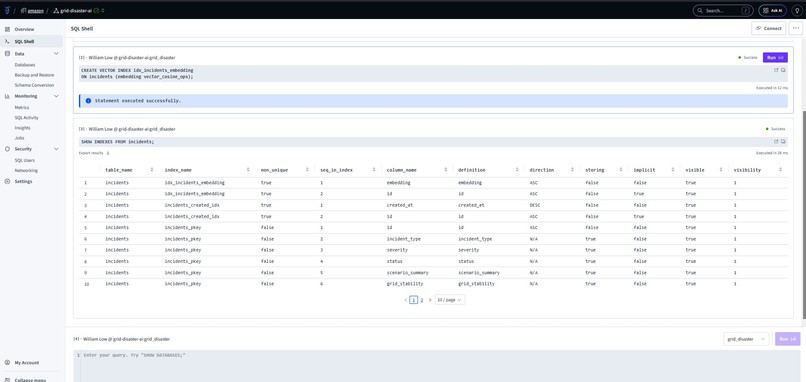
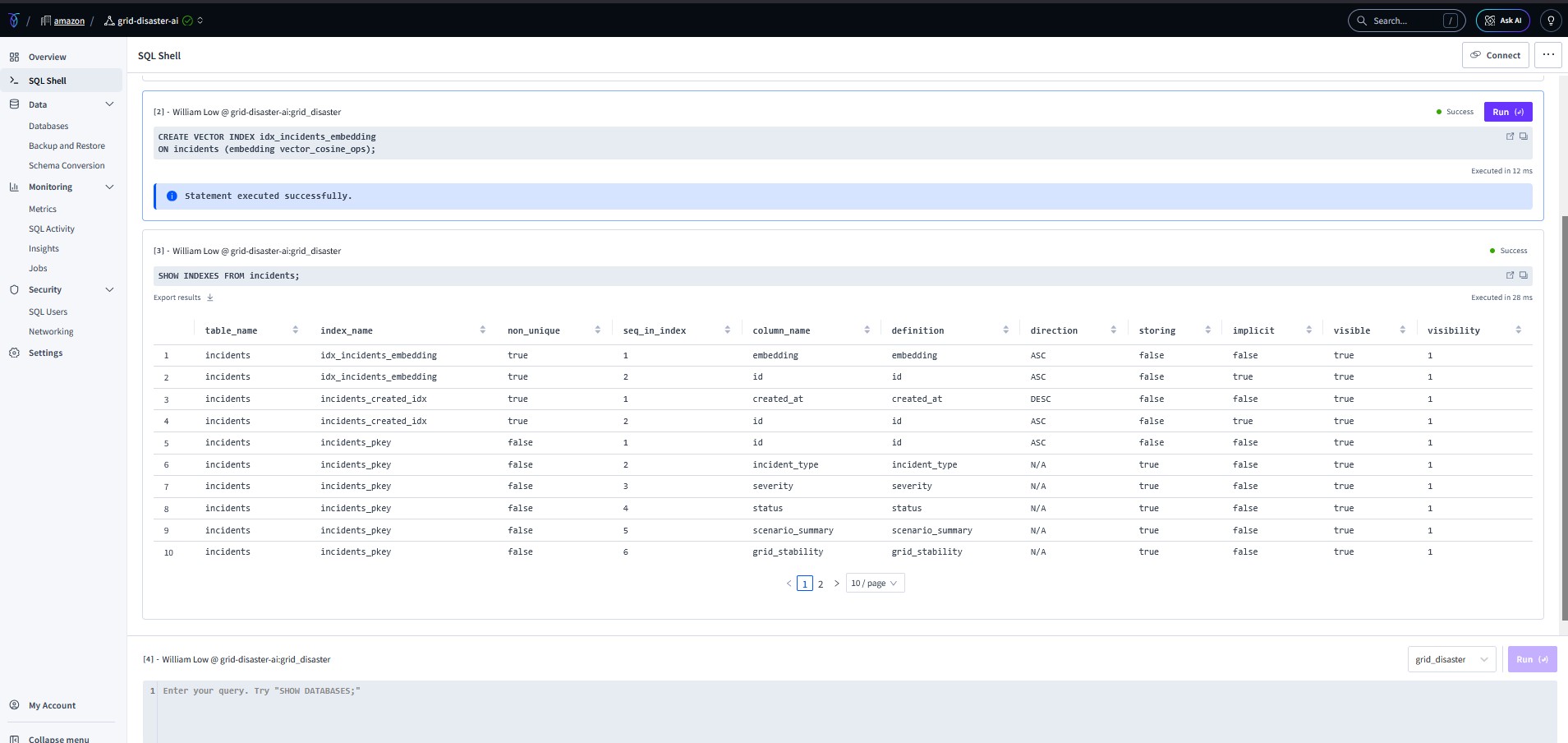
CockroachDB vector-index proof
-
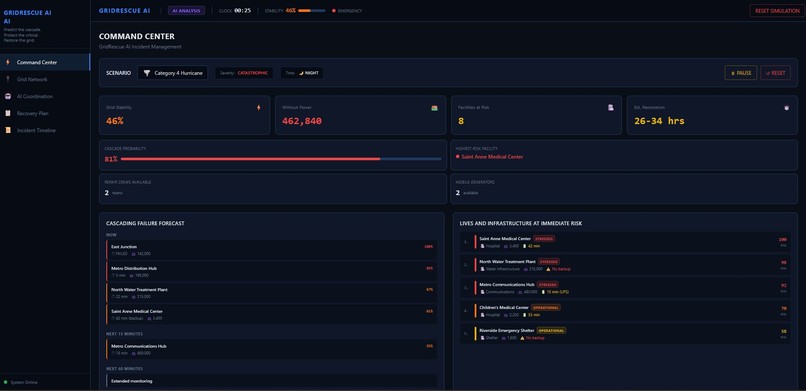
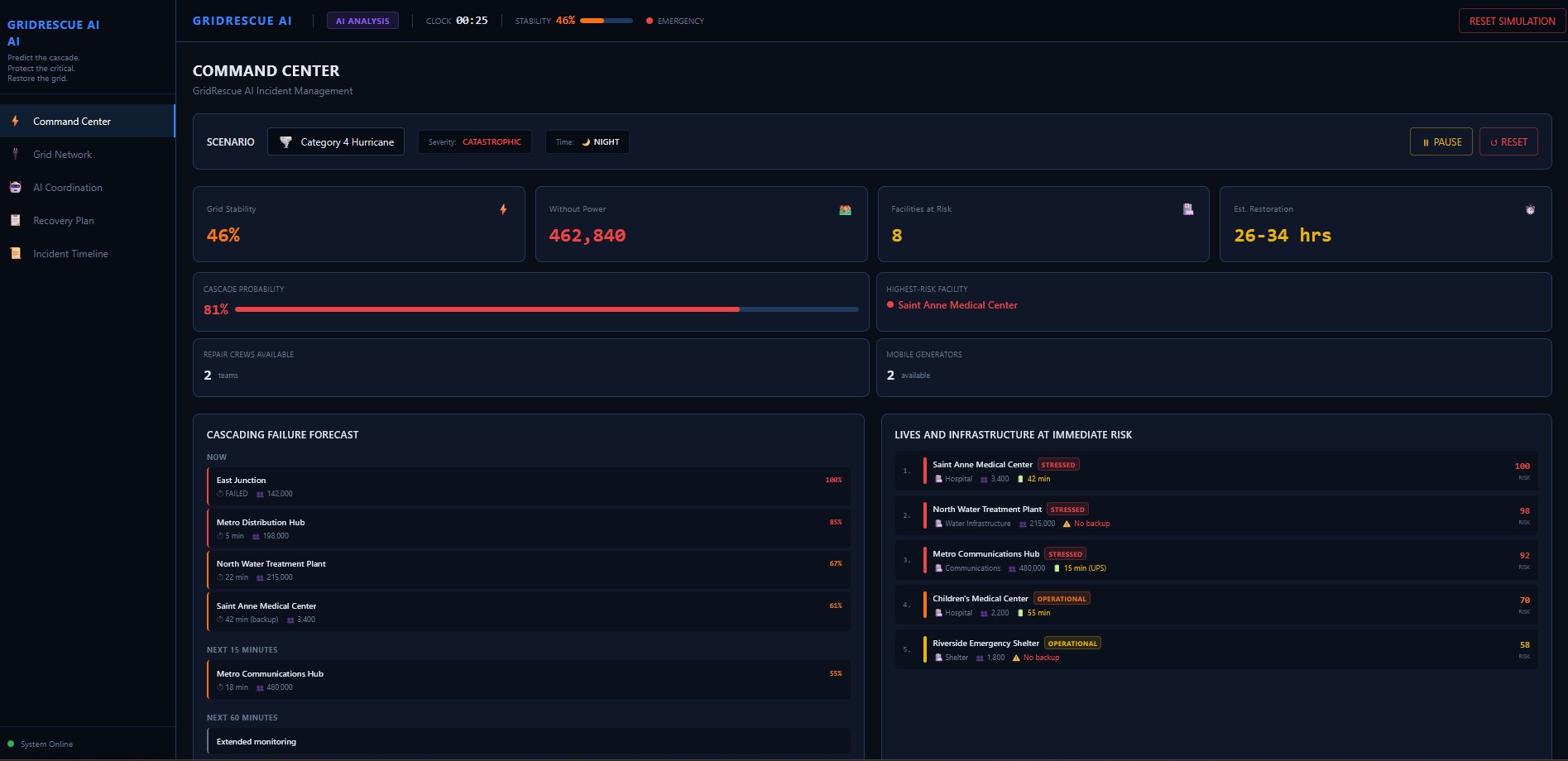
Command Center - hurricane scenario
-
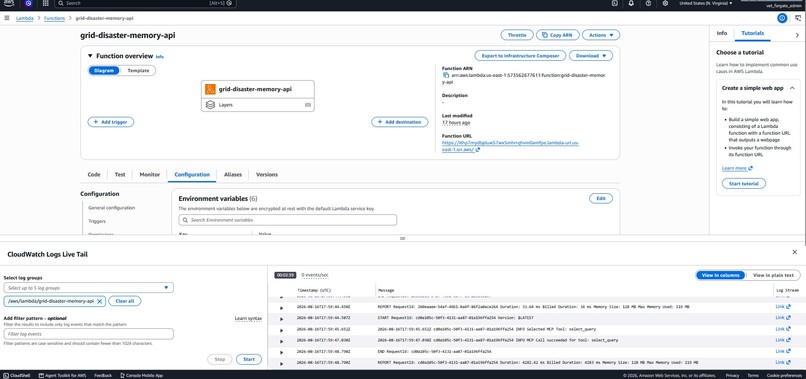
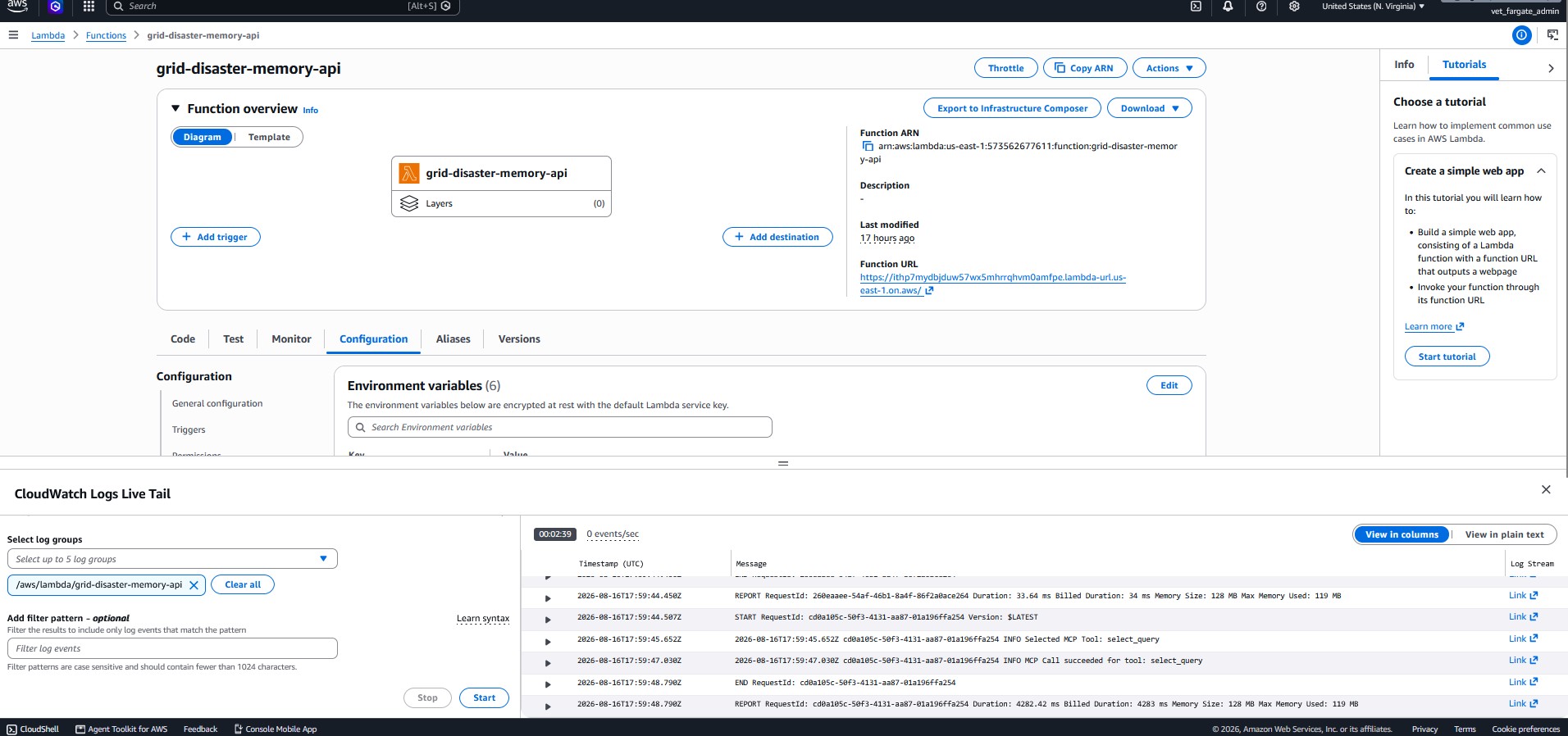
CloudWatch MCP-success proof
Inspiration
Grid failures during extreme weather and disasters can create cascading problems for communities, emergency responders, hospitals, transportation systems, and critical infrastructure. I wanted to build an AI system that could help analyze these situations quickly while also remembering what happened during previous incidents.
GridRescue AI was inspired by the idea that an AI emergency-response system should not start from zero every time. It should be able to retain useful operational knowledge and use that memory to improve future recommendations.
What it does
GridRescue AI is an agentic AI decision-support system for electrical-grid disaster response.
The system analyzes incident information, identifies risks, and generates recommended actions for mitigation and recovery. It is designed around multiple AI-driven components that can work together to evaluate a developing emergency.
GridRescue AI also uses persistent memory, allowing incident data, observations, recommendations, and previous decisions to be stored and retrieved later. This allows the system to use past operational context when responding to new events.
How we built it
GridRescue AI combines agentic AI, AWS Lambda, Python, and CockroachDB.
AWS Lambda provides the cloud execution layer for the application. The Lambda function communicates with CockroachDB, which acts as the persistent data and memory layer.
During development, I successfully tested the end-to-end architecture by invoking the AWS Lambda function and inserting incident information into CockroachDB.
The architecture allows AI agents to generate observations and recommendations while important information can be stored as durable operational memory rather than disappearing after each AI interaction.
Challenges we ran into
One of the biggest challenges was connecting the different parts of the cloud architecture reliably.
The application needed to coordinate AWS Lambda execution, Python application logic, CockroachDB connectivity, AI reasoning, and persistent memory.
Another challenge was deciding what information should actually be stored as memory. Saving everything generated by an AI system can create unnecessary noise, so the system focuses on useful information such as incidents, decisions, recommendations, and operational context.
Accomplishments that we're proud of
One of the main accomplishments was successfully creating and testing the connection between AWS Lambda and CockroachDB.
The project was able to execute cloud-based application logic and persist incident data in the database.
I am also proud that GridRescue AI goes beyond being a simple chatbot. It demonstrates the foundation of an AI system that can reason about incidents, preserve operational knowledge, and reuse that knowledge in future situations.
The project combines AI agents, cloud computing, persistent databases, and disaster-response concepts into a single working architecture.
What we learned
This project demonstrated how important persistent memory can be for agentic AI systems.
LLMs are powerful at reasoning, but without an external memory system they normally treat each interaction as largely independent. By connecting an AI application to CockroachDB, useful information can survive beyond a single session.
I also gained practical experience integrating AWS Lambda with CockroachDB and building an architecture where cloud-based AI components can read and write persistent operational information.
What's next for GridRescue AI
he next version of GridRescue AI could expand the system with:
Real-time weather and disaster data Live electrical-grid and outage information Geographic visualization of affected infrastructure Additional specialized AI agents Semantic and vector-based memory retrieval Confidence and risk scoring Human approval workflows for critical recommendations Restoration-priority optimization Analysis of previous incident outcomes
The long-term goal is to evolve GridRescue AI into a human-governed AI incident-command copilot that helps operators respond faster while learning from previous emergencies.
Built With
- agentic
- amazon-web-services
- aws-lambda
- cloud-computing
- cockroachdb
- llm
- persistent-memory
- python
- rest-api

Log in or sign up for Devpost to join the conversation.