Inspiration
Rooftop solar can produce more electricity than a household needs at one time, while nearby homes may still rely on grid energy. We wanted to explore what local energy sharing could look like if households could discover surplus nearby and coordinate around transparent prices.
What it does
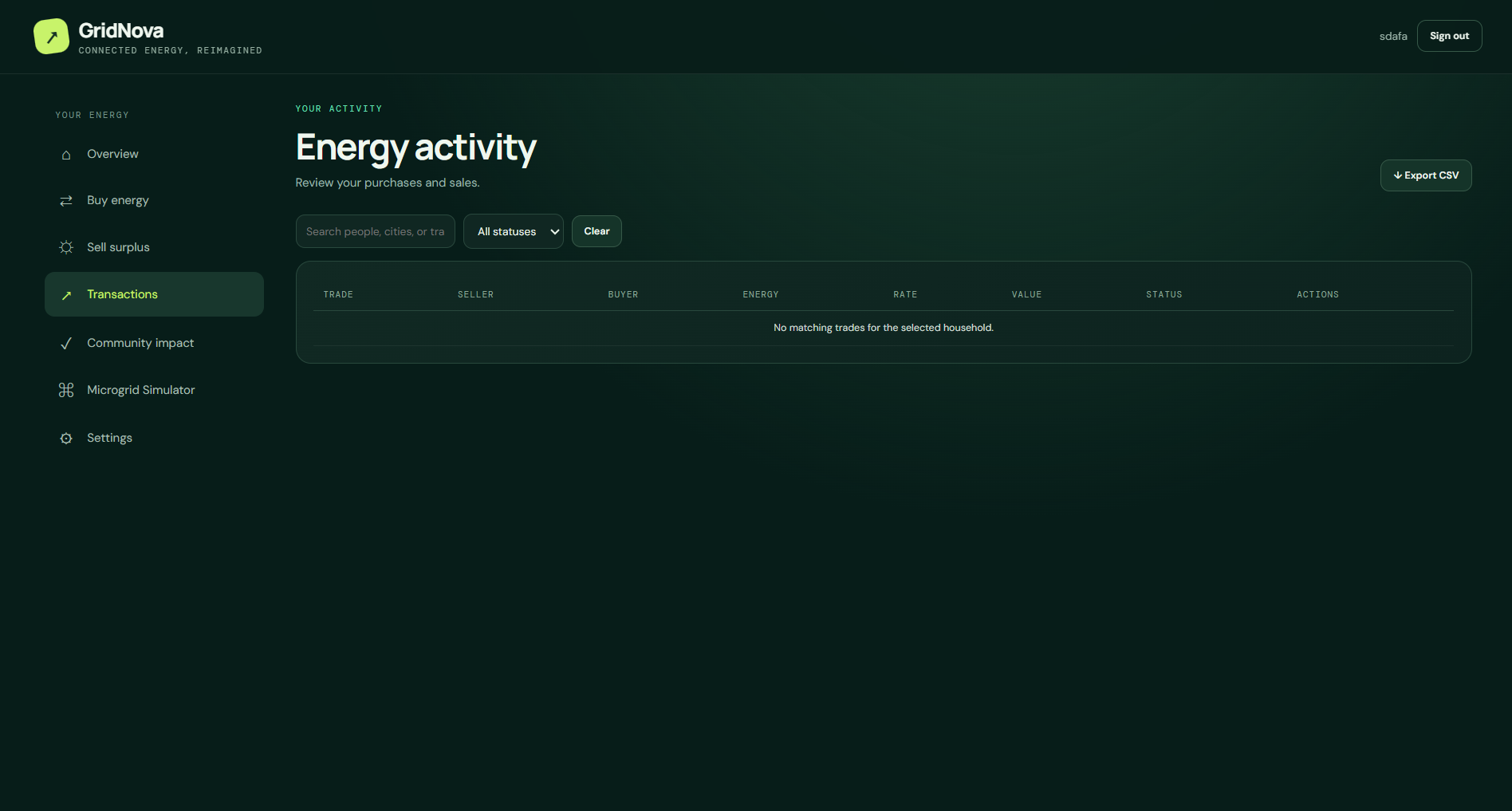
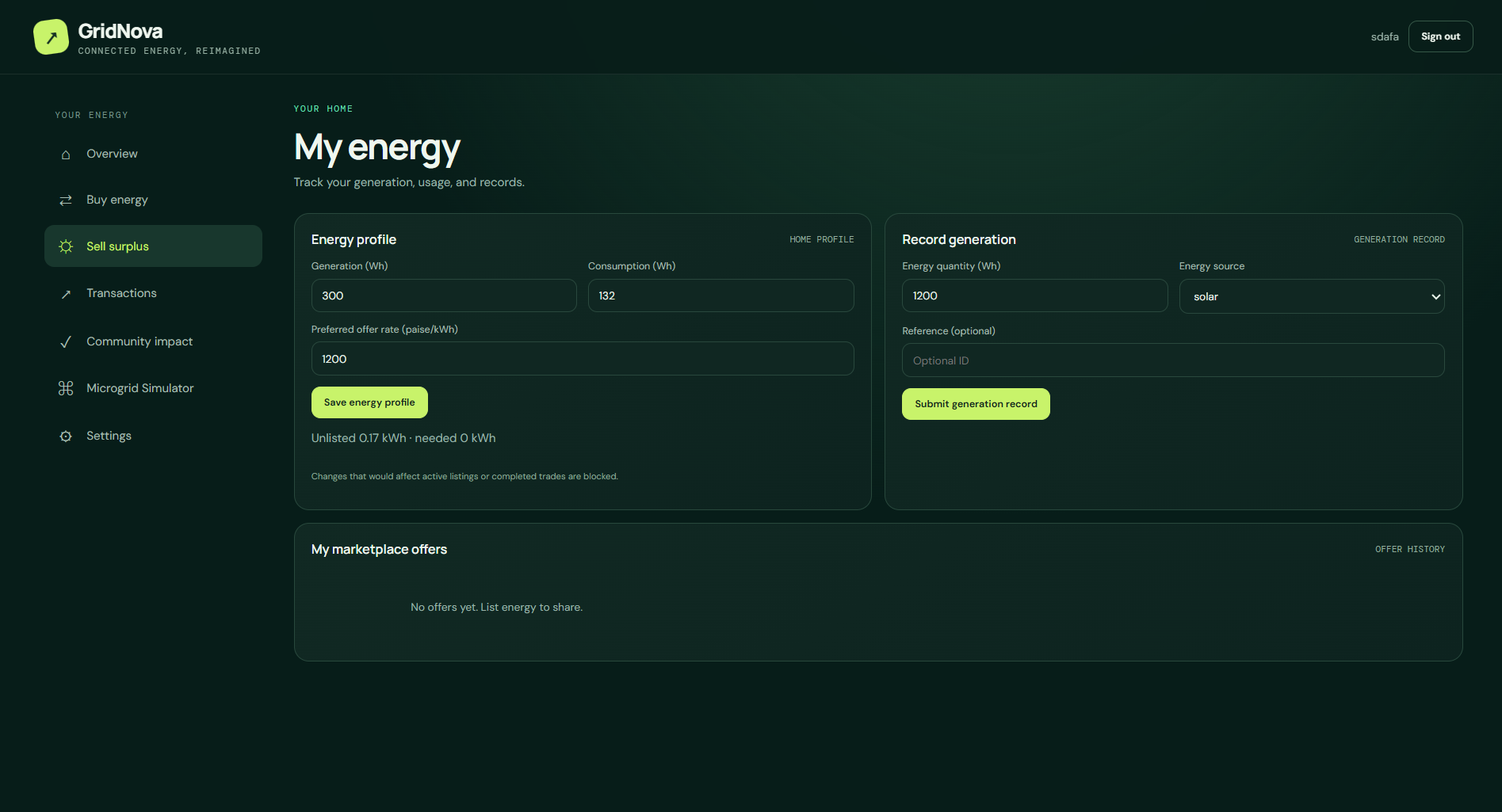
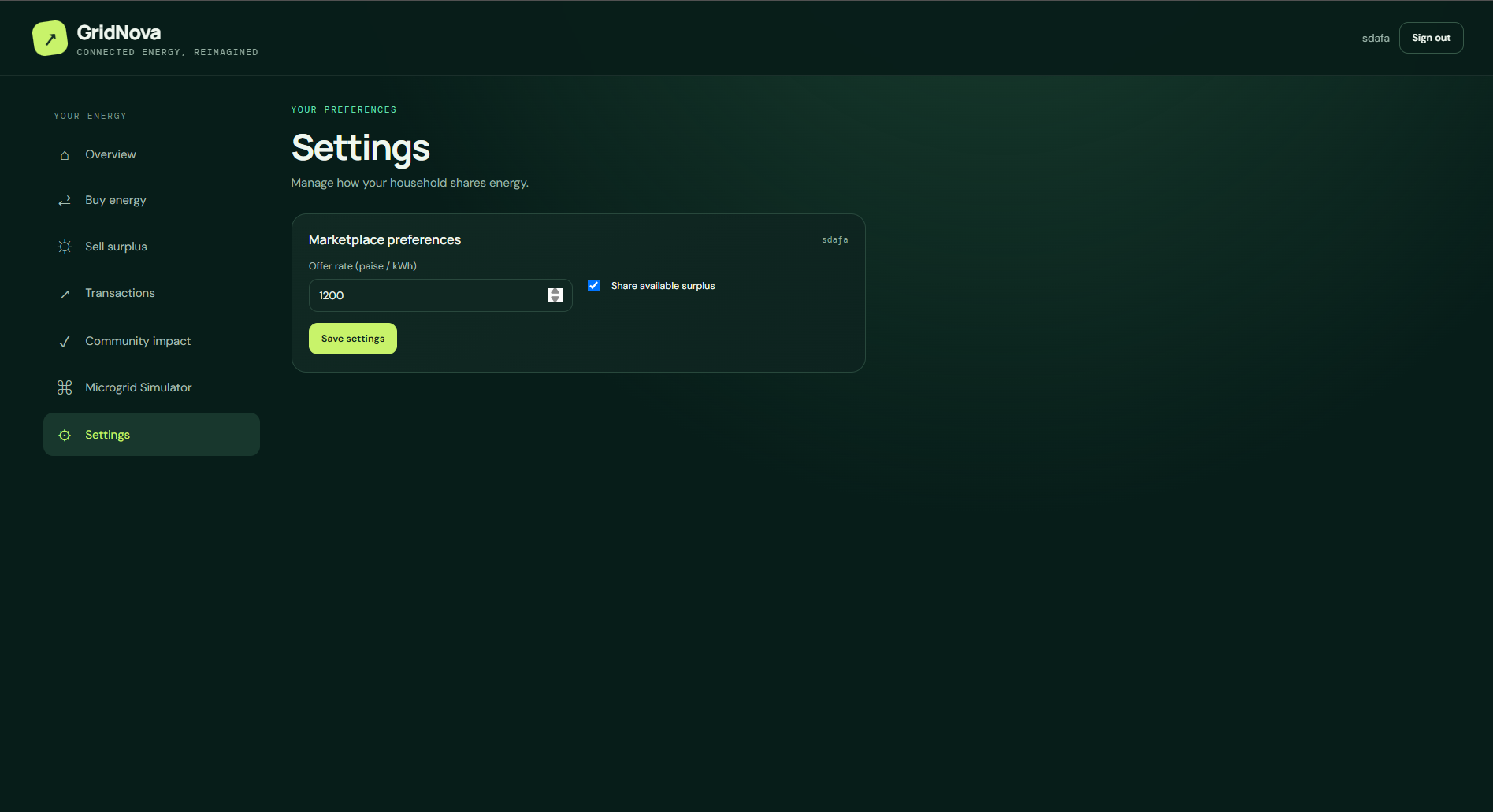
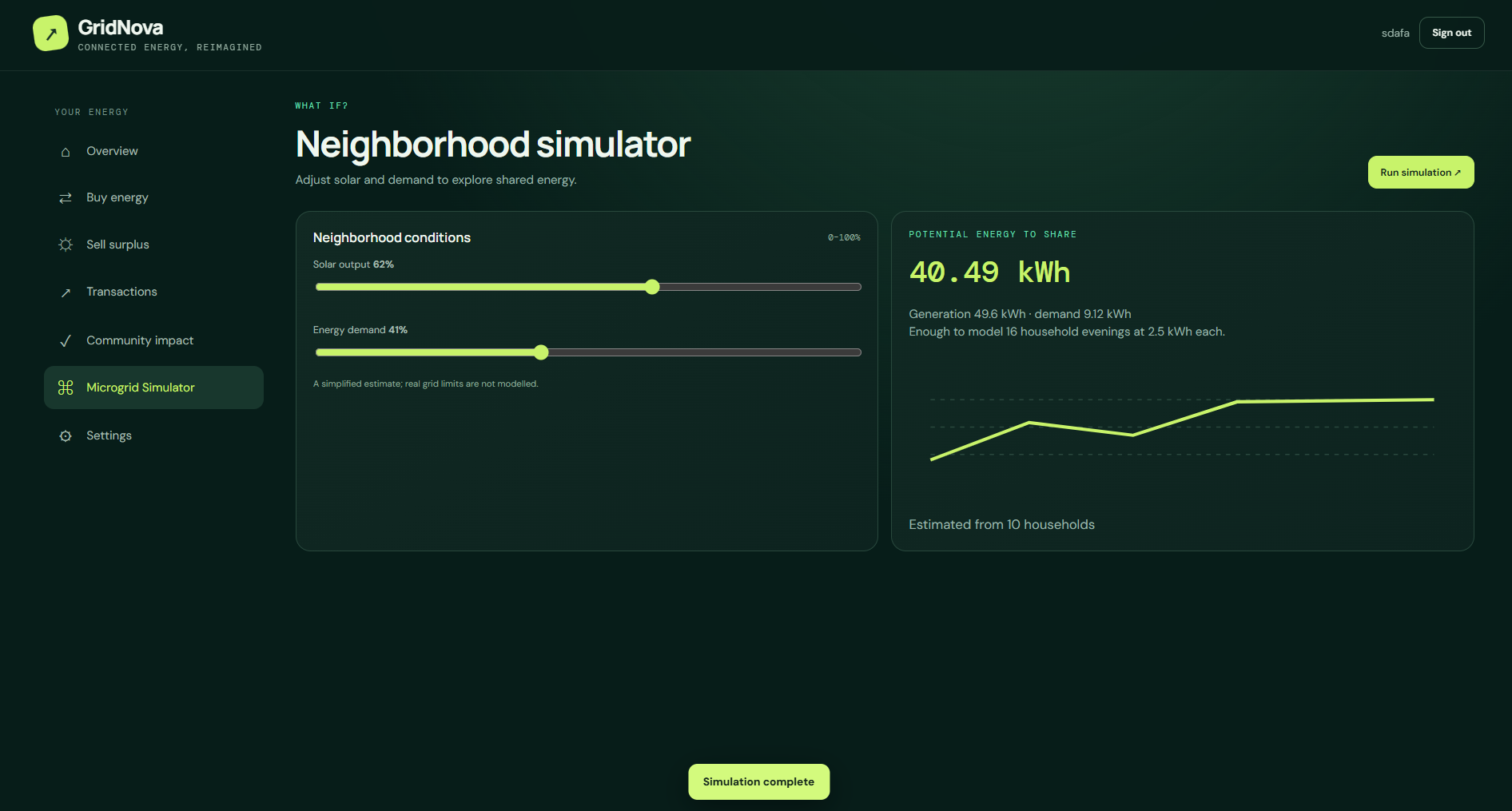
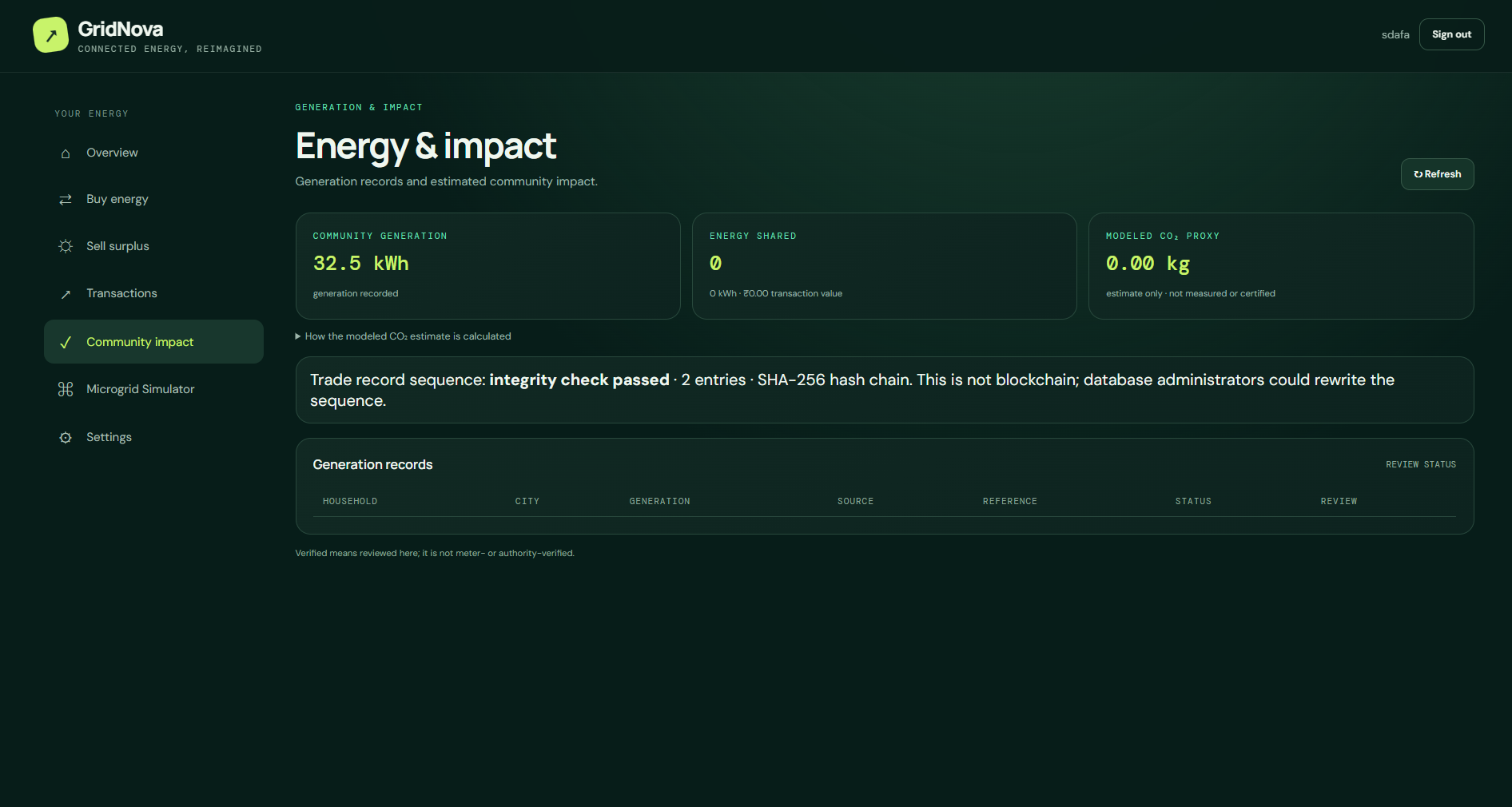
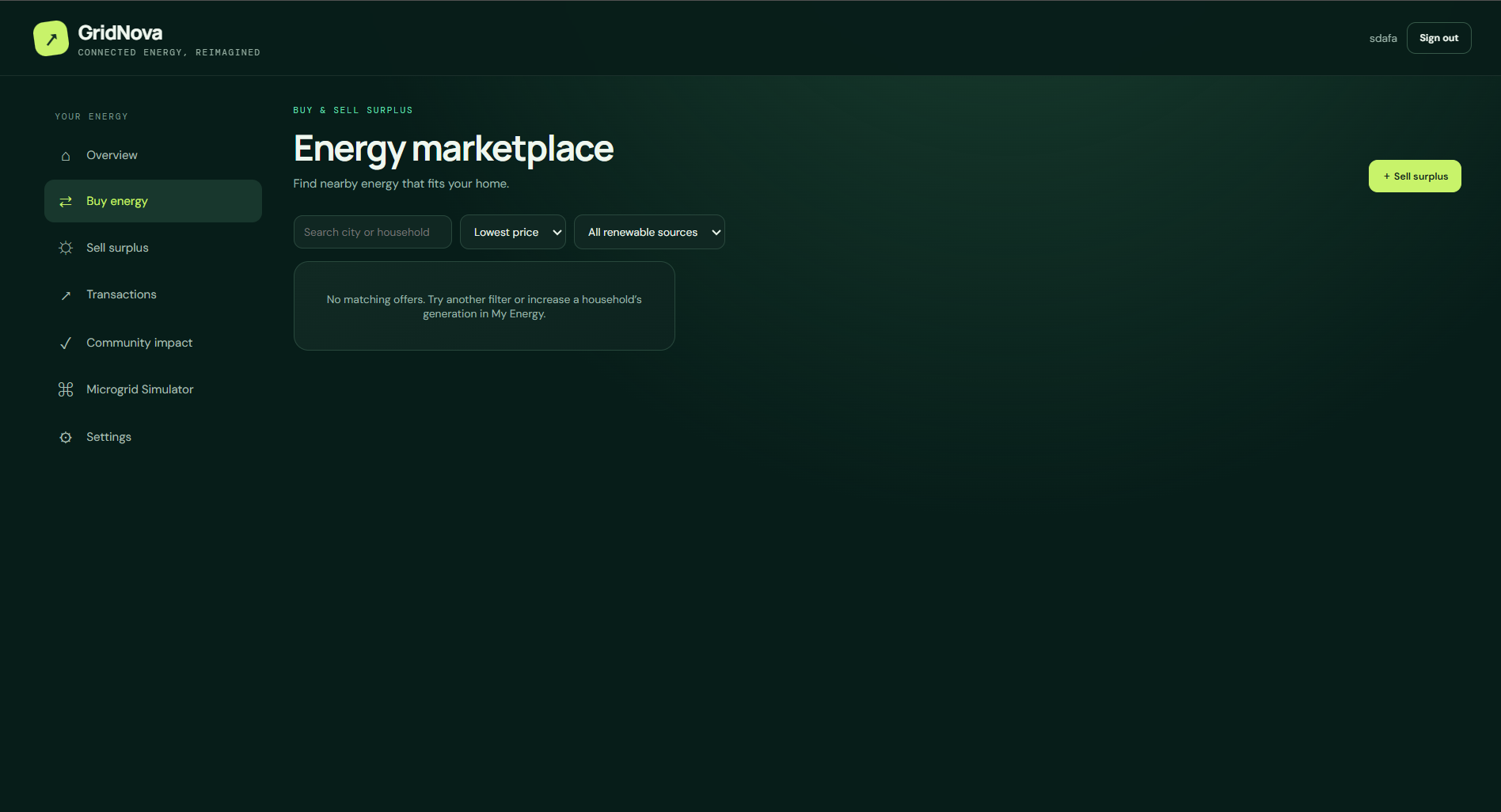
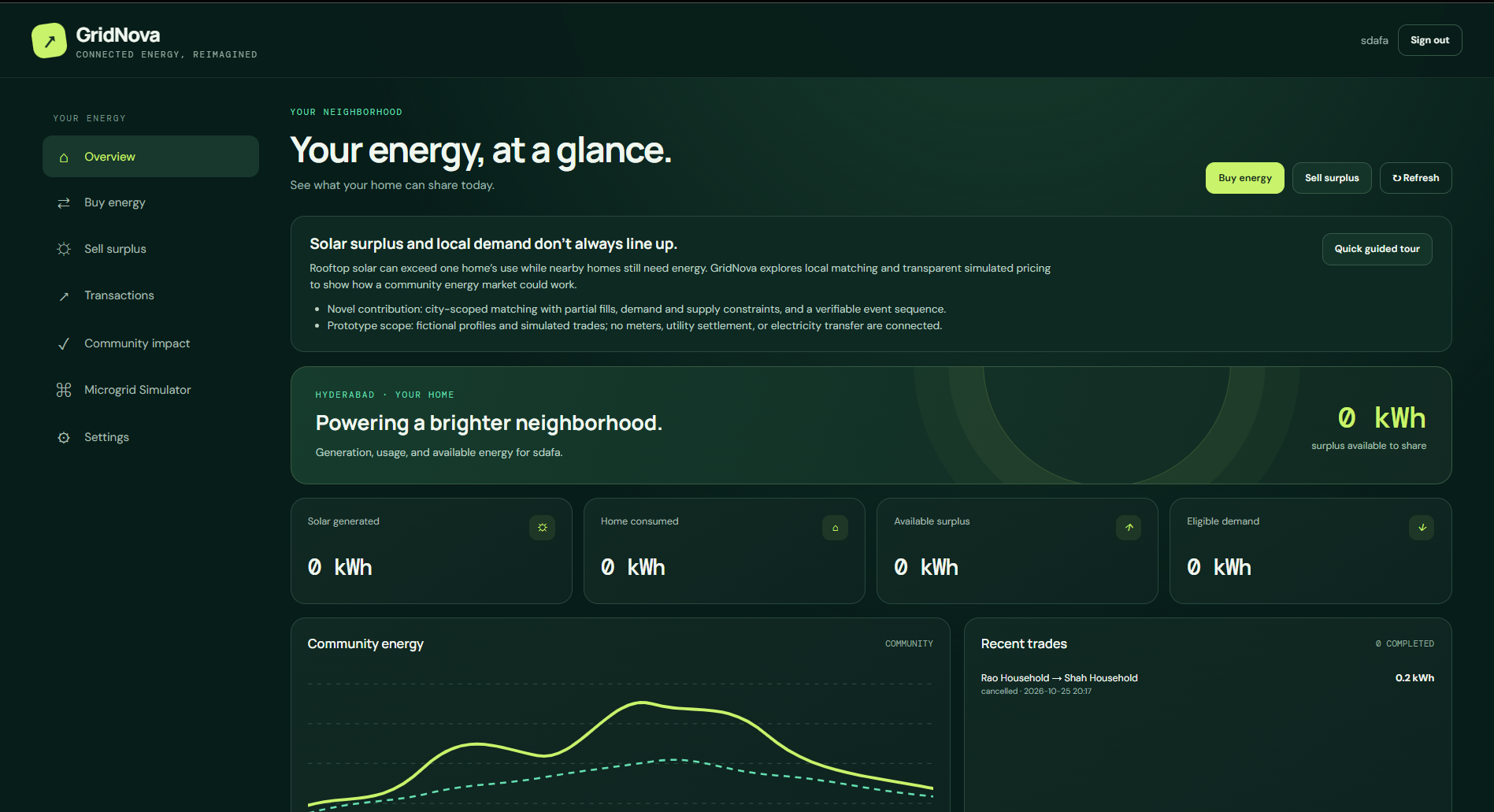
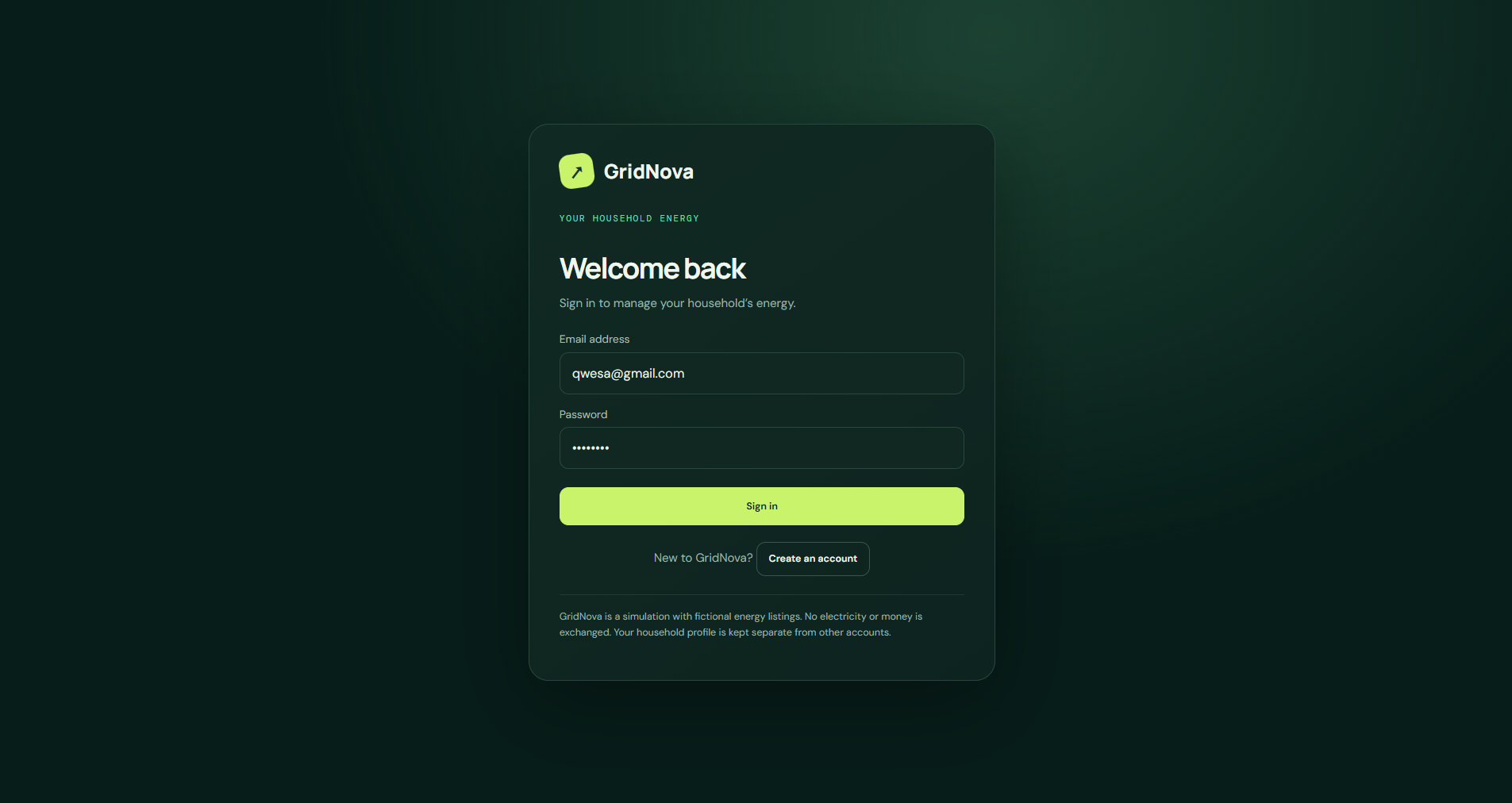
GridNova simulates a household energy marketplace. Users can create offers, browse local listings, compare prices, make partial purchases, and track transactions. The app also includes household energy profiles, generation records, a microgrid simulator, and a guided tour. All households and activity are fictional. GridNova does not transfer electricity or money, connect to meters or utilities, issue official certificates, or have regulatory approval. Its CO₂ figure is a modeled estimate based on completed simulated trades and a disclosed illustrative emissions factor—not measured impact.
How we built it
We built a responsive frontend with HTML, CSS, and JavaScript, backed by FastAPI, SQLAlchemy, and SQLite. The backend checks offer availability and eligible household demand, supports idempotent purchases, and keeps transaction history. Trade events are linked with SHA-256 hashes to demonstrate edit detection; SQLite remains the source of application state, so this is not blockchain.
Challenges we ran into
Energy accounting had to remain consistent across household profiles, active offers, partial purchases, and cancellations. We also needed retries to return the original purchase without creating duplicates. Another challenge was presenting climate estimates and verification status honestly, without implying meter validation or certified impact.
Accomplishments that we're proud of
We built an end-to-end buyer and seller experience, including offer creation, partial fills, transaction history, cancellation, and clear lifecycle statuses. We’re also proud of the disclosed impact calculation, guided tour, and tamper-evident trade-history demonstration.
What we learned
A compelling climate-tech prototype needs more than a polished interface. Its calculations need visible assumptions, its accounting needs to handle edge cases, and its claims need to match the data and integrations that actually exist. We also learned how important it is to make the household journey clear without exposing internal demo controls
What's next for GridNova — A New Era of Connected Energy
The next step is to explore what a real pilot would require: consented interval meter data, utility or distribution-network integration, a lawful settlement model, privacy and security protections, and a documented, time- and region-specific emissions data source. Until those dependencies are addressed, GridNova remains a simulation for exploring the idea with households and community energy groups.
Built With
- accessibility
- climate-tech
- css
- data-transparency
- design
- energy-marketplace
- fastapi
- html
- javascript
- microgrid-simulation
- peer-to-peer-energy
- playwright
- pytest
- python
- renewable-energy
- responsive
- sha-256
- solar-energy
- sqlalchemy
- sqlite

Log in or sign up for Devpost to join the conversation.