-
-
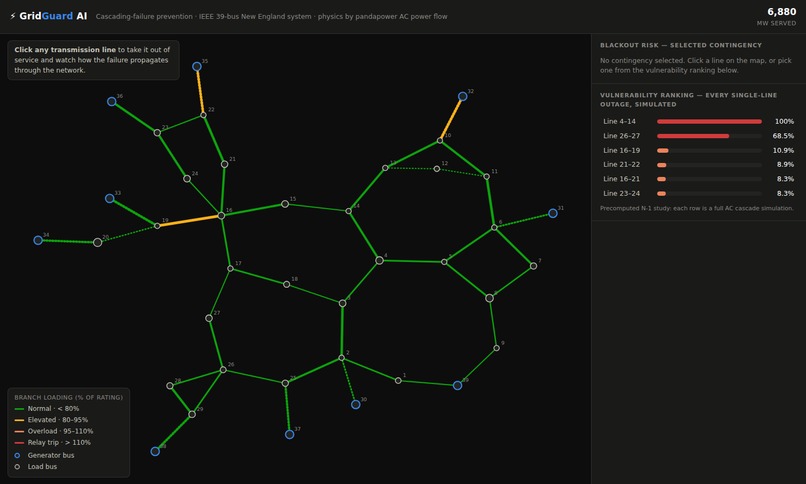
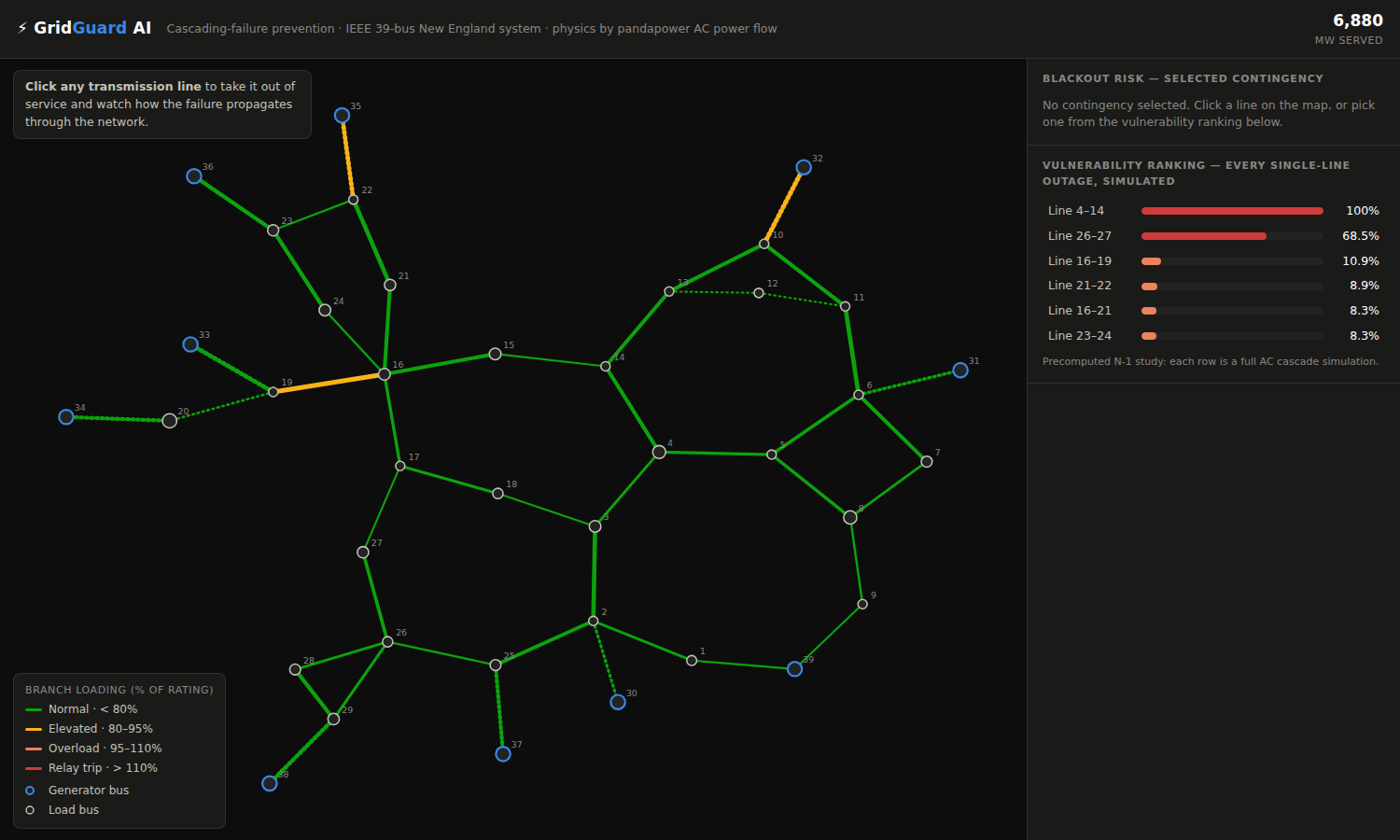
Base Grid
-
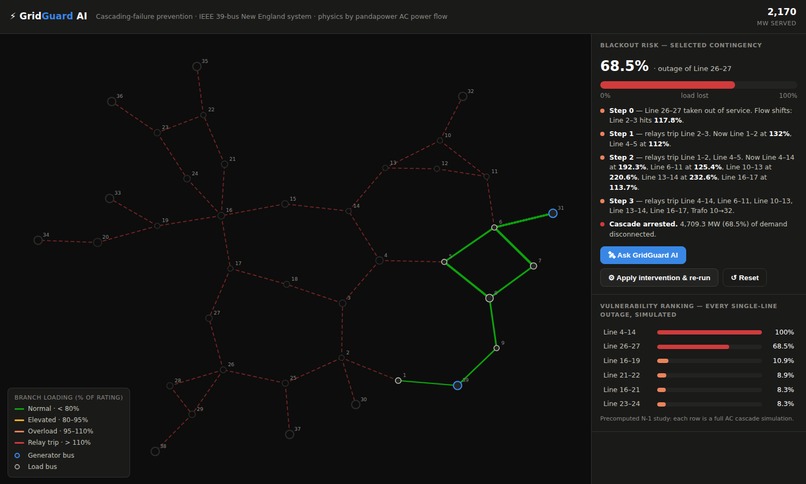
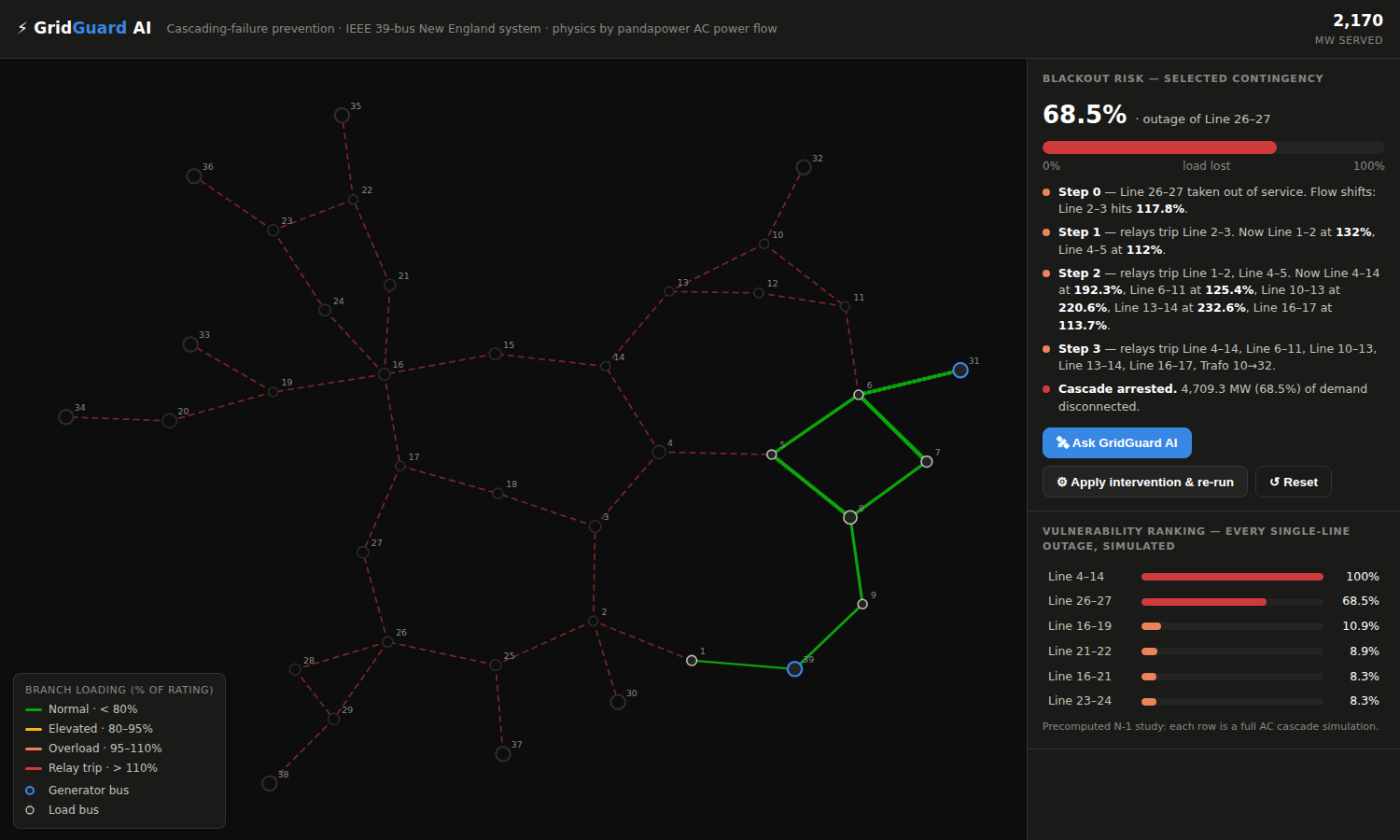
Cascade
-
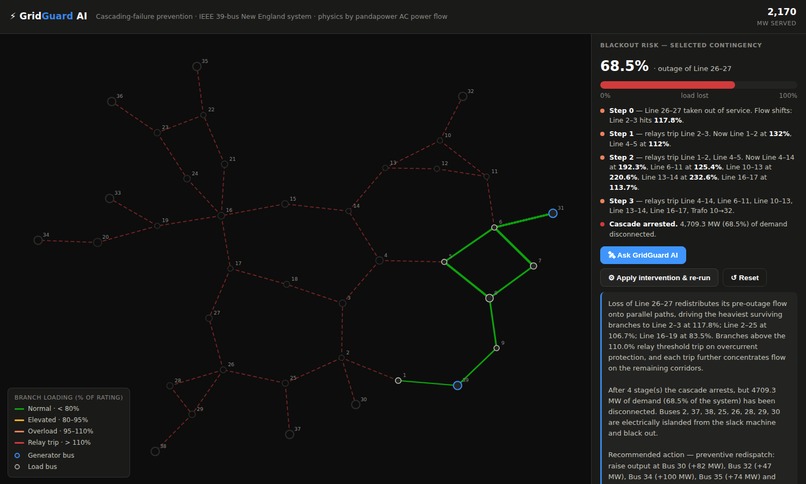
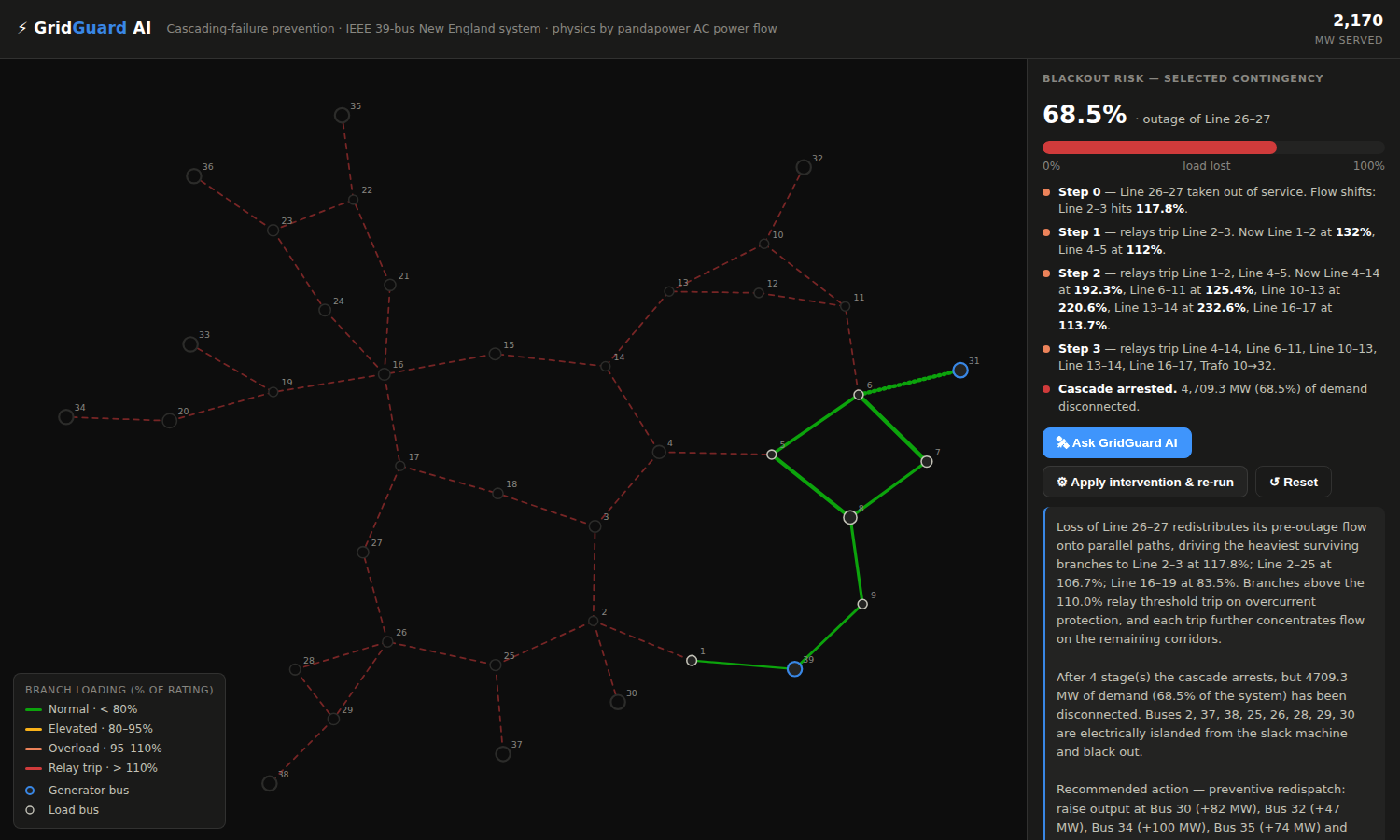
AI Analysis
-
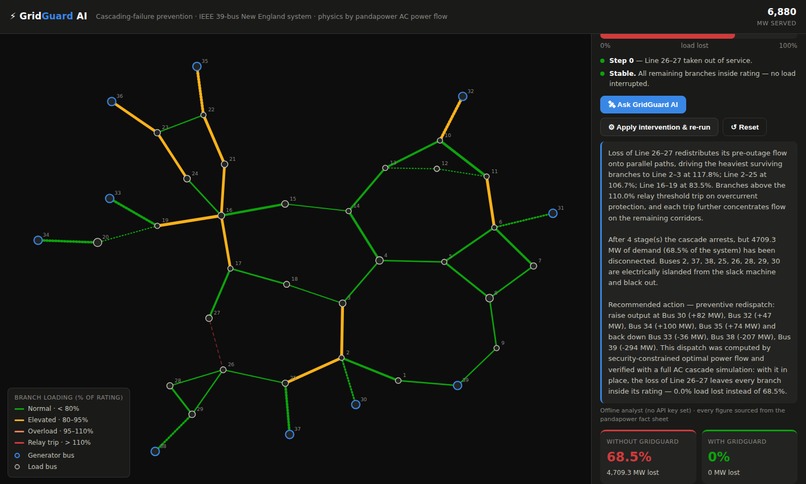
Prevented Case
-
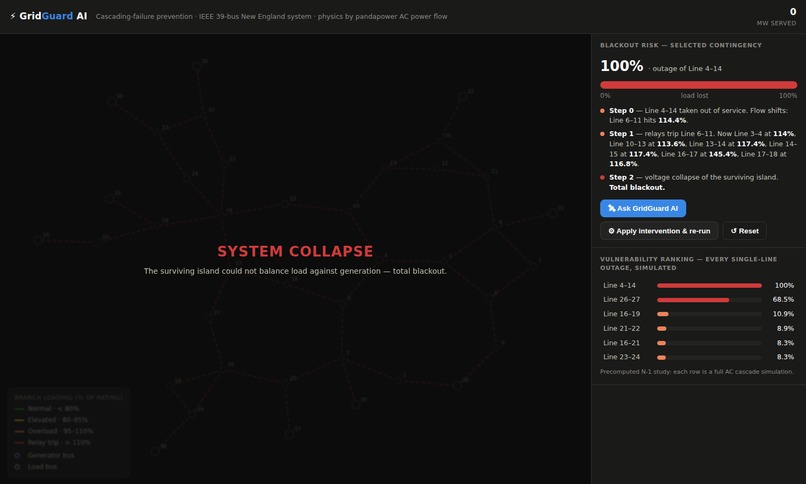
Collapse Case
Inspiration
GridGuard AI was inspired by my interest in electrical power systems and the problem of cascading failures, where a single transmission-line outage can overload other parts of the grid and potentially lead to a much larger blackout. I started the project from my existing work building a MATLAB App Designer application with MATPOWER to simulate and visualize cascading outages, but I wanted to take it further by exploring how AI could help people understand these failures and identify potential ways to prevent them.
What it does
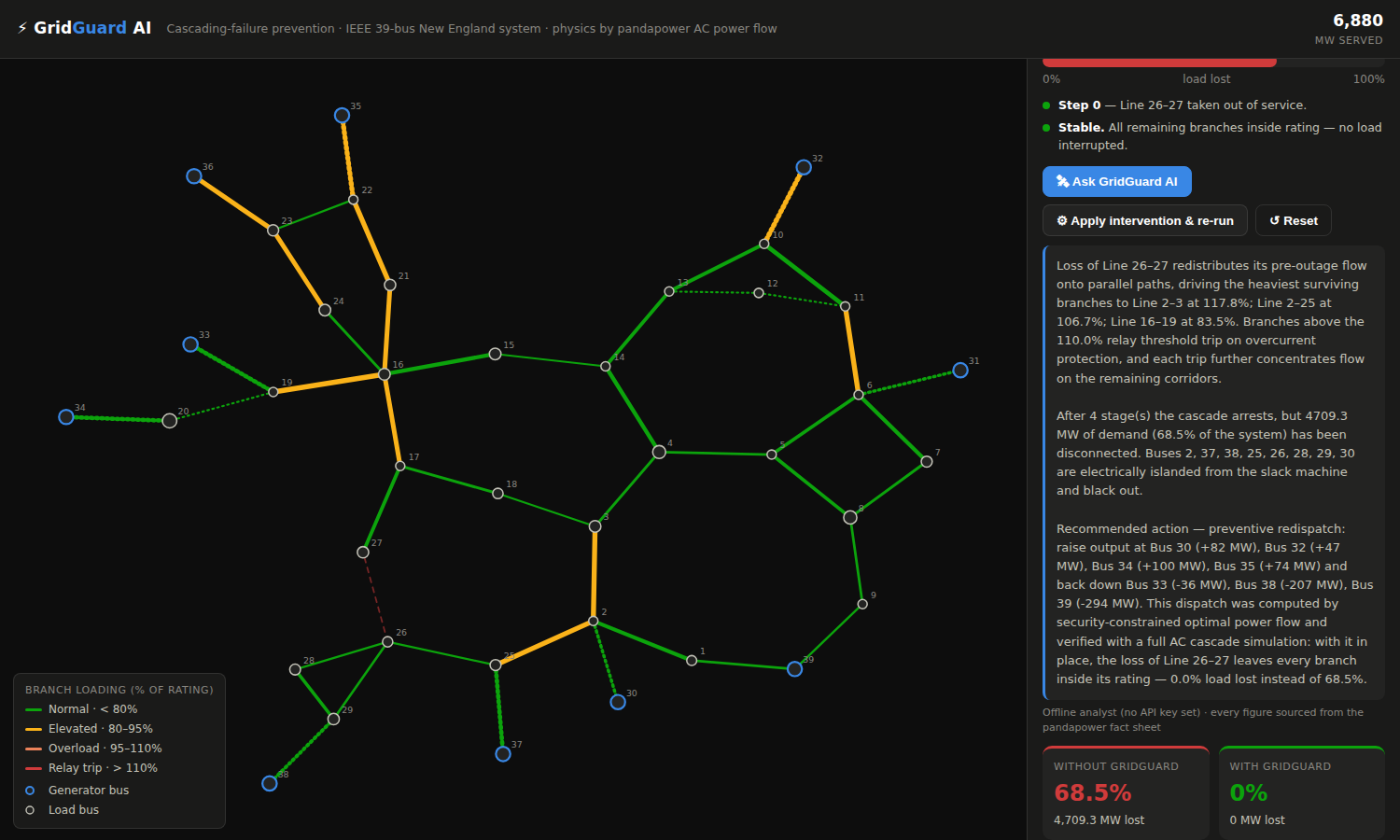
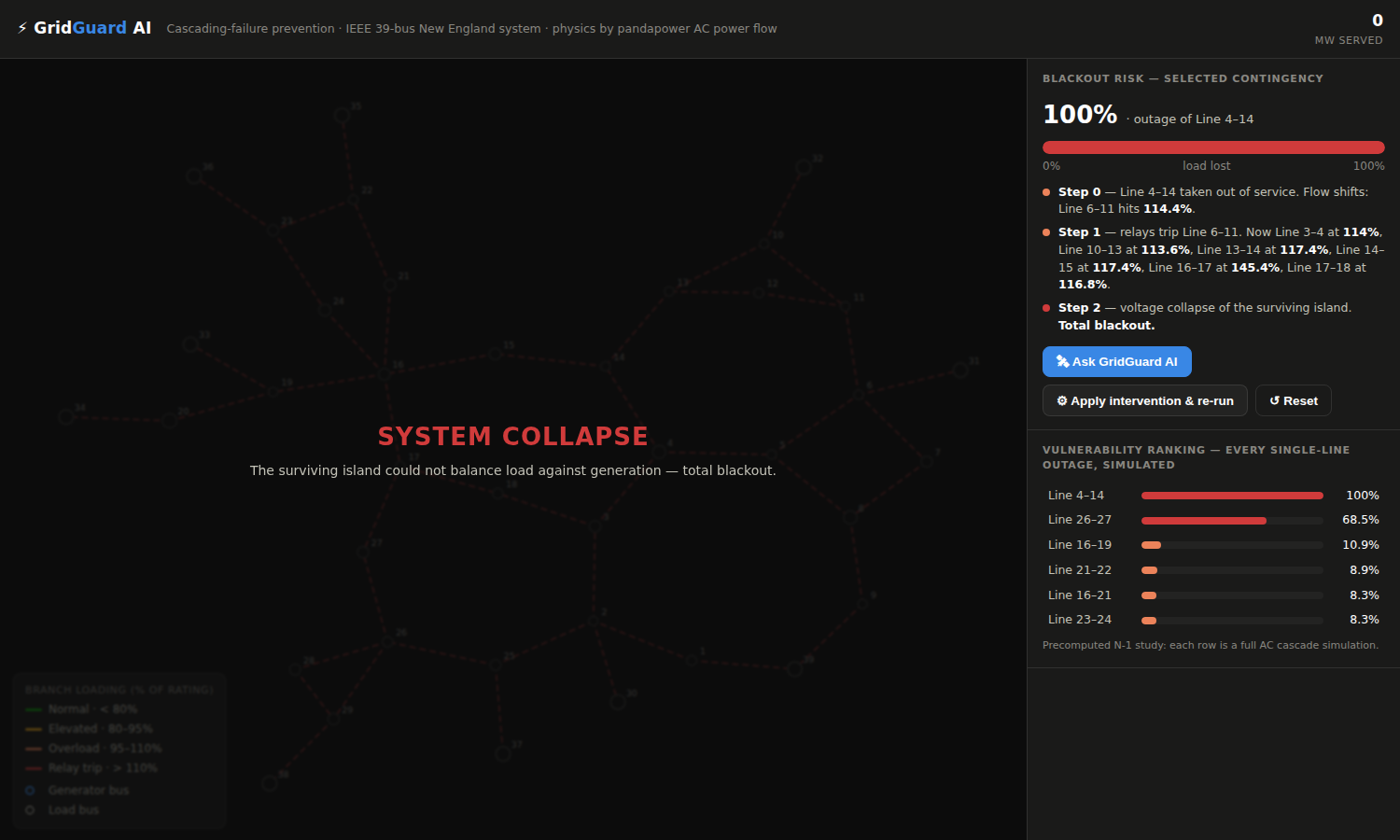
GridGuard combines a physics-based power-system simulation with an AI layer that analyzes the results, explains why a cascade occurred, identifies vulnerable components, summarizes the impact of an outage, and suggests possible mitigation strategies.
How we built it
The foundation of GridGuard is a physics-based power-system simulation rather than an AI model attempting to predict electrical behavior on its own. The simulation uses MATPOWER to model the electrical network and evaluate the effects of outages. When a component fails, the system can evaluate resulting changes in power flow and identify subsequent overloaded components. These results are then visualized so that the progression of the cascade is easier to understand. The AI component sits on top of this simulation. Rather than asking an AI model to "guess" what will happen to the grid, GridGuard provides it with simulation results and uses AI to help.
Challenges we ran into
One of the biggest challenges was determining how to incorporate AI in a way that actually added value. It would have been easy to build a chatbot that simply discusses power-grid failures, but that would not demonstrate meaningful technical integration. The more interesting challenge was connecting AI to actual simulation data and making its output useful. Another challenge was presenting a complex engineering problem in an intuitive way. Power-flow calculations and cascading failures can involve a large amount of numerical data, but a user should not need to understand every calculation to see that a particular line is becoming a critical point in the network. This led me to focus heavily on visualization and the user experience: simulate the failure, watch the cascade develop, understand why it happened, and explore how it could potentially be mitigated.
Accomplishments that we're proud of
I am proud to have completed my very first Hackathon! It was a lot of fun and I definitely plan on doing more in the future!
What we learned
One of the biggest things I learned was how different building an engineering simulation is from building something intended for other people to use. It is relatively straightforward to generate a plot showing that a line became overloaded. It is much harder to communicate why that matters and what someone should do with that information. I also learned more about the relationship between power-system modeling, visualization, and AI. AI can be useful without replacing the underlying engineering model. In GridGuard, its role is to turn complex simulation data into information that is easier for a human to understand. The project also helped me think more about software architecture. Instead of treating the simulation, visualization, and AI as one large system, I designed the project around separate components that each have a clear purpose.
What's next for GridGuard
The long-term vision is to move beyond simply visualizing failures toward systems that can identify vulnerabilities before they become catastrophic and help engineers evaluate possible responses.


Log in or sign up for Devpost to join the conversation.