InspirationHere’s a strong About the Project story for the competition submission. It focuses on the exact things judges are asking for: inspiration, what you learned, how you built it, and challenges.
About GridMind
What inspired us
GridMind started with a simple question:
What if AI could help people make better decisions about the energy they already have?
For millions of homes and small businesses, especially in markets where electricity can be unreliable, managing power is complicated. People may switch between the grid, generators, solar panels, batteries, and other sources every day.
Yet most energy tools simply show numbers.
We wanted to build something different.
Instead of another dashboard that tells customers what happened, we wanted an AI system that could understand why it happened, what it means financially, and what the customer could do next.
That idea became GridMind.
What we built
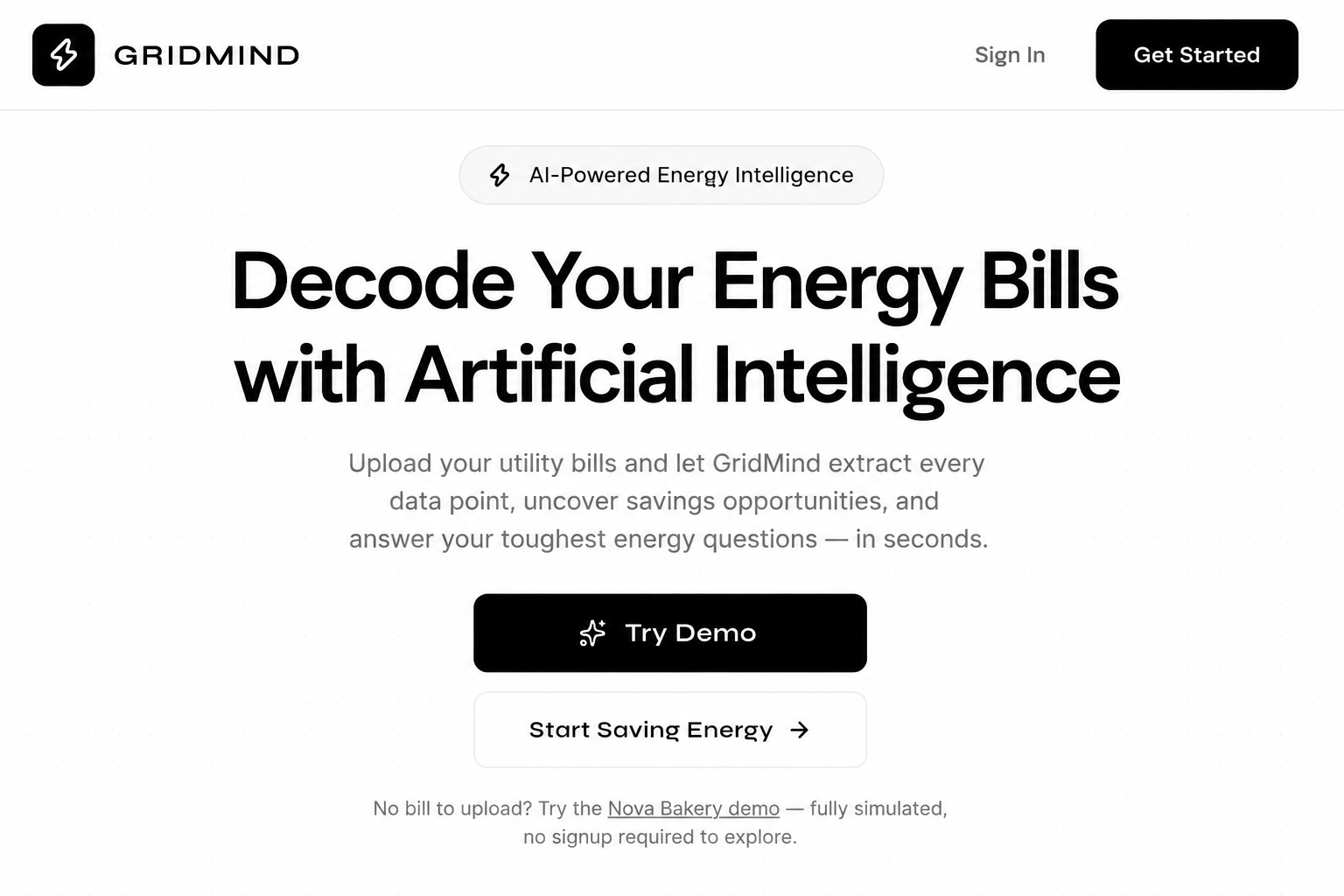
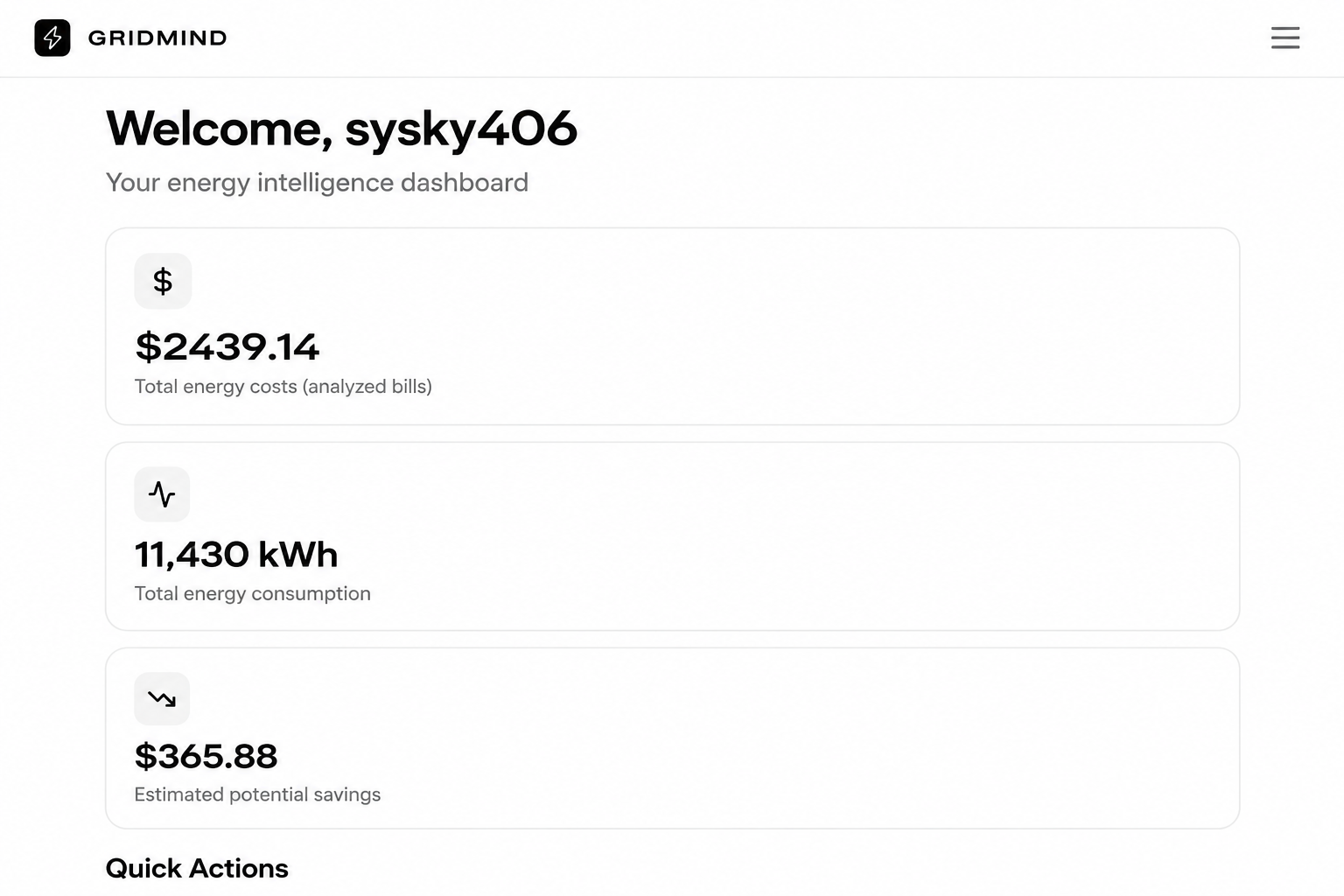
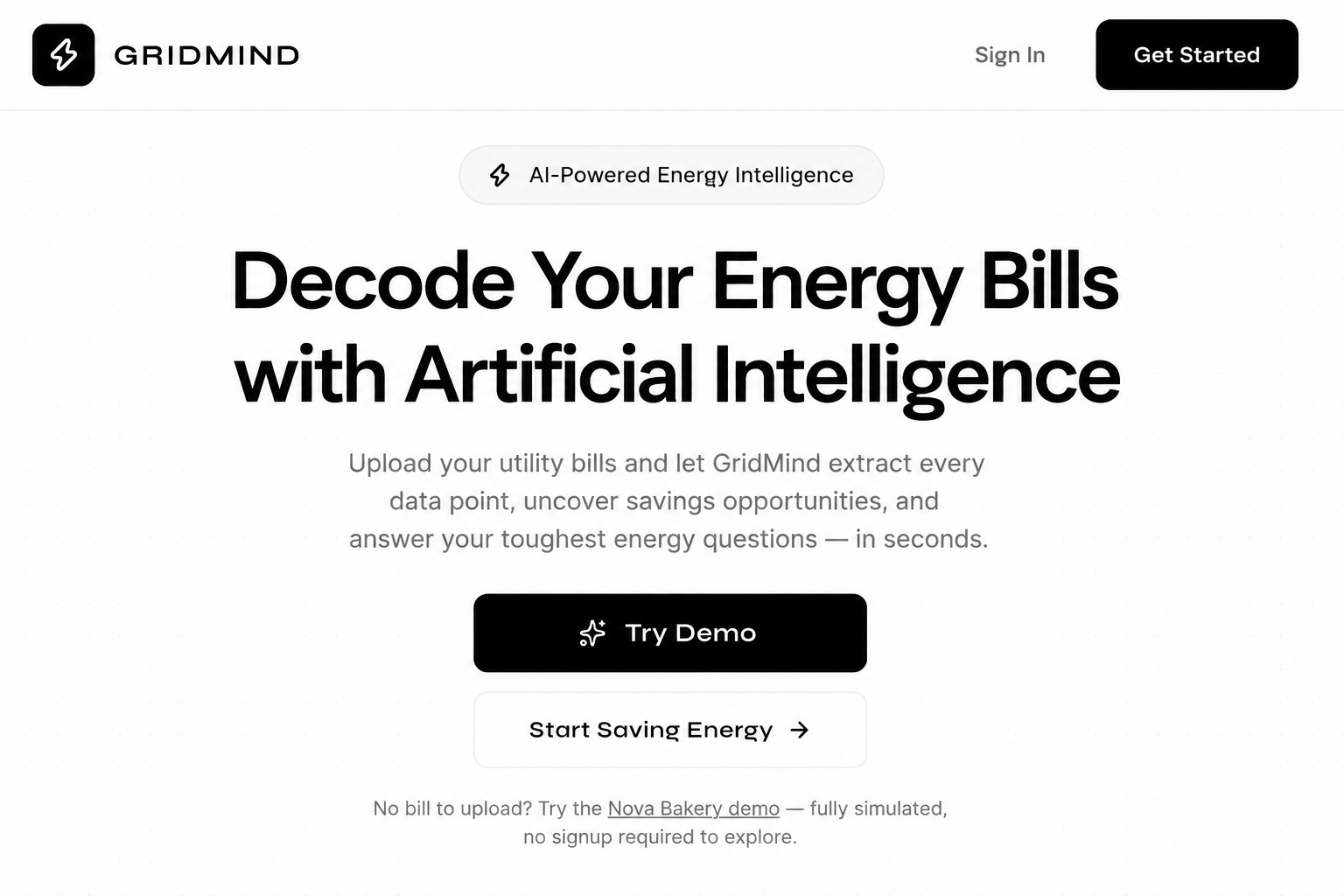
GridMind is an AI-powered energy management platform designed to help homes and businesses understand their energy usage and identify opportunities to reduce unnecessary costs.
The experience is centered around an AI energy team rather than a single chatbot.
Our agents include:
- Concierge Agent — helps customers understand and configure their energy profile.
- Document Agent — uses Gemini's multimodal capabilities to understand bills, receipts, and energy documents.
- Energy Intelligence Agent — analyzes consumption and energy-cost patterns.
- Savings Agent — identifies potential areas of wasted spending.
- Optimization Agent — creates personalized strategies for using available energy sources more efficiently.
We also built Ask GridMind, allowing customers to ask questions about their own energy information using natural language.
A customer can ask:
"Why did my energy cost increase?"
or:
"How can I reduce my electricity expenses?"
GridMind reasons over the customer's available data instead of returning generic energy advice.
How we built it
Google Gemini is at the center of GridMind's intelligence.
We use Gemini to understand multimodal information, reason over energy data, generate insights, and power the workflows performed by our AI agents.
We designed the system so information can move through an agent workflow:
Customer data → Gemini understanding → Energy analysis → Savings discovery → Optimization → Customer recommendation
Google Cloud provides the infrastructure needed to move GridMind toward a production-ready architecture, including cloud deployment, data storage, document storage, and monitoring.
We also designed the product around a realistic customer journey rather than building isolated AI features.
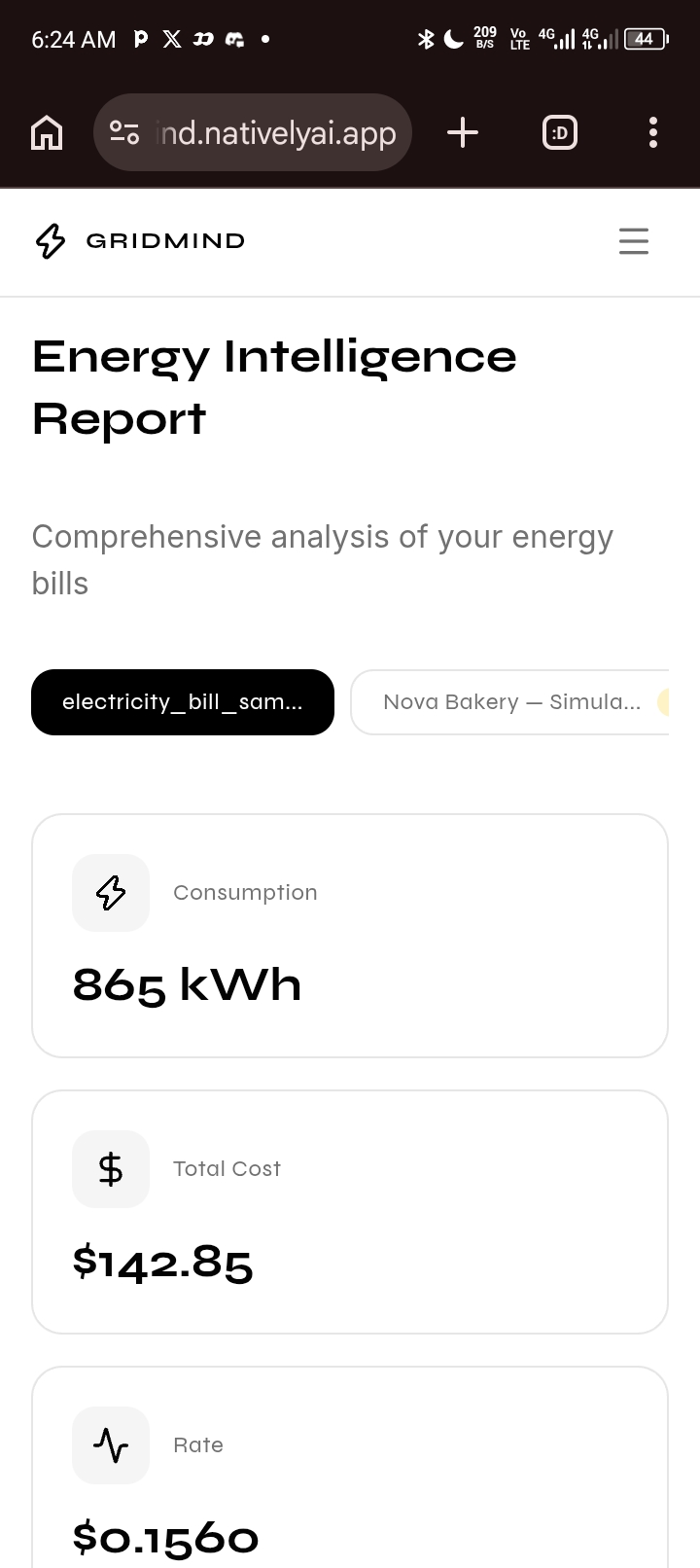
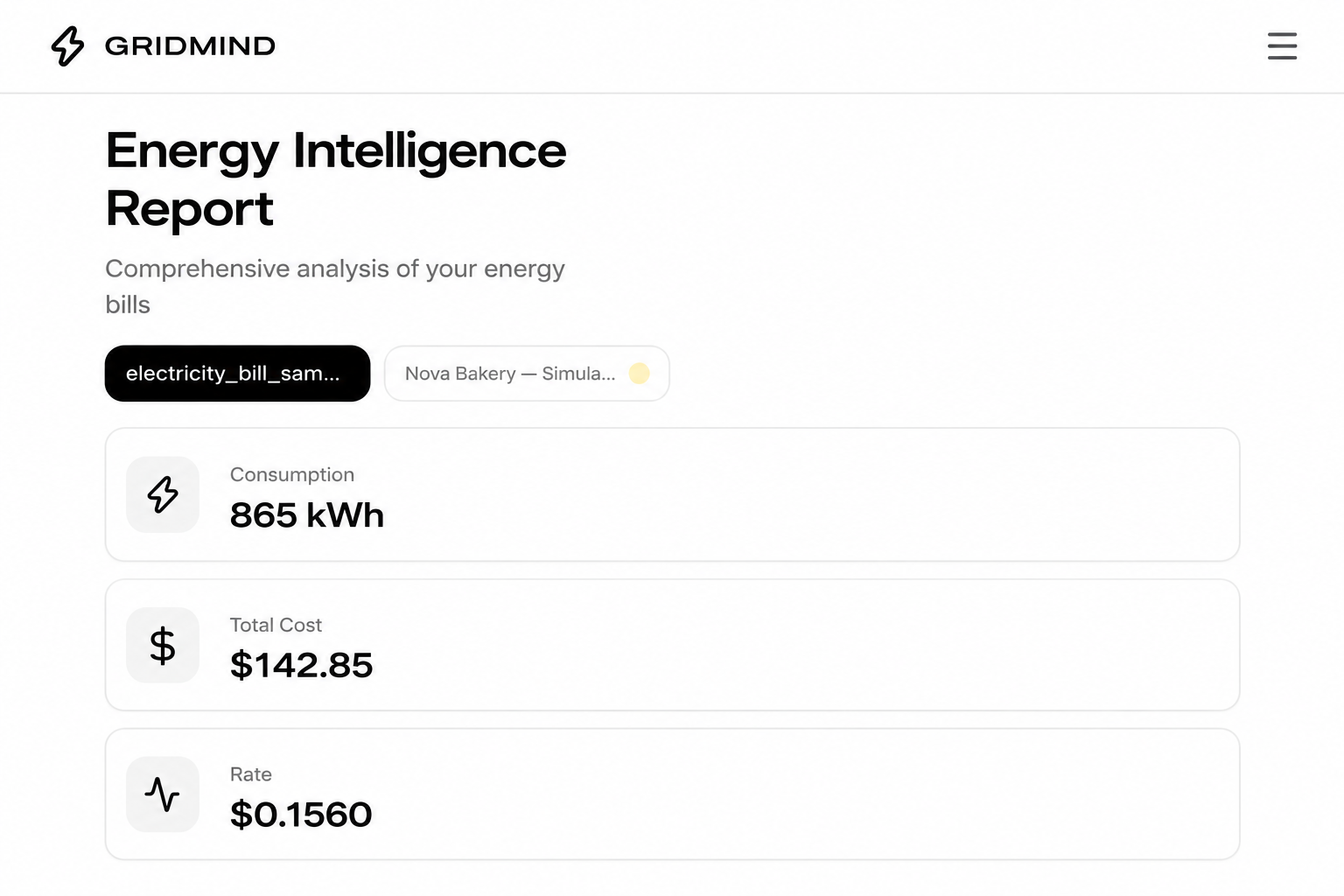
A customer can onboard, provide their energy information, receive an intelligence report, discover potential savings, and interact with GridMind to understand what to do next.
For our demonstration, we created a fictional business, Nova Bakery, with simulated energy data. This allows us to demonstrate the complete experience while clearly distinguishing demo data from real customer information.
What we learned
One of our biggest lessons was that AI becomes much more valuable when it is connected to a real workflow.
A chatbot can answer a question.
But an AI agent can receive information, analyze it, identify an opportunity, create a recommendation, and help the customer act on it.
We also learned that multimodal AI creates opportunities beyond traditional structured data. Energy information doesn't always arrive as clean numbers. It can exist inside bills, receipts, screenshots, photographs, and documents.
Gemini allows GridMind to turn these fragmented inputs into information that can actually be used.
Most importantly, we learned to focus on outcomes rather than features.
GridMind isn't ultimately about displaying electricity data.
It's about answering:
How much money are you losing, why are you losing it, and what can you do about it?
Challenges we faced
Building GridMind came with several challenges.
One of the biggest was designing a reliable document and image workflow. Real-world energy documents are inconsistent, and images may be blurry, incomplete, or formatted differently.
We therefore designed GridMind to avoid inventing information. When the AI cannot confidently interpret something, it should ask for better information rather than pretend it knows the answer.
Another challenge was deciding how much functionality to include in the MVP.
GridMind could eventually connect to smart meters, solar systems, batteries, inverters, utility APIs, and other energy infrastructure. However, building everything at once would have weakened the core experience.
We chose to focus on the most important customer journey:
Understand → Analyze → Find Savings → Recommend Action.
This allowed us to build a more focused and demonstrable product.
What's next
GridMind is only the beginning.
The long-term vision is to connect GridMind with real energy infrastructure and continuously learn how each home or business consumes power.
Future versions could integrate with smart meters, inverters, solar systems, battery management systems, utility APIs, and other connected energy devices.
Our goal is to evolve GridMind from an energy analytics product into an AI operating system for distributed energy.
Because the future of energy isn't only about producing more power.
It's also about using the power we already have more intelligently.
GridMind
Know your power. Control your costs.
What it does
How we built it
Challenges we ran into
Accomplishments that we're proud of
What we learned
What's next for GridMind
Built With
- agents
- ai
- cloud
- firestore
- gemini
- logging
- multimodal
- react
- run
- storage
- supabase
- typescript
- vite


Log in or sign up for Devpost to join the conversation.