-
-
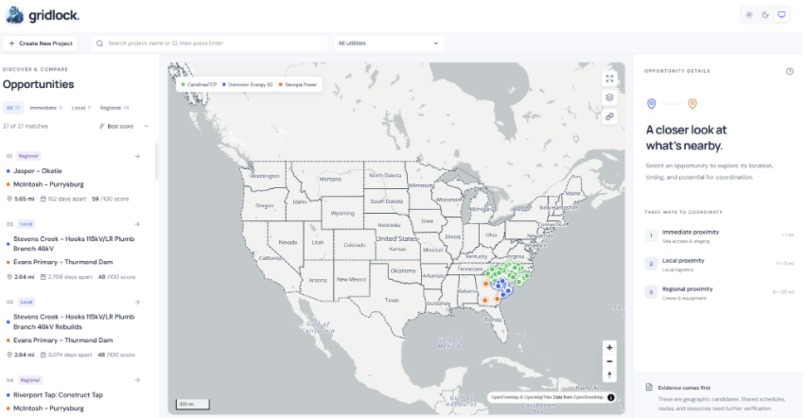
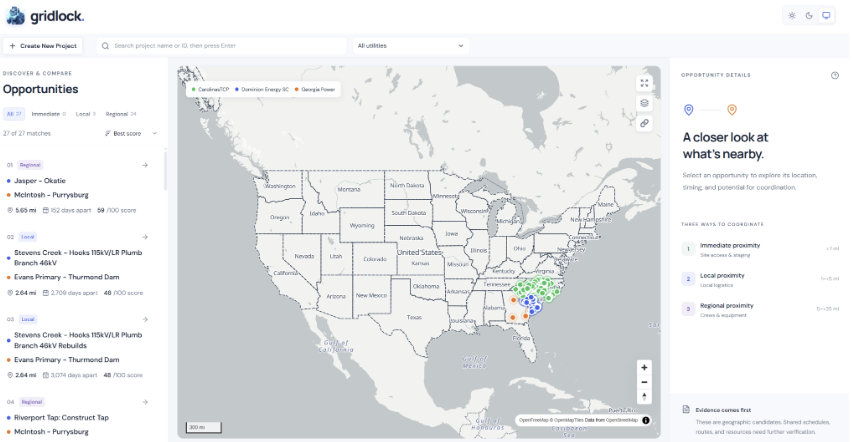
Light Mode Screen
-
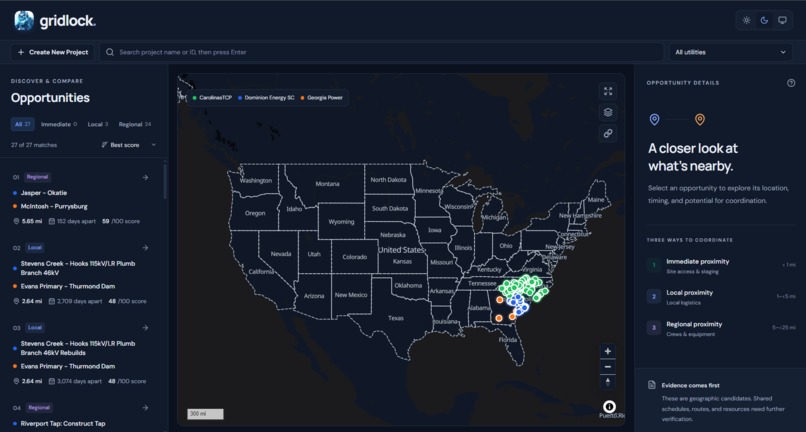
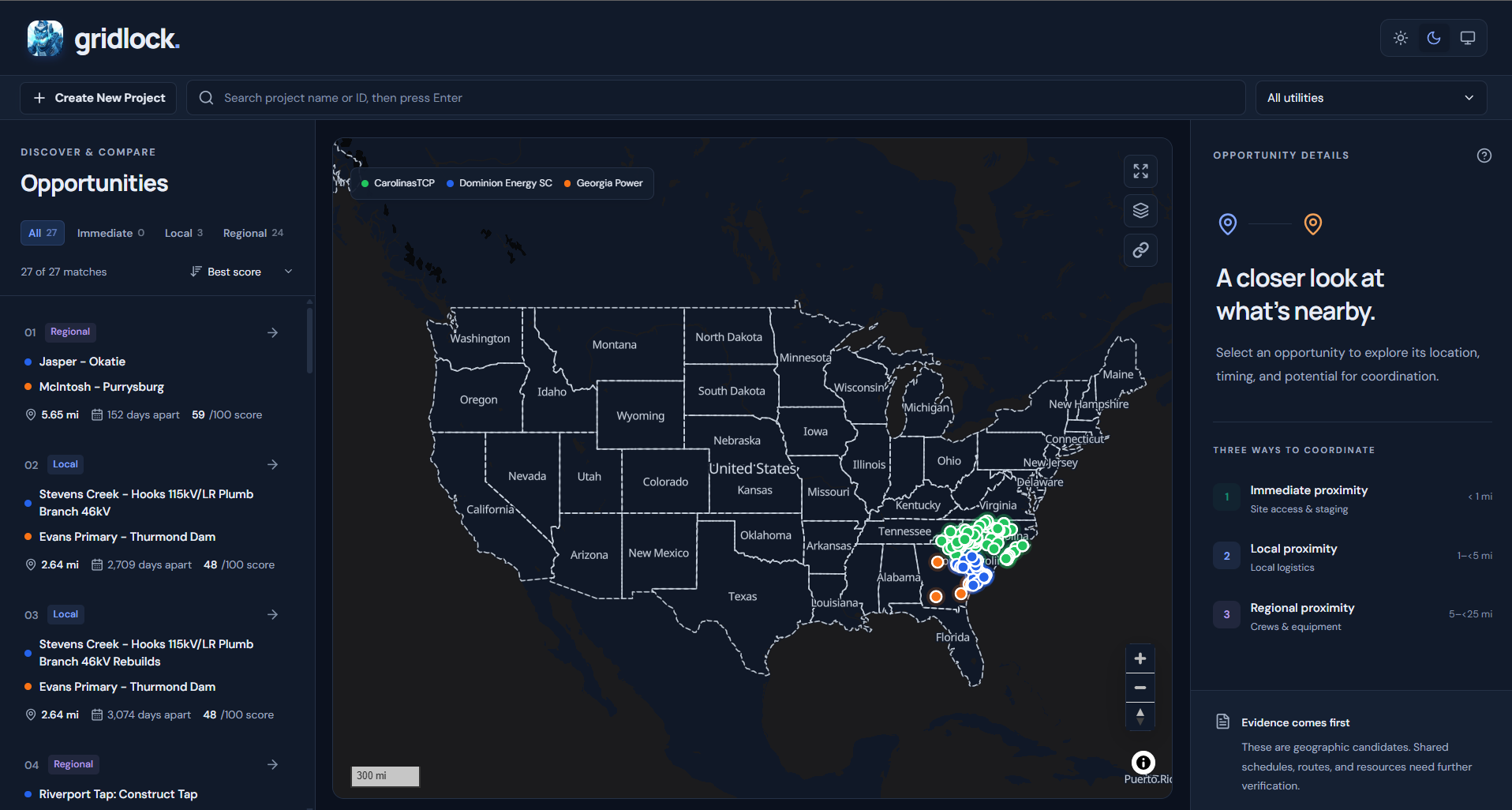
Dark Mode Screen
-
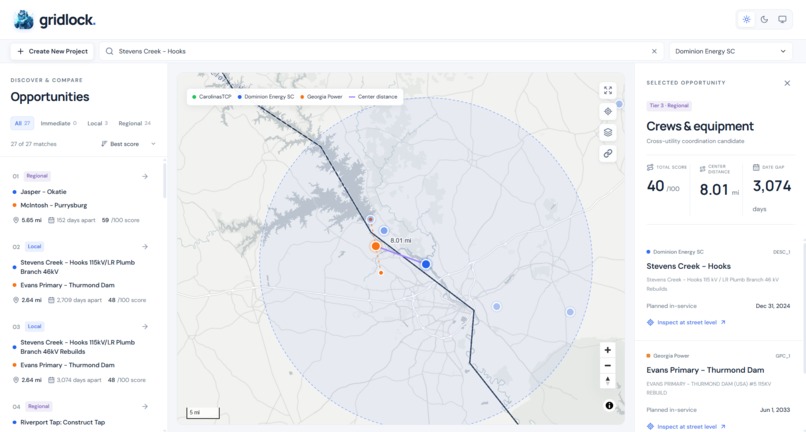
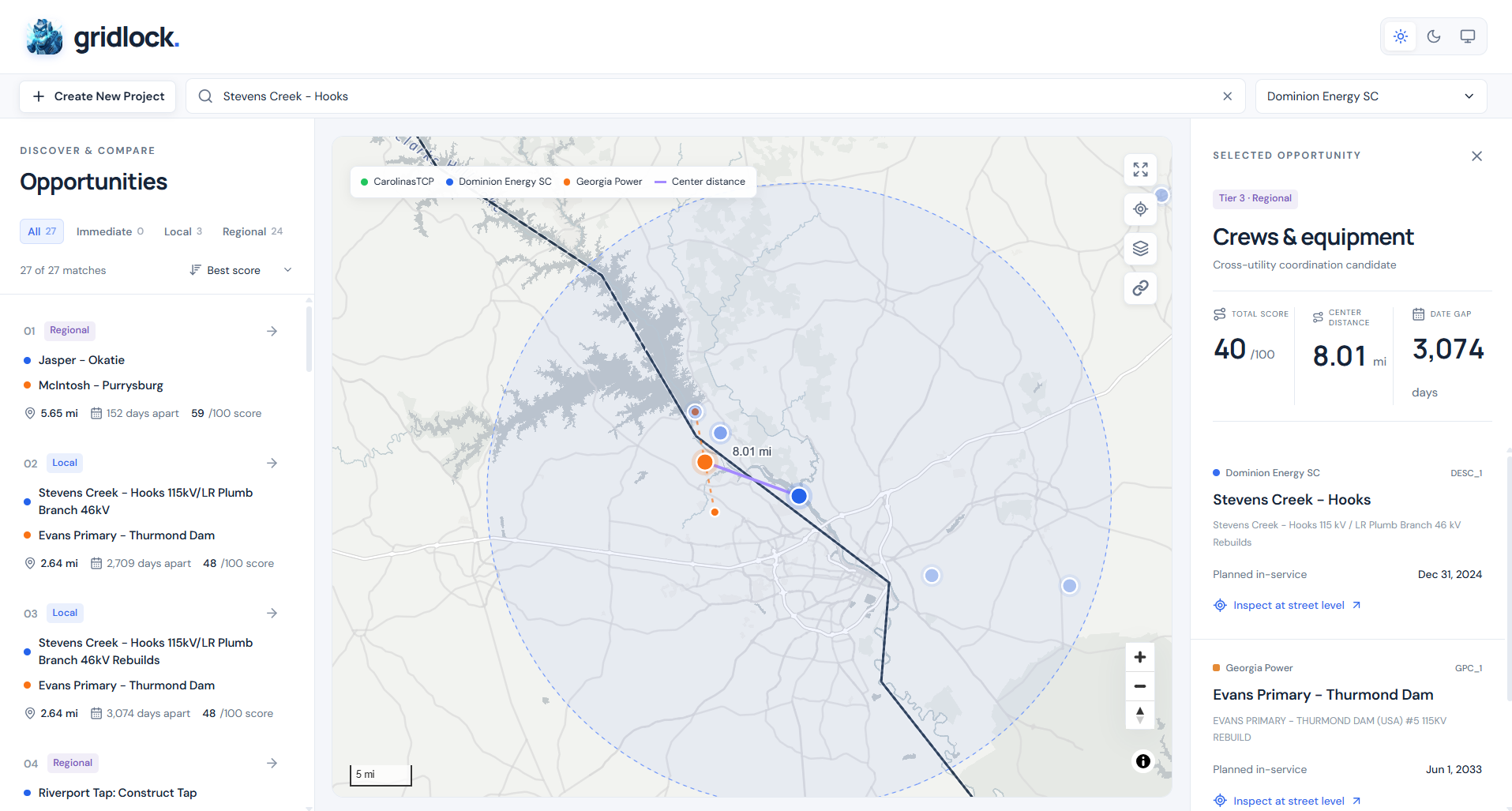
Gridlock Project Radius
-
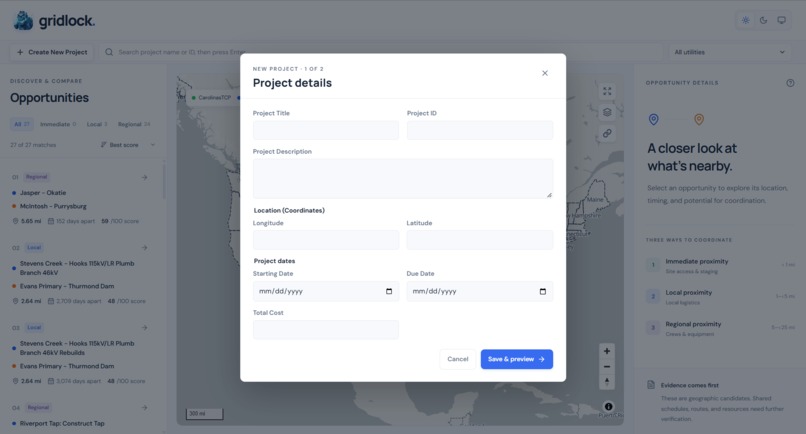
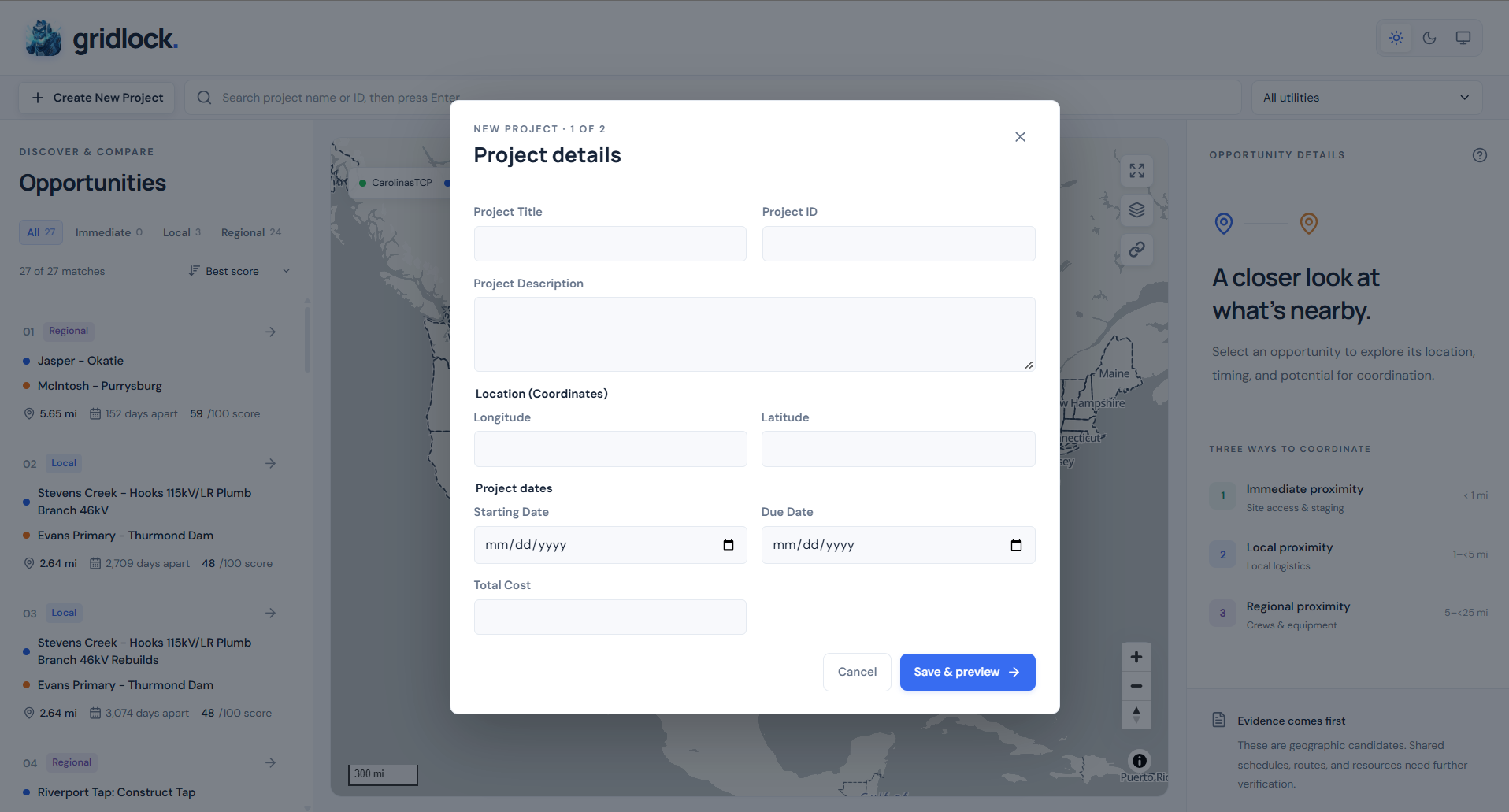
Create New Project Screen
-
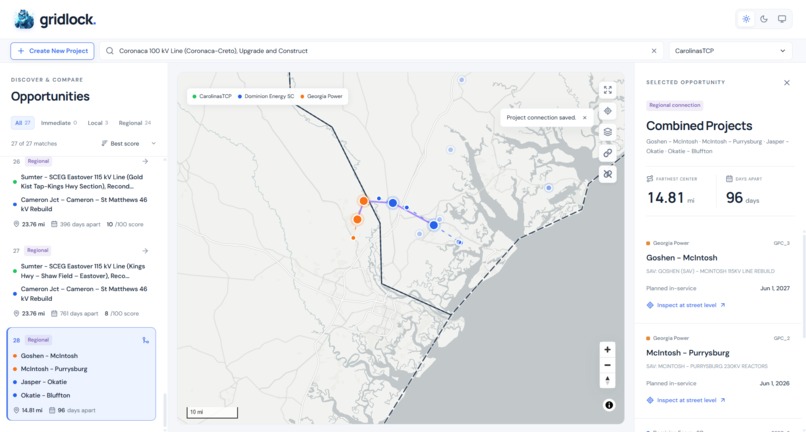
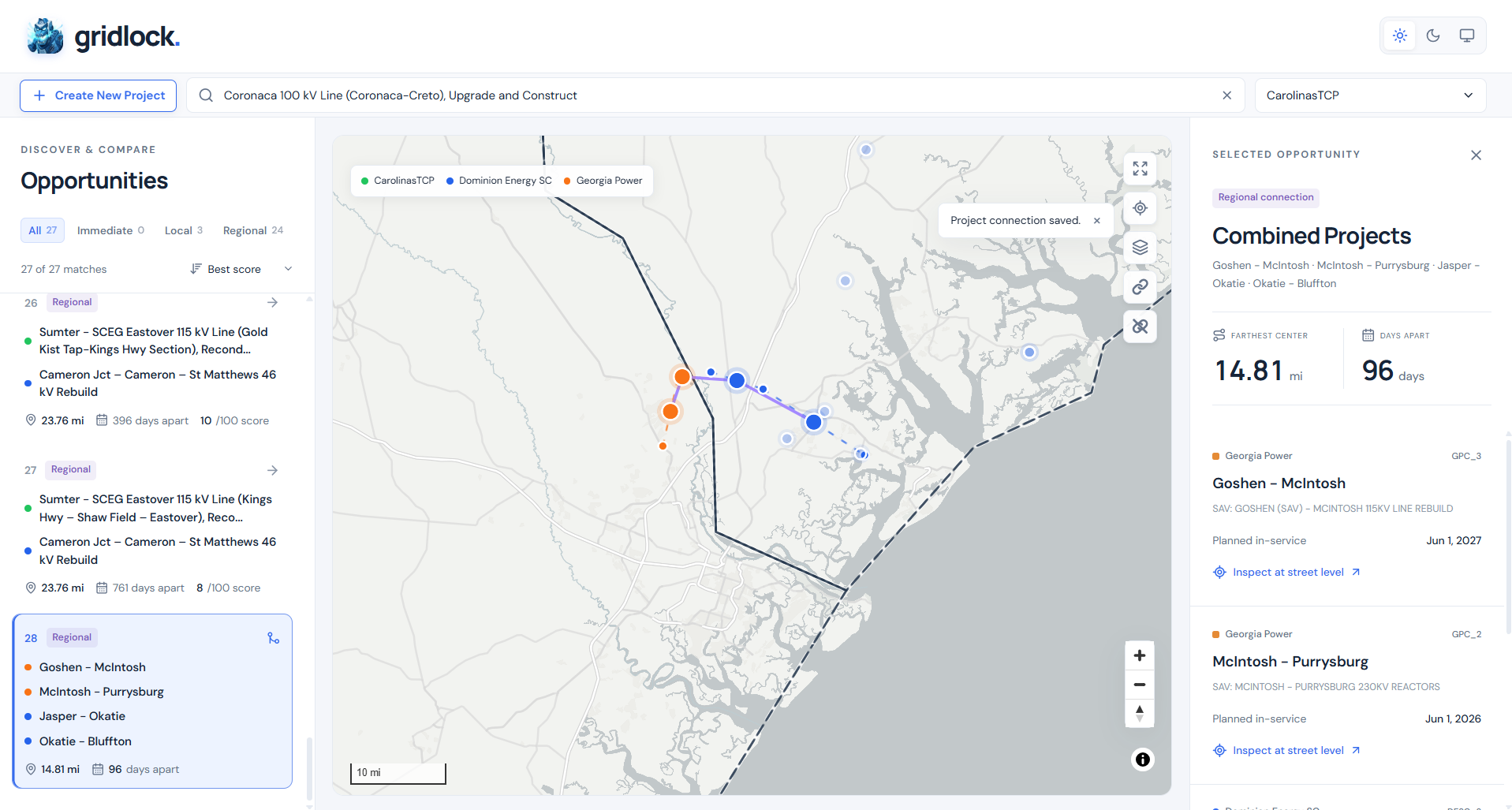
Combine Multiple Project Option
Inspiration
Our team felt that utility companies take a lot of risk with expenses and time when working individually on projects. We envisioned a way to allow the companies to see other companies that are working on projects nearby so they can potentially collaborate together to share materials, equipment, or any other resources without any individual company needing to take on the entirety of the expenses itself.
What it does
Our project reflects information from a database and ranks different possible collaborations that companies can look into. The ranking is based on how far both job sites are and the dates in which the projects will take place. Additionally, companies can create custom project locations to see if there are any other projects taking place near their custom location to look into collaborating with. We also implemented a feature where instead of just collaborating with one company, you can select multiple projects within a 25 mile radius of the initial project to collaborate as a group.
How we built it
Gridlock was built as a full stack application using React and TypeScript for the interactive dashboard, maps, and project comparisons. Vite powers the frontend build, while a Node.js API serves the app and project data from a local SQLite database. MapLibre GL provides the interactive maps, with OpenFreeMap supplying the basemap tiles.
Challenges we ran into
One challenge we ran into was placing the data from the database onto the map. Within the database, there are projects that are taking place at the same location but different times. This led to multiple points showing up in the map at the same time, meaning that when selecting it on the map only one would be selected. So, we had to develop a dropdown menu when clicking the point that allows you to see the other projects taking place at that location. Another challenge we faced was extracting the data from various different documentation. Each document had a different format and had different names for the data fields. To solve this we wrote various scripts linked to a Gemini API key to have a tailored version for each document. Also, we had to figure out what data was actually useful, there could be missing values in the documents and if used in the dataset it would cause errors since we needed to have accurate geological locations.
Accomplishments that we're proud of
For all of us this was our first hackathon and developed project, even so we are proud to say that we built a working full stack project having a working frontend, backend, and db. In addition, being able to meet deadline requirements and provide a working system in time.
What we learned
We learned the entire end to end process of a full stack project. For example, we learned how to connect the frontend interface to the backend and database. We also gained experience from researching real world data, extracting information we needed, and implementing it into our project in various ways. Additionally, we learned how we can take information we have and handle it in a way that can give us a ranking of the strongest possible collaborations for different companies to work together.
What's next for gridlock
For gridlock, we want to make an even better ranking system that takes compatibility into consideration. For example, if two projects are dealing with ROW, then they should have a higher compatibility score and overall score than a comparison of two companies within the same distance and time but one is working with ROW and the other is dealing with a reactor.


Log in or sign up for Devpost to join the conversation.