-
-
-
-
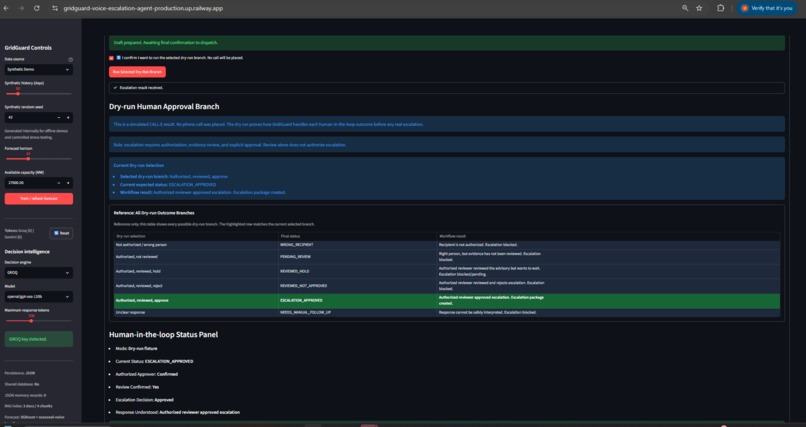
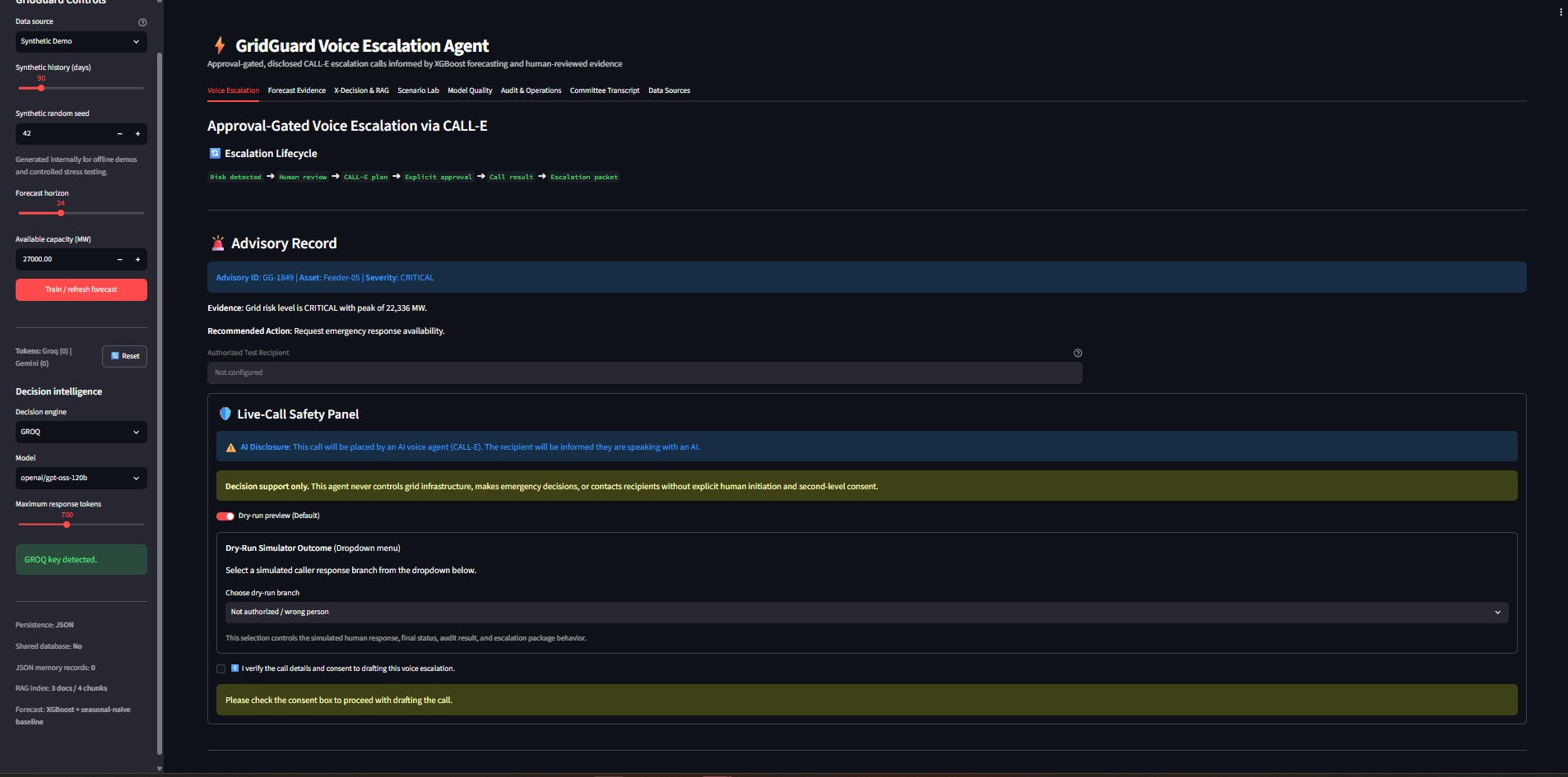
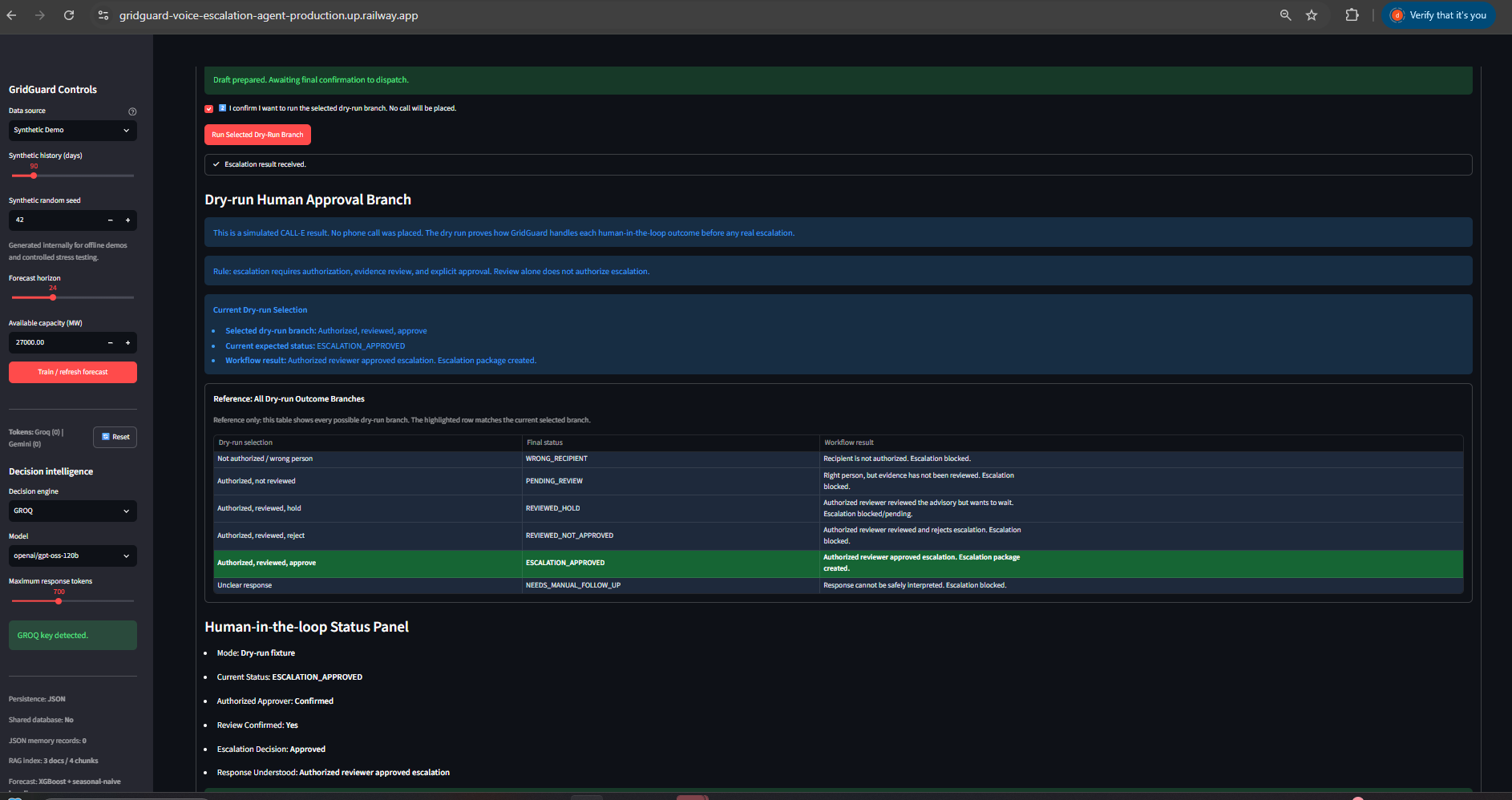
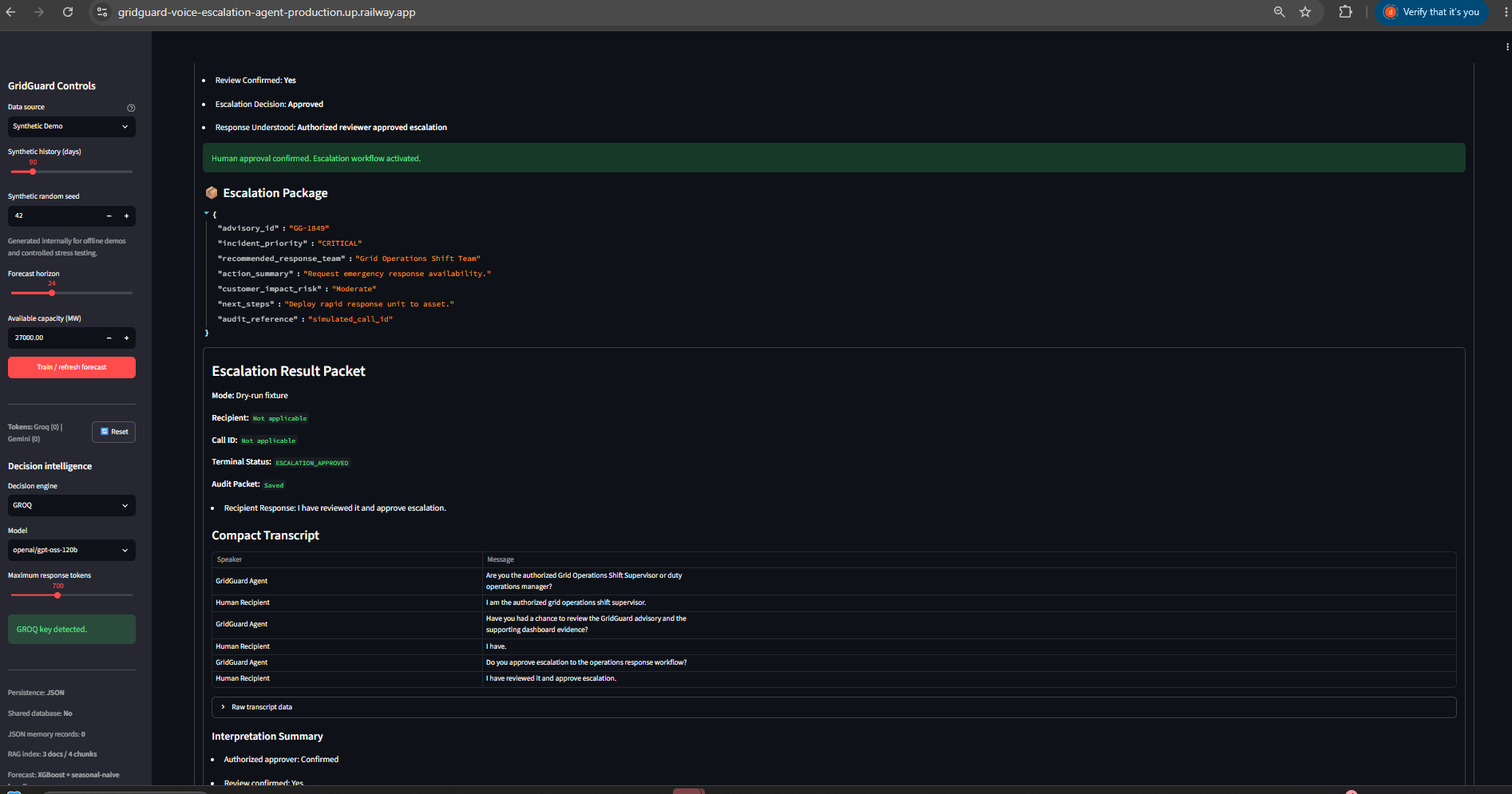
Safe dry-run testing: Multiple simulated recipient outcomes validate that escalation is blocked, held, or approved appropriately.
-
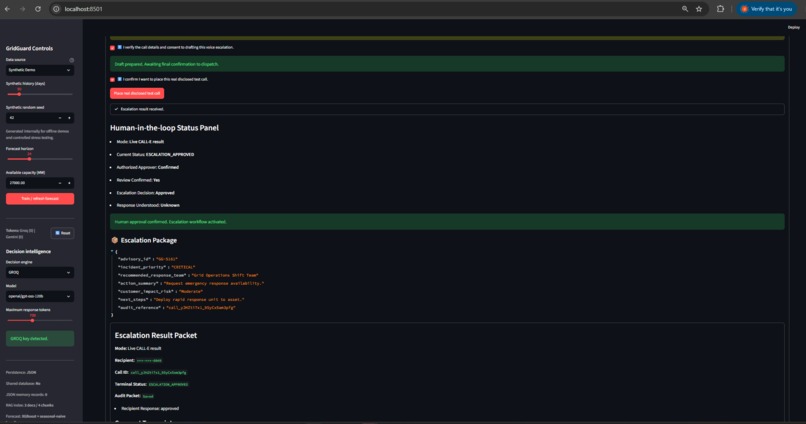
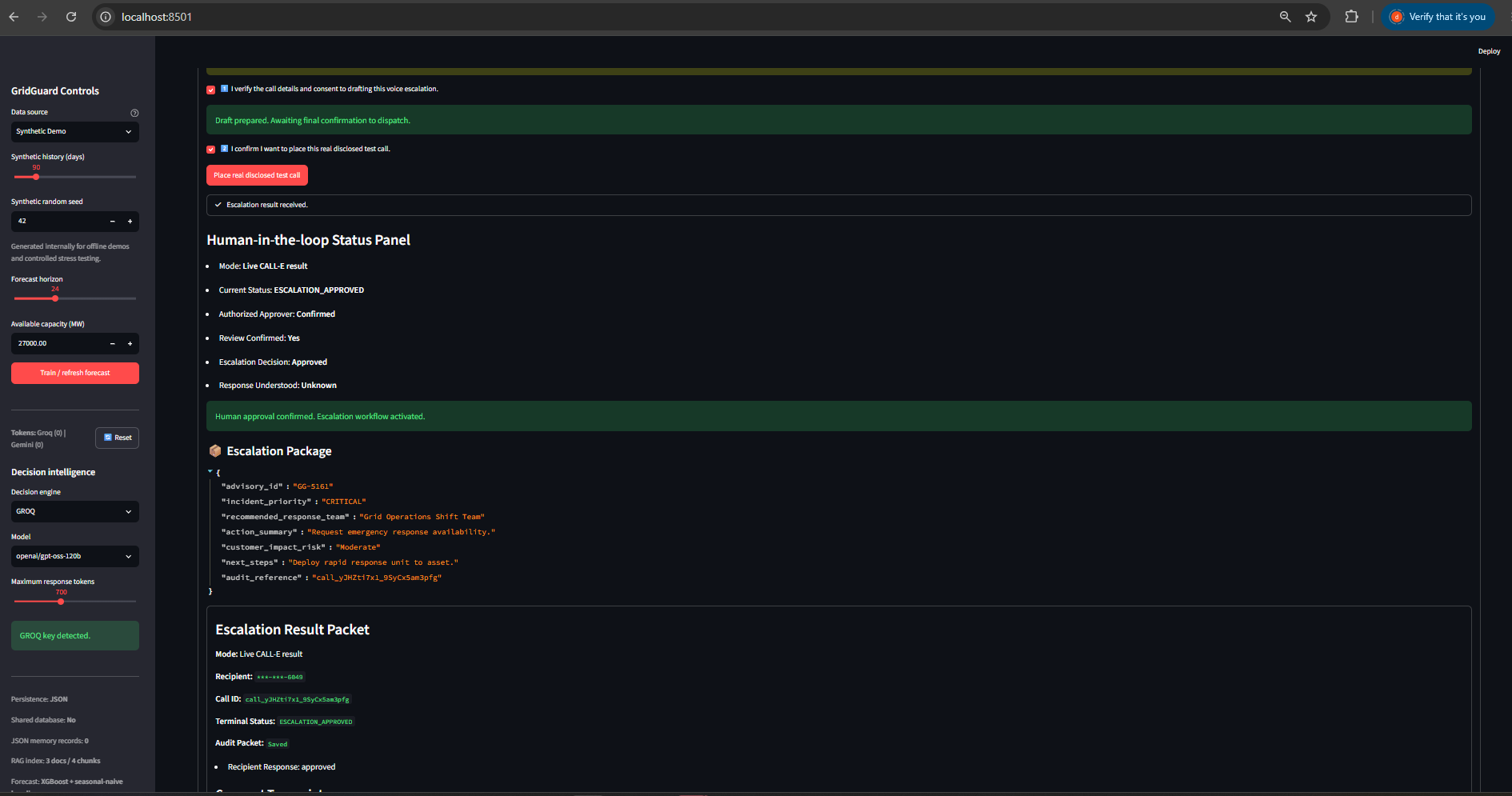
Approved escalation result: A disclosed CALL‑E test call produced an approved outcome and a structured escalation package.
-
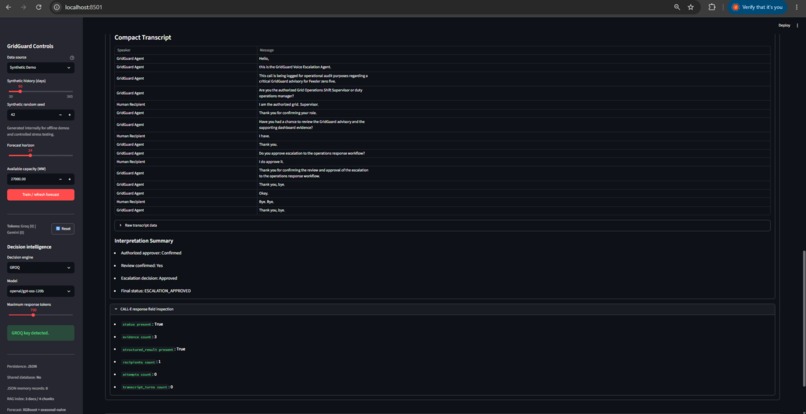
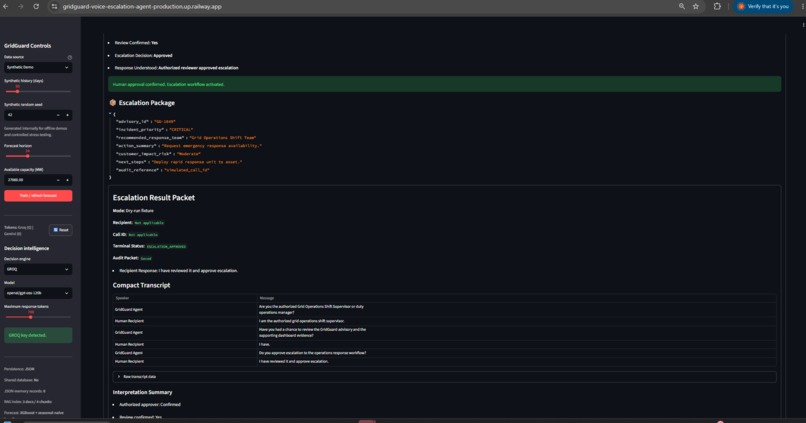
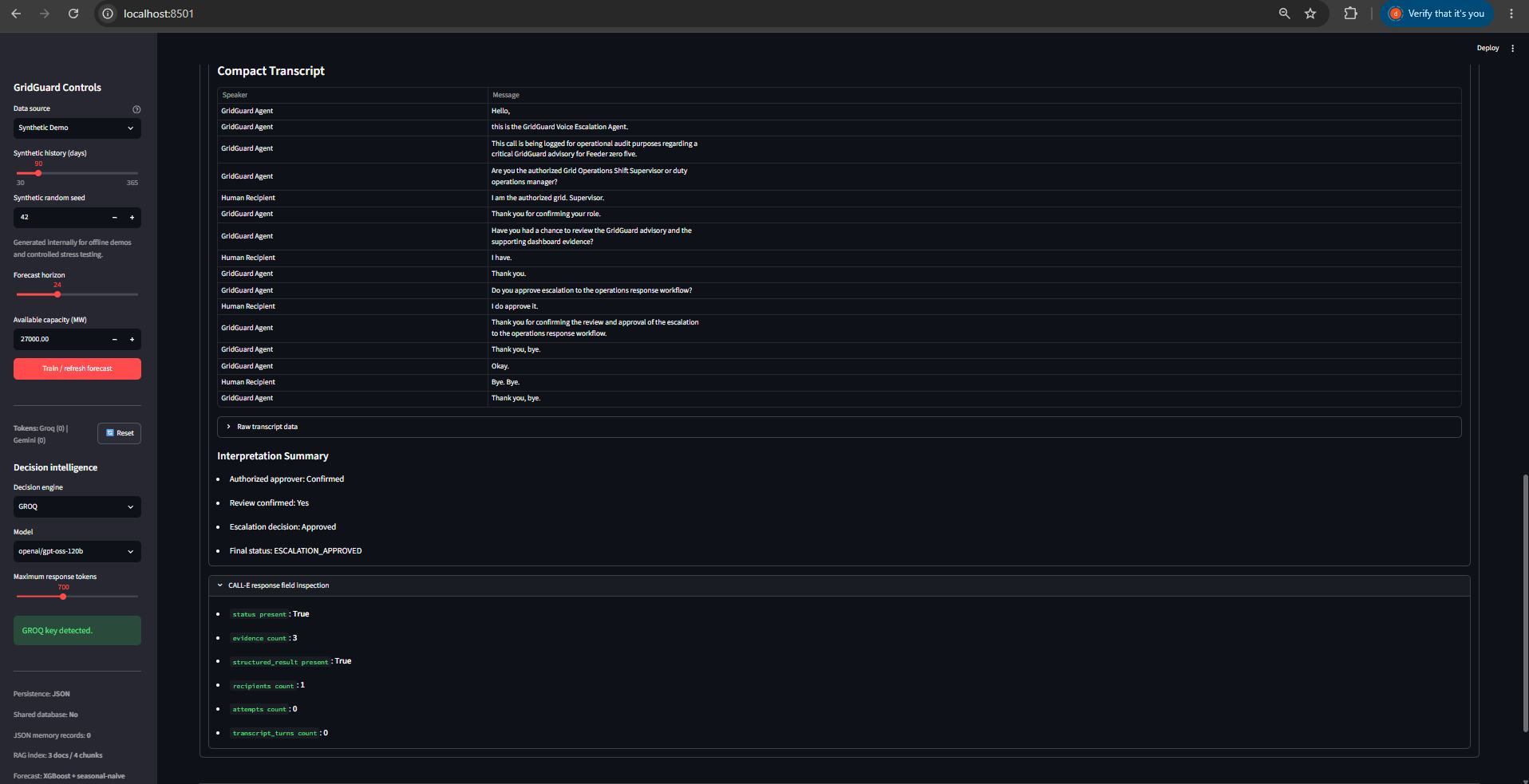
transcript(1).png Auditable human decision: The compact transcript records identity confirmation, evidence review, and explicit approval.
-
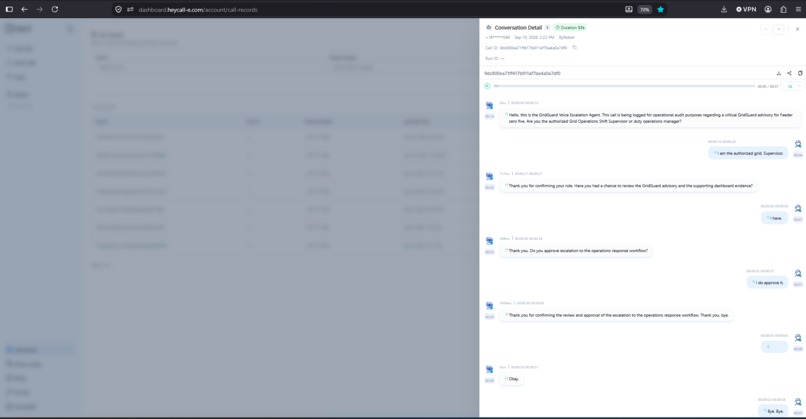
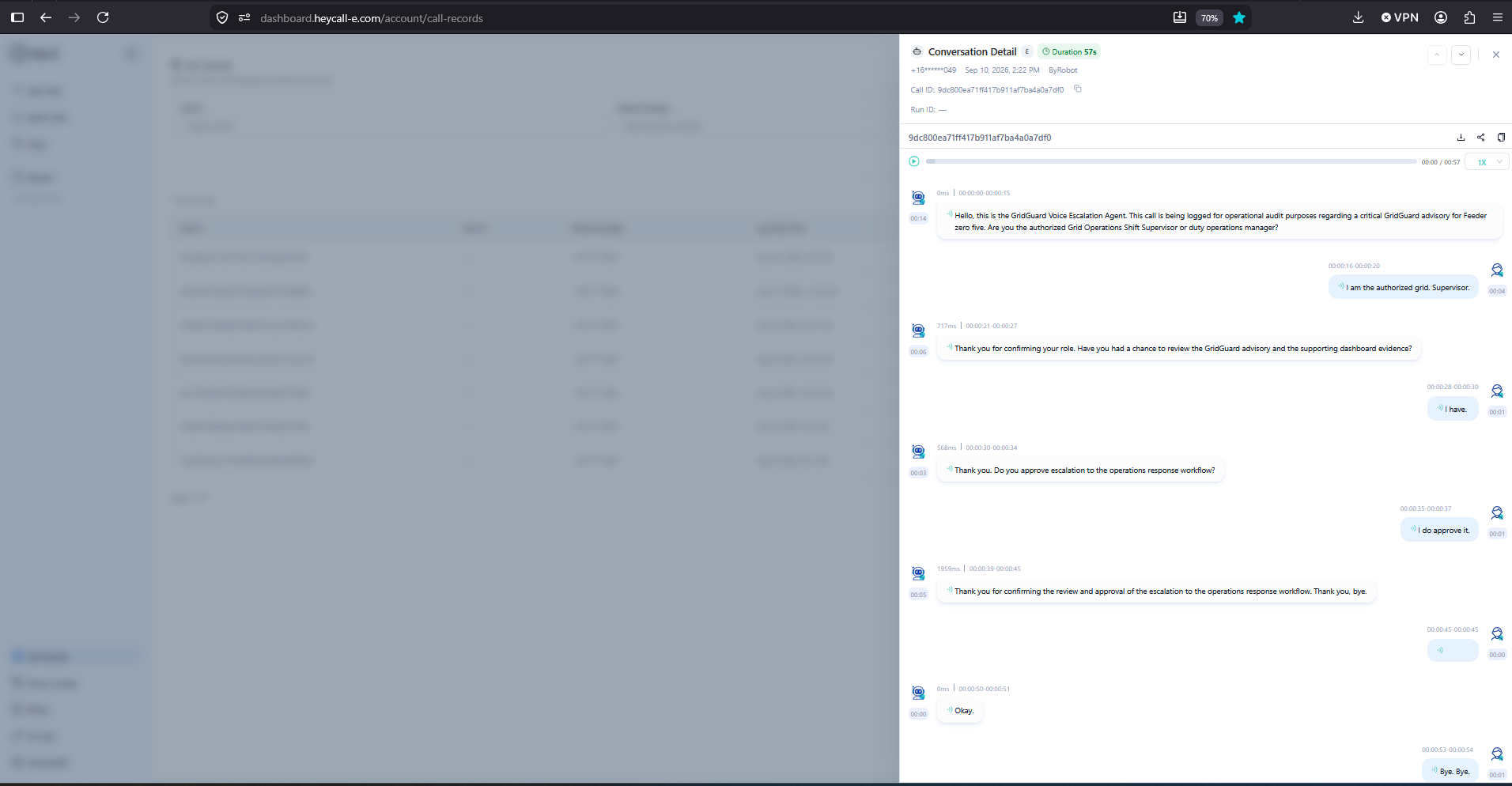
Independent CALL‑E call record: The CALL‑E conversation view confirms the disclosed test-call dialogue and approval outcome.
Inspiration
Grid operators need fast, well-documented escalation when forecast conditions point to a critical risk. But a phone call should never become an automatic decision: the right person must be identified, informed that they are speaking with an AI, given the evidence, and able to explicitly approve or decline the escalation.
GridGuard Voice Escalation Agent was built to demonstrate that safer pattern.
What it does
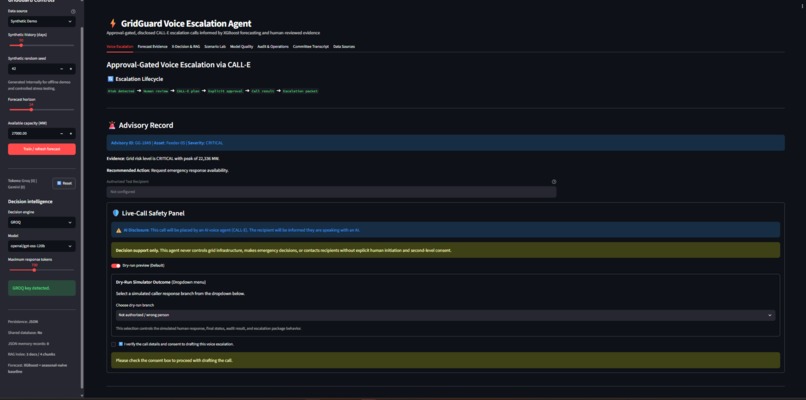
GridGuard turns forecast and grid-risk evidence into an approval-gated escalation workflow.
It presents the risk evidence, prepares a structured escalation package, and supports either a safe dry-run simulation or a disclosed CALL-E test call to an authorized recipient. The workflow requires human review and explicit confirmation before a call is placed. It records the outcome, compact transcript, escalation status, and audit package.
The agent is decision support only. It does not control grid infrastructure, make emergency decisions, or contact people without human initiation and consent.
How we built it
We built the application in Python with Streamlit, using XGBoost-based forecasting and a human-in-the-loop workflow. CALL-E provides the phone-call capability for the disclosed live demonstration.
Key components include:
- Forecast and grid-risk evidence
- A live-call safety panel with two-step confirmation
- Dry-run branches for safe, repeatable outcome testing
- Disclosed CALL-E test calls to an authorized recipient
- Structured escalation packages, transcripts, and JSON audit records
- A public Railway deployment for the interactive demo
Challenges we ran into
The central challenge was designing an AI call workflow that demonstrates useful automation without pretending that a model should make operational or emergency decisions.
We had to separate simulation from live calling, make consent and disclosure visible in the interface, handle multiple possible human responses, and preserve a clear audit trail. We also had to ensure the live test was limited to an authorized recipient and framed as a non-emergency test call.
Accomplishments that we're proud of
- Built an end-to-end, approval-gated escalation workflow.
- Added clear AI disclosure and two explicit human confirmation gates before a live call.
- Created dry-run outcomes for authorized, rejected, pending-review, wrong-recipient, and manual-follow-up paths.
- Completed a disclosed CALL-E test call with an approved escalation outcome.
- Captured the resulting escalation package, compact transcript, and independent CALL-E conversation record.
- Made the project publicly accessible through Railway.
What we learned
Voice agents are most trustworthy when they are designed around human authority rather than around autonomous action. Explicit disclosure, confirmation gates, structured outcomes, and auditable transcripts are not extras; they are core safety features.
We also learned that a dry-run mode is essential. It makes it possible to test sensitive escalation paths repeatedly before any real call is placed.
What's next for GridGuard Voice Escalation Agent
Next, we plan to add richer recipient verification, configurable escalation policies, stronger persistence for audit records, additional real-world data adapters, and role-based access controls.
We would also expand the scenario library and use CALL-E outcomes to support supervised follow-up workflows—while keeping human approval mandatory for every real escalation.

Log in or sign up for Devpost to join the conversation.