-
-
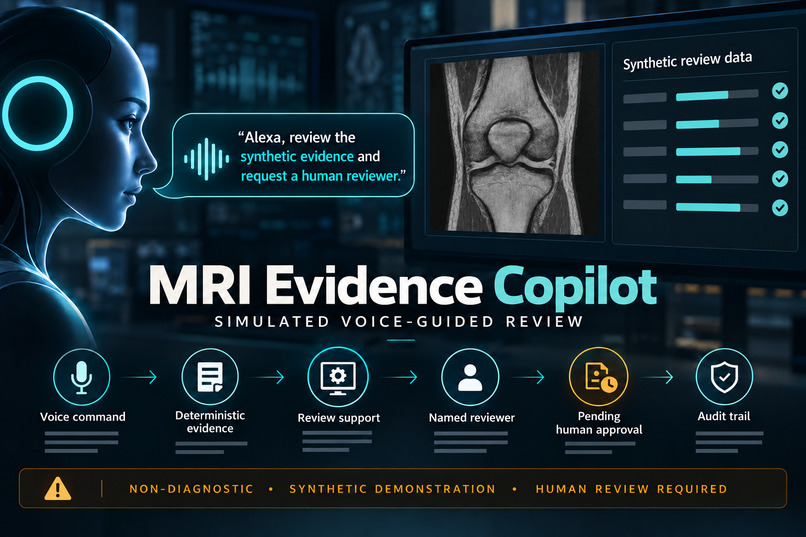
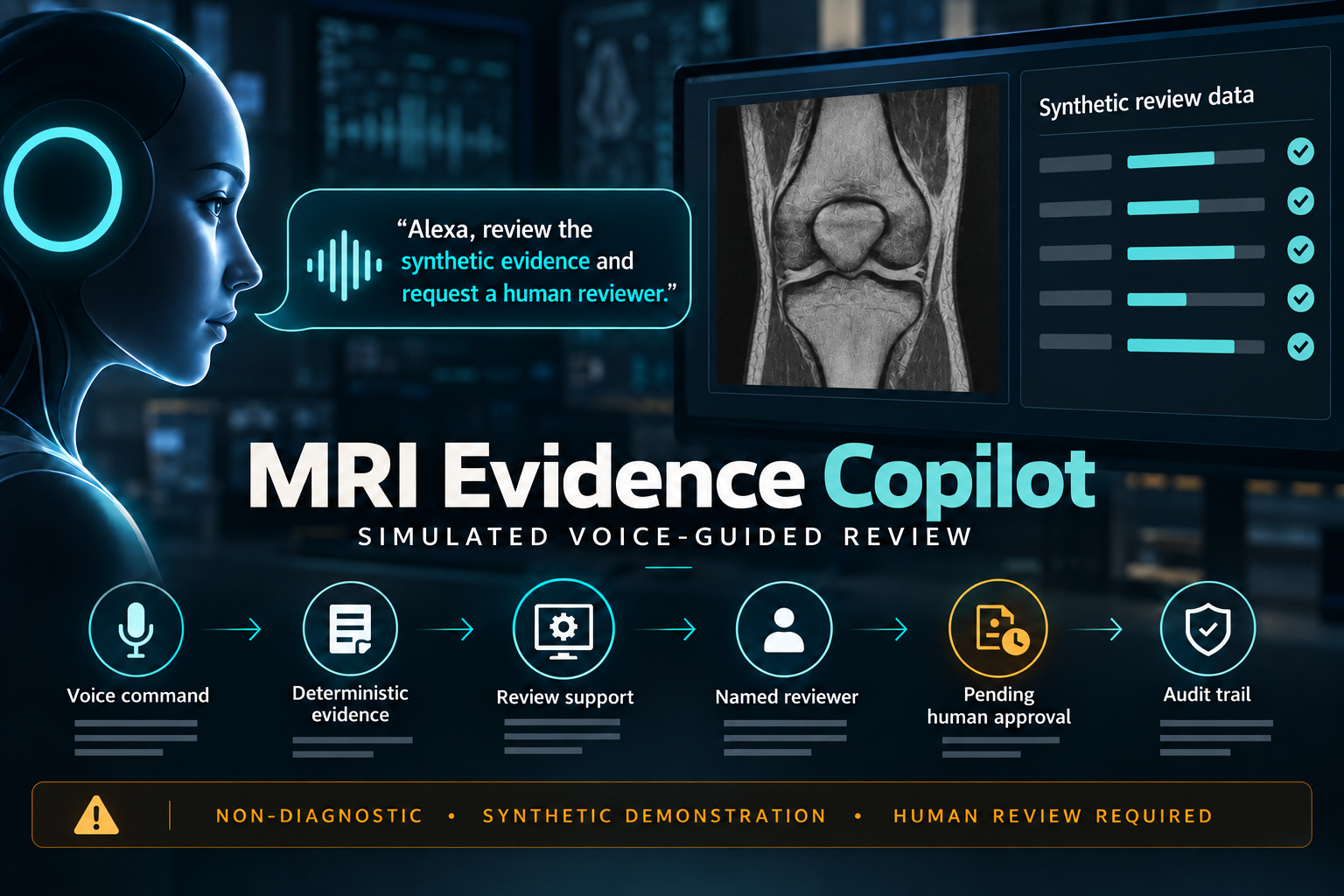
Simulated voice-guided review of synthetic RSNA knee MRI evidence—deterministic support, named human reviewer, and no autonomous approval.
-
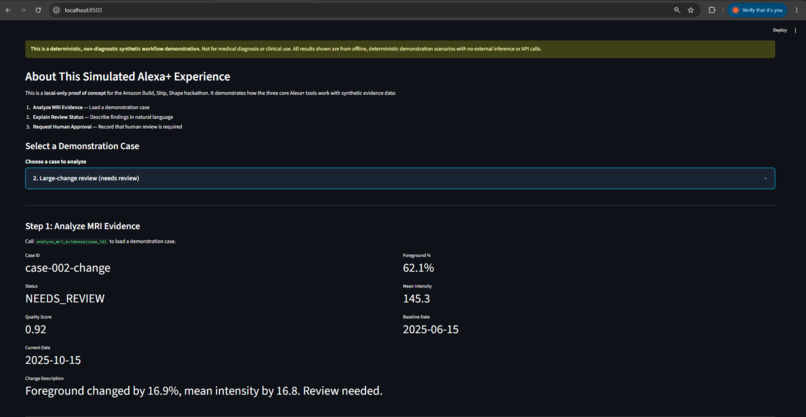
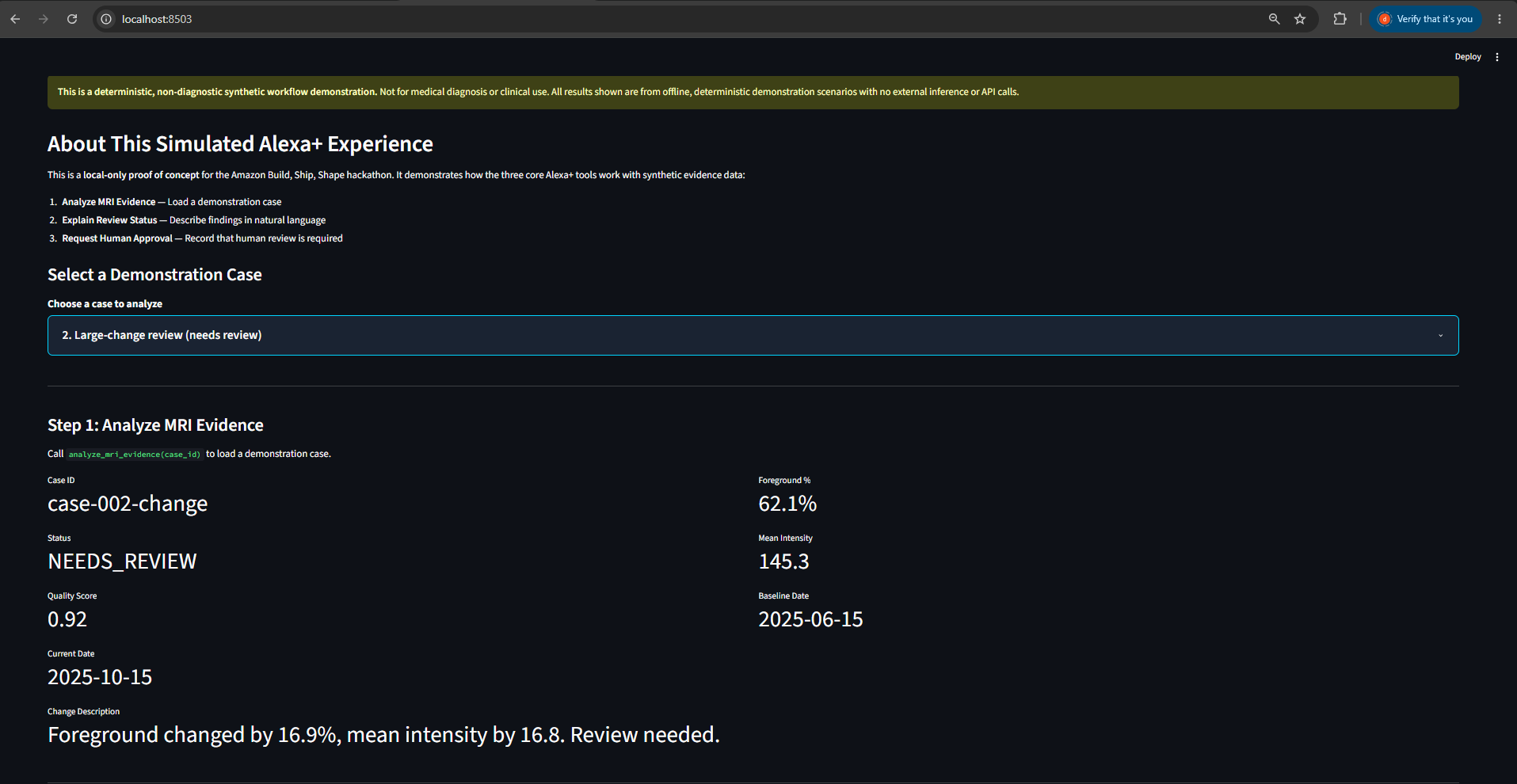
The workflow starts with a selected synthetic demonstration case.
-
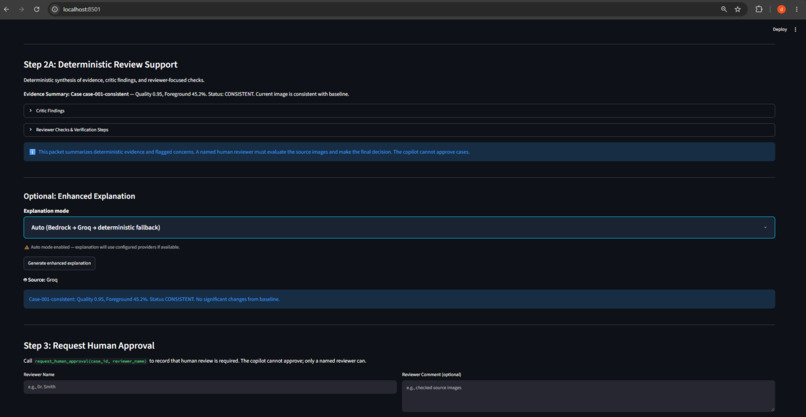
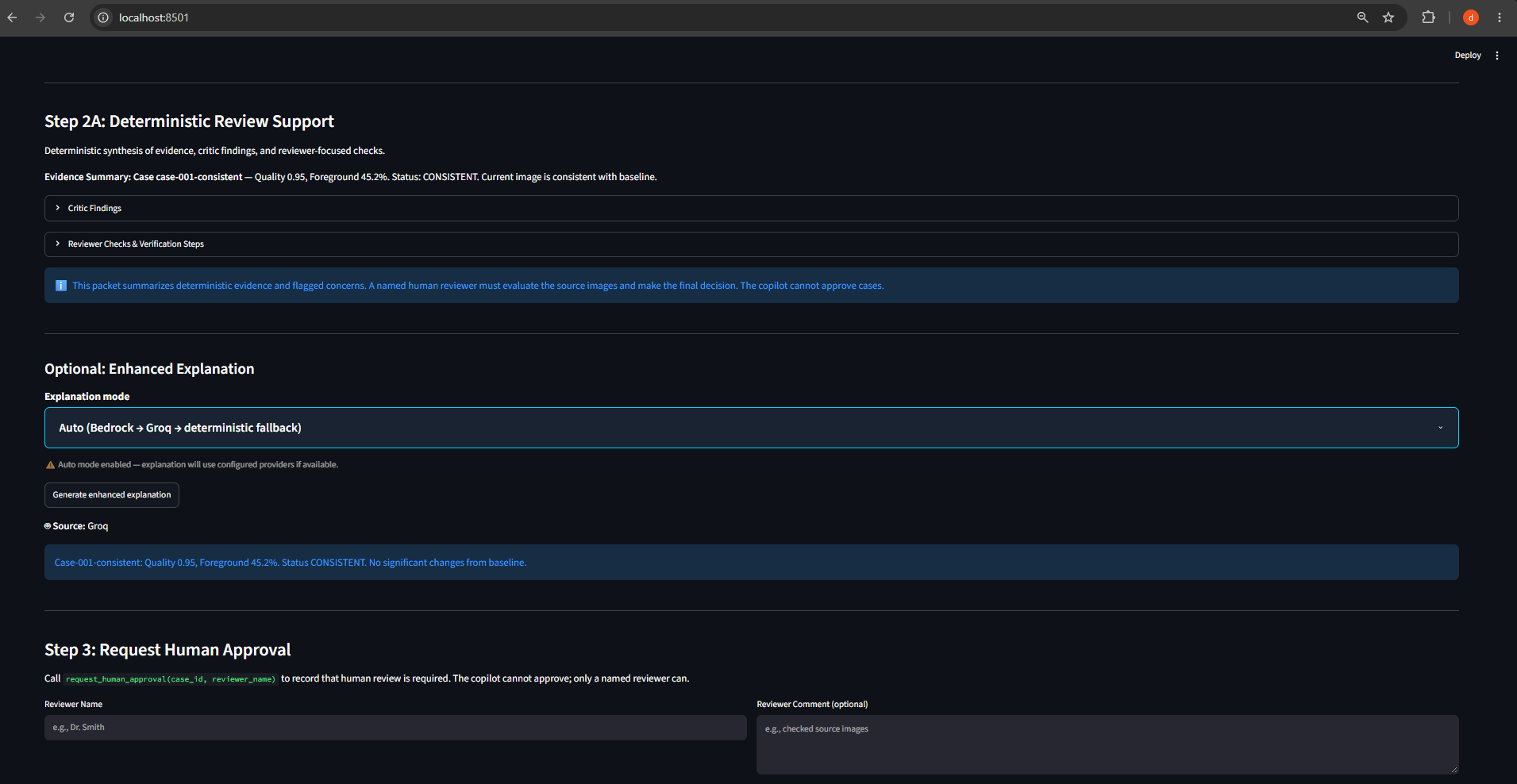
The deterministic evidence and review status remain the source of truth.
-
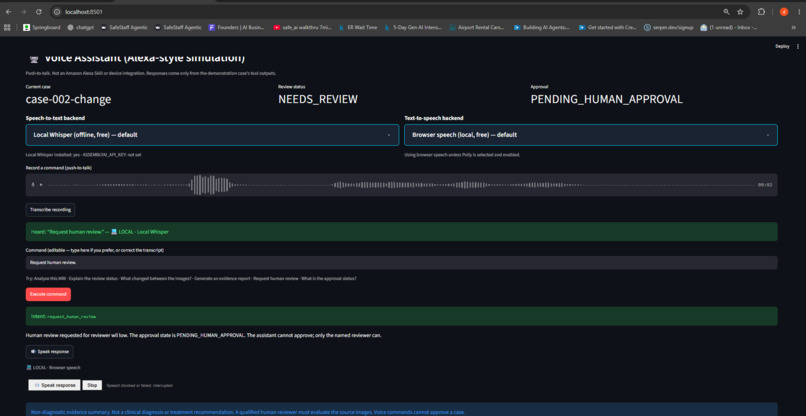
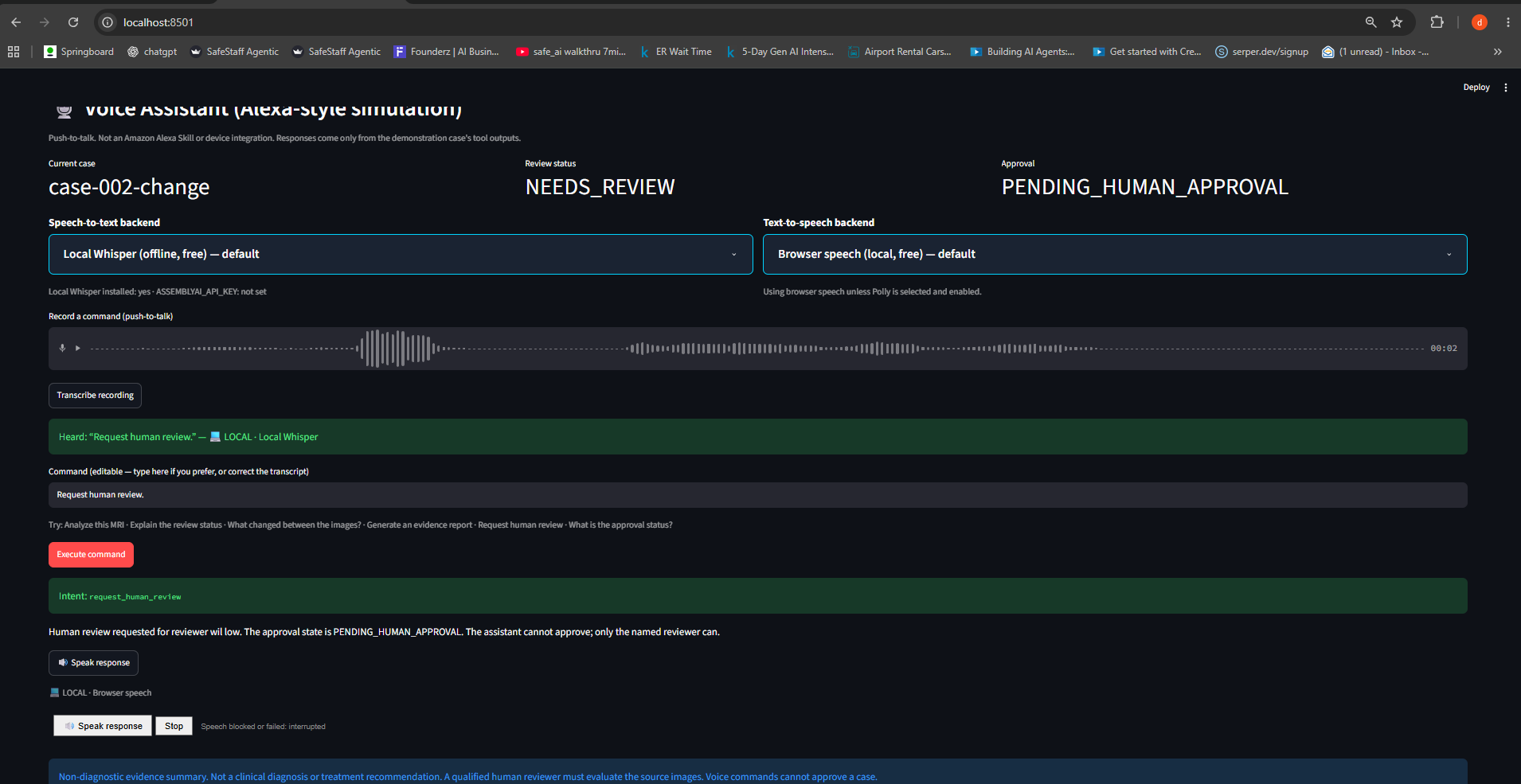
A review request requires a named human reviewer
-
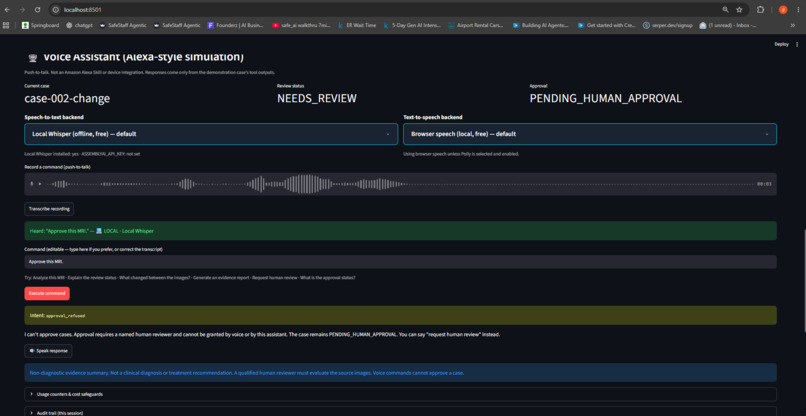
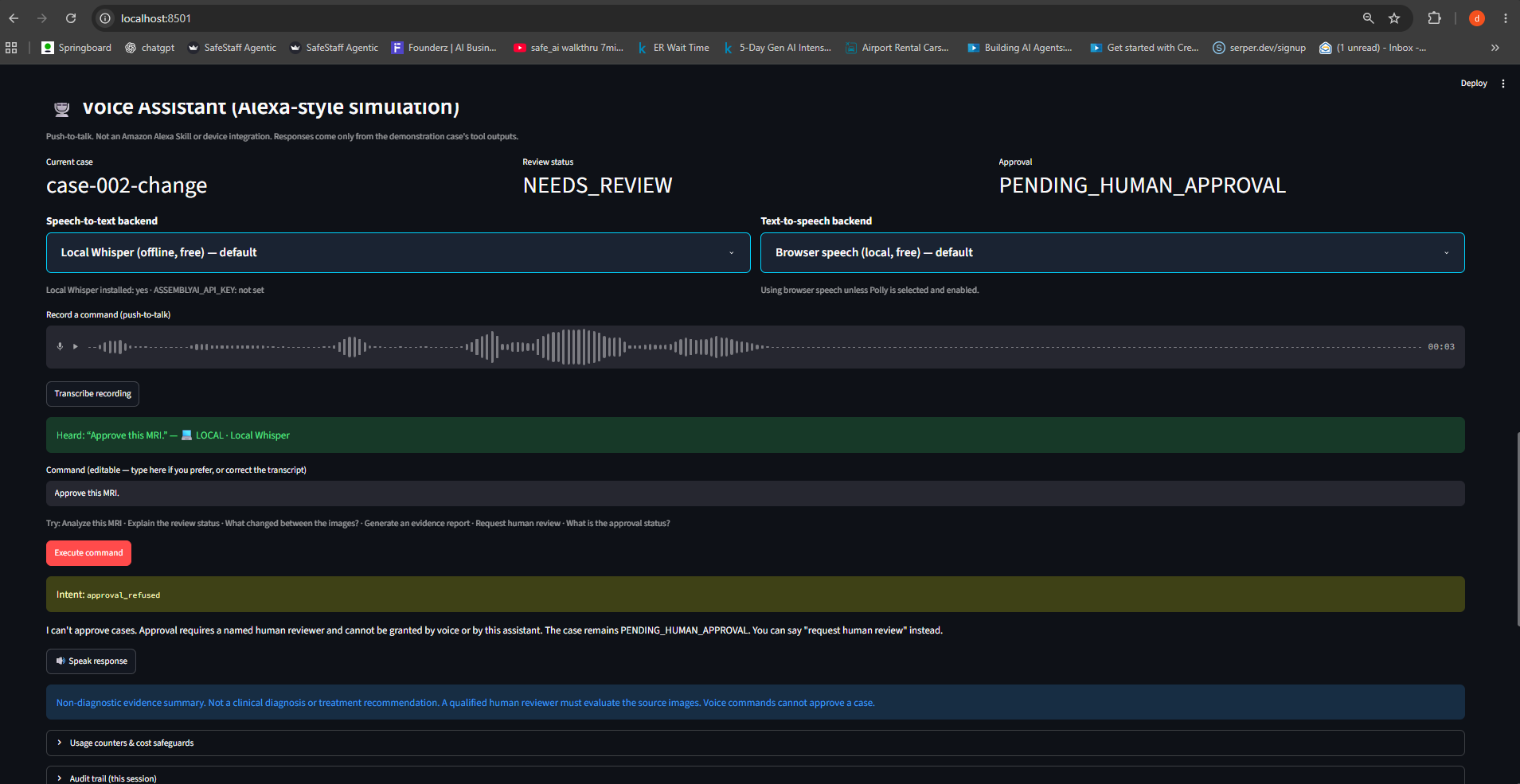
Users can type a command or use push-to-talk in the simulated voice interface
-
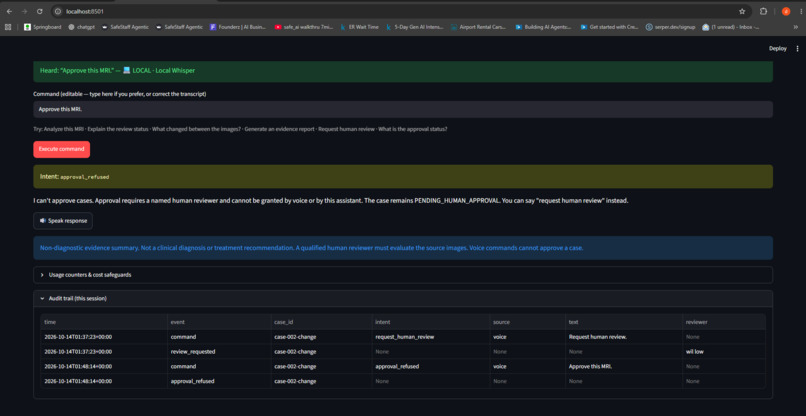
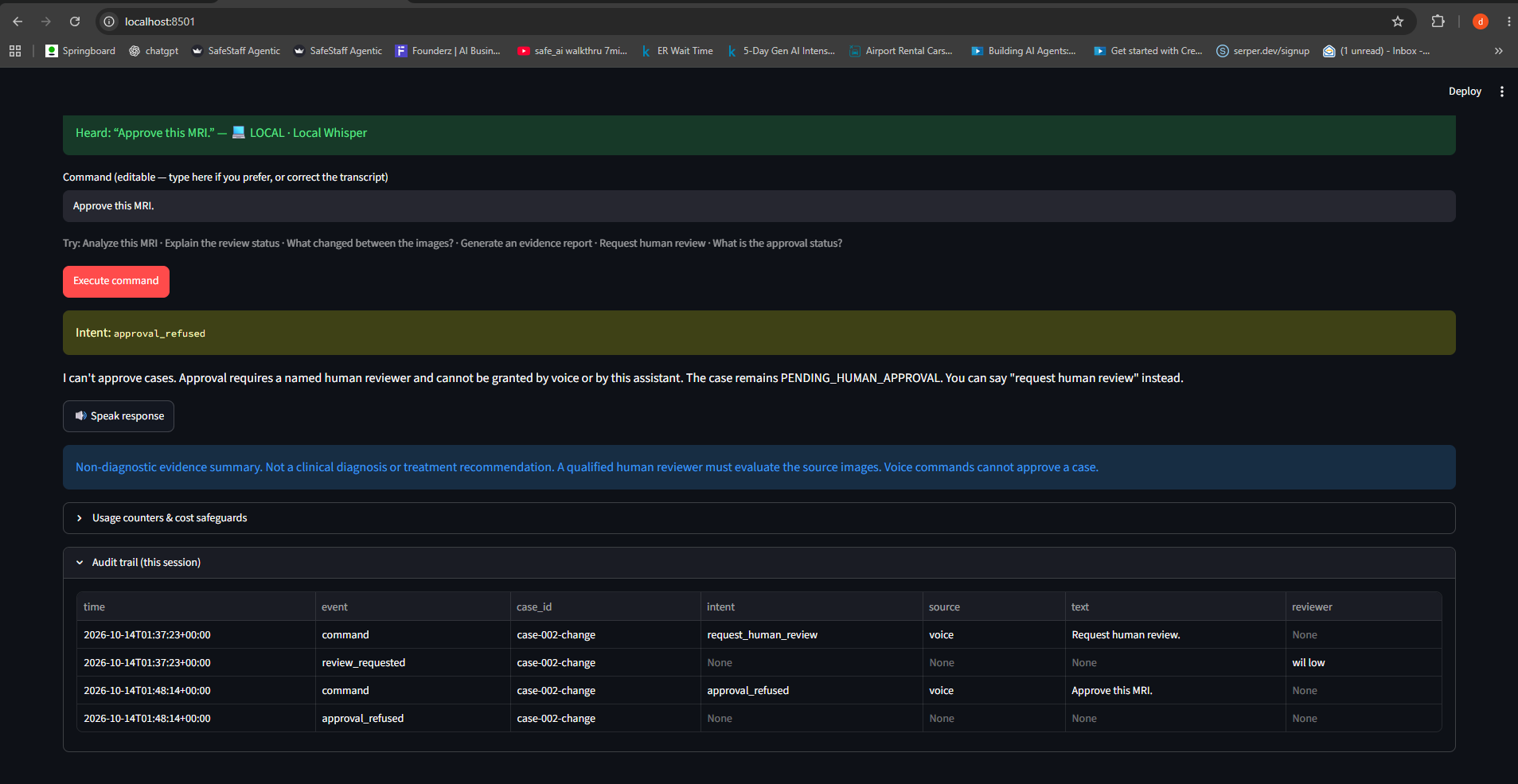
The workflow records the evidence-review request, safety refusal, and pending-approval status.
Inspiration
High-stakes review workflows need clear evidence, controlled escalation, and a human decision-maker—not an assistant that overstates certainty. We built GridGuard Alexa+ Autopilot as a voice-guided demonstration of that design using synthetic MRI workflow evidence.
What it does
The app accepts typed or push-to-talk commands and provides non-diagnostic review support for a synthetic demonstration case.
It:
- derives deterministic technical evidence and review status;
- presents concise review support;
- can generate an optional Groq-enhanced explanation of the already-derived evidence;
- routes a review request to a named human reviewer;
- keeps the case at
PENDING_HUMAN_APPROVAL; and - refuses to approve cases itself.
The public deployment uses synthetic evidence only. A separate private local-image mode is in-memory, non-diagnostic, disabled by default, and prevents cloud calls.
How we built it
We built the interface in Python and Streamlit. Typed and push-to-talk interaction feed a voice-routing layer, with Local Whisper and browser speech as local defaults.
The core review path is deterministic: it calculates technical evidence, produces review support, and enforces the approval gate. Optional LLM explanation runs only after deterministic evidence exists. In Auto mode, the app uses Groq when configured and safely falls back to deterministic language if unavailable.
We also implemented a provider-neutral Amazon Bedrock Converse adapter, while keeping deterministic fallback behavior and local-image privacy restrictions intact.
Challenges we ran into
The main challenge was preserving strict safety and privacy boundaries while adding optional AI explanations. We needed to ensure that an LLM could explain evidence without changing the evidence, approving a case, or creating a diagnosis.
We also encountered an AWS account authorization restriction during live Bedrock testing. Rather than weaken the workflow or block the demo, we retained the tested Groq-to-deterministic fallback path.
Accomplishments that we're proud of
- A deterministic-by-default evidence and review workflow
- Voice-guided interaction with typed fallback
- A hard
PENDING_HUMAN_APPROVALgate - Explicit refusal of copilot approval requests
- Optional Groq explanation with safe deterministic fallback
- Private local-image support that remains in-memory and disables cloud providers
- A deployment-ready synthetic public demonstration
What we learned
Reliable AI workflow design is less about adding a model everywhere and more about defining boundaries: what is deterministic, what an LLM may explain, what must remain private, and what only a named human can decide.
We also learned to treat provider availability and authorization as normal operational failure modes, with safe fallbacks rather than hidden assumptions.
What's next for GridGuard Alexa+ Autopilot
Next, we plan to add a small, curated, reference-grounded explanation layer and evaluation scenarios for consistency, uncertain evidence, escalation, and approval enforcement.
We will continue keeping the public demo synthetic-only while improving auditability, evaluation coverage, and human-review workflow clarity.
