-
-
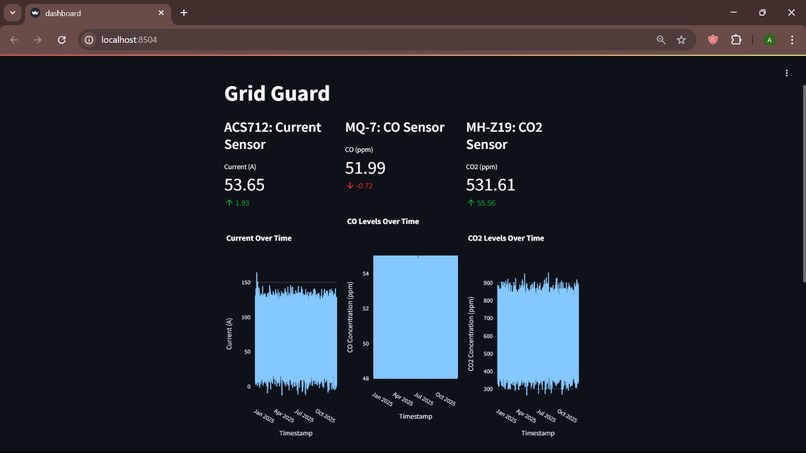
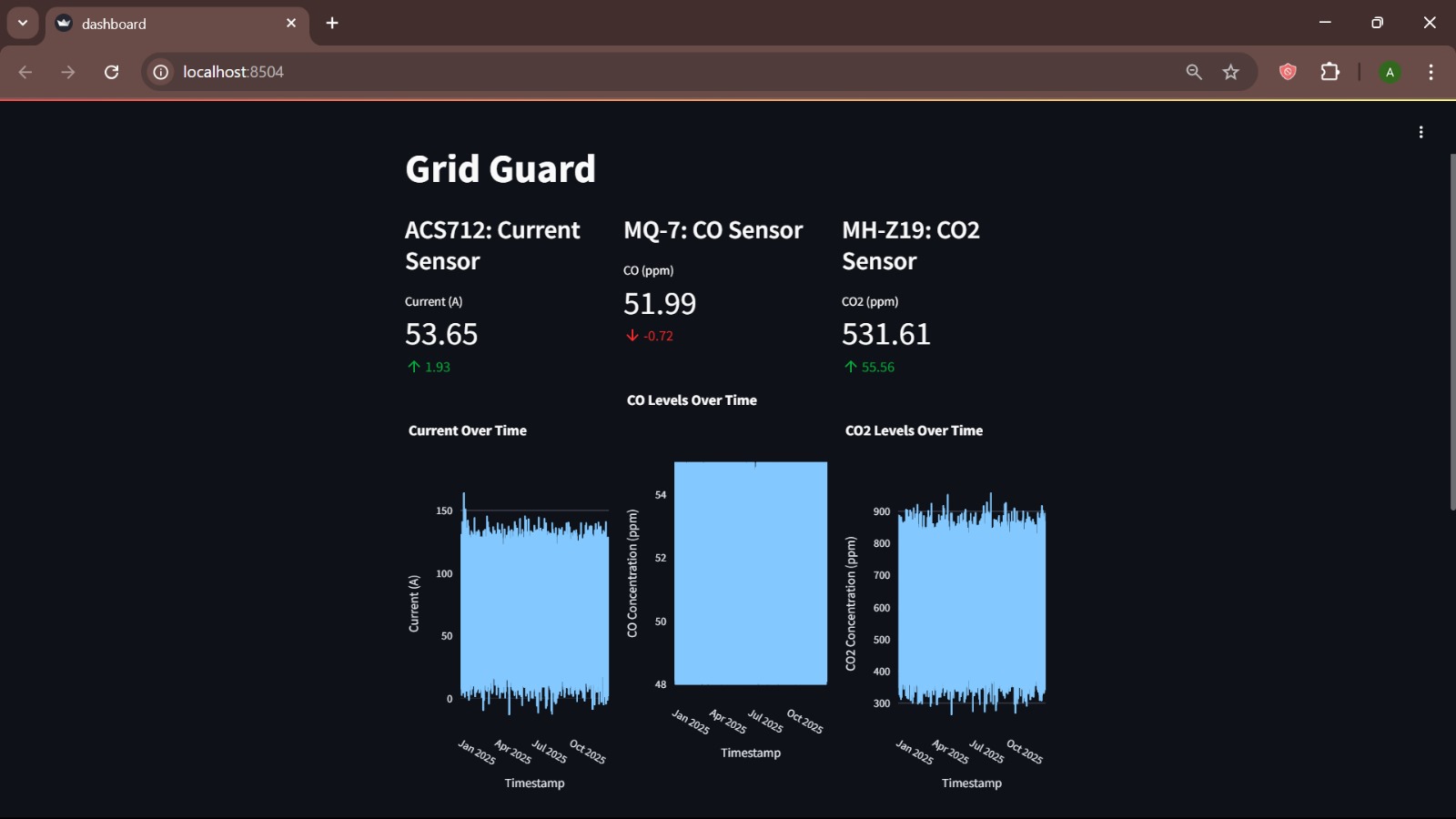
GridGaurd Dashboard showing the Sensor readings
-
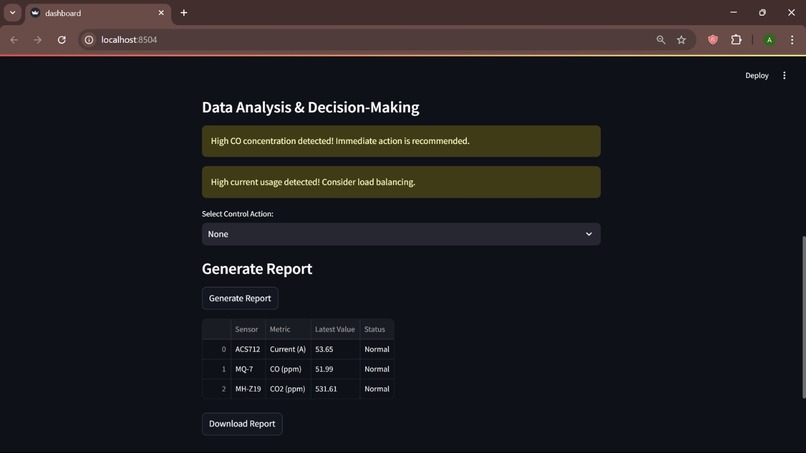
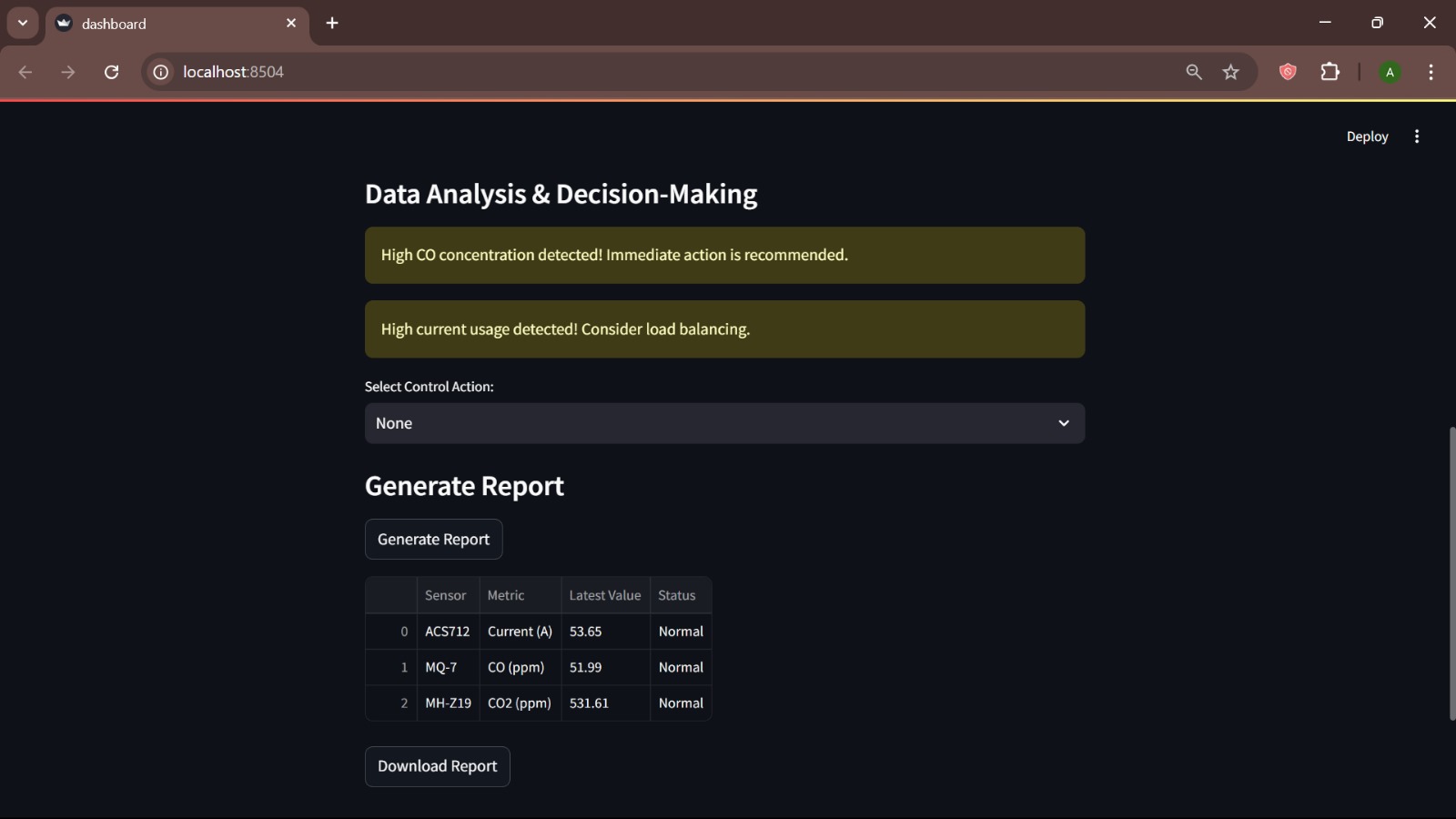
GridGuard dashboard Feedback control system
Inspiration:
The idea for GridGuard arose from the pressing need to enhance the efficiency, security, and sustainability of energy systems, especially in the context of the increasing integration of renewable energy sources. During my research, I realized that while renewable energy is essential, managing and optimizing energy storage and grid security presents significant challenges. Inspired by these challenges, I envisioned a system that could leverage artificial intelligence (AI) and IoT sensors to optimize energy usage, improve grid security, and contribute to decarbonization.
What I Learned:
Throughout this project, I learned about the potential of combining AI with sensor technologies for improving energy systems. Key takeaways include:
- Energy Optimization: Understanding the role of sensors in monitoring energy usage and storage, and how AI can optimize these processes.
- Grid Security: Recognizing the need for robust monitoring systems and threat detection in the context of critical infrastructure, particularly in power grids.
- Decarbonization: Learning how real-time data from sensors like CO2 sensors can contribute to reducing carbon emissions and improving sustainability.
How I Built the Project:
Although the physical hardware was not implemented during the hackathon, I thoroughly researched and studied the relevant sensors that are central to the GridGuard system. I used these insights to create a theoretical flowchart demonstrating how the system would function:
Energy Storage Optimization:
- The system utilizes current sensors (ACS712) to monitor energy storage and usage in real time.
Grid Security Monitoring:
- MQ-7 gas sensors and MH-Z19 CO2 sensors are crucial for detecting hazardous gases and monitoring CO2 emissions in the vicinity of the power grid.
Decarbonization Tracking:
- CO2 sensors play a key role in tracking emissions and ensuring that the system supports efforts to reduce carbon footprints.
- The AI system provides recommendations to users on how to adjust energy consumption patterns based on real-time carbon emission data.
Challenges Faced:
- Sensor Integration: While I couldn’t physically integrate the sensors, understanding their theoretical integration into the system was challenging. Ensuring that data from multiple sensors could be used effectively in the AI models took significant research.
- Data Processing Algorithms: Developing algorithms that would work in real-time to predict energy usage, optimize storage, and detect security threats required considerable effort to ensure efficiency and accuracy.
Despite these challenges, the project successfully demonstrated how an AI-powered energy management system could utilize IoT sensors to optimize energy storage, enhance grid security, and monitor carbon emissions, paving the way for a sustainable future.
Built With
- git
- numpy
- pandas
- python
- scikit-learn
- streamlit
- support-vector-regression


Log in or sign up for Devpost to join the conversation.