-
-
GridFlex Results
-
GridFlex Solana
-
GridFlex Forecast
-
GridFlex Settle
-
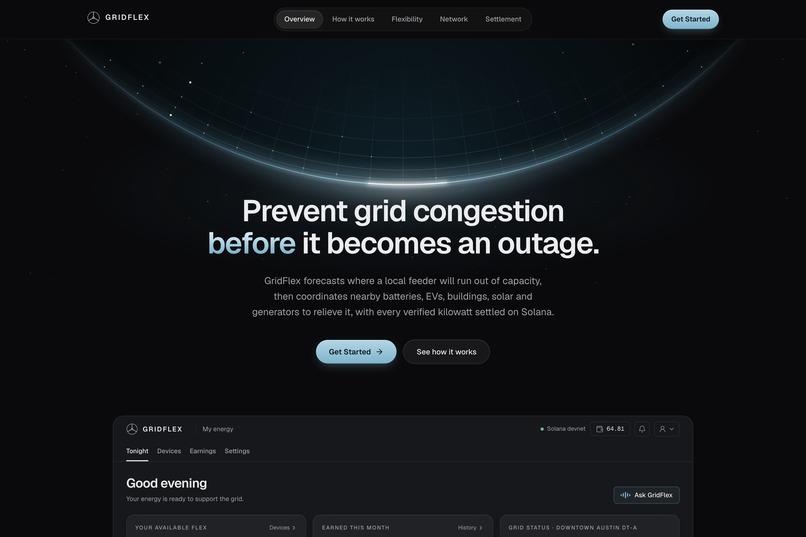
GridFlex Cover
-
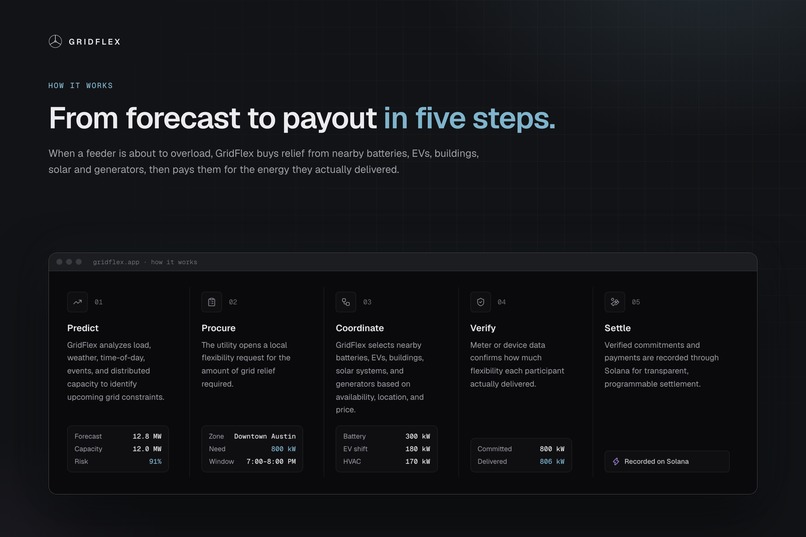
GridFlex Steps
-
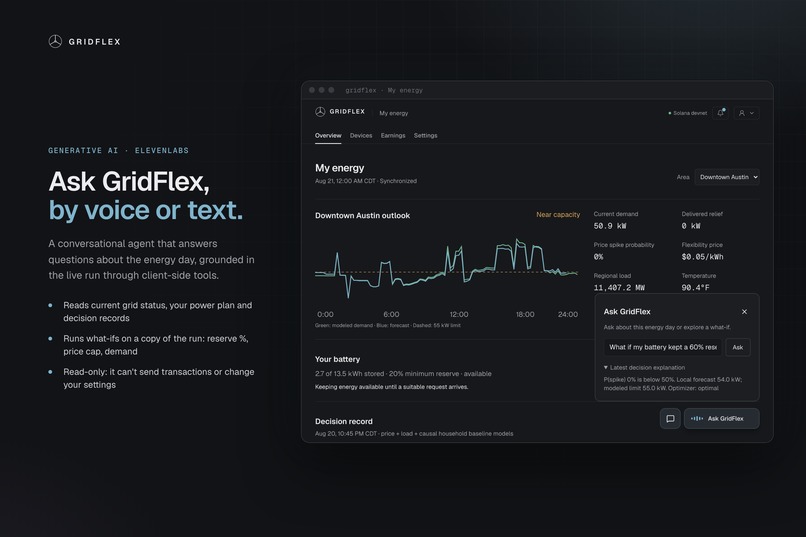
GridFlex Voice
-
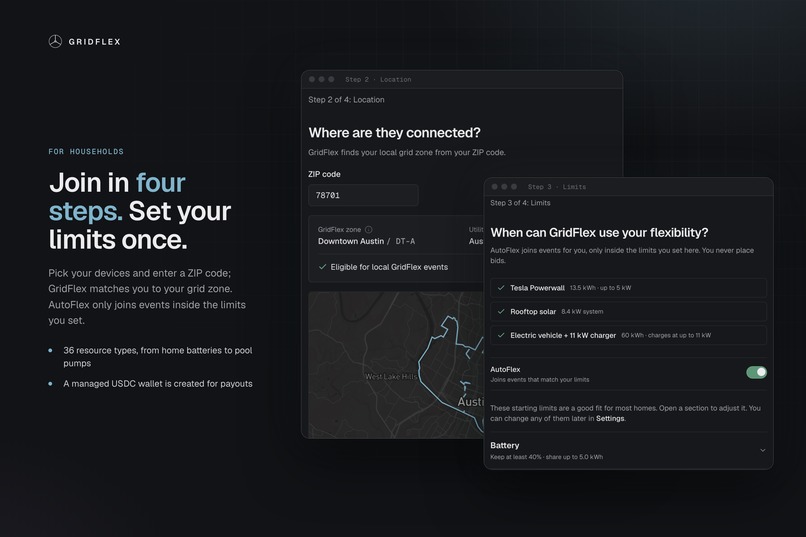
GridFlex Onboarding
Inspiration
Electricity infrastructure powers nearly everything modern life depends on, from hospitals, water treatment, and the refrigeration of food and medicine to communication networks, banking, and schools. However, that infrastructure can vary significantly from country to country, or even from state to state.
The root inspiration for this project came from a team member's home country, where severely unstable grid infrastructure makes blackouts and outages a part of everyday life. In Venezuela, people often rent or buy homes based on the availability of alternative energy sources, such as generators or solar panels. This inspired us to create an energy exchange and coordination system that could help keep the grid stable, rather than simply filling the gap after it collapses.
What it does
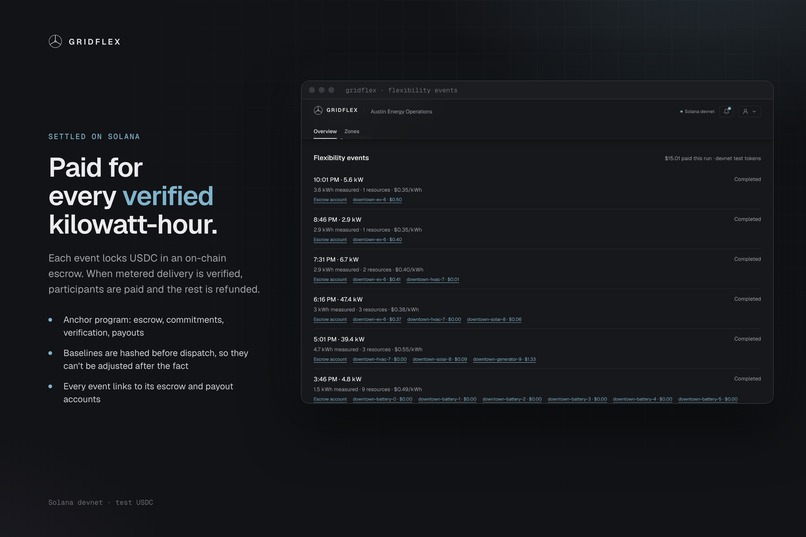
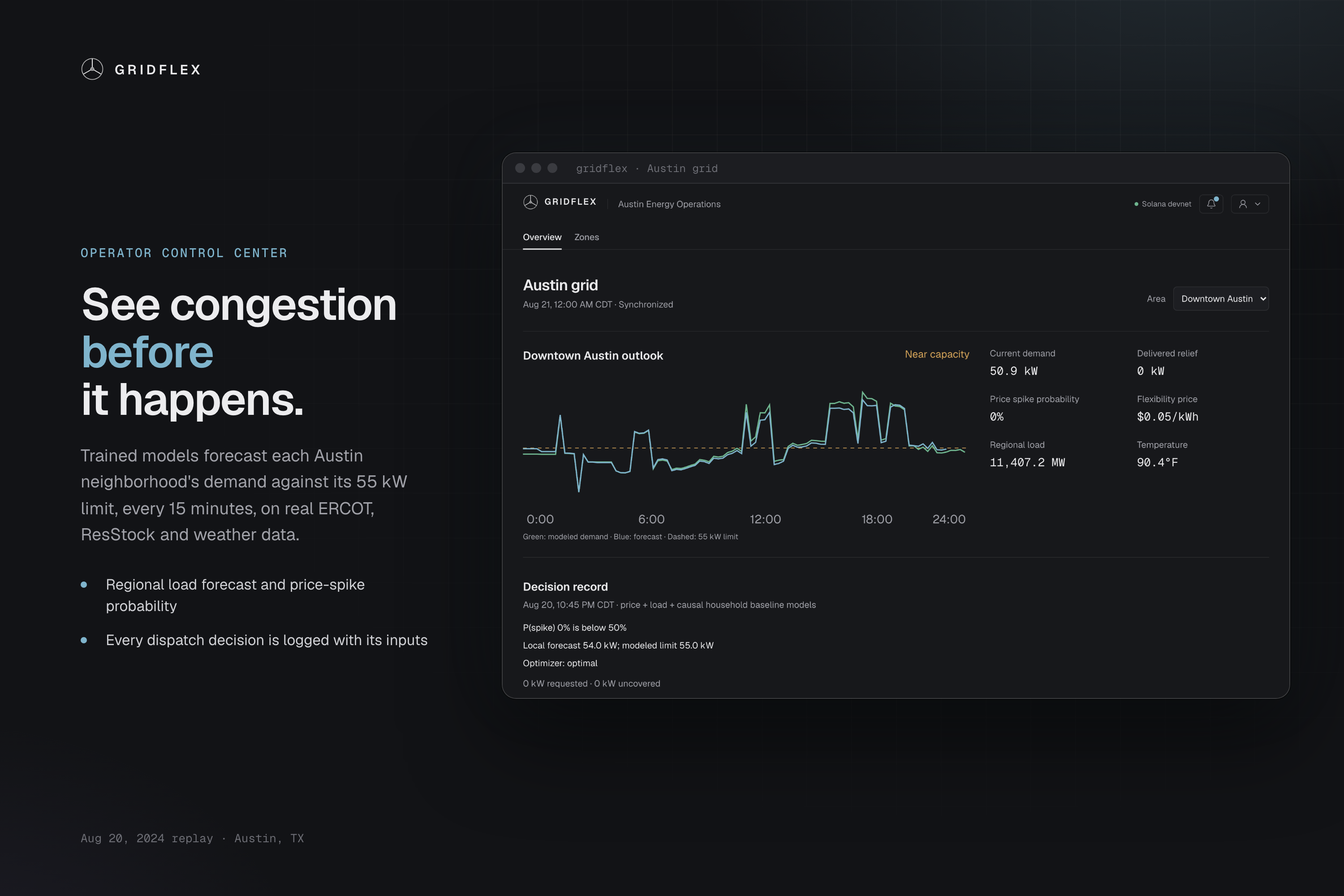
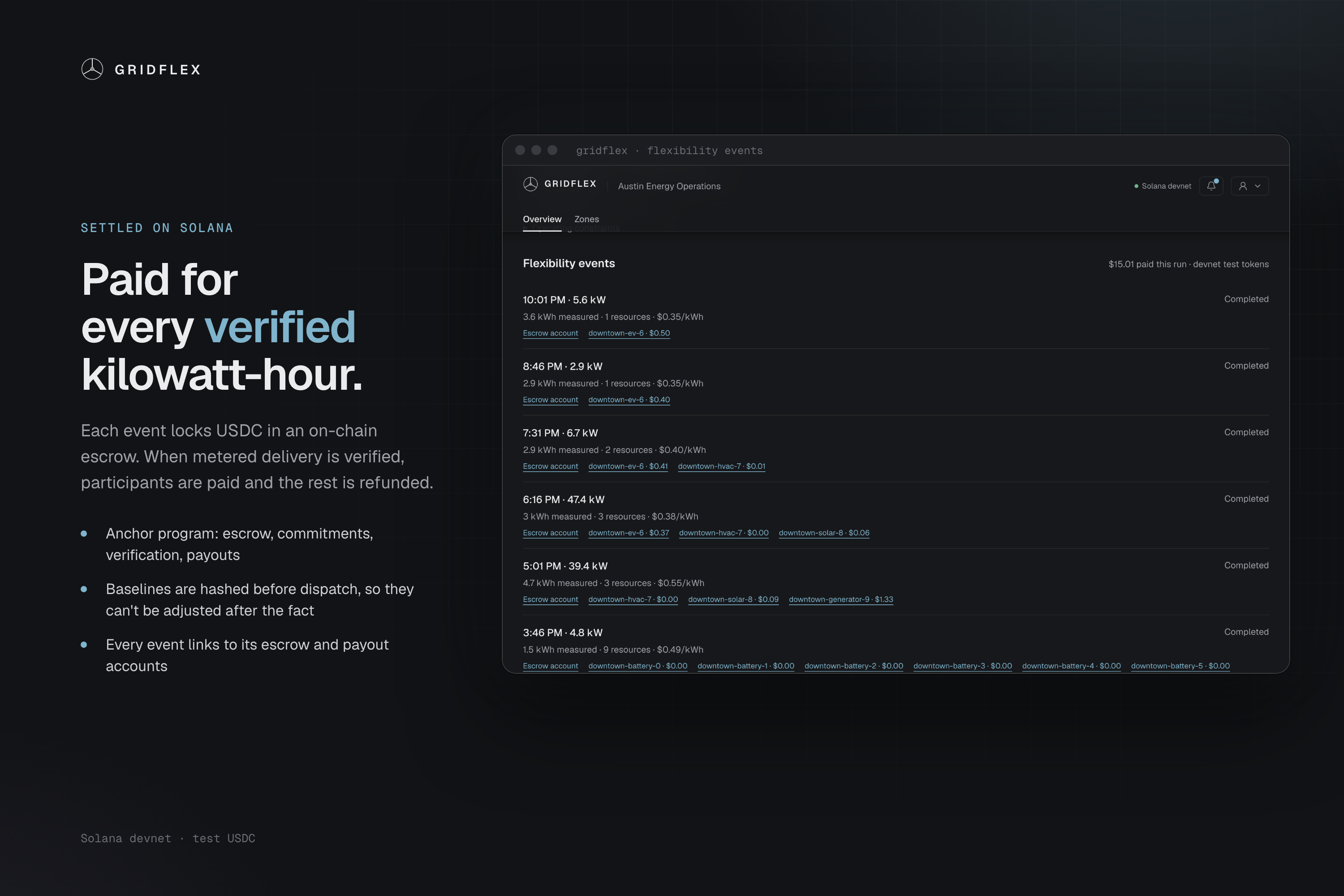
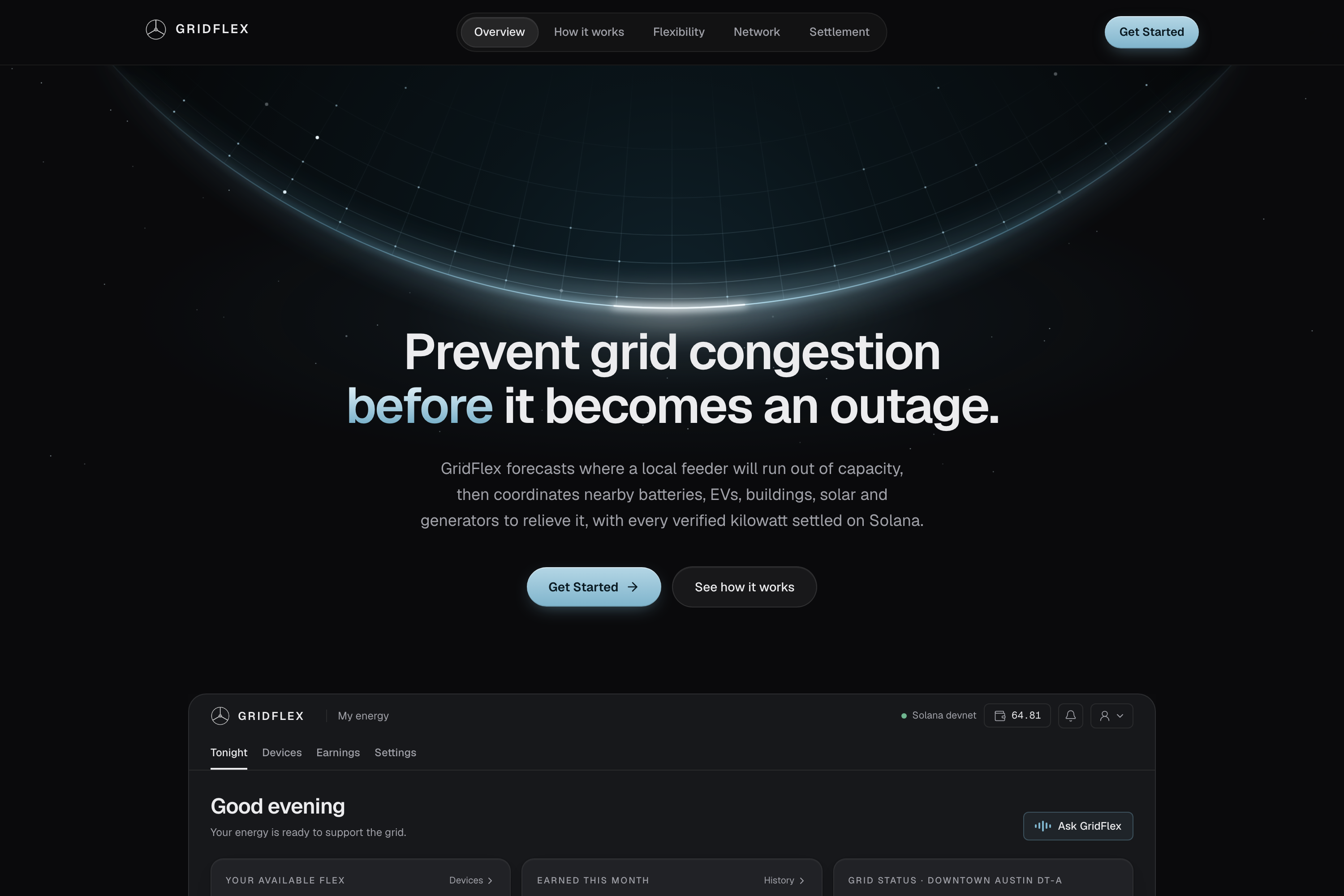
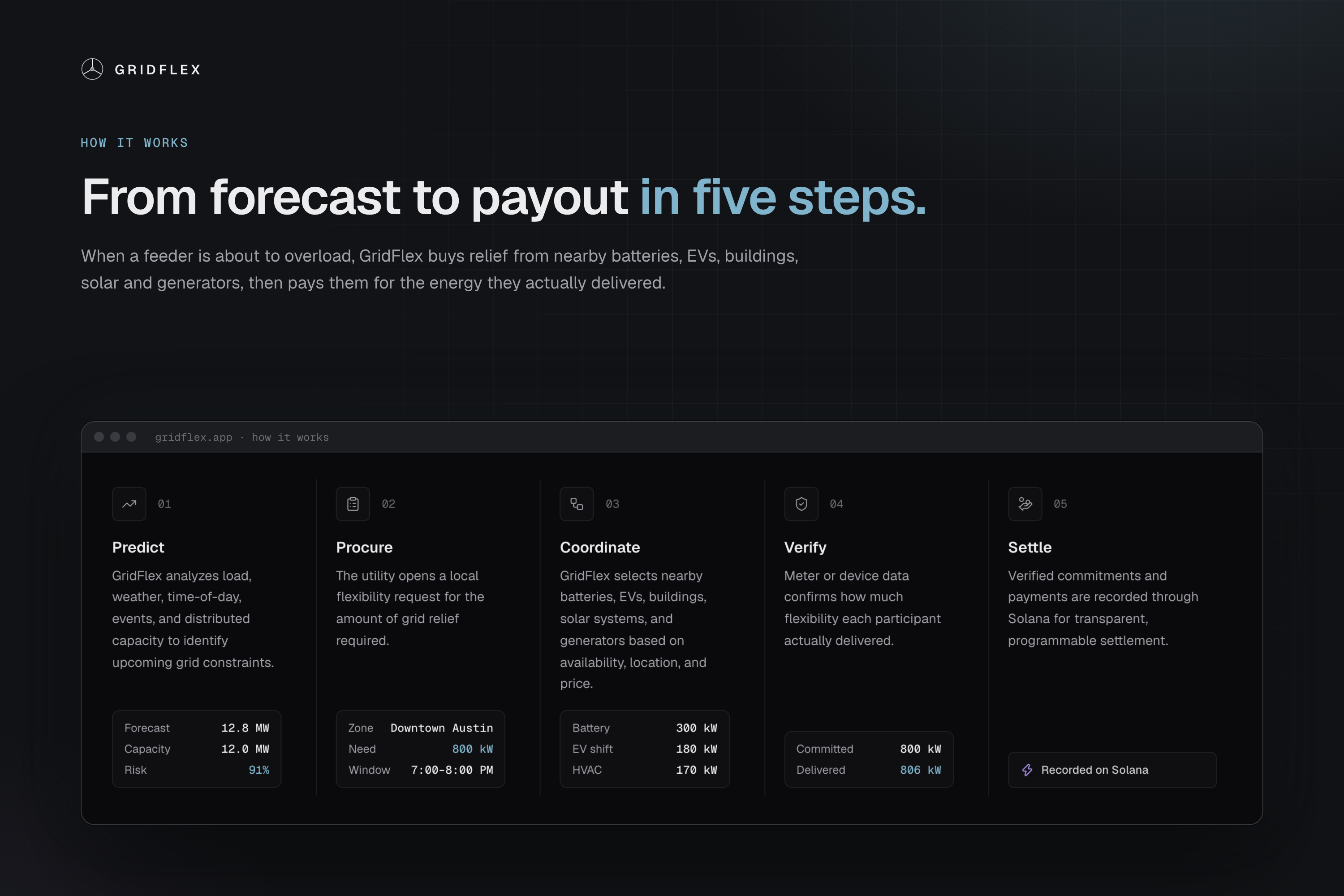
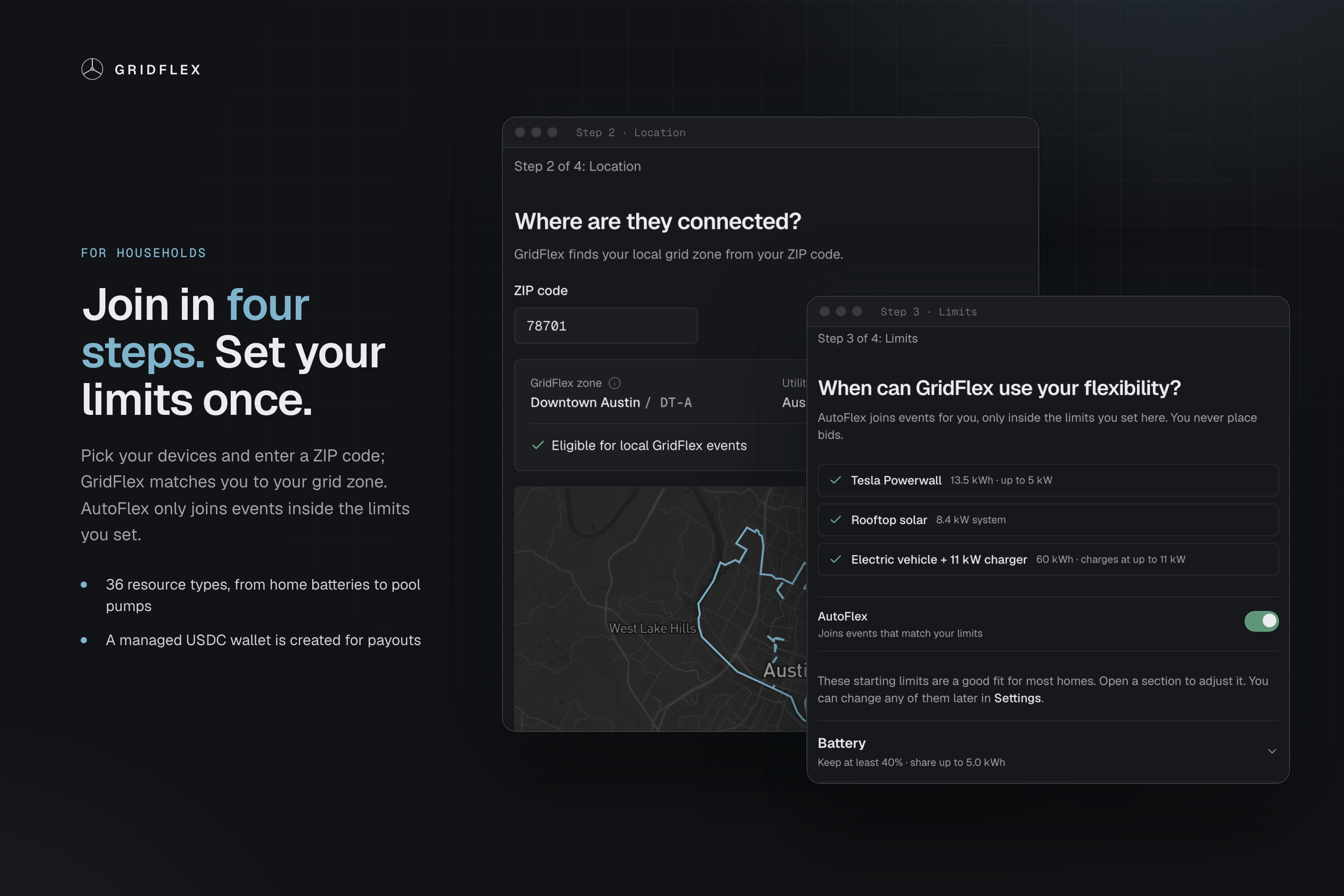
Our platform turns homes into small contributors to a virtual power plant, using AI to forecast when the grid will be strained and rewarding users through Solana microtransactions for supplying excess energy or reducing their usage at the right moment. What started as a response to one country's energy crisis became a model that could help make any grid more resilient.
How we built it
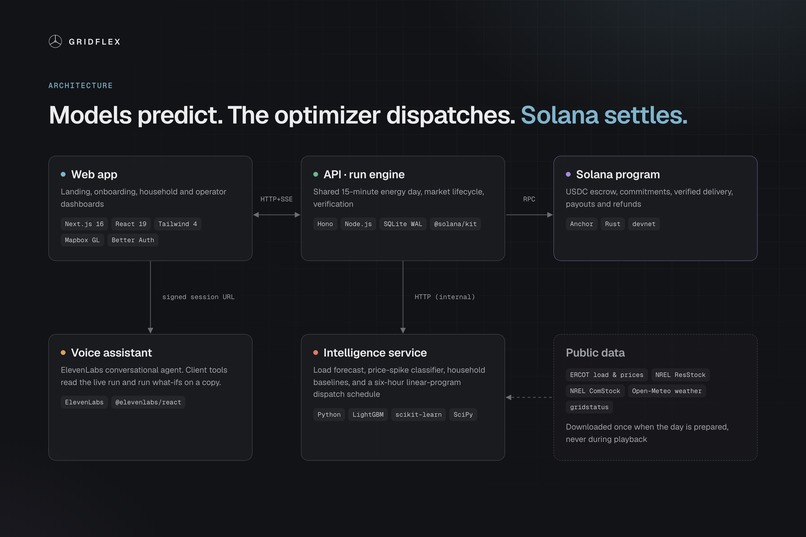
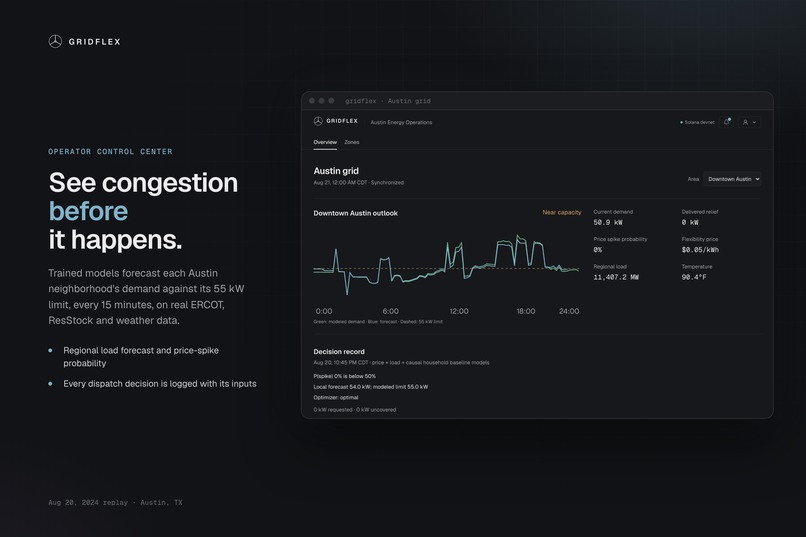
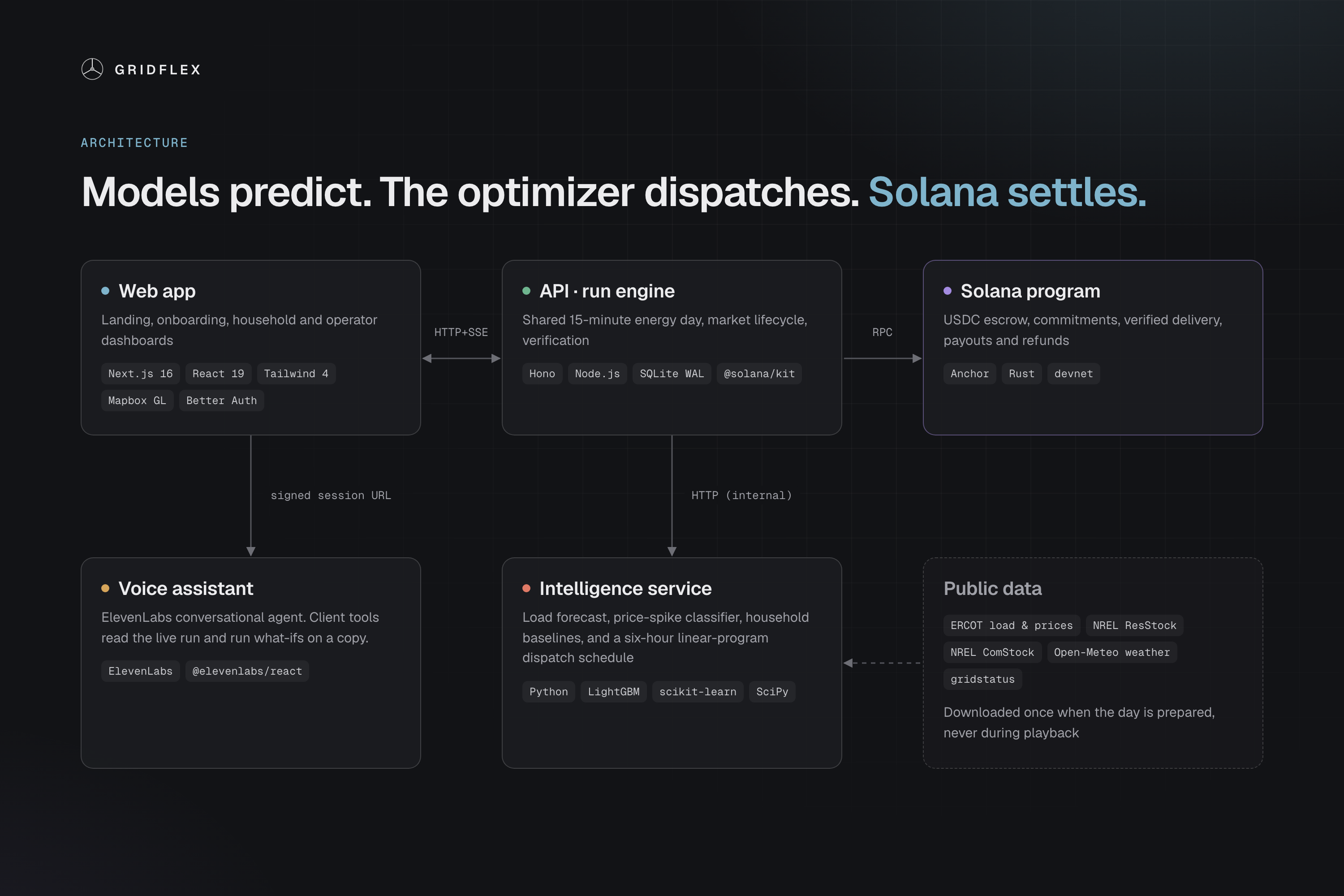
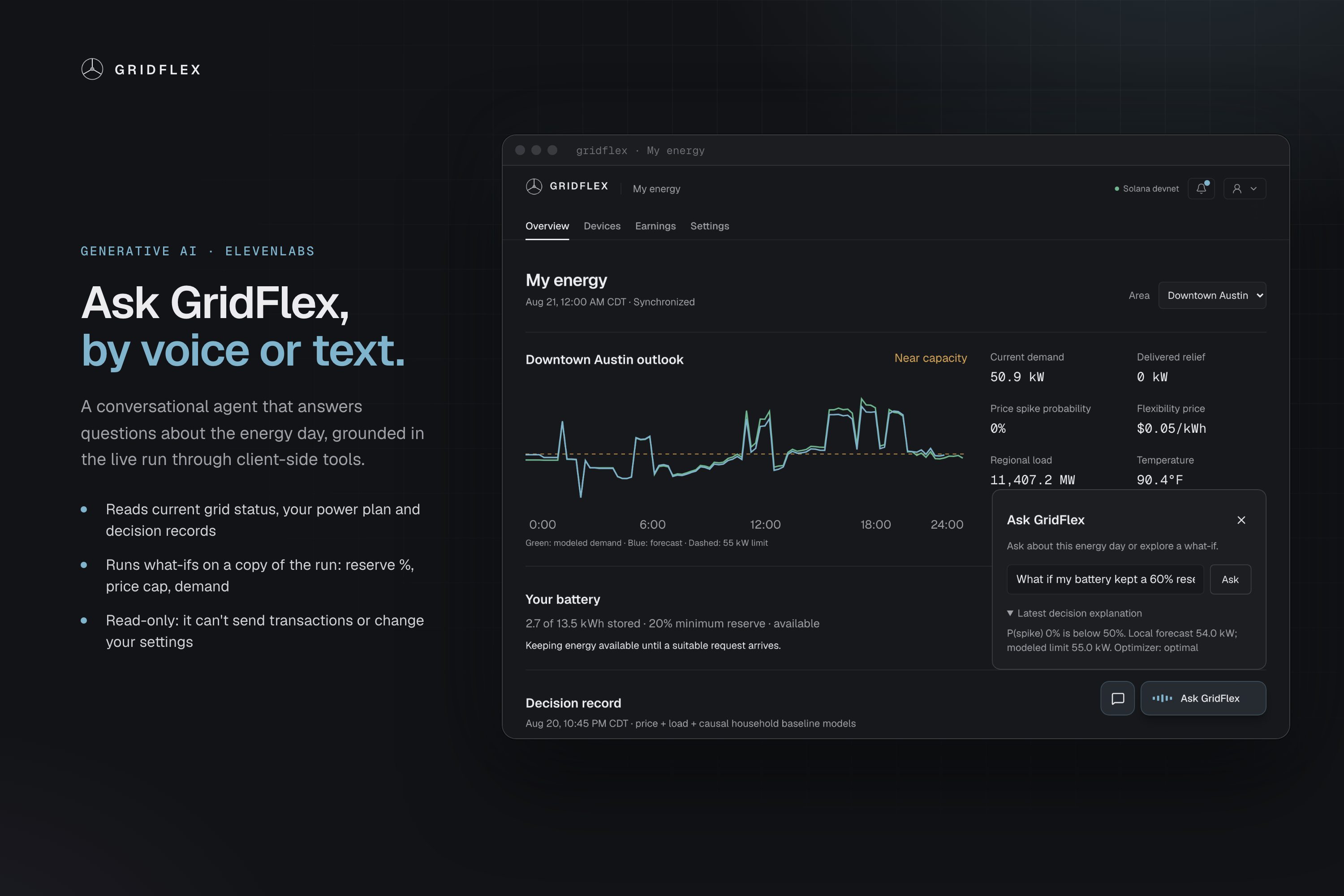
We built the dashboards with Next.js, supported by a Hono backend and a Python intelligence service. Our forecasting models use public electricity, weather, and building data, while an optimizer selects resources within their operating limits. Solana smart contracts manage escrow and payments, and an ElevenLabs assistant helps users understand grid conditions and system decisions.
Challenges we ran into
Energy economics is extremely complex, and in order to simulate our environment as accurately and realistically as possible, we had to work with a limited amount of available data. It was also easy to overcomplicate event modeling and contract pricing.
Throughout development, we had to keep our core purpose in mind: predicting as many energy-impacting events as possible and determining how available resources could best support the grid.
Accomplishments that we're proud of
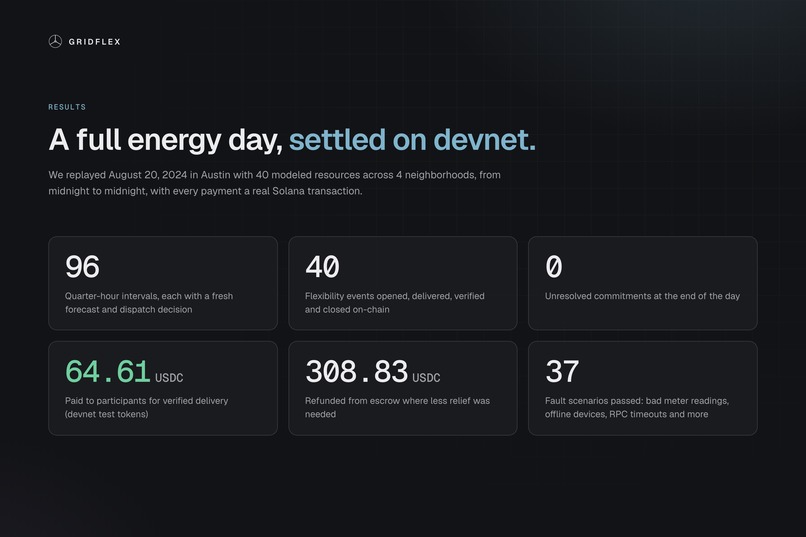
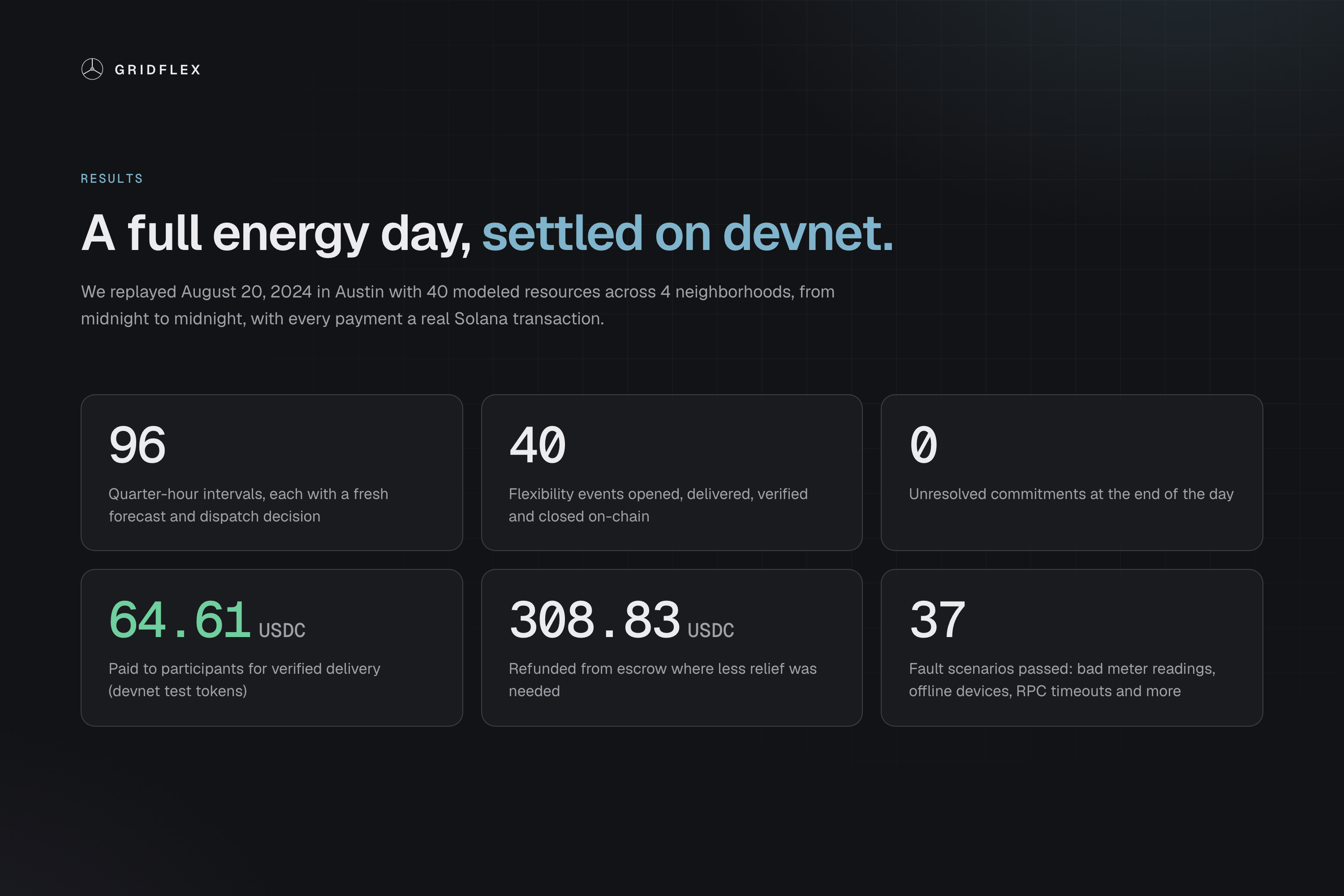
We're proud that our design reflects how virtual power plants actually work, focusing on demand reduction and safe energy sharing rather than an unrealistic concept. Most of all, we're proud that a project inspired by a third world country's infrastructure, grew into a solution that could make any community's grid more reliable and give people a way to benefit from the energy they already have. We connected forecasting, resource coordination, delivery verification, and payments into one working system. Our full-day simulation completed 40 events with actual Solana settlement and no unresolved commitments. We also built coverage for over 30 scenarios and made the system’s decisions accessible through dashboards and a conversational assistant.
What we learned
Building GridFlex taught us that the energy grid is far more complex than simply producing and consuming power. We learned that helping the grid isn't always about sending energy back to it. Often, the most valuable thing a household can do is reduce its demand at the right moment, which is how many real-world virtual power plants operate.
On the technical side, we gained hands-on experience combining hardware simulation, demand forecasting, and Solana microtransactions into one system. We also discovered how challenging it can be to fairly measure someone's contribution against an expected baseline.
Most importantly, we saw how technology can turn an everyday struggle like unreliable electricity into an opportunity for communities to work together to build a more resilient grid.
What's next for GridFlex
So far, this type of technology and energy exchange has largely been limited to specific markets and certain sources of alternative energy. Being able to demonstrate the capabilities of a system like GridFlex, even within a small region, could still have a meaningful impact.
The next step would be addressing our two biggest challenges: data and regulation. Solving those challenges would allow us to improve some of the most critical parts of the project, including better forecasting through live grid and weather data, more accurate resource coordination, and ultimately better rewards for users who help support the grid.
Built With
- docker
- elevenlabs
- hono
- machine-learning
- mapbox
- nextjs
- solana
- sqlite


Log in or sign up for Devpost to join the conversation.