Inspiration
Power outages and grid failures often make headlines only after they happen—during heatwaves, storms, or unexpected demand surges. The inspiration behind GridSense was a simple but critical question: why do we still react to grid stress instead of anticipating it? As climate variability and electricity consumption rise, we wanted to explore how data and AI could help grid operators shift from reactive firefighting to proactive prevention.
What it does
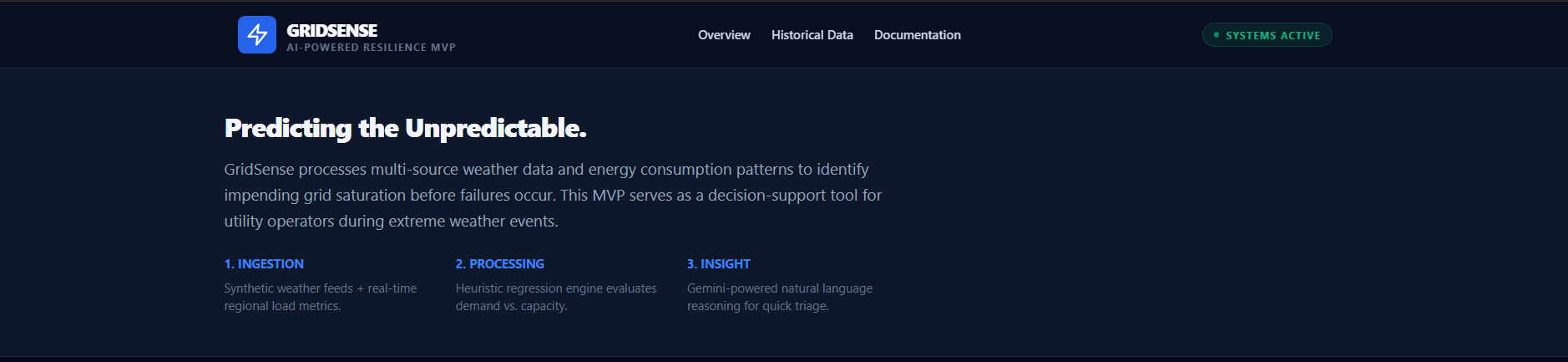
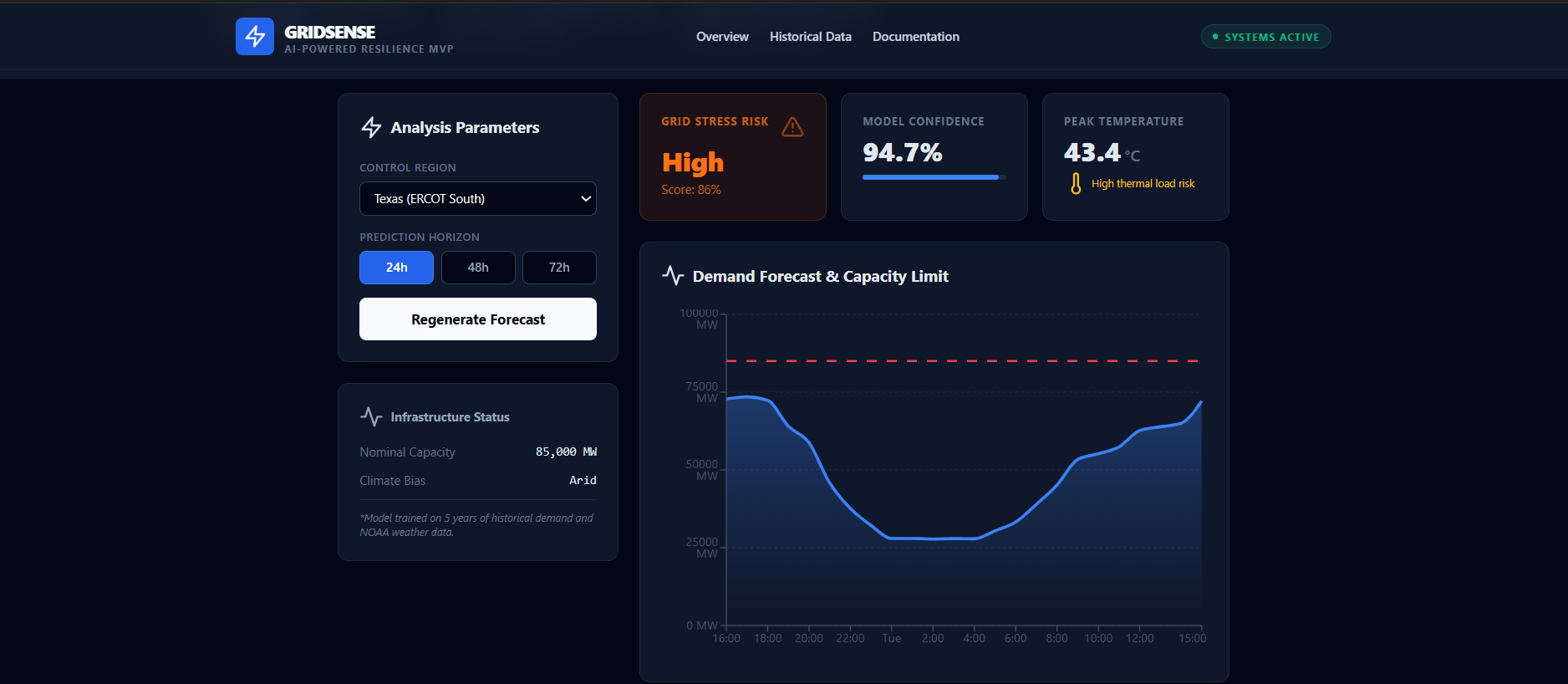
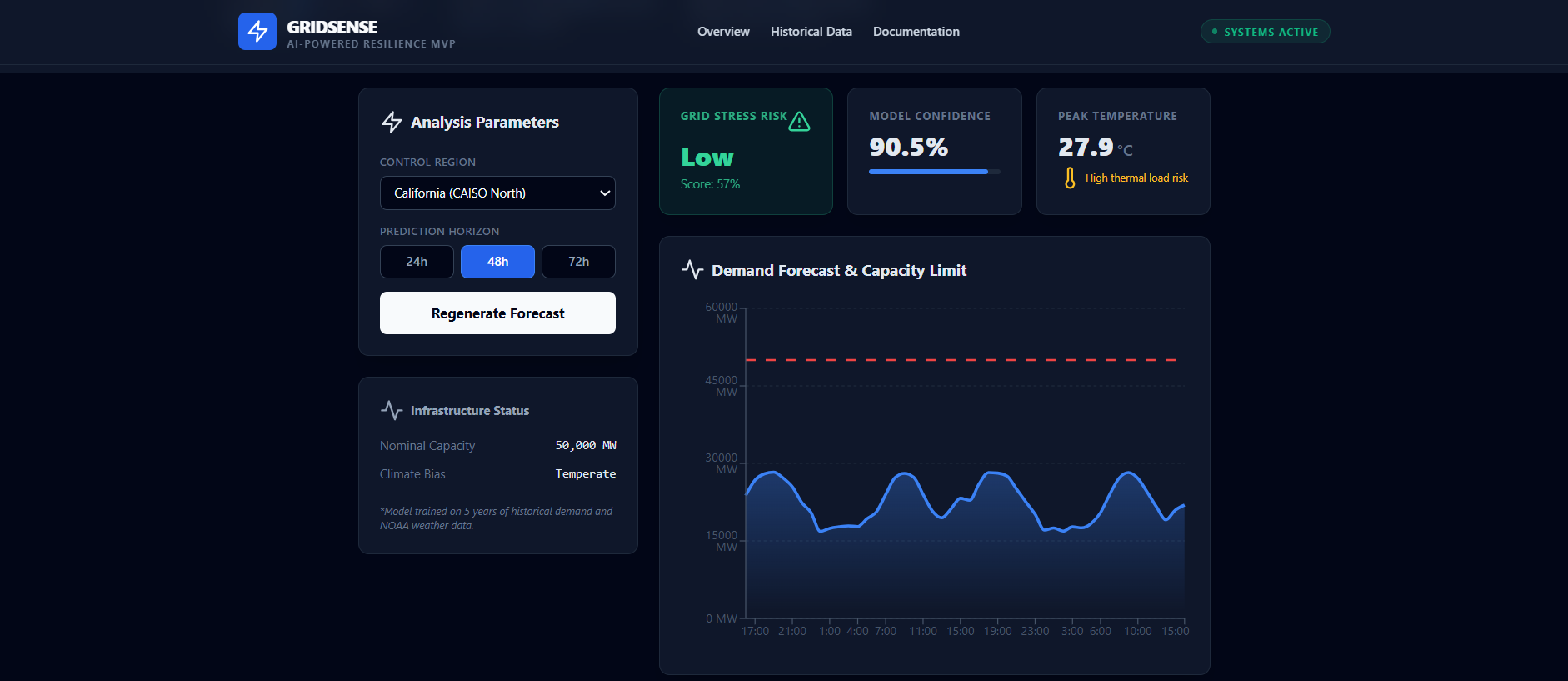
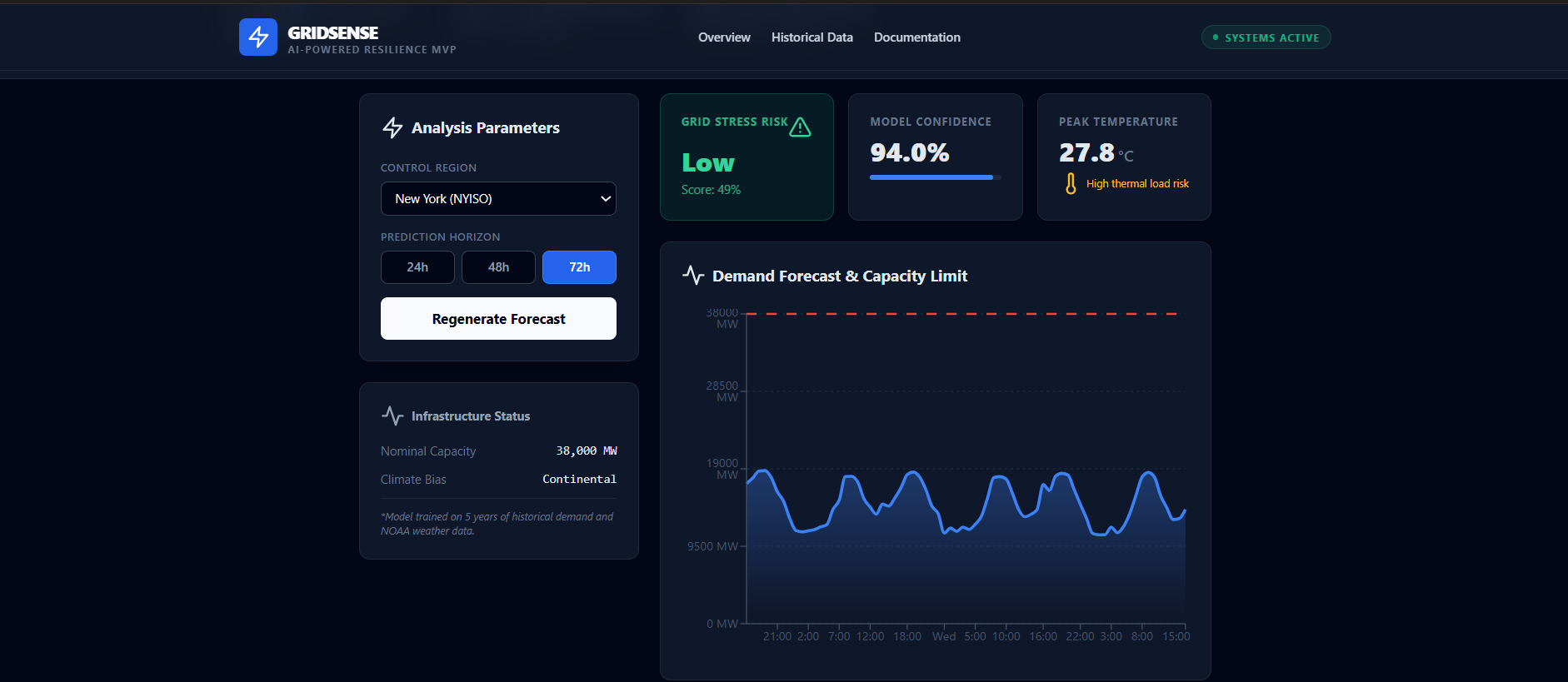
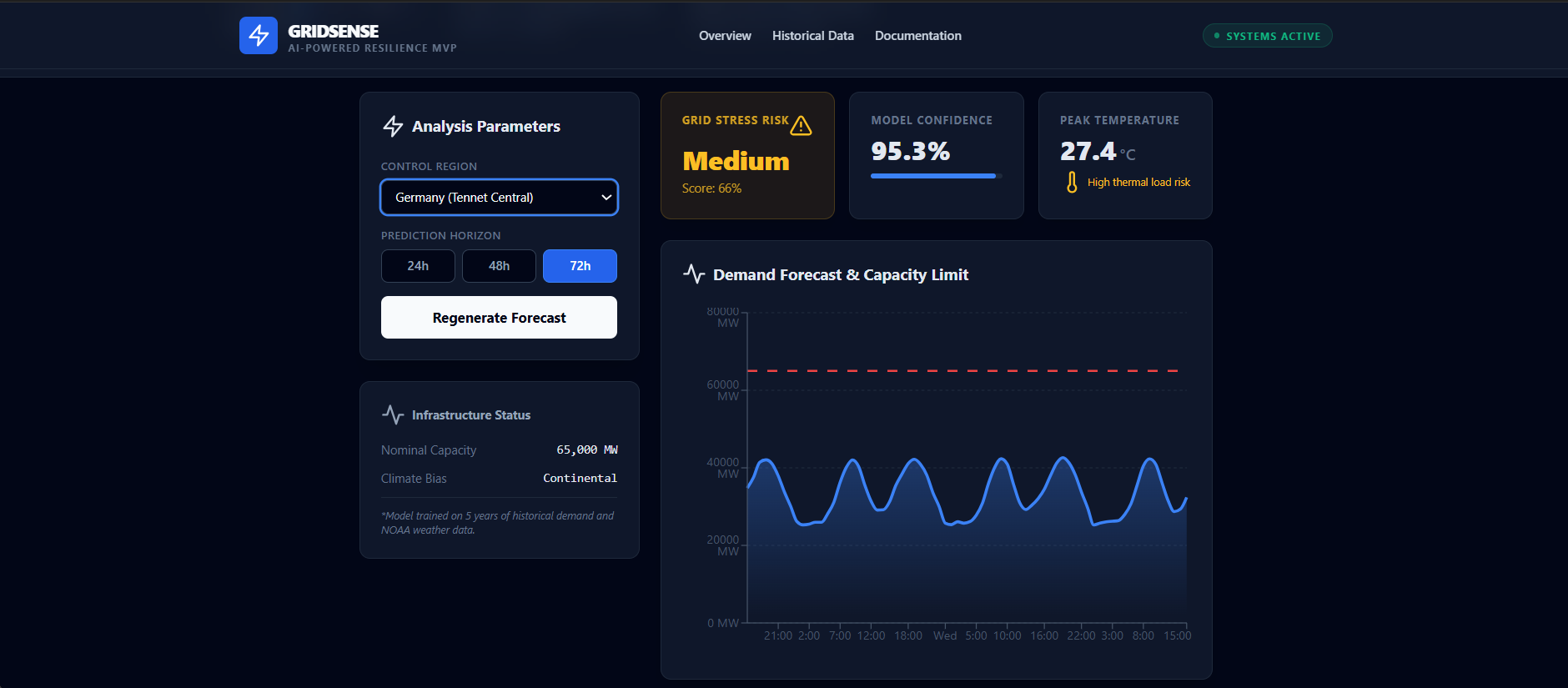
GridSense is an AI-powered system that predicts power grid stress risk 24–72 hours in advance. By analyzing historical electricity demand, weather conditions, and time-based patterns, it outputs a clear risk level (Low / Medium / High), a confidence score, and an explanation of the key factors driving the prediction, such as extreme heat or peak-hour demand. The goal is to provide early, actionable insight before failures occur.
How we built it
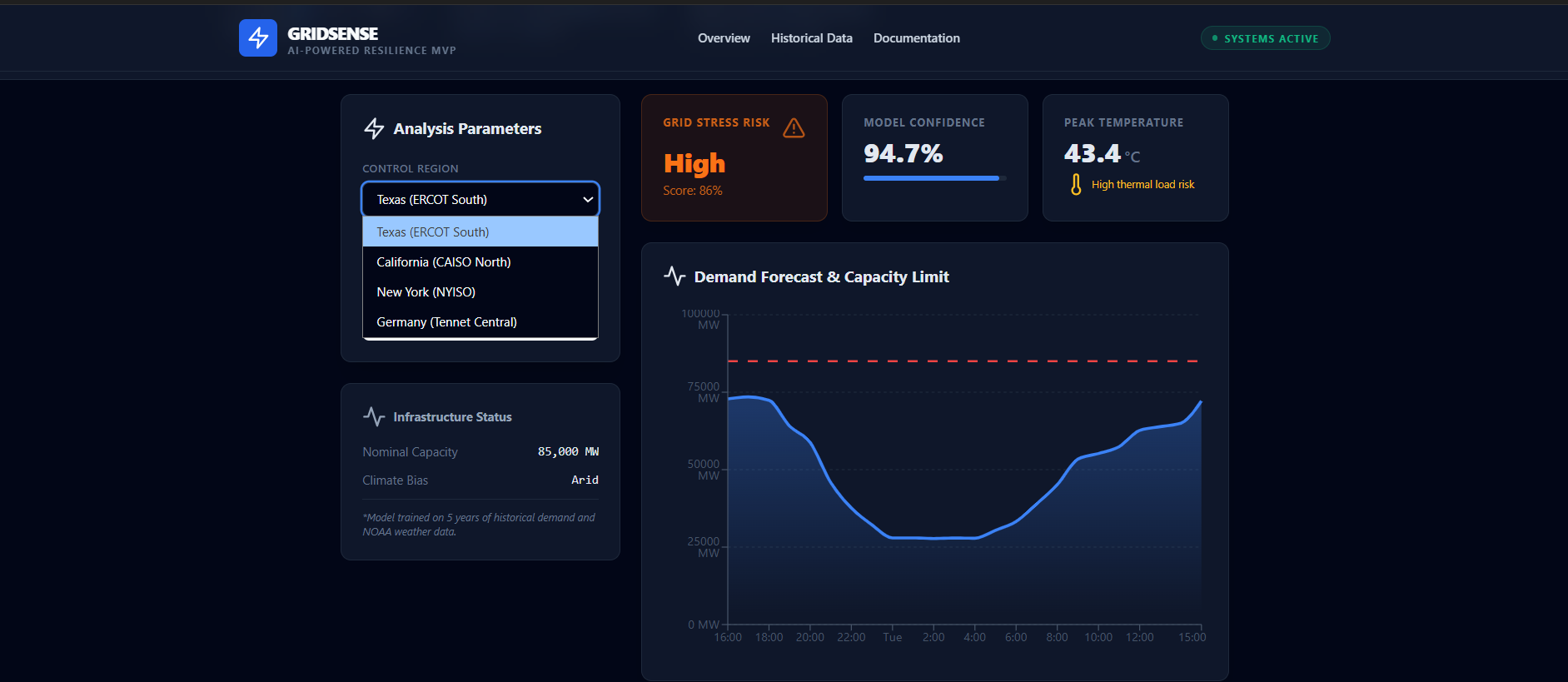
GridSense was built using Python for data processing and machine learning, with a predictive model trained on publicly available and synthetic electricity load and weather data. Features such as temperature, demand trends, and peak-hour indicators were engineered to reflect realistic grid behavior. The system is presented through an interactive Streamlit dashboard that allows users to explore different regions and forecast horizons using clear visualizations.
Challenges we ran into
One of the main challenges was balancing model realism with hackathon scope. Real power grid data is often fragmented or restricted, so we had to design careful assumptions and synthetic datasets that still captured real-world demand and weather patterns. Another challenge was maintaining explainability, ensuring predictions were not only accurate but also understandable to non-technical users.
Accomplishments that we're proud of
We are proud of delivering an end-to-end, fully runnable prototype that combines prediction, explainability, and visualization in a clean and accessible interface. GridSense goes beyond raw forecasts by clearly explaining why the grid is at risk, making the insights more trustworthy and actionable.
What we learned
This project highlighted the importance of explainable AI in critical infrastructure. We learned that feature engineering and clear communication can be just as important as model choice, especially when AI outputs are used to support real-world decisions.
What's next for GridSense
Future work includes integrating real-time data feeds, expanding predictions to more granular geographic levels, and incorporating additional factors such as renewable energy variability and grid constraints. With further development, GridSense could evolve into a practical decision-support tool for utilities and energy planners focused on building more resilient power systems.
Built With
- data
- load
- matplotlib
- numpy
- pandas
- power
- public-weather-data
- python
- scikit-learn
- streamlit
- synthetic

Log in or sign up for Devpost to join the conversation.