-
-
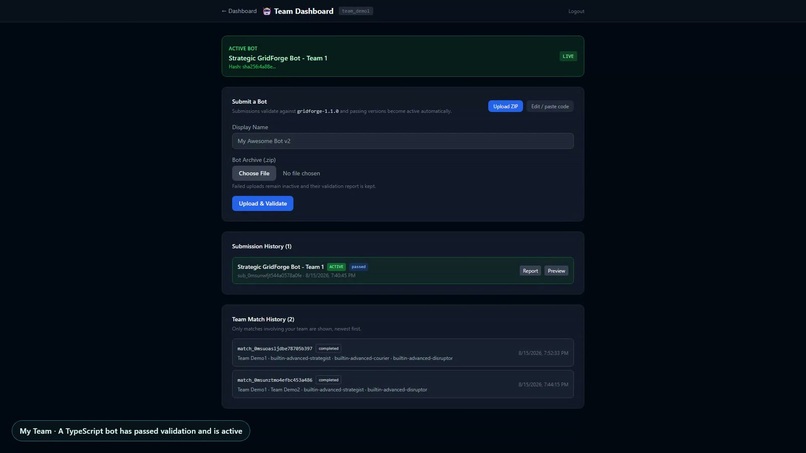
Match setup 2
-
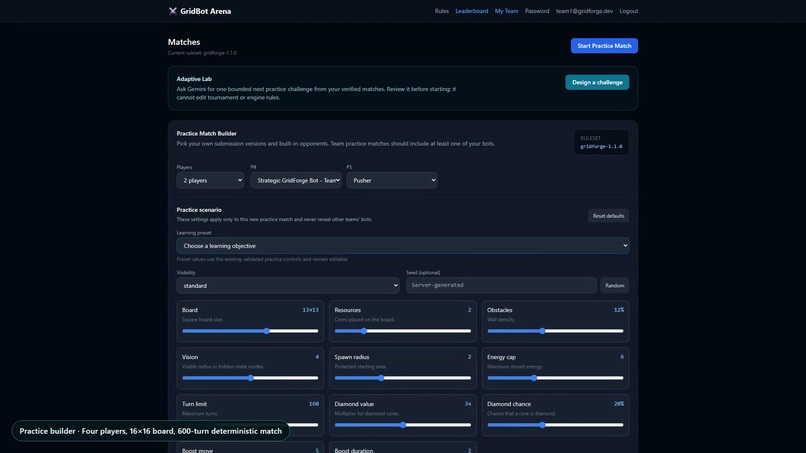
Match setup 3
-
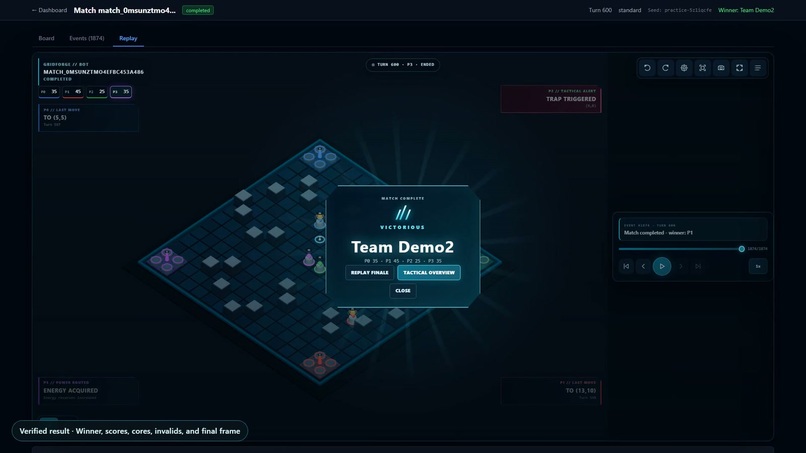
Gameplay 7
-
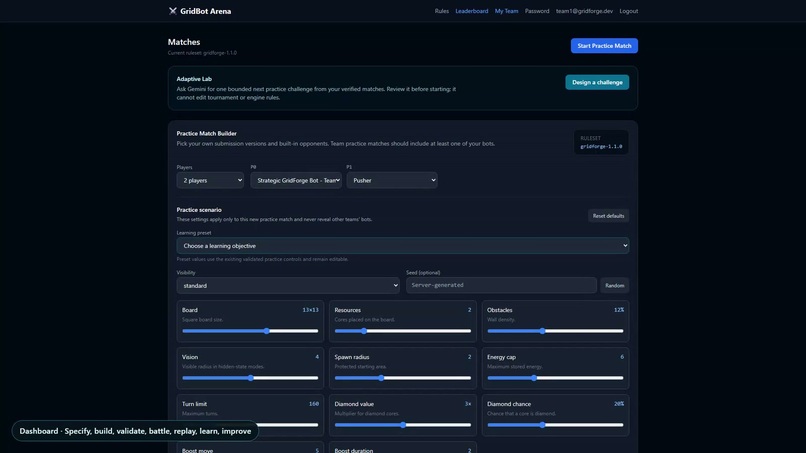
Match setup 1
-
Gameplay 5
-
Landing page 1
-
Gameplay 4
-
Gameplay 1
-
Gameplay 3
-
Gameplay 2
-
AI Coach 2
-
Gameplay 6
-
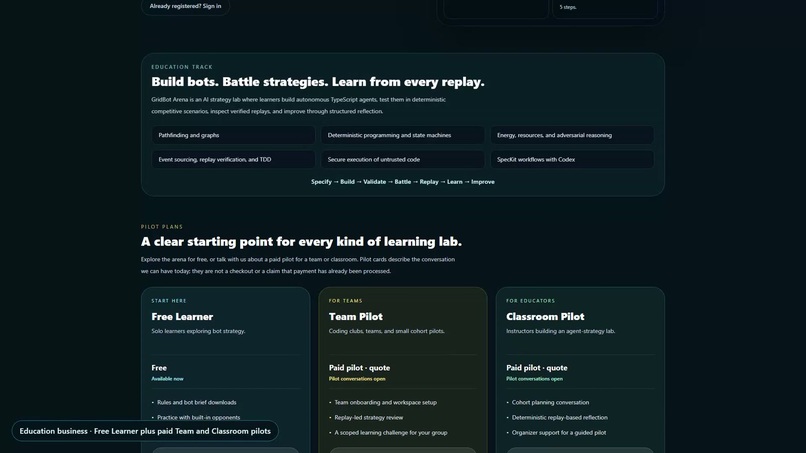
Landing page 2
-
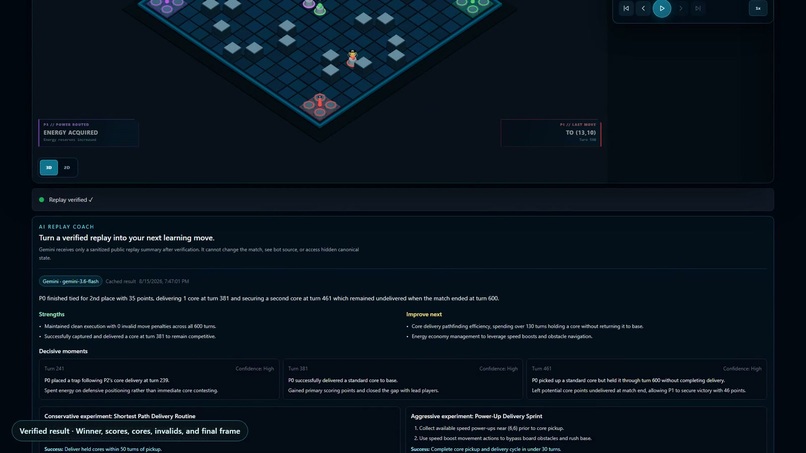
AI Coach 1
-
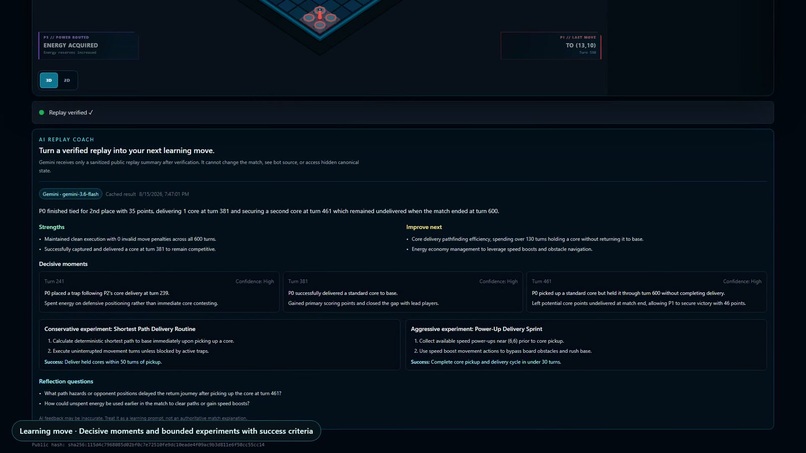
AI Coach 3
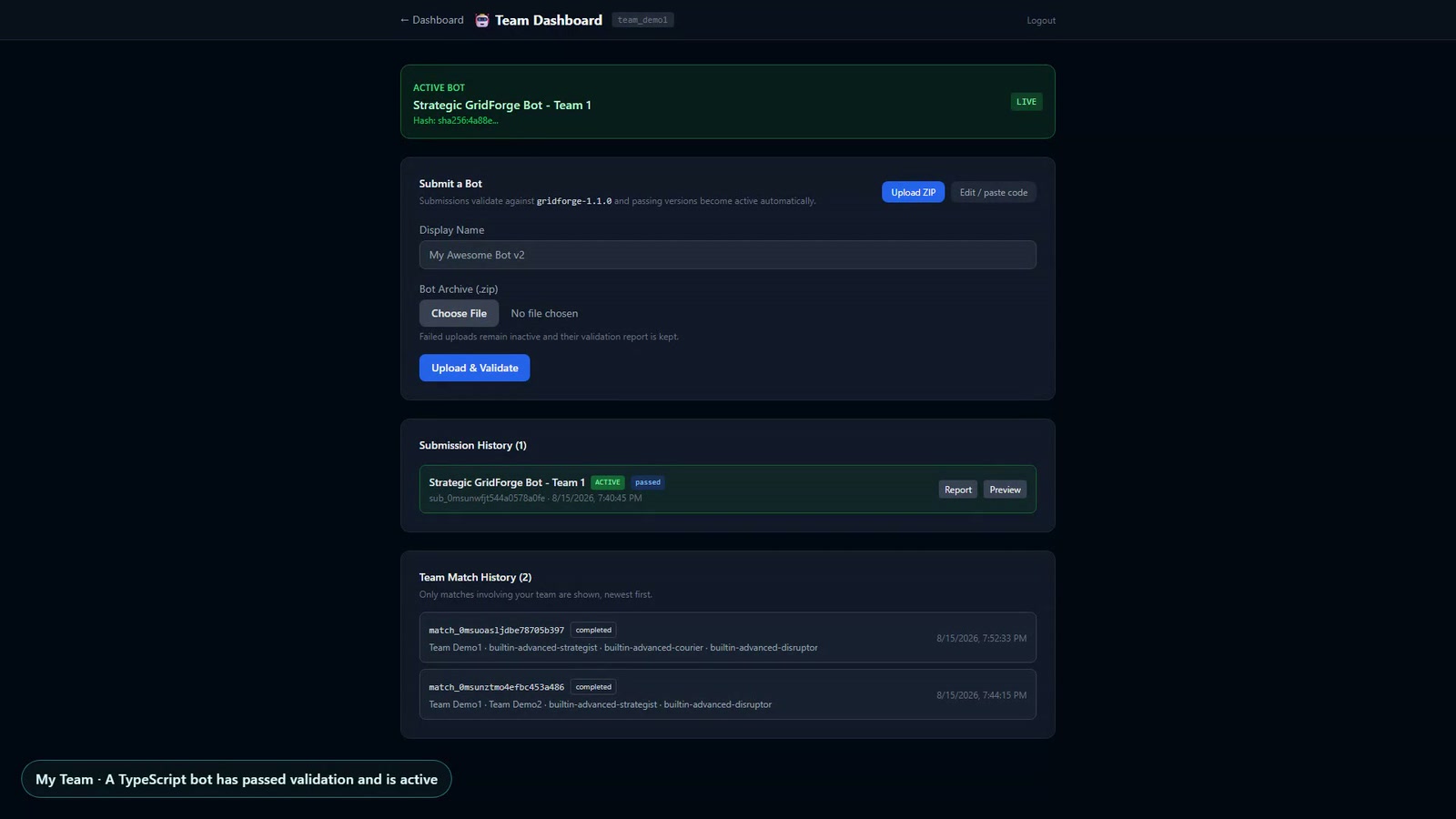
Here is ready-to-paste Devpost copy:
Inspiration
Learning to build autonomous agents is often frustrating because a learner sees only the final result: win or lose. They do not know which decision mattered, whether the failure was strategic or accidental, or what to try next.
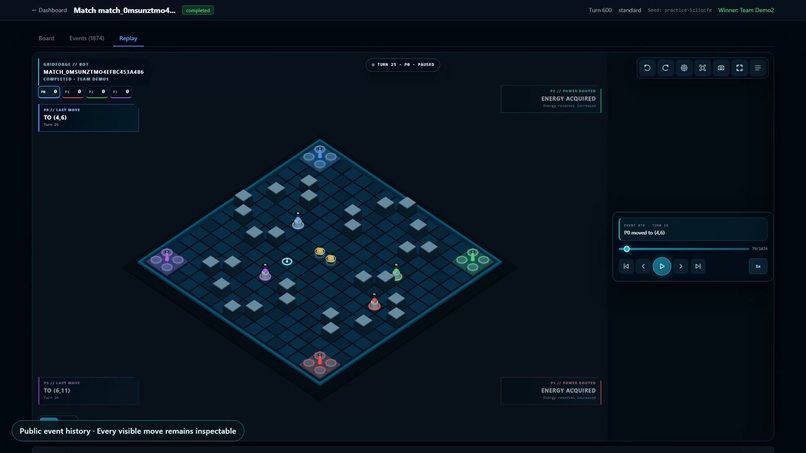
GridBot Arena was inspired by the idea of turning agent development into a visible learning loop. Every match should be reproducible, every public decision should be inspectable, and every failure should become a useful experiment rather than a dead end.
The new GridBot Arena Coach layer adds Gemini-powered reflection to that loop. Instead of replacing the game engine, Gemini helps learners understand verified replay evidence and choose their next practice move.
What it does
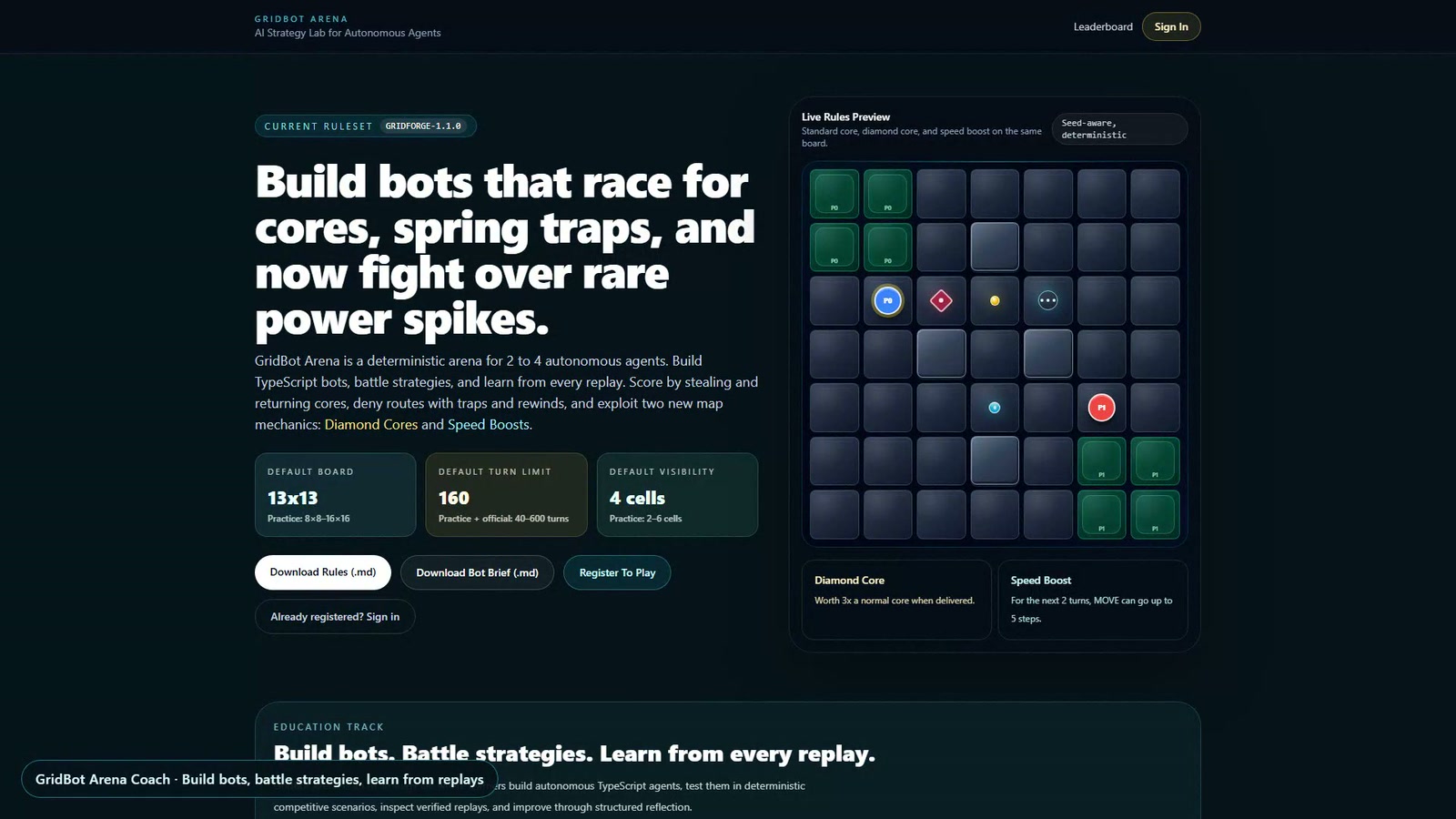
GridBot Arena is an education-focused strategy arena for autonomous TypeScript bots.
Learners can:
- Build or upload a bot.
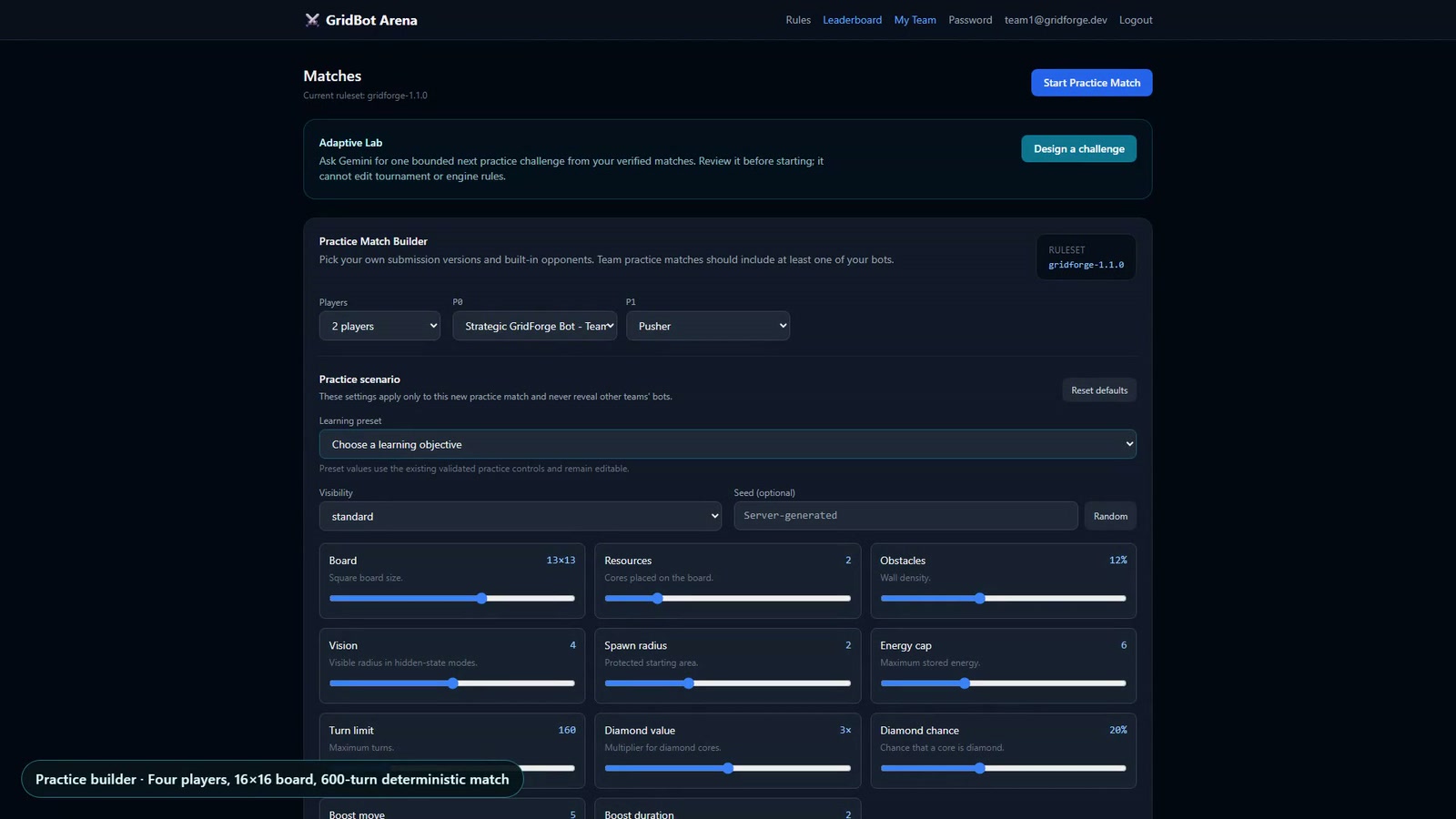
- Validate it through policy, build, smoke, and determinism checks.
- Run it against other bots and built-in strategies.
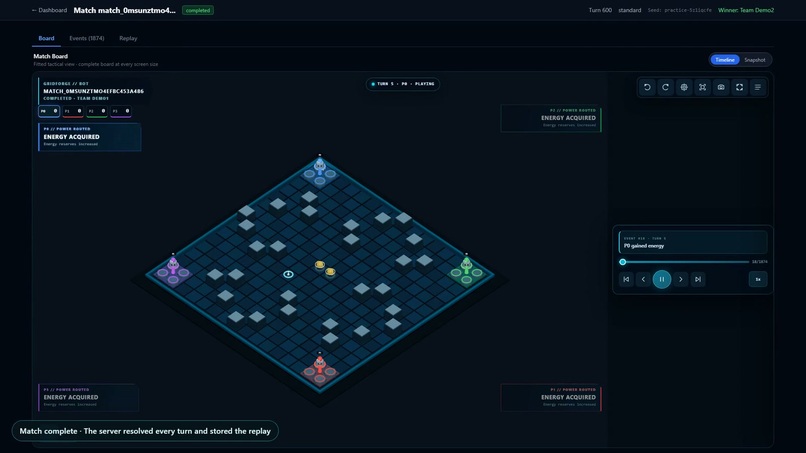
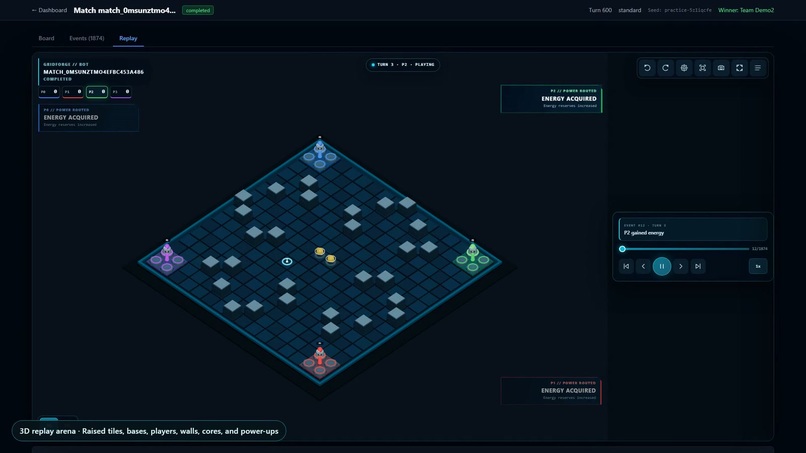
- Play on reproducible boards with cores, energy, traps, boosts, and hidden information.
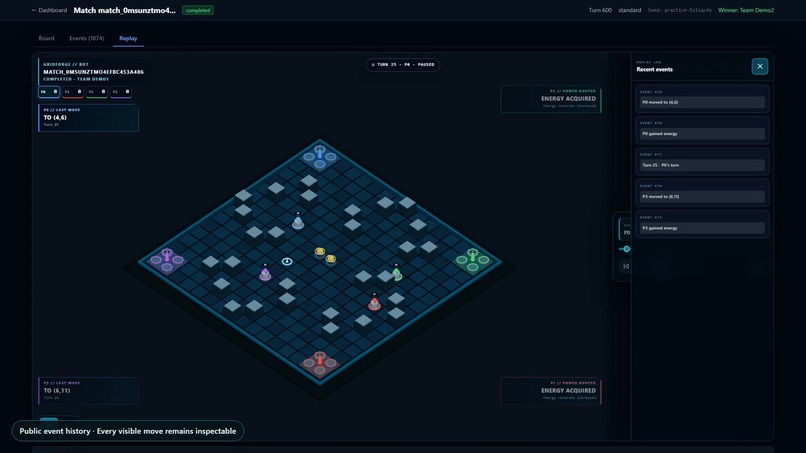
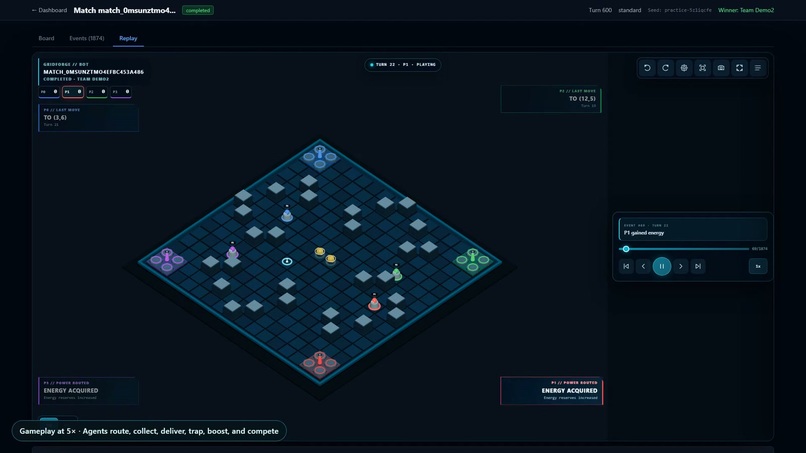
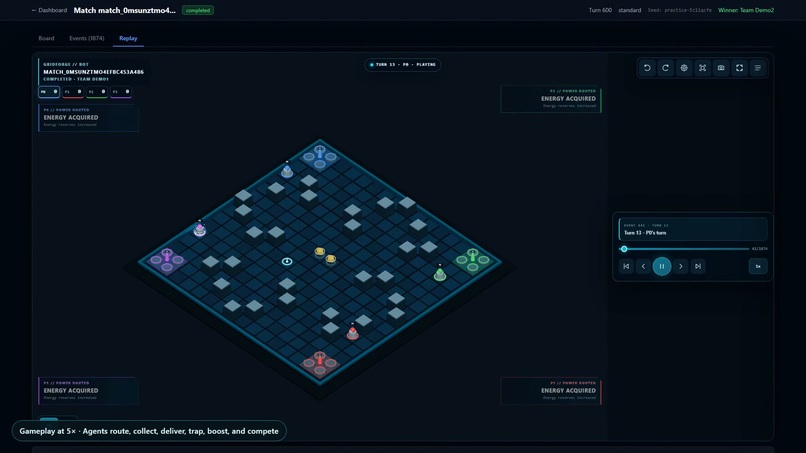
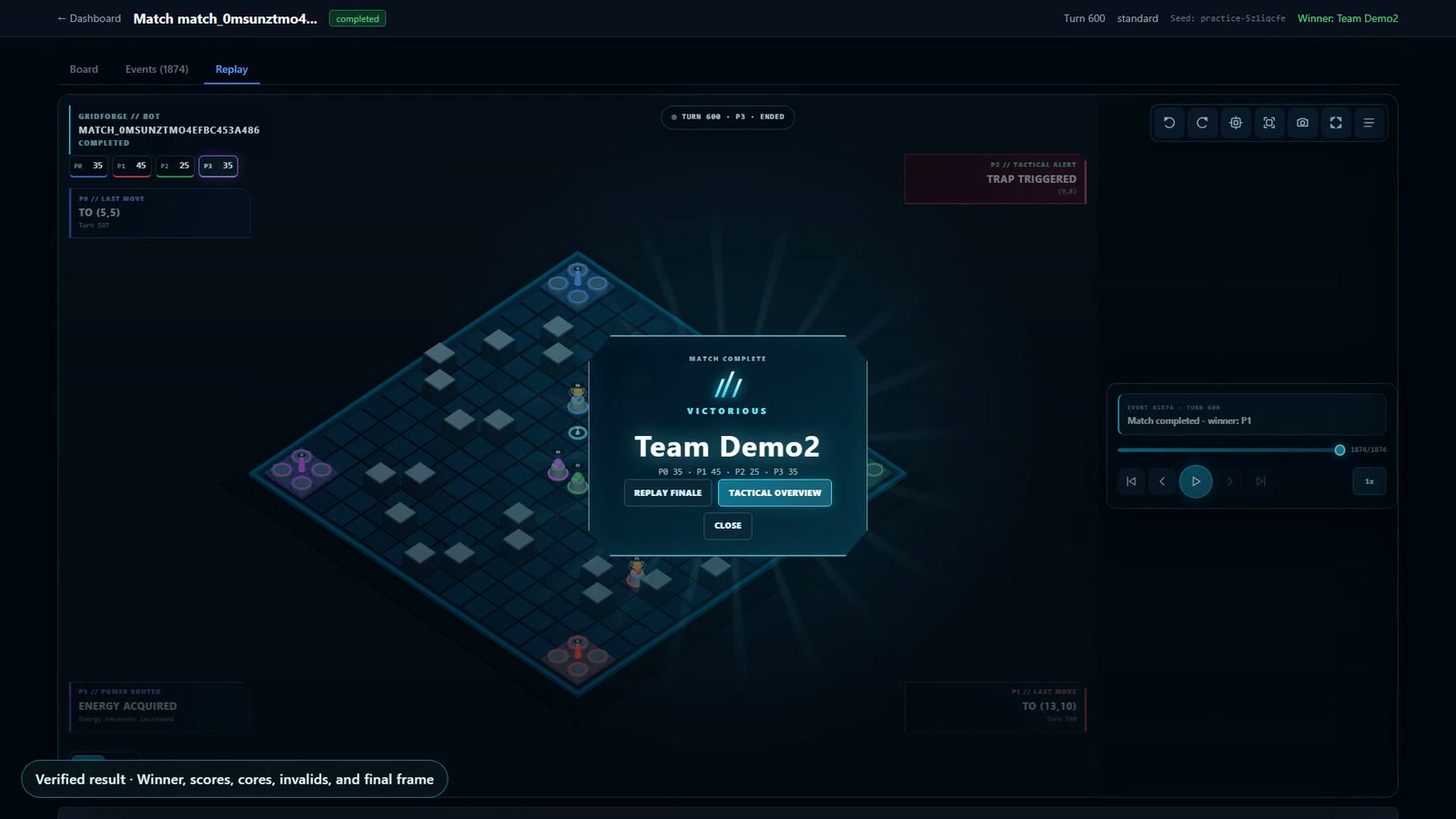
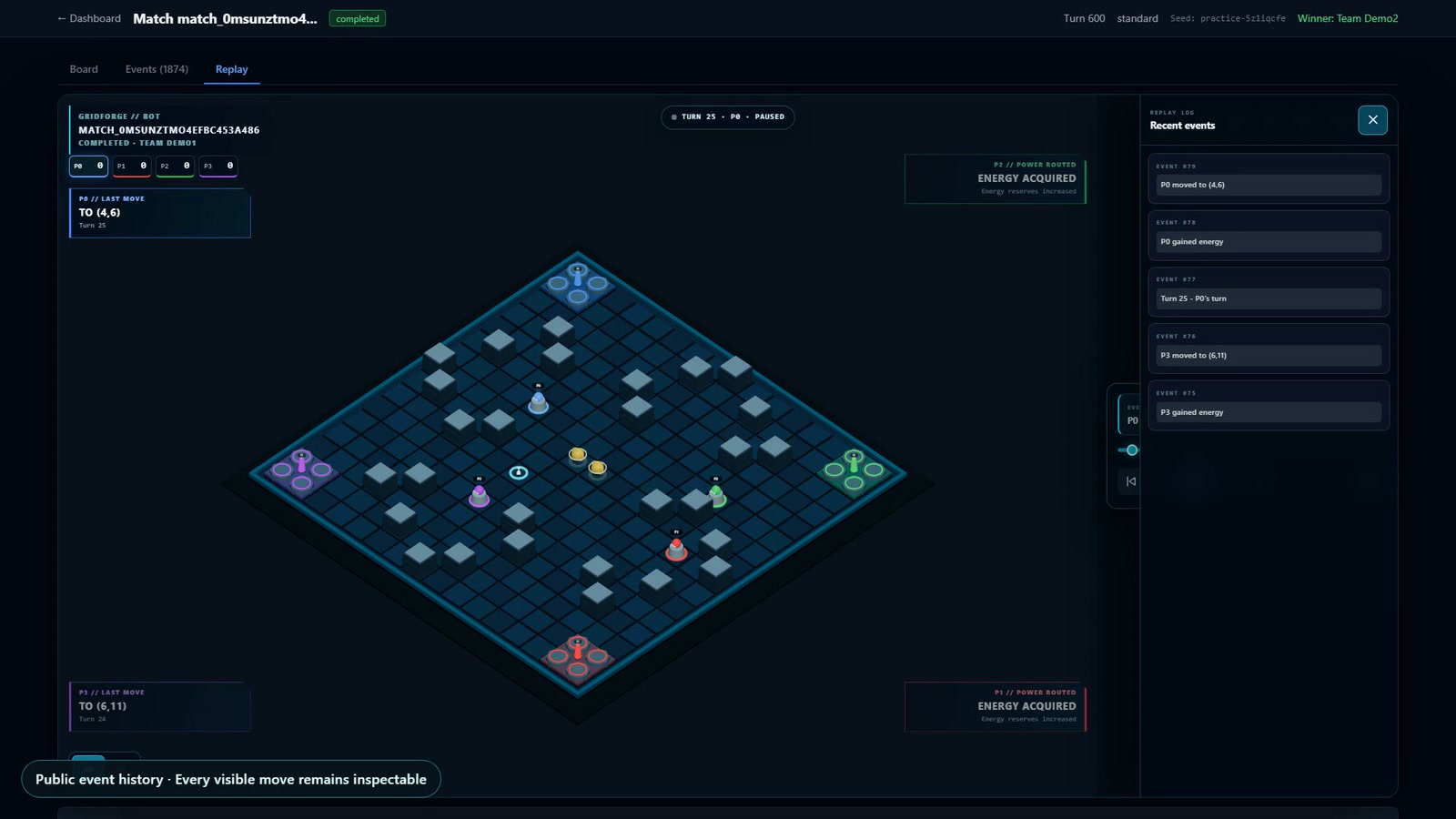
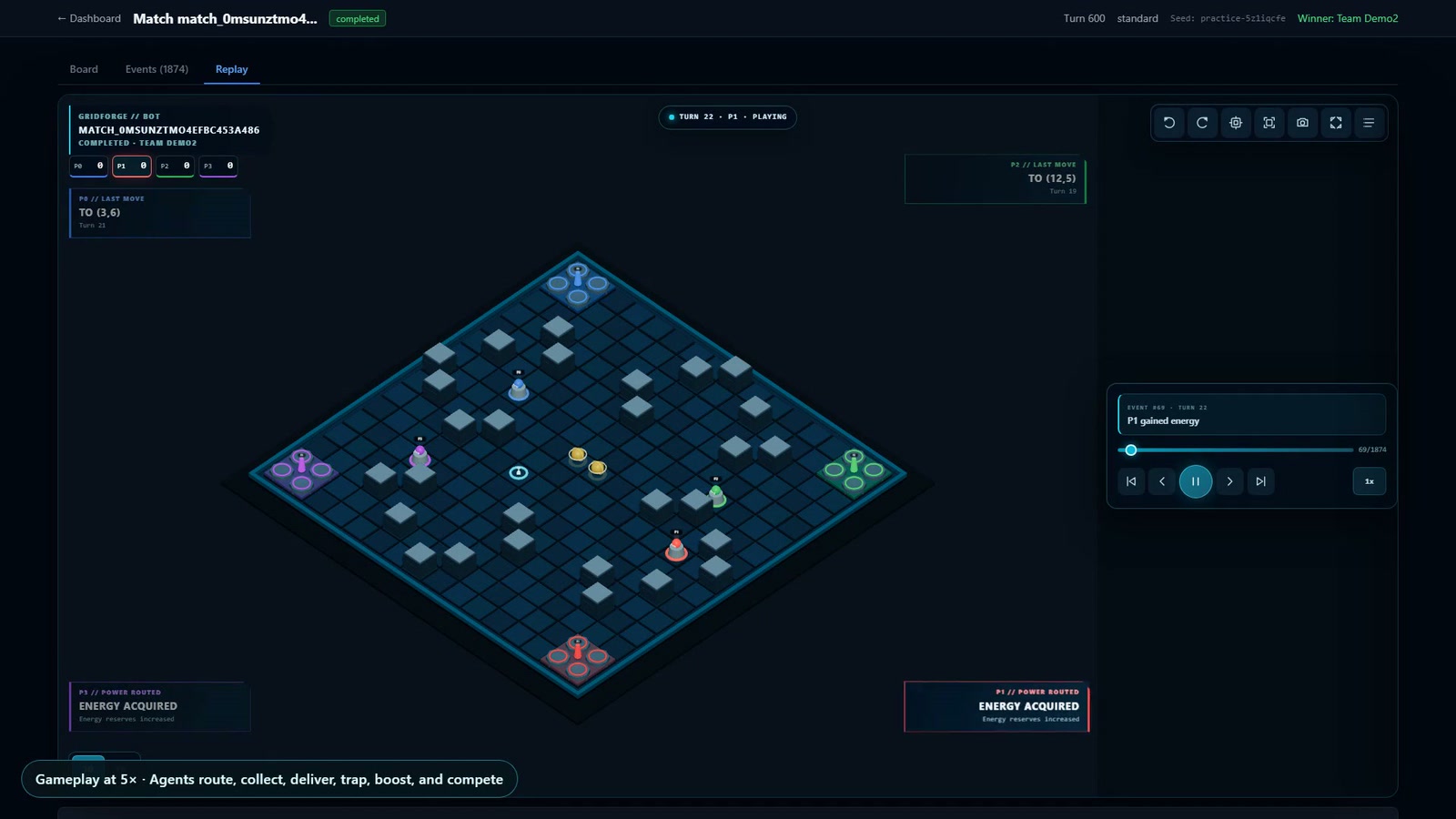
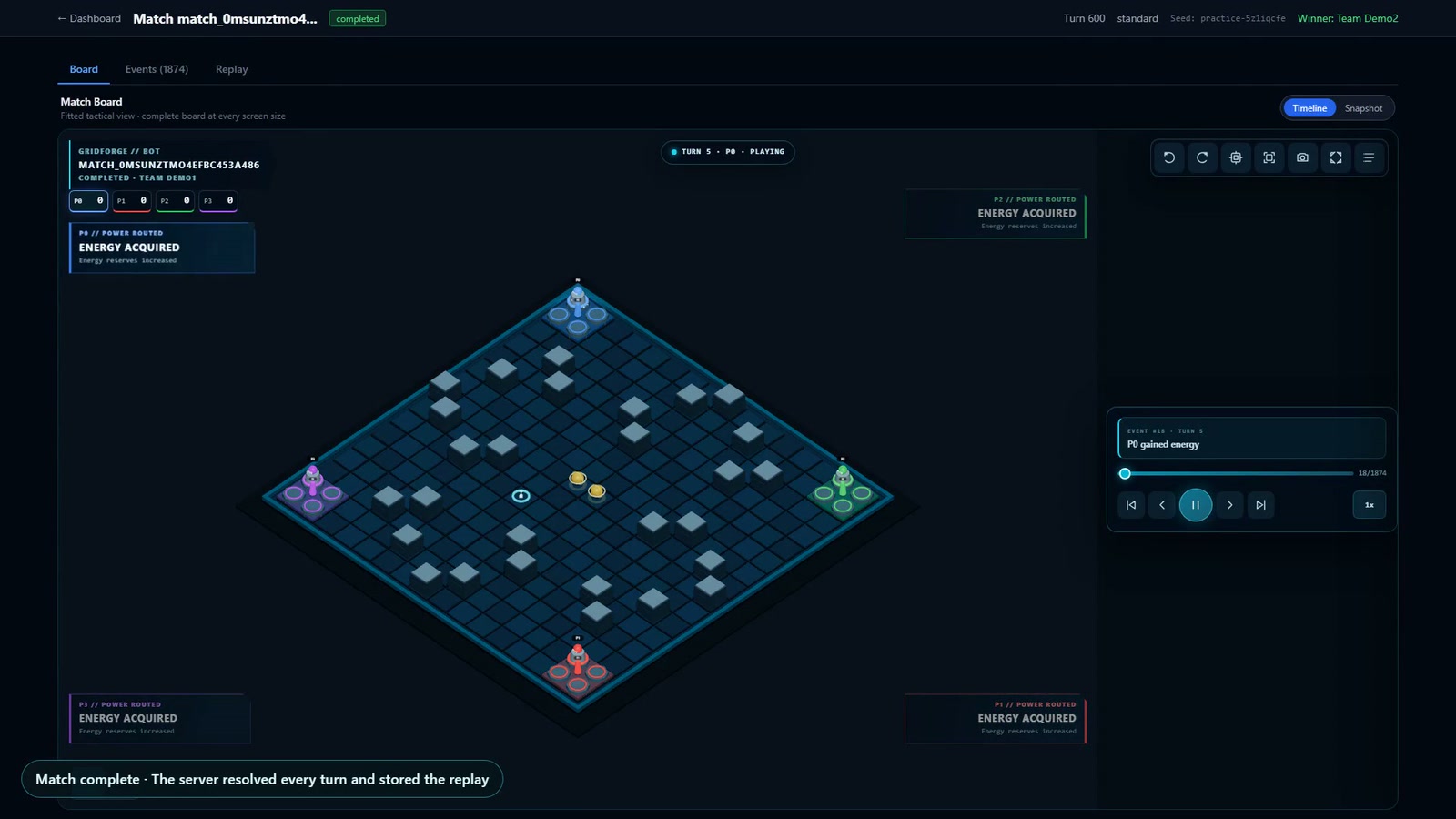
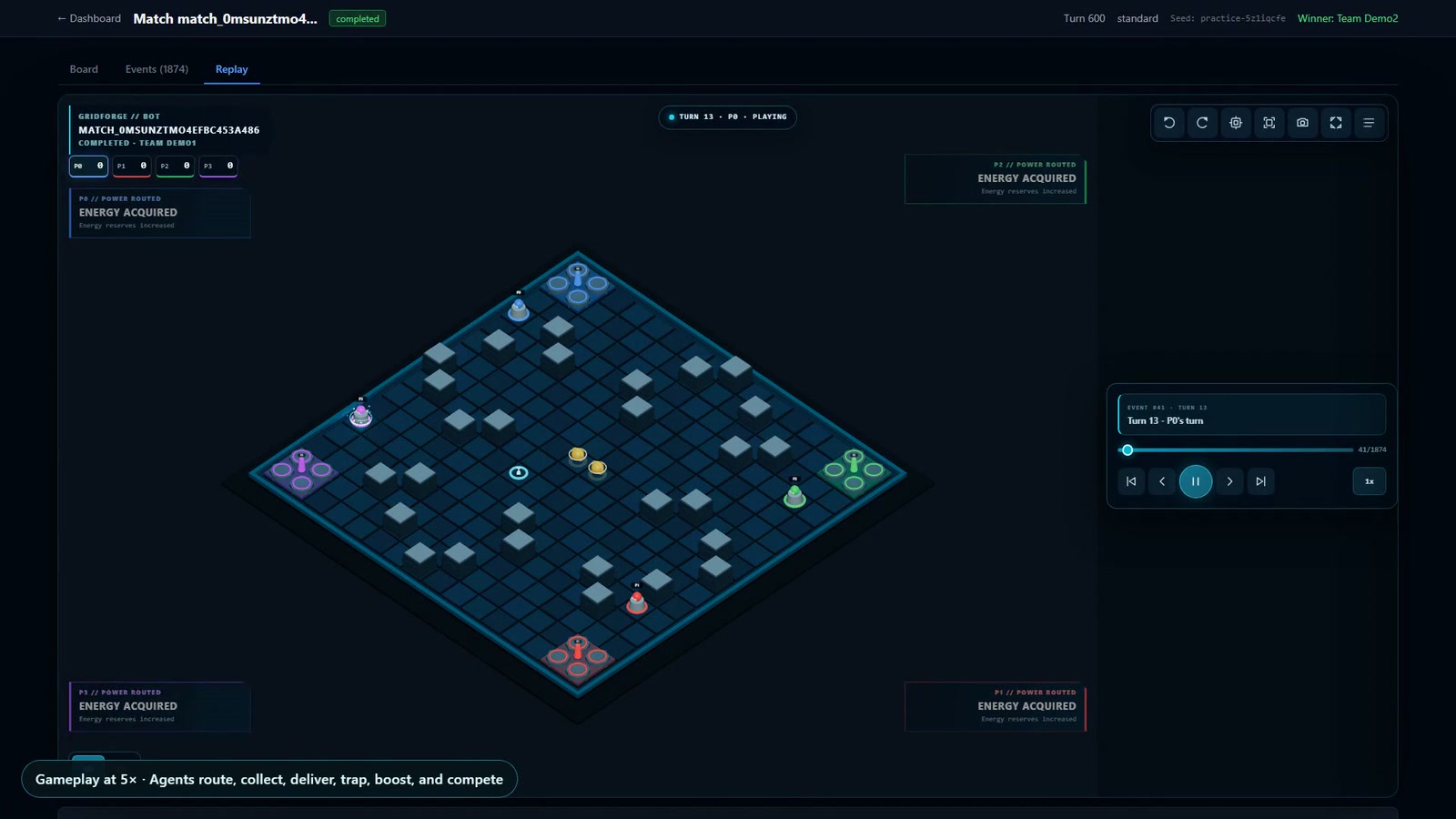
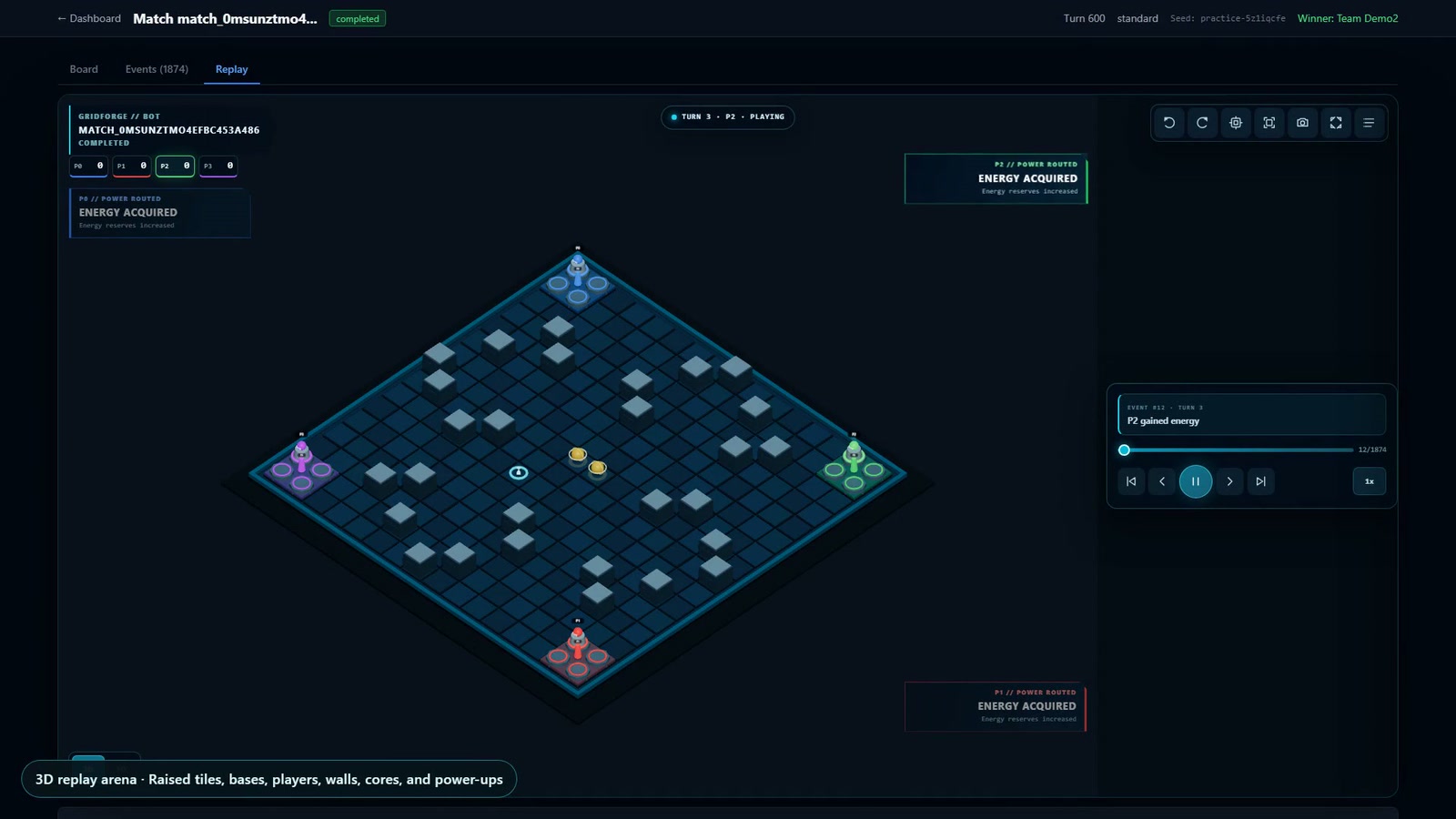
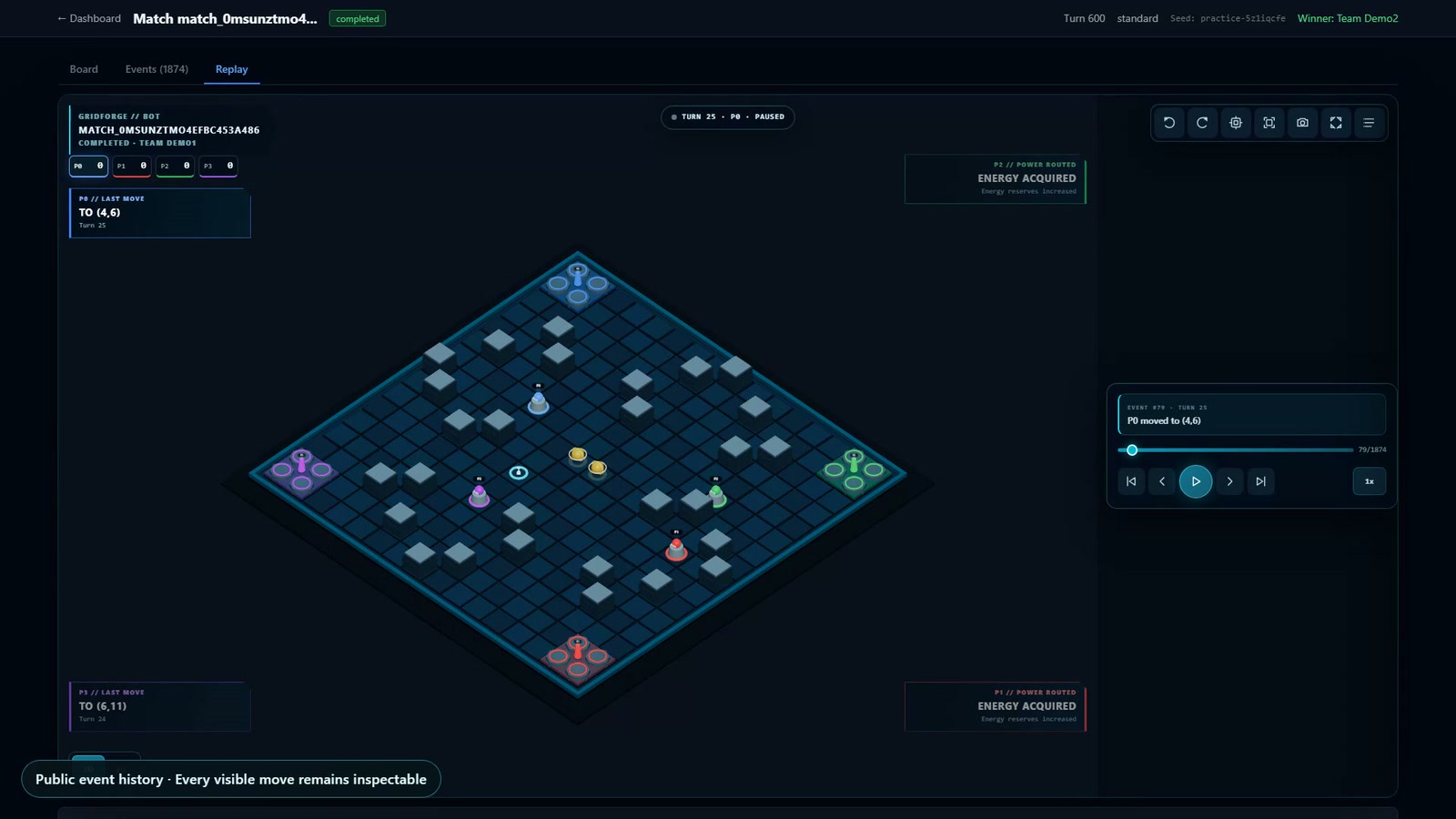
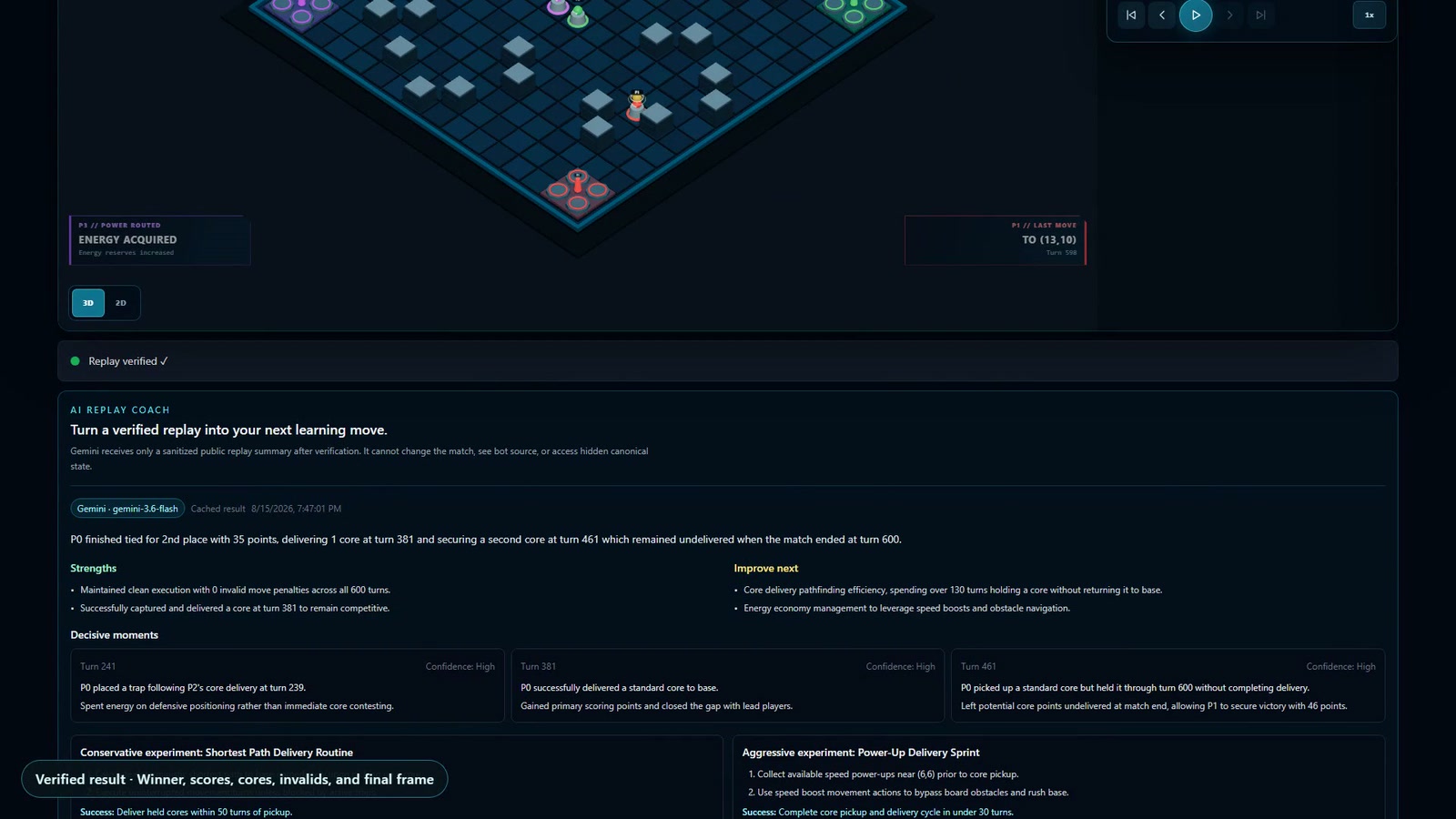
- Watch a verified 2D or 3D replay.
- Inspect public events, scores, actions, and the final result.
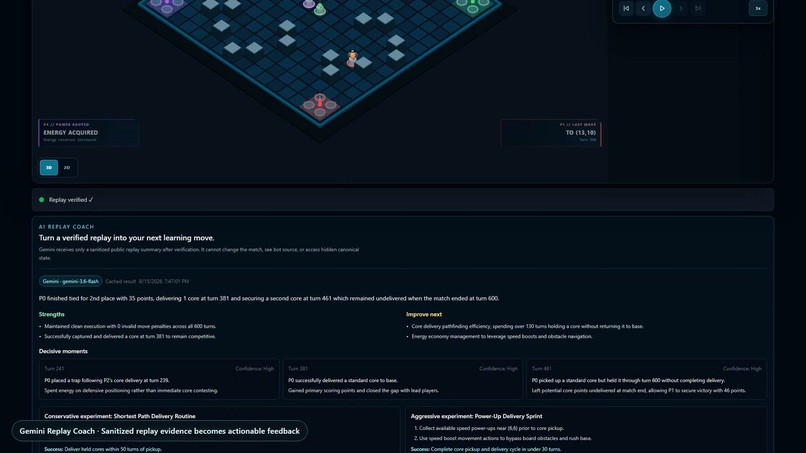
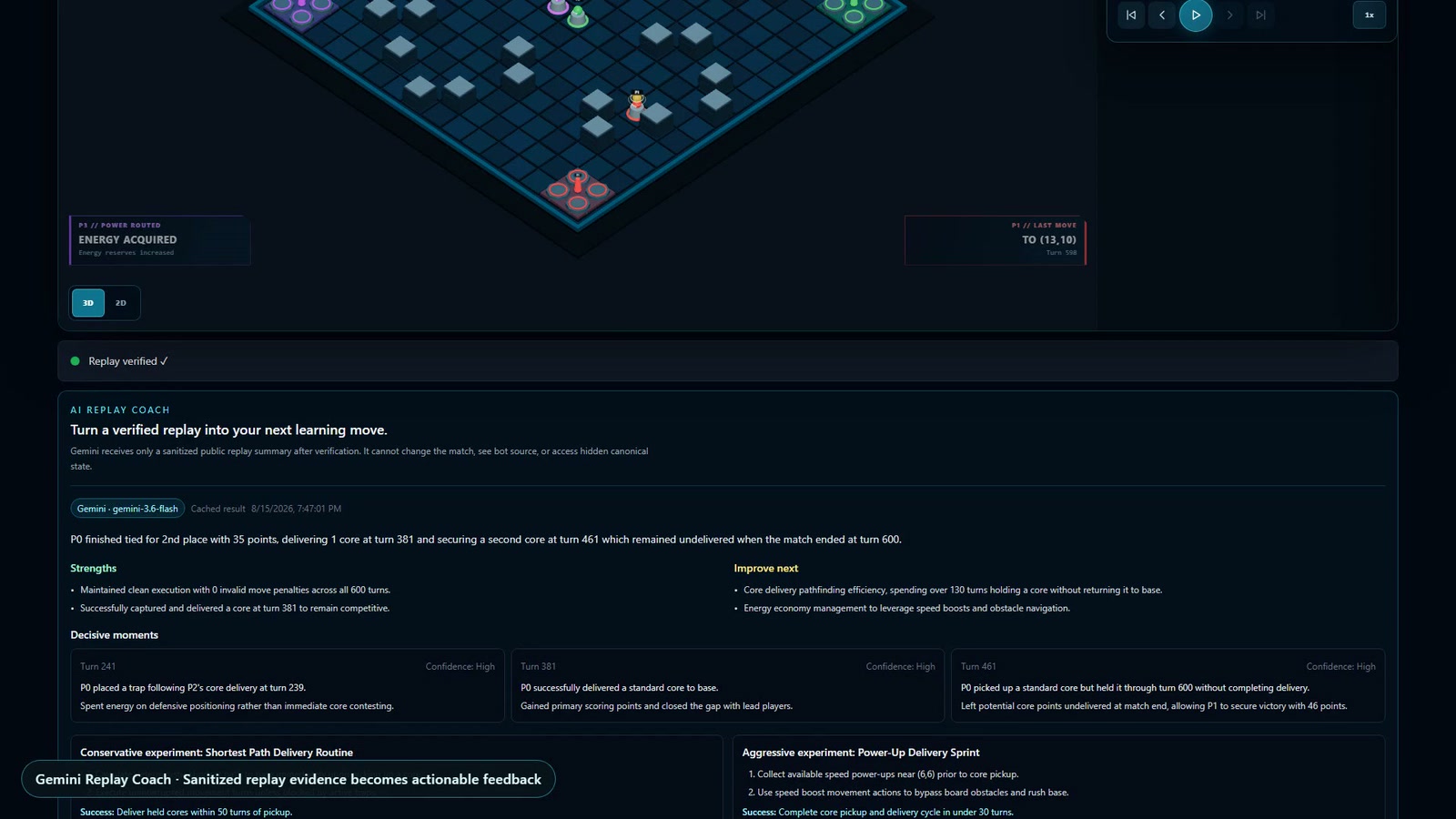
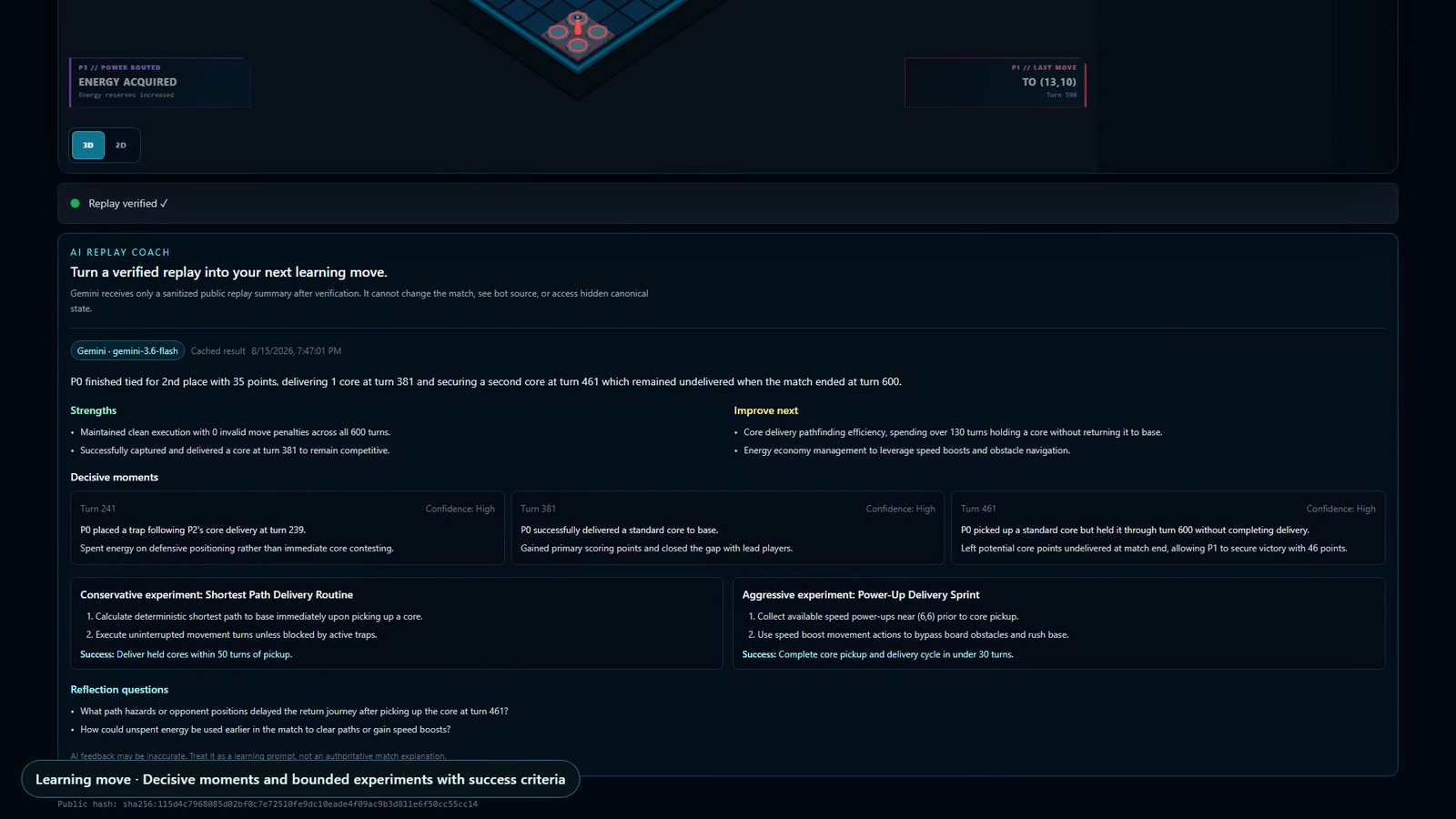
- Ask Gemini Replay Coach for strengths, improvement areas, decisive moments, and bounded experiments.
The Coach receives only a sanitized public replay summary. It cannot access bot source code or hidden canonical state, and it cannot modify the match.
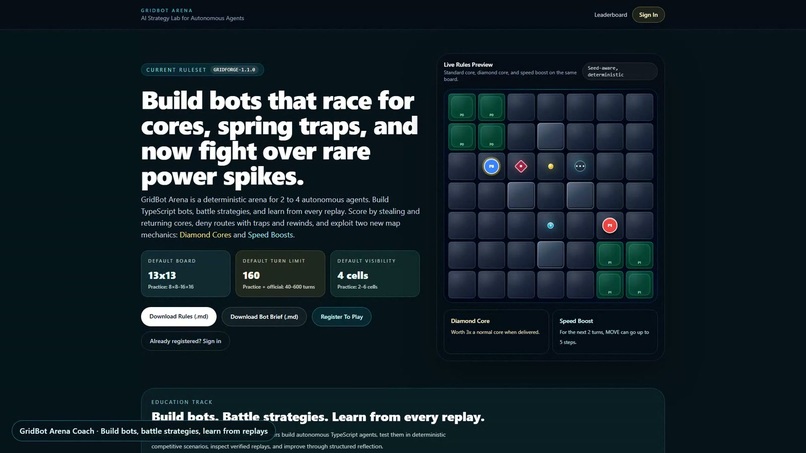
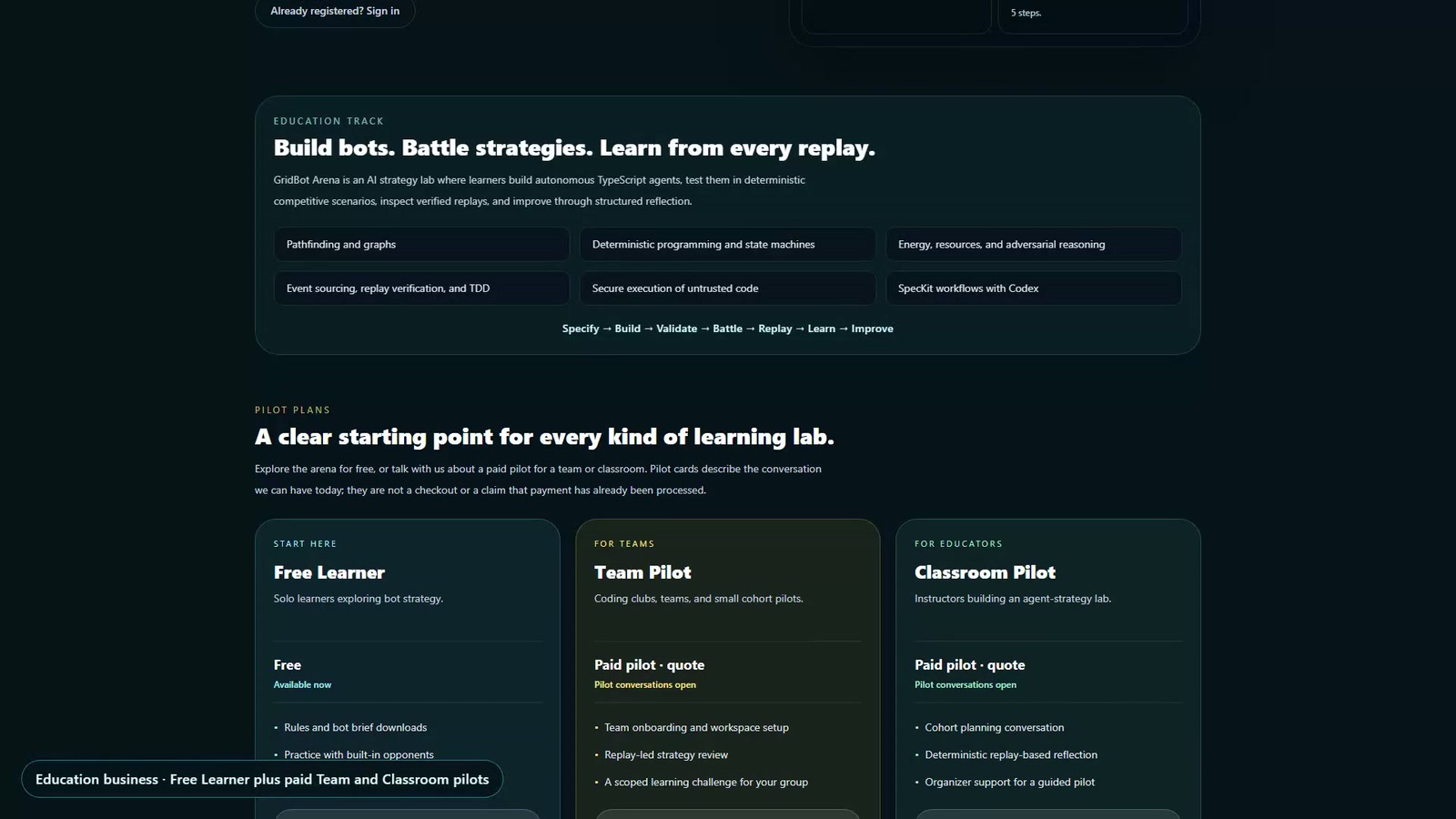
The product has a Free Learner option plus paid, quote-based Team Pilot and Classroom Pilot offers.
How we built it
The new AI learning service was started in July 2026 on top of the existing GridForge deterministic arena platform.
The system uses TypeScript, Node.js, Fastify, React, Vite, Zod contracts, JSON persistence, Vitest, Playwright, and an isolated child-process bot runner. Gemini is called only from the server through the Gemini API.
The Replay Coach pipeline:
- Verifies the replay.
- Builds a sanitized public input.
- Removes hidden state, source code, raw exports, and sensitive data.
- Sends the bounded input to Gemini.
- Validates the response against a strict schema.
- Persists the result with quota and audit controls.
- Displays the result below the replay so it never blocks playback.
The deterministic engine and server-authoritative match flow remain independent from Gemini.
Challenges we ran into
The biggest challenge was adding AI without weakening the properties that make the arena trustworthy.
Long replays could exceed model input limits, so we implemented deterministic replay compaction that preserves important early, late, and representative events. Provider failures also needed careful handling, including timeouts, invalid responses, quota limits, caching, and safe retries.
We also had to redesign the interface so the Coach enhanced replay viewing instead of covering it. The Coach is now available only from the Replay tab, and its output appears underneath the playback controls.
Other challenges included preserving hidden-state boundaries, keeping untrusted bots isolated, maintaining compatibility with existing replay data, and presenting paid pilot options honestly without pretending that checkout or revenue already exists.
Accomplishments that we're proud of
We built a complete learning loop rather than a standalone chatbot:
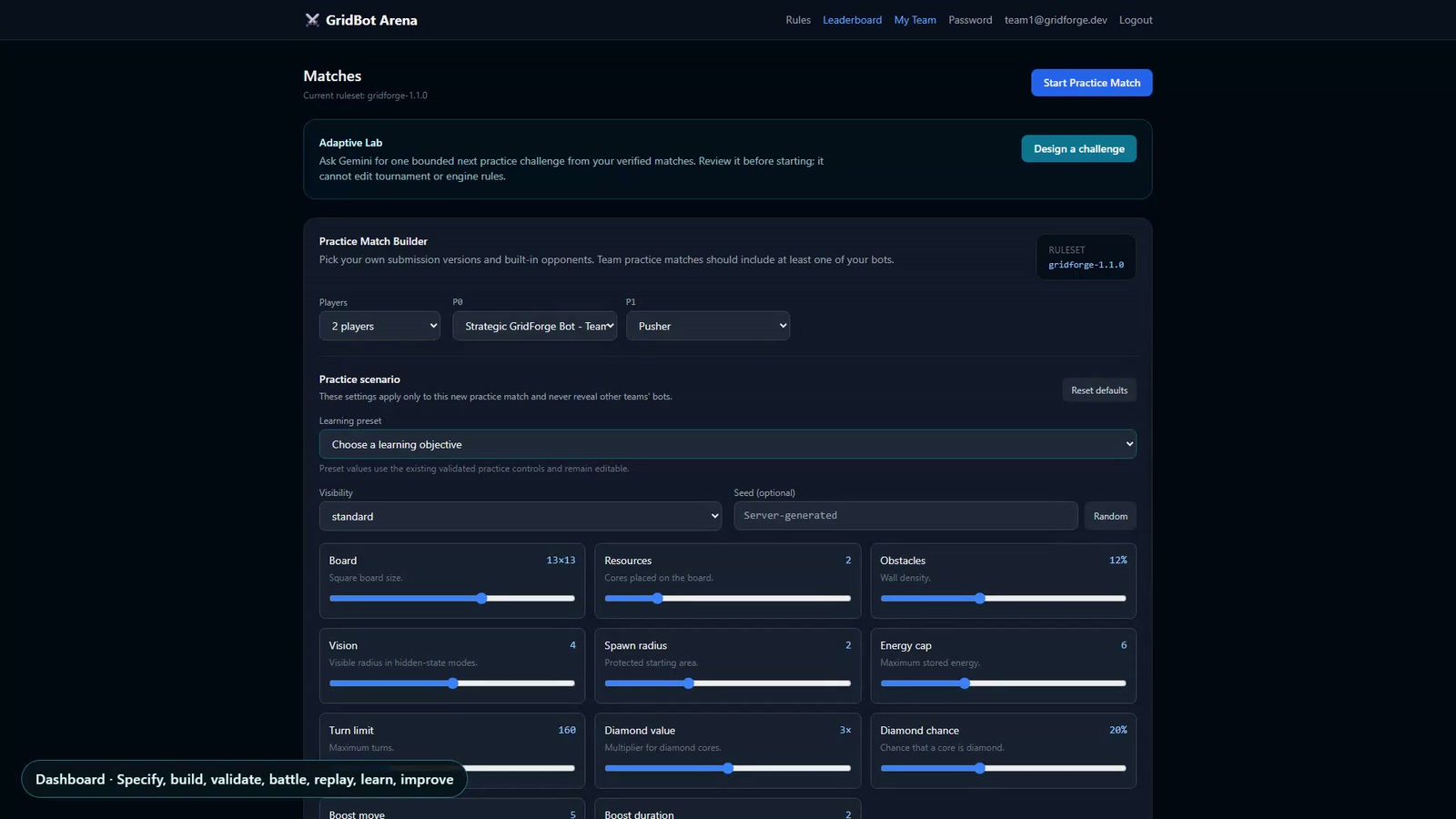
Specify → Build → Validate → Battle → Replay → Coach → Improve
We are especially proud that:
- The same authoritative replay powers both visual playback and AI coaching.
- Gemini receives only a sanitized public projection.
- Coach output is schema-validated before it reaches the user.
- Replay playback remains fully usable while coaching is displayed below it.
- The arena supports both an interactive 3D view and a labelled 2D fallback.
- The system includes quota controls, caching, audit events, and secret isolation.
- The landing page clearly distinguishes free access from paid pilot opportunities.
- The full automated suite currently passes 202 tests.
What we learned
We learned that useful AI feedback depends more on trustworthy context than on generating a long answer.
A coach becomes much more valuable when it is grounded in verified events, identifies specific decisive moments, and proposes experiments with measurable success criteria. We also learned that AI should be bounded: it should suggest the next learning move, not become the authority that determines game state.
From the product side, we learned that a free learner experience and paid team/classroom pilots can coexist, but the distinction must be explicit. We are reporting the current pilot honestly: five users have free access for 90 days, with no revenue yet.
From the engineering side, we learned that model failures, oversized inputs, caching, quotas, privacy, and observability must be designed as part of the feature—not added after the demo.
What's next for Grid Bot Arena
The immediate next step is completing the public deployment and capturing production Gemini evidence for judging.
After the pilot period, we plan to:
- Convert successful free pilots into paid Team and Classroom plans.
- Add teacher dashboards and cohort progress views.
- Add replay-to-replay progress tracking.
- Improve Coach explanations with more personalized practice plans.
- Expand Adaptive Lab into a structured curriculum generator.
- Add opt-in feedback collection and anonymized learning analytics.
- Support more bot languages and classroom integrations.
- Build a larger library of strategy challenges and assessment scenarios.
The long-term goal is to make GridBot Arena a practical learning environment where autonomous-agent programming becomes observable, reproducible, and teachable.

Log in or sign up for Devpost to join the conversation.