-
hero
-
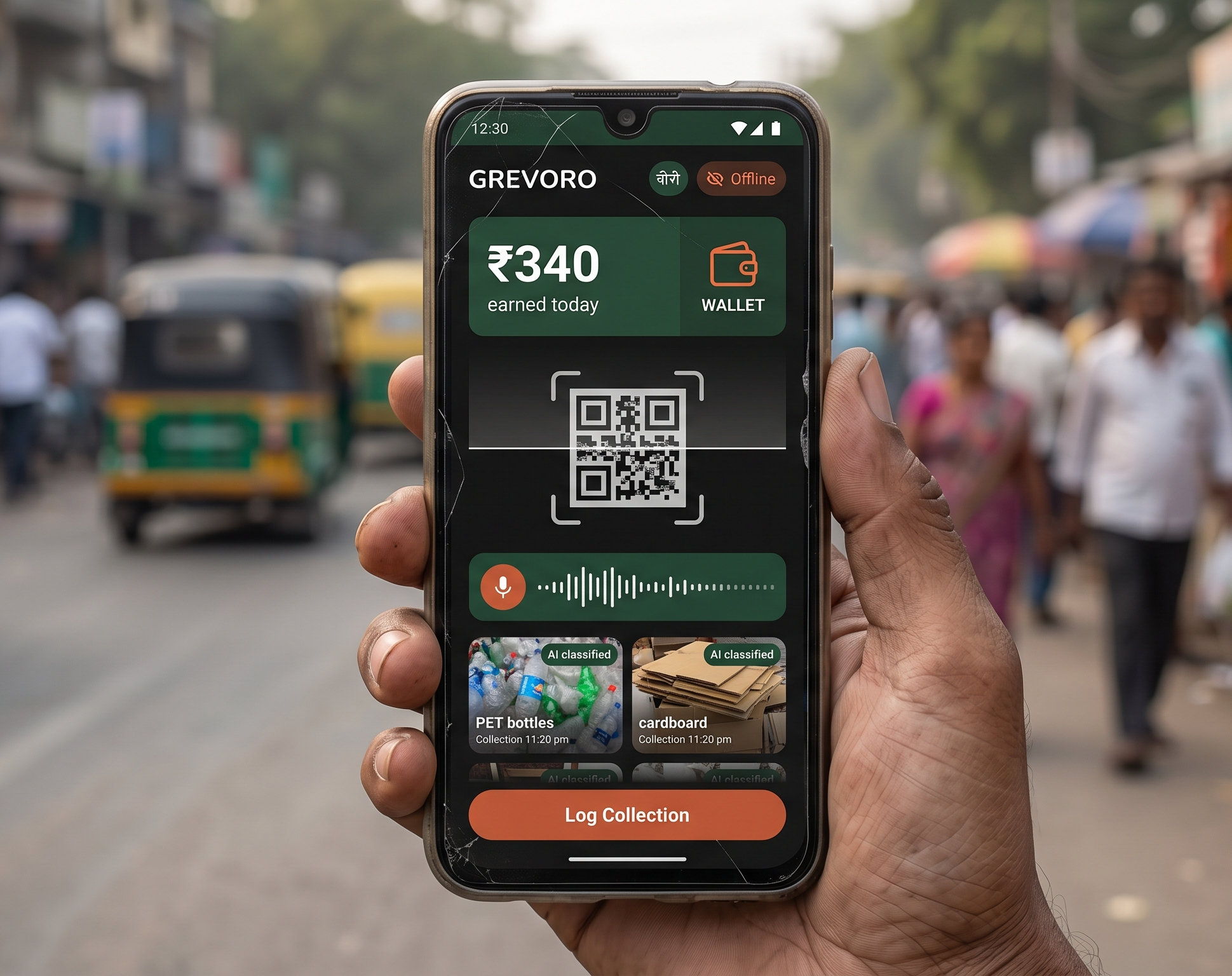
The Ragpicker Mobile Interface
-
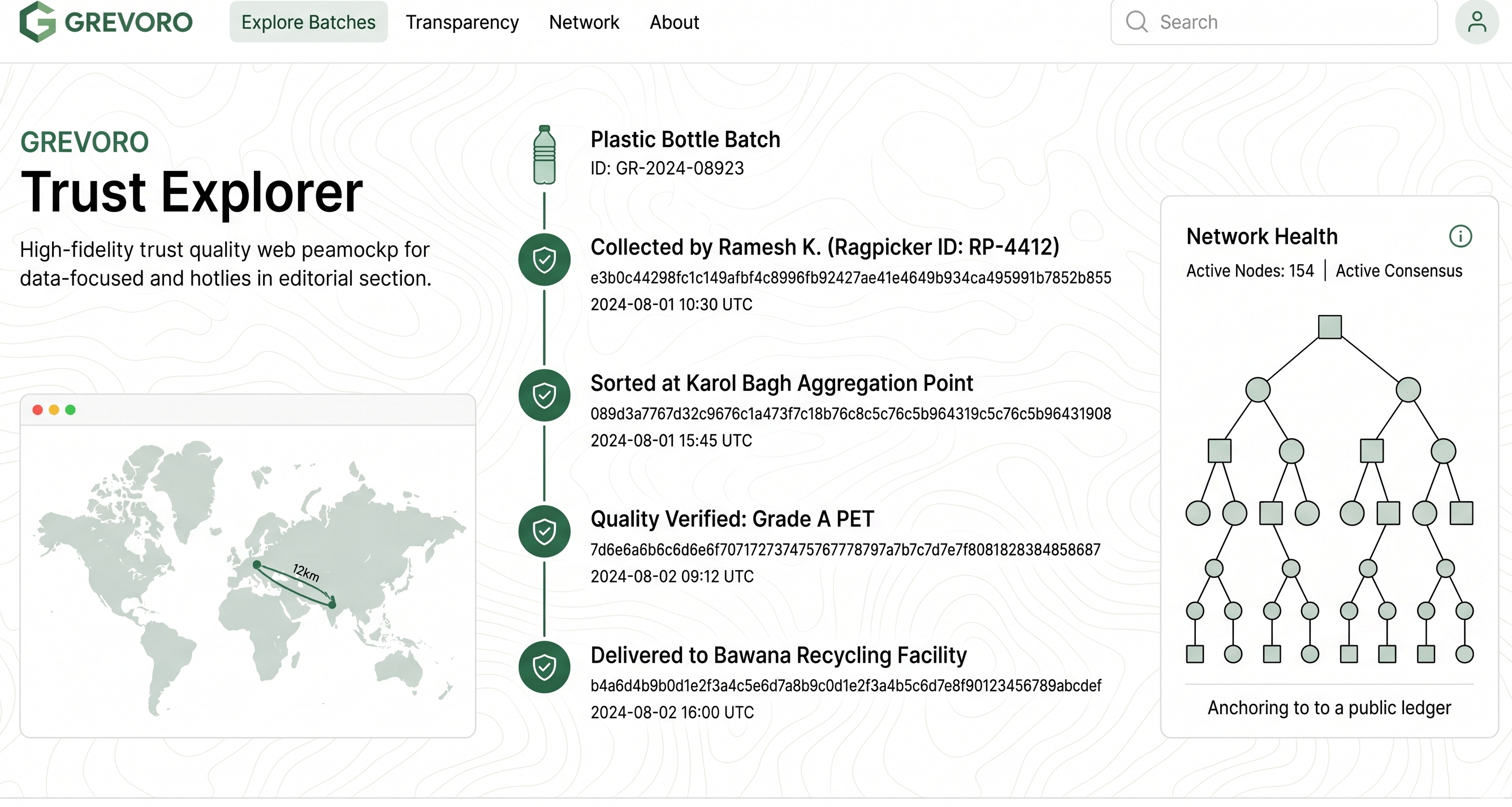
The Public Trust Explorer
Inspiration
India generates 62 million tonnes of waste annually, yet 90% of recycling happens through informal workers (ragpickers, kabadiwalas) who earn ₹200-400/day without recognition. Meanwhile, corporations spend crores on ESG reports with no verifiable proof. We built GREVORO to bridge this gap — digitizing the invisible supply chain while dignifying the invisible workforce.
What We Learned
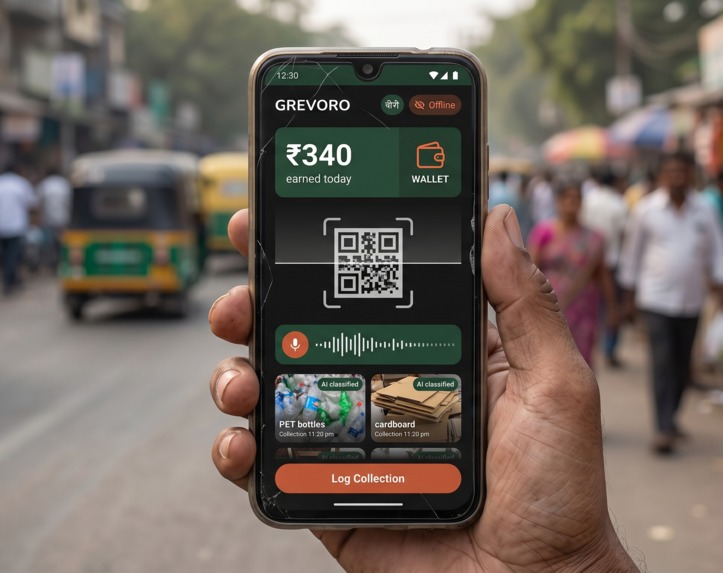
The informal waste economy is a data desert. No APIs, no tracking, no trust. We discovered that ragpickers remember routes by heart but lack digital identity. By giving them a simple portal with QR-based batch logging, we transformed their memory into immutable hash chains — proving provenance without blockchain gas fees.
How We Built It
Architecture: Microservices with Next.js 14 (App Router) frontend, Express API, Python ML (FastAPI) for demand forecasting, and BullMQ workers for async processing.
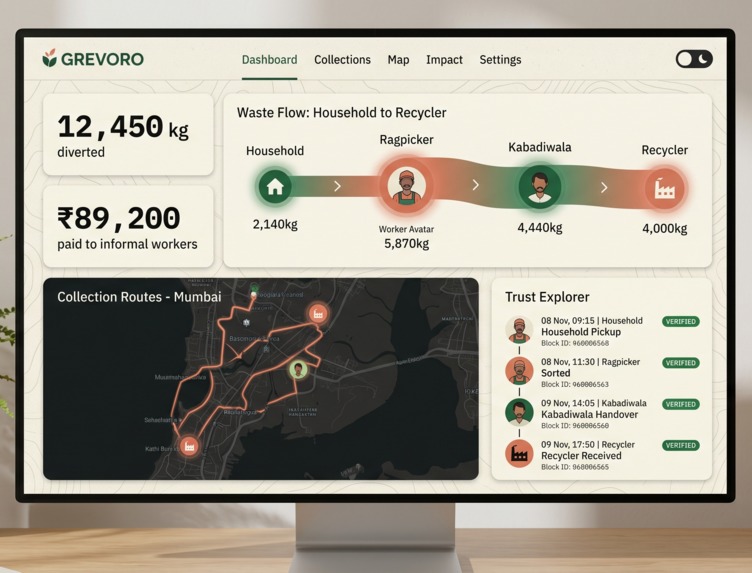
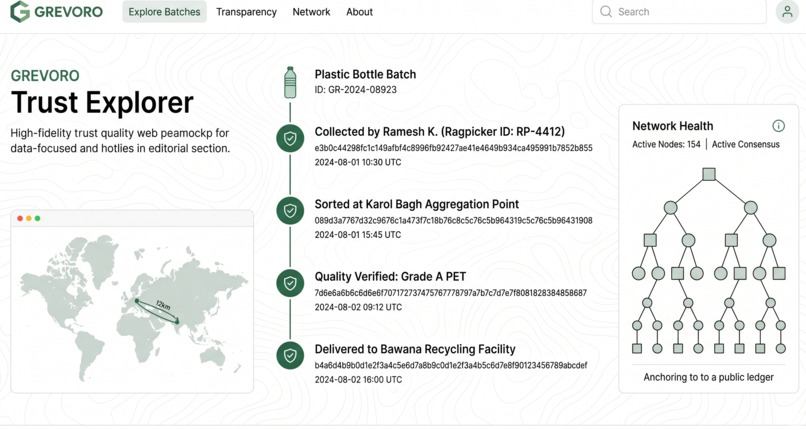
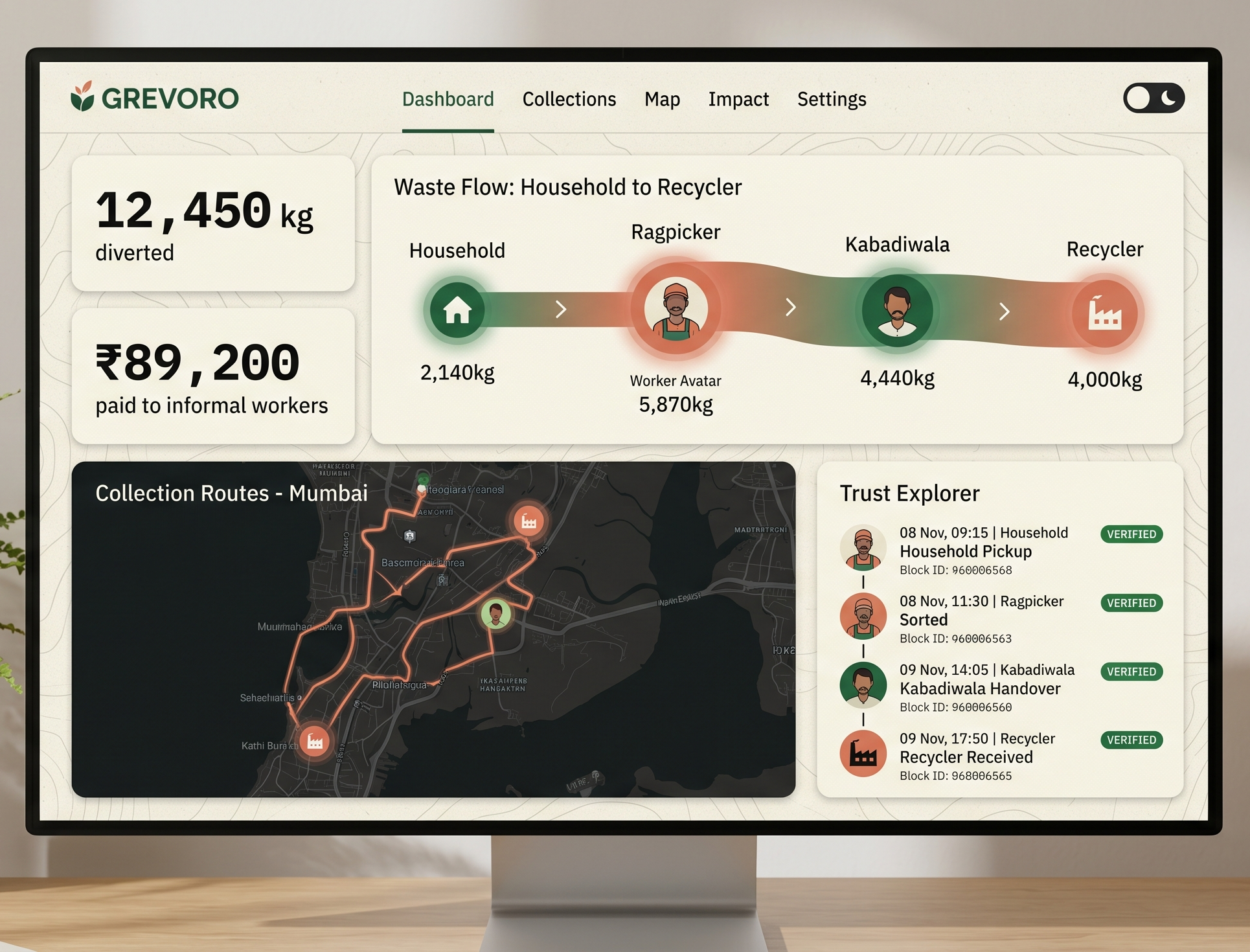
Traceability Engine: Every handoff generates a SHA-256 hash chain anchored to a Merkle tree — giving each waste batch a tamper-proof "birth certificate."
Six Portals: Role-based access for households (request pickups), ragpickers (log via QR), kabadiwalas (weigh & verify), recyclers (track processing), and public (transparency explorer).
Market Layer: Real-time recyclable trading with dynamic pricing based on ML-predicted demand and actual supply chain data.
ESG Dashboard: D3-powered Sankey diagrams showing true material flow — finally, auditable circular economy metrics.
Challenges
- Multi-script support: Workers use Hindi/English mix — we built a hybrid UI with iconography.
- Offline sync: Ragpickers work in connectivity gaps — QR codes store offline, sync on reconnect.
- Trust without blockchain: Achieved immutable audit trails using cryptographic hashing + Postgres, avoiding gas costs while keeping verifiability.
Built With
- 14
- atlas
- auth
- bullmq
- cloudflare
- css
- d3.js
- docker
- express.js
- fastapi
- framer
- ioredis
- jwt
- mongodb
- motion
- next.js
- orm
- postgresql
- prisma
- python
- qrcode
- r2
- recharts
- redis
- render
- sankey
- socket.io
- tailwind
- typescript
- zod

Log in or sign up for Devpost to join the conversation.