Inspiration
A feature request can sound tiny—“add dark mode,” “add comments,” or “add Google login”—while hiding days of design, engineering, accessibility, testing, and deployment work.
That gap between how simple work sounds and how complicated it becomes inspired Gremlin. Instead of displaying another boring checklist, Gremlin turns hidden scope into a creature you can see, fight, and eventually defeat.
What it does
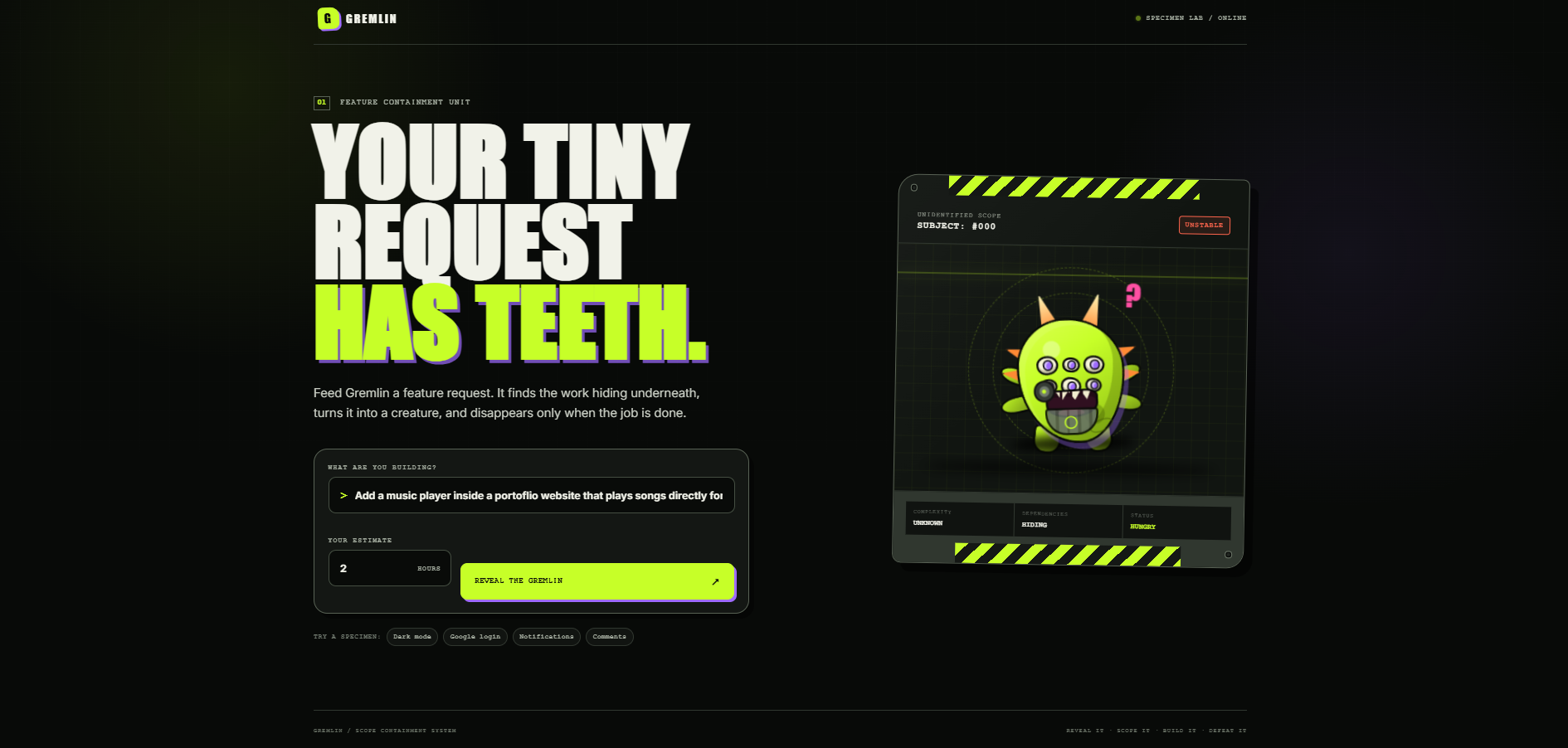
Gremlin is an AI-powered scope planner that reveals the work hiding inside a feature request.
A user enters:
- The feature they want to build
- Their original time estimate
Gremlin then generates:
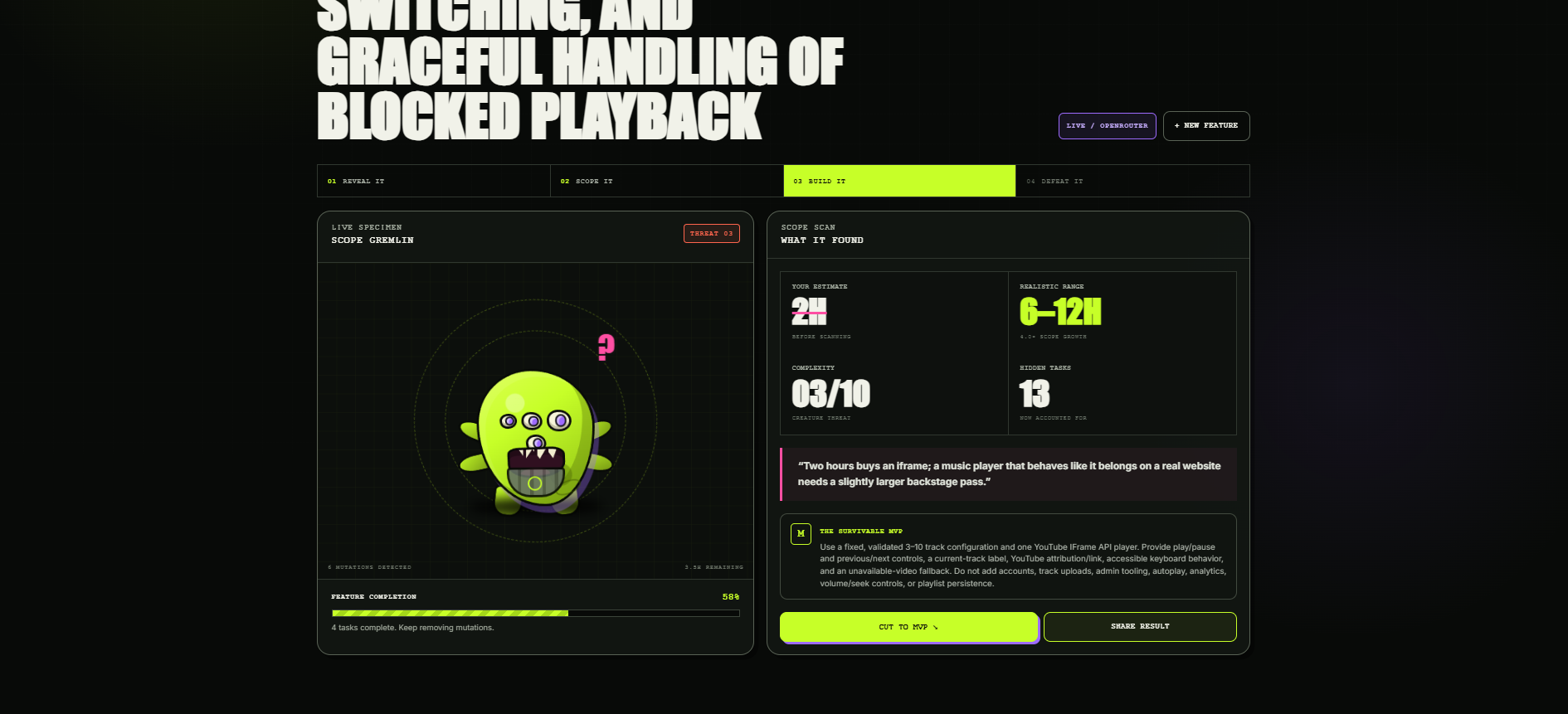
- A realistic estimated range
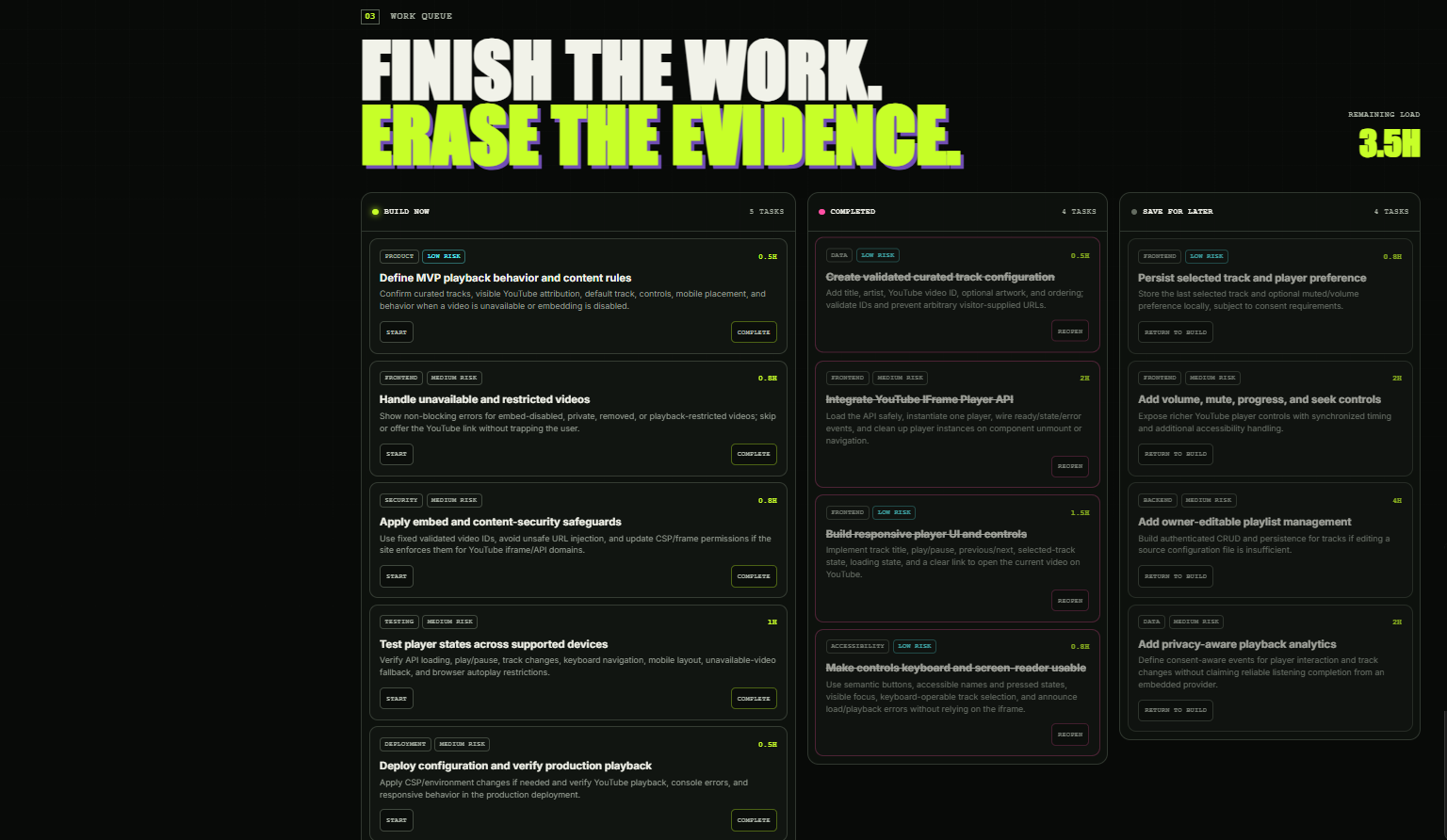
- Required and optional implementation tasks
- Individual task estimates
- Complexity and risk levels
- Assumptions, dependencies, and potential problems
- A smaller, survivable MVP
That hidden work becomes a visual “scope gremlin.” Users can start tasks, complete them, or move optional work to later. As the remaining workload decreases, the gremlin becomes weaker and smaller. When every task is completed or removed from scope, the gremlin disappears.
How we built it
Gremlin was built with HTML, CSS, vanilla JavaScript, Node.js, and Vercel Functions.
The server sends the feature request and estimate to GPT-5.6 through the OpenAI Responses API. The model returns structured JSON containing the scope analysis, task list, risks, estimates, and MVP recommendation.
The frontend transforms that response into an interactive project plan. Task progress is stored locally so users can return to their active gremlin later. Gremlin also includes a reliable demo-analysis fallback so the core experience remains demonstrable if an external AI request is temporarily unavailable.
Challenges we faced
The biggest challenge was making the AI output useful rather than simply dramatic. Gremlin needed to identify concrete implementation work, produce believable estimates, separate required work from optional scope, and return a consistent structure the interface could render.
We also had to balance humor with practical value. The gremlin needed personality, but the product still had to function as a credible planning tool.
Deployment presented another challenge because the project combines static frontend assets with serverless API functions. We had to correctly configure the build output and Node runtime for Vercel.
Accomplishments that we're proud of
- Turned an abstract problem—hidden project scope—into a memorable visual metaphor
- Built a complete feature-to-plan workflow
- Generated structured, actionable tasks instead of generic AI advice
- Made the creature respond to real project progress
- Created an MVP-cutting mechanic that immediately reduces the workload
- Added a fallback system so the demo remains reliable
- Shipped a responsive application and public deployment during Build Week
What we learned
We learned that AI planning becomes much more useful when its output is constrained by a schema and connected to an interactive workflow.
We also learned that estimates are easier to understand when people can see the difference between their original guess and the work discovered underneath it. Making scope visual and slightly ridiculous makes an uncomfortable planning conversation much easier to have.
What's next for Gremlin
Next, we would like to add:
- Shared team projects
- GitHub, Linear, and Jira task export
- Estimate calibration based on completed work
- Different gremlin personalities for different project risks
- Voice and animated reactions
- Shareable scope reports
- Project history and team analytics
Gremlin’s goal is simple: reveal the work, control the scope, and make the monster disappear.

Log in or sign up for Devpost to join the conversation.