-
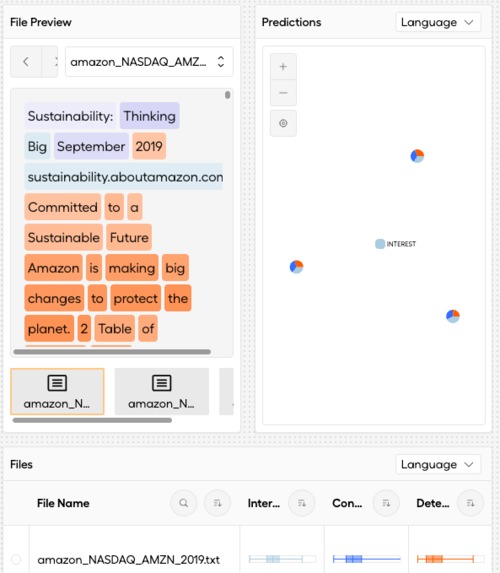
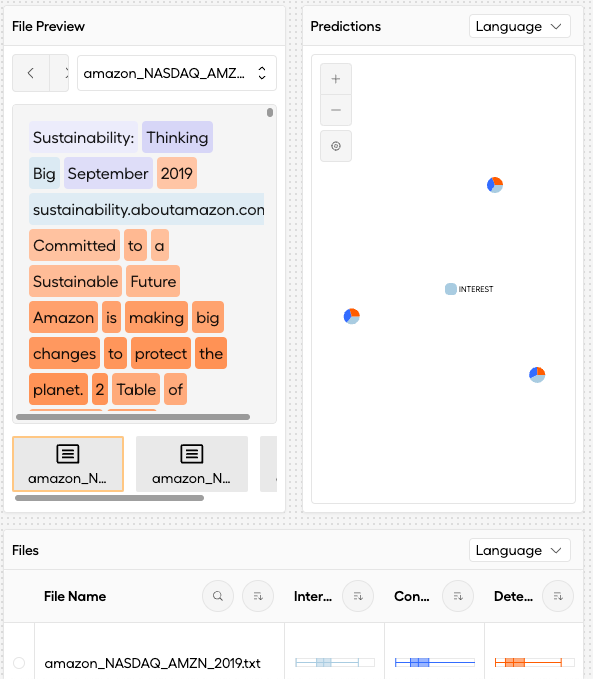
text analysis example
-
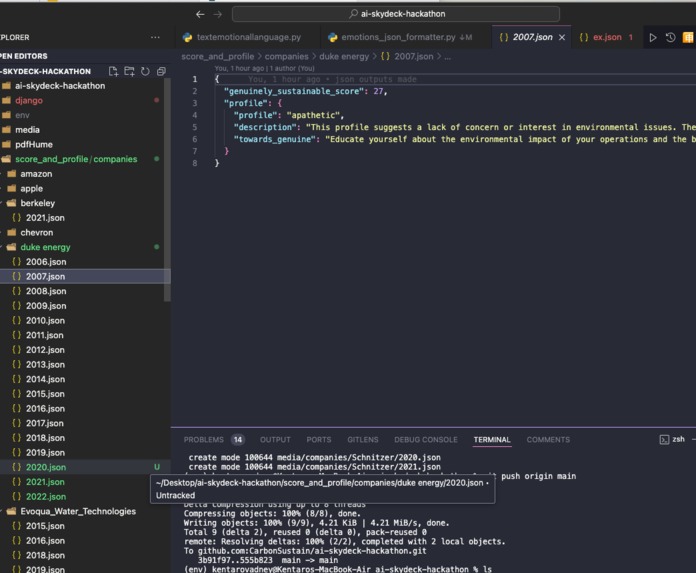
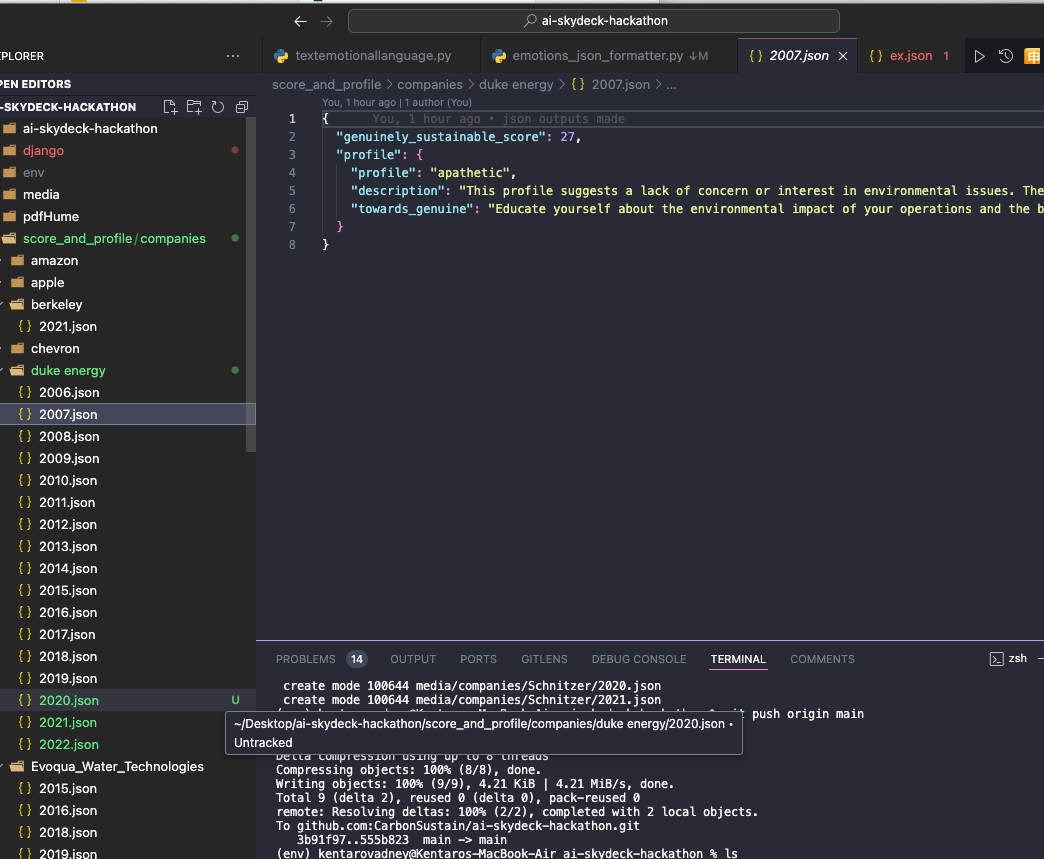
one of many company climate tech emotional analysis profile and score
💡 Inspiration 🌳
Companies love green marketing 🌱 but don't know how their sustainability reports 📄 nor public speeches and videos 🗣️ truly represent the company as good for the planet 🌍 or if they are greenwashing 🧼 or greenhushing 🤫.
Companies need AI-powered actionable insights and information 🤖 on how people emotionally react to their data ❤️, along with logical interactions with facts 📊.
✨ What it Does ✨
We provide educational examples of scoring, recommendations, and clarification of good 👍 and bad 👎 sustainability reports and videos of sample companies 🏢.
Our web platform 🌐 does the following:
- The user selects a company from the "bad" or "good" section.
- We perform emotional sentiment analysis on the sustainability report PDF text and an interview video per year for that company. This is displayed in an easy-to-understand graph 📈.
- We provide the company's emotional profile, an explanation of that profile, and actionable insights to help them be perceived as authentically sustainable 🏆.
🛠️ How We Built It 🛠️
- We built a webscraper with Beautiful Soup (bs4) in Python to gather public sustainability reports for good and bad companies.
- We created a PDF-to-text parser using OpenAI's pdfminer and the RAG tutorial to convert these reports into text files for sentiment analysis.
- We used the Hume Expression Measurement API (text, face, burst, and prosody) to analyze both text and video data.
- We developed a scoring rubric heuristic to assess how authentically sustainable a company is perceived.
- We created psychological profiles with suggestions to improve perceptions of sustainability (detailed below).
- We generated images representing public perception using AWS Bedrock Image Generation.
- We prototyped our frontend and backend extensively using repl.it.
🚧 Challenges We Ran Into 🚧
Integrating diverse work into the backend was difficult due to the variety of frameworks and AI tools we used. Aligning different technologies, ensuring smooth communication, and managing dependencies were key challenges. We also faced issues with integrating OpenAI RAG for actionable AI insights.
🎉 Accomplishments That We're Proud Of 🎉
We're proud of our ability to learn and effectively use diverse tools 💪. Despite the challenges, we integrated multiple AI tools and developed a custom model for greenwashing detection. Our team showed resilience and collaboration to overcome obstacles and create a cohesive system.
📖 What We Learned 📖
We gained valuable experience integrating AI tools, developing custom models, managing complex projects, and improving our teamwork skills 🤝. This project significantly expanded our technical knowledge and project management abilities.
🚀 What's Next? 🚀
- Allow custom PDF and video uploads for personalized insights.
- Train custom Hume models for more accurate greenwashing/hushing detection.
- Use Hume's Real-Time Measurement for live sentiment feedback.
- Integrate with OpenAI RAG for AI-powered insights.
- Make data interactive with LLMs and create a vectorDB for embeddings.
🧠 Psychological Profiles & Insights 🧠
- Greenwasher 🧼: Exaggerates positive actions. Focus on transparency, data-backed claims, and measurable goals.
- Greenhushing Defensive 🤫: Discomfort or defensiveness about sustainability. Acknowledge areas for improvement, communicate openly, and engage stakeholders.
- Genuinely Sustainable 🏆: Demonstrates true commitment. Continue setting ambitious goals, transparent reporting, and inspire others.
- Apathetic 🤷: Lacks concern or interest. Educate yourself about the impact and benefits of sustainability.
- Skeptical 🤔: Doubts green claims. Seek credible information, case studies, and dialogue with experts.
- Eco-Anxious 😟: Feels anxious or overwhelmed. Focus on actionable steps, collaborate with others, and celebrate achievements.
- Critical 🧐: Disapproves of unsustainable practices. Identify areas for improvement, hold companies accountable, and advocate for change.
- Aspiring Sustainable 🌱: Desires to be more sustainable. Set realistic goals, start small, and seek guidance.
- Idealistic ✨: Overly optimistic view. Ground idealism in reality, acknowledge complexity, and adapt.
- Eco-Sad 😔: Feels sadness or grief. Channel grief into action, connect with others, and focus on solutions and hope.
Built With
- amazon-web-services
- angular.js
- bedrock
- bs4
- django
- emotional-analysis
- faceai
- hume
- hume-ai
- openai
- python
- rag
- voiceai


Log in or sign up for Devpost to join the conversation.