Inspiration
Environmental pollution and improper waste disposal are growing challenges that affect communities, public health, and the environment. Many waste-related issues go unreported, while identifying their severity and coordinating cleanup efforts can be difficult.
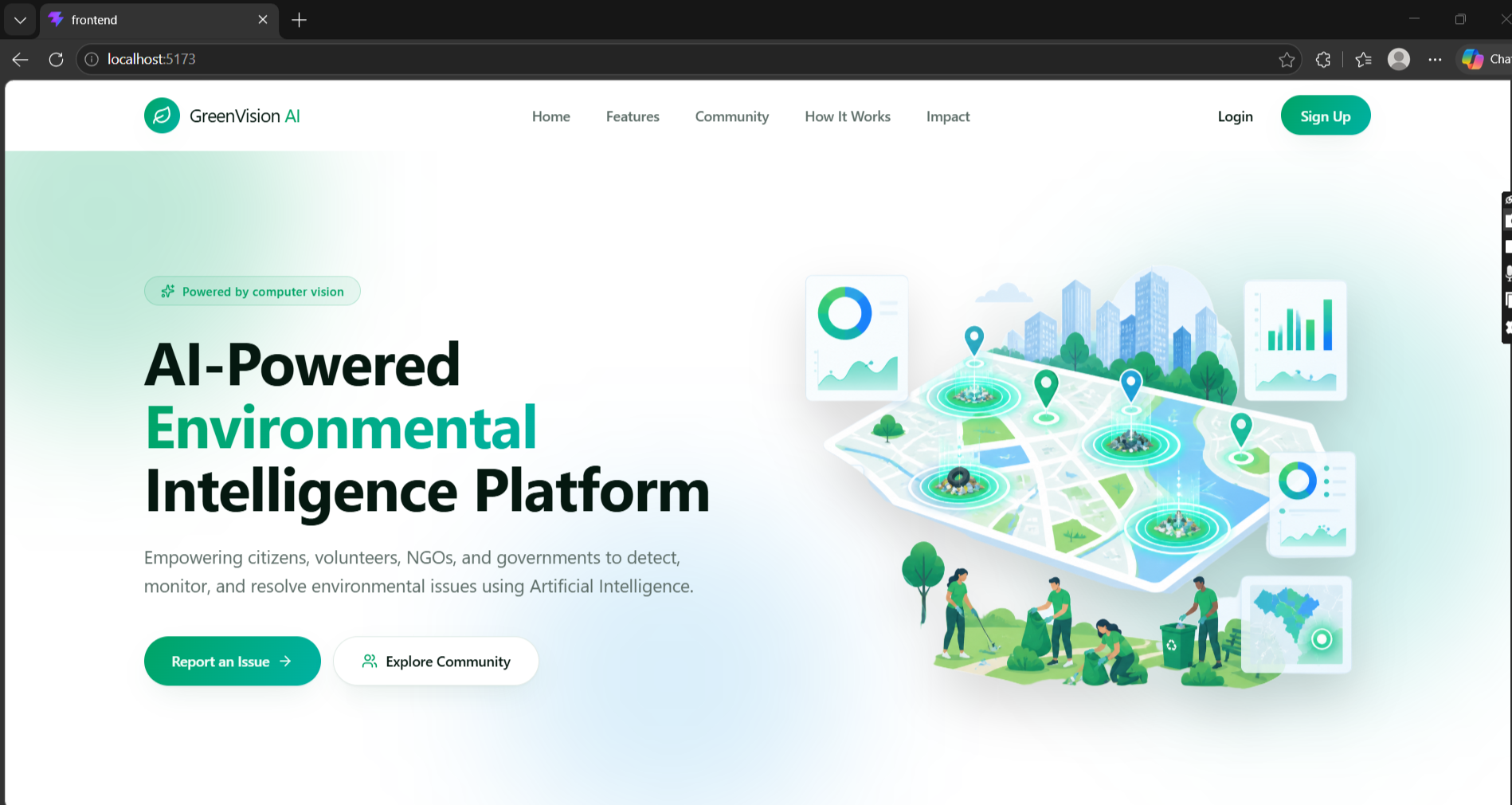
We were inspired to build GreenVision AI, an AI-powered environmental intelligence and community cleanup platform that connects citizens with government authorities. Our goal is to use artificial intelligence to make environmental reporting smarter, simplify the identification of waste-related problems, and encourage communities to take an active role in creating a cleaner and greener future.
What it does
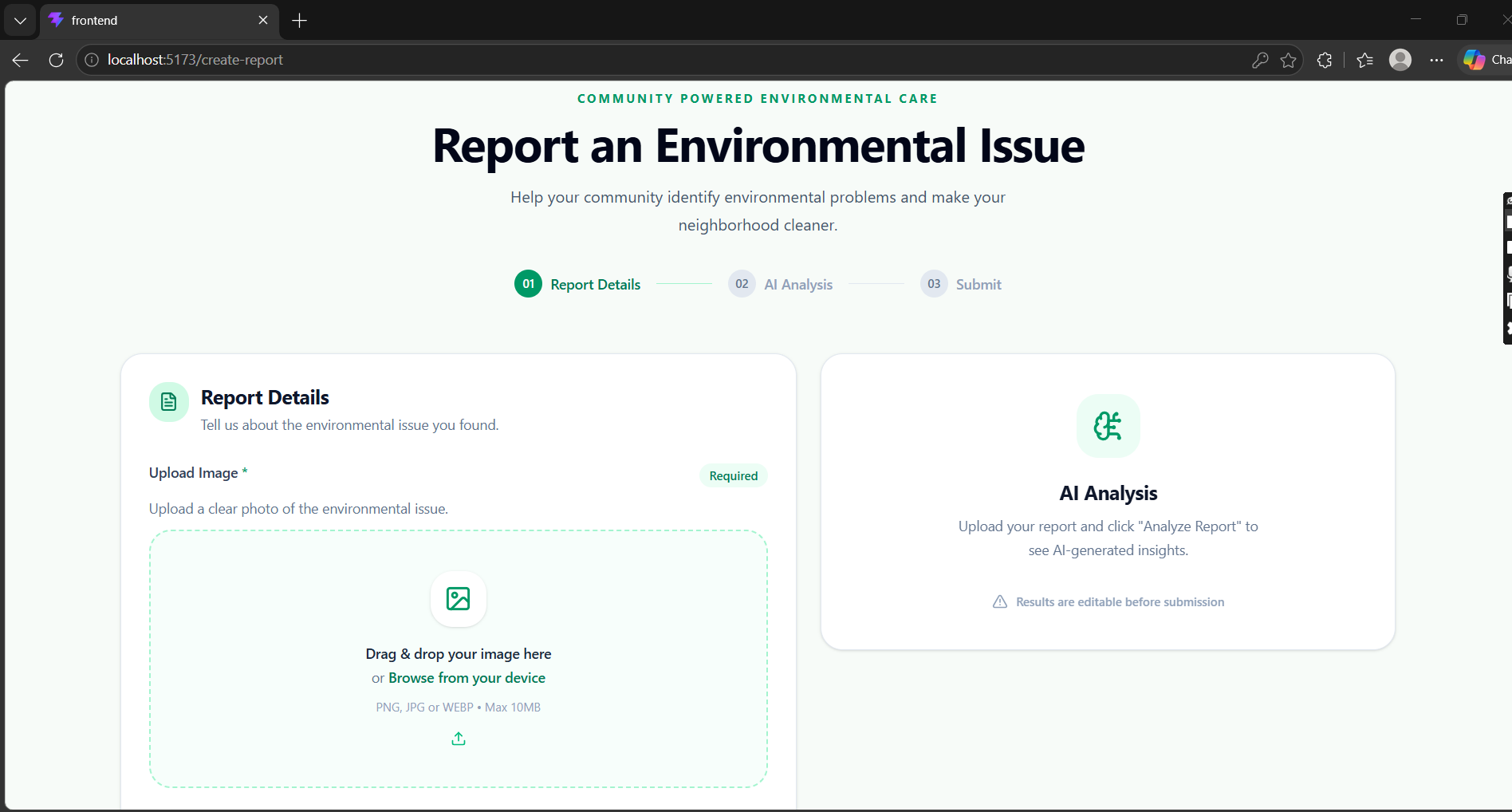
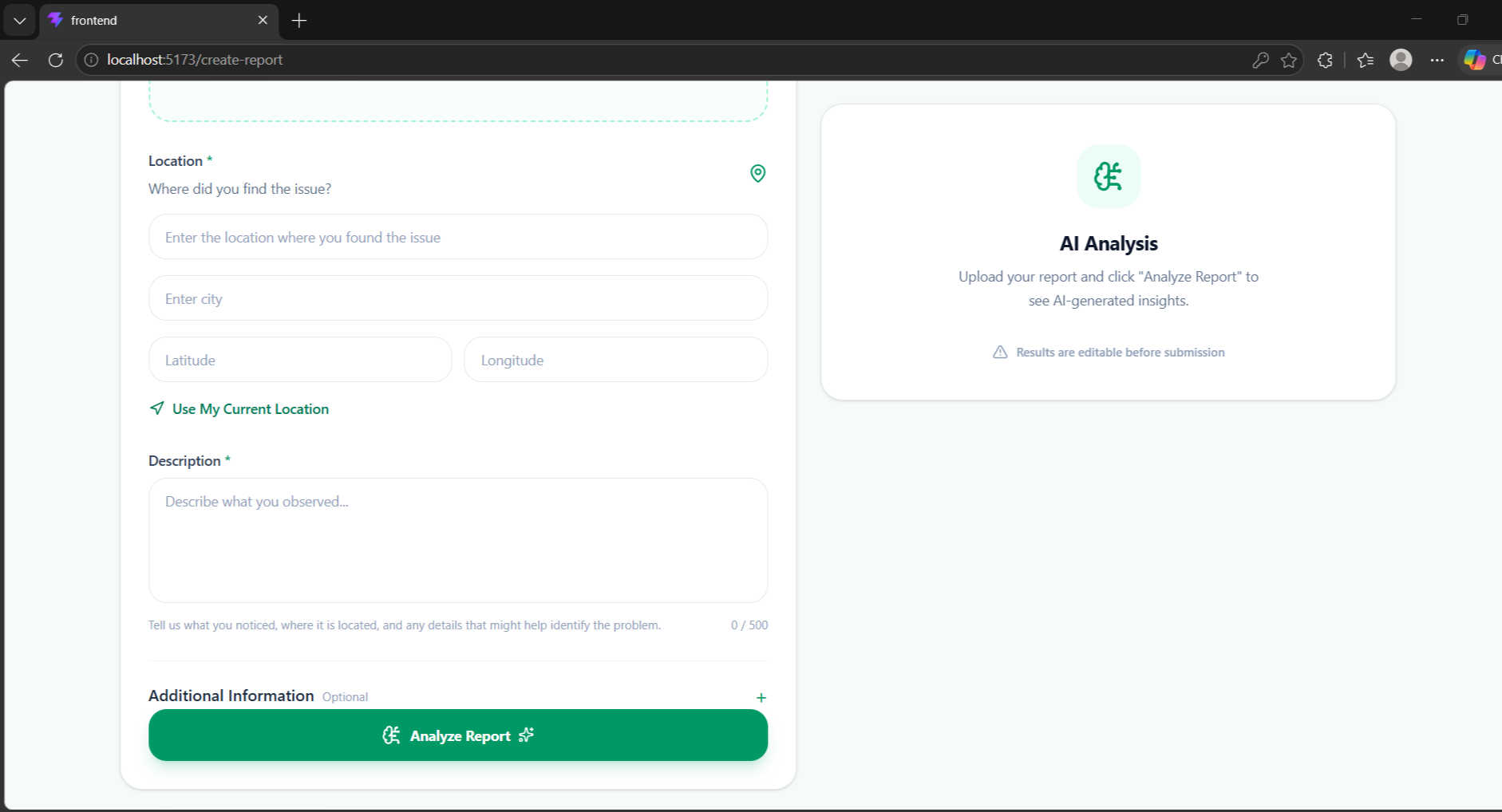
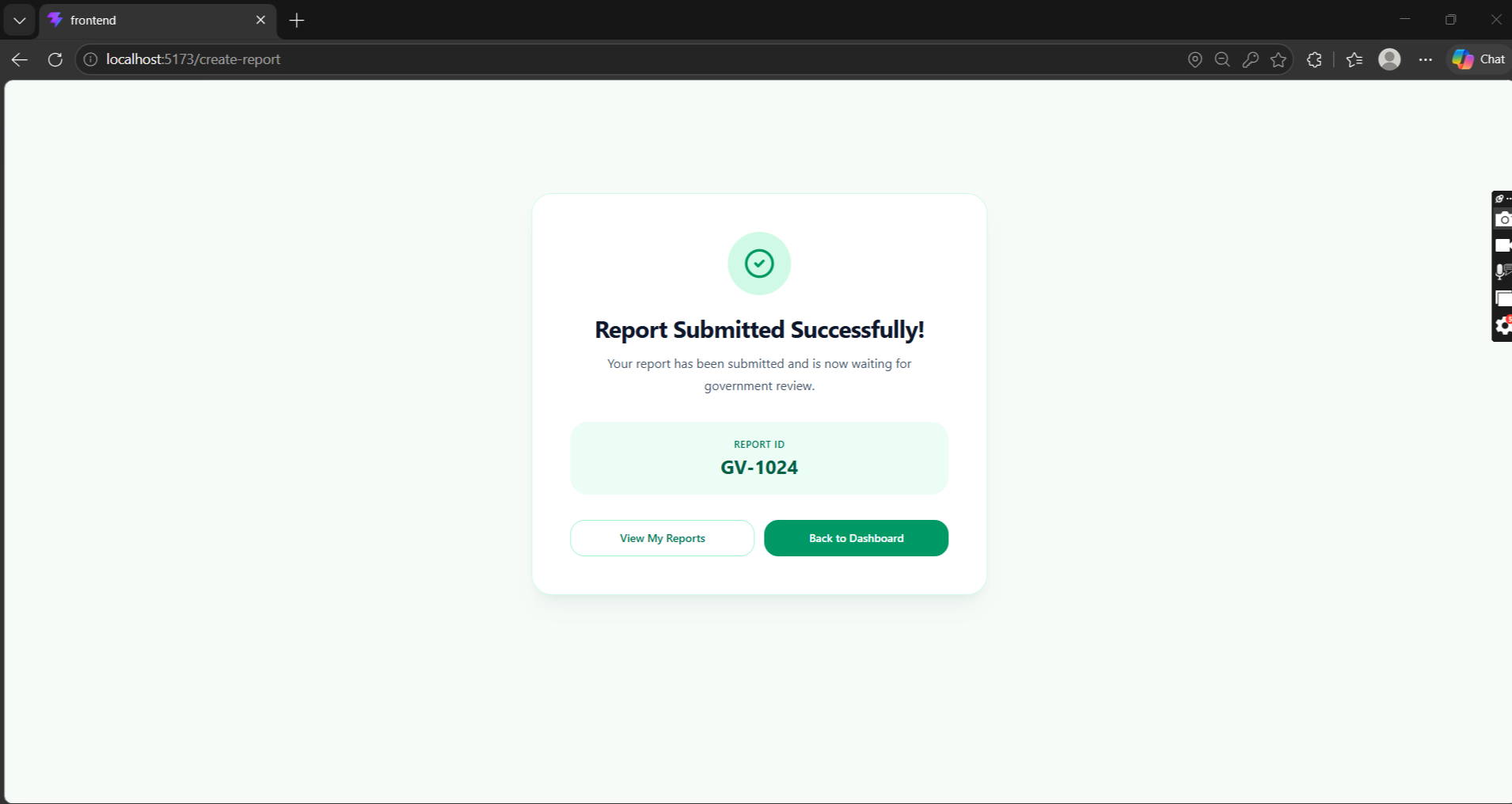
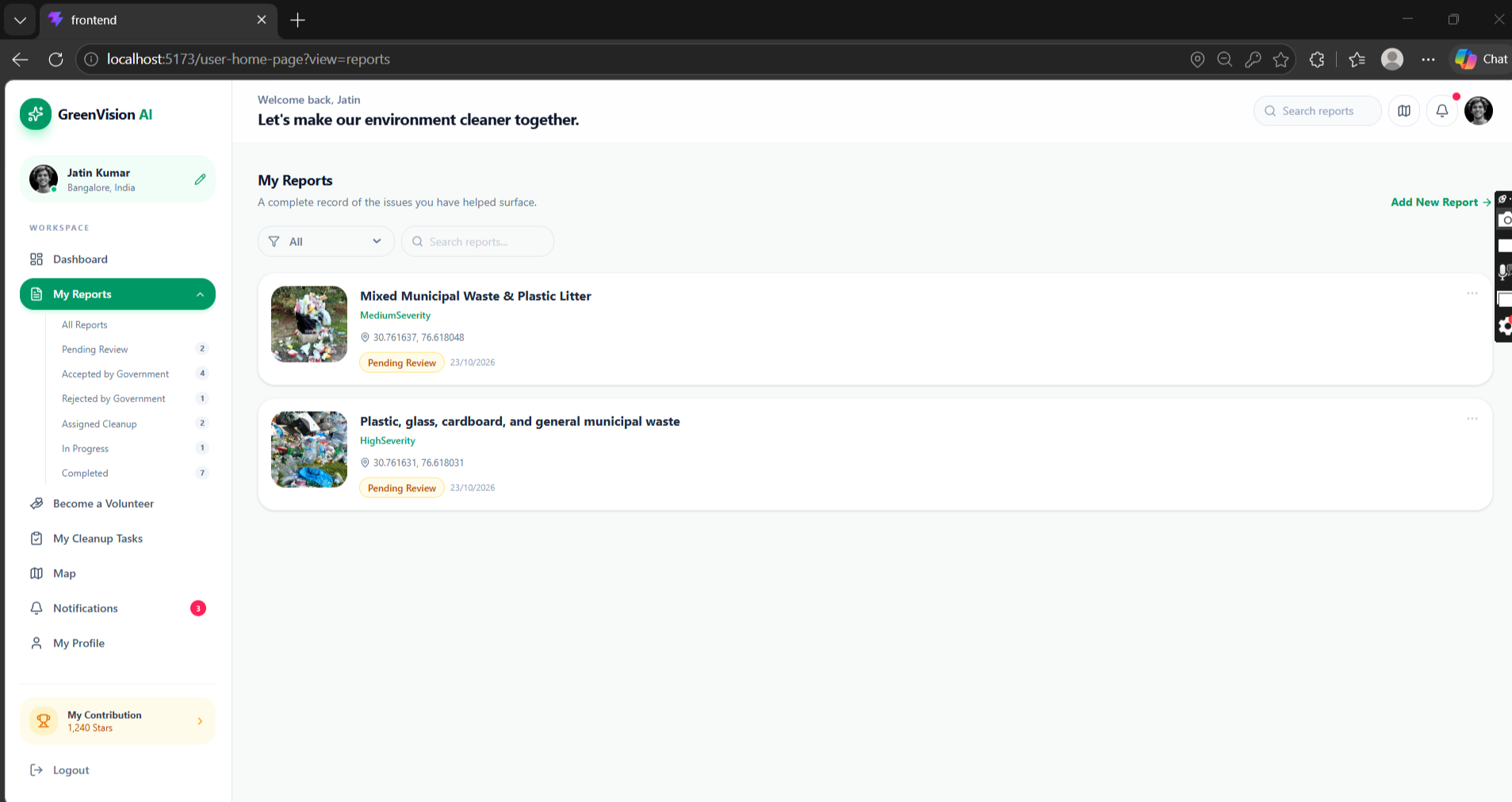
GreenVision AI helps citizens report environmental issues and provides AI-powered insights to support waste management and decision-making.
Key features include:
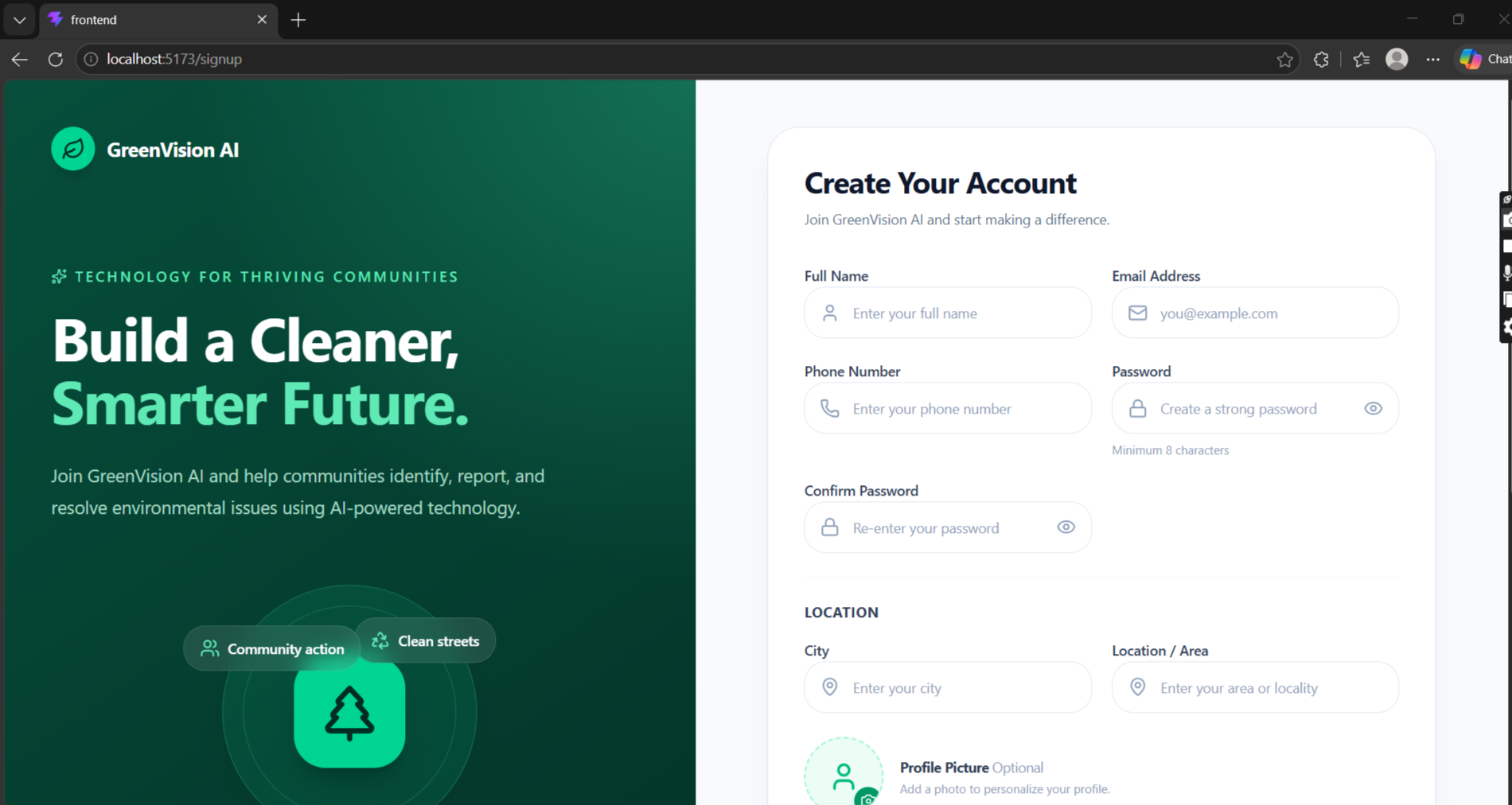
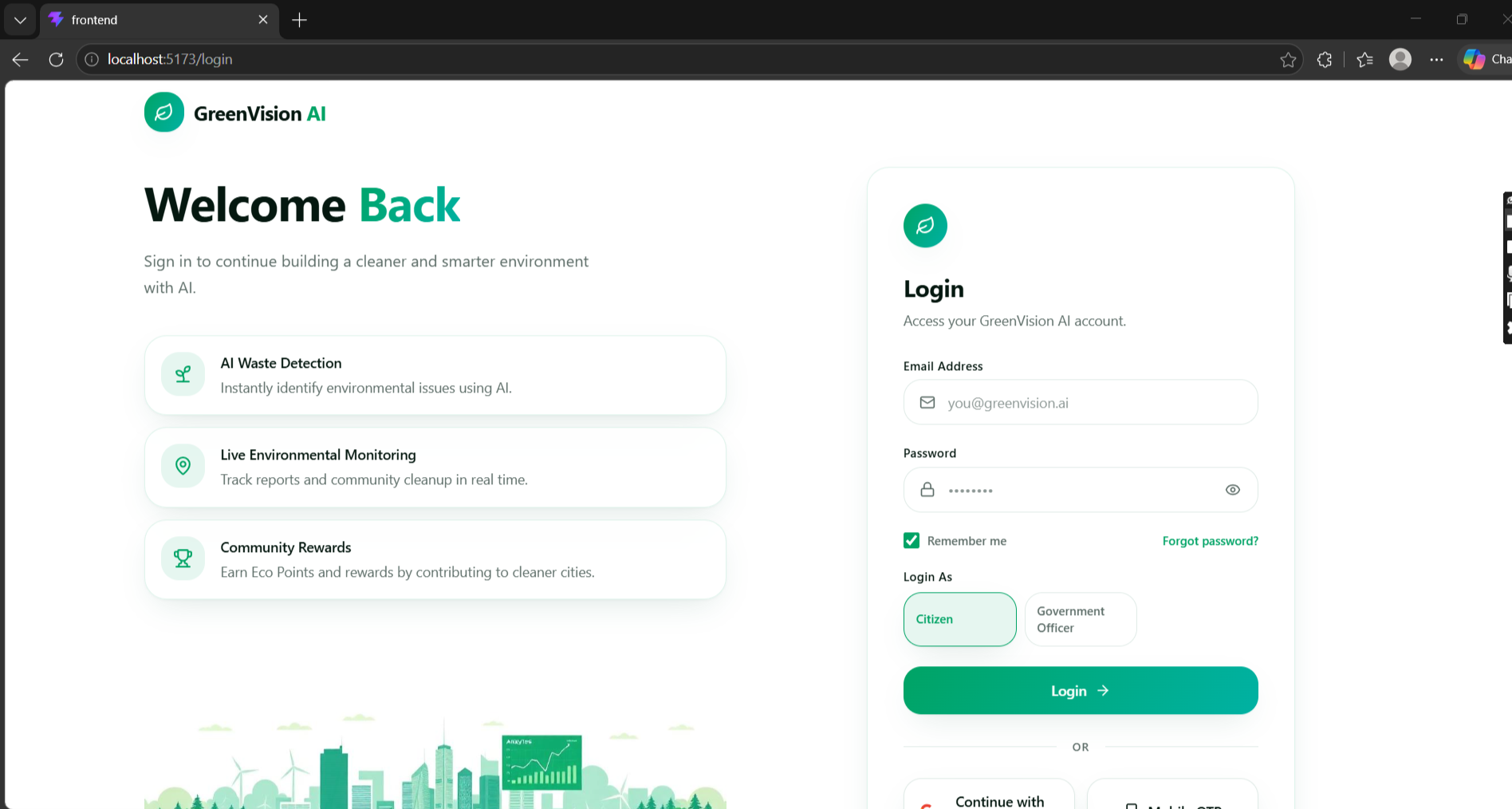
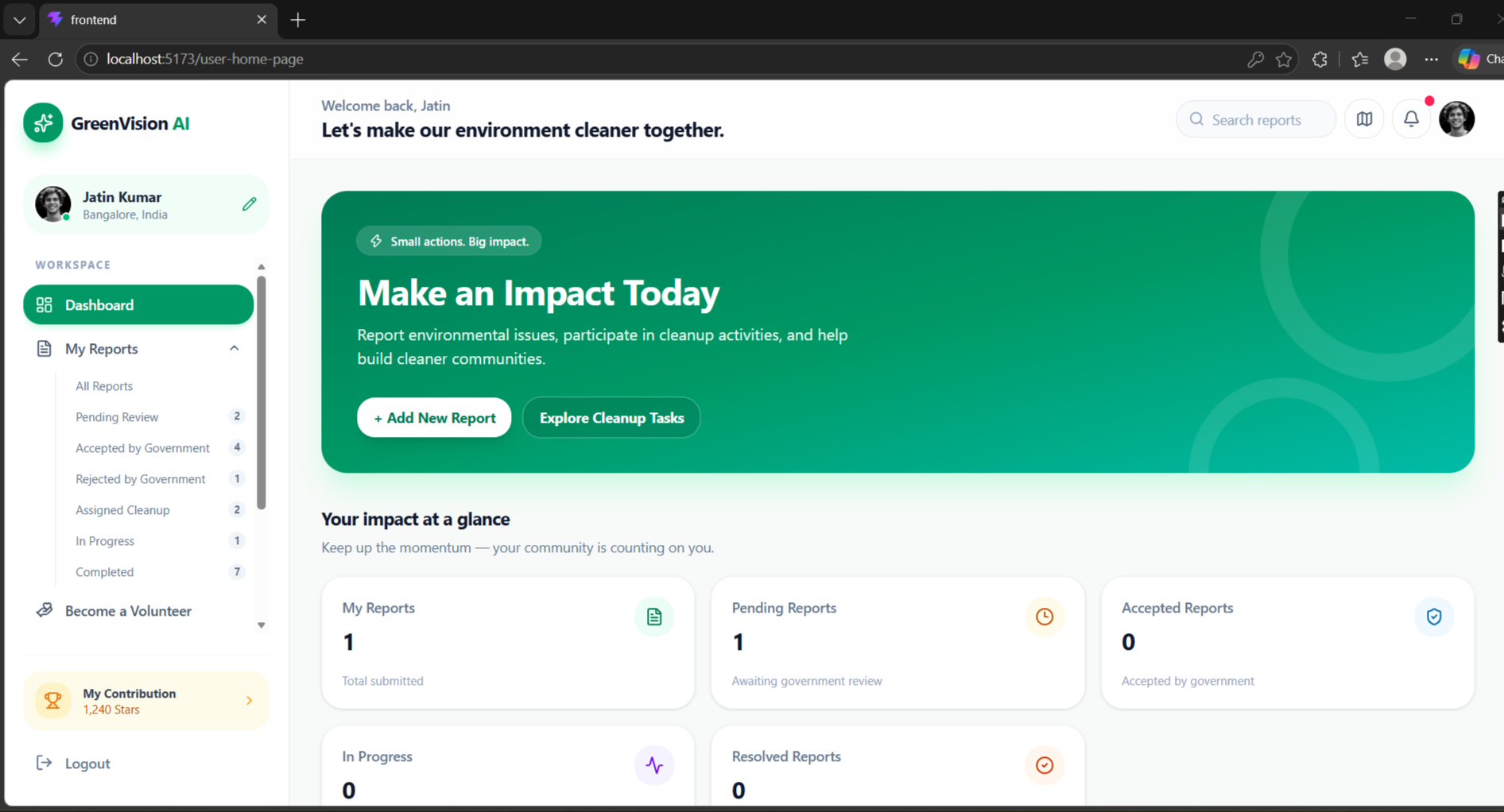
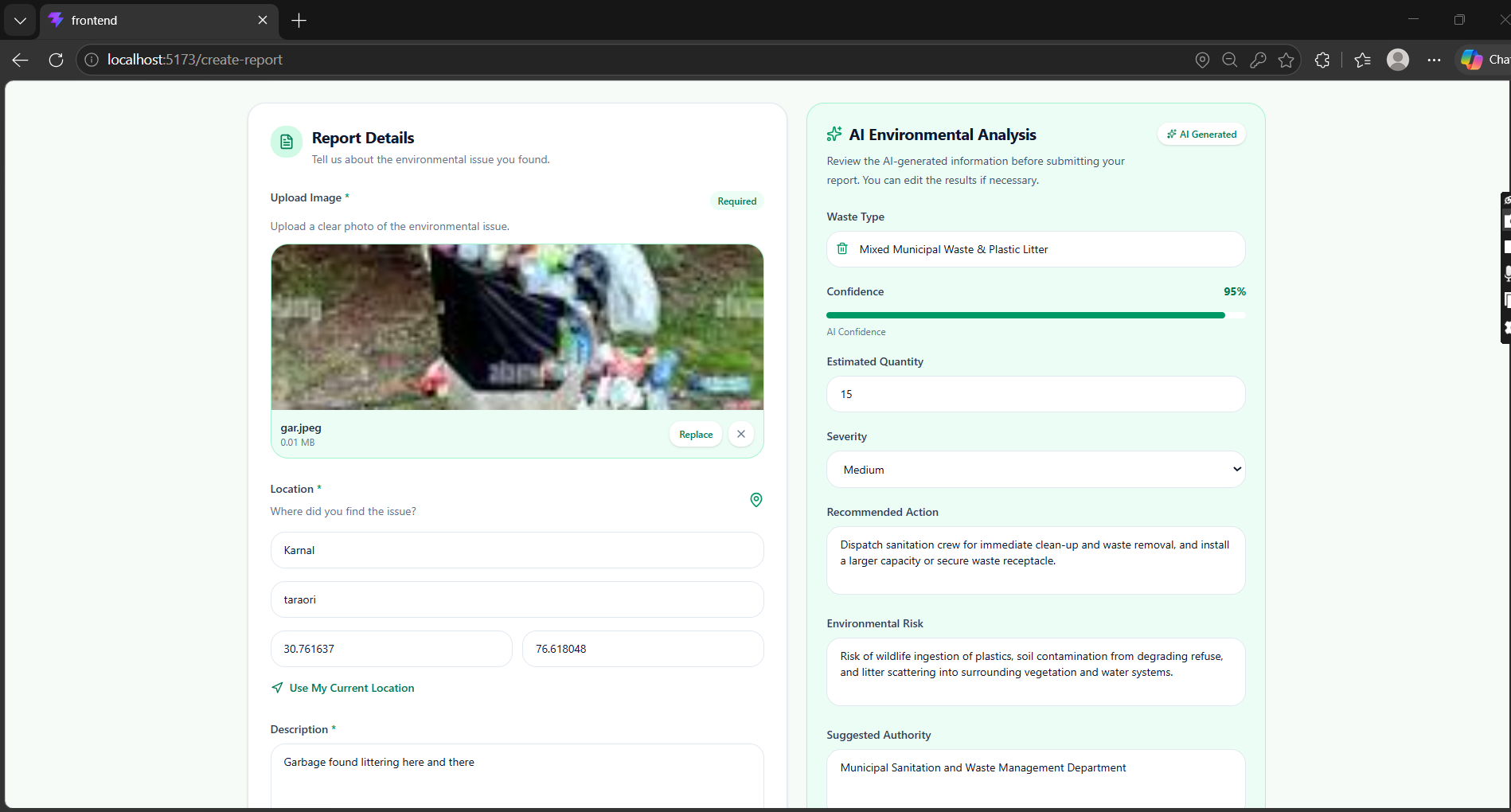
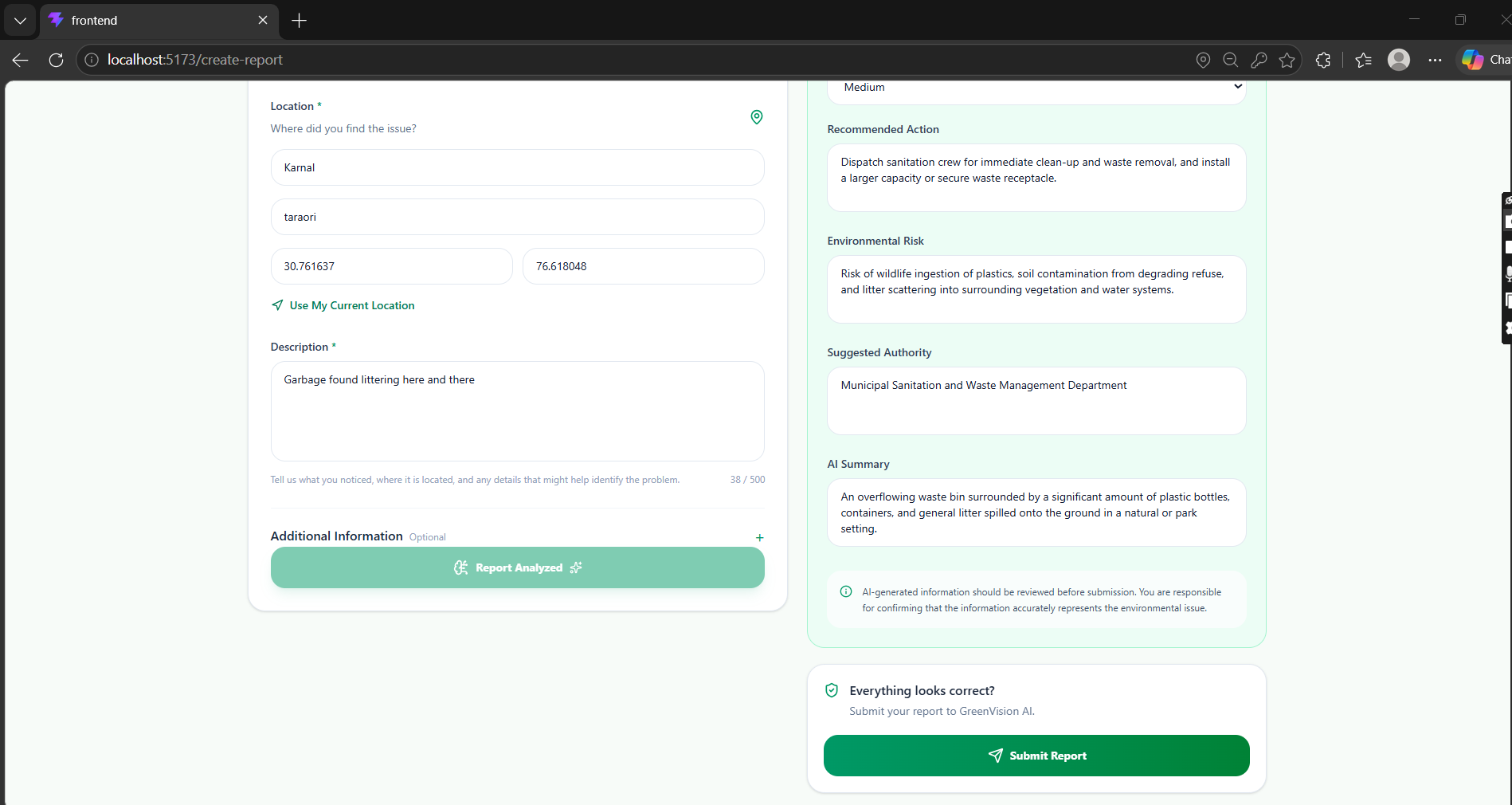
AI-Powered Waste Analysis:Analyzes reported waste images using Google Gemini API to generate insights about waste type, confidence score, severity, and estimated waste quantity. Citizen Reporting: Enables citizens to submit reports about waste-related issues in their surroundings. Government Access: Provides government users with access to submitted reports to help them identify and review environmental problems. Role-Based Authentication: Separates citizen and government access to provide a structured user experience. User Verification: Incorporates authentication and verification mechanisms to manage user access. Environmental Intelligence: Organizes reported information into structured data that can help identify issues requiring attention.
By bringing AI and community participation together, GreenVision AI aims to make environmental problem reporting more accessible and actionable.
How we built it
We built GreenVision AI using a full-stack web development architecture that combines a frontend interface, backend APIs, a database, and AI integration.
Our technology stack includes:
Frontend: React.js, JavaScript, HTML, and CSS. Backend: Node.js and Express.js. Database: MongoDB with Mongoose. AI Integration: Google Gemini API for analyzing environmental reports. API Communication: REST APIs connecting the frontend and backend. Authentication: User authentication, verification, and role-based access control. Version Control: Git and GitHub for collaborative development and source code management.
The backend handles authentication, report creation, and communication with the AI service. Environmental reports are stored in MongoDB, while AI-generated insights are organized into structured fields for further use by the application.
We developed the application in separate modules to make the system easier to test, debug, maintain, and extend.
Challenges we ran into
One of our biggest challenges was integrating AI-generated insights into the environmental reporting workflow while keeping the returned data consistent with our database structure.
We also faced challenges with MongoDB Atlas connectivity, frontend-backend communication, authentication, cross-origin resource sharing (CORS), and integrating code developed across different Git branches.
Debugging these issues required us to inspect API responses, review backend logs, verify configuration settings, and test individual components before connecting them.
These challenges taught us that developing an AI-powered application requires more than connecting an AI API. Reliable infrastructure, proper error handling, data consistency, and effective collaboration are equally important.
Accomplishments that we're proud of
We are proud to have developed a platform that applies AI to a real-world environmental problem rather than using it only for demonstration purposes.
Our key accomplishments include:
Integrating Google Gemini API into an environmental reporting workflow. Building a full-stack application using React, Node.js, Express.js, and MongoDB. Developing separate functionality for citizens and government users. Creating backend APIs to manage user authentication and environmental reports. Structuring AI-generated insights into meaningful environmental data. Collaborating through Git and GitHub while developing and integrating different application modules.
Most importantly, we transformed an idea for smarter environmental management into a working application foundation with potential for further development and real-world impact.
What we learned
Working on GreenVision AI strengthened our understanding of full-stack development, AI integration, database management, and collaborative software engineering.
We gained practical experience in designing REST APIs, connecting React components to backend services, structuring MongoDB schemas, implementing authentication, and processing AI-generated responses.
We also improved our debugging and problem-solving skills by resolving database connectivity issues, API integration errors, and Git merge conflicts.
Beyond the technical aspects, we learned how important it is to understand the actual problem, divide a complex project into manageable modules, and design technology around the needs of its users.
What's next for GreenVisionAi
Our vision is to evolve GreenVision AI into a more comprehensive environmental monitoring and community cleanup platform.
Some of our planned improvements include:
Interactive Environmental Maps: Display reported waste issues geographically to help identify potential pollution hotspots. Report Status Tracking: Allow citizens to track the progress of their reports from submission to resolution. Smart Prioritization: Use AI-generated severity insights to help authorities prioritize environmental issues. Notifications: Notify relevant users when reports are submitted or their status changes. Analytics Dashboard: Visualize reporting trends, waste categories, and environmental problem areas. Community Cleanup Campaigns: Encourage citizens to participate in local cleanup activities and contribute to measurable environmental improvements. Improved AI Analysis: Further evaluate and improve the reliability of waste classification and estimated waste quantities.
Our long-term goal is to bridge the gap between citizens, technology, and environmental authorities by making waste reporting more intelligent, accessible, and actionable.
GreenVision AI — Turning environmental challenges into AI-powered solutions for a cleaner, greener future.
Built With
- api
- authentication
- authorization
- cloudinary
- css3
- express.js
- github
- hoppscotch
- html5
- javascript
- jwt
- mapbox
- mongodb
- node.js
- postman
- react.js
- restful
- vercel
- vscode


Log in or sign up for Devpost to join the conversation.