-
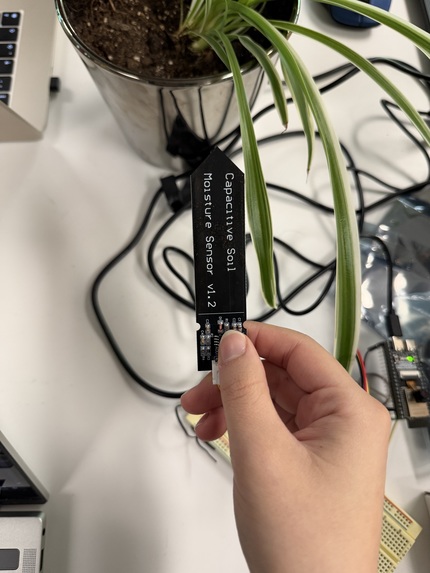
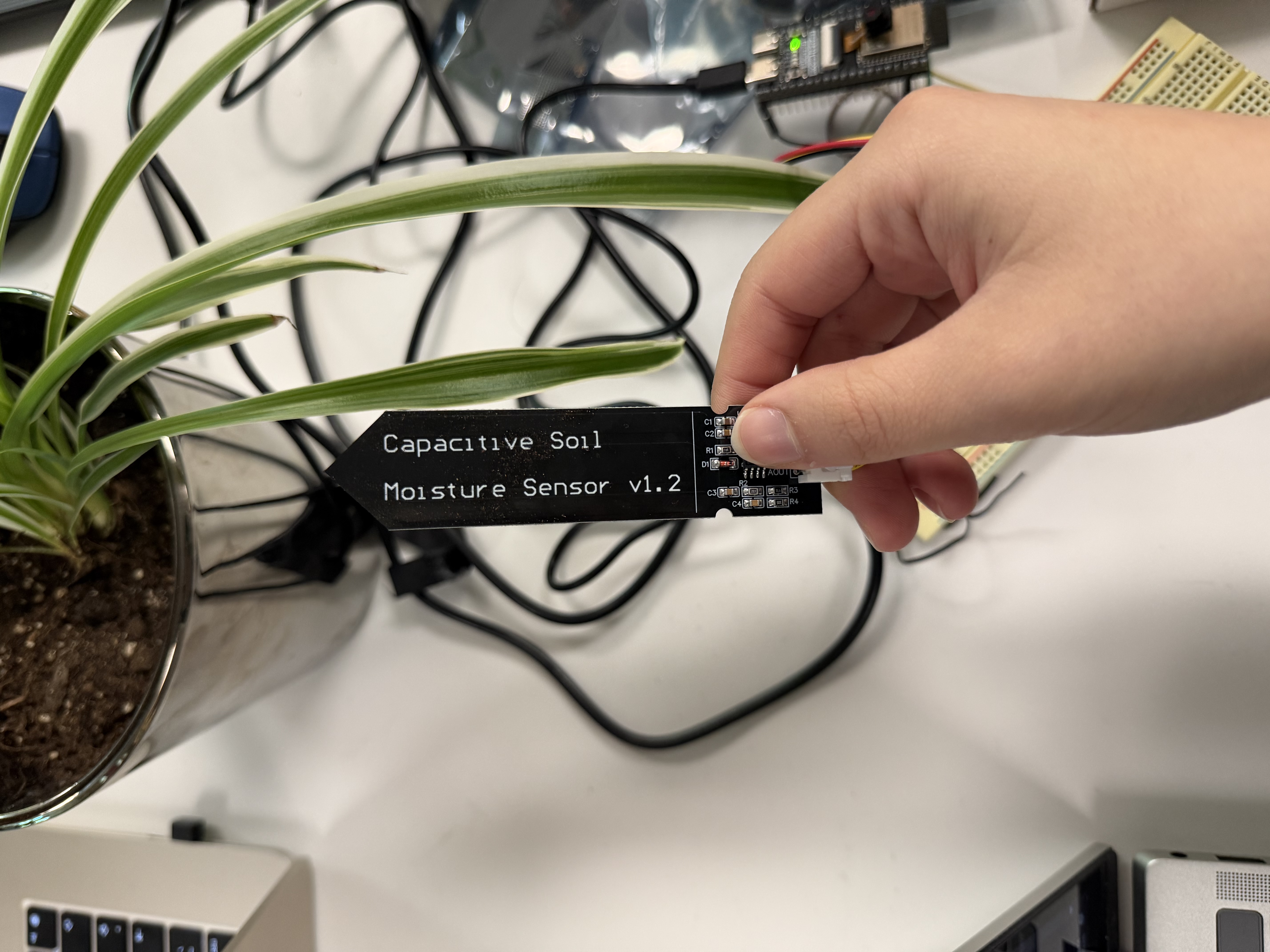
Moisture Sensor
-
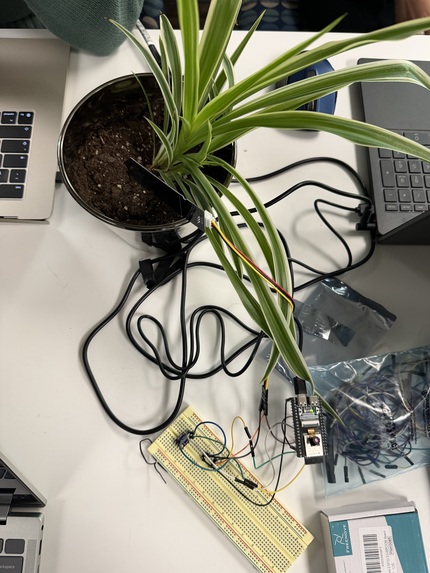
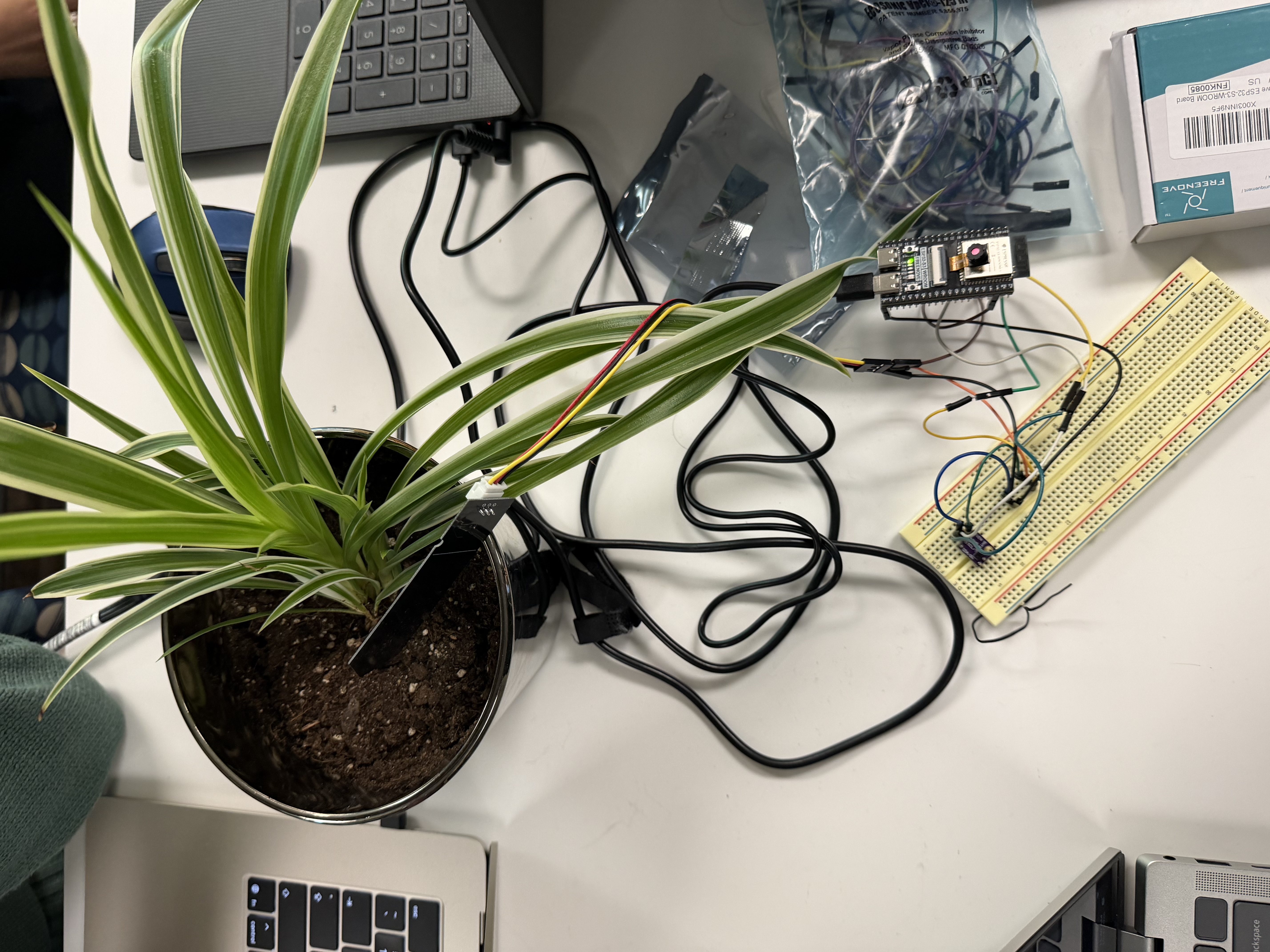
Hardware sensors setup with esp32
Inspiration
The inspiration for GreenVision came from a simple problem most people have had: keeping plants healthy especially when you don’t know exactly what they need. We wanted to create a system that gives growers a clearer view of their plant’s condition and development. While it can help individual plant owners, the idea could also scale to larger greenhouse systems.
What it does
GreenVision monitors both the growing conditions and development of a plant. Sensors collect soil moisture, temperature, and humidity data, while our computer vision models detect and count tomatoes, classify their ripeness, and estimate the plant’s growth stage. The results are displayed through a Grafana dashboard so growers can make more informed decisions about plant care.
How we built it
We built GreenVision using an ESP32-S3 with soil moisture, temperature, and humidity sensors for environmental monitoring. Sensor data is transmitted over Wi-Fi and stored in CSV format. For the AI portion, we used Python, Ultralytics YOLO, and trained models for tomato detection, ripeness detection, and plant growth-stage classification. Finally, the sensor readings and AI results are brought together in a Grafana dashboard
Challenges we ran into
Some of our biggest challenges were wiring and configuring the sensors, training the AI models, choosing appropriate confidence levels, and integrating the different parts of the system. We also had to work through false detections from the computer vision model and balance detection accuracy with video performance.
Accomplishments that we're proud of
We’re proud that we were able to bring several different technologies together into one working prototype such as real sensor readings, computer vision, AI predictions, Wi-Fi data transfer, and a Grafana dashboard.
What we learned
We learned that building a complete system takes time, patience, testing, and iteration. Problems can appear unexpectedly in hardware, software, AI training, and integration. We also learned that an AI model isn’t automatically perfect after training—things such as dataset quality and confidence thresholds have a major effect on real-world predictions.
What's next for GreenVision
We would like to support more plant varieties, live camera input, and automatic watering based on soil-moisture readings. Also scaling the system for larger greenhouse applications and adding solar charging and battery power so the system could operate more independently.
Built With
- aitraining
- chatgpt
- computervision
- datasets
- esp32
- sensors
- vscode
