-
-
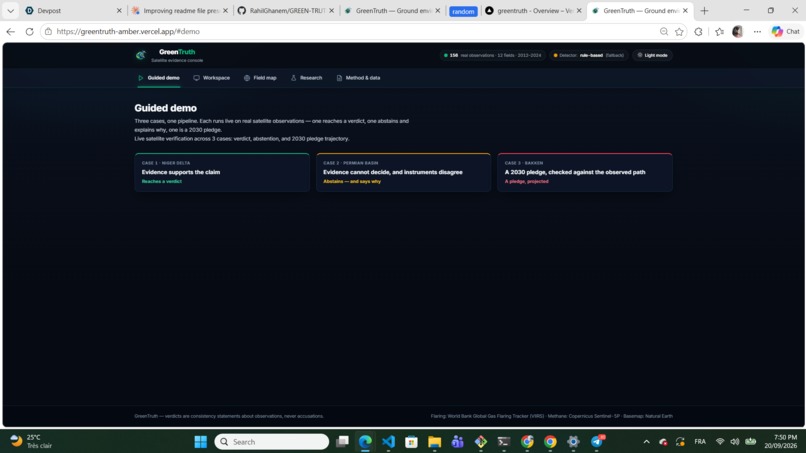
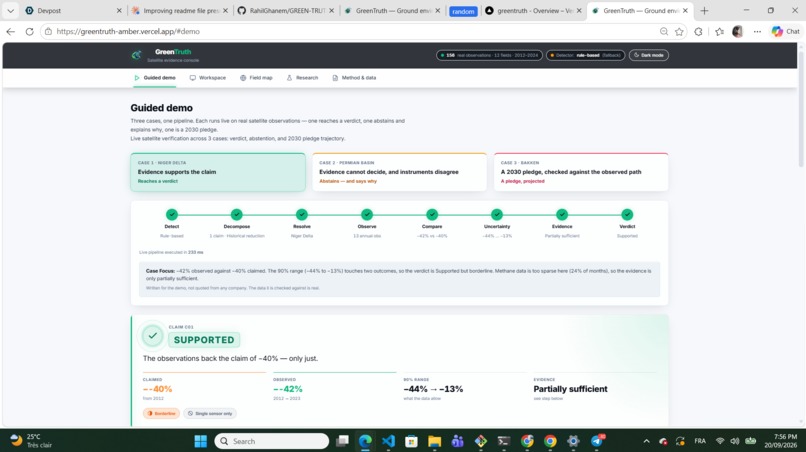
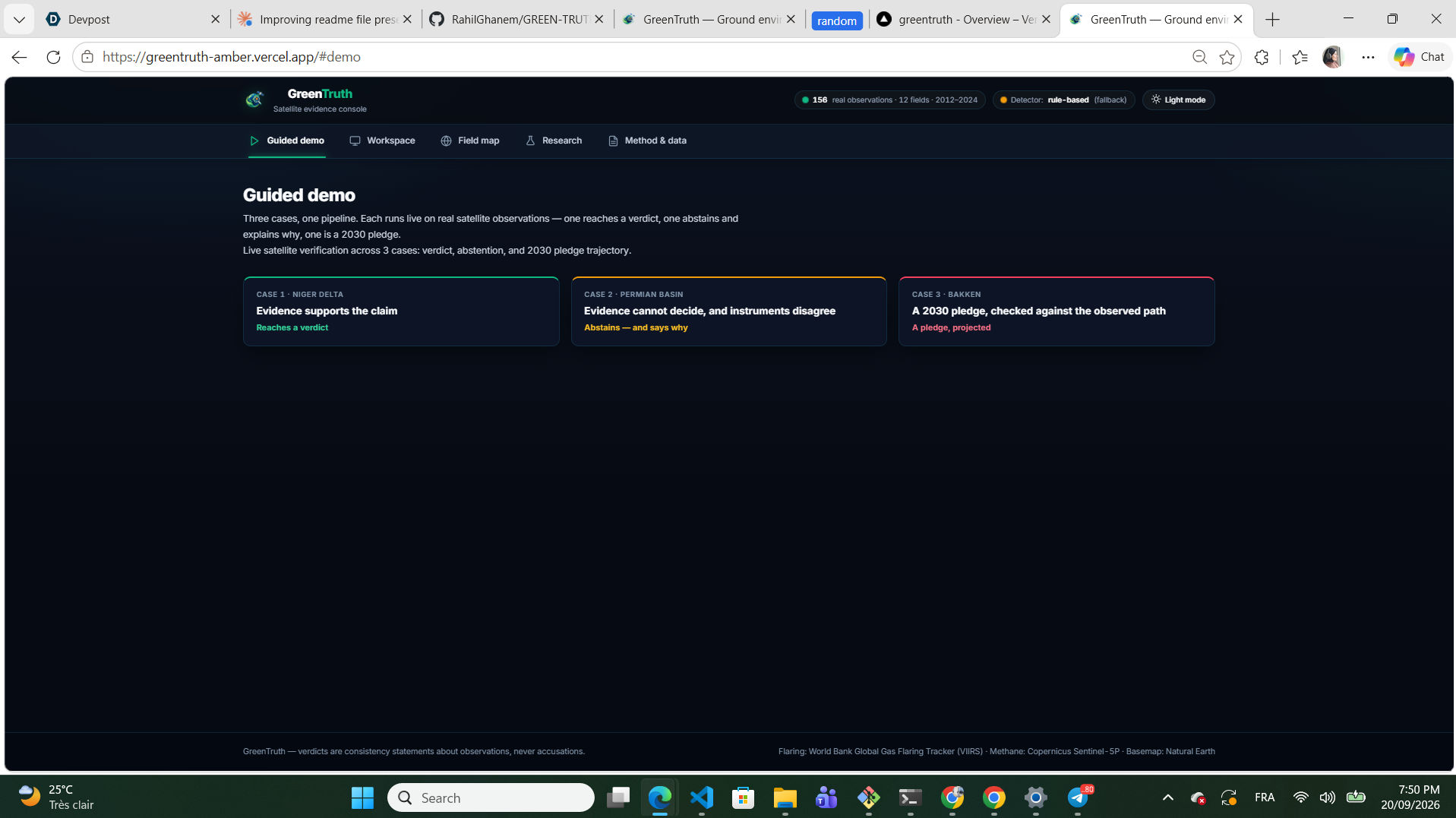
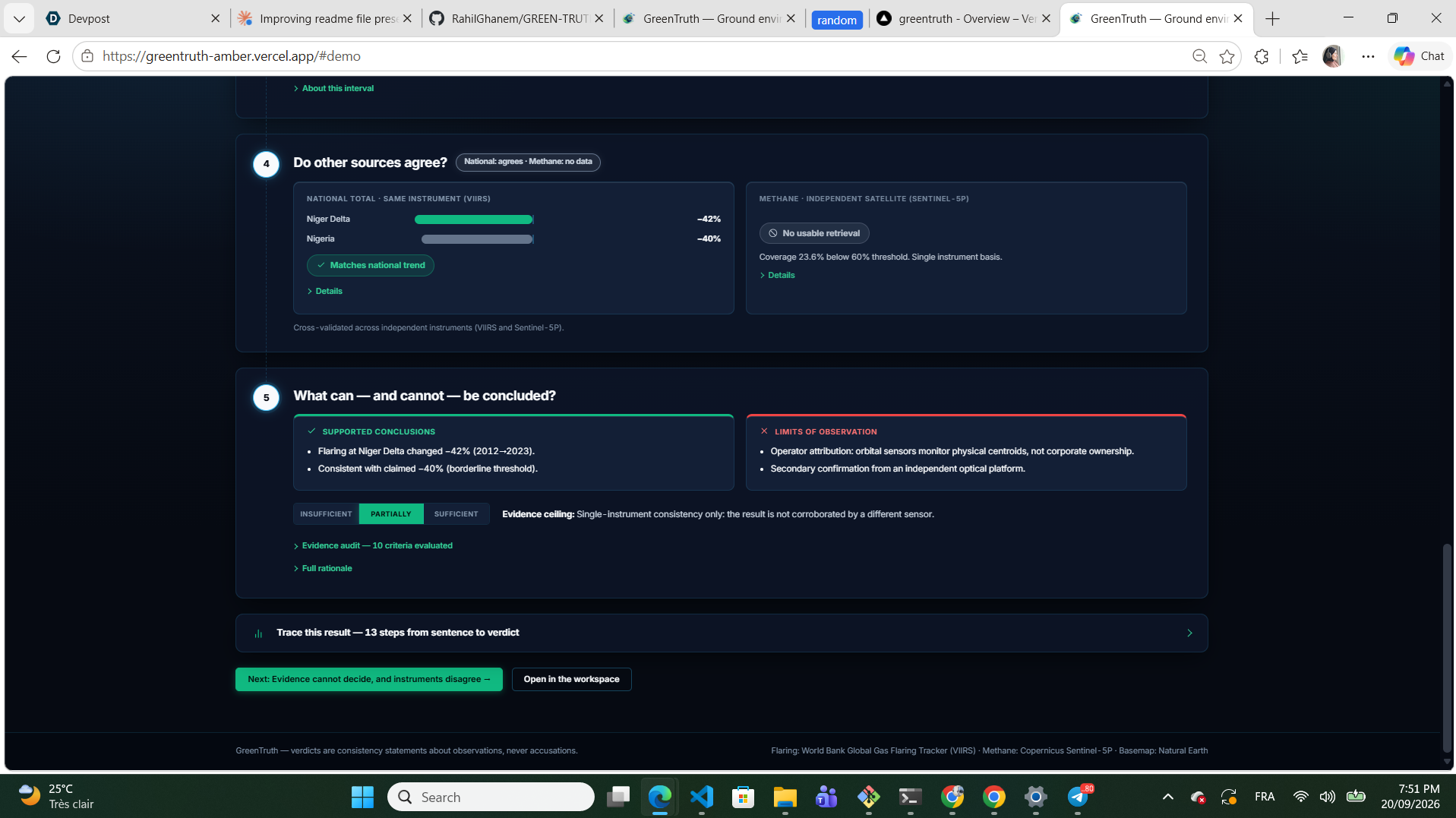
Guided demo 3 cases one pipeline Each runs live on real satellite observations one reaches a verdict, one abstains one is a 2030 pledge
-
light mode
-
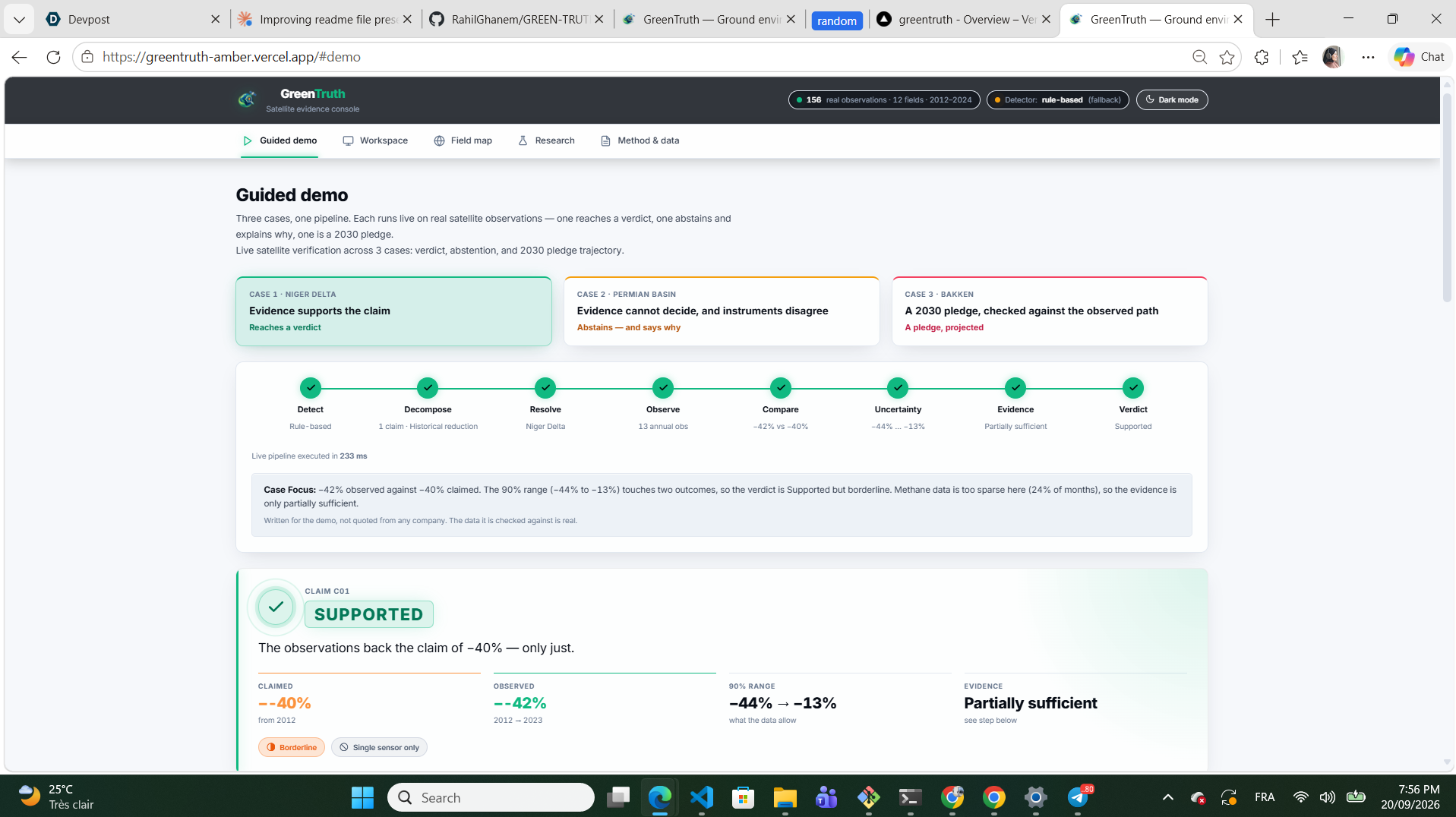
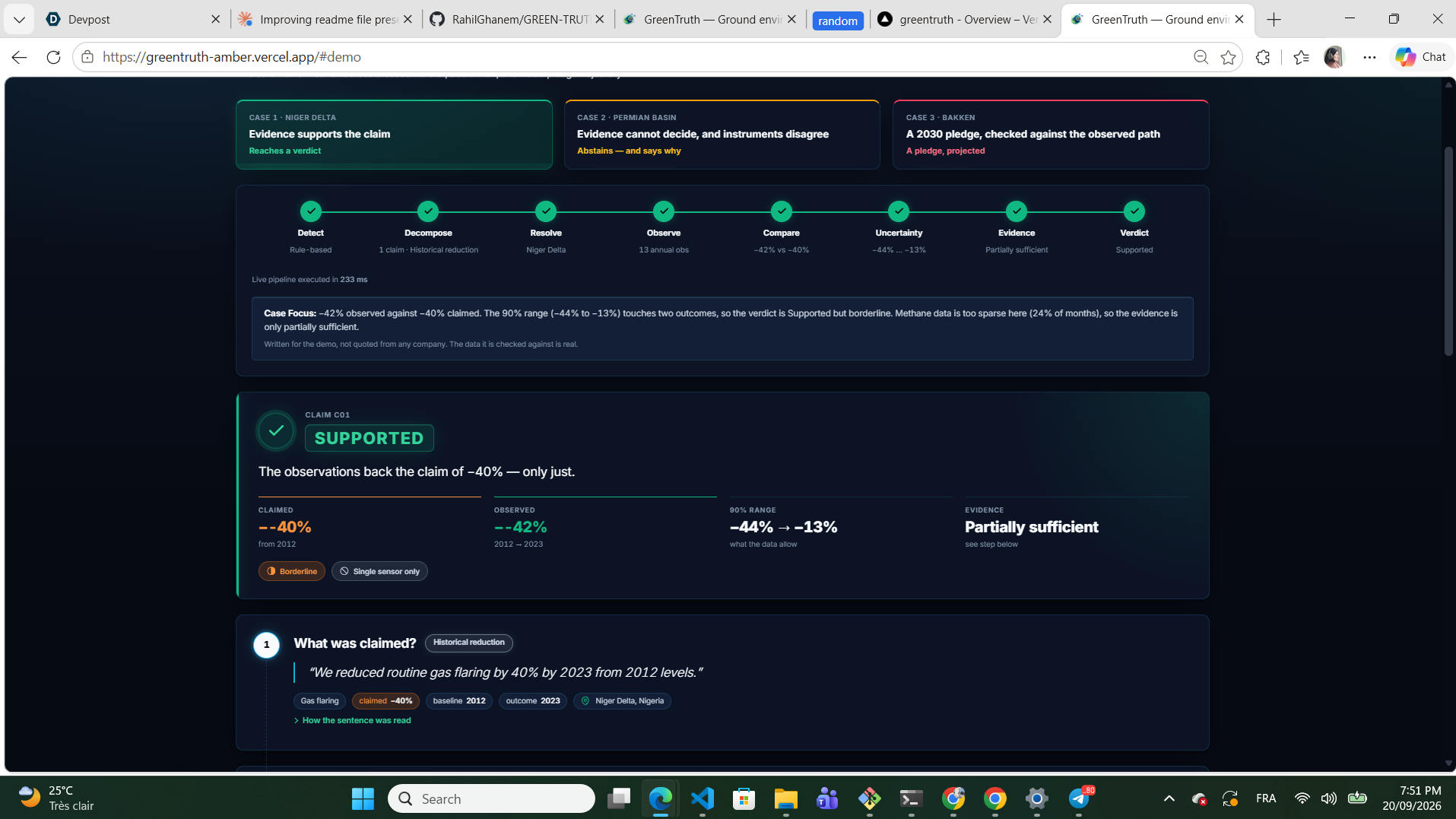
case " We reduced routine gas flaring by 40% by 2023 from 2012 levels"
-
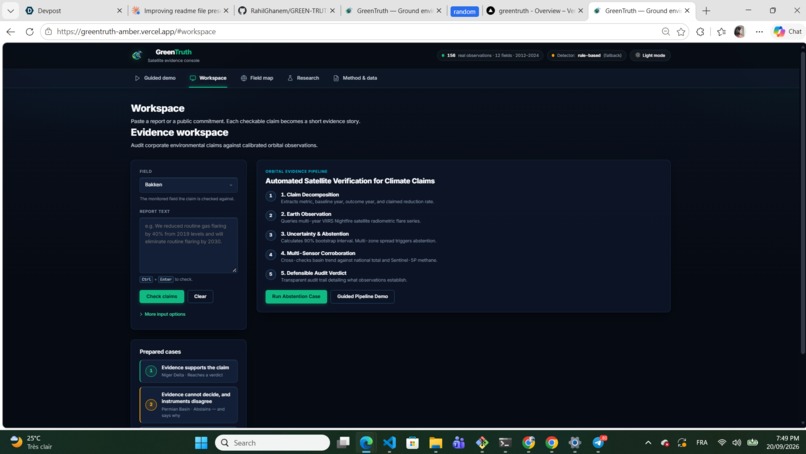
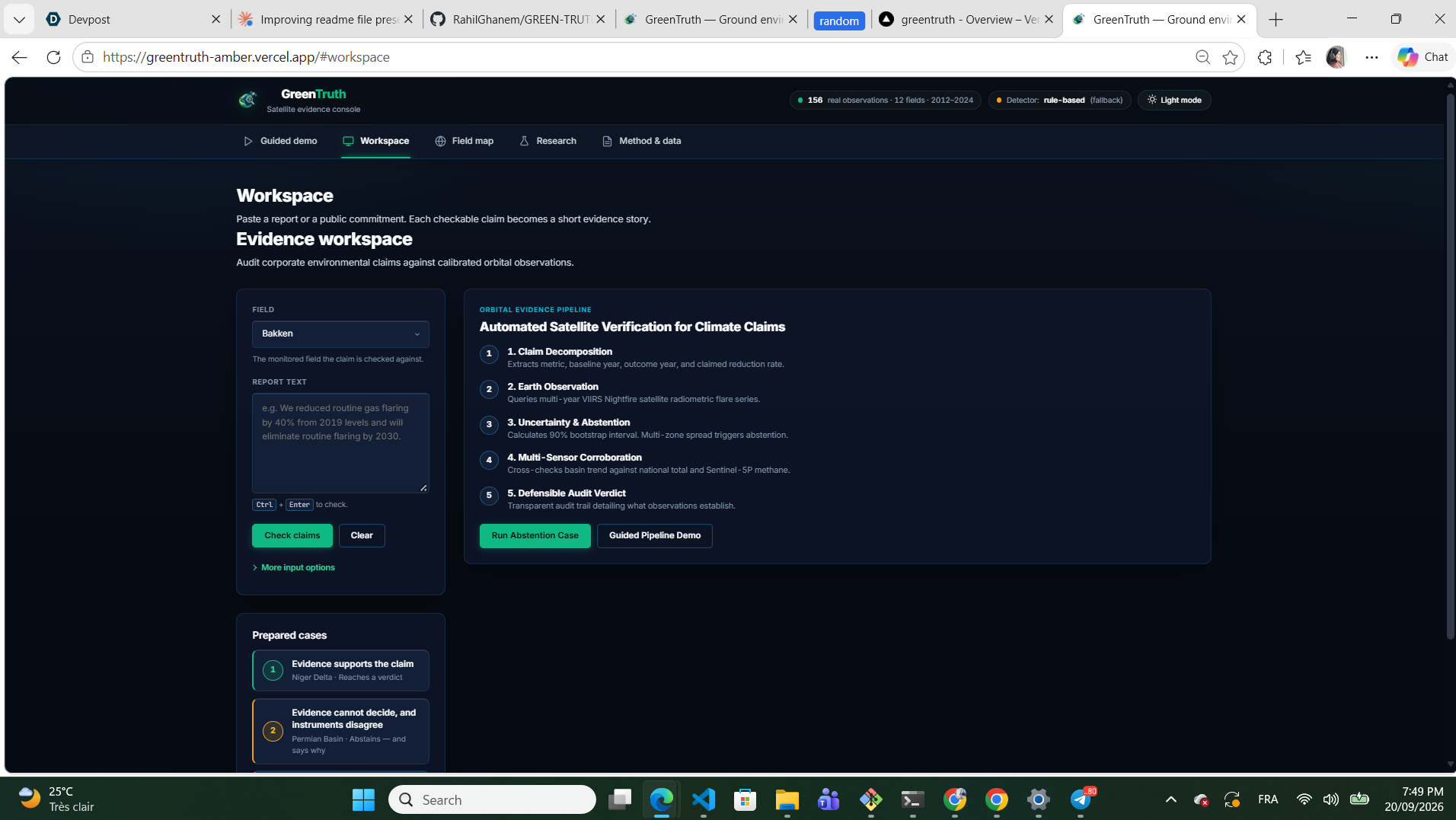
Workspace Paste a report or a public commitment. Each checkable claim becomes a short evidence story.
-
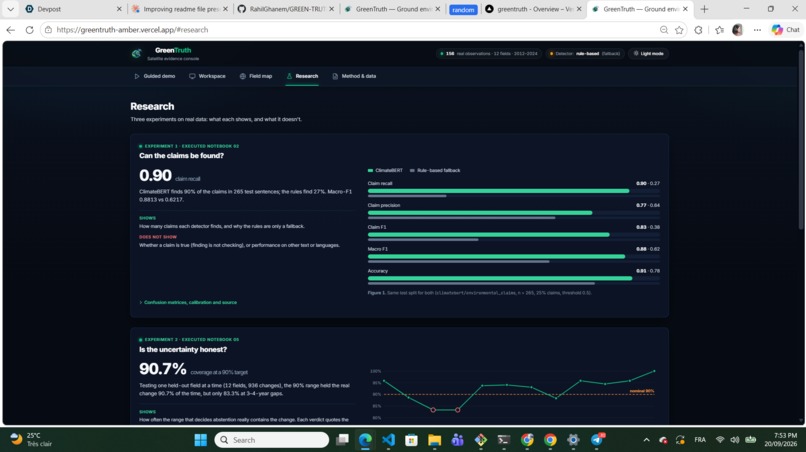
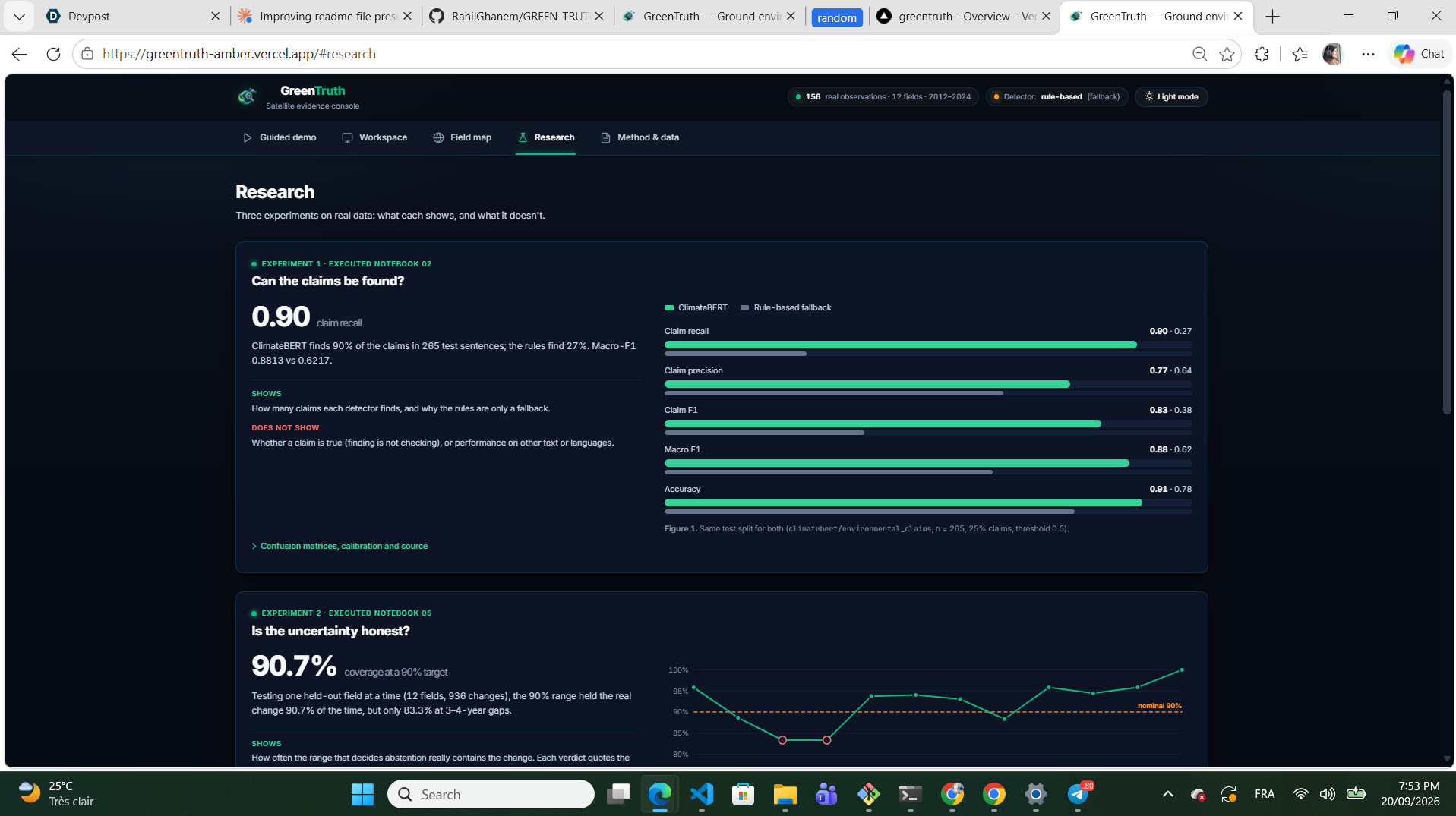
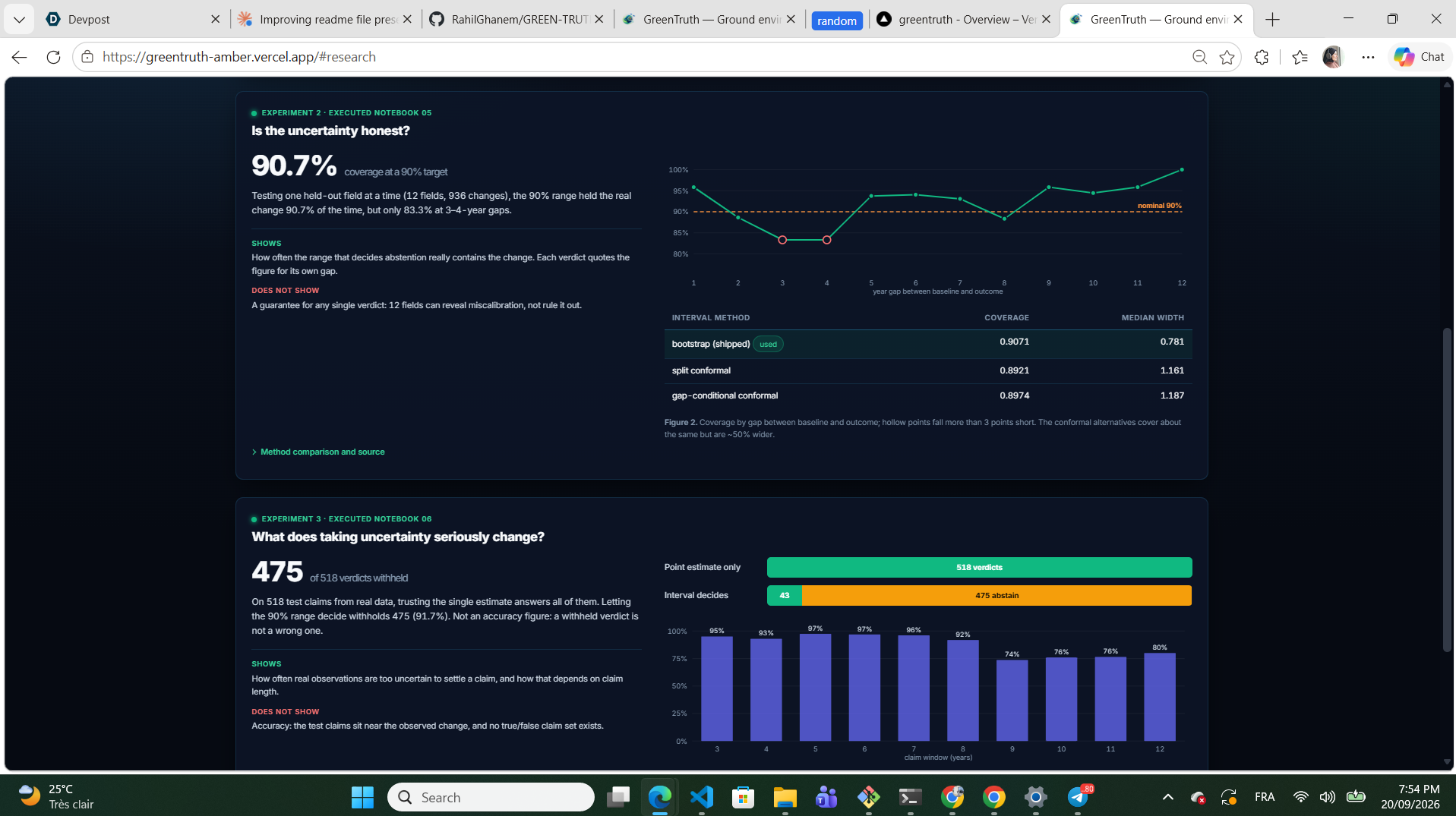
Experiment 1.2 · Can the claims be found?&Is the uncertainty honest?
-
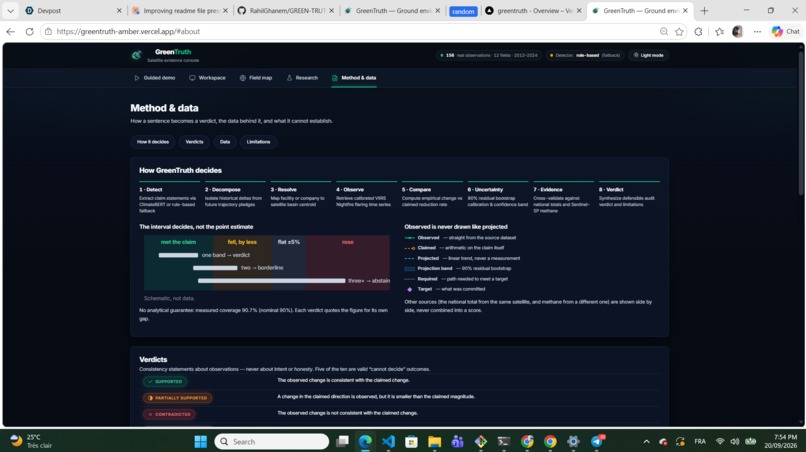
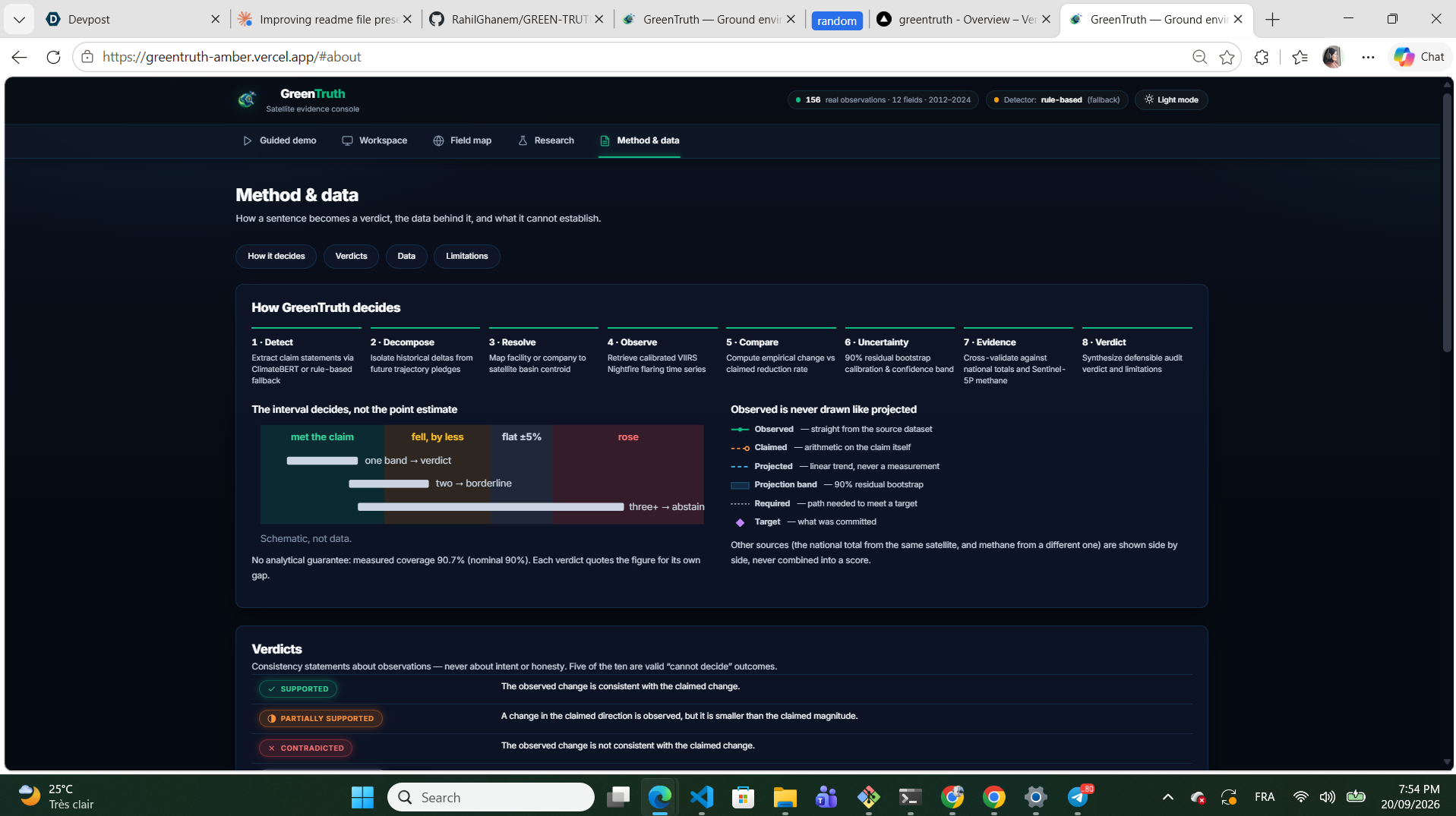
Method & data
-
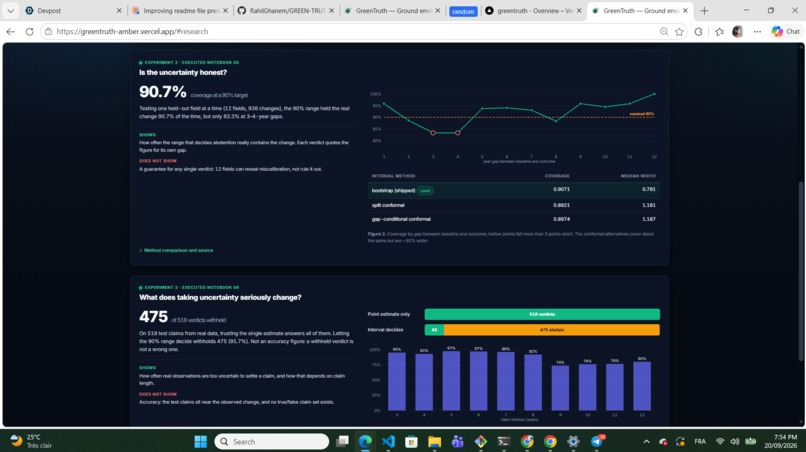
What does taking uncertainty seriously change?
-
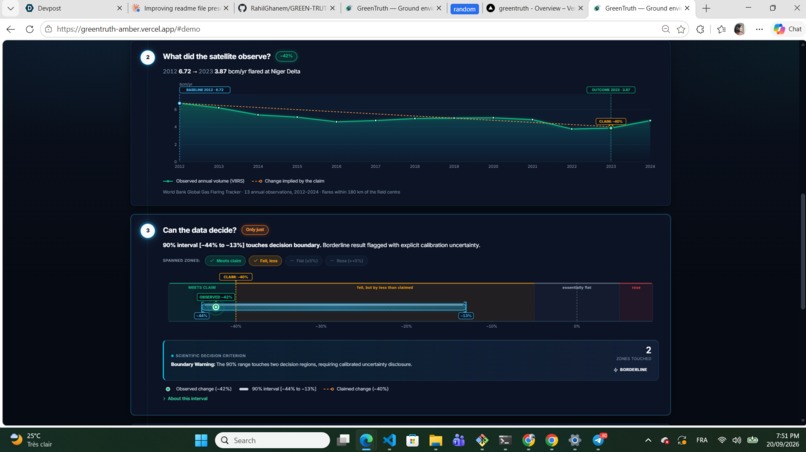
case " We reduced routine gas flaring by 40% by 2023 from 2012 levels"
-
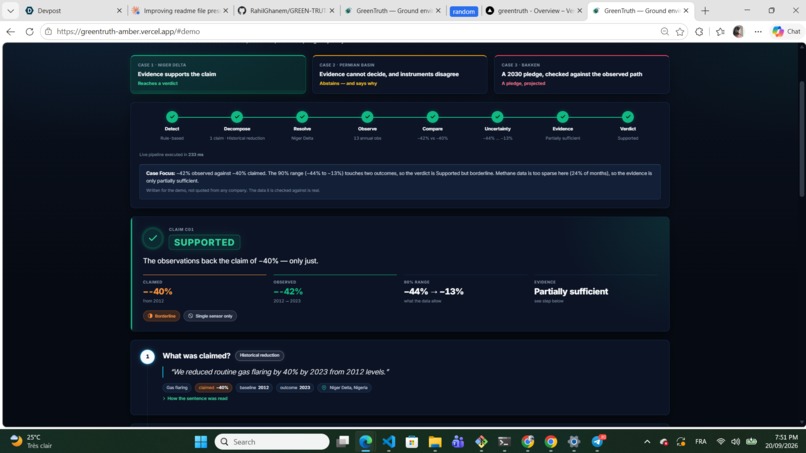
case " We reduced routine gas flaring by 40% by 2023 from 2012 levels"
-
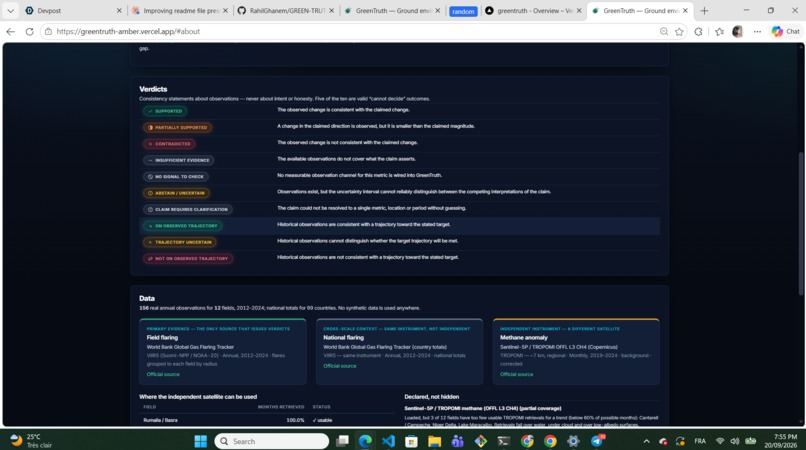
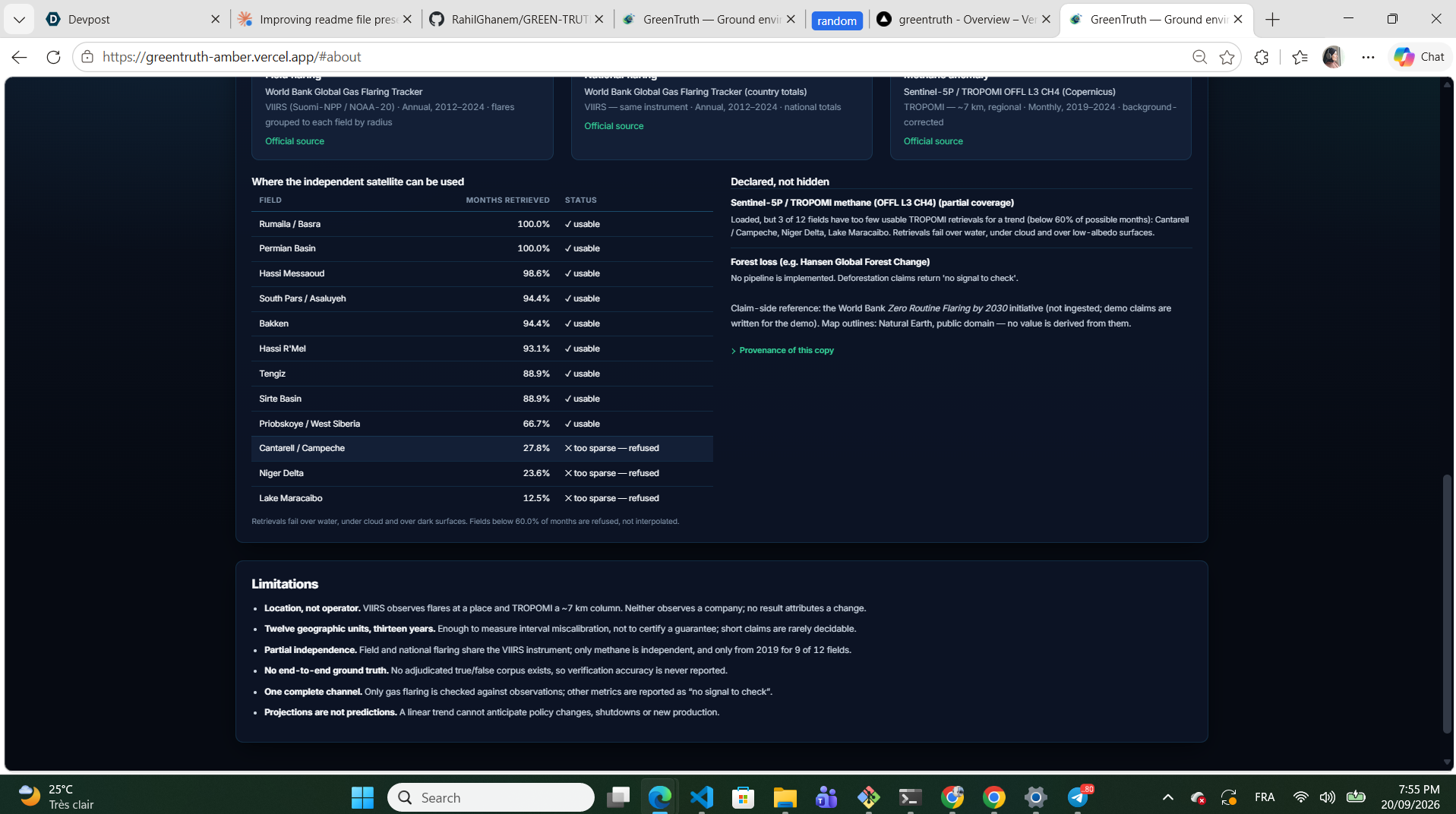
How a sentence becomes a verdict, the data behind it, and what it cannot establish.
-
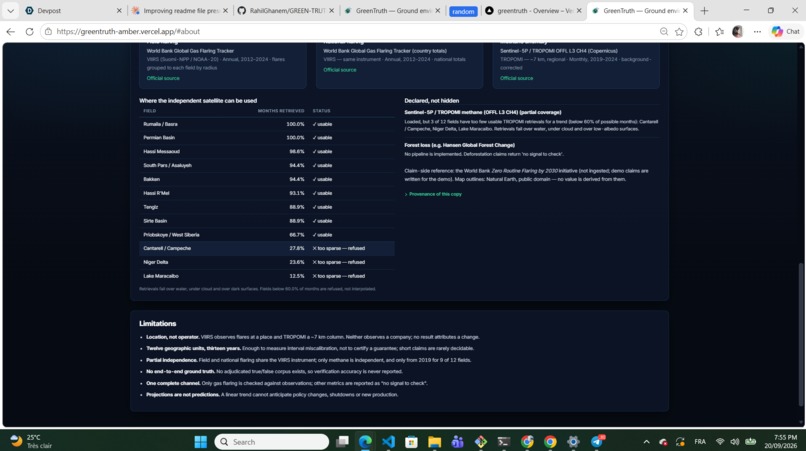
Limitations
-
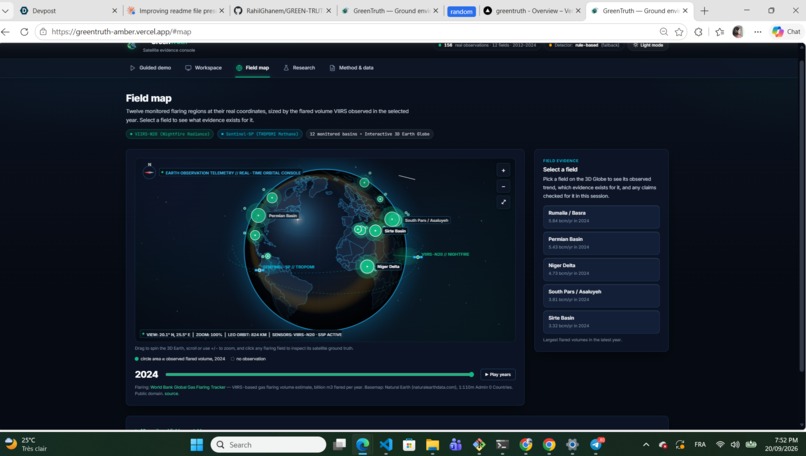
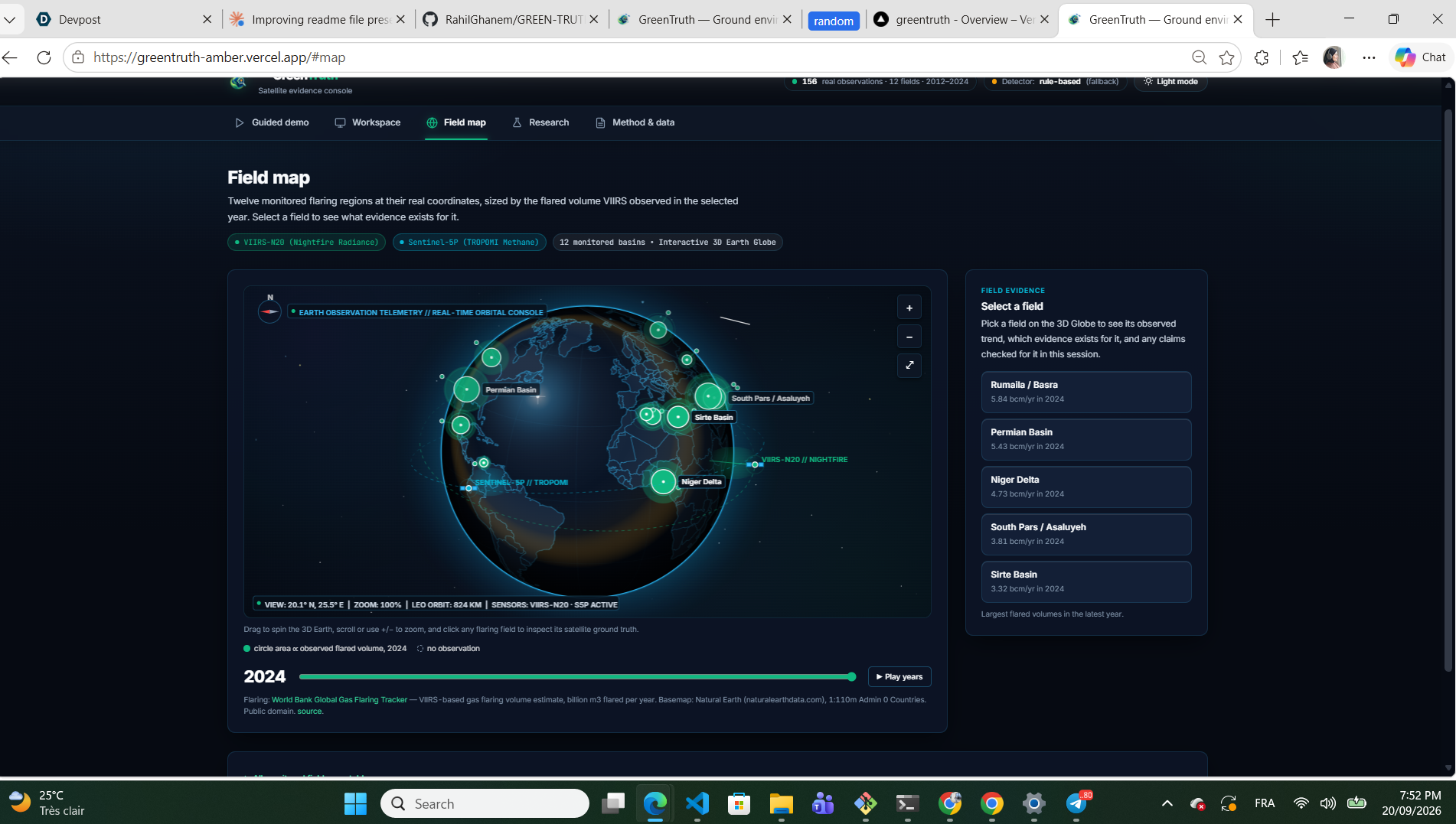
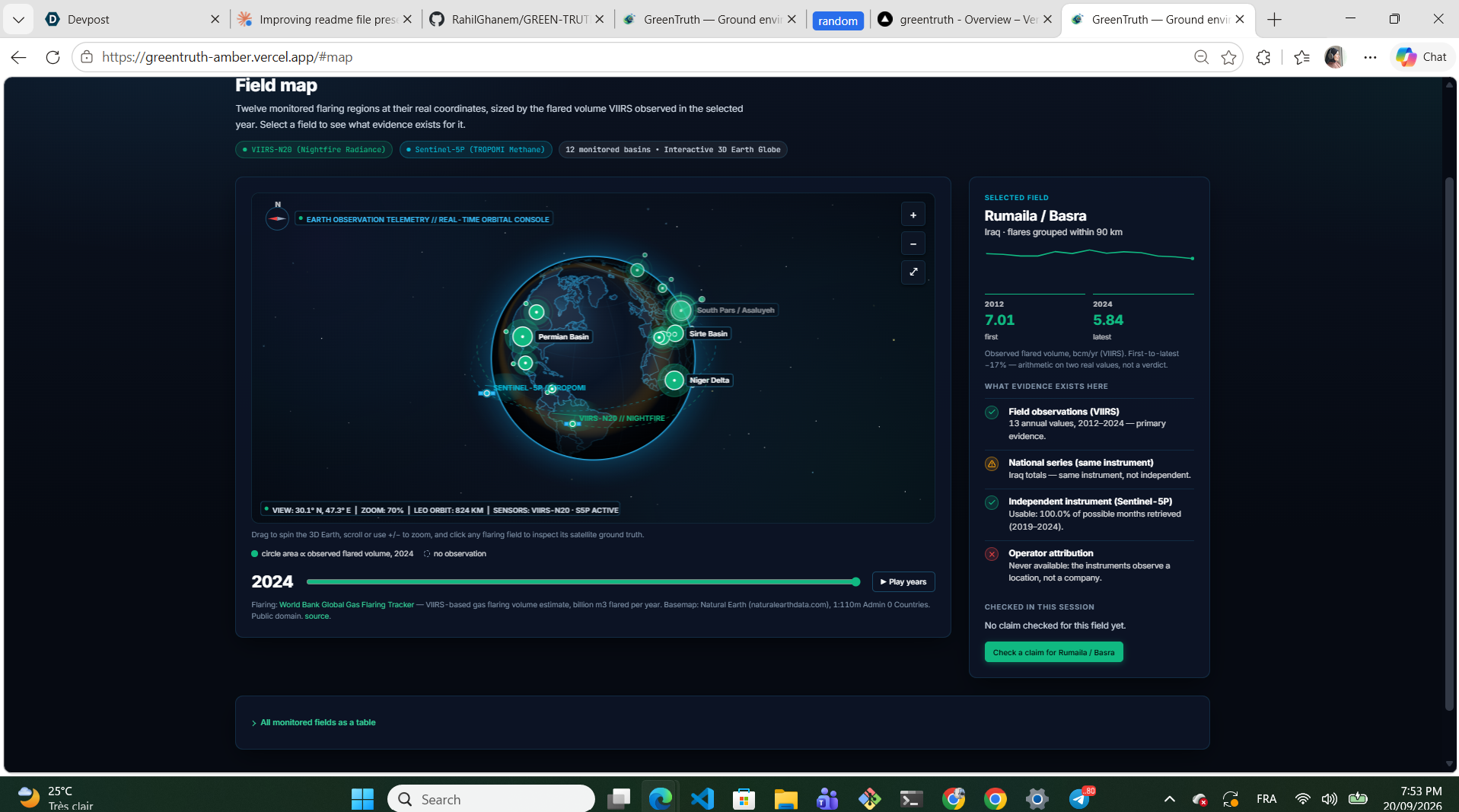
Twelve monitored flaring regions at their real coordinates, sized by the flared volume VIIRS observed in the selected year
-
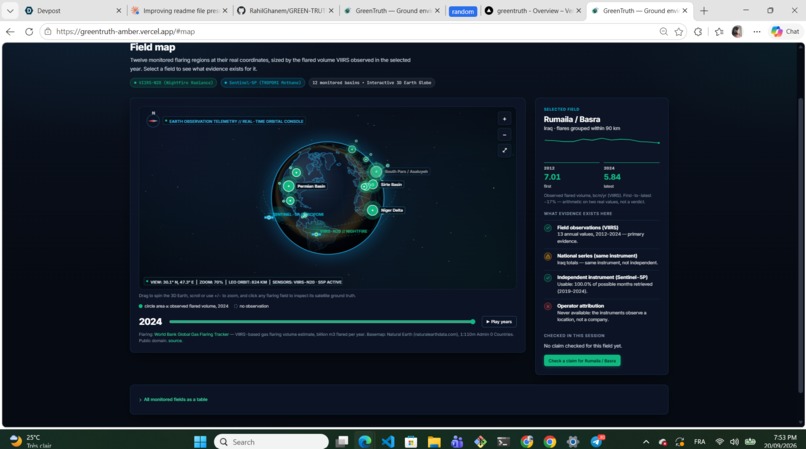
Selected field details
-
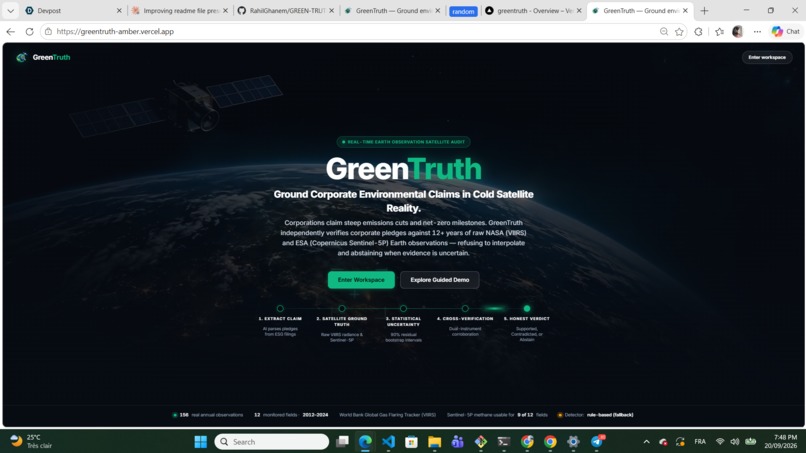
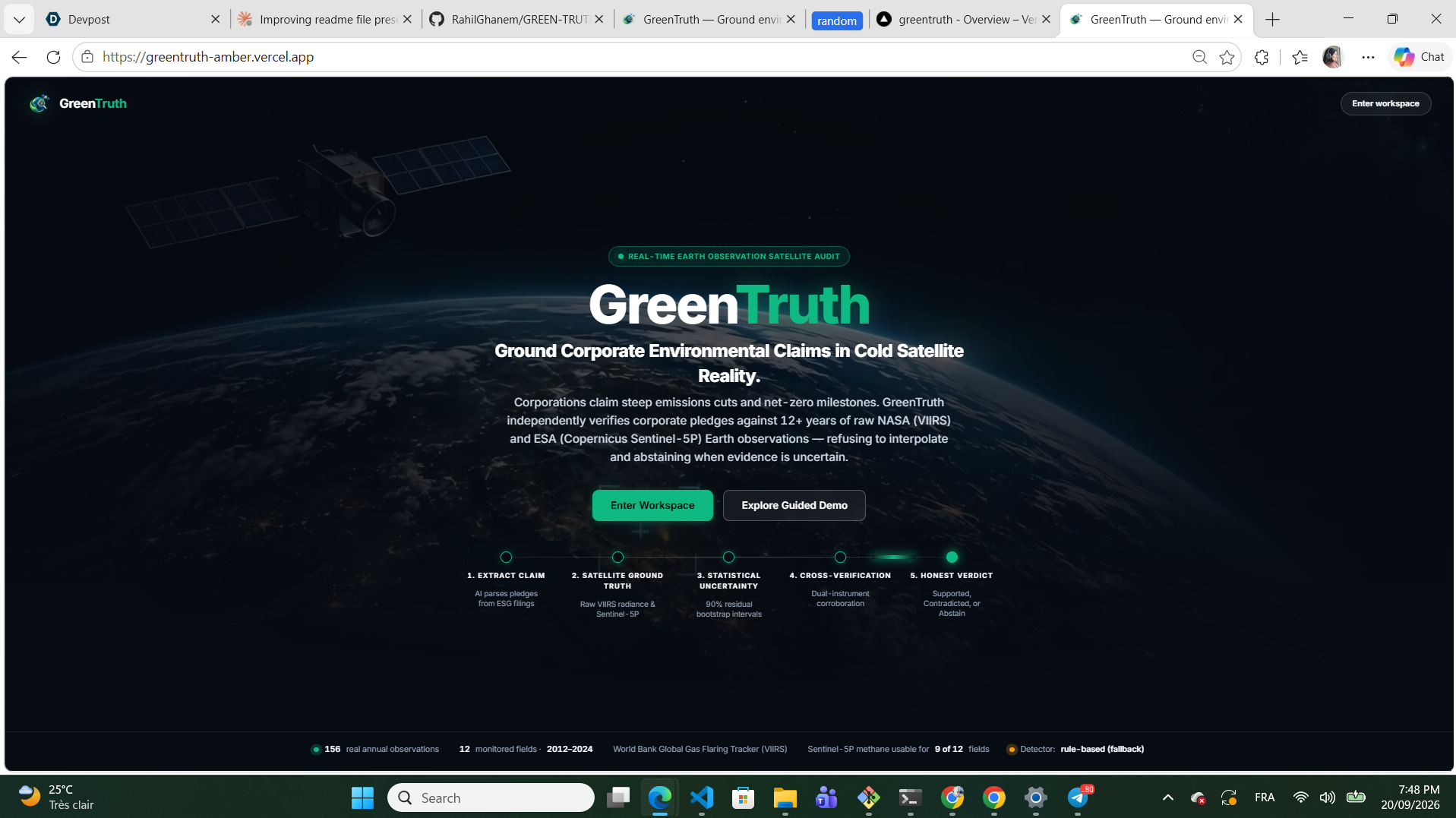
landing page
Inspiration
I kept thinking about a simple question:
When a company says, “We reduced our environmental impact,” how can we know?
Environmental reports contain thousands of claims, but the evidence behind them is often difficult to check. I wanted to build something that does not simply trust a sustainability statement — it looks at the Earth itself.
That idea became GreenTruth: a system that takes an environmental claim and asks real satellite observations whether the evidence supports it.
My goal was not to build another dashboard that shows green numbers.
I wanted to build a system that can also say:
“The evidence is not enough. I don't know.”
What it does
GreenTruth reads environmental reports and identifies claims that can be checked.
For gas-flaring claims, it compares them with real satellite-based observations from the World Bank Global Gas Flaring Tracker (VIIRS) and uses Sentinel-5P methane observations as a second source when the data is usable.
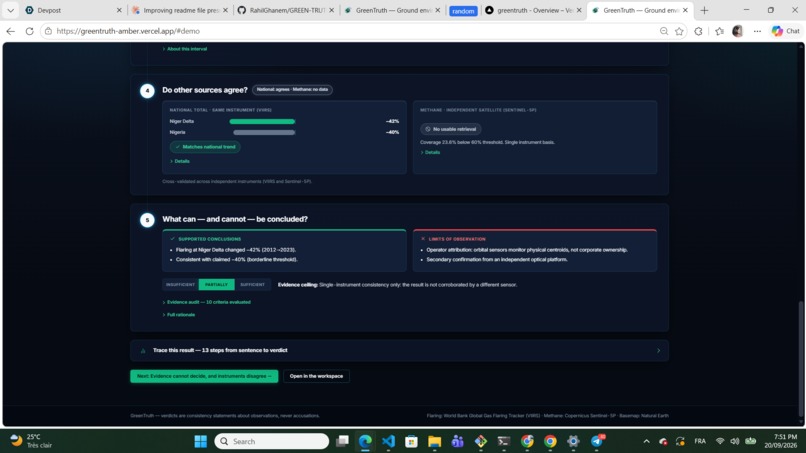
For every claim, GreenTruth asks:
- What was claimed?
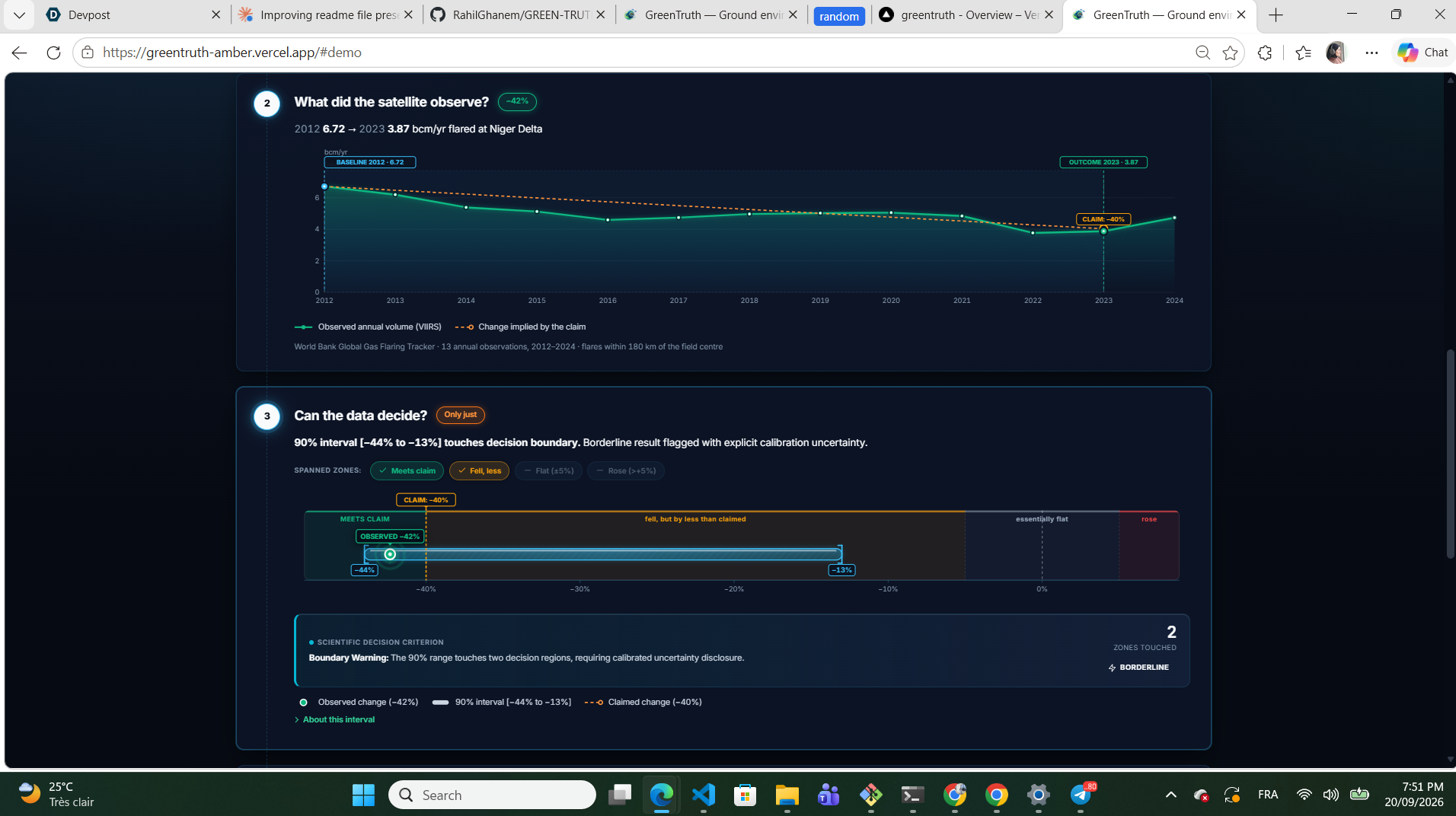
- What did the satellite observe?
- Can the evidence actually decide?
- Do other available sources agree?
- What can we responsibly conclude?
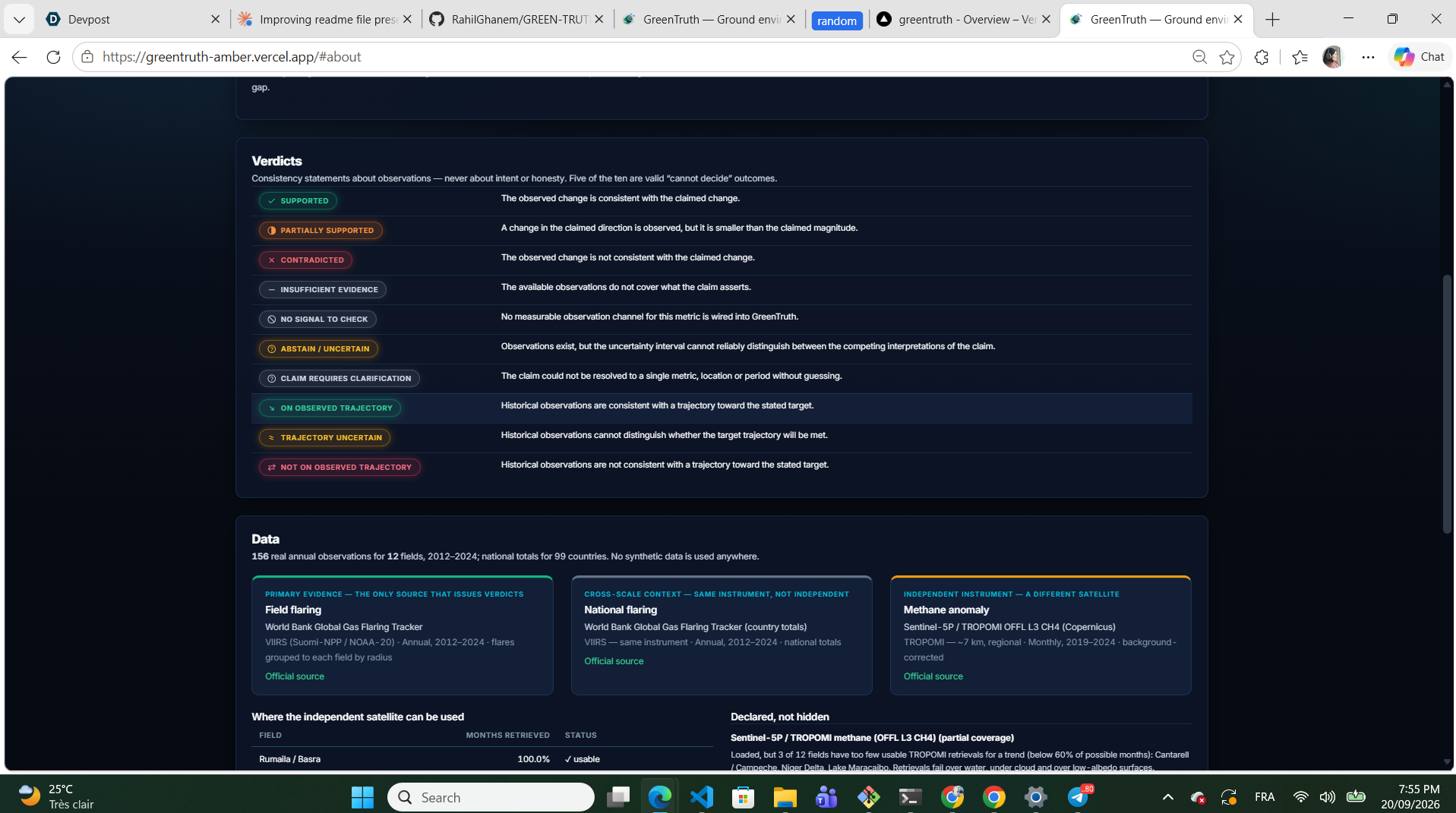
The result can be a supported claim, a contradiction, a partial result, or an abstention when the uncertainty is too large.
That last part is important to me.
GreenTruth is designed to avoid turning uncertain satellite measurements into confident accusations.
How we built it
I built GreenTruth independently, from the data pipeline to the interface.
The system combines:
- ClimateBERT for environmental claim detection
- World Bank Global Gas Flaring Tracker (VIIRS) for historical flaring observations
- Sentinel-5P methane data for an additional atmospheric signal
- A custom uncertainty-based evidence engine
- A lightweight Python backend
- A browser-based interactive interface
- Interactive maps, charts, evidence traces, and claim investigations
One of the main ideas I implemented is that the uncertainty interval can determine the verdict.
Instead of looking only at:
“The estimated change was −29%.”
GreenTruth asks:
“What range of outcomes is still plausible?”
If that range crosses important decision boundaries, the system does not force a yes/no answer.
It abstains.
I also separated historical claims from future pledges. A measured historical change is treated as evidence, while a future target is treated as a trend-based projection rather than pretending that a projection is a prediction.
Every result is traceable back through the evidence pipeline.
Challenges we ran into
The biggest challenge was realizing that real-world environmental evidence is messy.
A clean chart can make the world look much simpler than it really is.
Satellite measurements have uncertainty. Different instruments measure different things. Methane can come from many regional sources. A satellite can observe a location, but it cannot automatically tell me which company caused what happened there.
Another difficult problem was deciding what GreenTruth should do when the evidence is ambiguous.
It was tempting to always produce a verdict.
Instead, I built the system around the opposite principle:
If the evidence cannot support a conclusion, GreenTruth should say so.
I also had to make the system work as a real web application while keeping the scientific pipeline reproducible and transparent.
Accomplishments that I'm proud of
I am especially proud that GreenTruth is not just a visual demo.
It has a real evidence pipeline behind it.
Some results from my evaluation:
- 0.8813 macro-F1 for ClimateBERT claim detection
- 0.8955 claim recall
- 90% uncertainty coverage of 0.9071 overall
- 115 automated tests
- 156 real annual observations
- 12 monitored fields from 2012–2024
- Two independent types of satellite evidence where methane coverage is sufficient
Most importantly, I built the system so that it can refuse to overclaim.
For example, one of my demo cases has a point estimate that appears to support a company's reduction claim — but the uncertainty range is too wide.
GreenTruth does not simply celebrate the good-looking number.
It says:
“The data can't tell.”
That behavior is one of the things I wanted the project to demonstrate.
What I learned
I learned that building an AI system for the real world is very different from building a model that simply produces an answer.
The difficult question is not always:
“What does the model predict?”
Sometimes it is:
“Does the available evidence justify saying anything at all?”
I also learned much more about satellite data, uncertainty, environmental measurements, scientific reproducibility, and how easily a visualization can create a stronger impression than the underlying evidence supports.
Most importantly, I learned that uncertainty is not a weakness of an AI system.
Handled correctly, it is part of the answer.
What's next for GreenTruth
GreenTruth currently focuses on gas flaring, but the idea can go much further.
Next, I want to expand it toward more environmental claims and additional satellite signals, while improving uncertainty calibration and evidence coverage.
I also want to build a richer evidence graph connecting:
Claim -> Location -> Satellite observation -> Measurement -> Uncertainty -> Supporting evidence -> Conclusion
The long-term vision is simple:
Give environmental claims an evidence layer that can be inspected, challenged, and traced back to the Earth observations behind them.
Because when someone makes a claim about the planet,
the planet should get a chance to answer.
Built With
- climate-ai
- climatebert
- conformal-prediction
- css
- data-visualization
- environmental-ai
- github
- html
- hugging-face
- javascript
- jupyter-notebook
- machine-learning
- natural-language-processing
- python
- satellite-data
- sentinel-5p
- uncertainty-quantification
- vercel
- viirs

Log in or sign up for Devpost to join the conversation.