-
-

Logo
-
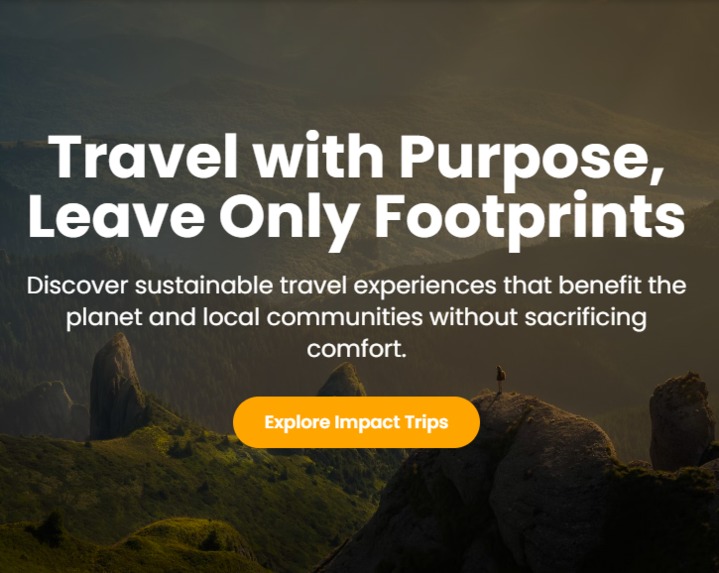
Headliner

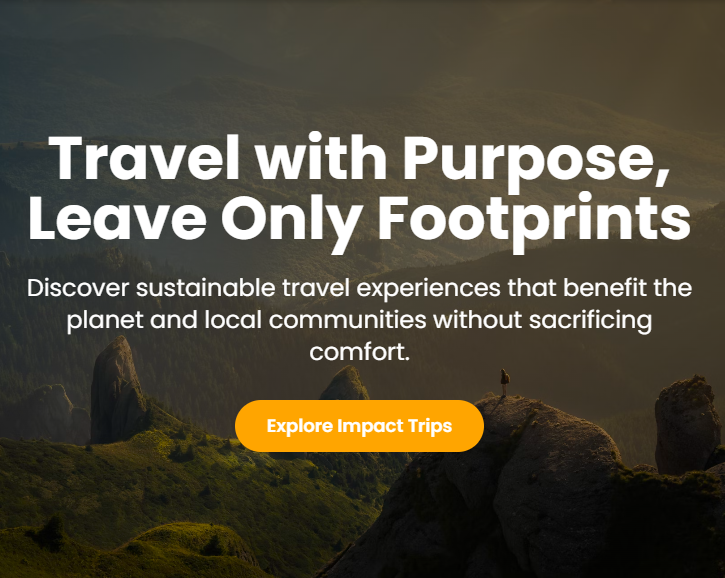
Inspiration
The idea of GreenTrip came from frustrating truths: planning trips is hard, and not many people think to travel to save the planet. Many people looking to travel spend hours and hours on travel websites to book an interesting vacation and, unfortunately, traditional tourism can harm the places we love to visit. But what if travel could be a force for good? What if, instead of just taking photos and memories, we could leave places better than we found them? That's when it clicked. People want to travel responsibly; they just need someone to make it simple. GreenTrip was born from this belief: that doing good shouldn't be complicated, and that the best adventures are the ones that matter.
What it does
GreenTrip is your gateway to meaningful travel. It's a platform that connects you directly with trips that make a difference. Whether that's ecotourism experiences that protect wildlife habitats, volunteer opportunities that support local communities or impact travel that creates lasting positive change. You browse curated trips across three categories, each vetted for genuine sustainability and impact. Every listing shows you exactly what difference your trip will make: maybe it's planting 50 trees, supporting a community school, or helping with marine conservation. We handle all the complicated logistics so you can focus on what matters: having an incredible experience while leaving the world a little better than you found it.
How I built it
I kept the tech stack intentionally simple; a single-page application built with HTML, Tailwind CSS, and vanilla JavaScript. No overcomplicated frameworks. I used earthy colours and made sure the interactions feel smooth and intuitive. The trip cards show impact metrics front and center to show transparency.
Challenges we ran into
Balancing aesthetics with accessibility was tougher than I expected. I wanted the site to be beautiful, but it also needed to work for everyone: screen readers, keyboard navigation, and different devices. Finding that balance required a lot of testing and rethinking. And honestly? Writing copy that felt genuine without sounding preachy was hard. Nobody wants to be lectured about their travel choices. I had to find a voice that was inspiring and action-oriented without making people feel guilty. It took many rewrites to get the tone right.
Accomplishments that we're proud of
I'm proud of how clean and intuitive the interface turned out. When someone lands on GreenTrip, they immediately understand what it does and how to use it. No confusion, no learning curve. Just clarity. The impact visualization was a win too. Showing travelers "50 trees planted" or "2 tons of CO2 offset" makes sustainability concrete and real, not abstract. Numbers matter, but only when people can actually feel them.
What I learned
Simplicity is deceptively hard. It's easy to add features; it's incredibly difficult to say no to them. I learned that constraints breed creativity; having to build everything in a single HTML file forced me to think critically about what was truly essential. I learned that design isn't just about making things pretty; it's about solving problems. Every color choice, every button placement, every word of copy should serve a purpose. If it doesn't help the user, it doesn't belong.
What's next for GreenTrip
GreenTrip is a proof of concept, but the vision is to turn it into a fully functional platform that genuinely disrupts how people think about travel. I'm also thinking about a booking engine integration. Right now, it's a beautiful storefront, but users can't actually book trips. Connecting with payment systems and building out the reservation infrastructure is the logical next step. I'm dreaming about a mobile app eventually. Most travel planning happens on phones, and having GreenTrip in people's pockets with features like offline trip guides, real-time impact updates, and location-based sustainable travel tips could be game-changing.
The wildcard idea: What if GreenTrip could certify and help traditional hotels and tour operators become more sustainable? Not just listing existing green options, but actively helping the industry transform. Training programs, sustainability audits, and a "GreenTrip Certified" badge that means something. That would be moving from curation to actual change-making.
Honestly though: The next step is validation. I need to get this in front of real users, hear what resonates, what confuses them, what they wish it had. Building in isolation only gets you so far. The real learning happens when actual travelers start using it, breaking it, and telling me what they actually need. GreenTrip started as an idea to make sustainable travel simpler. What's next is making it real, scalable, and genuinely impactful. One trip, one traveler, one positive footprint at a time.


Log in or sign up for Devpost to join the conversation.