-
-
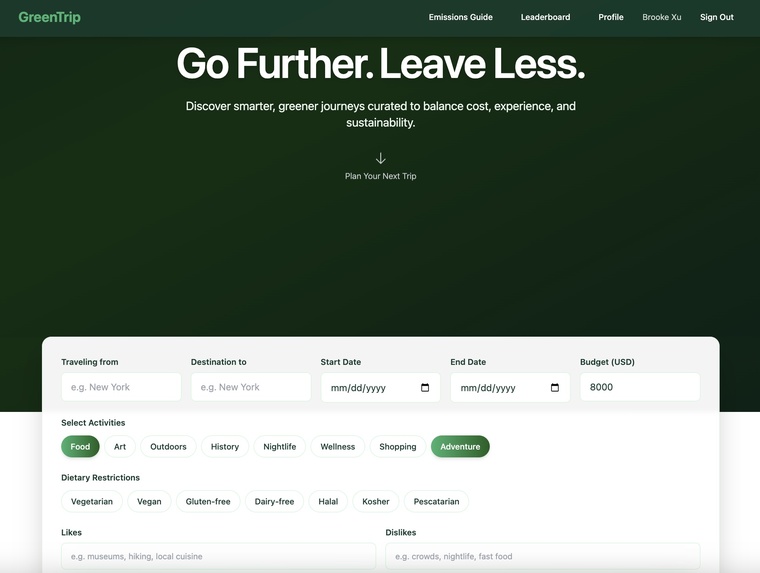
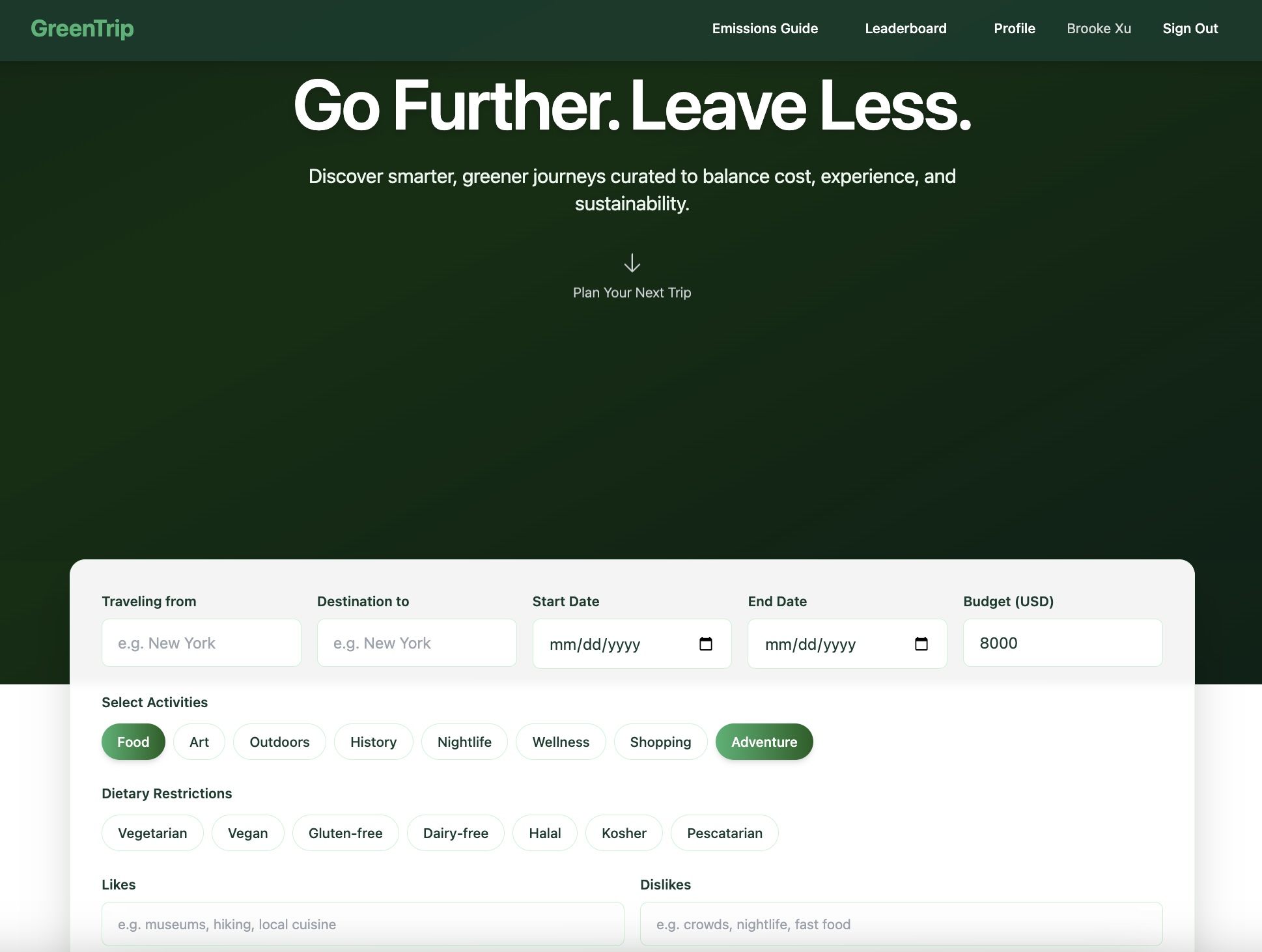
Home Page
-
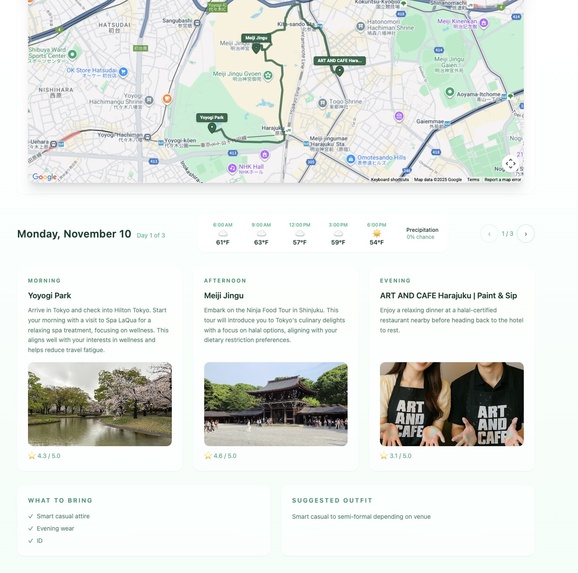
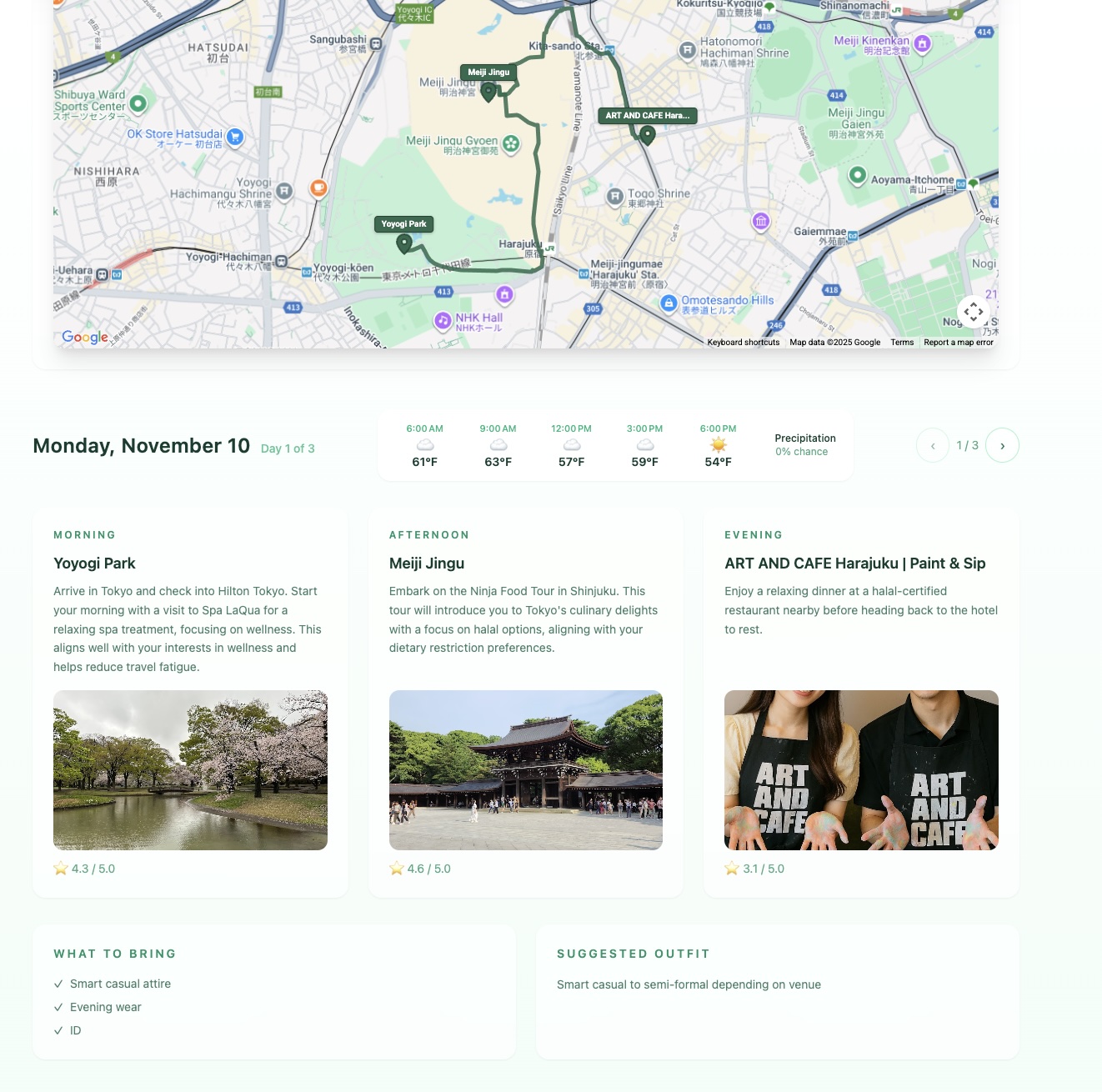
Optimized Itinerary with Map and Pictures
-
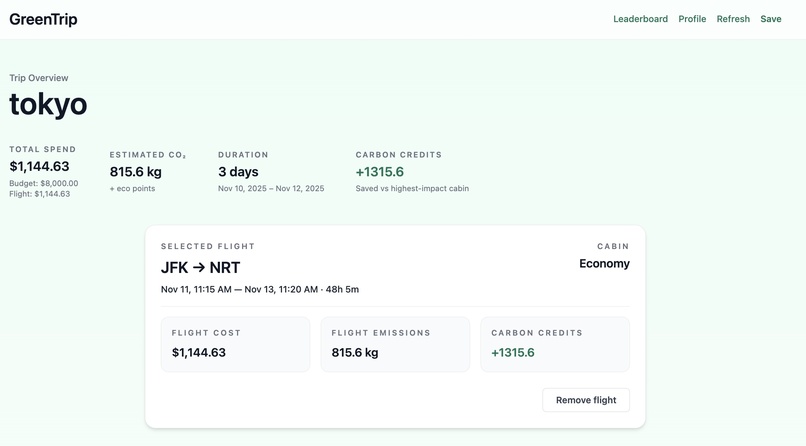
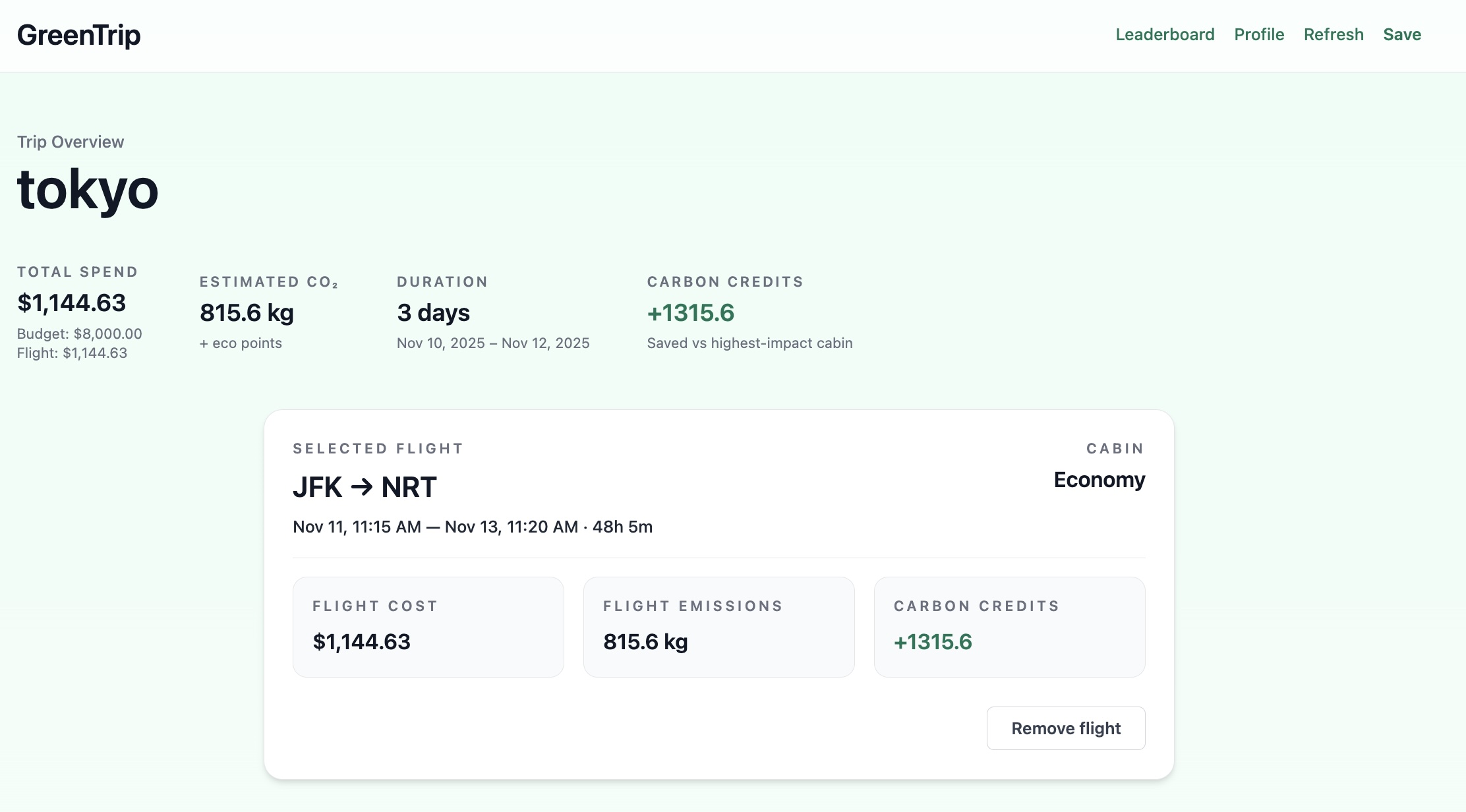
Flight Options
-
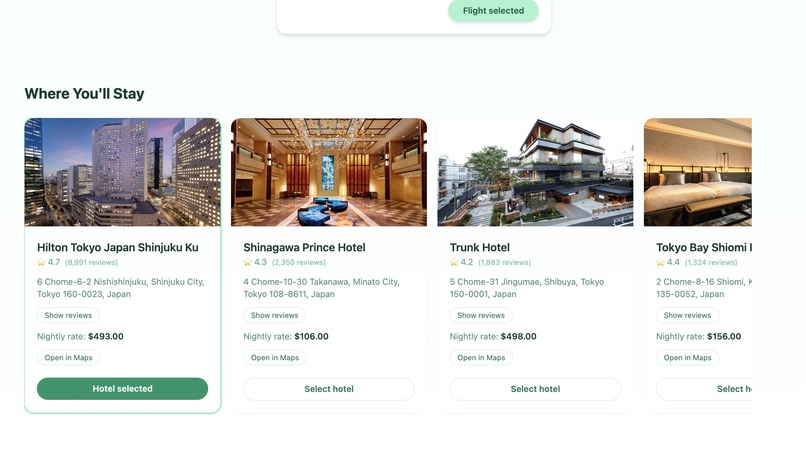
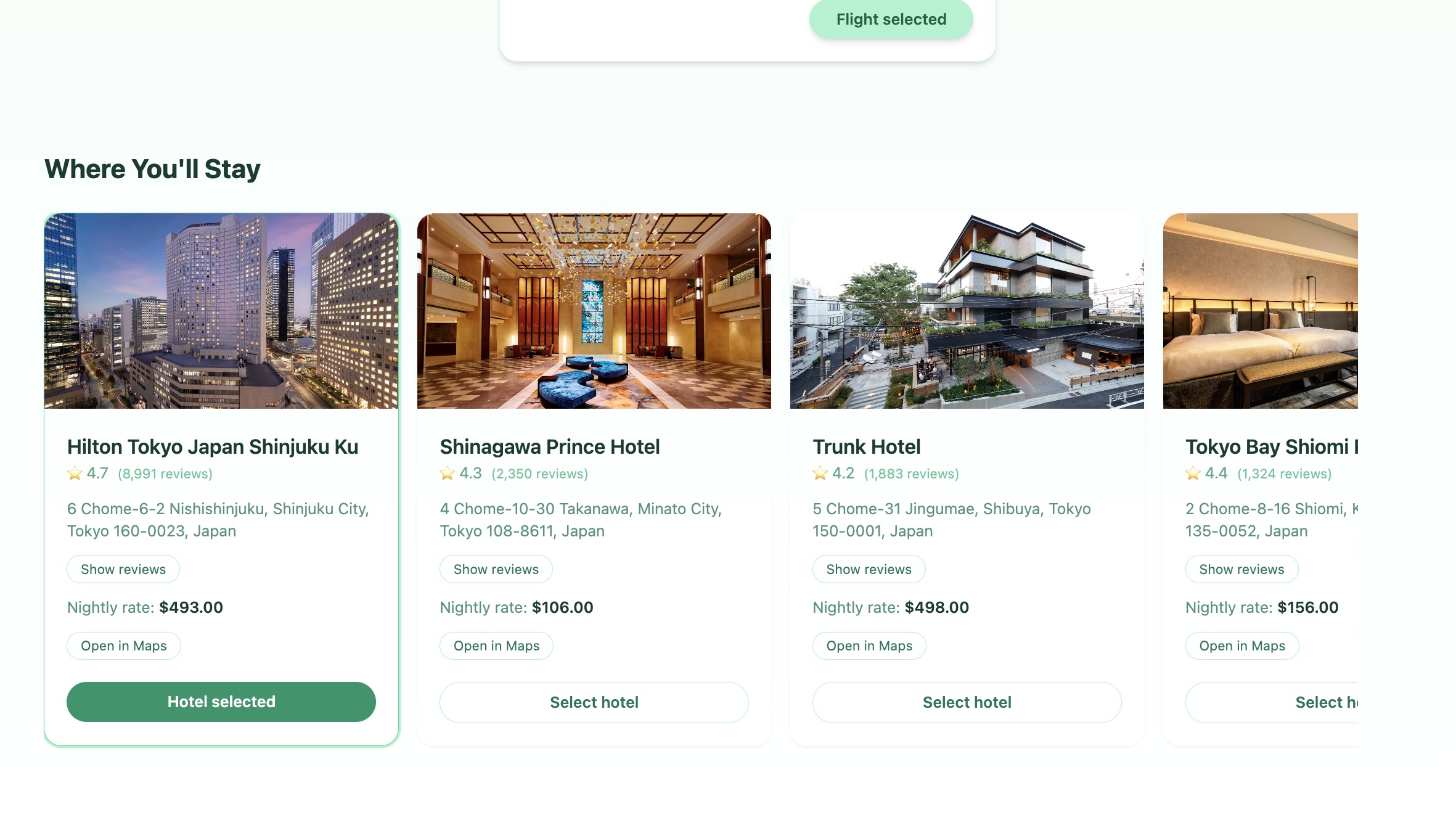
Hotel Options
Inspiration
As students who live far from home, we tend to take high CO₂-emitting modes of transportation more frequently. Despite our generation’s focus on reducing emissions, sustainability isn’t always top of mind when trip planning involves so many moving parts. There currently exists no comprehensive travel platform that plans an entire trip — most tools only optimize for one thing, like finding cheap flights or bundling flights and hotels. Few, if any, consider full itineraries. GreenTrip takes this one step further by combining itinerary planning with sustainable motivation, helping users balance cost, experience, and carbon impact while making eco-conscious travel both easy and rewarding.
What it does
Our solution, GreenTrip, is a sustainable travel planning platform and carbon credit system that helps users make eco-conscious choices without sacrificing convenience or experience. It automatically generates personalized itineraries that include flights, trains, hotels, and daily activities based on user preferences, budget, and travel dates.
Unlike traditional travel platforms that only book flights or hotels, GreenTrip plans entire daily itineraries where activities are geographically optimized. This means your attractions and accommodations are intentionally placed close together to minimize travel time and reduce carbon emissions, while also making the trip more seamless and enjoyable.
GreenTrip recommends low-emission transportation like short-haul buses and trains when available and calculates the carbon footprint for each trip using verified data. Users can earn eco-credits by choosing greener options and see their impact compared to friends, global averages, and even celebrities known for high emissions.
Each trip includes an AI-powered chat planner that lets users adjust plans in natural language, and a leaderboard where travelers can compete with friends to be the most sustainable. Through Photon iMessage integration, users can even text GreenTrip for updates, making sustainable travel as simple as sending a message.
How we built it
Frontend: Built with Next.js 14, React, TypeScript, and Tailwind CSS for fast, responsive, and maintainable development. We added GSAP for smooth scroll and fade animations to create a sleek, futuristic feel, and Chart.js for clear carbon and credit visualizations.
Backend: Powered by FastAPI (Python 3.11) for its speed, async capability, and simple data handling with Pydantic validation. This made it easy to integrate multiple external services and return consistent JSON responses.
Database & Auth: Implemented with Supabase (PostgreSQL), chosen for its built-in authentication, real-time syncing, and Row Level Security—ideal for protecting user and trip data.
AI Layer: Integrated the Dedalus Labs API to generate personalized itineraries and conversational responses, using prompt engineering to include user preferences, weather, and budget data.
External APIs: Combined the Flight API (for real-time flight and pricing data), ICAO API (for verified carbon emissions per flight and cabin class), Google Places API (for attractions and points of interest), and OpenWeather API (for weather forecasts) to make each itinerary both realistic and sustainable.
Messaging: Used Photon iMessage Kit for a natural conversational experience—allowing users to text “What’s the plan for today?” or “Show greener options” directly via iMessage.
Challenges we ran into
At the beginning, we struggled with finding an idea that had real impact. However, when we shared our personal experiences, we found common ground in our desire to make travel more sustainable and accessible. Fetching API requests was a challenge because we were working with a wide variety of unfamiliar tools and data formats. We also had to switch environmental APIs multiple times. Some had strict usage limits, others didn’t return the data we needed, and a few simply stopped working mid-development.
We wanted GreenTrip to be more than another travel app, so we constantly iterated on how to make sustainability feel personal and rewarding, which took several design pivots. Managing version control also posed difficulties; with multiple people pushing updates simultaneously, merge conflicts in GitHub became a recurring challenge. Despite these hurdles, each obstacle helped us refine our product vision, improve our technical workflow, and ultimately build a platform we’re proud of.
Accomplishments that we're proud of
We’re especially proud of how our results page UI turned out. At first, design wasn’t our strength, but the integration of vibrant images, clean layout, and GSAP scroll animations made the app feel dynamic and alive. We also loved how we gamified sustainability, making eco-friendly choices more relatable through carbon credits, leaderboards, and playful celebrity comparisons. Beyond the design, we’re proud of how impactful GreenTrip is — it empowers users to make tangible, informed changes toward greener travel while still keeping it fun and social. Seeing sustainability presented in such an engaging, accessible way made all our hard work feel worthwhile.
What we learned
We learned how to integrate a diverse stack of APIs—from flight data to weather to carbon emissions—into a single cohesive system. It taught us how to debug, handle failed endpoints, and design fallback logic when things broke. We also gained a deeper appreciation for how technology can drive sustainability, not just through algorithms but through thoughtful UX that makes people want to choose greener options. On the teamwork side, we learned how to manage version control and merge conflicts, communicate across roles, and stay organized under pressure. Most importantly, we realized how fulfilling it is to build something that’s not only technically complex, but also socially impactful in helping travelers make more mindful choices.
What's next for GreenTrip
We plan to turn GreenTrip into a mobile app so travelers can access sustainable planning tools on the go. We also want to integrate more APIs to provide richer, more accurate data on transportation, hotels, and attractions, and form partnerships with real hotels, airlines, and tourist sites to surface verified sustainability scores and eco-friendly options.
As a team, we hope to continue building and exploring with a better future in mind: one where technology helps travelers make choices that are not only smarter, but kinder to the planet.
Built With
- chart.js
- dedalus
- fastapi
- gsap
- next.js-14
- photon
- pydantic
- python
- react
- supabase
- tailwind-css
- typescript
- uvicorn


Log in or sign up for Devpost to join the conversation.