-
-
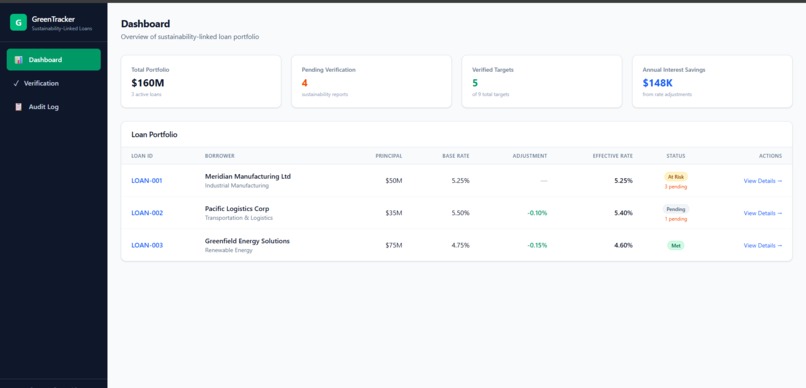
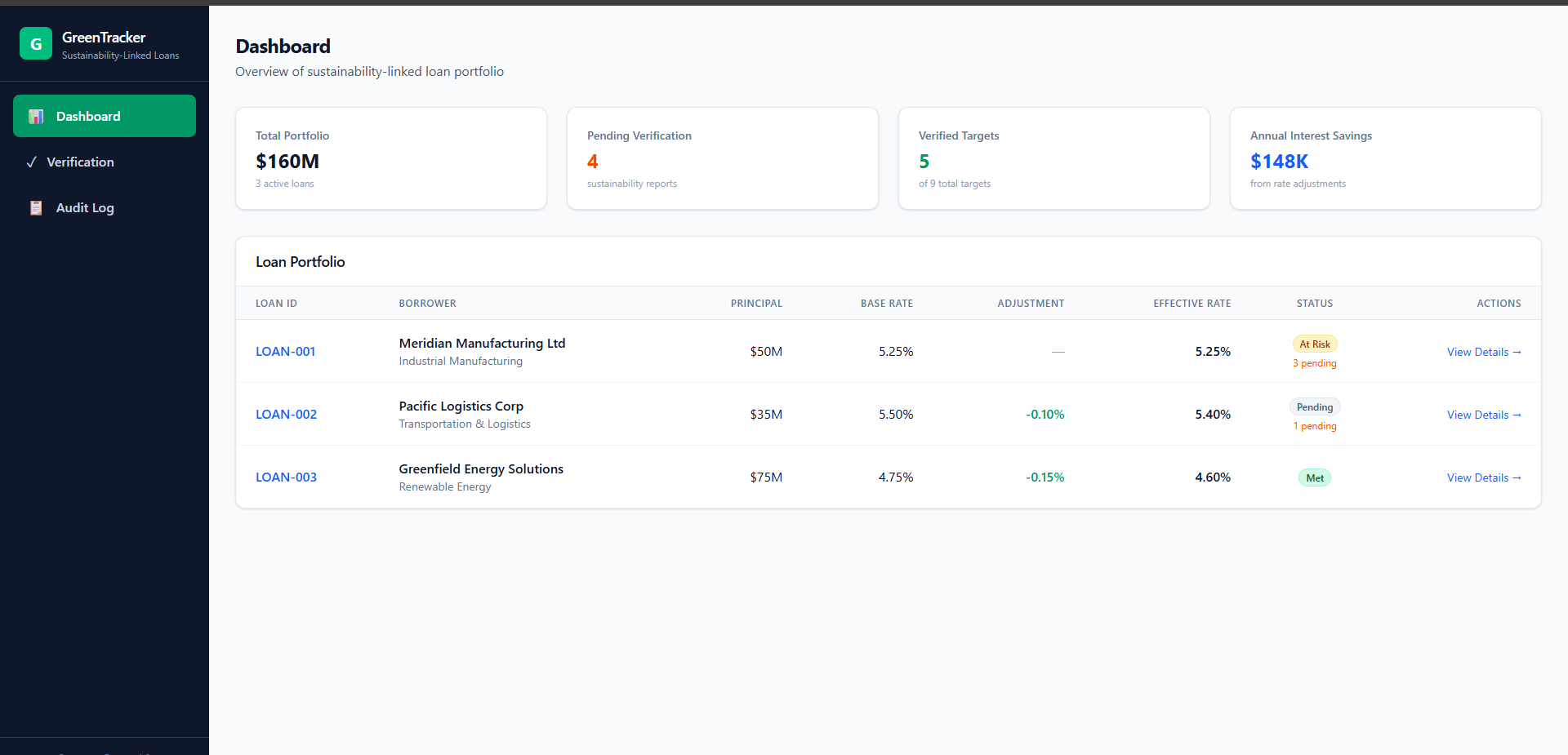
Portfolio-level view of sustainability-linked loan compliance and real-time interest rate impact
-
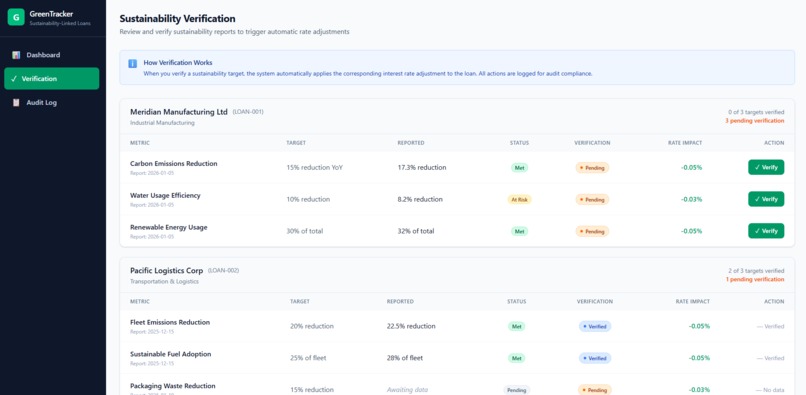
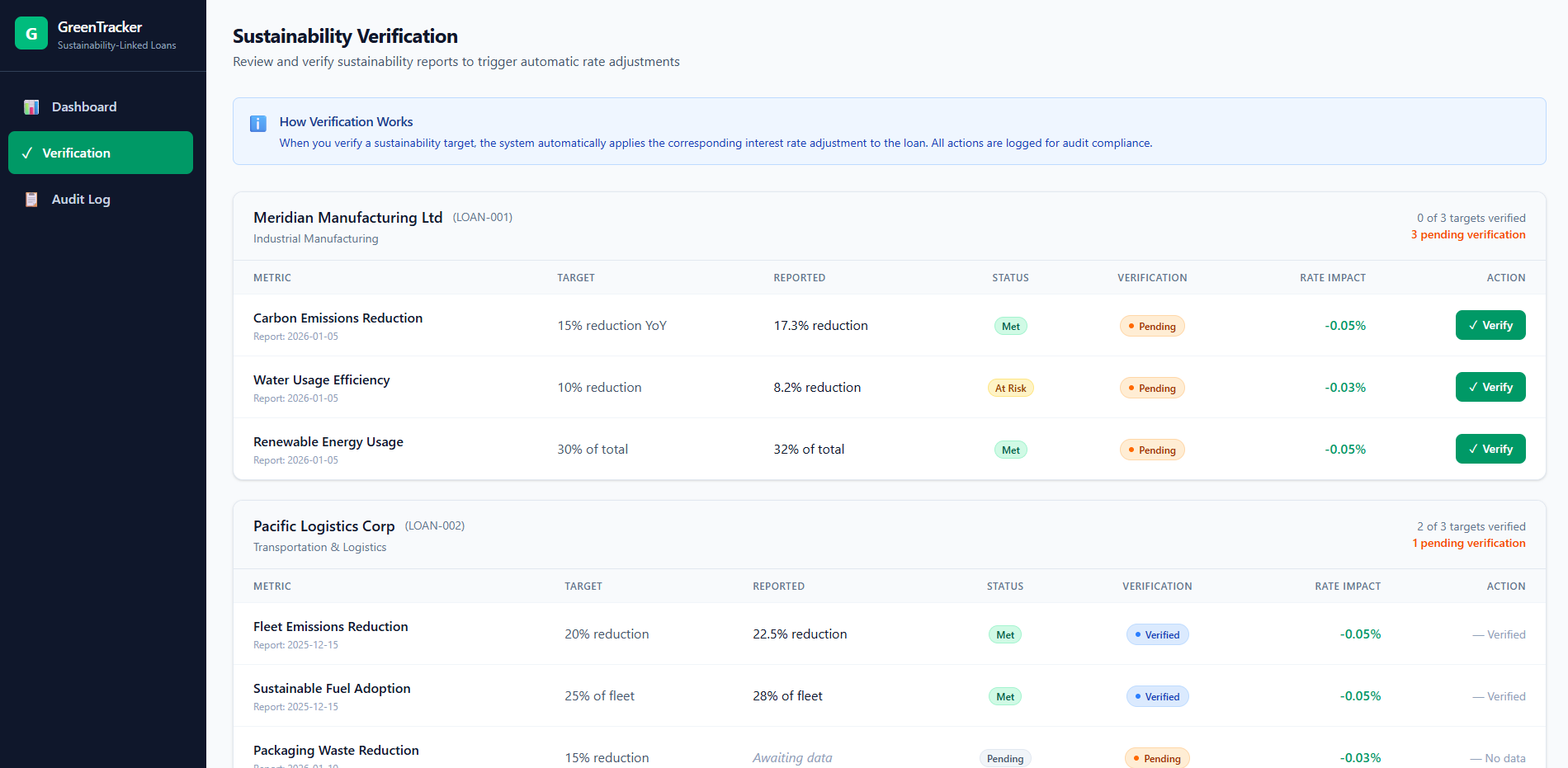
Automated verification of sustainability targets with deterministic rate adjustments
-
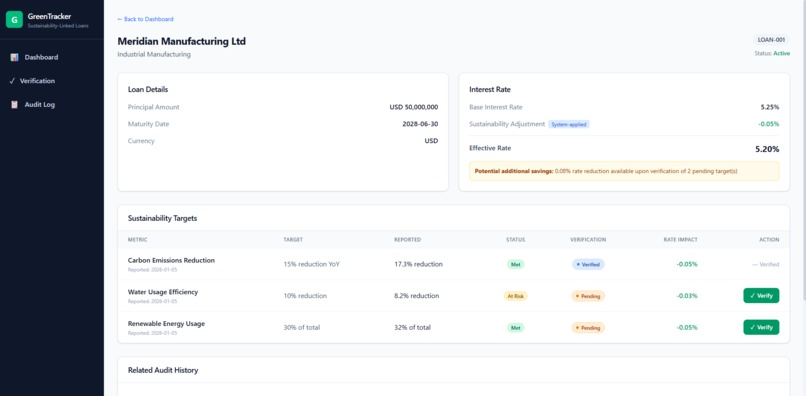
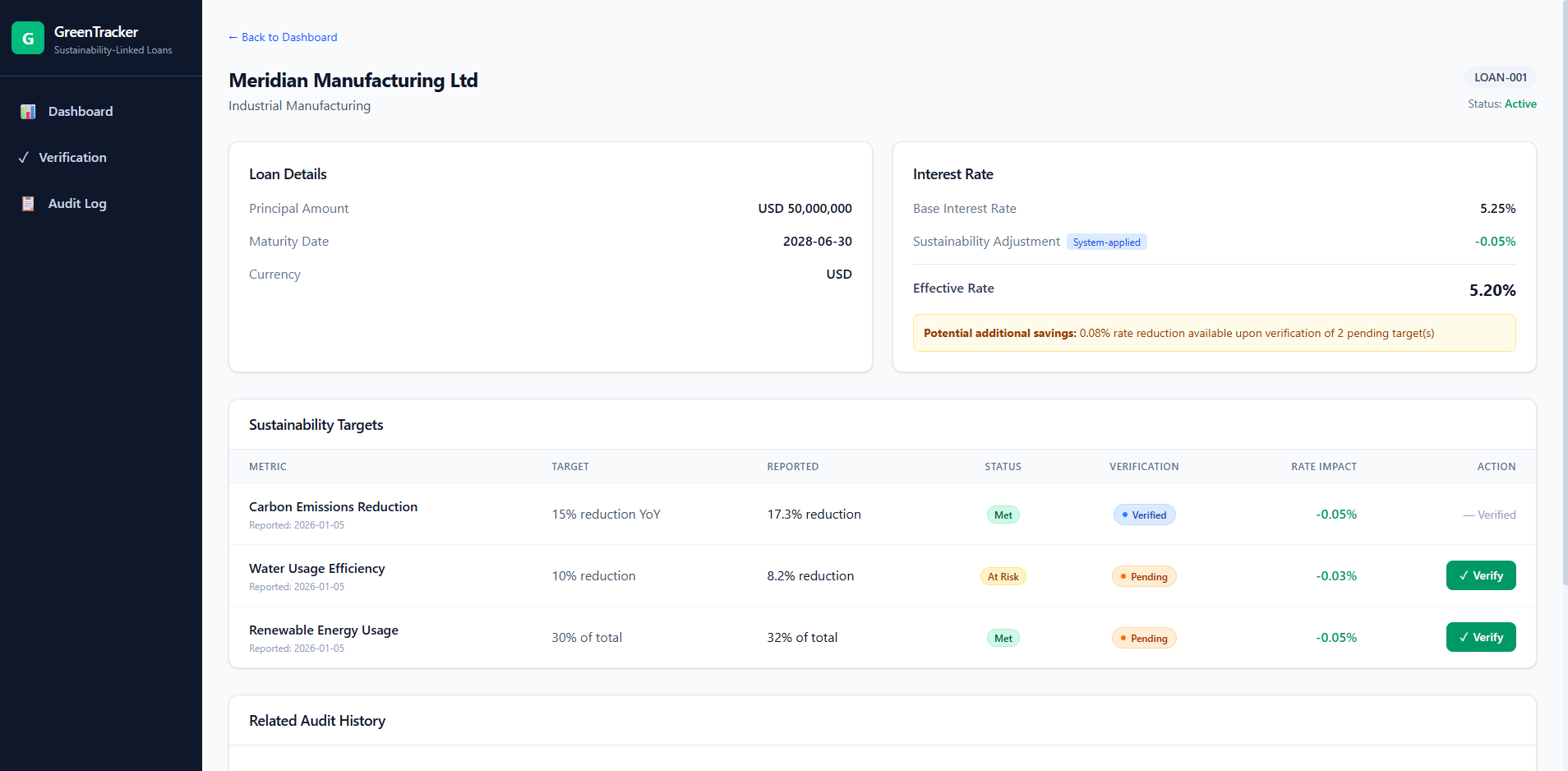
Verified sustainability outcomes applied directly to loan pricing
-
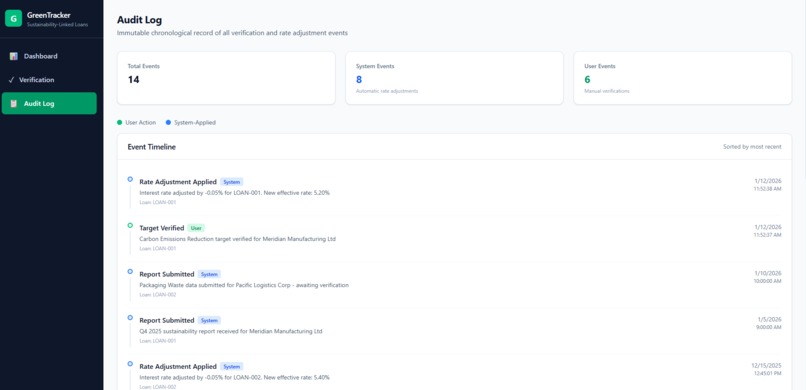
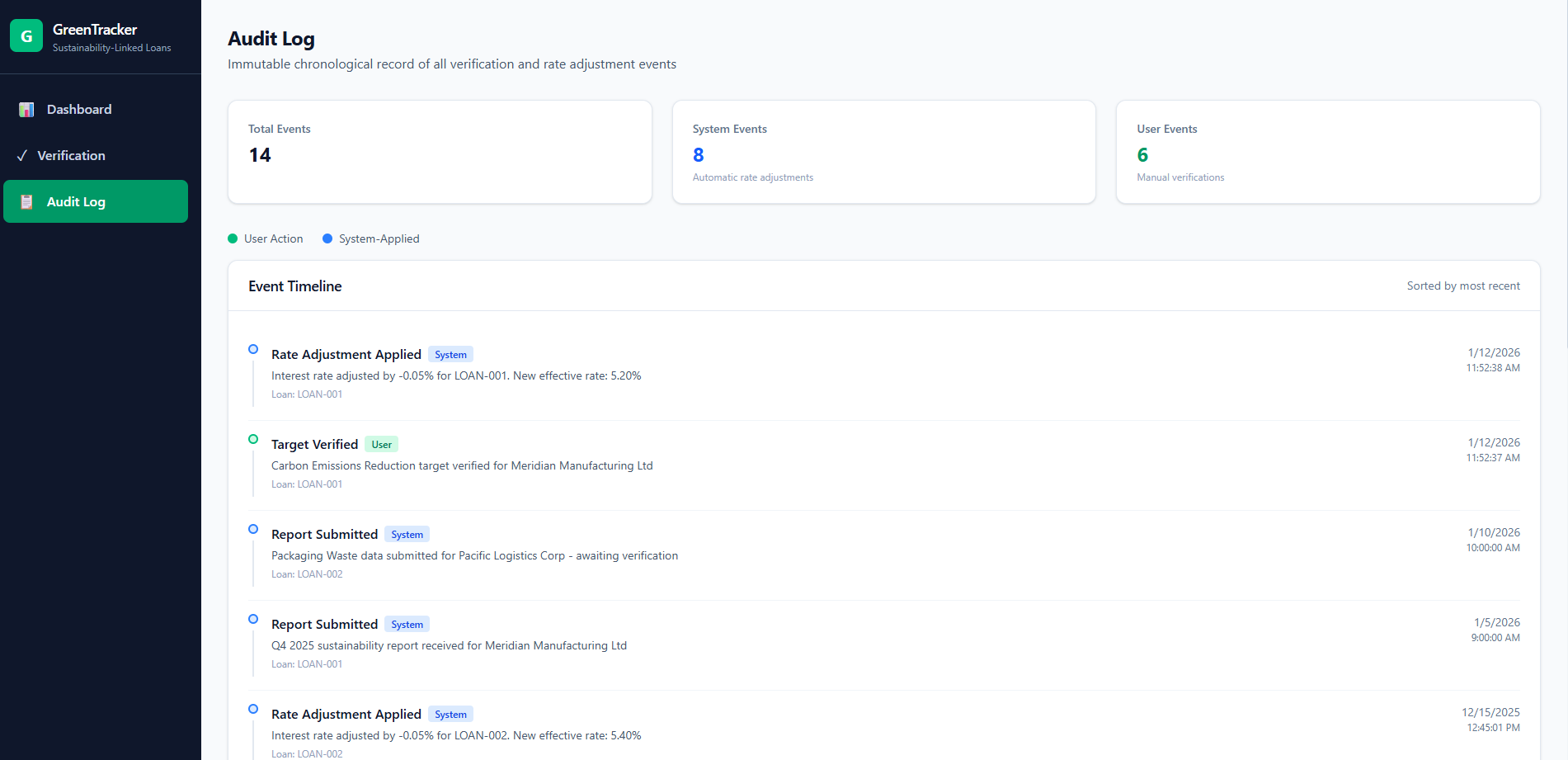
Immutable audit trail for sustainability-linked loan decisions
Inspiration
Sustainability-Linked Loans (SLLs) are meant to financially incentivize better environmental performance, but in practice they are still managed through emails, PDFs, spreadsheets, and manual interest rate updates.
The inspiration for GreenTracker came from observing a gap between decision and execution: even when sustainability performance is verified, the impact on loan pricing is often slow, opaque, and operationally risky.
This project explores what happens if that gap is removed.
What it does
GreenTracker is a desktop-first prototype that demonstrates how verified sustainability outcomes can automatically adjust loan interest rates in a transparent and auditable way.
Once a sustainability target is marked as Verified, the system:
- Automatically recalculates the loan’s effective interest rate
- Applies the adjustment as a system-controlled action
- Records both the verification and pricing change in a chronological audit log
The prototype focuses on orchestration, not raw ESG data collection.
How we built it
GreenTracker was built as a minimal web application using:
- Next.js (App Router)
- TypeScript
- Tailwind CSS
Static mock data and local state are used to simulate real loan workflows. The application is desktop-first and designed for non-technical users, such as loan officers, credit teams, and compliance stakeholders.
The emphasis was on clarity, commercial realism, and explainability rather than production complexity.
Challenges we ran into
The main challenge was defining realistic scope. Instead of attempting to ingest or validate raw sustainability data, the project deliberately focuses on the moment where sustainability performance is already verified and needs to be operationalized into pricing. Balancing realism with hackathon constraints required making careful design decisions about what to automate and what to represent symbolically.
Accomplishments that we're proud of
- Demonstrating deterministic, system-applied interest rate adjustments
- Creating a clear audit trail for verification and pricing decisions
- Presenting a complex financial workflow in a simple, judge-friendly interface
- Maintaining commercial credibility without overengineering
What we learned
- The hardest part of sustainable finance is not measurement, but execution
- Small, well-scoped automation can significantly reduce operational risk
- Transparency and auditability are as important as automation in loan systems
What's next for GreenTrack
Future iterations could integrate:
- Third-party ESG verification providers
- Bank loan management systems
- Regulatory reporting workflows
The core concept would remain the same: once sustainability outcomes are verified, pricing should update automatically and transparently.
Built With
- nextjs
- tailwind
- typescript
- vercel

Log in or sign up for Devpost to join the conversation.