Inspiration
As AI and software systems grow rapidly, they consume large amounts of computational power and electricity. However, developers rarely consider the environmental impact of their code. This inspired us to create GreenTrace AI, a tool that helps developers understand and reduce the carbon footprint of their software.
What it does
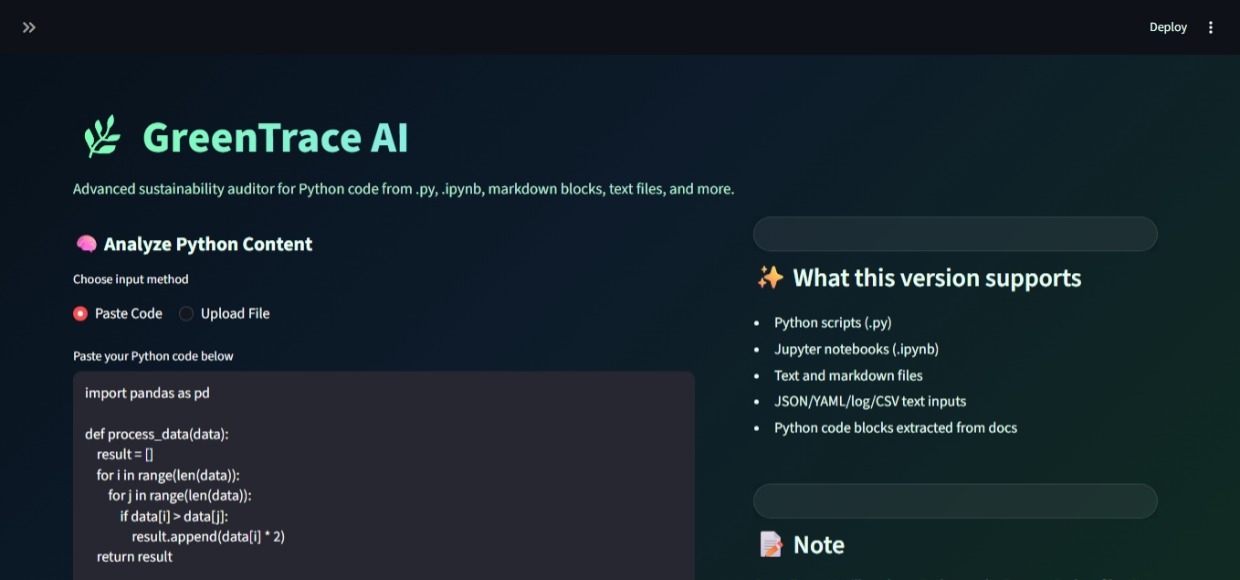
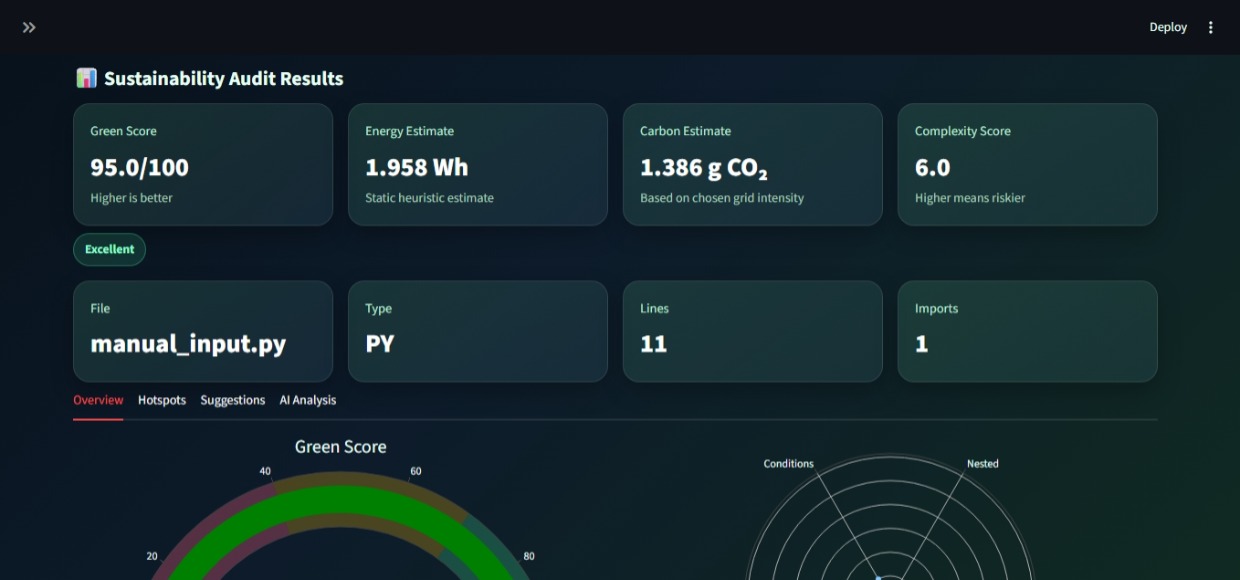
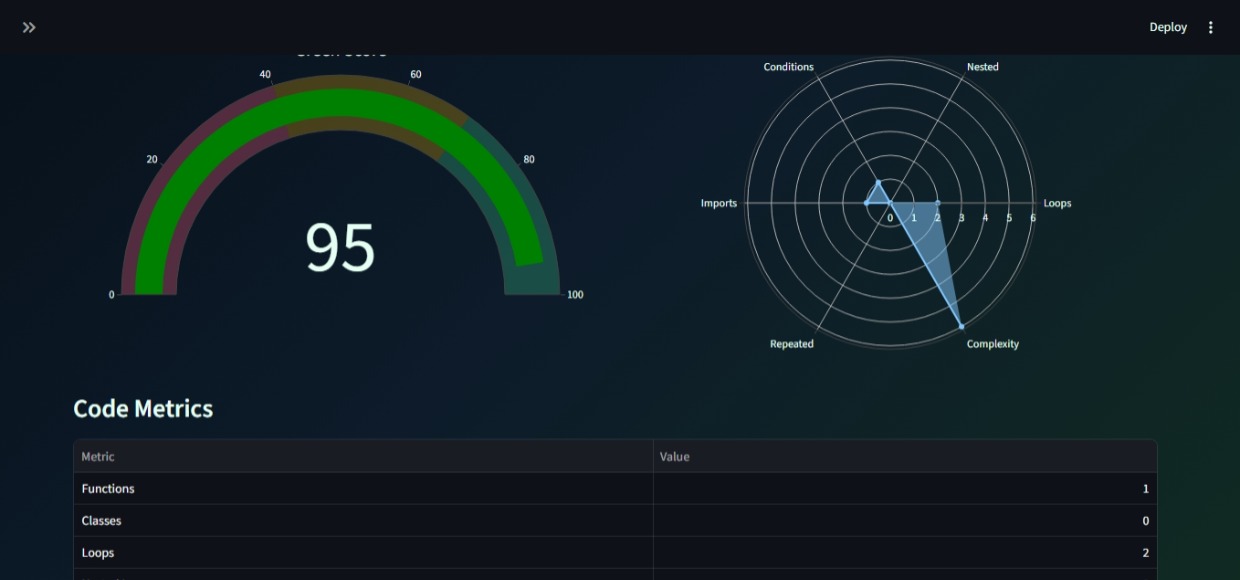
GreenTrace AI analyzes Python code to estimate its energy usage and carbon footprint. It generates a Green Score and uses AI to suggest improvements that make the code more efficient and environmentally friendly.
How we built it
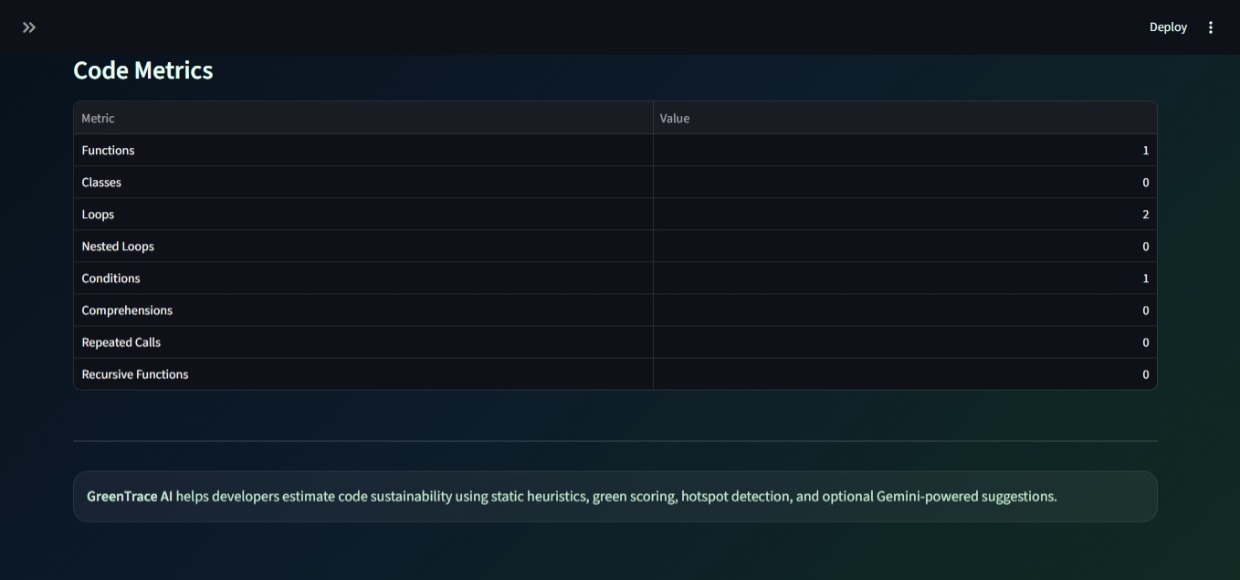
We built the project using Python, Streamlit, and Plotly for the dashboard. The code is analyzed using AST (Abstract Syntax Tree) techniques, and Gemini AI provides optimization and green refactoring suggestions.
Challenges we ran into
One challenge was estimating energy consumption without direct hardware measurements. Another was designing a meaningful Green Score and integrating AI suggestions effectively within a short hackathon time. Accomplishments that we're proud of We successfully built a working AI-powered sustainability auditor that analyzes code and provides actionable optimization suggestions through a clean and interactive dashboard. What we learned We learned how to analyze code using Python AST, integrate AI APIs, and build an interactive AI-powered web application for real-world impact.
What's next for GreenTrace AI –
Sustainable Code Analyzer Future improvements include integrating real-time carbon tracking, multi-language support, IDE plugins, and cloud-based code sustainability analysis.


Log in or sign up for Devpost to join the conversation.