-
-
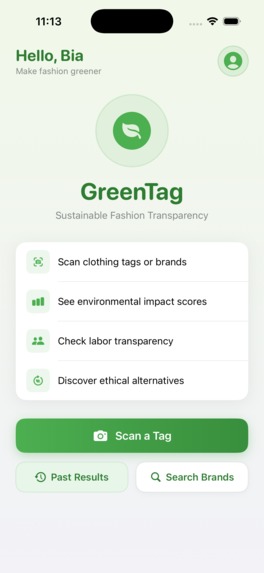
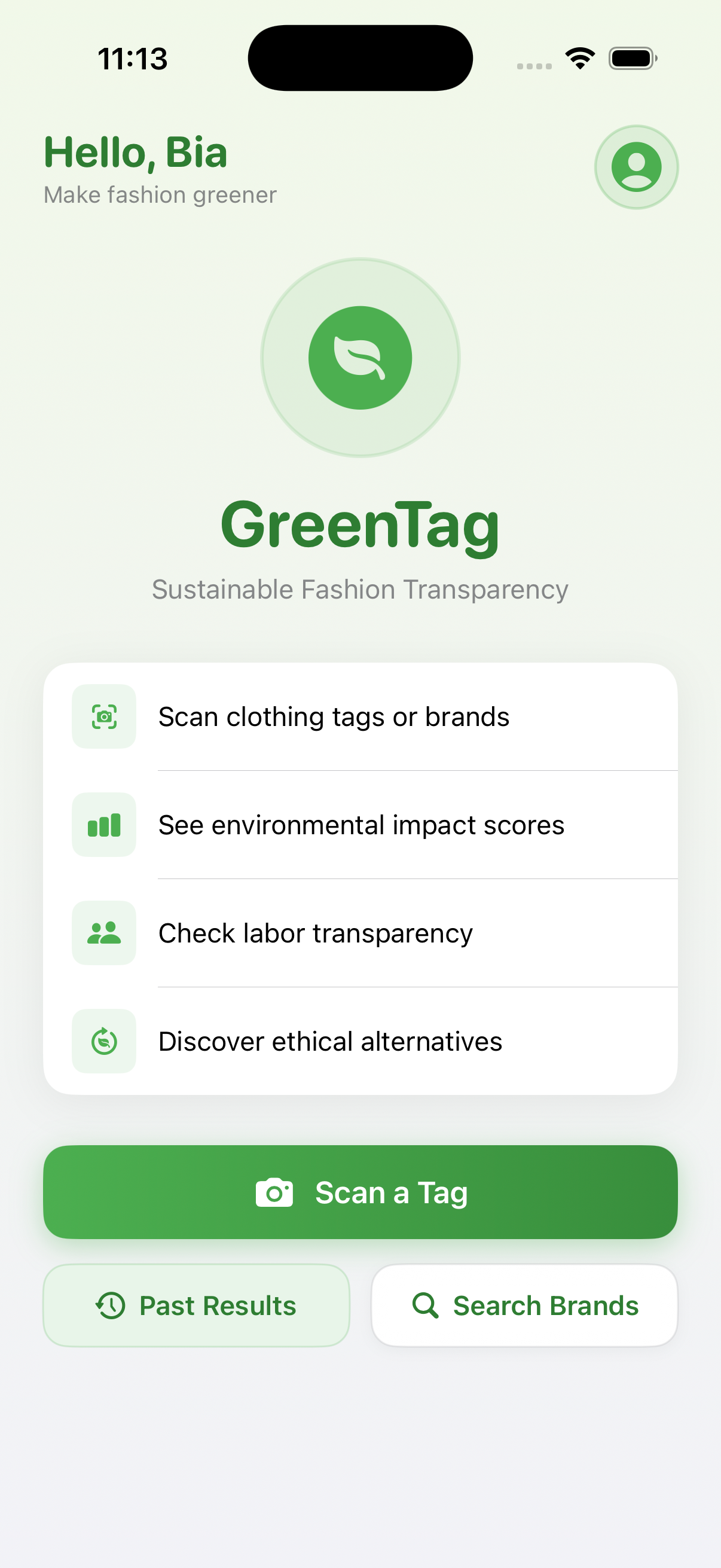
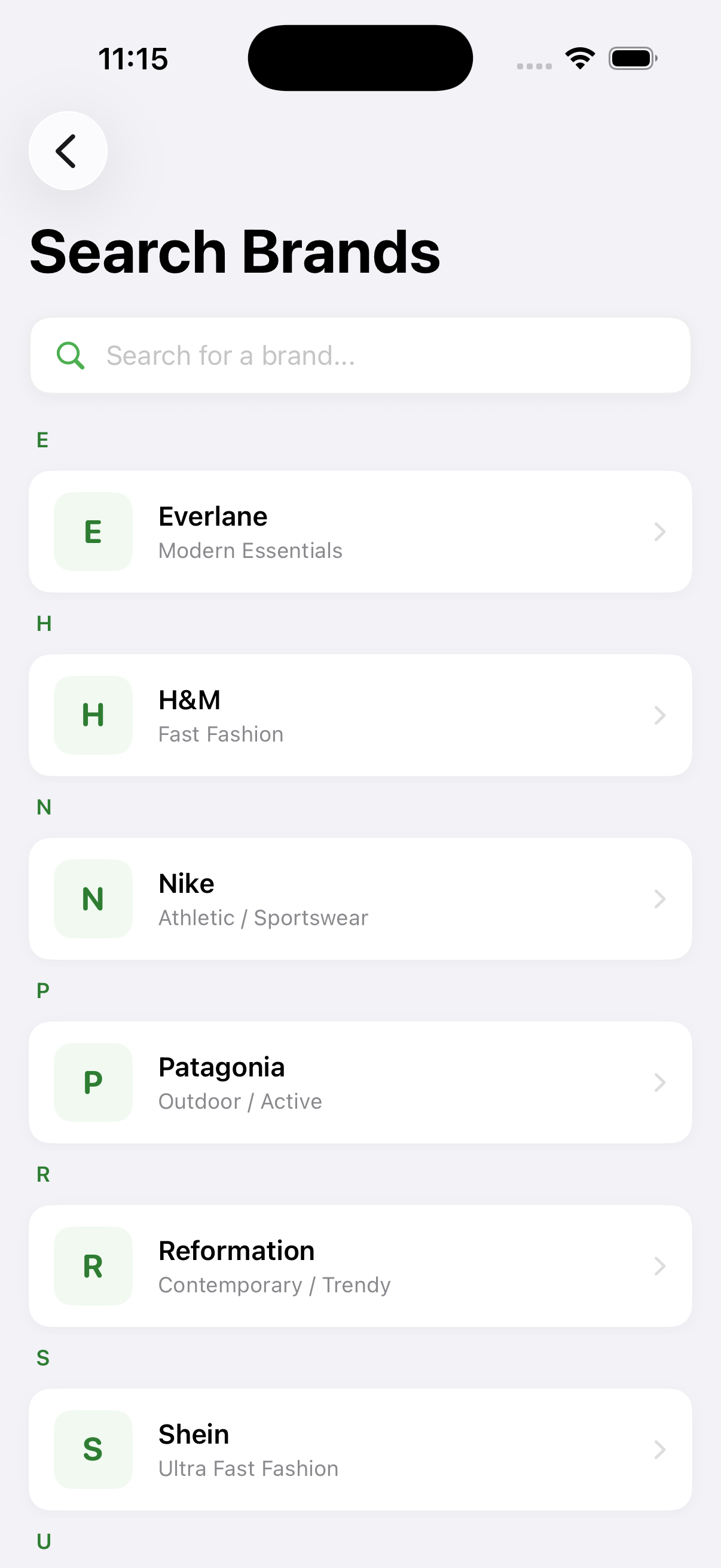
Users can scan new item tags, search brands they enjoy shopping, or past scans they submitted for insight
-
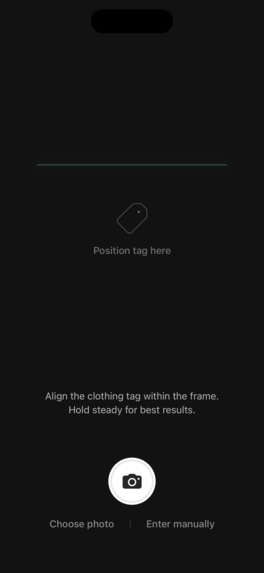
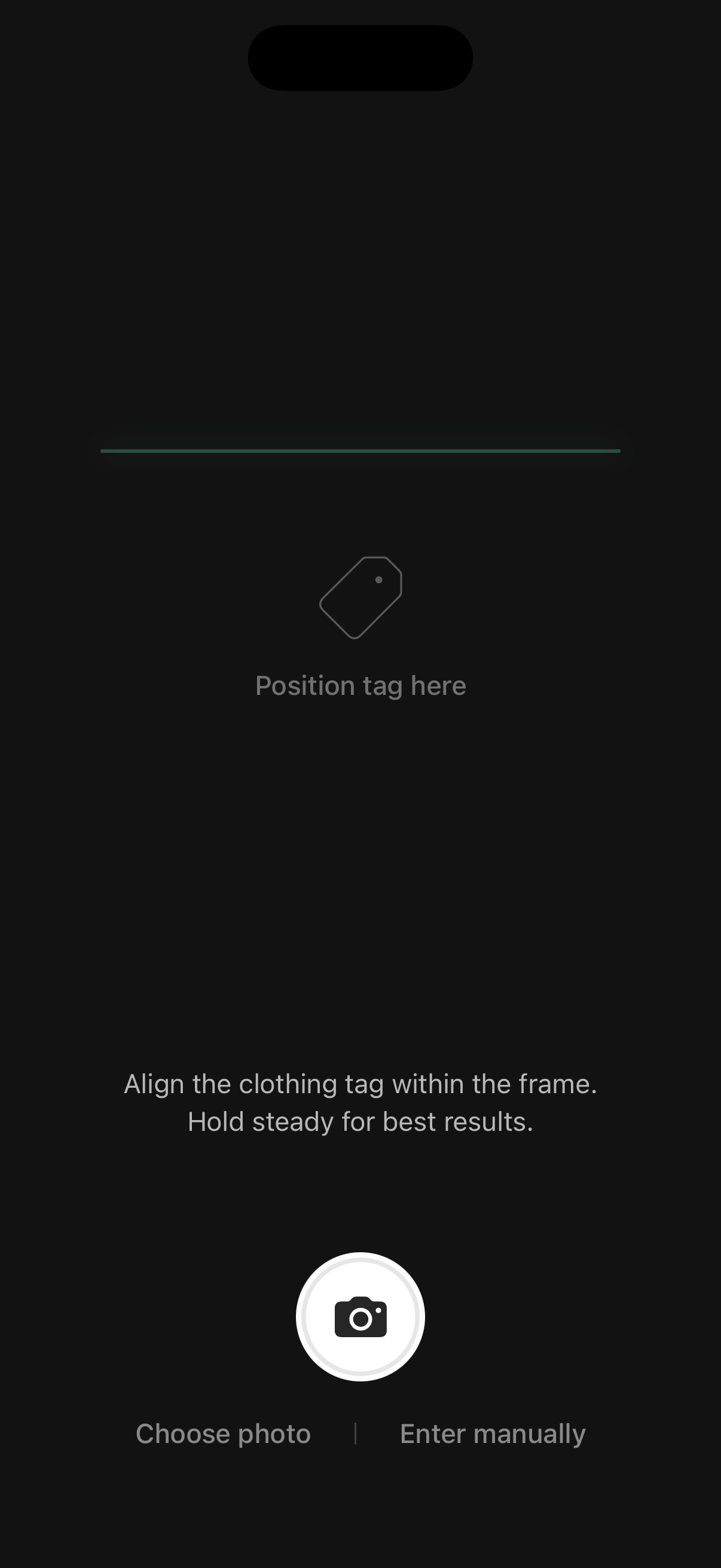
Options to either manually input their clothing information, scan a new tag, or access previous tag photos from their library are available
-
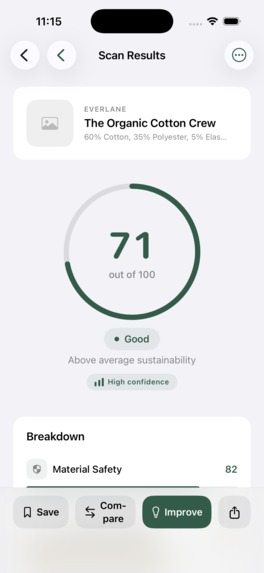
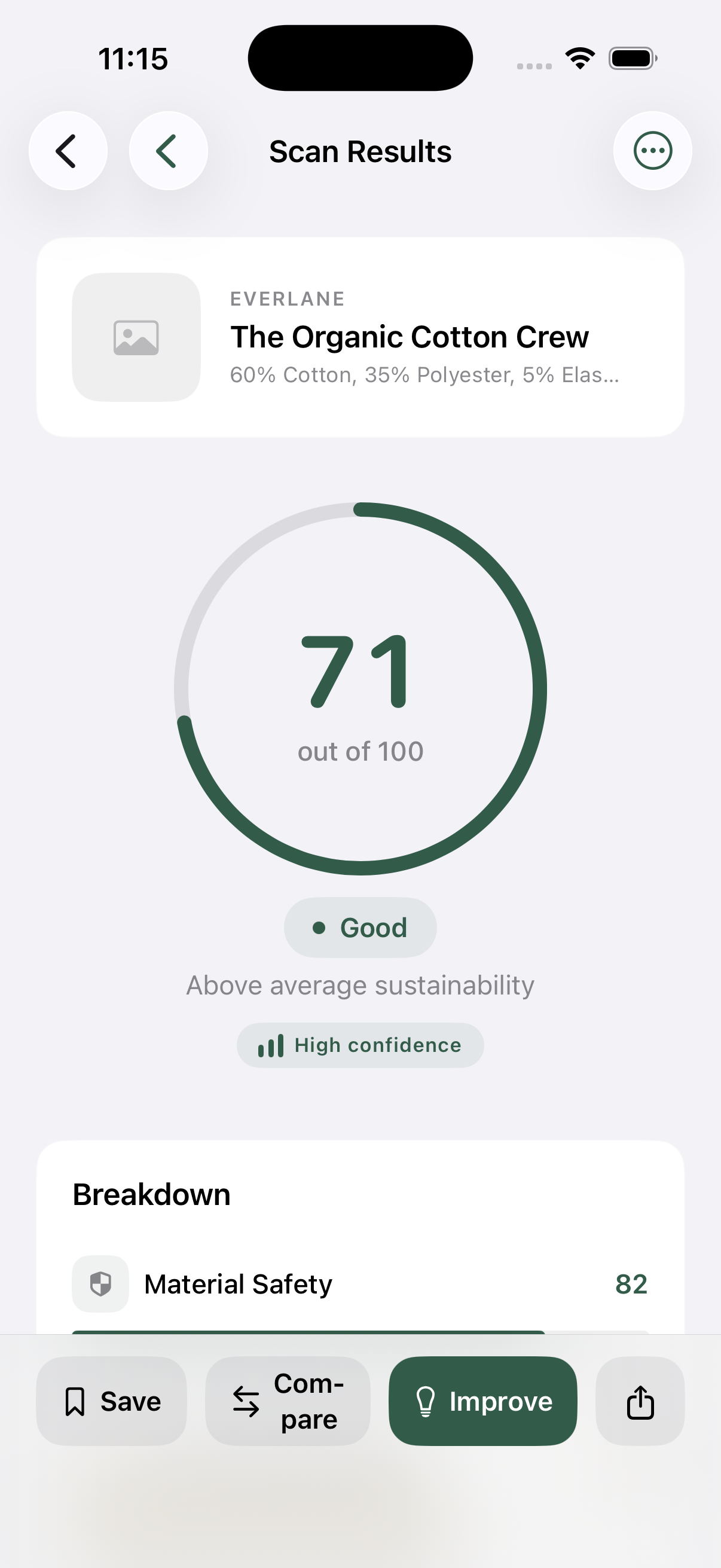
A report with a calculated sustainability score and context will be displayed
-
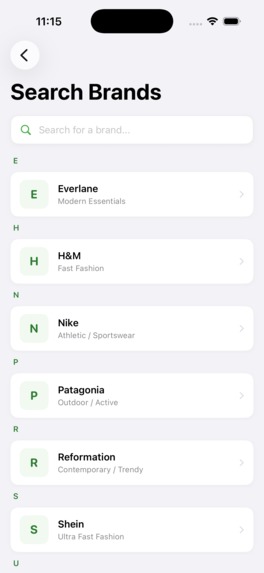
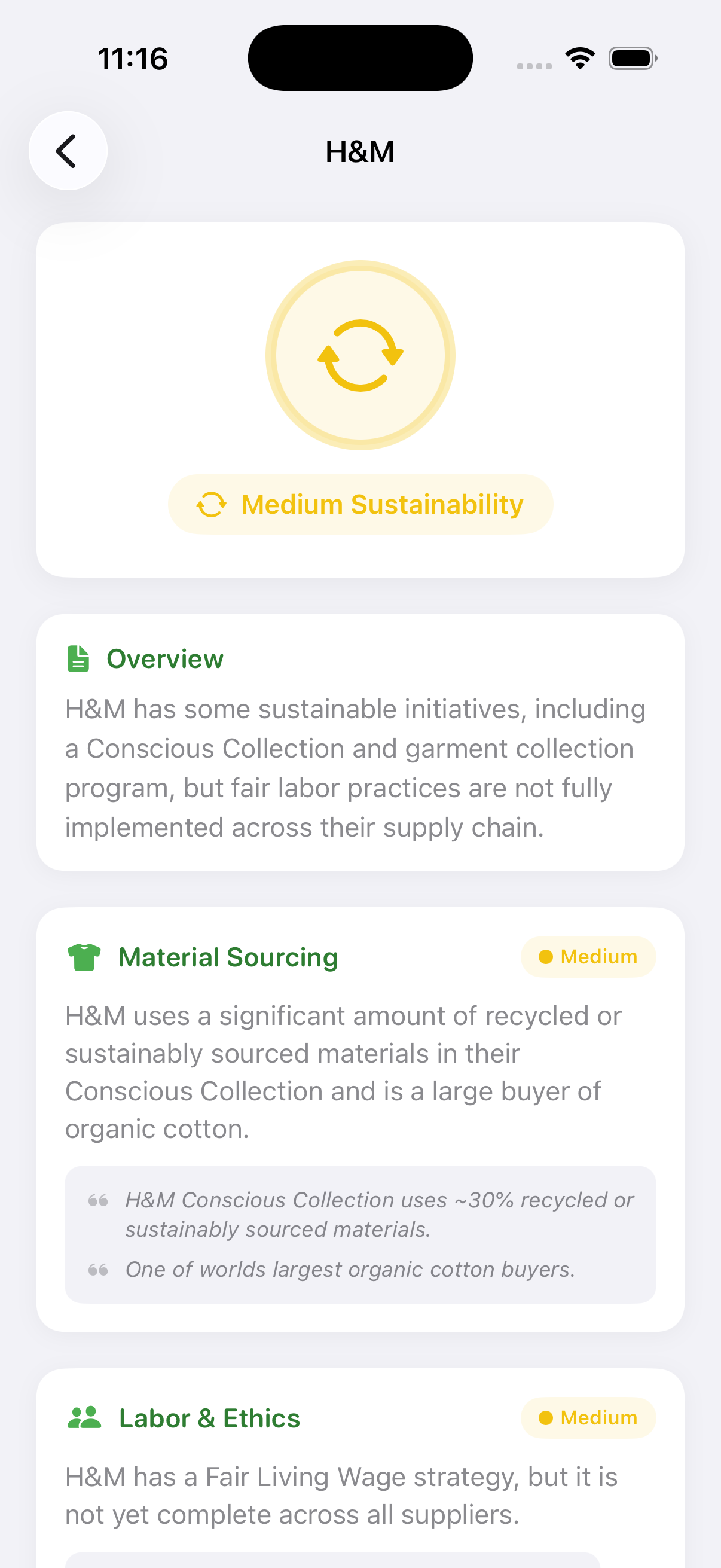
If wishing to know specific insight about certain brands, they can search or find the brand they wish to learn more about
-
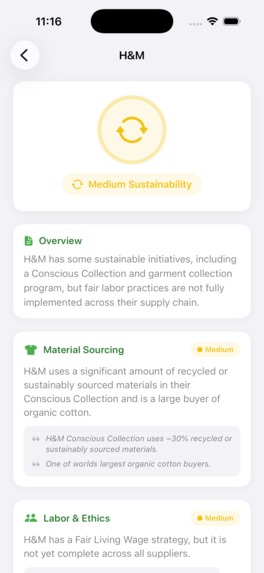
Brand insight will be given on materials sourcing, labor and ethics, as well as other factors
Inspiration
Shopping sustainably shouldn’t require a degree in materials science. Clothing tags are full of information, but most consumers don’t know what “viscose,” “elastane,” or blended fabrics actually mean for the environment. We were inspired by the gap between good intentions and usable information — people want to make better choices, but the data isn’t accessible at the moment of decision. GreenTag was born to turn something people already have — a clothing tag — into instant, understandable sustainability insight.
What it does
GreenTag lets users scan a clothing tag and instantly receive:
A material breakdown (e.g. cotton, polyester, blends)
A sustainability score (0–100) with a clear verdict
A category-level breakdown explaining environmental tradeoffs
Contextual explanations so users understand why a fabric scores the way it does
Instead of overwhelming users with raw data, GreenTag translates technical material information into simple, actionable insight.
Features
- Scan new clothing tags or upload tags saved from your library to get a report on its sustainability, enabled with Apple Vision and OCR
- Access brand knowledge regarding sustainabilty with Gemini insight
- Access and manage past reports you've generated with local storage enablement
- Receive a confidence number generate from core calculation metric logic
How we built it
We built GreenTag as a native iOS app focused on speed and clarity:
VisionKit for document scanning and camera pass-through
Apple Vision OCR to extract text from clothing tags
A custom parsing layer to detect materials, percentages, and keywords
A scoring engine that maps materials to environmental impact signals
SwiftUI for a clean, modern, and responsive interface
The app is designed around a single flow: scan → analyze → understand.
Challenges we ran into
OCR inconsistency: Clothing tags vary wildly in layout, font, and print quality.
Messy real-world text: Tags include irrelevant info (care instructions, branding, manufacturing codes) that needed filtering.
Balancing accuracy vs. simplicity: Sustainability data can be nuanced, but users need clarity, not complexity.
Time constraints: Building a reliable scan-to-insight pipeline in a hackathon timeframe required sharp prioritization.
Accomplishments that we're proud of
Shipping a working end-to-end scan → score experience
Successfully extracting and parsing real clothing tag text
Designing an interface that feels consumer-ready, not just a demo
Turning a complex sustainability problem into something usable in seconds
What we learned
OCR is powerful, but post-processing is where the real intelligence lives
Users trust scores more when they understand why they exist
Sustainability tools must meet people where they are — at the point of purchase
Constraints force better product decisions
What's next for GreenTag
Next, we want to:
Expand the material database and scoring accuracy
Detect certifications (GOTS, OEKO-TEX, Bluesign)
Add biodegradation timelines and impact comparisons
Allow users to save scans and track habits over time
Explore retailer and brand integrations for real-world adoption
GreenTag’s goal is simple: make sustainability visible, understandable, and actionable — one tag at a time.
Built With
- ocr
- swiftui
- vision
- visionkit

Log in or sign up for Devpost to join the conversation.