-
Our Mission
-
Challenge statement
-
CARLA Simulation
-
CARLA Simulation
-
GreenRoute Ai
-
Google Cloud API
Inspiration
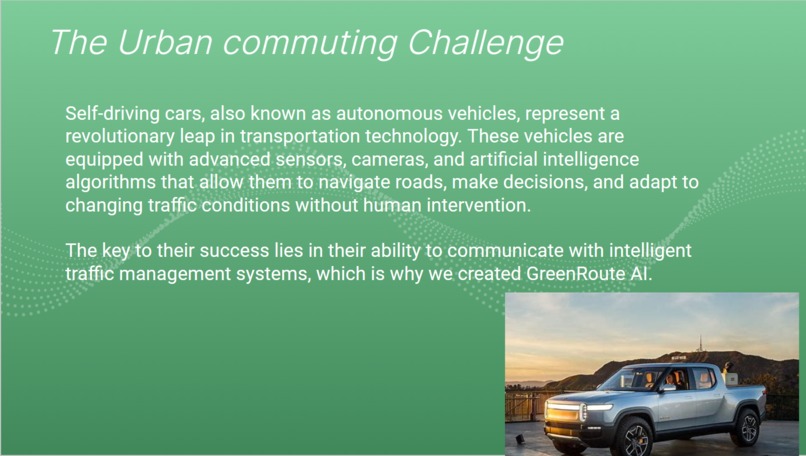
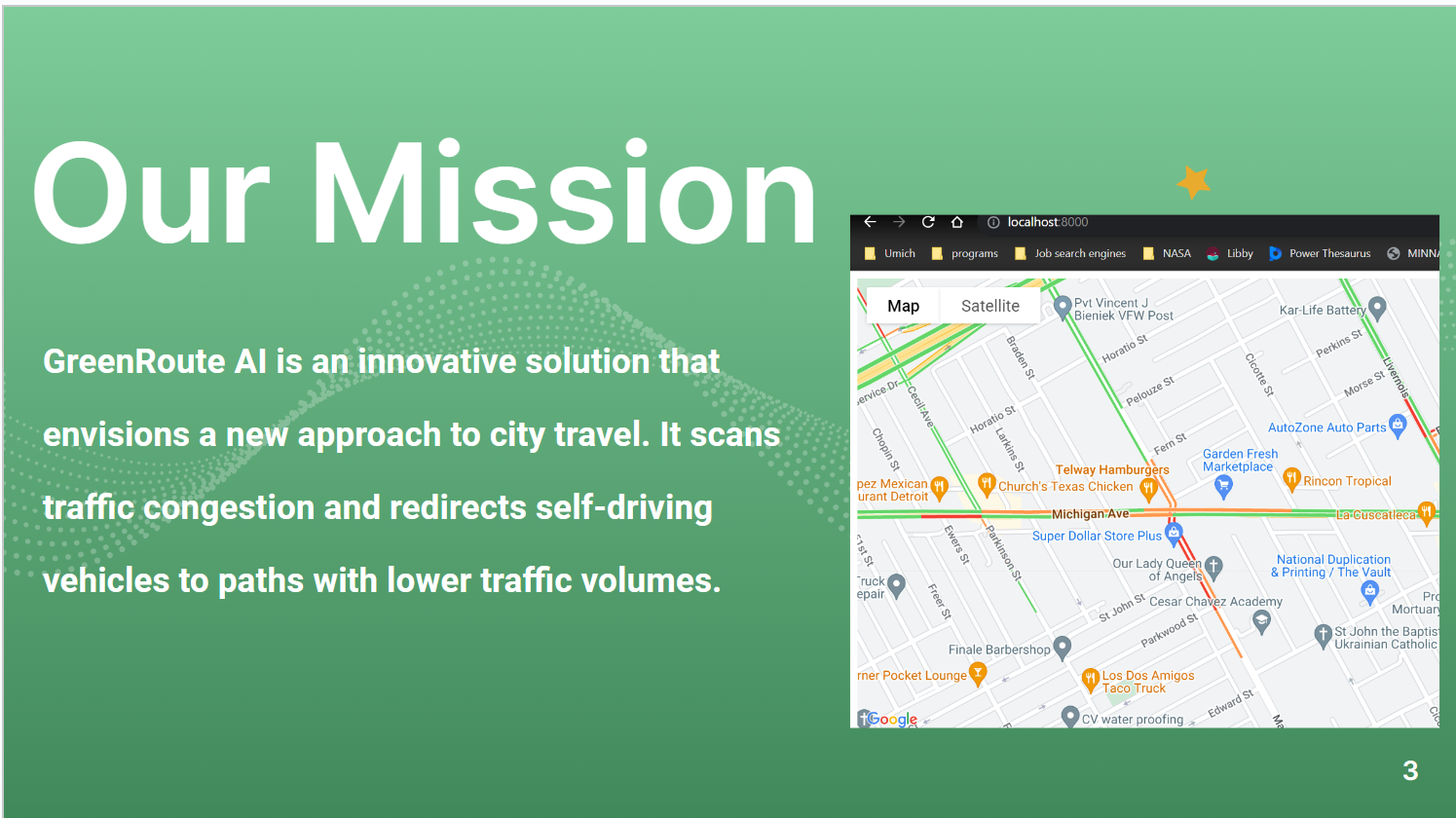
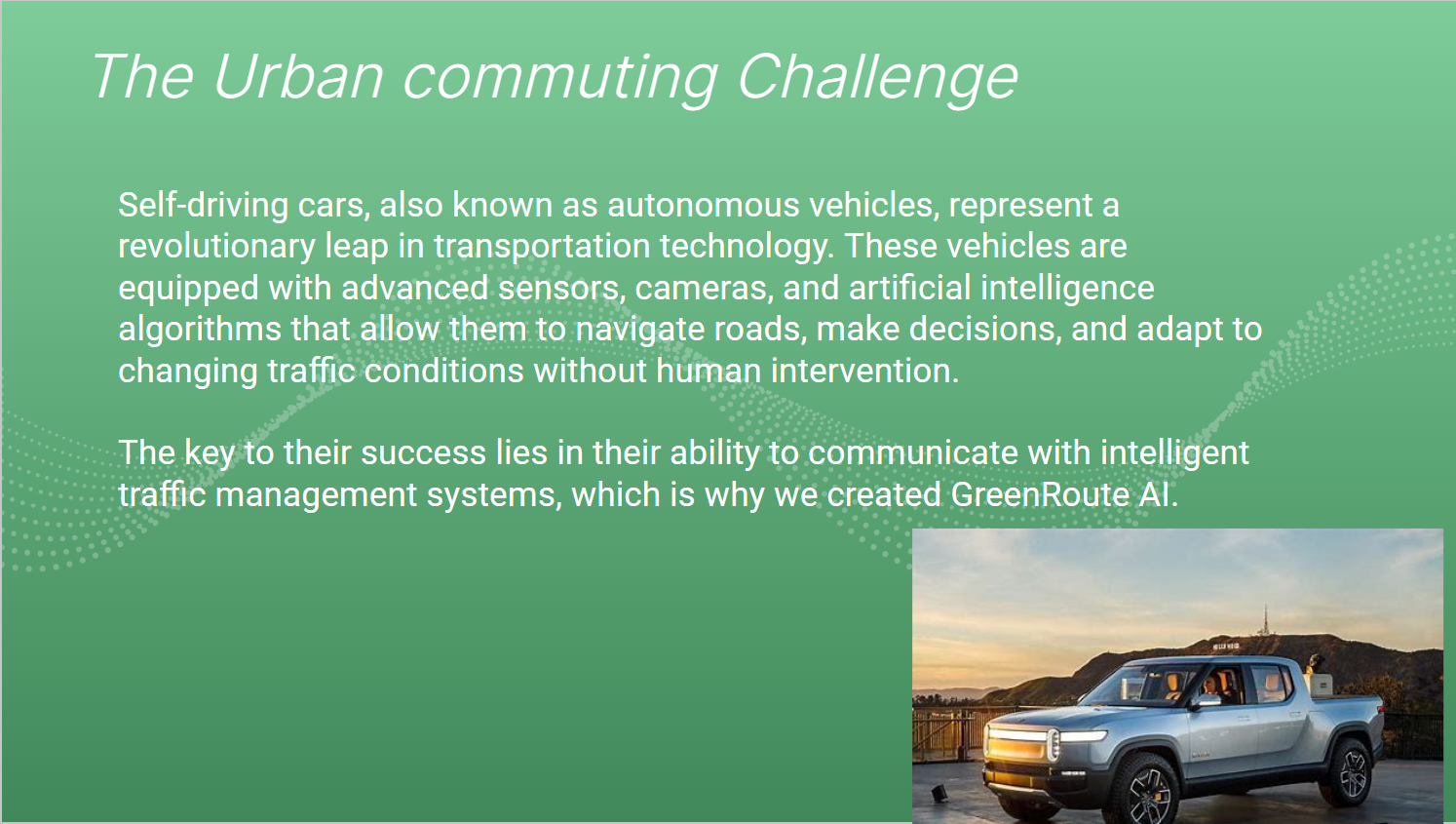
The inspiration behind 'GreenRoute AI' stems from our commitment to shaping the future of urban mobility. We envision a world where self-driving cars are the norm, and to support this vision, we're developing an innovative solution that harnesses AI and real-time traffic data. Our goal is to create a seamless driving experience, not just for humans but for autonomous vehicles as well. By providing traffic insights and optimized routes, we aim to pave the way for a future where self-driving cars effortlessly navigate city streets while reducing congestion and emissions.
What it does
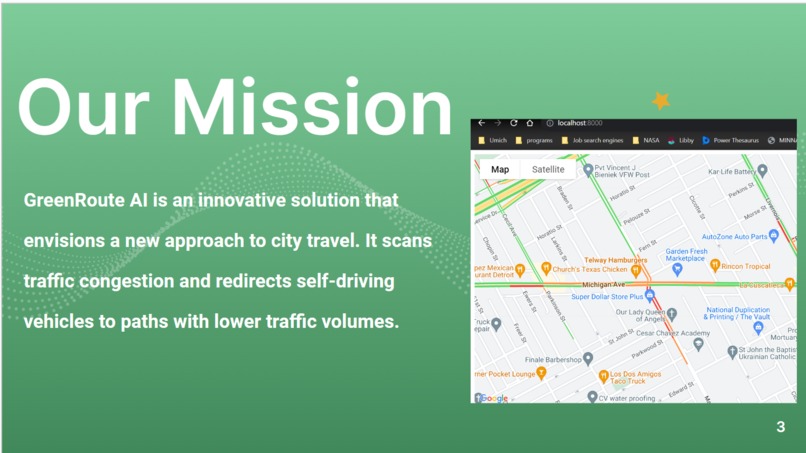
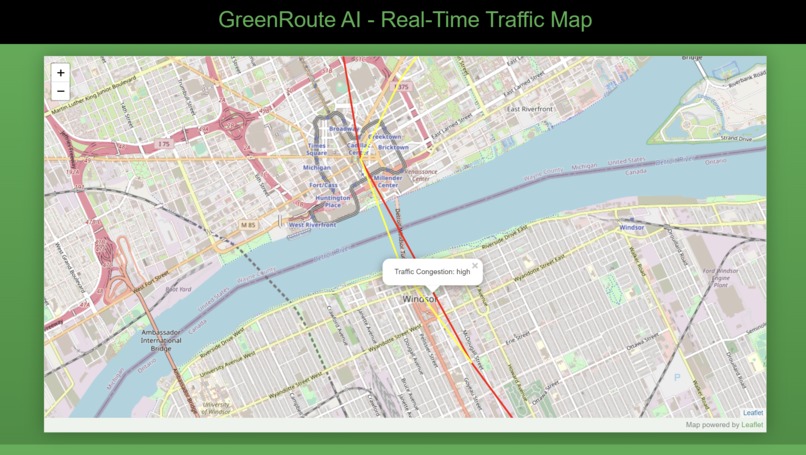
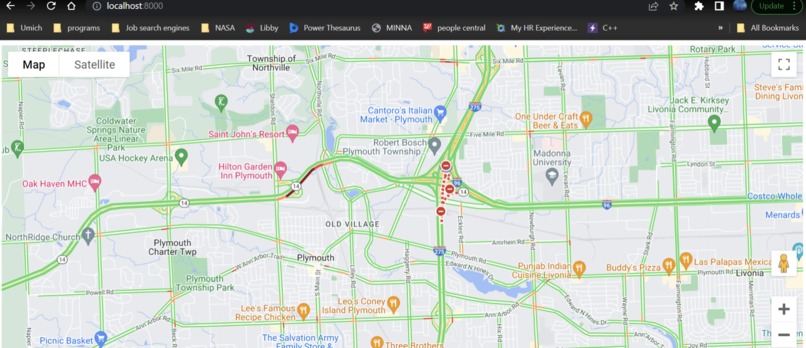
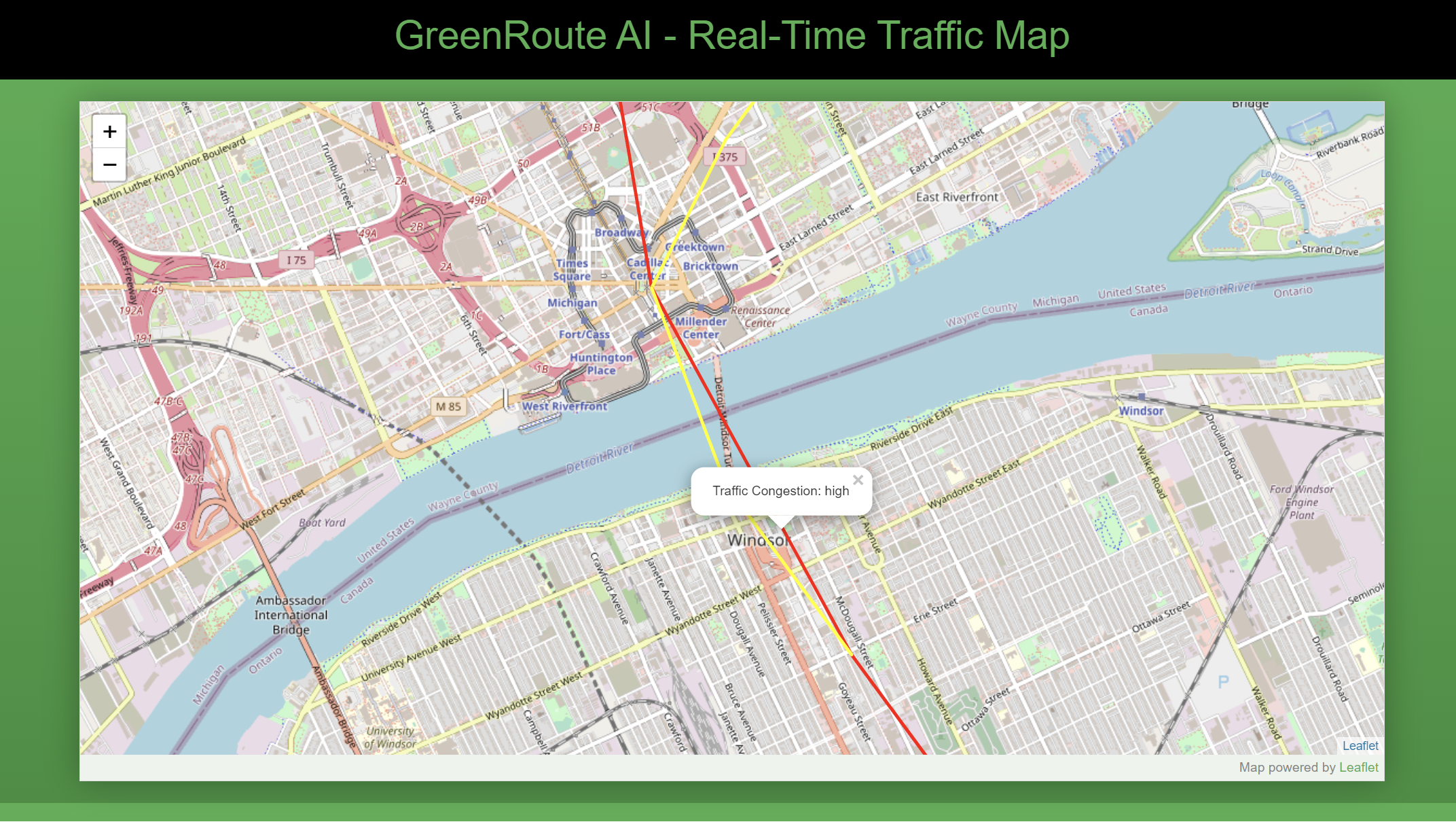
GreenRoute AI is a groundbreaking solution that reimagines urban commuting. It's designed to empower both human and autonomous drivers by providing real-time traffic congestion updates and smart route recommendations. Our platform utilizes Leaflet and dynamic JavaScript interactions to present users with an interactive and informative traffic map. By integrating live traffic data, our platform can identify bottlenecks and swiftly reroute vehicles, whether they're human-driven or autonomous. The project began by attempting to integrate the Mapbox API for comprehensive traffic data, but challenges led us to simulate traffic data within our project. We displayed road segments with varying congestion levels through distinct colors. This tool is a testament to the power of open-source tools, creative problem-solving, and the seamless interplay between HTML, CSS, and JavaScript in web development.
Our vision extends beyond the current implementation. In the future, we aim to contribute to a world where roadways are fluid and commuters experience reduced travel time and fuel consumption. Our ambition is to further enhance GreenRoute AI and integrate it seamlessly with emerging self-driving car technologies. By doing so, we envision a dynamic ecosystem where self-driving vehicles leverage our data for real-time route optimization, reducing congestion and fuel emissions. GreenRoute AI isn't just about navigation; it's about transforming the way we move through our cities, improving traffic flow, and contributing to a greener, more efficient future.
How we built it
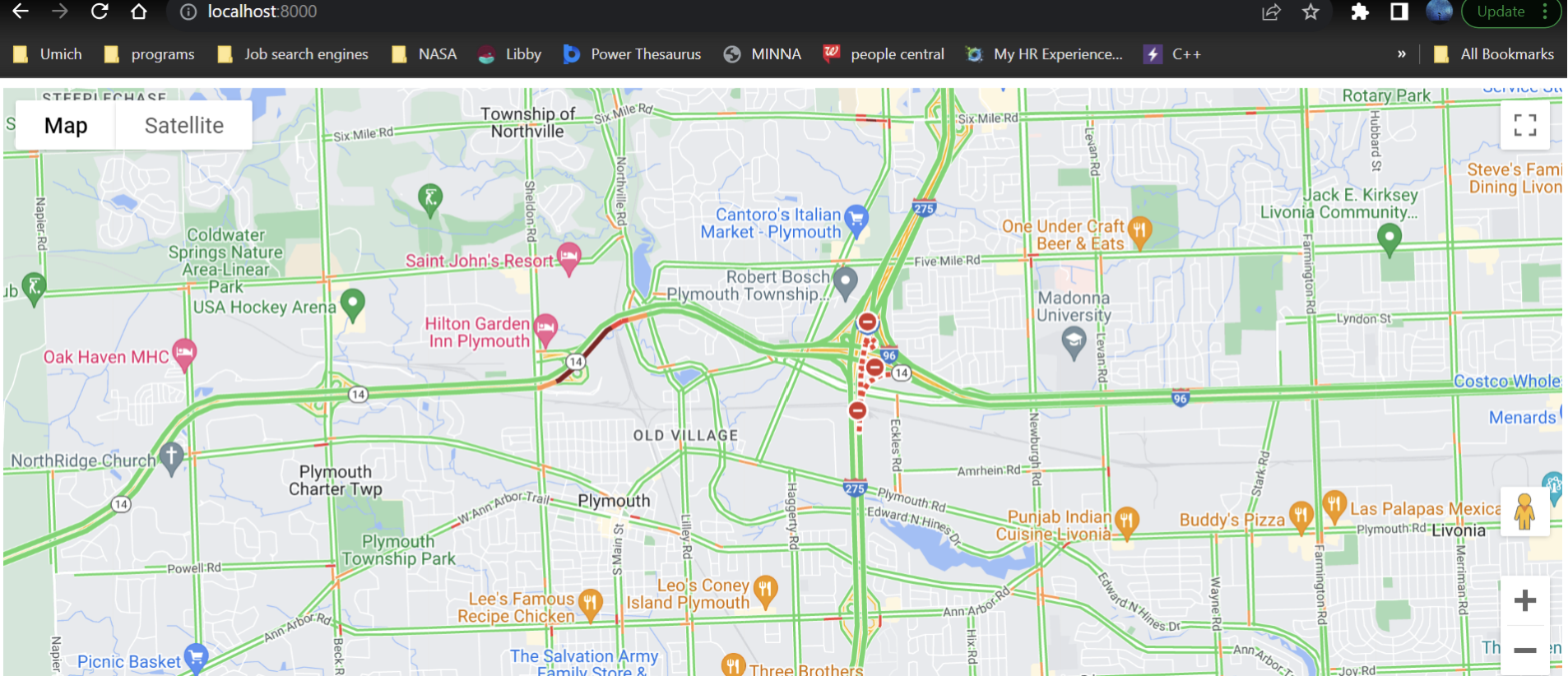
In the development of our project, we leveraged the powerful Leaflet library to create an interactive and real-time traffic map. Our goal was to provide users with up-to-date traffic information, and to do so, we initially explored integrating the Mapbox API for comprehensive traffic data. This involved utilizing HTML to structure our web page and incorporating CSS to style the user interface. JavaScript played a pivotal role in bringing our vision to life, allowing us to interact with Leaflet, make requests to external APIs, and process the received data. While our original intent was to integrate Mapbox, we encountered challenges along the way and decided to simulate traffic data within our project. This approach enabled us to showcase road segments with varying congestion levels by defining their colors.
Challenges we ran into
Throughout the project, we encountered a range of intricate challenges that significantly impacted our initial plan. Our foremost obstacle was the creation of a simulation environment for testing our code. Initially, we decided to explore CARLA, a highly advanced simulation tool for autonomous driving, which seemed ideal for our needs. However, we soon discovered that setting up CARLA wasn't a straightforward task.
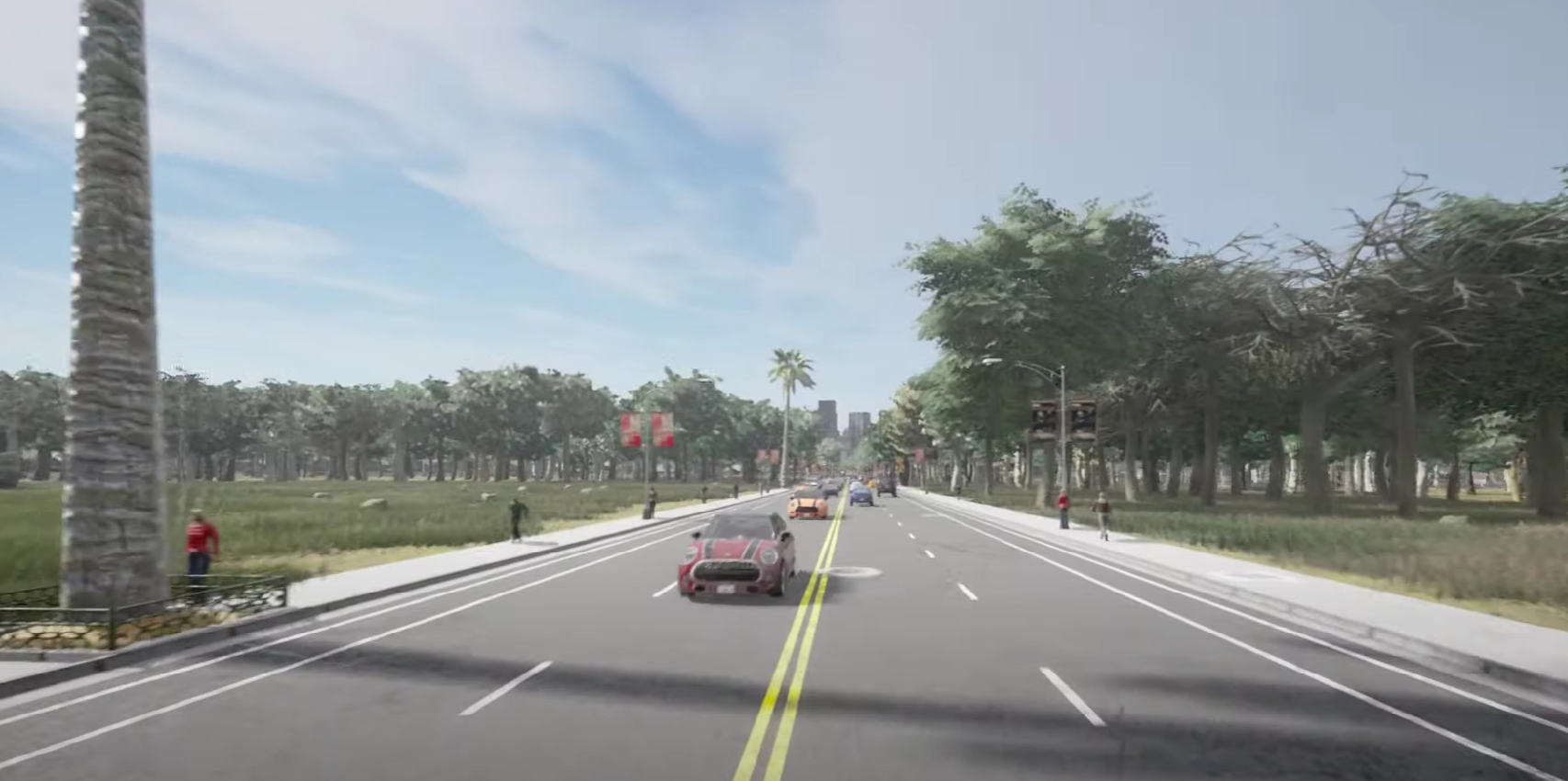
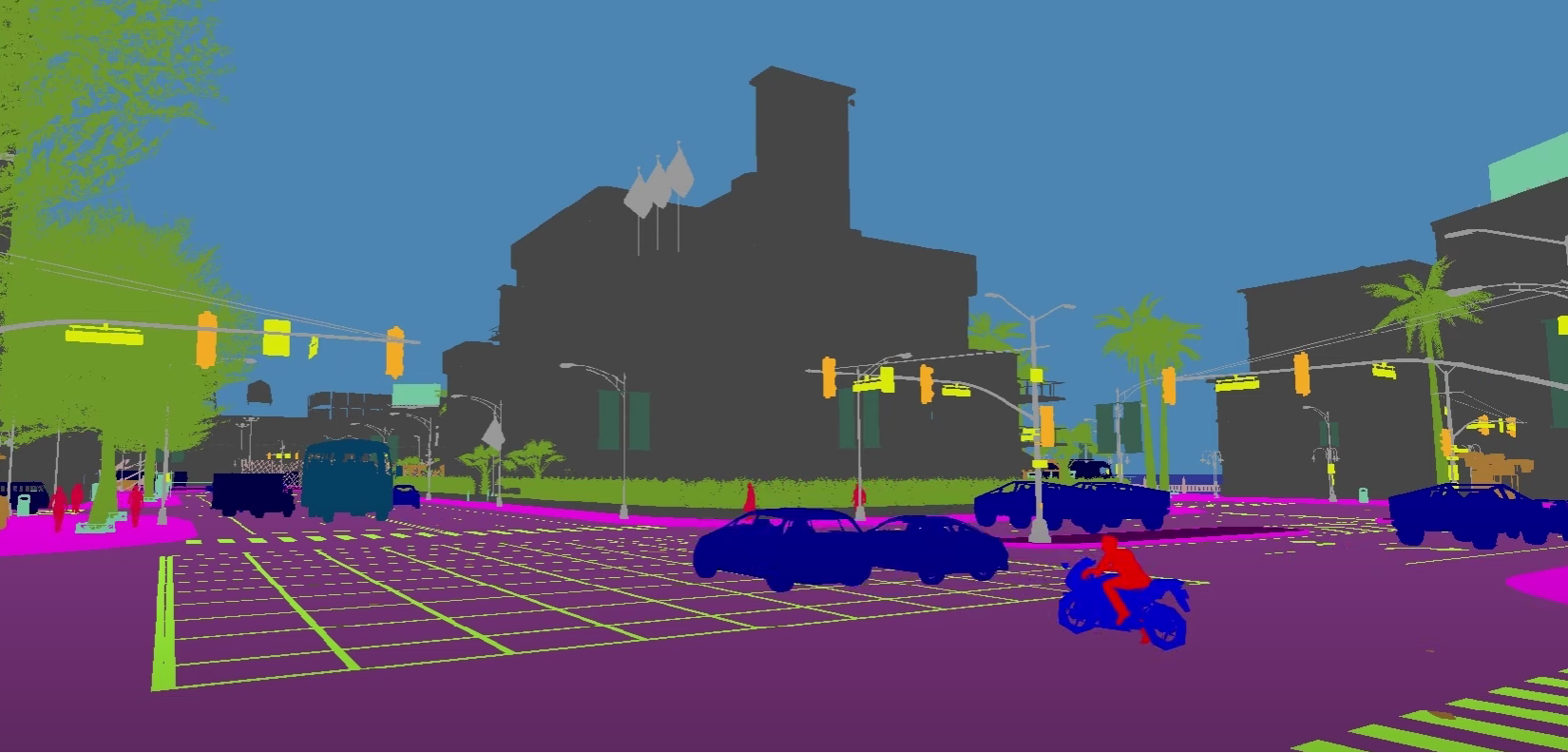
The CARLA simulation environment, a crucial component for our project, was accessible only as a zip file on GitHub. This source was valuable, but it also brought its own set of complications. It took a considerable amount of time to extract the files and set up the environment properly.
Simultaneously, integrating the CARLA Python API posed another significant challenge. Our goal was to establish a connection between our Python code and the CARLA simulator. This would enable us to create a realistic car simulation and test our Python script with real-world traffic conditions. But the process was far more intricate than we had initially imagined.
We encountered issues ranging from compatibility problems with Python versions to intricate configuration intricacies. Debugging and resolving these challenges was a time-consuming process, and we found ourselves spending more time troubleshooting than making progress on the project. The real struggle came when we attempted to integrate the CARLA Python API. Our aim was to establish a seamless connection between our Python code and the CARLA simulator, creating an accurate representation of real-world driving conditions within the simulation.
Considering these extensive technical roadblocks, we made the strategic decision to pivot our project's focus. We transitioned towards developing a dynamic map that could showcase real-time traffic data. Our aim is for this data to be harnessed by autonomous vehicles in the future, contributing to a smarter, more efficient transportation ecosystem.
Accomplishments that we're proud of
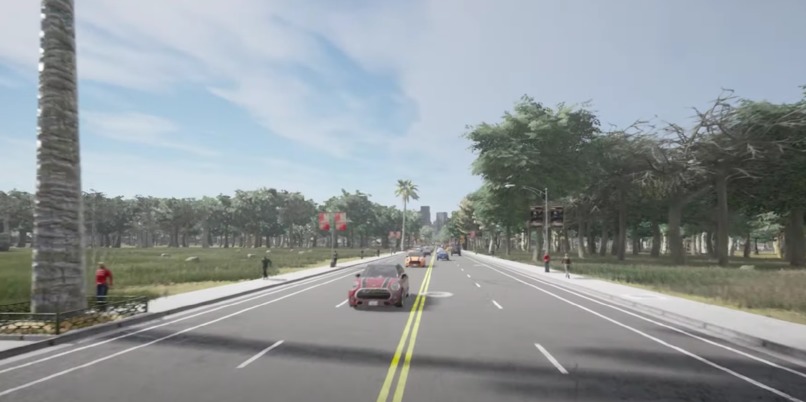
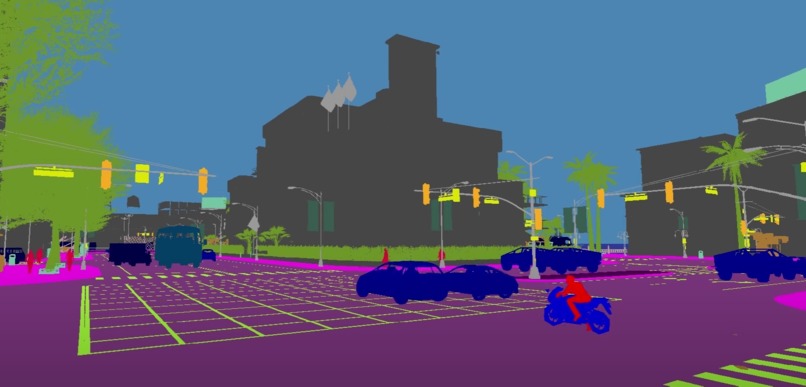
Reflecting on our journey at this hackathon, we take great pride in what we've accomplished. We successfully set up the CARLA simulator, which allowed us to dive into a captivating virtual driving experience. This milestone laid the foundation for our vision of an AI-enhanced simulation environment that has the potential to transform the world of autonomous driving.
What we learned
Throughout this hackathon, we embarked on an incredible learning journey. One of our key takeaways was the valuable experience of setting up CARLA, a complex driving simulator. It provided us with insights into the complexities and nuances of real-world traffic scenarios, and the challenges of integrating Python APIs to interact with the simulation.
Additionally, we discovered the immense potential of the Mapbox API, gaining a deeper understanding of how it can be harnessed to provide real-time traffic data. We learned that technology is a powerful enabler for creating innovative solutions, such as our project, 'GreenRoute AI.' This experience highlighted the importance of adaptability, as we pivoted our initial simulation-based idea to a real-time traffic map.
Above all, this hackathon taught us that collaboration, creative problem-solving, and the drive to adapt and evolve are crucial in the fast-paced world of technology. We're excited to continue exploring and developing 'GreenRoute AI' to make a meaningful impact on the future of transportation.
What's next for GreenRoute Ai
Moving forward, our focus at 'GreenRoute AI' is on practicality and innovation. We've learned that the road to success is paved with challenges and creativity. Our next milestones include refining our mapping system to cover more urban areas and improving the user interface for ease of access.
We're eager to enhance our real-time traffic data, making it more accurate and beneficial for drivers. While future integration with self-driving cars is a lofty goal, we acknowledge the need for step-by-step progress. In the immediate future, we're aiming to expand our map's coverage and make it even more user-friendly.
We understand that the path to innovation involves constant learning and adaptation. With an eye on the horizon, we plan to embark on partnerships and pilot programs to refine our solution in real-world settings. The future is promising, and 'GreenRoute AI' is determined to bring practical, real-time traffic information to users, making daily commutes smoother and more efficient.

Log in or sign up for Devpost to join the conversation.