-
-
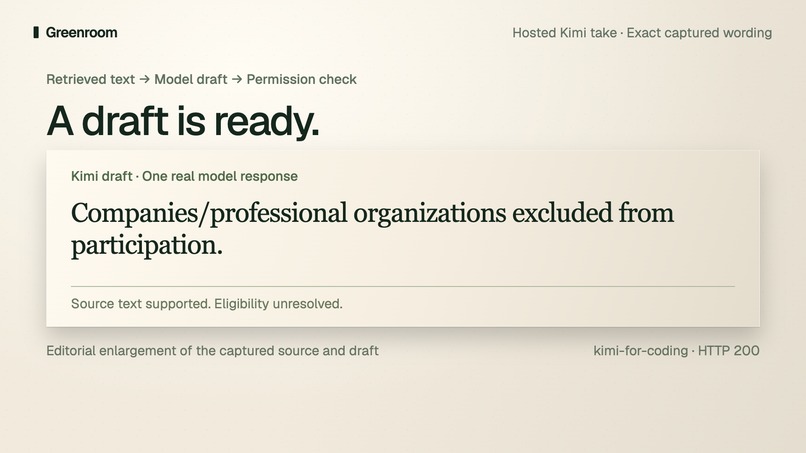
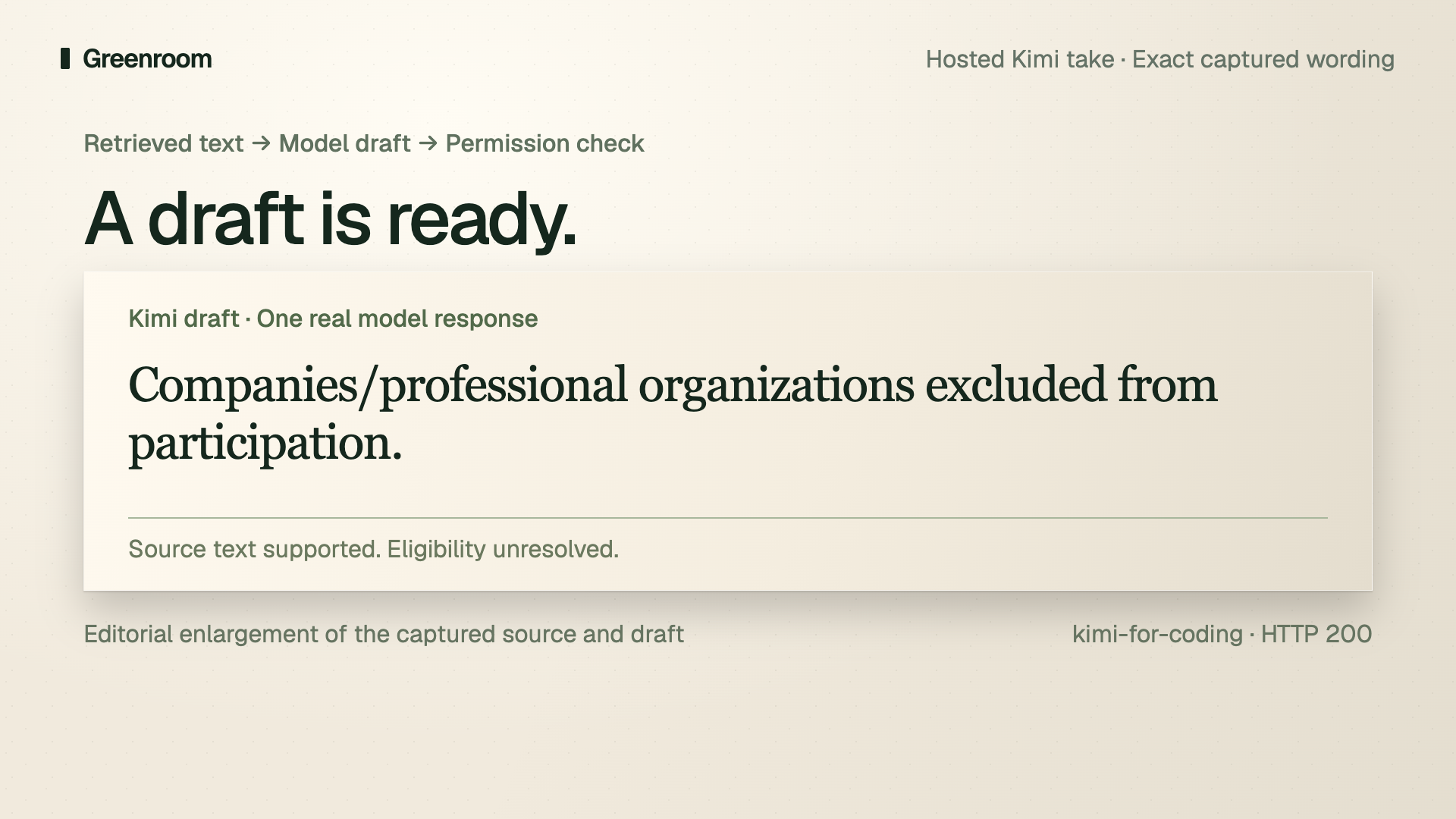
One real Kimi draft. Source text supported; eligibility unresolved.
-
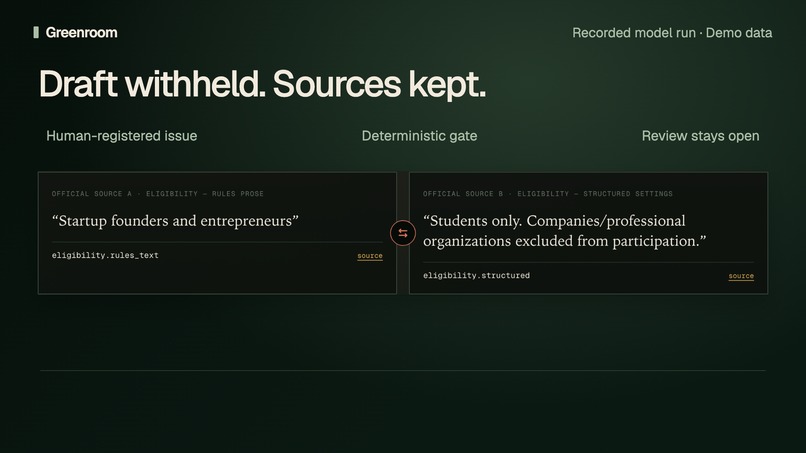
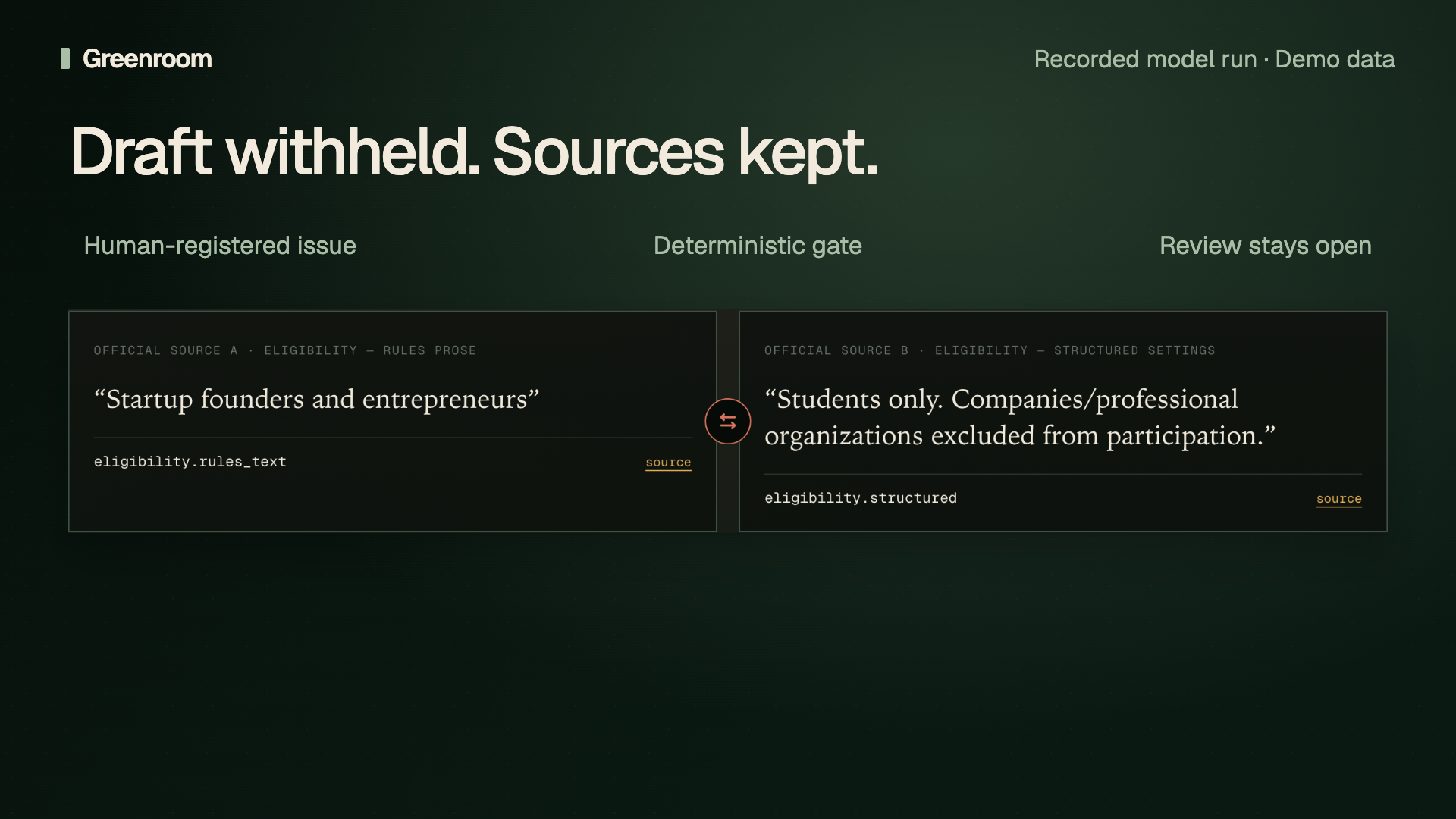
The draft is withheld while both sources remain available for review.
Inspiration
At 2:07 AM, a volunteer organizer receives a short question: “Can our company enter?” One confident reply could send a team into days of work. Greenroom starts with the responsibility behind that answer: show what supports it, and leave unresolved decisions visible.
What it does
Asha, our synthetic organizer persona, asks the question in Greenroom. The product retrieves relevant official material, drafts an answer, and checks it before returning a reply. In the recorded scenario, the draft takes a position on an eligibility issue previously registered during human source review. Greenroom withholds the draft and keeps both source excerpts, their provenance, a contact route from the source snapshot, and the recorded outcome visible. Asha can investigate without an uncertain draft silently becoming permission.
How we built it
The TypeScript workflow separates drafting from permission. BM25 retrieval selects material from a curated official corpus. A hosted Kimi model prepares the draft; deterministic checks examine citations, source anchors, qualifiers, polarity, dates, and numbers. A rejected draft can receive one repair attempt, while human-registered high-severity issues require review. A Fastify API, React workbench, and file-backed audit records make the chain inspectable.
Challenges
A leading “Yes” or “No” could overstate what a supporting clause established. We tightened the check so a standalone answer particle needs a complete factual rewrite. We also separated model-proposed issues from human-reviewed issues. Founders and incorporated companies are not automatically the same category: the demonstration shows how to handle a question needing clarification, rather than claiming an automatic eligibility ruling.
Accomplishments
We made one complete result visible: question → draft → hold → two sources → contact route → audit. The 140-second English film includes a genuine hosted-model run using the recorded source snapshot. One Kimi request returned a draft; Greenroom withheld it and recorded the conflicted outcome with both source excerpts. The accompanying ten-slide deck explains the product, architecture, evidence, and next steps.
What we learned
A useful outcome does not always settle the original question. A held draft, readable evidence, and a clear next step can help an organizer act without hiding uncertainty. The model can contribute language while explicit rules keep permission and accountability visible.
What's next
Validate the workflow with organizers, broaden hosted evaluation across the corpus, and then verify a consent-aware Discord integration. Registration and submission feeds need explicit data contracts. Adoption, response-time gains, participant recovery, and scale remain to be measured.
Demo and judging access
The organizer and community are synthetic. Sources and the displayed contact route use an archived September 10 snapshot. The film records one real Kimi drafting run and the existing human-reviewed issue gate; no live Discord message, assignment, or notification is sent.
Source, setup and testing instructions: https://github.com/er-s-an/greenroom
Ten-slide presentation: https://github.com/er-s-an/greenroom/blob/main/docs/greenroom-deck.pdf
Built With
- bm25
- fastify
- kimi
- node.js
- react
- typescript
- vite

Log in or sign up for Devpost to join the conversation.