-
-
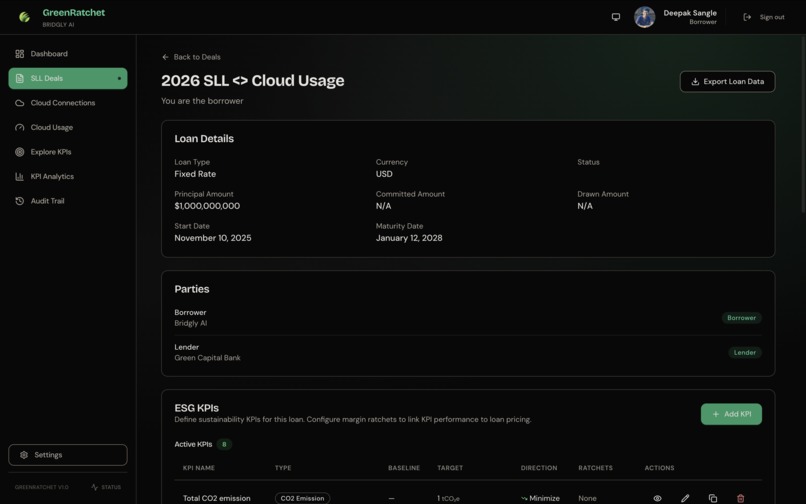
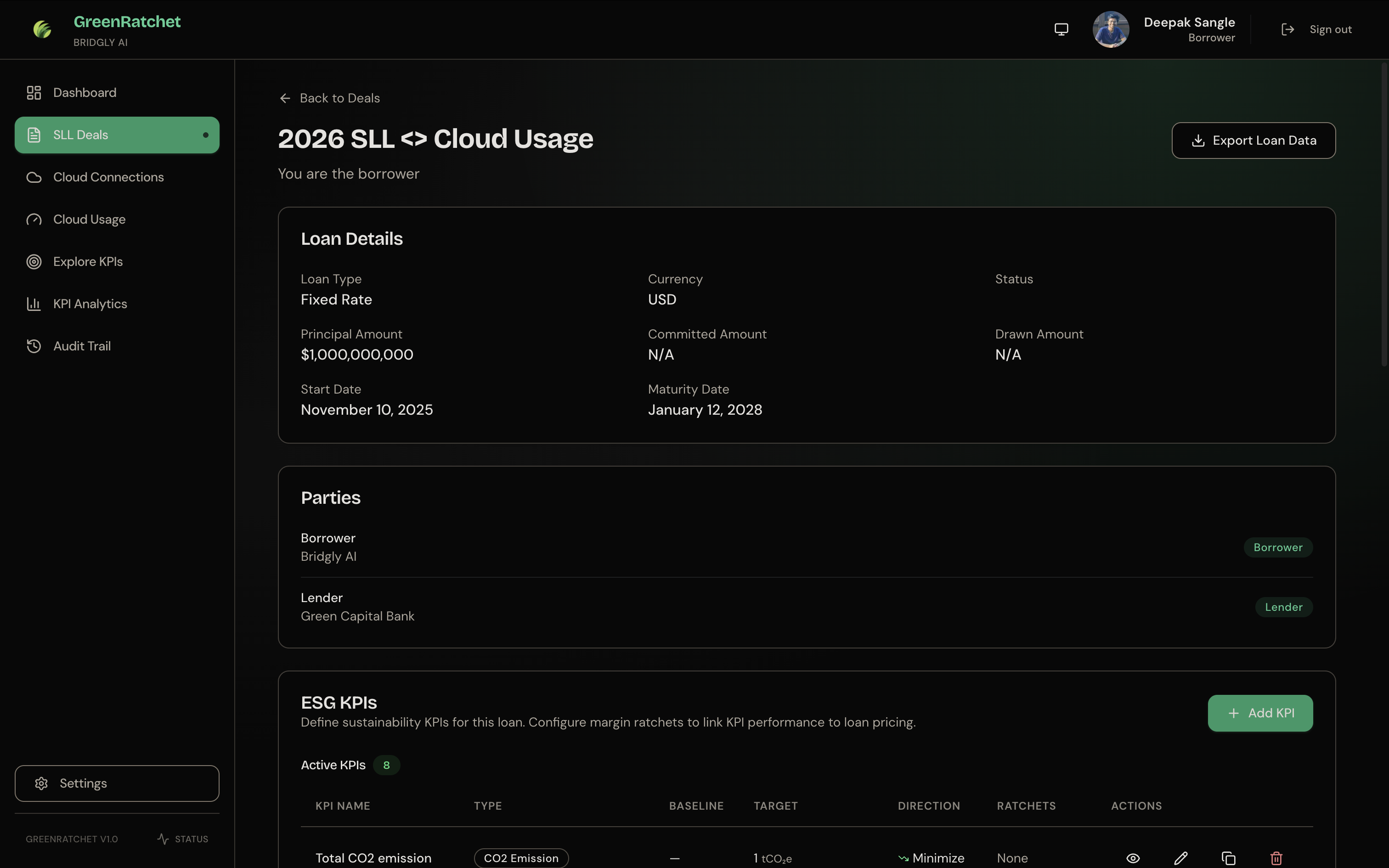
Loan, KPIs, and margin Ratchets
-
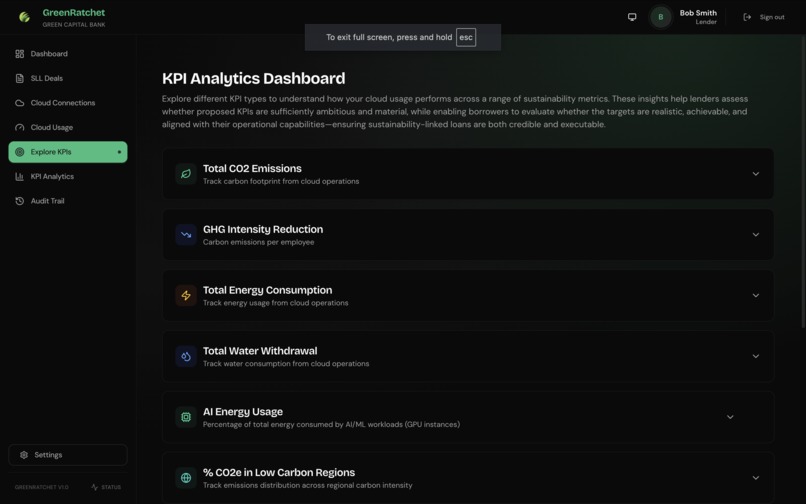
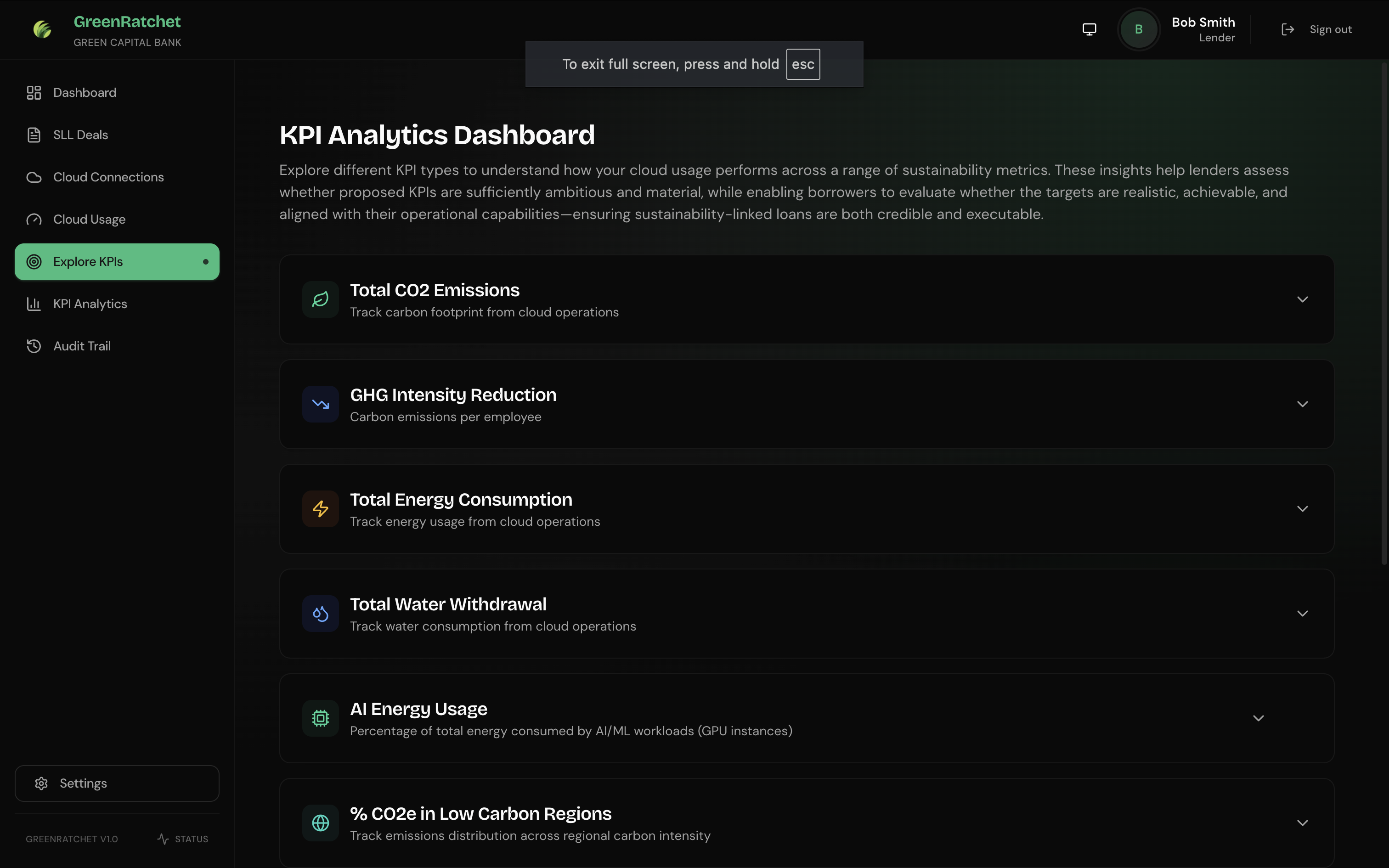
Explore all the KPIs
-
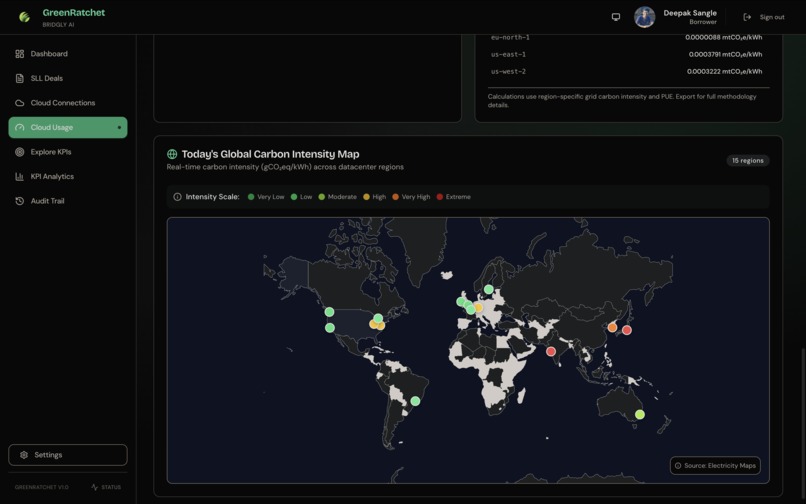
Complete transparency
-
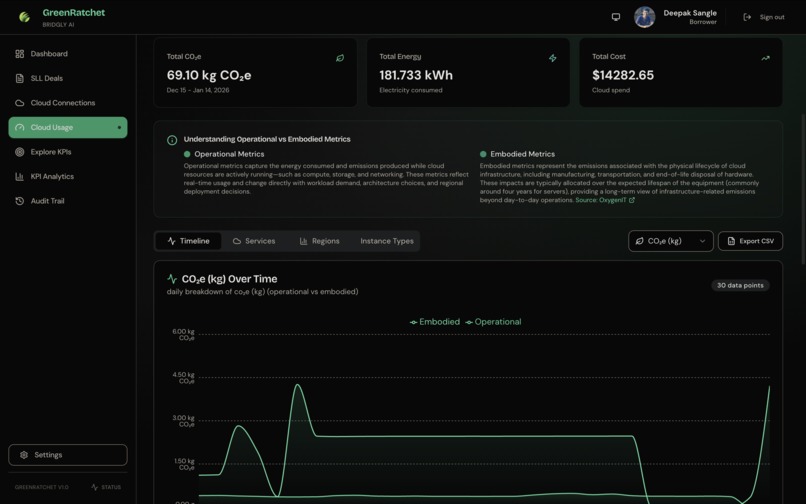
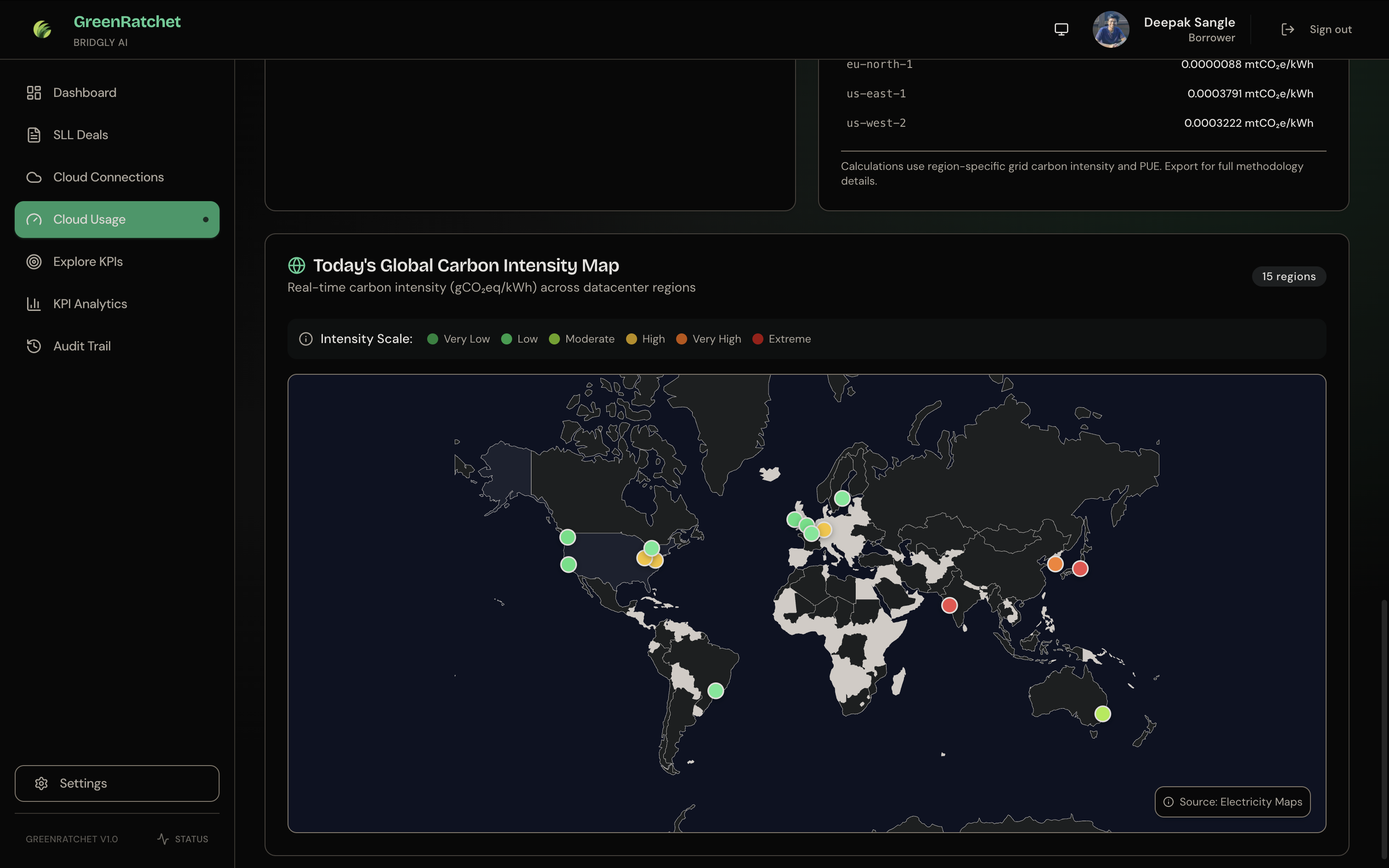
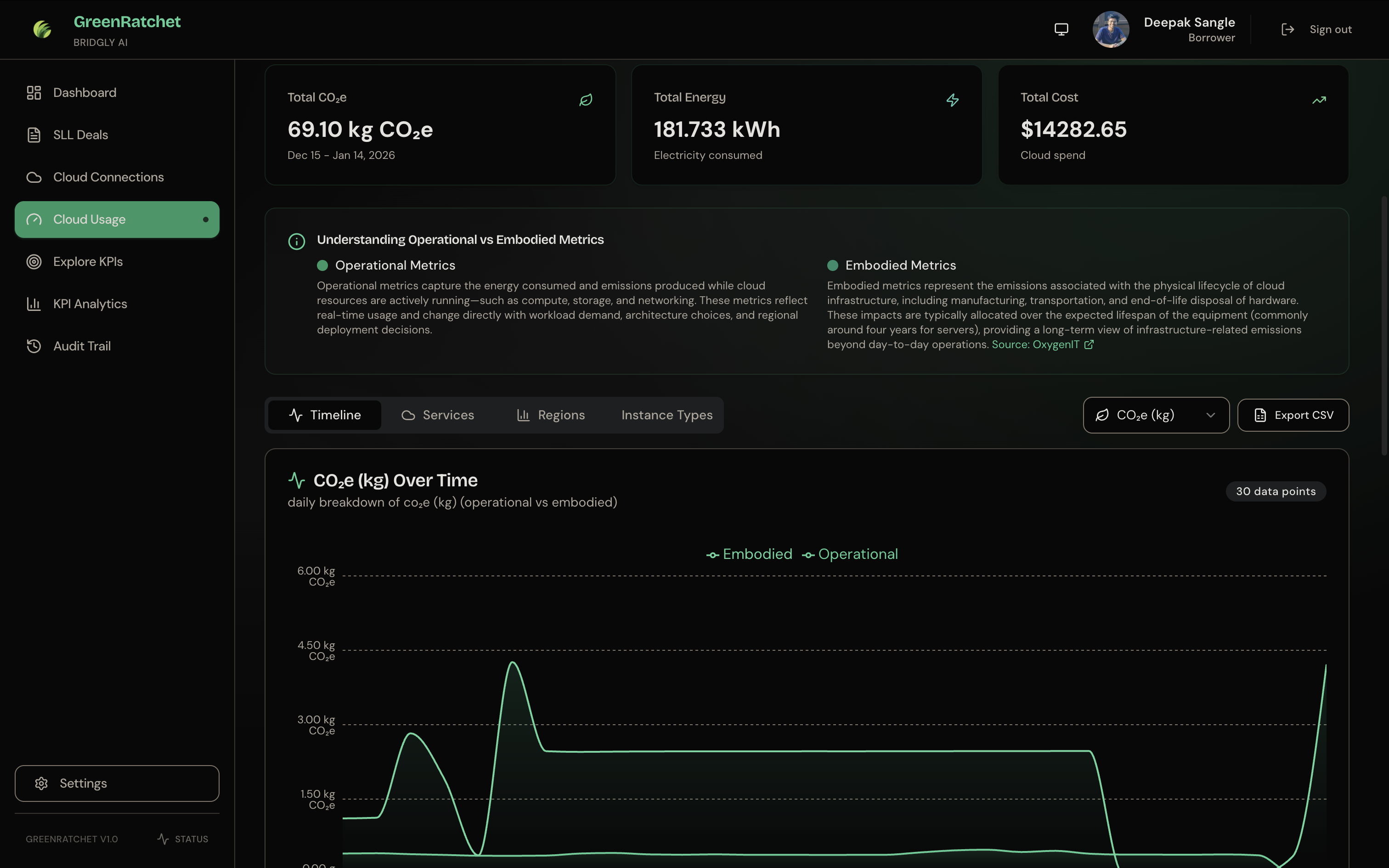
Evaluate Cloud Usage
Inspiration
Sustainability-Linked Loans are designed to financially reward companies for meeting sustainability targets, but in practice we saw a recurring problem: cloud infrastructure — one of the fastest-growing sources of environmental impact — is poorly represented in sustainability metrics. Teams often commit to KPIs without fully understanding how cloud usage translates into carbon, energy, or water impact. When those KPIs are missed or disputed, companies can face unexpected interest rate increases, lenders face monitoring risk, and sustainability-linked finance fails to drive real change. GreenRatchet was inspired by the need to make cloud sustainability measurable, transparent, and trustworthy for both borrowers and lenders.
What it does
GreenRatchet is a sustainability metrics and performance platform designed for cloud-linked Sustainability-Linked Loans. It connects directly to cloud environments to translate real usage data into standardized sustainability KPIs covering carbon emissions, energy consumption, water usage, regional impact, and efficiency metrics. Borrowers can propose KPIs and performance targets, while lenders can review, evaluate ambition, and formally accept them within the platform. Once agreed, KPI performance is tracked continuously, supported by a full audit trail and exportable data for compliance and verification. GreenRatchet focuses on measuring and monitoring sustainability performance — not loan pricing or execution.
How we built it
GreenRatchet is built as a cloud-native web platform with a strong focus on data integrity, transparency, and scalability. Cloud usage data is securely ingested via a one-click cloud connection using infrastructure-as-code, ensuring metrics are based on real operational data rather than estimates. Sustainability metrics are calculated using provider disclosures and industry-aligned methodologies, and structured into predefined KPI templates suitable for Sustainability-Linked Loans. The platform includes role-based views for borrowers and lenders, an auditable event log, and flexible data export capabilities to support regulatory and reporting requirements.
Challenges we ran into
One of the biggest challenges was translating complex, low-level cloud usage data into sustainability metrics that are accurate yet easy to understand for non-technical users. Another challenge was designing KPIs that balance ambition and feasibility — metrics that are meaningful enough for lenders while still being achievable for growing companies. We also had to ensure trust and transparency throughout the system, which required careful handling of auditability, historical data backfilling, and clear separation between sustainability performance and financial decision-making.
Accomplishments that we're proud of
We’re proud to have built a working platform that connects cloud infrastructure directly to sustainability-linked finance use cases. GreenRatchet supports multiple sustainability dimensions beyond carbon, including energy, water, regional impact, and AI-related workloads. The ability to backfill historical cloud data, provide a full audit trail, and export detailed usage data makes the platform genuinely usable for real-world sustainability and compliance workflows. Most importantly, we’ve created a shared space where borrowers and lenders can align on sustainability KPIs with clarity and confidence.
What we learned
We learned that sustainability metrics only drive impact when they are trusted, understandable, and tied to real operational decisions. Abstract or high-level ESG reporting is not enough — teams need visibility into how day-to-day infrastructure choices affect sustainability performance. We also learned that lenders and borrowers often want the same thing: clear, comparable metrics that reduce surprises and disputes. Designing for both sides of the table fundamentally shaped how GreenRatchet works.
What's next for GreenRatchet
Next, we plan to expand GreenRatchet’s KPI library, improve regional and temporal granularity, and support additional cloud providers. We also want to enable deeper scenario analysis so teams can see how architectural or regional changes would affect sustainability performance before committing to new KPIs. Longer term, our goal is to help establish standardized, cloud-native sustainability metrics that allow capital to consistently reward real efficiency and environmental impact across the digital economy.
Built With
- nextjs


Log in or sign up for Devpost to join the conversation.