-
-
The All-In-One AI Garden Planner
-
-
-
-
-
-
-
-
-
-
-
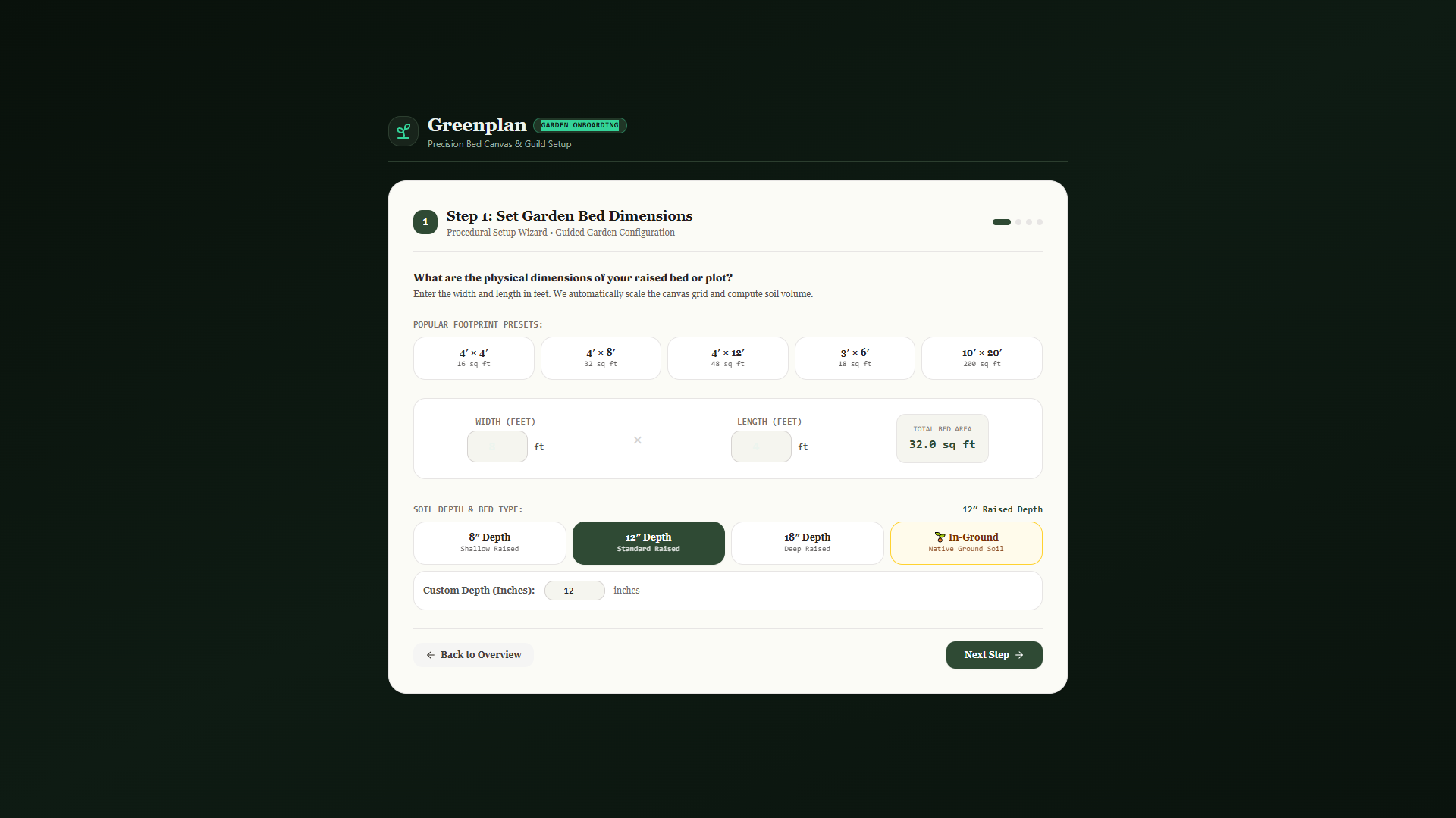
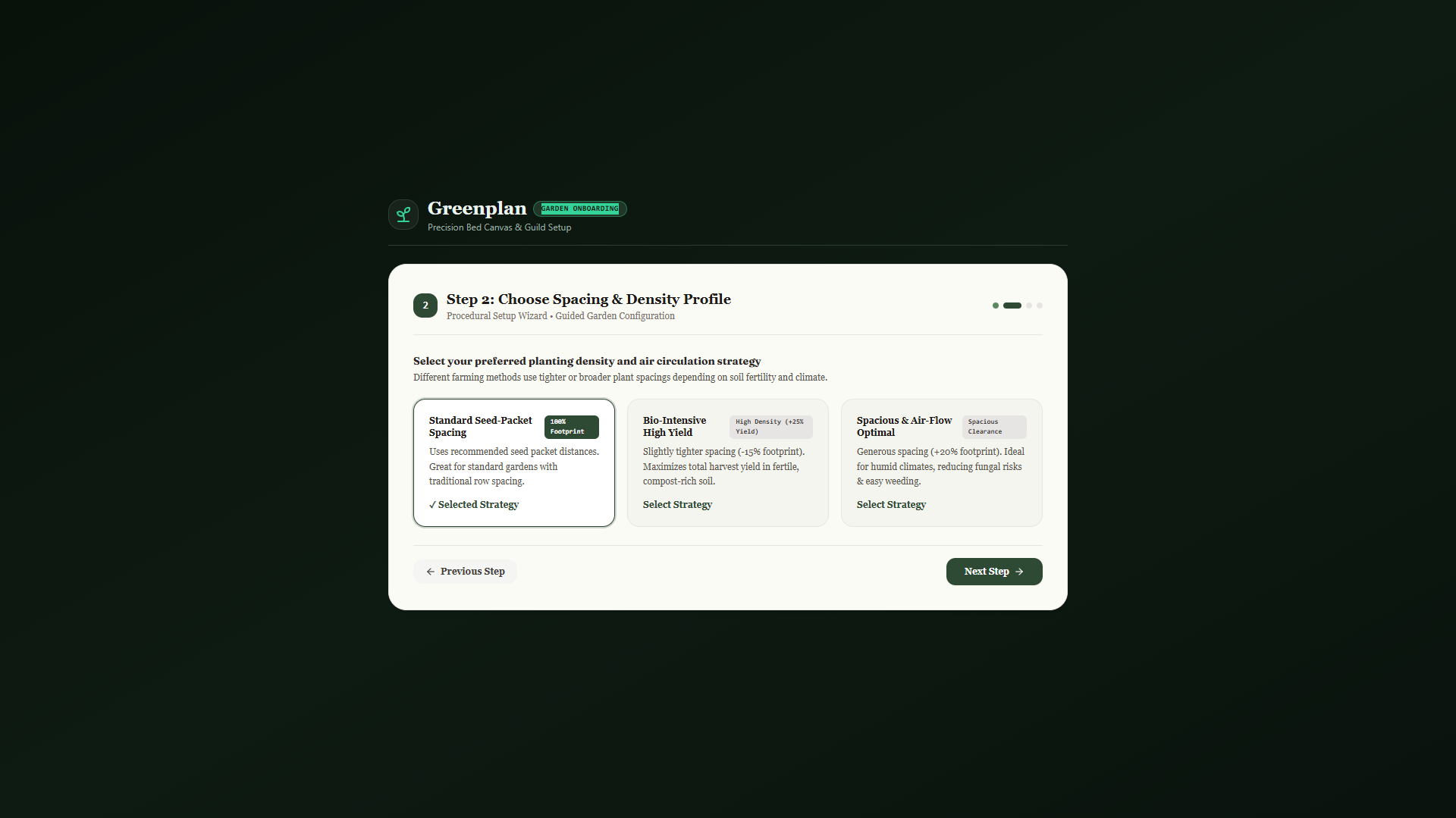
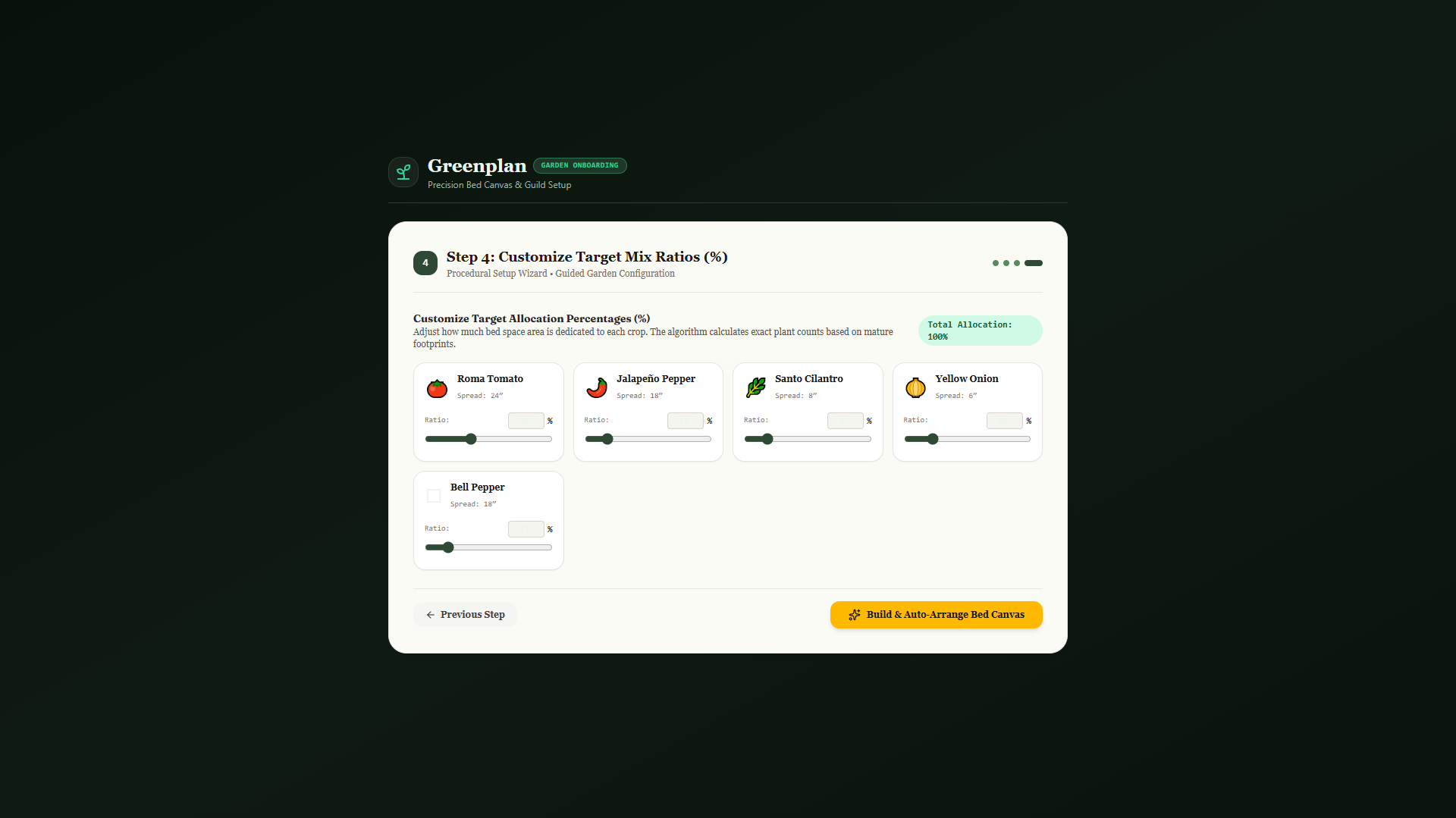
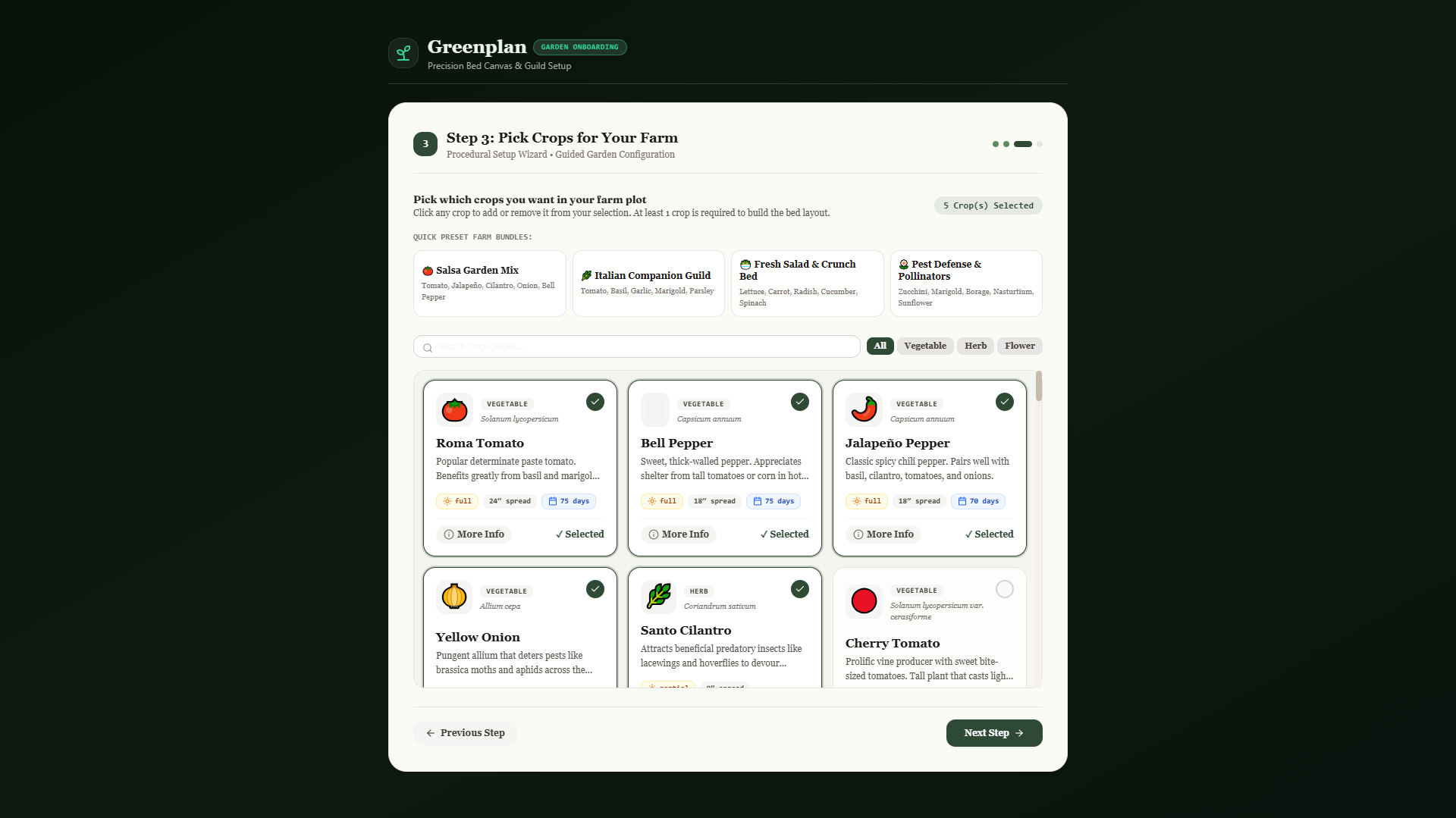
Greenplan
🌐 Live Demo | 💻 GitHub Repository
Inspiration
Garden planning tools usually give generic zone advice, and real companion-planting knowledge lives scattered across blogs and books instead of one place a beginner can act on.
We wanted a tool where you could just describe your garden and have it actually built for you, correctly spaced and companion-checked, instead of dragging shapes around and hoping you got it right.
What it does
Greenplan is a garden planning and care platform with four parts:
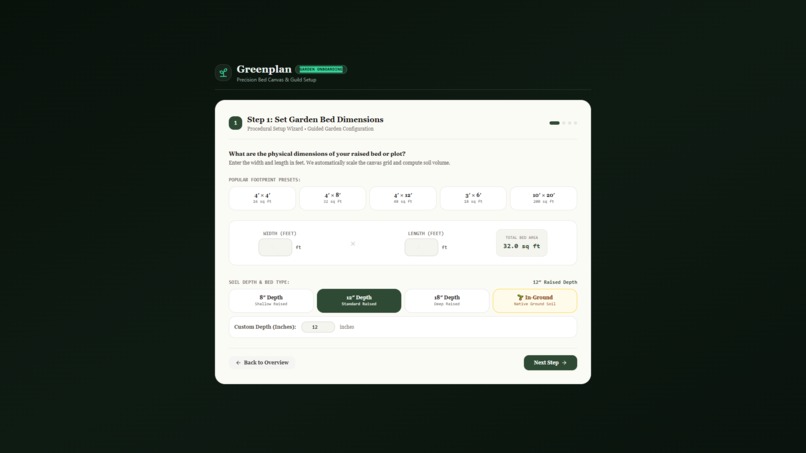
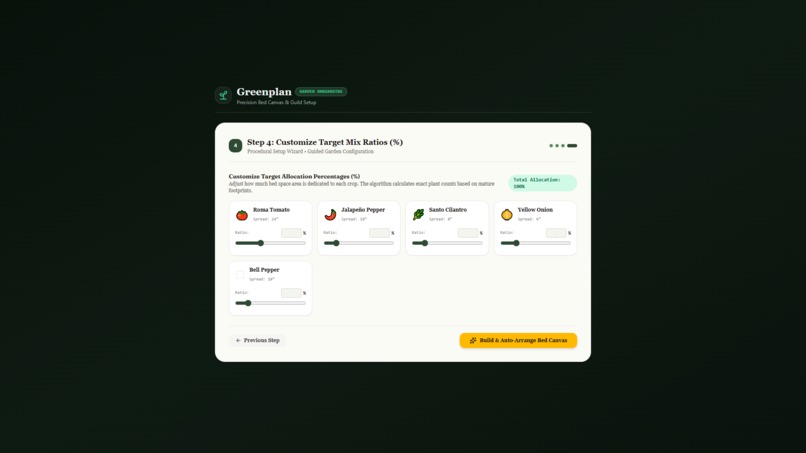
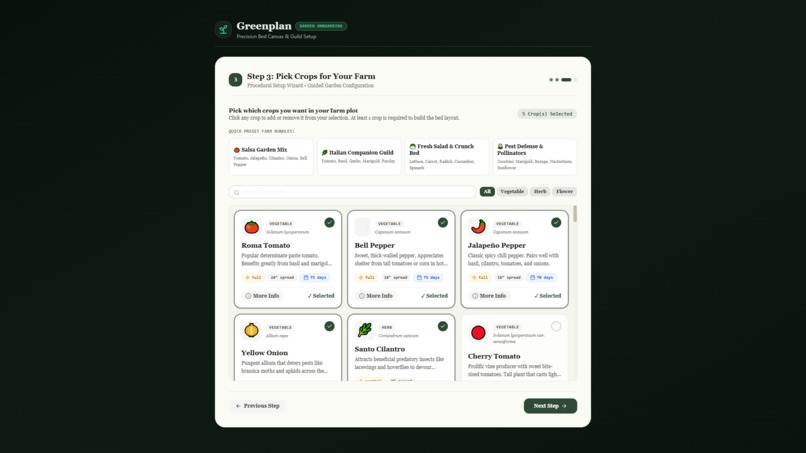
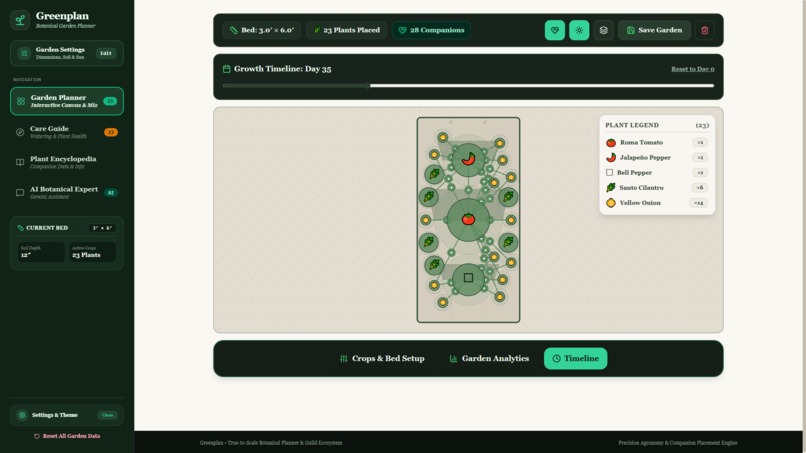
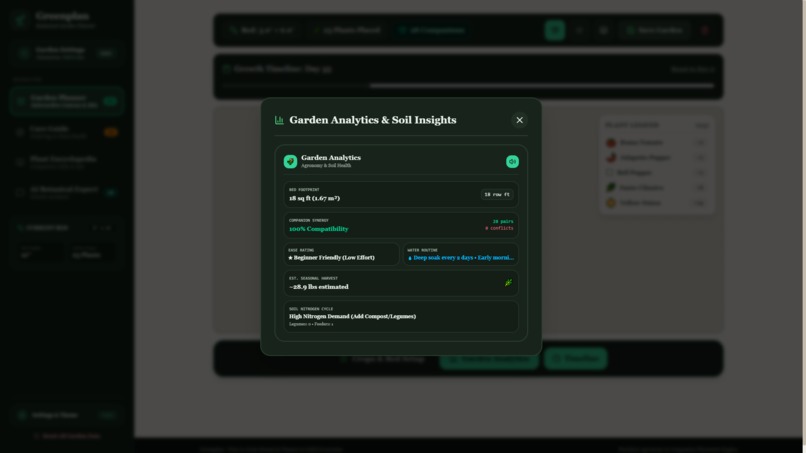
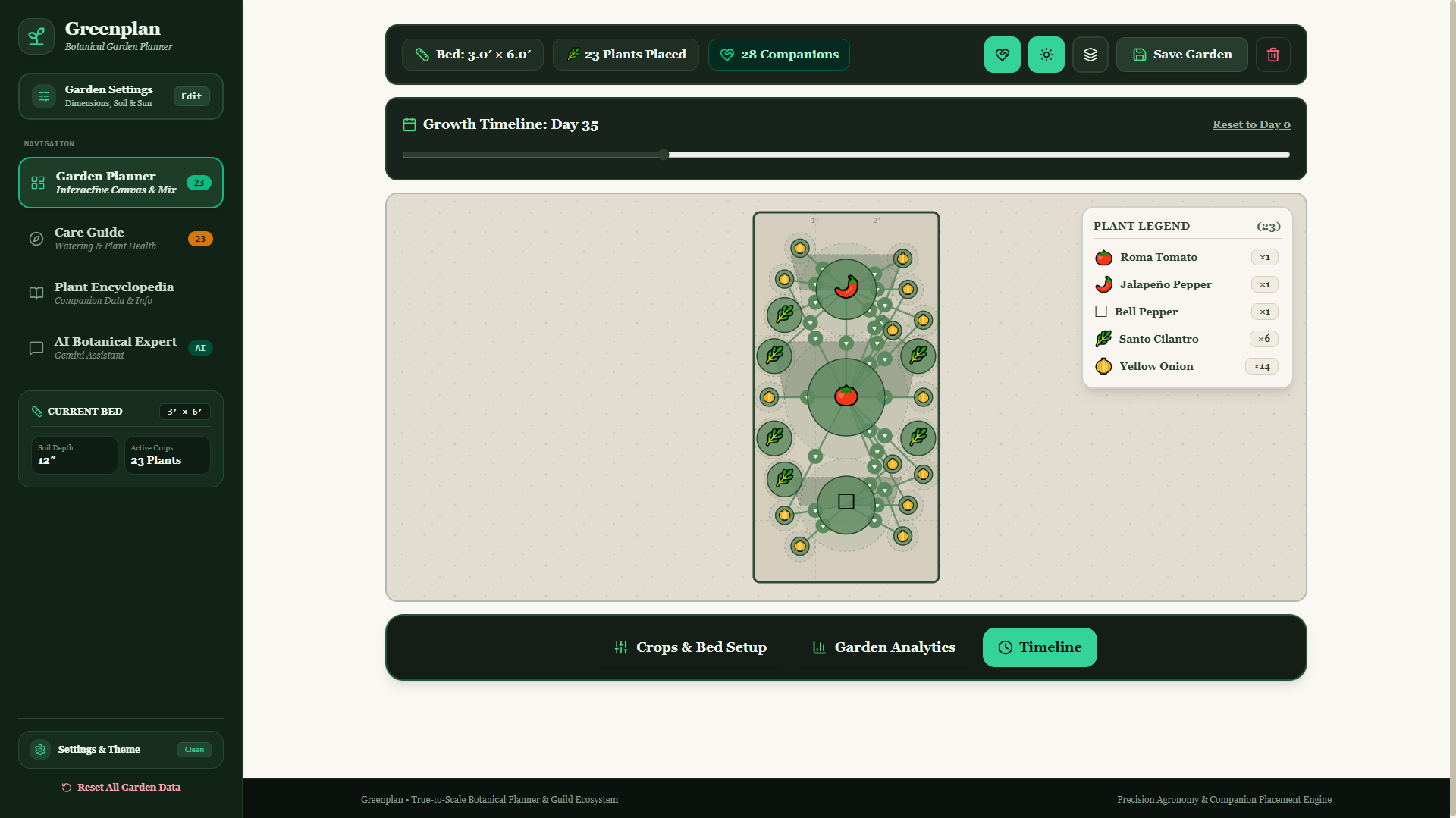
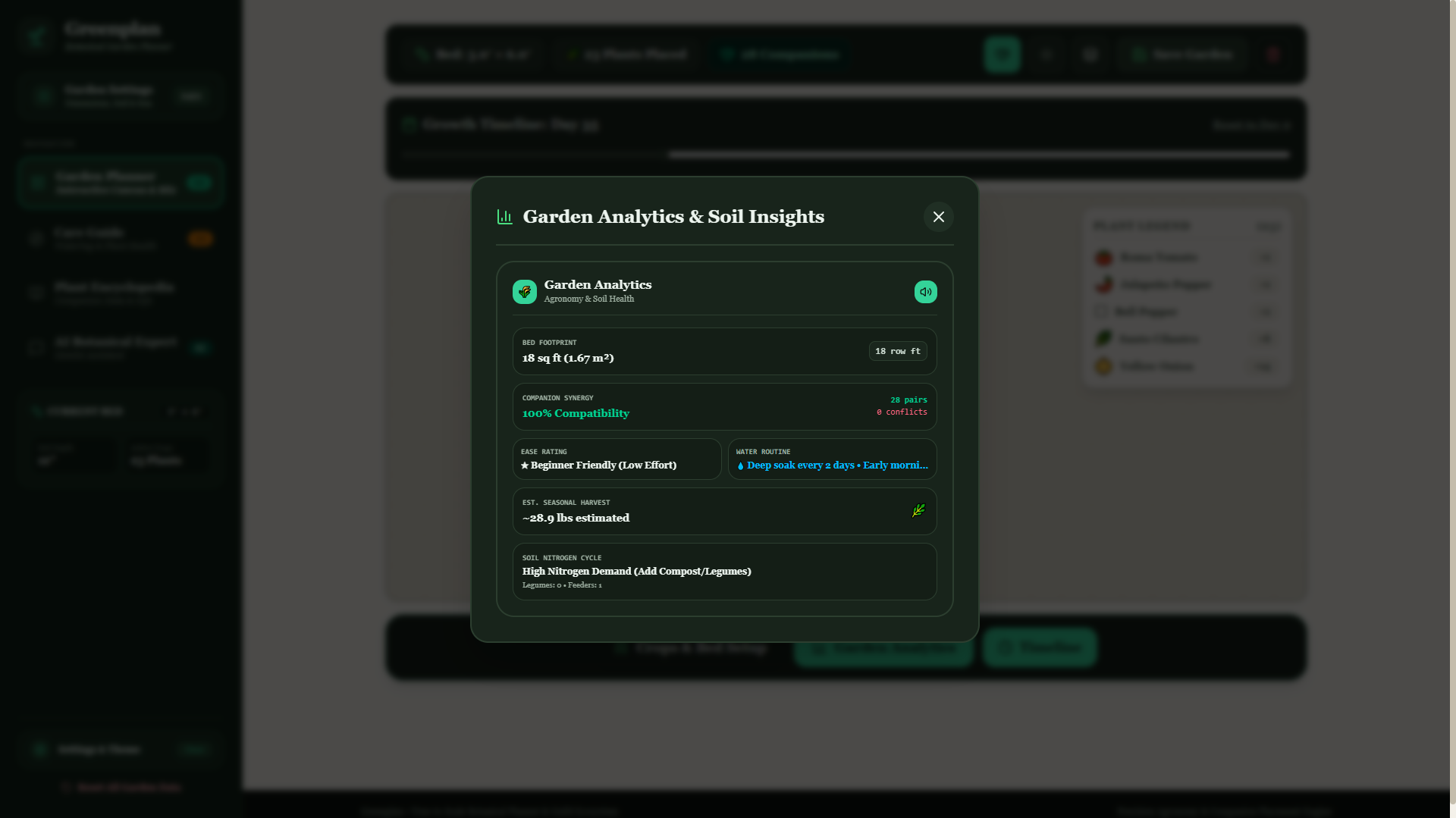
- 🌿 Garden Planner: describe your bed and what you want to grow, and the AI builds the full layout for you, placing every plant at its real spacing on a true-to-scale canvas sized to your actual bed dimensions. Manual drag-and-drop is there too for hands-on adjustments, but the AI is what does the actual planning. A collision engine flags overlapping spacing in exact inches. A companion overlay draws live green and red lines showing which neighboring plants help each other and which conflict. A sun and shadow overlay models real shade cast by taller plants onto the bed. A growth timeline slider shows the bed maturing from Day 0 to harvest, and a soil calculator tells you exactly how much soil to buy.
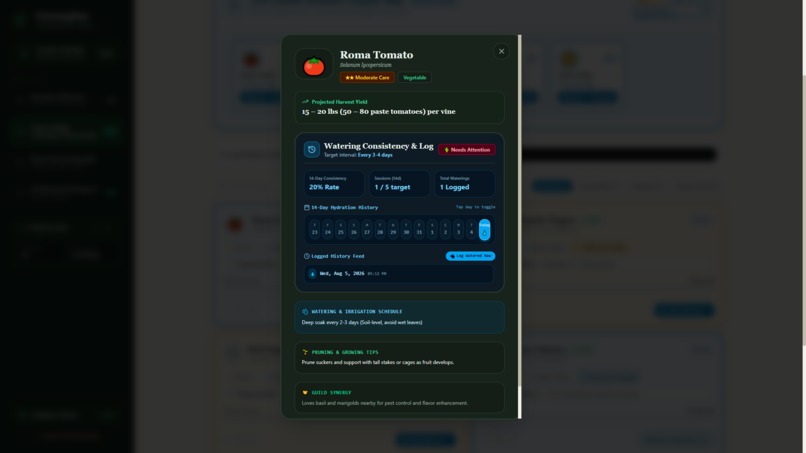
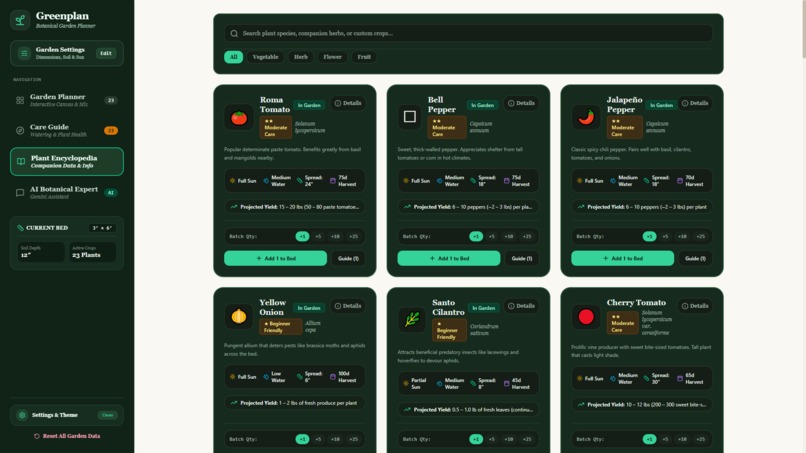
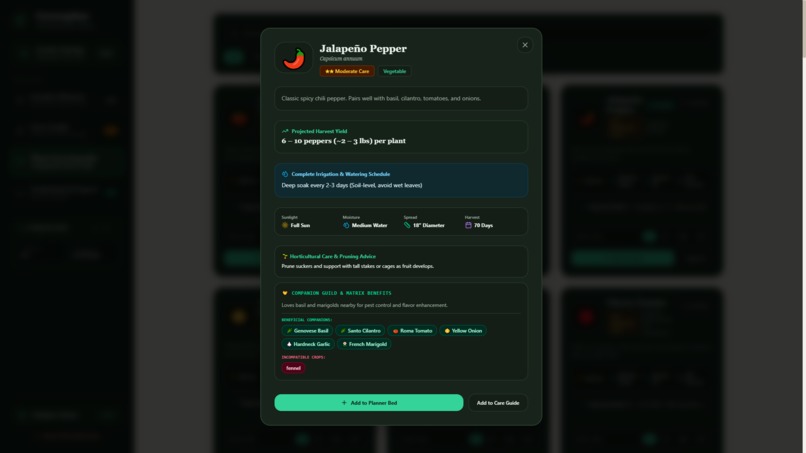
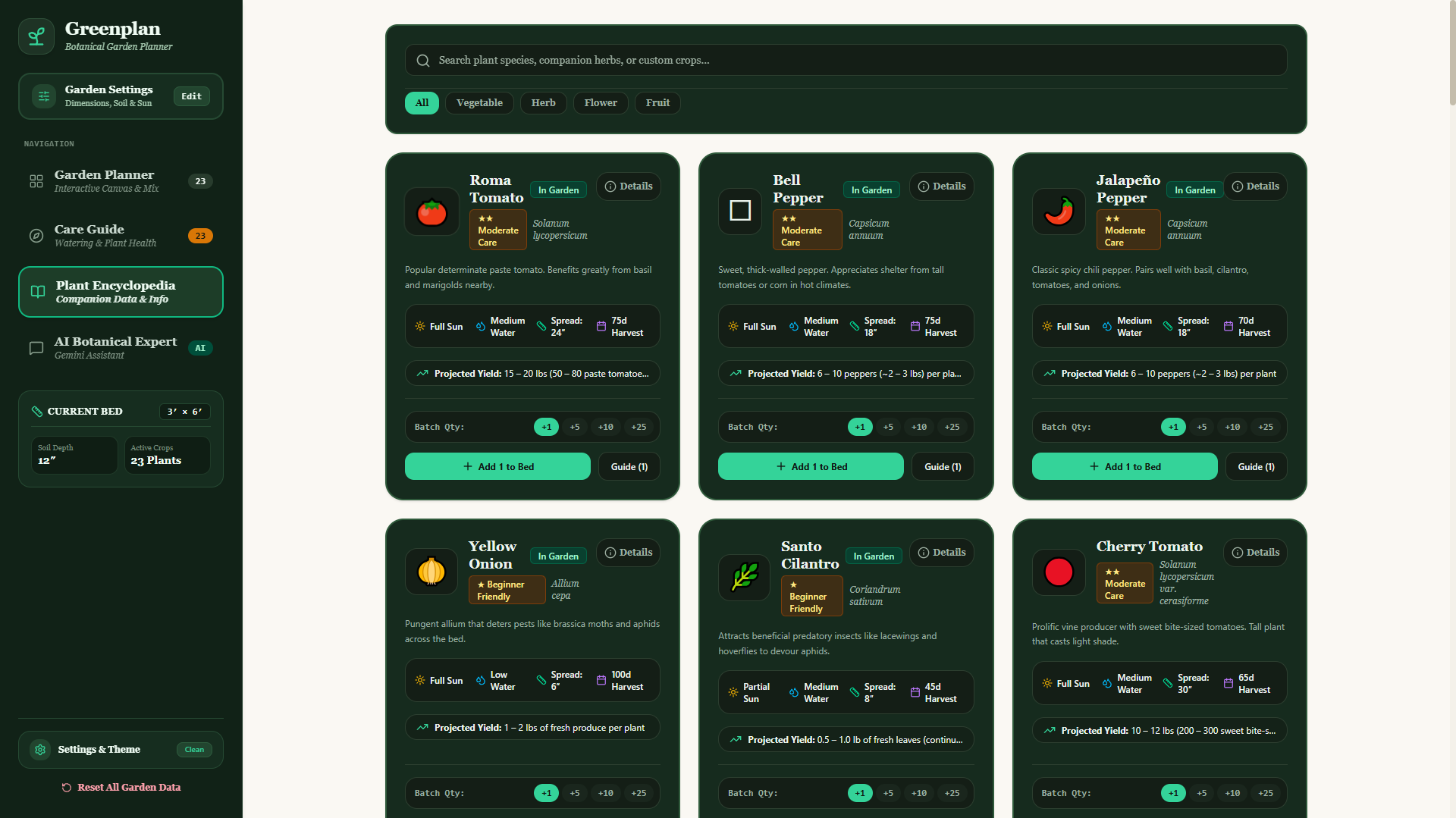
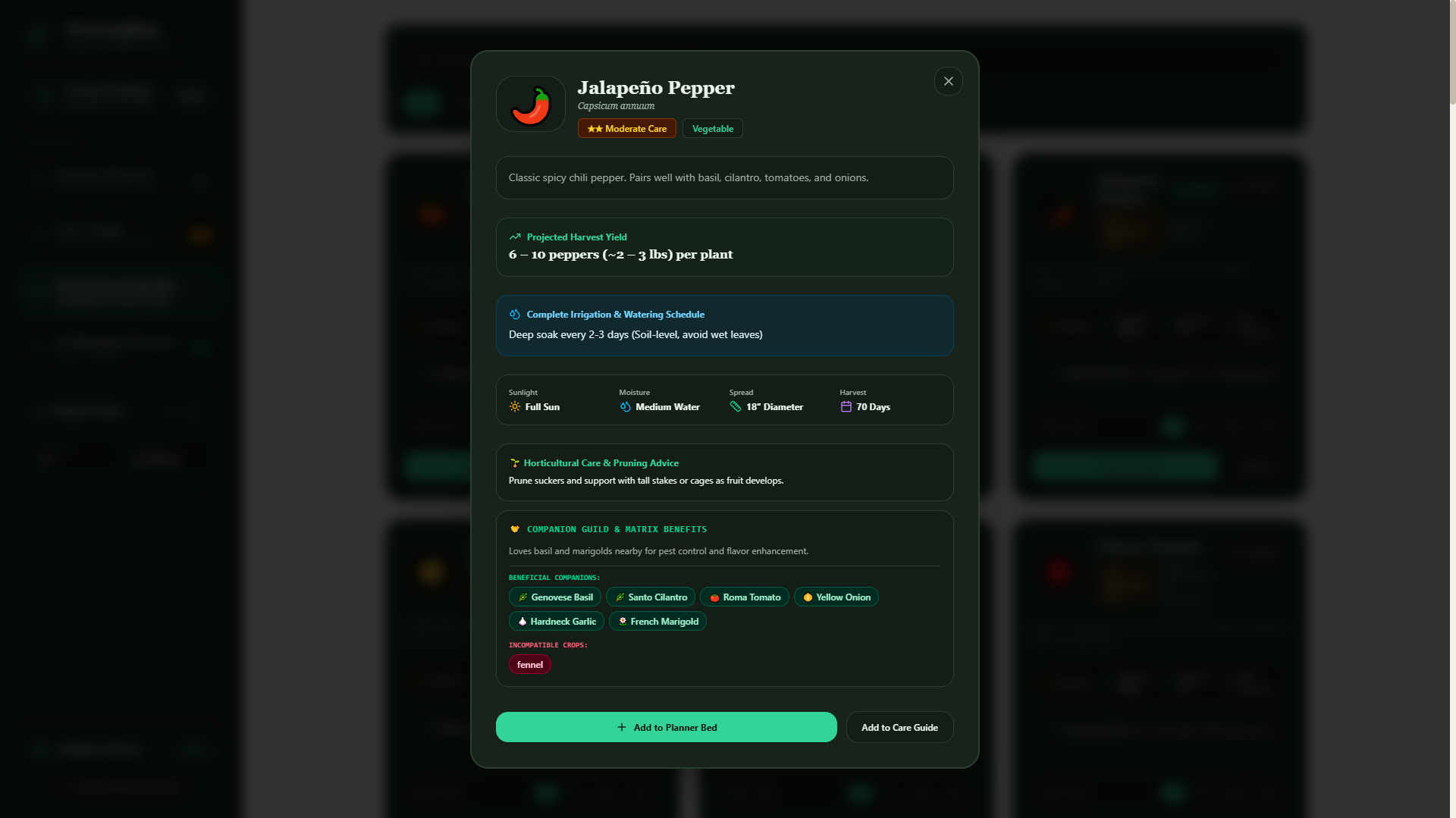
- 📚 Plant Database: a wide botanical catalog with full care profiles and companion data, plus a custom plant builder for anything not listed.
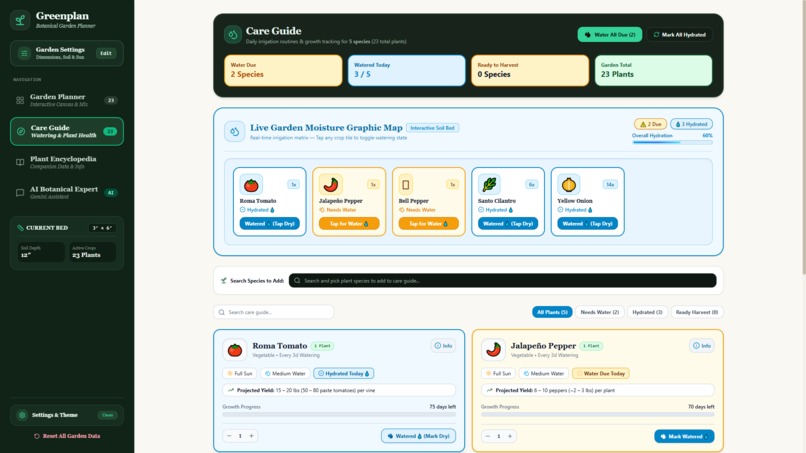
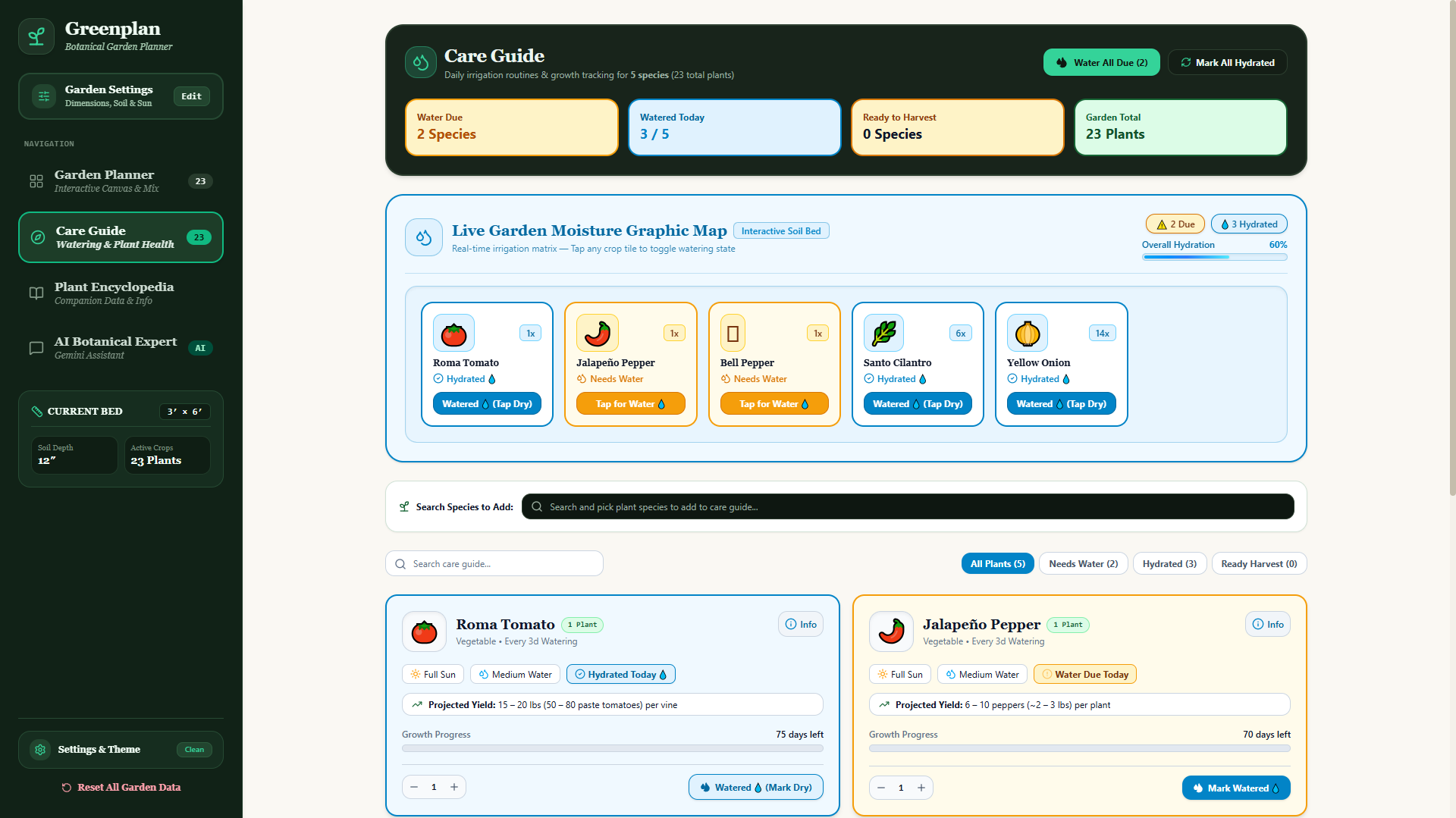
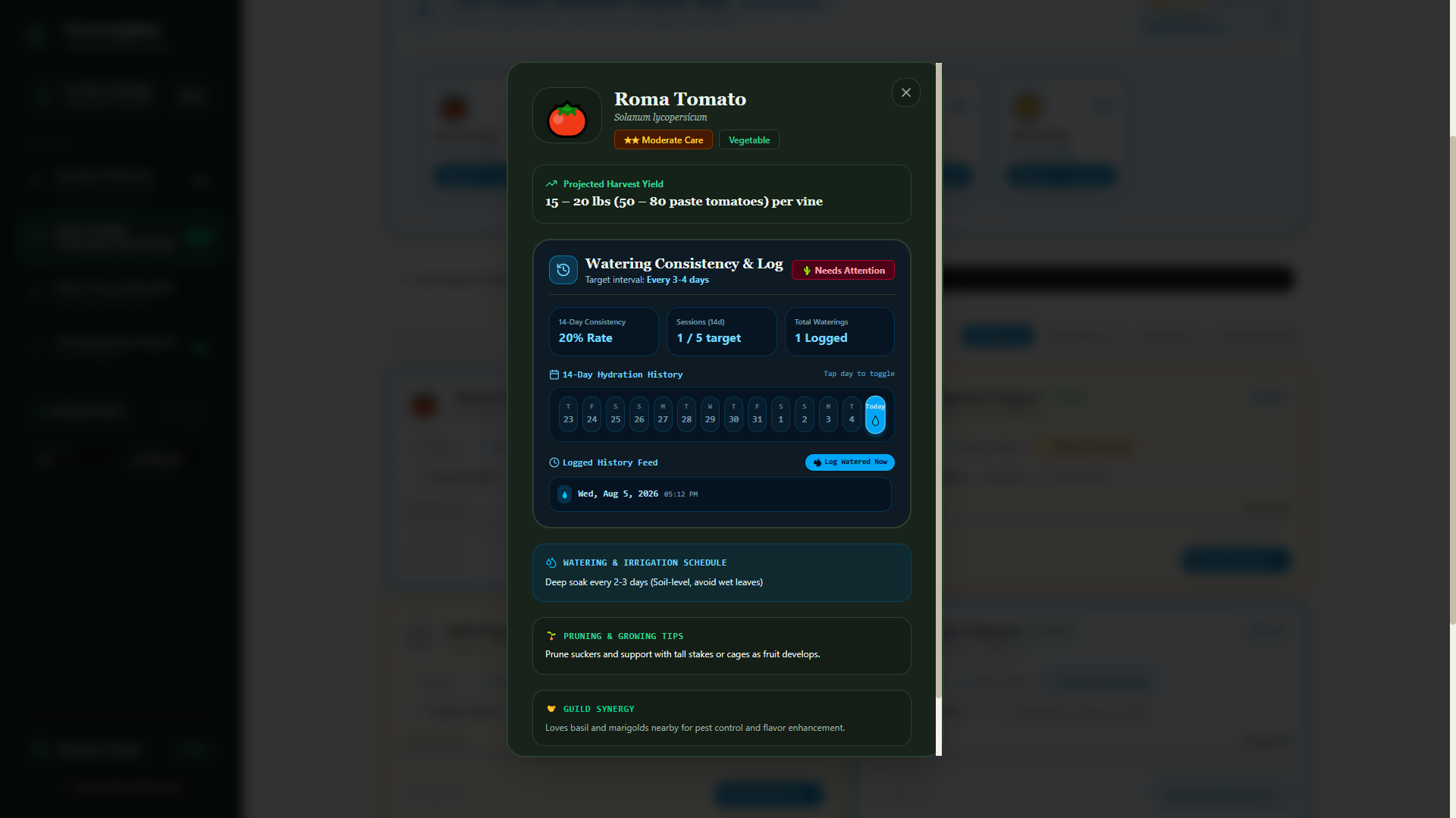
- 📅 Care Guide: turns whatever's actually planted into a live watering and task schedule, with a pest and disease troubleshooting matrix.
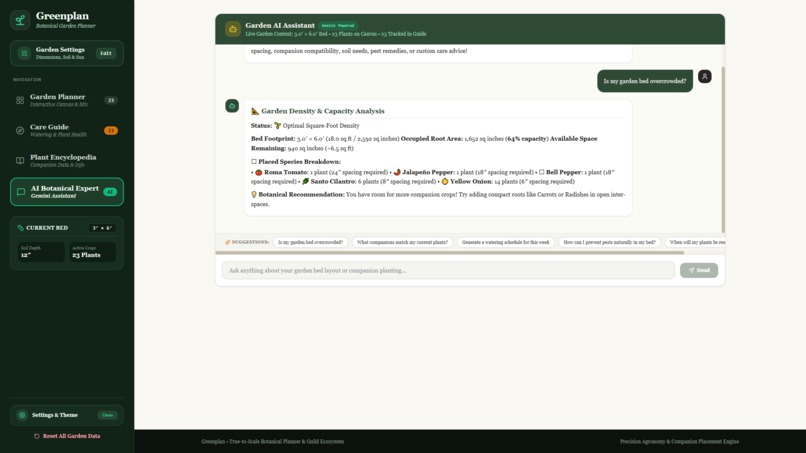
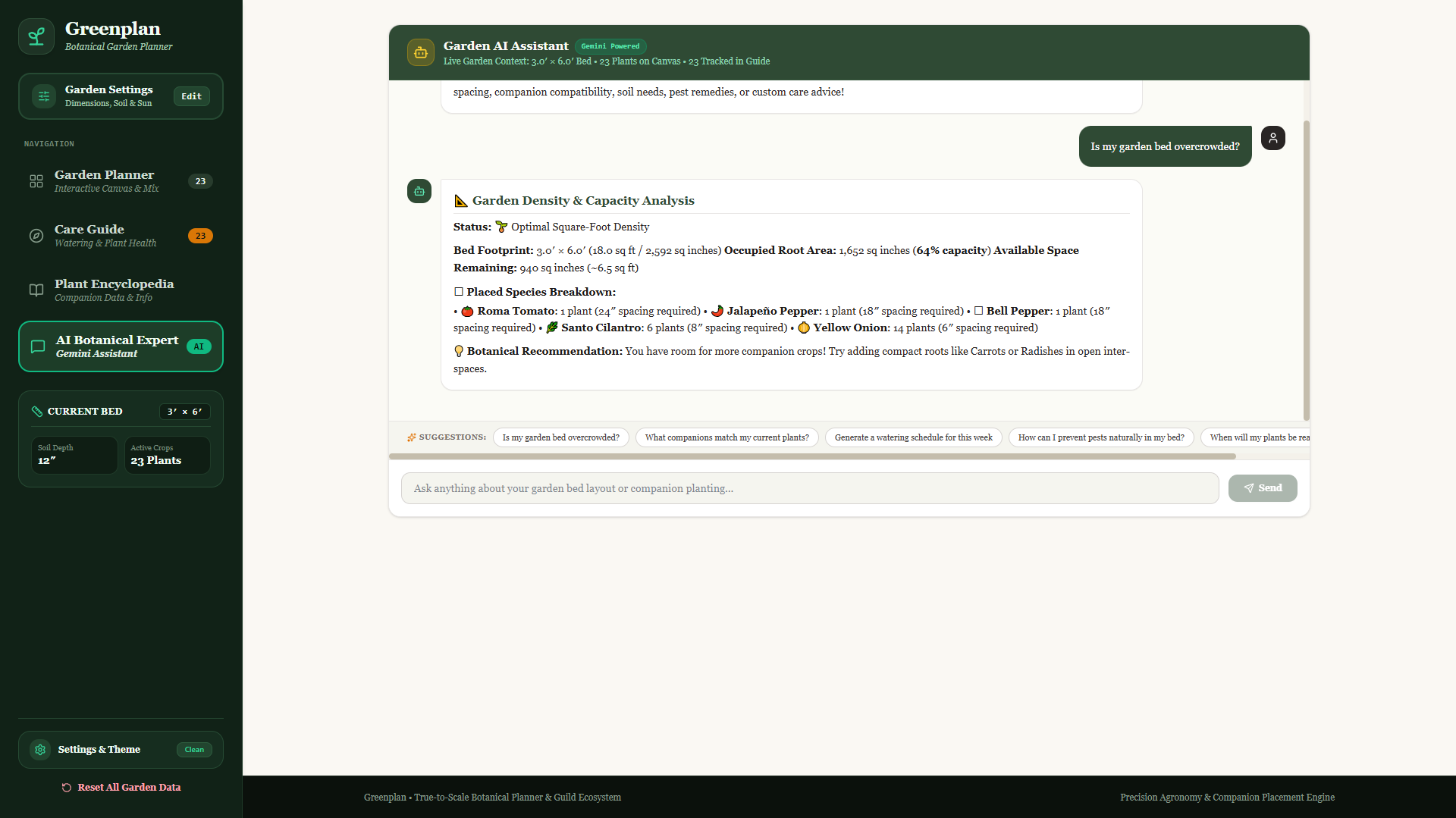
- 🤖 AI Botanical Assistant: powered by Gemini 2.5 Flash, aware in real time of your exact bed dimensions and crop layout, so its advice is specific to your garden instead of generic.
How we built it
The core of the app is an AI layer that turns a plain description of what someone wants to grow into an actual valid layout: it selects plants, decides quantities, and places them on a continuous, true-to-scale canvas rather than a fixed grid, since real plants don't occupy uniform squares.
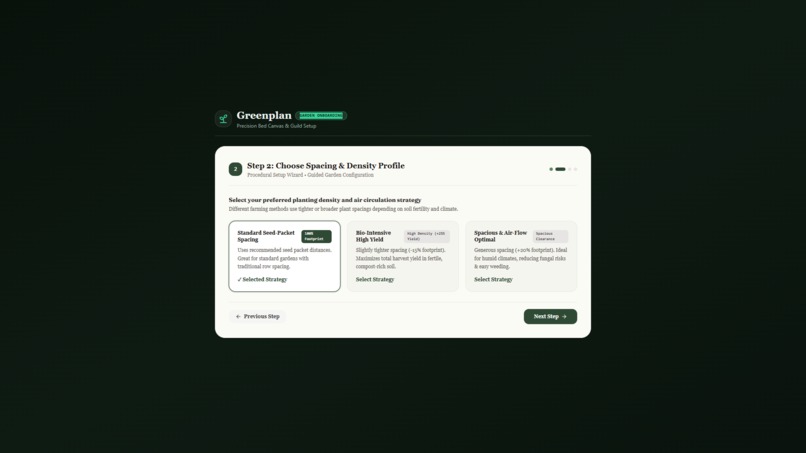
Placement respects real collision math between plant centers and prioritizes known companion relationships while avoiding conflicts. Manual drag-and-drop sits on top of that same engine for anyone who wants to fine-tune the AI's layout by hand. The plant database combines real botanical data with a curated companion-planting relationship table, since that data doesn't exist in any structured public dataset. The AI assistant gets a live summary of the user's actual garden state on every request, so its answers stay grounded in what's really planted.
Challenges we ran into
Getting the AI to reliably place very different plant sizes correctly in the same bed, like a squash next to a carrot, meant building real collision and distance calculations instead of simple grid logic. That's a bigger technical lift, but it's the only version that gives a correct answer every time the AI generates a layout.
Companion planting data also isn't available in any clean API, so we curated that relationship layer ourselves and made sure both the AI and the app never imply a relationship they don't actually have data for.
Accomplishments that we're proud of
Getting the AI to turn a plain-language description into a fully placed, collision-free, companion-aware garden layout is the technical centerpiece of the app. We're also proud that the AI assistant is genuinely garden-aware rather than a bolted-on chatbot: it answers differently depending on what's actually planted.
What we learned
Real gardening knowledge is undocumented and scattered rather than structured. Building the companion-planting layer taught us more about the domain than any single dataset could have. We also learned that letting AI handle the actual placement, rather than just offering advice, is what makes a planning tool feel effortless instead of like more work.
What's next for Greenplan
- ❄️ Seasonal frost-date integration tied to the user's actual location, so the AI can time planting recommendations to real local risk windows.
- 👥 A shared community library where users contribute companion data for plants outside our curated set, closing the biggest data gap over time.
- 🔄 Crop rotation planning that carries a bed's history year to year, so the AI can warn against replanting the same family in the same spot too soon.
Built With
- gemini-api
- html5
- react
- typescript
- vite


Log in or sign up for Devpost to join the conversation.