
Inspiration
A moment that truly inspired me was at the Child Creativity Lab, a non-profit organization for creative reuse. I was in a room filled with kids who were ready to transform what others saw as trash into something amazing. We spent hours creating crafts from old cardboard, bottle caps, paper towel tubes, paint, etc. It was inspiring to see how they could turn waste into something beautiful, and it made me realize the potential of merging sustainability with art.
In addition, the impact of daily art supplies on the environment is also devastating.
Deforestation: According to Time Magazine, over 15 billion trees are lost annually due to logging, agriculture, and urbanization.
Paper, Canvases, and Paintbrushes: Art supplies often require wood-based products, which contribute to logging and deforestation.
Habitat Destruction: Logging for art supply materials often results in habitat loss for species, contributing to biodiversity decline.
What it does
The objective of this project was to make sustainability a natural part of the creative process by utilizing cutting-edge AI technologies. With the app GreenPalette, I want to help artists reduce waste, use eco-friendly materials, and find new ways to upcycle everyday items into beautiful works of art. By combining creativity with sustainability, GreenPalette aims to make a positive impact on both the art world and the planet.
How we built it
Green Palette utilizes advanced AI technologies including OpenAI API Keys, Cloud Variables, Firebase, Object Detector, WebViewer and Data Viewer. These features are coded using Thunkable Block Code and JavaScript to create a seamless and interactive user experience.
Challenges we ran into
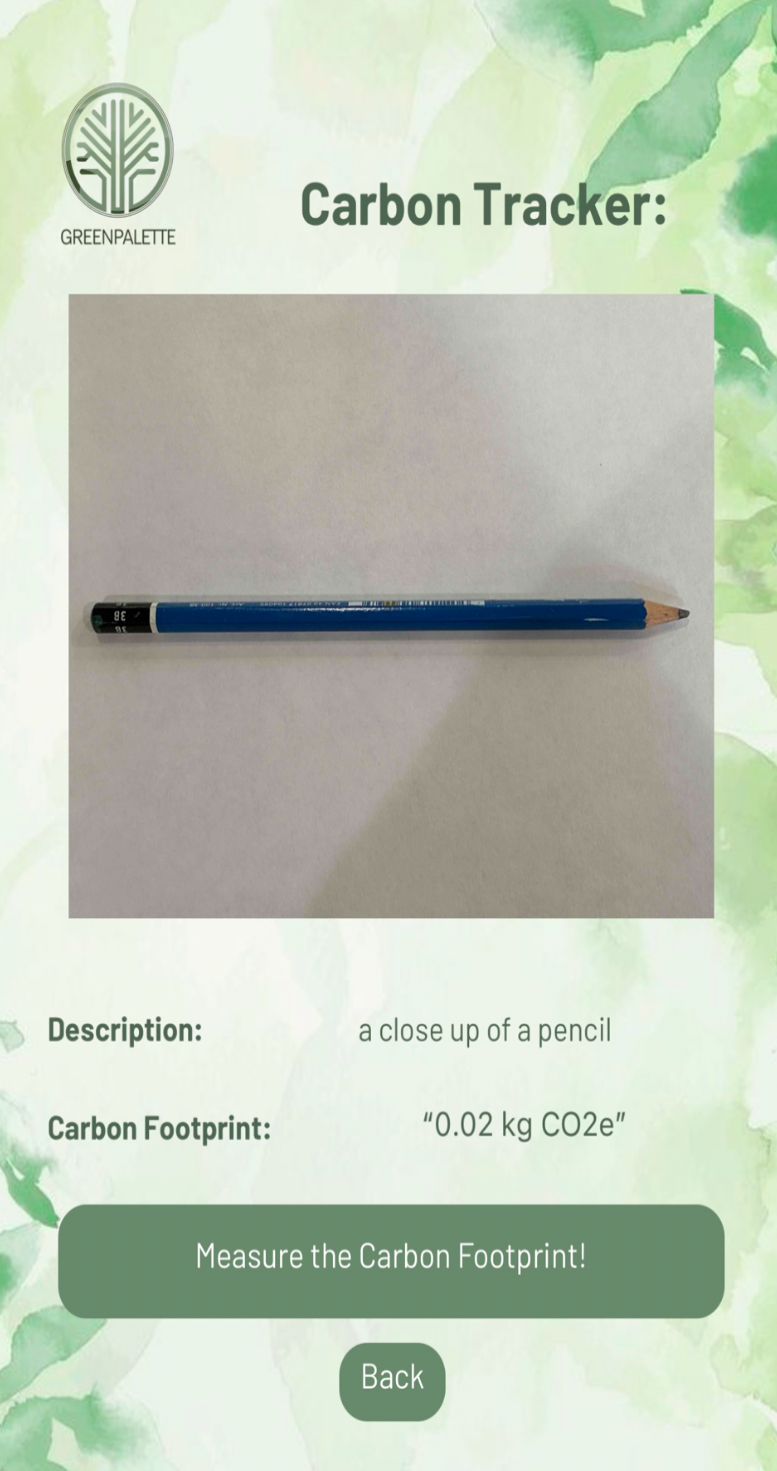
One particular challenge was ensuring the carbon footprint tracker could reliably scan and detect different materials, as its accuracy sometimes varied, making it difficult to provide consistent feedback to users. However, I was able to overcome this challenge by researching Thunkable’s features, and ultimately develop a program that would accurately detect different types of materials. In addition, designing the leaderboard was tricky. It took a lot of trial and error to find the right way to recognize users' contributions while keeping the focus on creativity and sustainability. Despite these challenges, seeing the app come to life has been incredibly rewarding.
Accomplishments that we're proud of
I’m proud of the five features I was able to implement.
Art Marketplace: Users can buy and sell unused art supplies and eco-friendly artworks. To sell an item, users will need to upload an image and enter a title, price, and description. Other users can also browse these listings, view details, and contact sellers directly.
Carbon Tracker: When the user clicks on “Calculate Footprint,” the device’s camera opens, allowing the user to take a picture of an art supply. Once the photo is taken, the app processes the supply and calculates the carbon footprint associated with it.
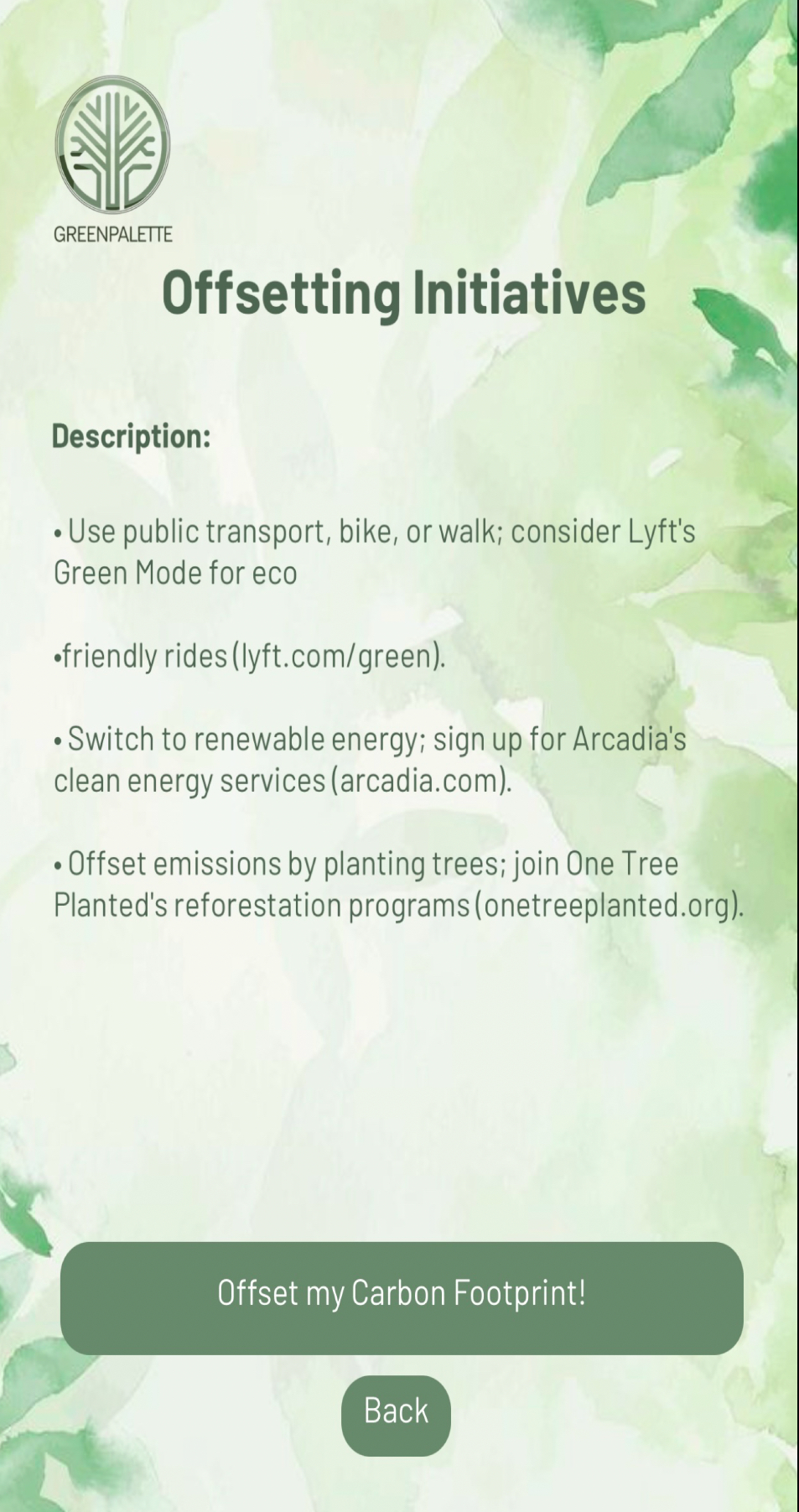
Offsetting Initiatives: The Offsetting Initiatives feature allows users to reduce their carbon footprint by contributing to environmental projects. The app, using OpenAI’s API, generates three personalized suggestions according to the user’s carbon footprint.
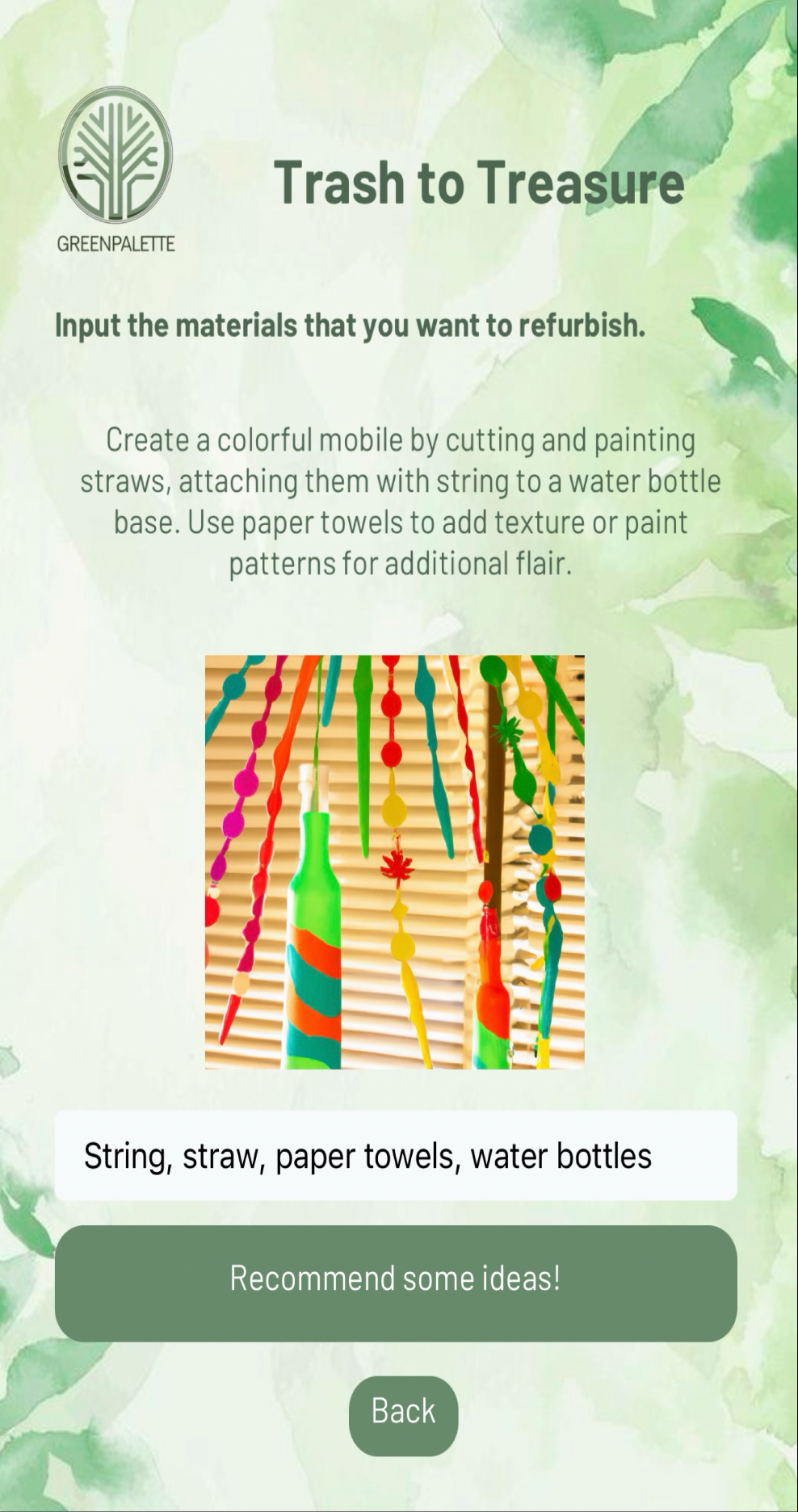
Trash to Treasure: The Trash to Treasure feature inspires creativity while advocating for waste reduction. It offers creative ideas for repurposing household waste into art. Users can enter the names of materials, and the app will suggest upcycling ideas with descriptions and a picture.
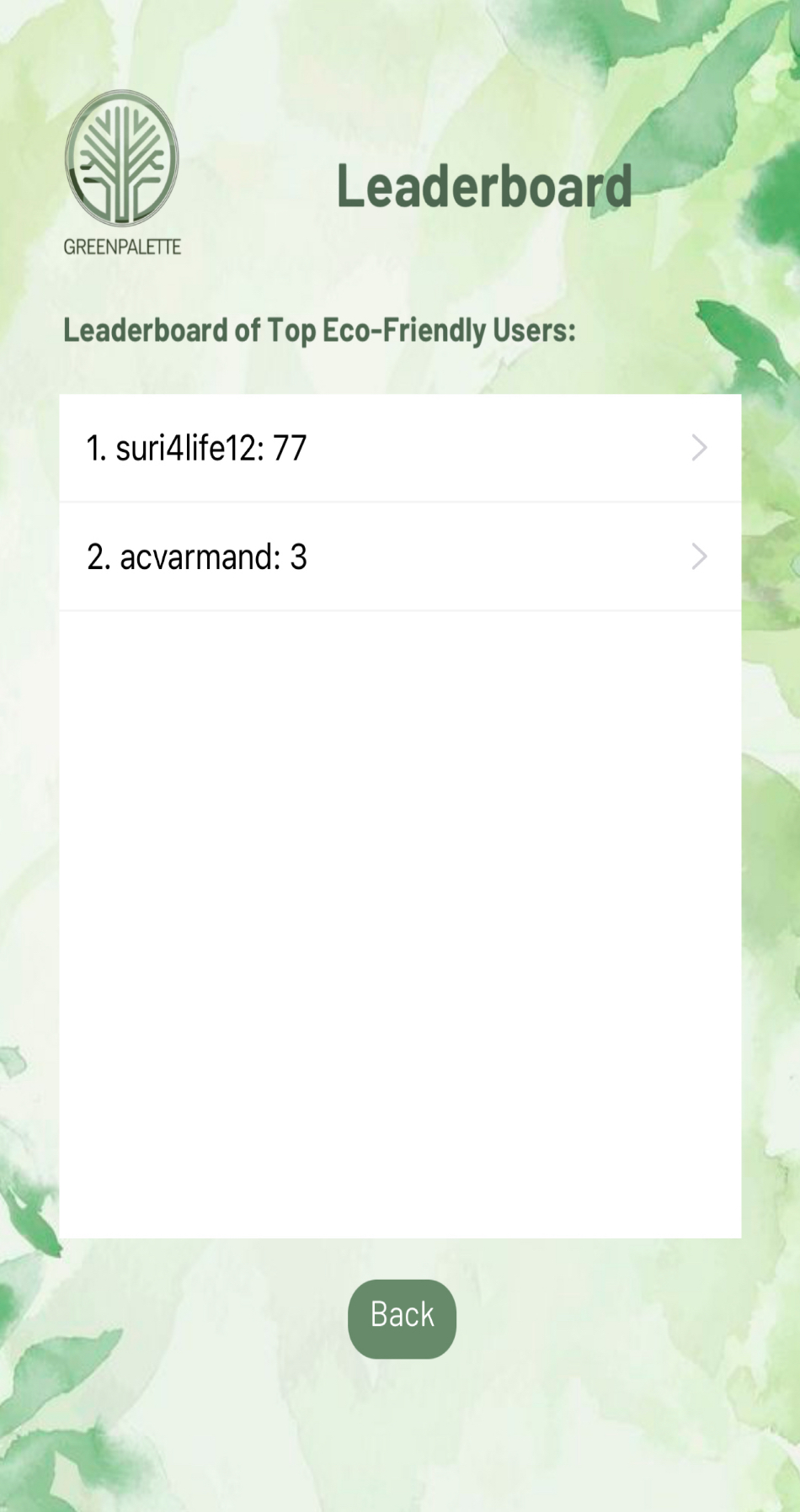
Leaderboard: The leaderboard tracks user engagement based on their carbon footprint tracking activity. Each time a user measures the carbon footprint of an object, their environmental efforts are logged and contribute to their ranking on the leaderboard. This feature encourages users to frequently use the app and make eco-friendly decisions, with the incentive of climbing higher on the leaderboard by continuously reducing their carbon footprint.
What we learned
Through this process, I learned that AI isn’t just about efficiency—it can reshape how we interact with sustainability and creativity. Developing GreenPalette taught me that technology should not only solve problems but also inspire new ways of thinking and engaging with the world. In the future, I want to explore how AI can be used in more unexpected and interdisciplinary ways, especially in areas that blend environmental responsibility with art, education, and innovation.
What's next for GreenPalette
In the future, I hope to implement two main improvements.
Certification Program: Users can complete challenges to earn badges or certificates for their efforts in sustainable art. These challenges may include upcycling discarded materials into new artworks, reducing waste through digital art practices, or creating pieces that raise awareness about environmental issues.
Augmented Reality: I would love to include augmented reality (AR) features that allow users to visualize their art pieces in different environments before they even start creating—giving them more inspiration and helping them see the potential of their projects in real time.
Built With
- api
- chatbot
- cloudvariable
- dataviewer
- firebase
- imagebot
- javascript
- objectdetector
- openai
- thunkable
- webviewer

Log in or sign up for Devpost to join the conversation.