-
-
GreenLoan Compass — An ESG-aware loan monitoring
About the Project
Inspiration
Banks are increasingly expected to demonstrate credible ESG alignment in their lending portfolios, but ESG information is often fragmented across spreadsheets, reports, and siloed systems. While sustainability commitments are clear, day-to-day visibility into ESG exposure, covenant compliance, and loan-level drift remains difficult for relationship managers, risk teams, and executives.
GreenLoan Compass was inspired by this gap — not the absence of ESG intent, but the lack of operational clarity. The goal was to create a simple, explainable tool that helps banks see, track, and communicate ESG performance across loans without changing core banking systems.
What I Learned
This project reinforced that ESG value comes primarily from transparency and explainability, not complexity. Many real-world ESG challenges can be addressed by making existing information visible, consistent, and auditable before introducing advanced analytics or automation.
I also learned the importance of architectural honesty. Rather than simulating complex ESG scoring or regulatory engines, the project focuses on what can be shown clearly and credibly today, aligning closely with real banking workflows and expectations.
How the Project Was Built
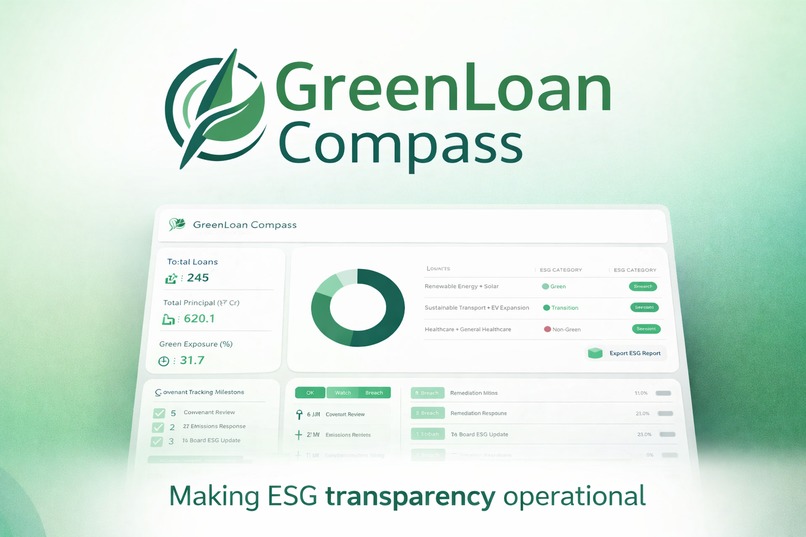
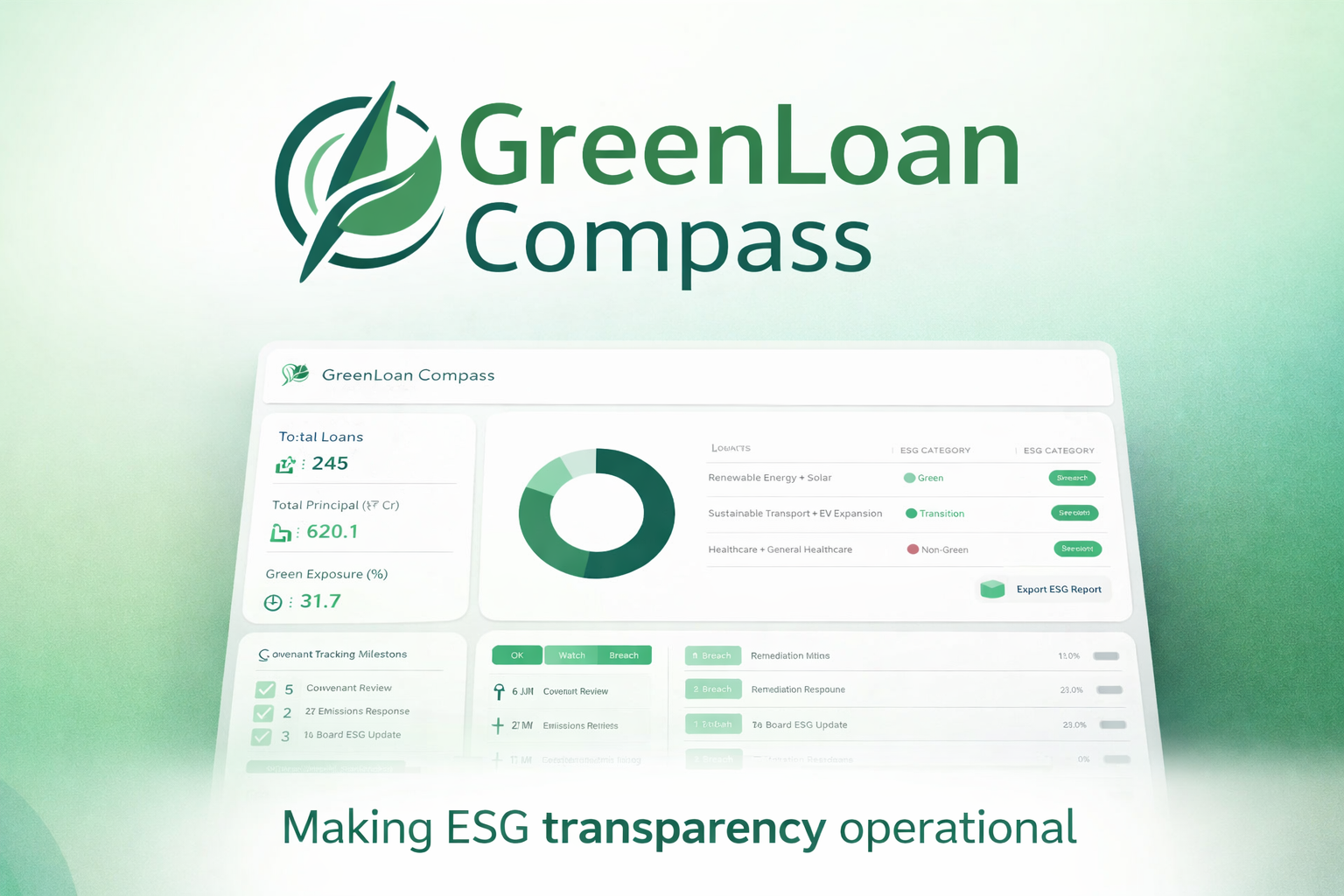
GreenLoan Compass is implemented as a desktop-based prototype using a modern web UI stack. It presents ESG insights through a portfolio dashboard, loan-level drill-downs, covenant tracking, and audit-ready reporting.
Key design choices include:
- A portfolio-first dashboard showing ESG exposure and green lending ratios
- Loan-level views with ESG health, drift indicators, and covenant timelines
- Realistic, static sample data to ensure deterministic and explainable results
- PDF report export to reflect real management and regulatory needs
For example, green exposure is calculated transparently as:
[ \text{Green Exposure (\%)} = \frac{\sum \text{Green Loan Principal}}{\sum \text{Total Loan Principal}} \times 100 ]
This keeps the logic easy to explain to non-technical stakeholders.
Challenges Faced
One of the main challenges was scope discipline. ESG is a broad domain, and it was important to decide what not to build in order to avoid over-claiming automation or intelligence. The project deliberately avoids simulating ESG scoring engines or regulatory logic that are not implemented.
Another challenge was ensuring data consistency and trust. Small mismatches in units or definitions can quickly undermine confidence, so care was taken to ensure clean data handling and stable KPIs throughout the application.
Reflection
GreenLoan Compass demonstrates how ESG oversight can move from aspiration to day-to-day practice through visibility, structure, and discipline. While the solution can be extended in the future, even its current form shows how banks can operationalize ESG transparency in a practical and credible way.

Log in or sign up for Devpost to join the conversation.