-
-
digital twins
Inspiration
The GreenLight project was driven by the need to improve the efficiency, reliability and accessibility of solar energy. With the growing challenge of climate change, utilising renewable energy sources such as solar energy has become crucial. However, the issues of maintaining regular solar output, high maintenance expenses, and a lack of real-time monitoring have prevented the widespread adoption of solar energy. With the help of digital twins, AI, and Internet of Things (IoT) technologies, GreenLight seeks to solve these problems by increasing the effectiveness of solar energy systems and promoting sustainable development in a variety of sectors.
What it does
GreenLight uses innovative digital technologies to improve solar panel maintenance and monitoring. It optimises energy output, forecasts maintenance needs, and generates real-time data on solar panel performance. GreenLight enables customers to remotely monitor, assess, and manage solar systems to increase system efficiency and dependability. Features include digital twin simulation, chatbots for AI assistants, report creation, and predictive maintenance.
How we built it
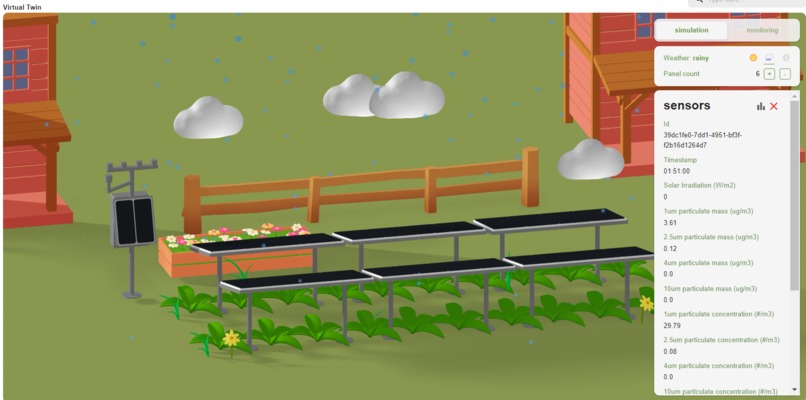
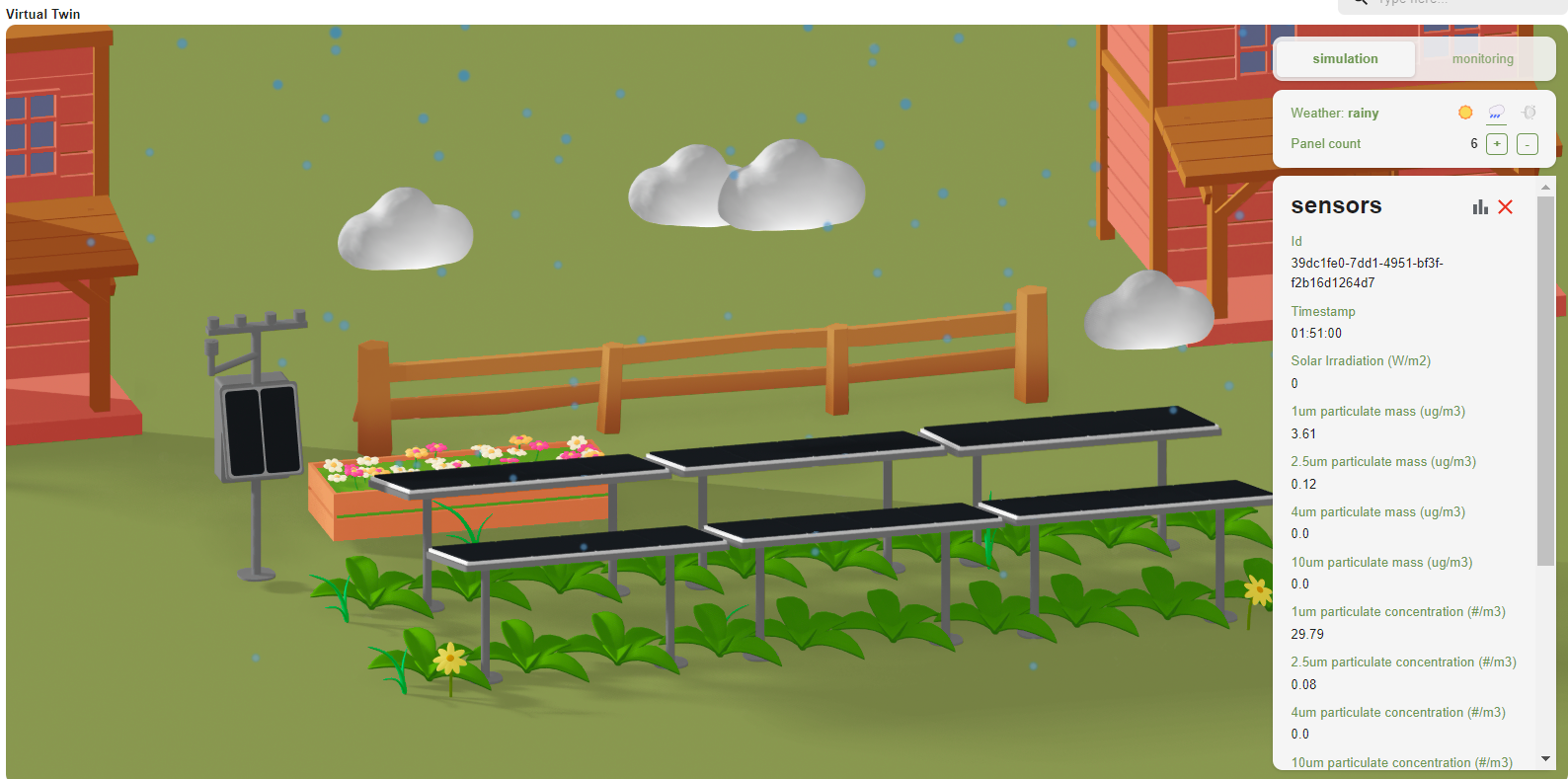
We applied several advanced technologies to develop GreenLight: Digital Twins: To test various setups and simulate solar panel constructions. This greatly lowers risks in addition to lowering the expense of physical testing. IoT Sensors: To continuously gather data on environmental conditions (including temperature, light intensity, and panel angle) and panel performance in real-time. These data are then transmitted to the digital twin platform for real-time monitoring by the user. AI Algorithms: We have created AI algorithms that evaluate both past and current data to produce energy consumption reports and forecast any malfunctions, allowing for predictive maintenance. Cloud Infrastructure: To ensure effective data processing and storage, GreenLight uses a scalable cloud architecture that enables users to view and manage system data from any location at any time. Together, these elements function flawlessly to give users meaningful insights, real-time monitoring, and user-friendly dashboards. Challenges we ran into Data Accuracy: Provides reliable and accurate real-time data from the Internet of Things sensors to facilitate predictive maintenance. Any inaccuracies or delays in data could compromise the system's overall performance. Complexity of integration: Integrate IoT, AI, and digital twin simulation into a single system that resolves incompatibilities. Additionally, one of the project's biggest technological challenges was creating a robust data analytics pipeline. User experience: Creating user-friendly chatbots and dashboards that offer concise, useful information to raise user satisfaction and engagement. Accomplishments that we're proud of A digital twin model that mirrors the performance of solar panels in real time has been successfully built, providing users with a realistic virtual test environment. The model allows users to replicate diverse scenarios without damaging the actual equipment, considerably boosting system operability and testing efficiency. Developed a predictive maintenance system based on artificial intelligence (AI) that anticipates possible problems and issues early warnings, minimising downtime, cutting operating expenses, and enhancing solar system dependability. Introduced a user-friendly interface that combines the generation of energy consumption reports with an AI chatbot to create a simple and intuitive experience. The AI chatbot answers user enquiries promptly and offers assistance to help maximise system performance. What we learned We learnt a great deal about the challenges of integrating digital twin technology, IoT data, and AI analytics while developing GreenLight. Through this process, we learnt how to create user-centric interfaces that make it easier for users to operate and how crucial real-time data accuracy is for predictive maintenance. This endeavour also highlighted our dedication to promoting sustainability and innovation in the field of renewable energy. Our team has developed a deeper grasp of technology integration and energy management system design through this project, which will serve as the foundation for the next technical advancements.
Challenges we ran into
Challenges we ran into Data Accuracy: Provides reliable and accurate real-time data from the Internet of Things sensors to facilitate predictive maintenance. Any inaccuracies or delays in data could compromise the system's overall performance. Complexity of integration: Integrate IoT, AI, and digital twin simulation into a single system that resolves incompatibilities. Additionally, one of the project's biggest technological challenges was creating a robust data analytics pipeline. User experience: Creating user-friendly chatbots and dashboards that offer concise, useful information to raise user satisfaction and engagement.
Accomplishments that we're proud of
Accomplishments that we're proud of A digital twin model that mirrors the performance of solar panels in real time has been successfully built, providing users with a realistic virtual test environment. The model allows users to replicate diverse scenarios without damaging the actual equipment, considerably boosting system operability and testing efficiency. Developed a predictive maintenance system based on artificial intelligence (AI) that anticipates possible problems and issues early warnings, minimising downtime, cutting operating expenses, and enhancing solar system dependability. Introduced a user-friendly interface that combines the generation of energy consumption reports with an AI chatbot to create a simple and intuitive experience. The AI chatbot answers user enquiries promptly and offers assistance to help maximise system performance. What we learned We learnt a great deal about the challenges of integrating digital twin technology, IoT data, and AI analytics while developing GreenLight.
What we learned
Through this process, we learnt how to create user-centric interfaces that make it easier for users to operate and how crucial real-time data accuracy is for predictive maintenance. This endeavour also highlighted our dedication to promoting sustainability and innovation in the field of renewable energy. Our team has developed a deeper grasp of technology integration and energy management system design through this project, which will serve as the foundation for the next technical advancements.
What's next for GreenLight
In the future, we plan to further expand GreenLight's functionality as follows: Expand GreenLight's capabilities to handle larger solar panels. To accommodate varying user needs, expand the dashboard's personalisation choices. In order to support more complicated energy management, introduce more varied data sets to increase the accuracy of AI predictive models. Expand partnerships with more industry players to advance the range of applications for GreenLight. Encourage the use of clean energy around the world to contribute to the realisation of a sustainable energy vision.


Log in or sign up for Devpost to join the conversation.