-
-
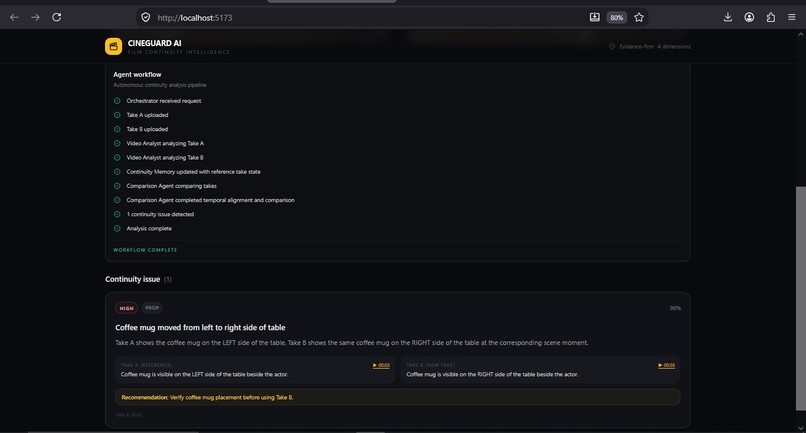
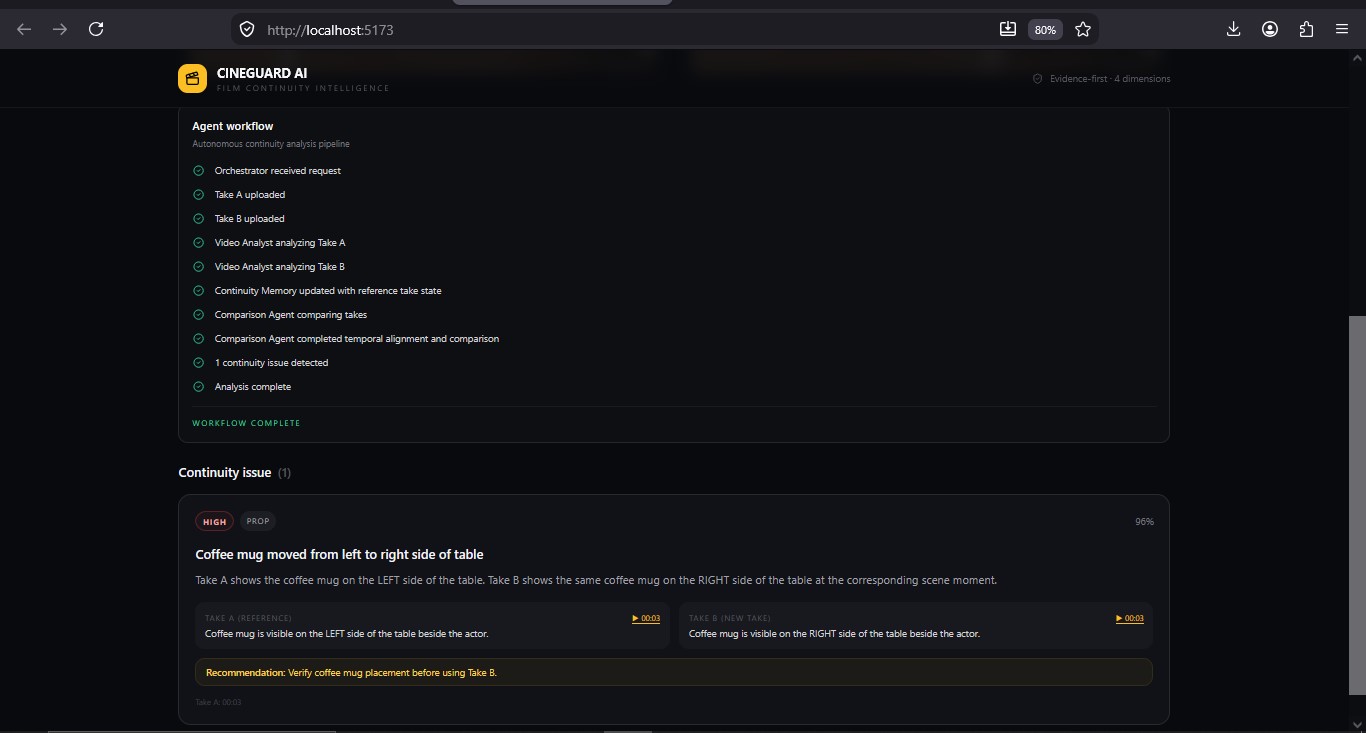
Agent Workflow and Result
-
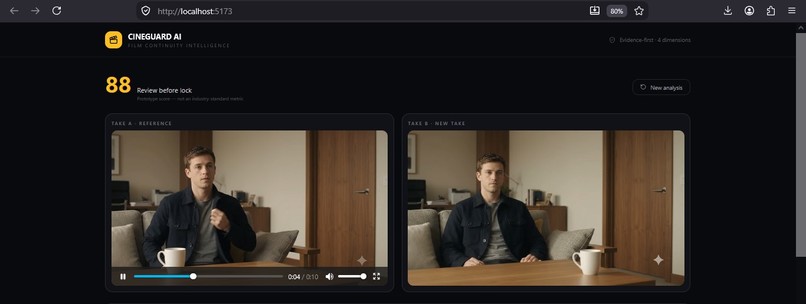
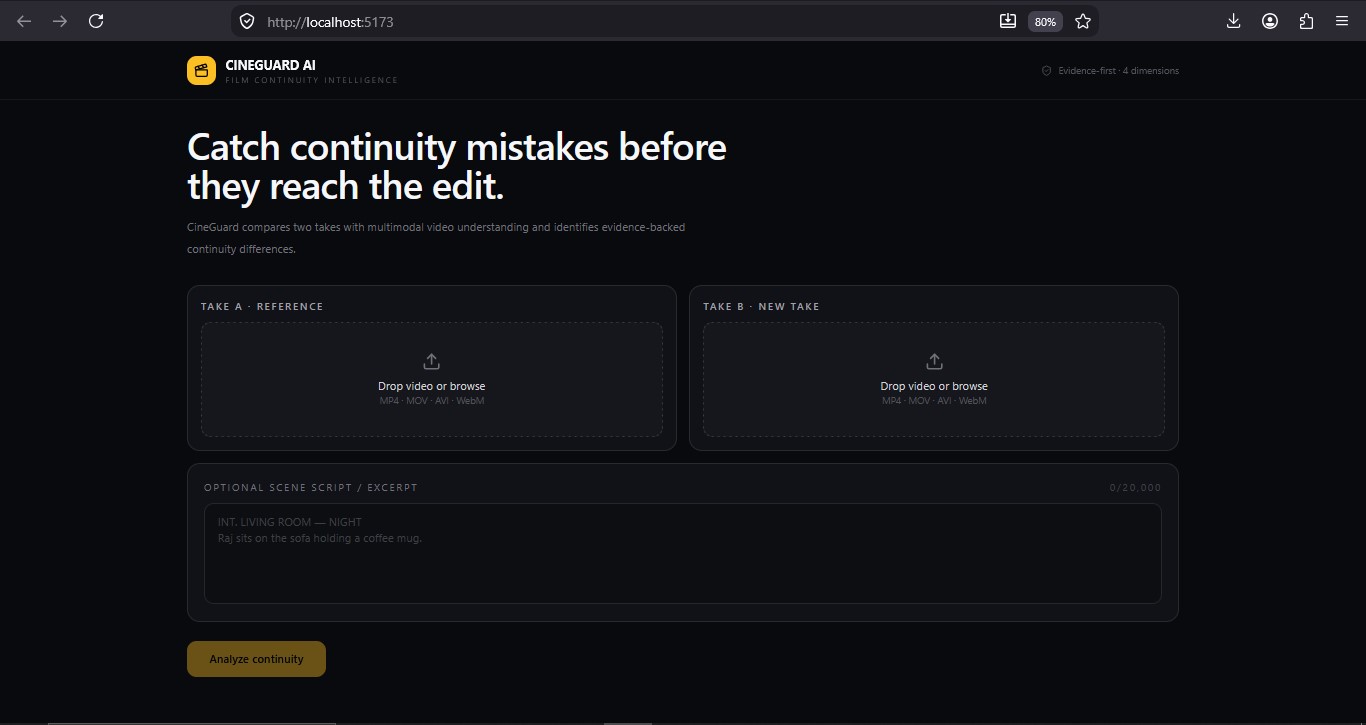
Take A / Take B comparison after uploading video
-
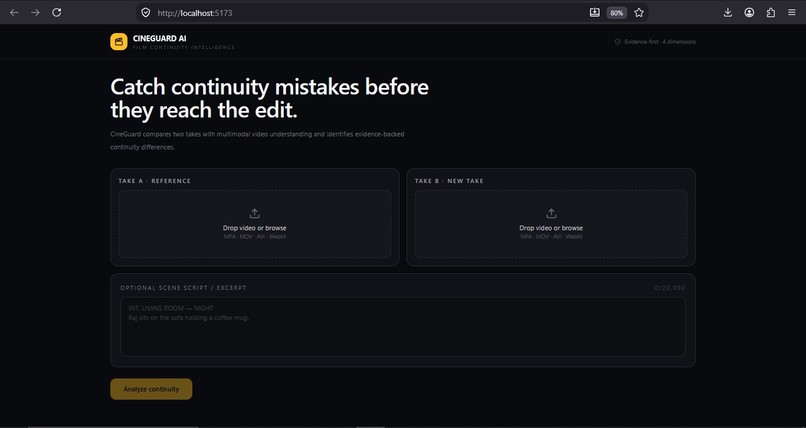
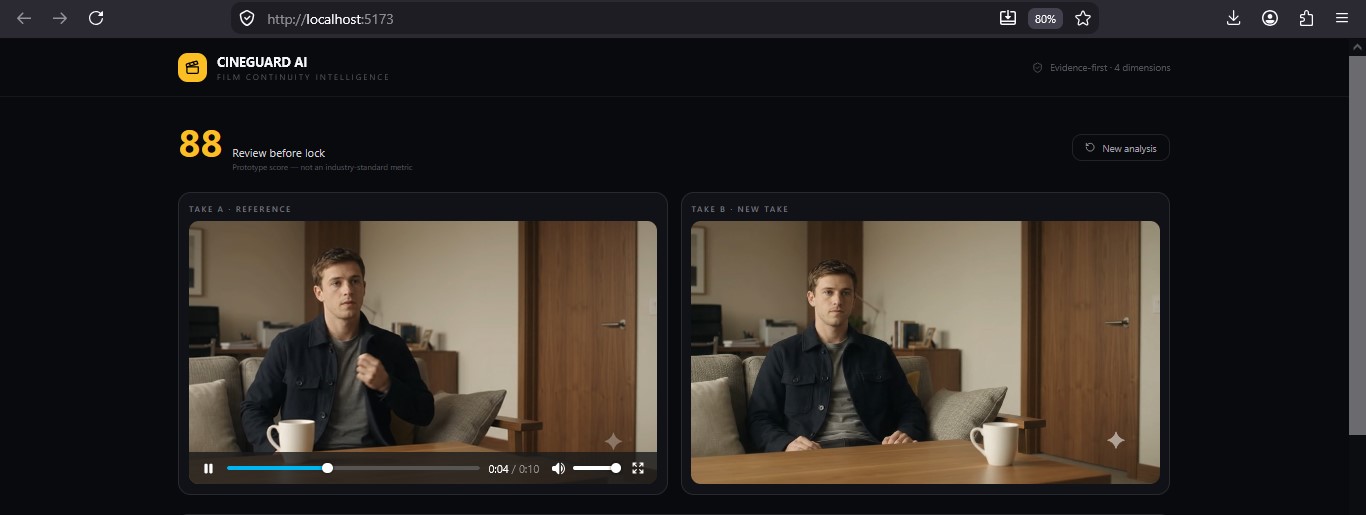
Take A / Take B comparison
-
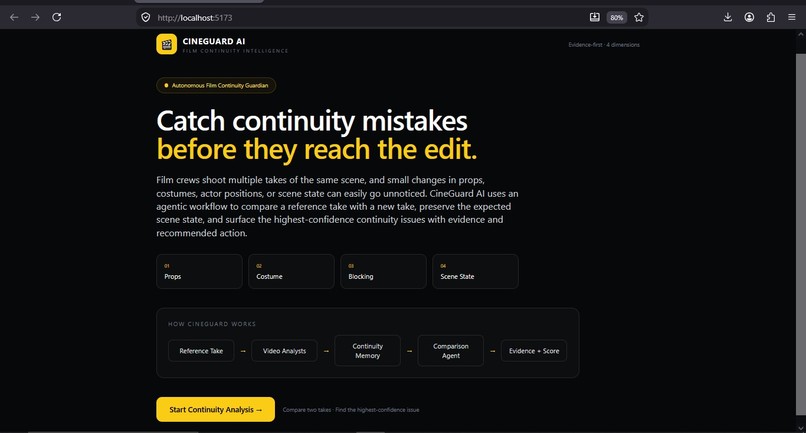
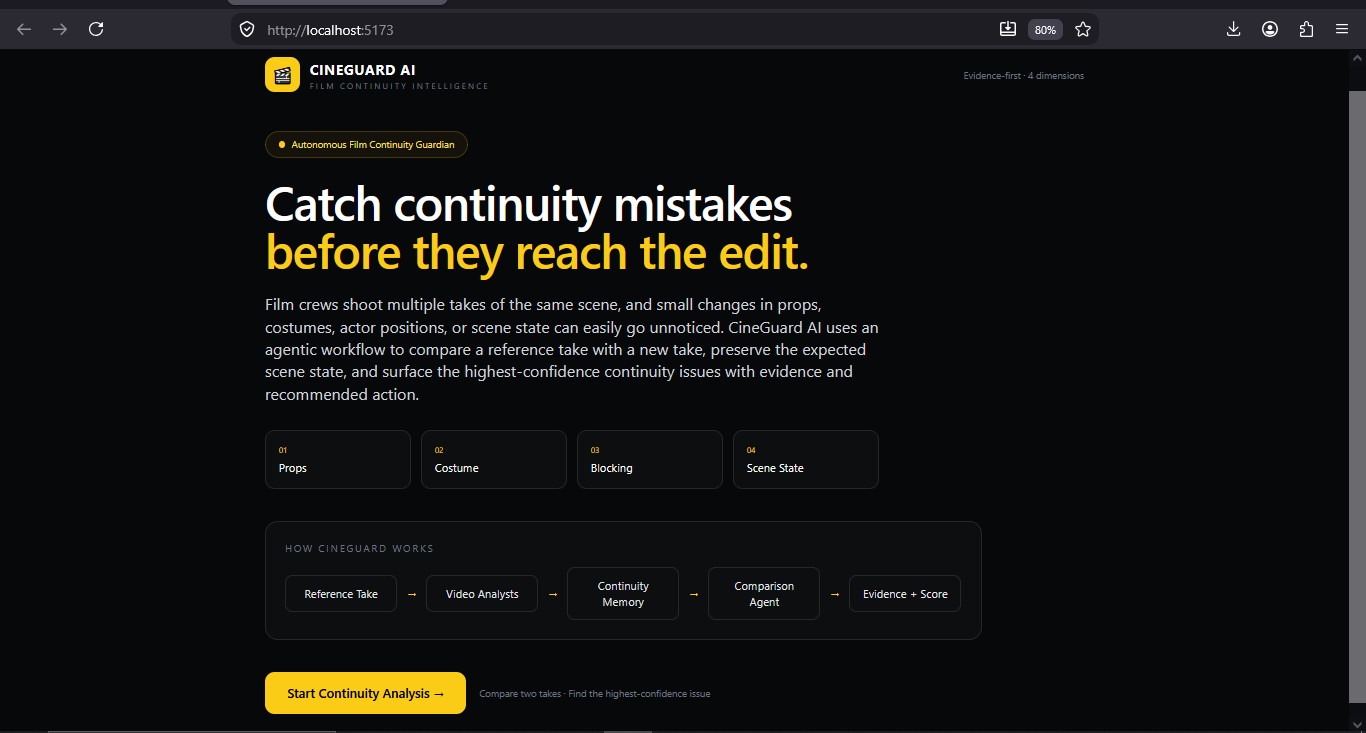
CineGuard intro page
Inspiration
In filmmaking, the same scene is often recorded multiple times from different angles and takes. A take can look perfect on its own, yet small continuity mistakes can appear when two takes are edited together: a coffee mug moves, a costume detail changes, an actor shifts position, or scene lighting becomes inconsistent.
These mistakes are easy to overlook during production and may only be discovered during editing, leading to additional review time or expensive reshoots.
We built CineGuard AI — Autonomous Film Continuity Guardian to act as an AI-powered digital script supervisor that checks continuity before footage reaches the final edit.
What it does
CineGuard AI compares a Reference Take (Take A) with a New Take (Take B) and checks four focused continuity dimensions:
- Props — cups, phones, bags, books, and objects in the scene
- Costume / Appearance — jackets, shirts, sleeves, buttons, and visible accessories
- Lighting / Time of Day — major changes in scene lighting and visual conditions
- Actor Blocking / Position — changes in actor position and movement
The system doesn't just flag that two videos are different. It produces structured evidence showing what changed, where it changed, confidence in the observation, and a recommendation for the filmmaker.
For example, in our demonstration:
Take A: Coffee mug is on the left side of the table.
Take B: Coffee mug is on the right side of the table.
CineGuard reports a HIGH severity PROP continuity issue with 96% confidence and recommends verifying the mug placement before using Take B.
How we built it
CineGuard is designed as an autonomous agentic workflow rather than a single AI call.
The workflow is:
Orchestrator → Video Analysts → Continuity Memory → Comparison Agent → Evidence & Continuity Score
The Orchestrator receives the analysis request and coordinates the workflow.
The Video Analyst agents analyze the individual takes and extract relevant scene state.
Continuity Memory preserves the reference take state so important scene details can be compared consistently.
The Comparison Agent performs temporal alignment and compares the two takes to identify potential continuity violations.
Finally, CineGuard produces an evidence-backed issue report and an explainable continuity score.
The application was built with:
- React
- TypeScript
- Tailwind CSS
- Java
- Spring Boot
- Google Gemini / Google Gen AI SDK
- Google Cloud / Vertex AI architecture
- Firestore support
- Agent-based orchestration
- IBM Bob during development
Challenges we ran into
One of our biggest challenges was making video continuity analysis reliable. A useful system cannot simply detect visual differences because many differences between takes are intentional.
We therefore had to design the workflow around scene state, temporal alignment, evidence, confidence, and focused continuity categories.
We also faced challenges with multimodal video processing, structured AI outputs, agent orchestration, Google Cloud authentication, and making the application reliable enough for a live hackathon demonstration.
To ensure the complete experience could still be demonstrated reliably, we implemented a clearly defined demo mode with structured sample analysis results when live AI inference is unavailable.
Accomplishments that we're proud of
We are proud of turning a filmmaking problem into a complete agentic workflow rather than building another generic chatbot.
CineGuard provides:
- Two-take video comparison
- Specialized agent workflow
- Continuity memory
- Temporal comparison
- Structured continuity issues
- Confidence scoring
- Evidence from both takes
- Explainable continuity scoring
- A polished film-production-focused interface
- Reliable demonstration mode
Our key demonstration successfully shows CineGuard identifying the coffee mug position changing from left to right between two takes and turning that observation into an actionable continuity warning.
What we learned
We learned that building an effective AI agent is not only about connecting a model to an application.
The important part is designing the reasoning workflow around the user's real problem.
For CineGuard, this meant separating video analysis, memory, comparison, and reporting into logical agent responsibilities.
We also learned how important structured outputs and evidence are for AI systems used in professional workflows. A filmmaker should be able to understand why an issue was flagged rather than blindly trusting an AI-generated result.
What's next for CineGuard AI
Our next step is to expand CineGuard from a two-take continuity checker into a persistent production continuity intelligence system.
Future versions could:
- Analyze multiple takes automatically
- Track continuity across an entire scene
- Maintain continuity state across a complete production
- Detect more detailed costume and prop changes
- Provide visual issue markers directly on footage
- Integrate with professional editing workflows
- Generate and manage production continuity tickets
- Deploy the complete Gemini-powered pipeline on Google Cloud
- Learn production-specific continuity rules from previous scenes
Our long-term vision is simple:
Catch continuity mistakes before they reach the edit.
Built With
- aiagents
- computervision
- firestone
- google-cloud
- google-genai-sdk
- googlegemini
- ibmbob
- java
- multimodelai
- react
- springboot
- tailwindcss
- typescript
- vertexai
- videoanalysis

Log in or sign up for Devpost to join the conversation.