


Inspiration
Our inspiration for GreenLens stemmed from a deep understanding of the persistent challenges faced by farmers globally – from unpredictable crop diseases decimating yields to volatile market prices impacting livelihoods. We saw an opportunity to leverage cutting-edge technology, particularly Artificial Intelligence, to empower agricultural professionals with the insights and tools they need to overcome these hurdles and foster more sustainable, profitable farming practices.
What it does
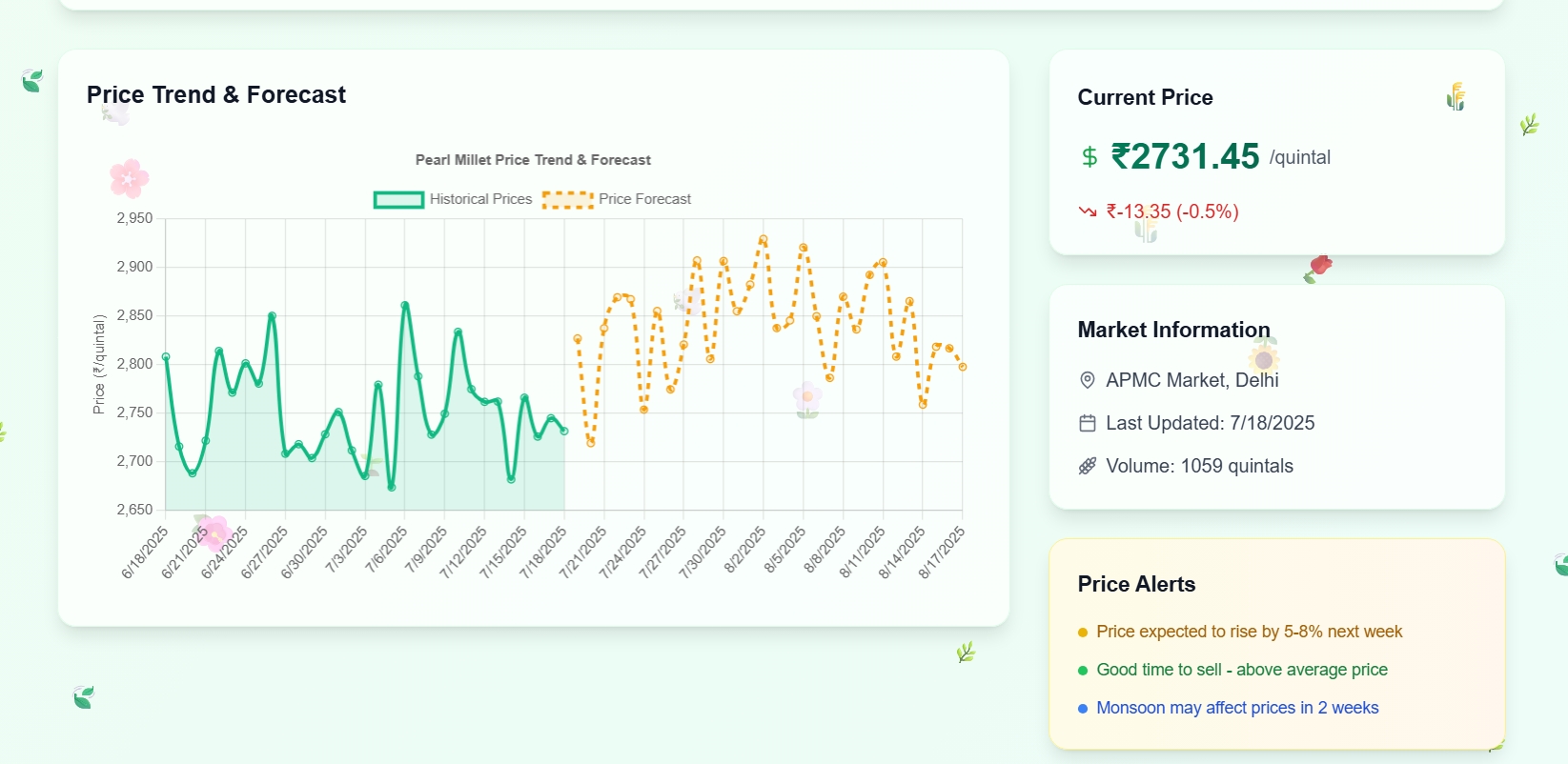
GreenLens is a comprehensive, full-stack agricultural intelligence platform designed to be a farmer's ultimate companion. It features AI-powered crop disease detection through image upload, AI-driven soil analysis for tailored fertilizer recommendations, and AI-based crop price prediction using time-series forecasting. Beyond these core AI functionalities, it includes essential task management tools, vital climate insights, and robust user authentication with flexible subscription plans.
How we built it
GreenLens was meticulously crafted using a modern tech stack. The intuitive user interface was developed with React and TypeScript, styled with TailwindCSS, and bundled with Vite. The powerful backend is built on Node.js and Express, also leveraging TypeScript for robust development. The core intelligence, particularly the AI models for disease detection, soil analysis, and price prediction, were developed in Python, utilizing libraries like Prophet for forecasting. JWT was implemented for secure authentication, and Multer handled file uploads for image processing.
Challenges we ran into
Developing GreenLens presented several challenges. Integrating diverse technologies like a React frontend, Node.js backend, and Python machine learning services required careful orchestration and API design. Training robust AI models for disease detection demanded extensive, high-quality datasets, which were challenging to acquire and meticulously annotate. Ensuring the accuracy of soil analysis recommendations across varied soil types and the predictive power of crop price forecasting in volatile markets also required rigorous testing and refinement.
Accomplishments that we're proud of
We are incredibly proud of successfully integrating advanced AI capabilities into a user-friendly, full-stack application. Developing the AI-powered crop disease detection with high accuracy is a significant achievement, offering immediate value to farmers. We're also proud of the predictive capabilities of our AI-driven crop price forecasting and the practical utility of our soil analysis recommendations. Building a scalable architecture with secure user authentication and a comprehensive suite of tools within a cohesive platform stands as a testament to our team's dedication and expertise.
What we learned
Throughout the development of GreenLens, we learned the immense potential of AI in revolutionizing agriculture, but also the critical importance of domain-specific data. We gained valuable insights into designing intuitive user experiences for a diverse user base, particularly farmers who may have varying levels of technological familiarity. Furthermore, we refined our skills in orchestrating complex microservices and ensuring seamless communication between different technological stacks to deliver a robust and reliable product.
What's next for GreenLens
The future of GreenLens is focused on continuous innovation and expansion. We plan to enhance our AI models by incorporating satellite imagery for broader field analysis and developing predictive models for pest outbreaks. We will expand our database for disease detection to cover more crops and regional variations. Furthermore, we aim to integrate with IoT devices for real-time farm monitoring and explore partnerships with agricultural co-operatives and government bodies to broaden our reach and impact.
Built With
- ai
- api
- backend
- html5
- jwt
- ml
- python
- react
- tailwindcss
- typescript

Log in or sign up for Devpost to join the conversation.