
## Inspiration
Climate change continues to accelerate, yet most people don’t know the true impact of their daily habits. Existing carbon-tracking apps are either too complicated, too generic, or lack real-time AI insights. I wanted to build a tool that makes sustainability simple, personal, and actionable.
GreenLens was inspired by the idea that everyone deserves a clear understanding of their ecological footprint—and the guidance to improve it. Not just data, but direction. Not just tracking, but transformation.
## What It Does
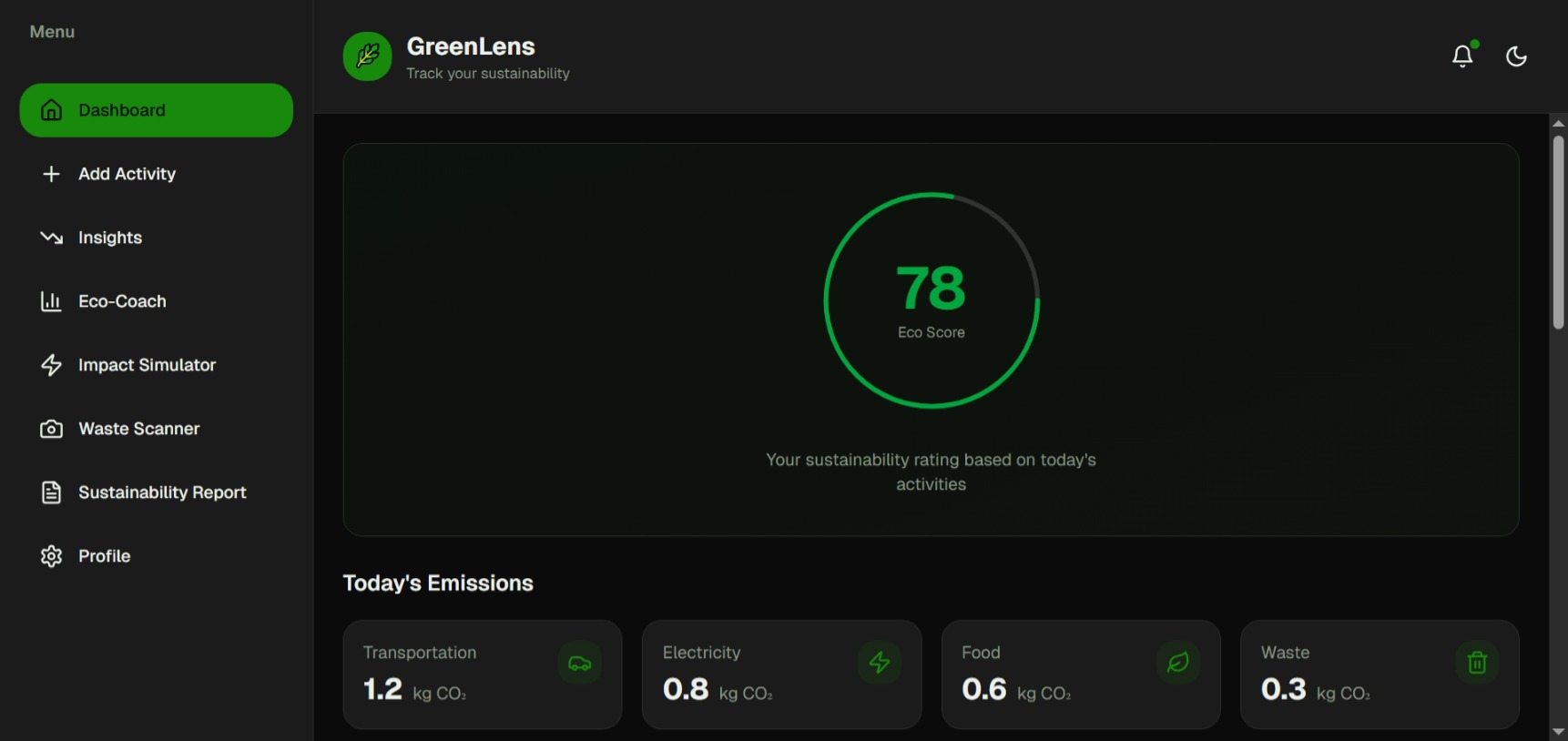
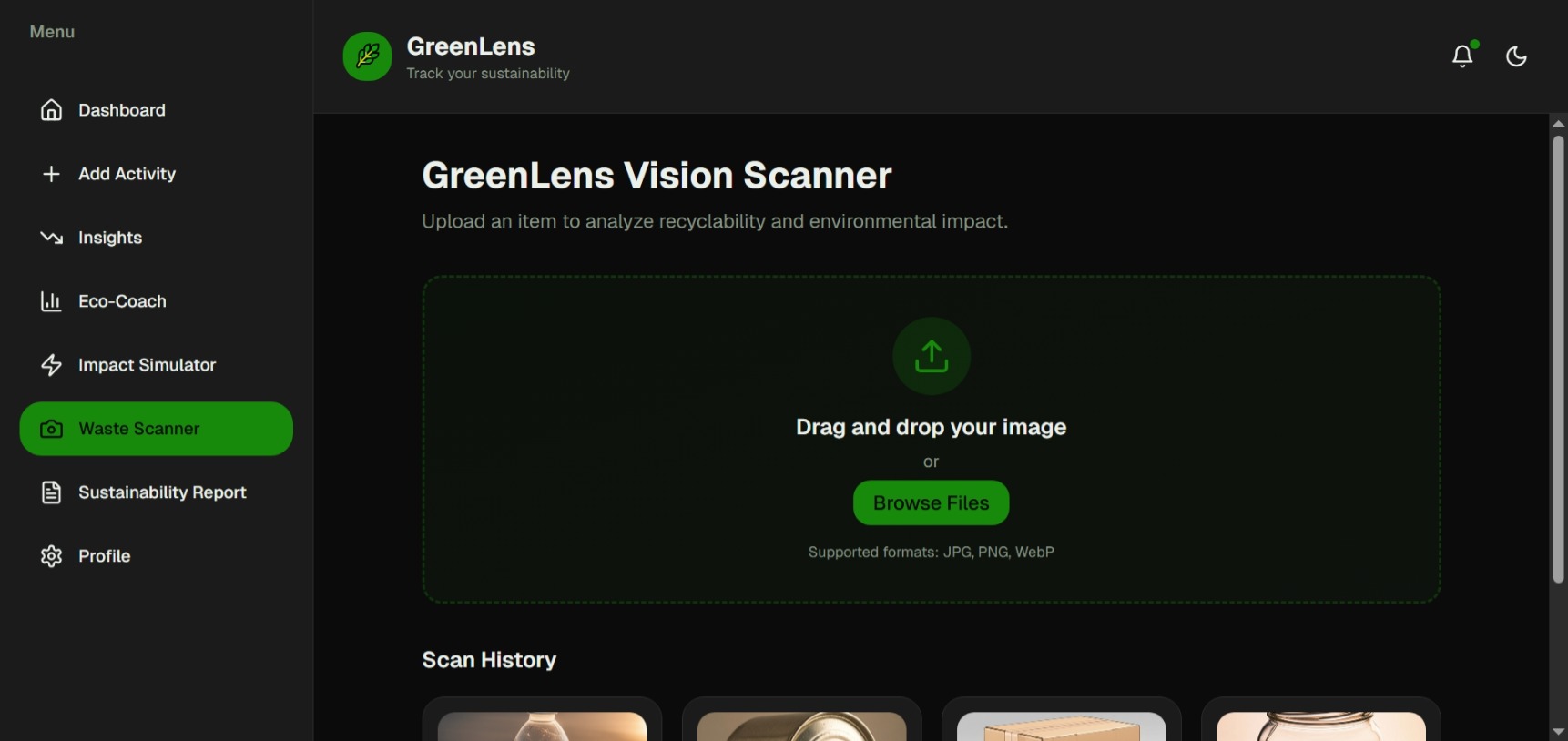
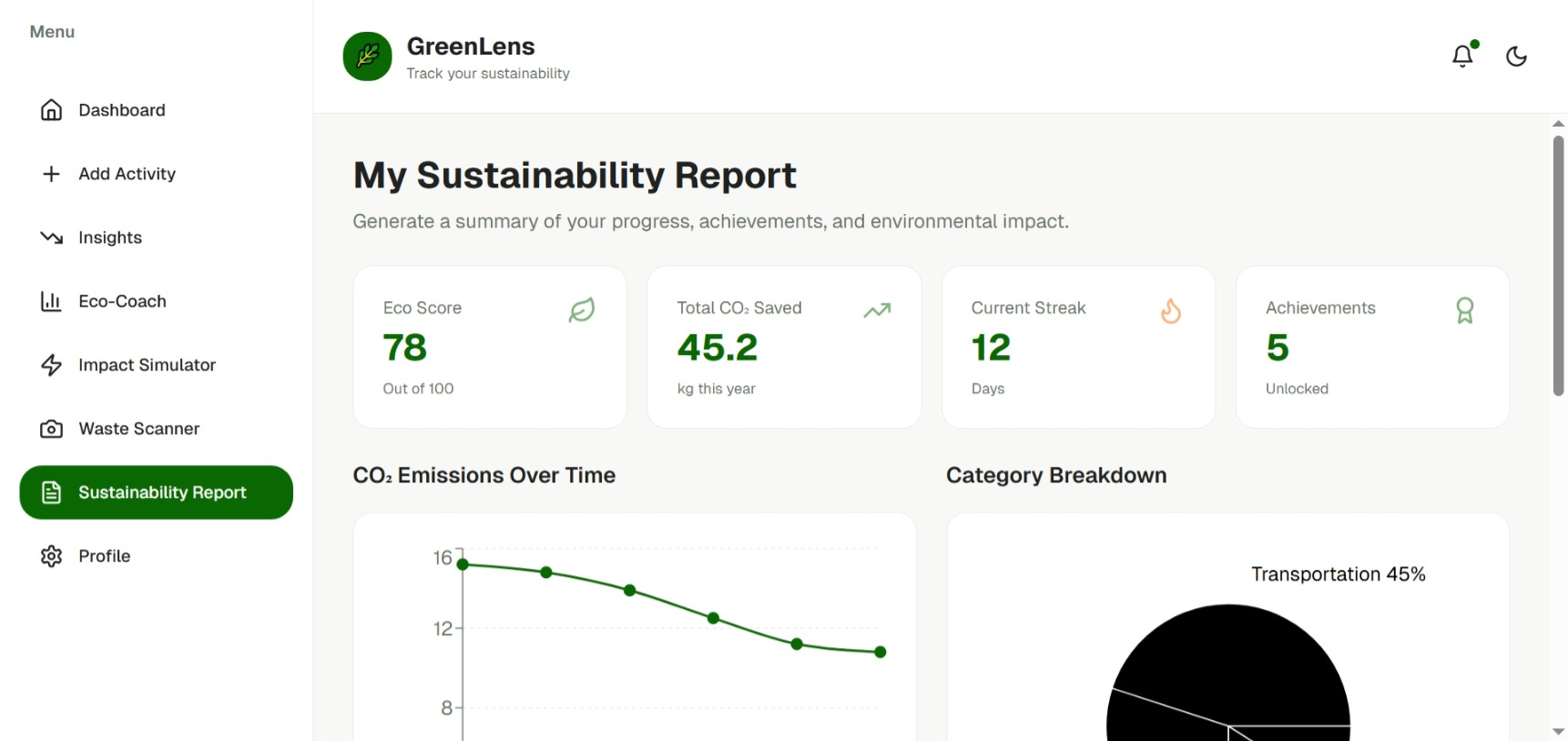
GreenLens Eco-Intelligence Suite is an AI-powered sustainability dashboard that gives users a complete overview of their environmental impact.
It offers:
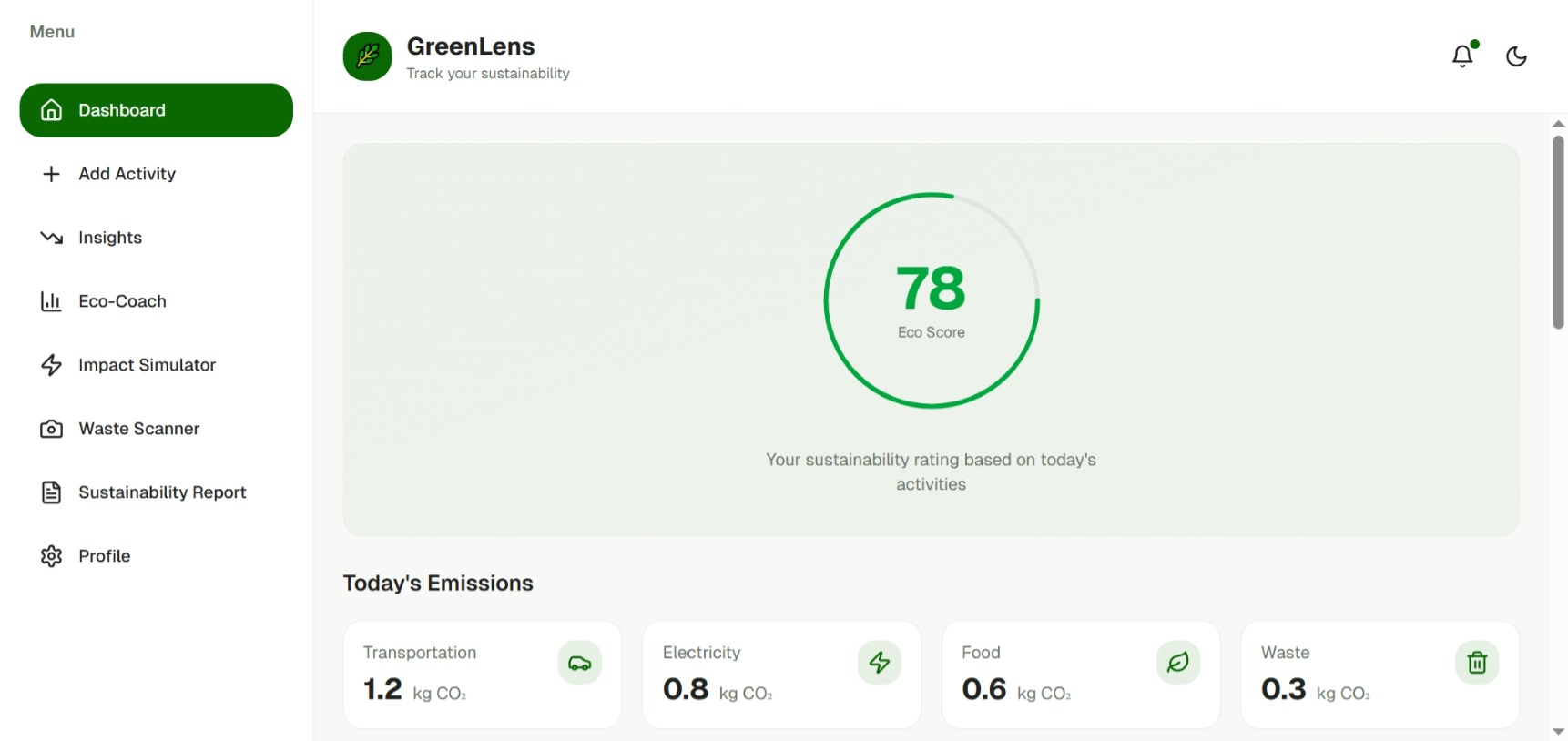
- 🌿 Carbon Footprint Dashboard — Clear, visual breakdown of daily and monthly emissions
- ⚡ Energy & Consumption Monitoring
- 🤖 AI Sustainability Assistant for personalized eco-advice
- 🔮 Predictive Impact Engine — Forecasts future emissions based on current behavior
- 🧭 Eco-Path Navigator — Smarter travel route suggestions for reduced carbon output
- 🏆 Gamified Eco-Challenges with streaks and badges
- 🟢 Sustainability Score powered by intelligent scoring models
Everything is designed for simplicity, engagement, and impact.
## How We Built It
GreenLens was built entirely using Next.js, enabling rapid UI generation and clean, consistent components.
Tech Stack:
- Next.js 15 for the frontend framework and routing
- Tailwind CSS for styling
- ShadCN UI components for a polished experience
- OpenAI API to power the AI Sustainability Assistant
- Custom scoring algorithms for impact calculation
- Lightweight storage for user session and local tracking
- Vercel for deployment
The system integrates static and dynamic UI components with AI-driven insights to deliver a smooth, intelligent sustainability dashboard.
## Challenges We Ran Into
- ⛔ Balancing real-time analytics with lightweight performance
- ⛔ Designing data visualizations that stay simple but meaningful
- ⛔ Ensuring the AI assistant provides accurate and actionable environmental advice
- ⛔ Creating a scoring model that feels intuitive for different types of users
These challenges helped refine the final tool into something more stable and user-friendly.
## Accomplishments That We’re Proud Of
- 🎉 Building a fully functional sustainability platform in a short timeframe
- 🤖 Successfully integrating AI to generate personalized eco-recommendations
- 🎨 Achieving a clean, professional dashboard UI Next.js
- 📈 Creating a unique Predictive Impact Engine that sets GreenLens apart
- 🏅 Designing gamified features that make sustainability engaging
- 🚀 Deploying a stable, responsive product on Vercel
## What We Learned
- How to combine AI models with real-world environmental data patterns
- The importance of simplifying complex environmental metrics
- Best practices in designing interactive dashboards and charts
- How to keep performance smooth even with multiple analytics components
- The power of gamification in motivating sustainable habits
## What’s Next for GreenLens Eco-Intelligence Suite
- ☁️ Cloud-based user accounts with long-term data storage
- 📱 Mobile app version for real-time sustainability tracking anywhere
- 🛰️ Live integrations with energy meters, map APIs, and carbon databases
- 🧑🤝🧑 Community Circles for teams, families, and schools
- 🏙️ Local environmental suggestions based on region
- 🌐 Open API for developers to build sustainability tools on top of GreenLens
- 🏆 Global Eco-Challenge Events where users compete to lower carbon footprints
- 🎓 Educational mode for students learning environmental science
Built With
- javascript
- lucide
- next.js
- recharts
- shadcn
- tailwind
- typescript

Log in or sign up for Devpost to join the conversation.