-
-
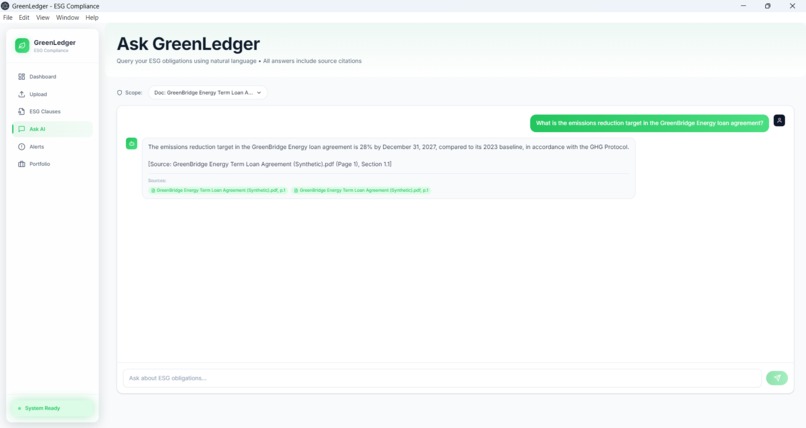
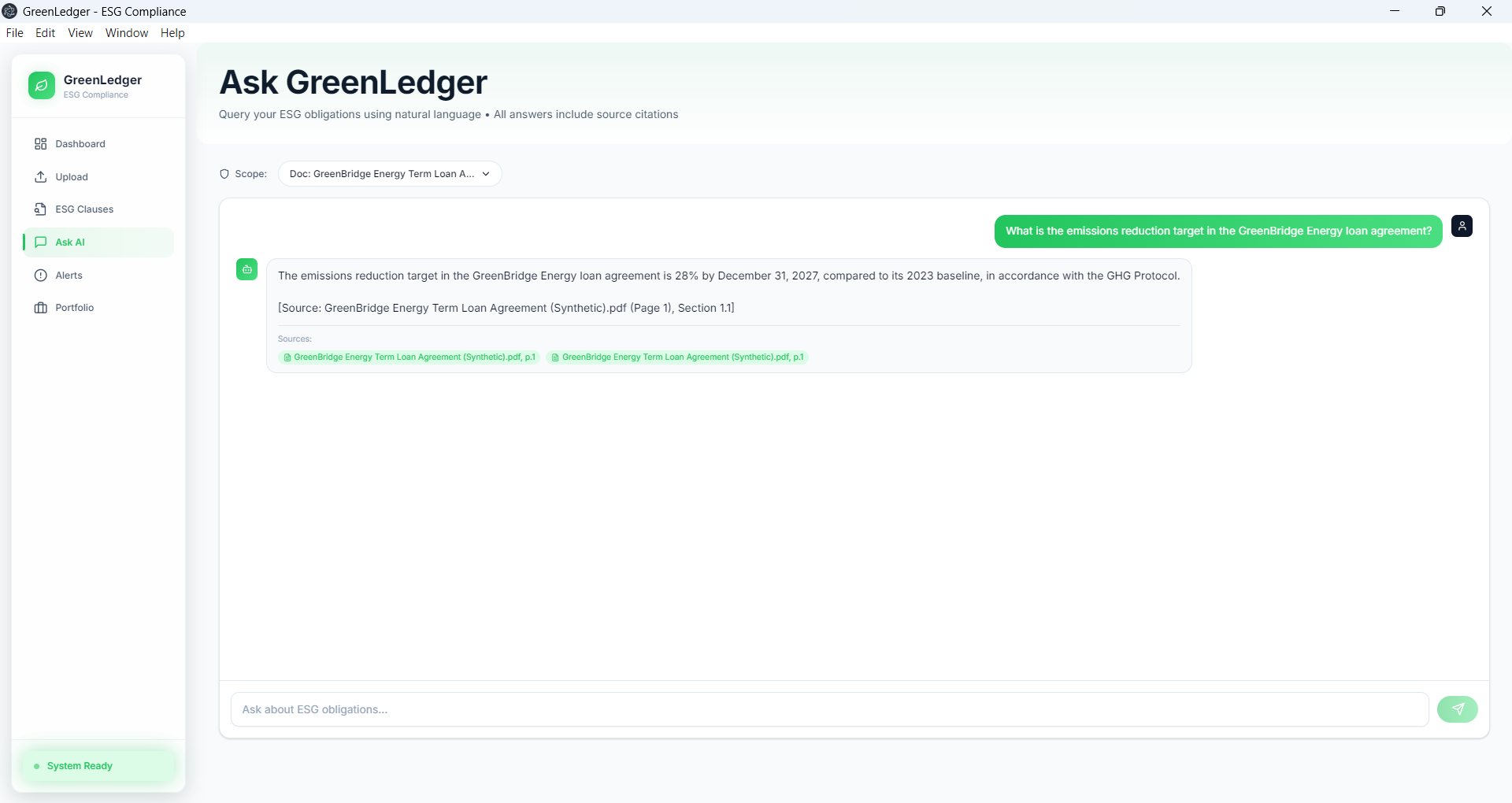
GREENLEDGER_ESG_ASK_AI
-
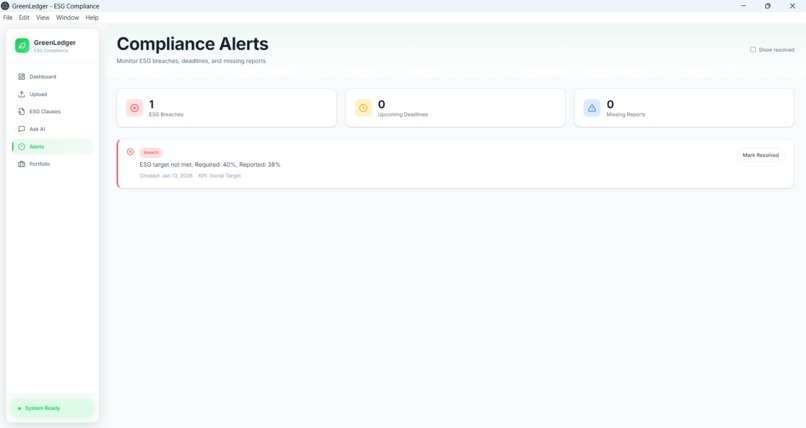
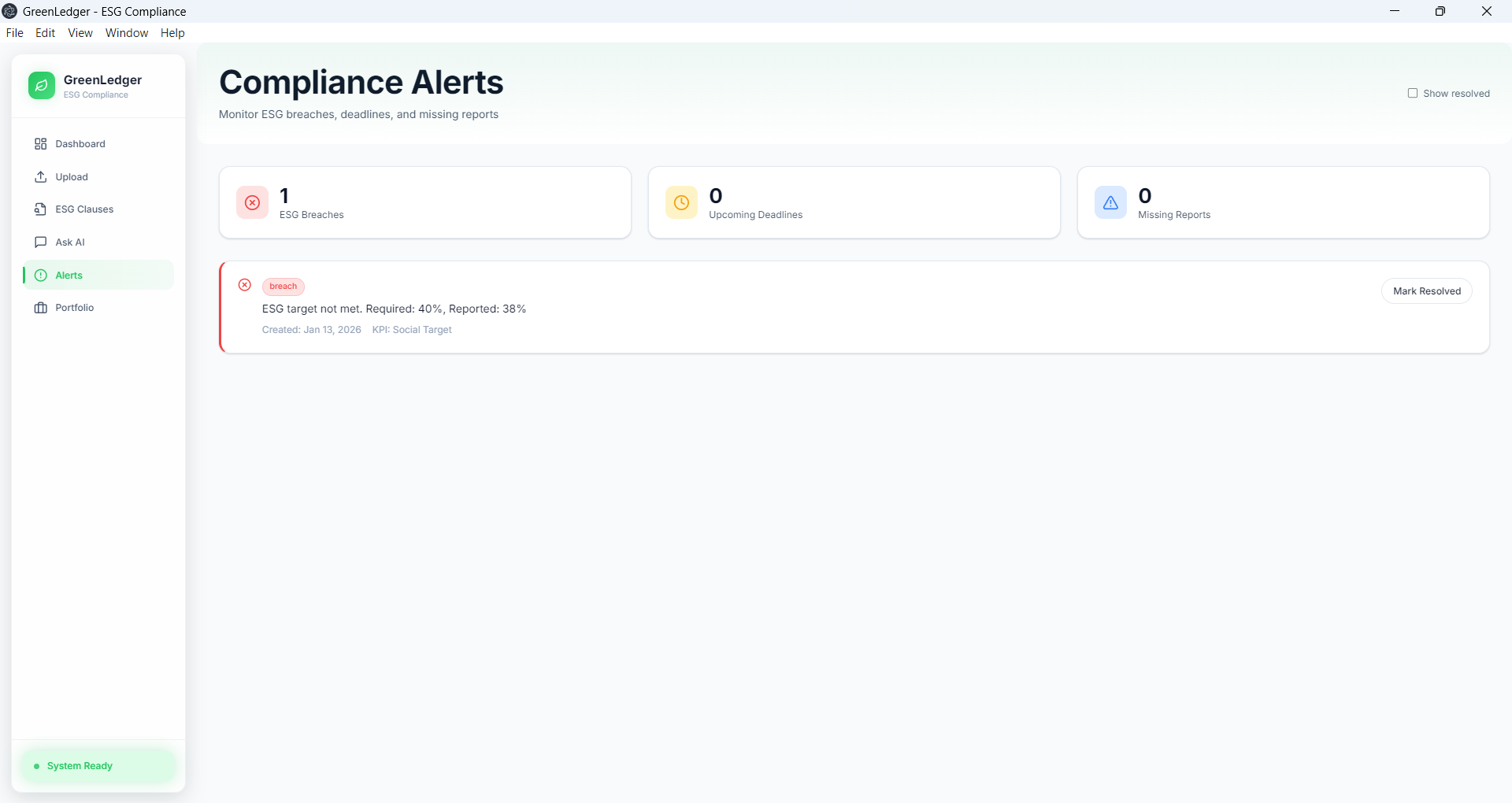
GREENLEDGER_ESG_COMPLIANCE_ALERT
-
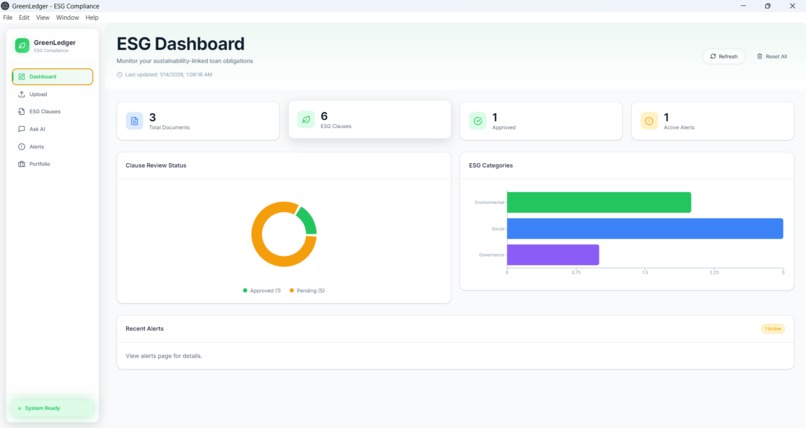
GREENLEDGER_ESG_DASHBOARD
-
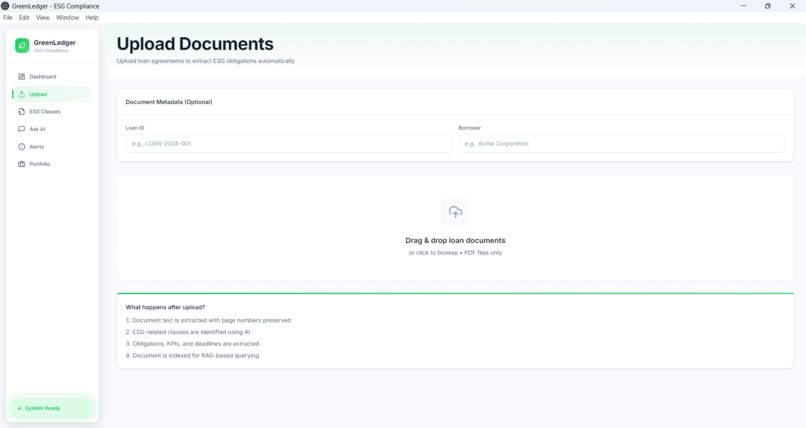
GREENLEDGER_ESG_UPLOAD_DOC
-
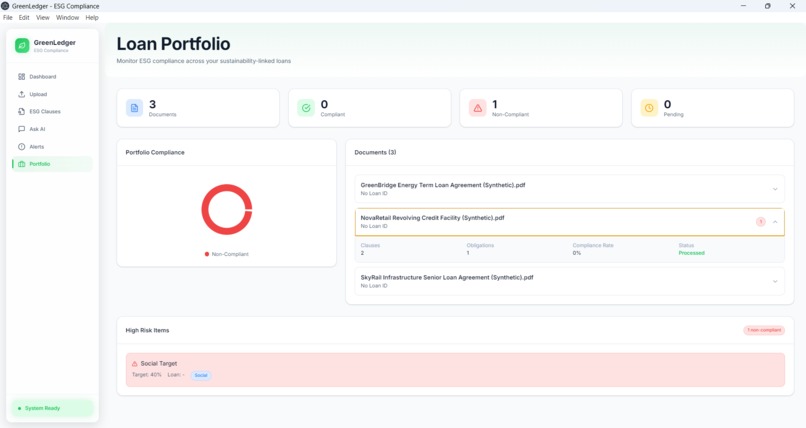
GREENLEDGER_ESG_LOAN_PORTFOLIO
-
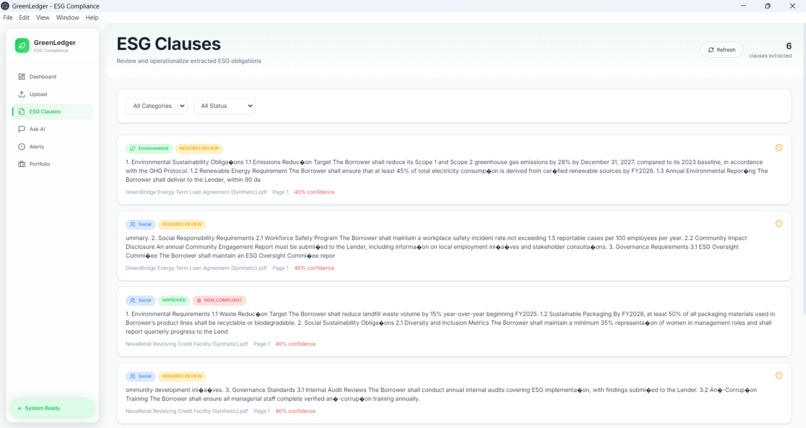
GREENLEDGER_ESG_CLAUSE
-
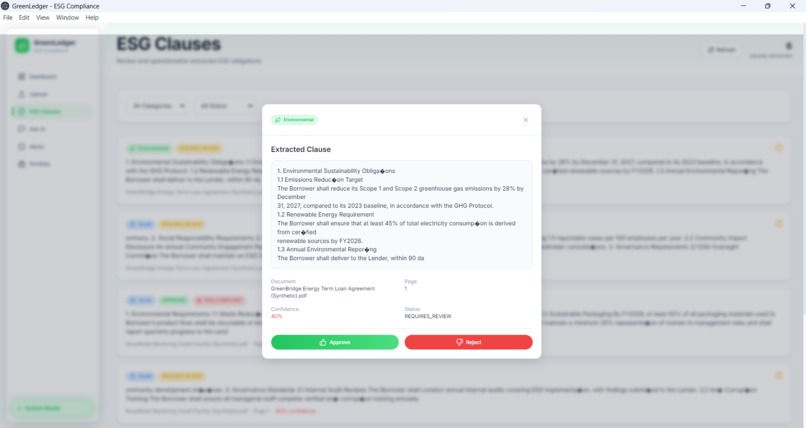
GREENLEDGER_ESG_APPROVE
-
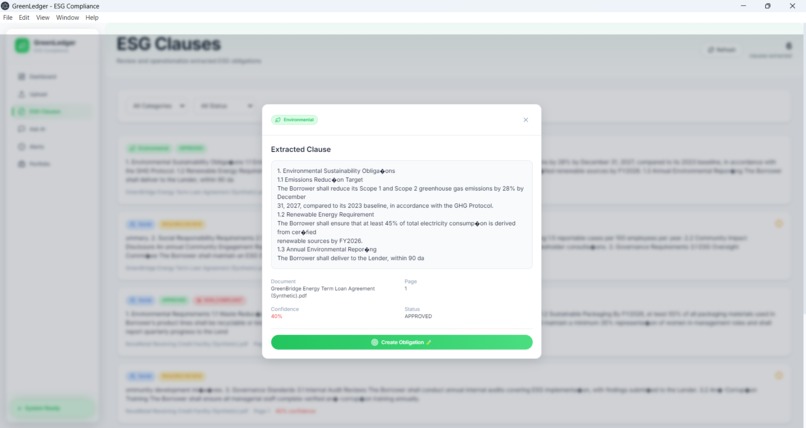
GREENLEDGER_ESG_CREATE_OBLIGATION
-
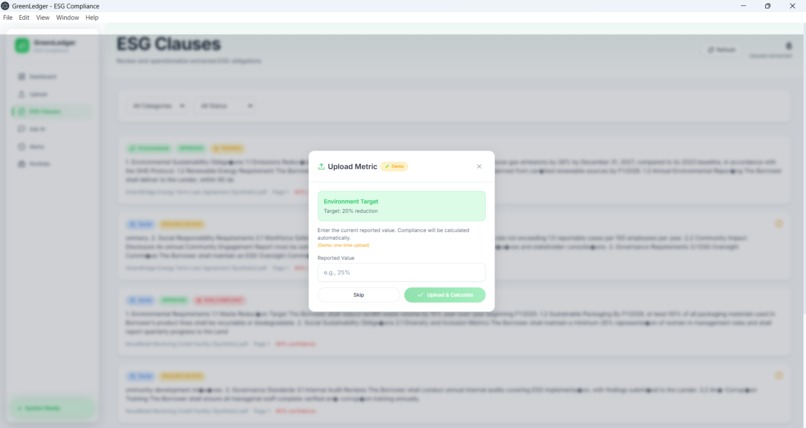
GREENLEDGER_ESG_UPDATE_METRIC
-
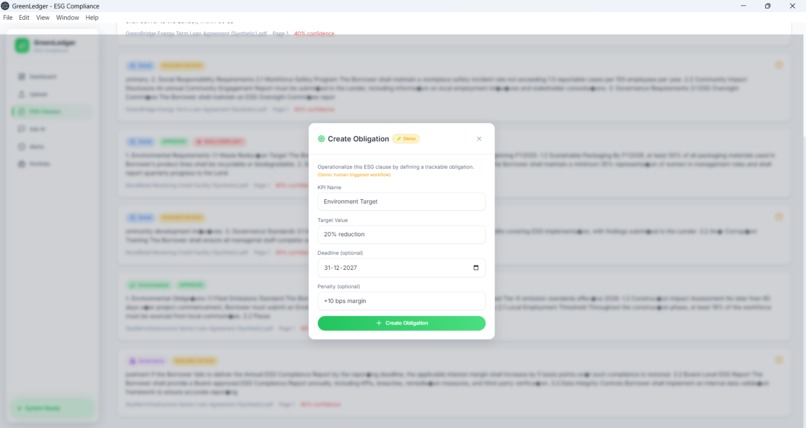
GREENLEDGER_ESG_CREATE_OBLIGATION_1
Inspiration
The global push for sustainability has transformed the loan market. "Greener Lending" is no longer just a buzzword; it is a regulatory and financial imperative. However, I realized that the infrastructure supporting this shift is archaically manual.
Billions of dollars in sustainability-linked loans are governed by clauses buried deep within hundreds of pages of PDF legalese. Compliance teams manually hunt for reporting dates, emission targets, and KPIs. This friction creates "Compliance Drift" - where critical environmental obligations are missed simply because they are locked in a document rather than live in a database.
I was inspired to build GreenLedger to bridge this gap. I wanted to treat a Loan Agreement not as a static file, but as a dynamic data source, turning legal text into actionable ESG mandates.
What it does
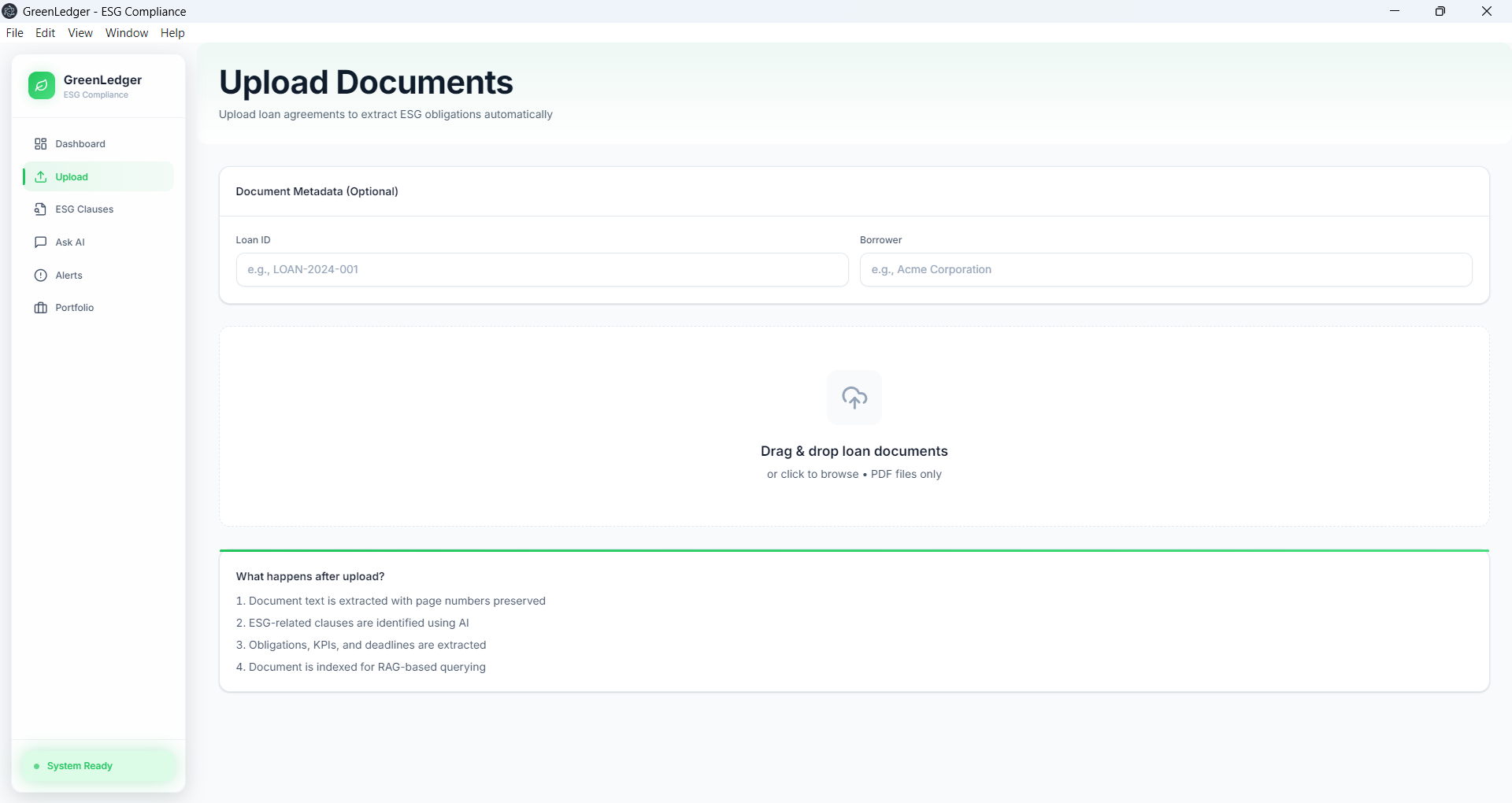
GreenLedger is a dual-interface platform—a privacy-first Desktop Application and a comprehensive REST API—that automates the lifecycle of Green Loan management.
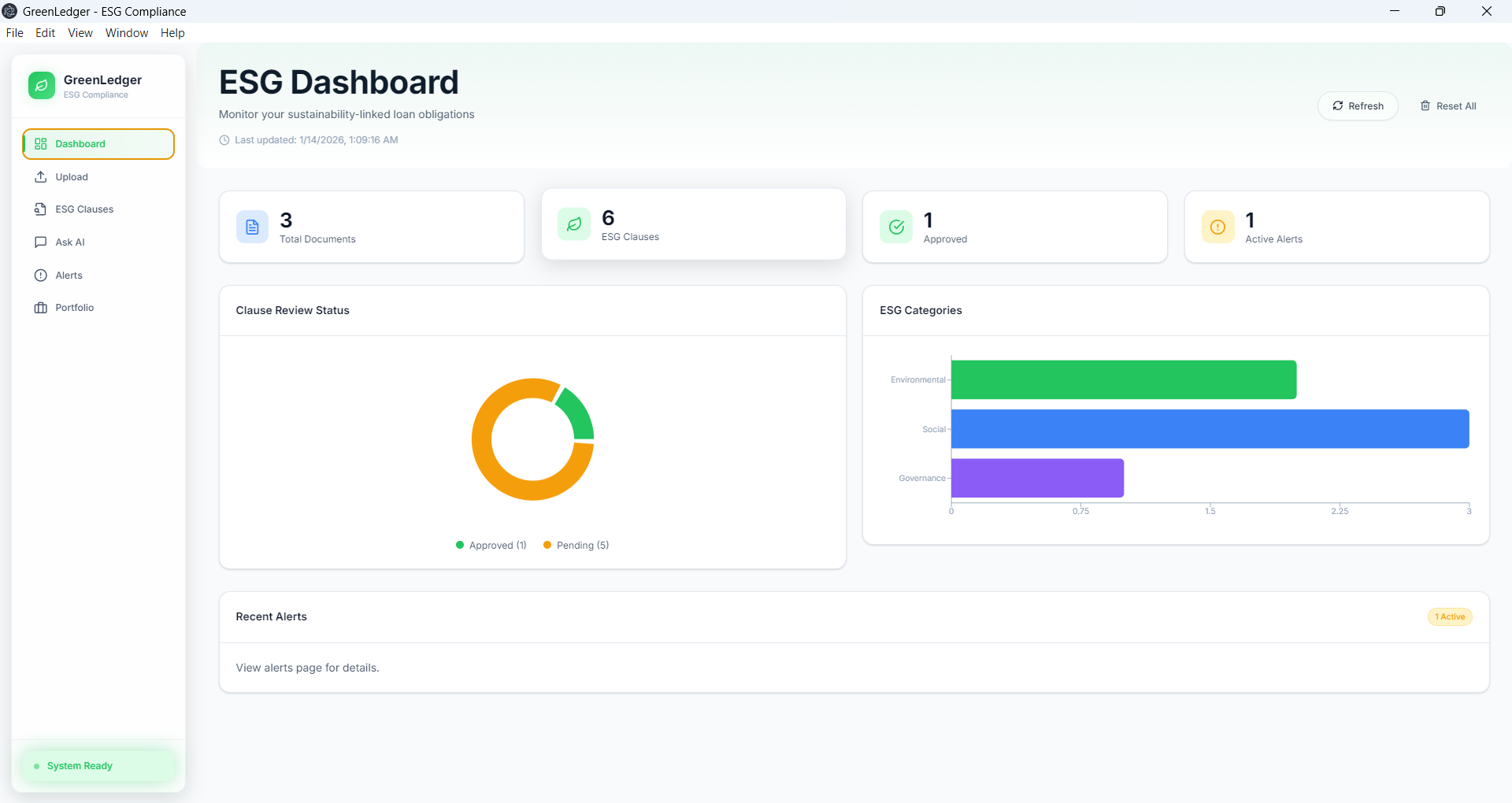
- The Desktop App (Electron): A native application where compliance officers upload PDF loan agreements. The AI processing happens entirely on-device using a local LLM (Ollama), ensuring sensitive financial data never leaves the user's machine.
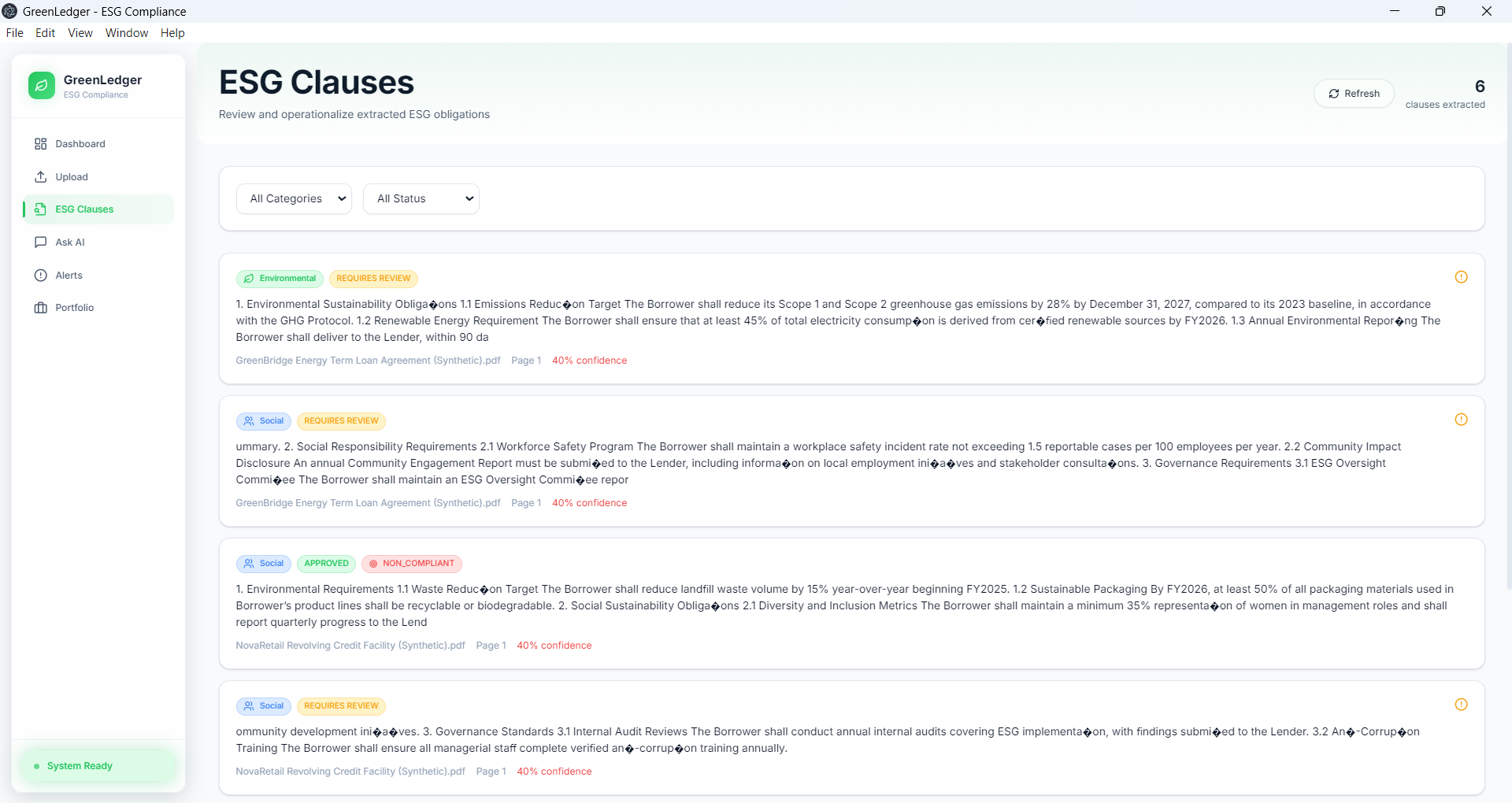
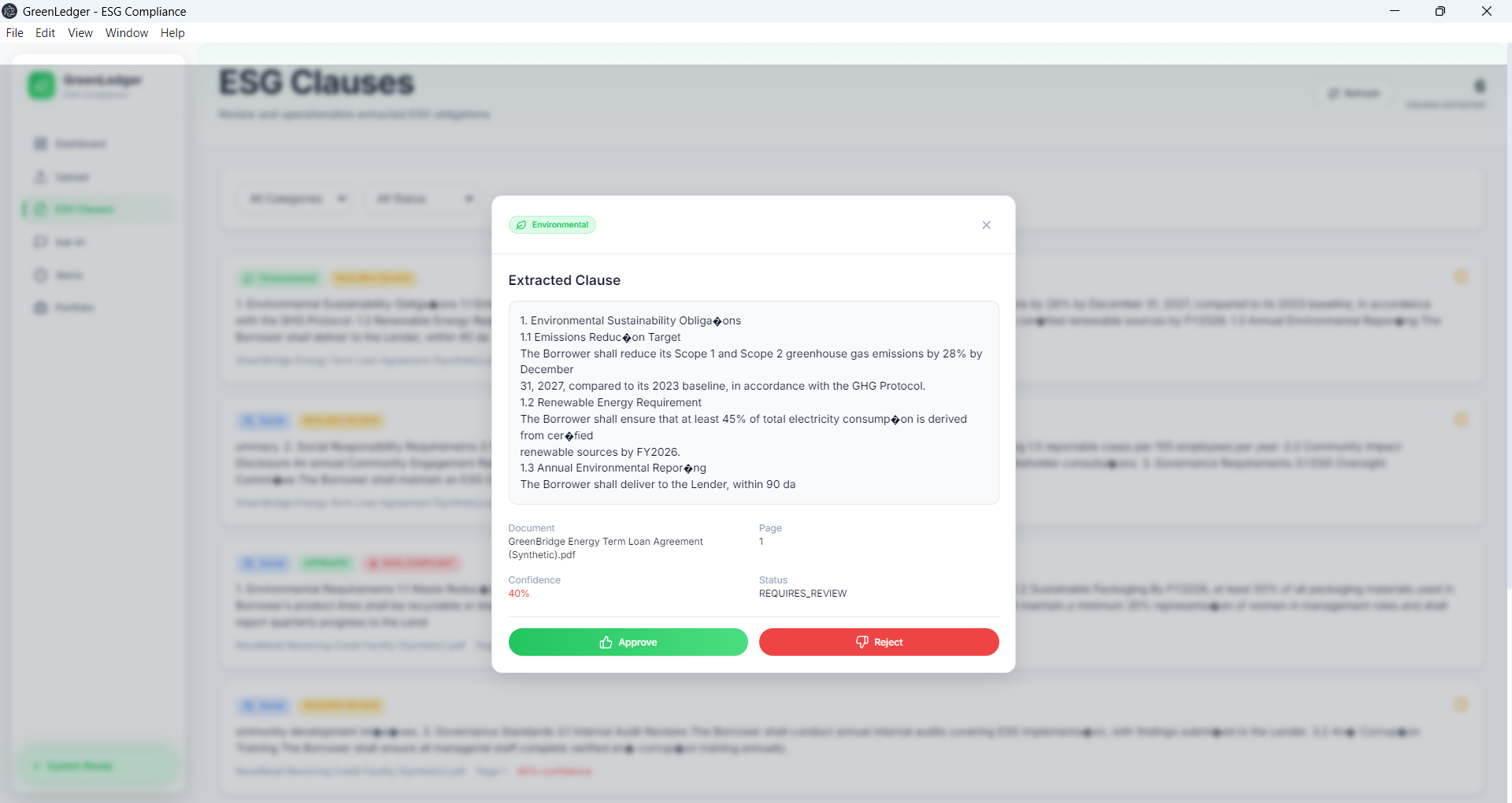
- Automated Clause Extraction: My AI analyzes document text to identify, extract, and structure ESG-specific clauses (e.g., "Annual CO2 Reduction Targets," "Diversity Hiring Quotas").
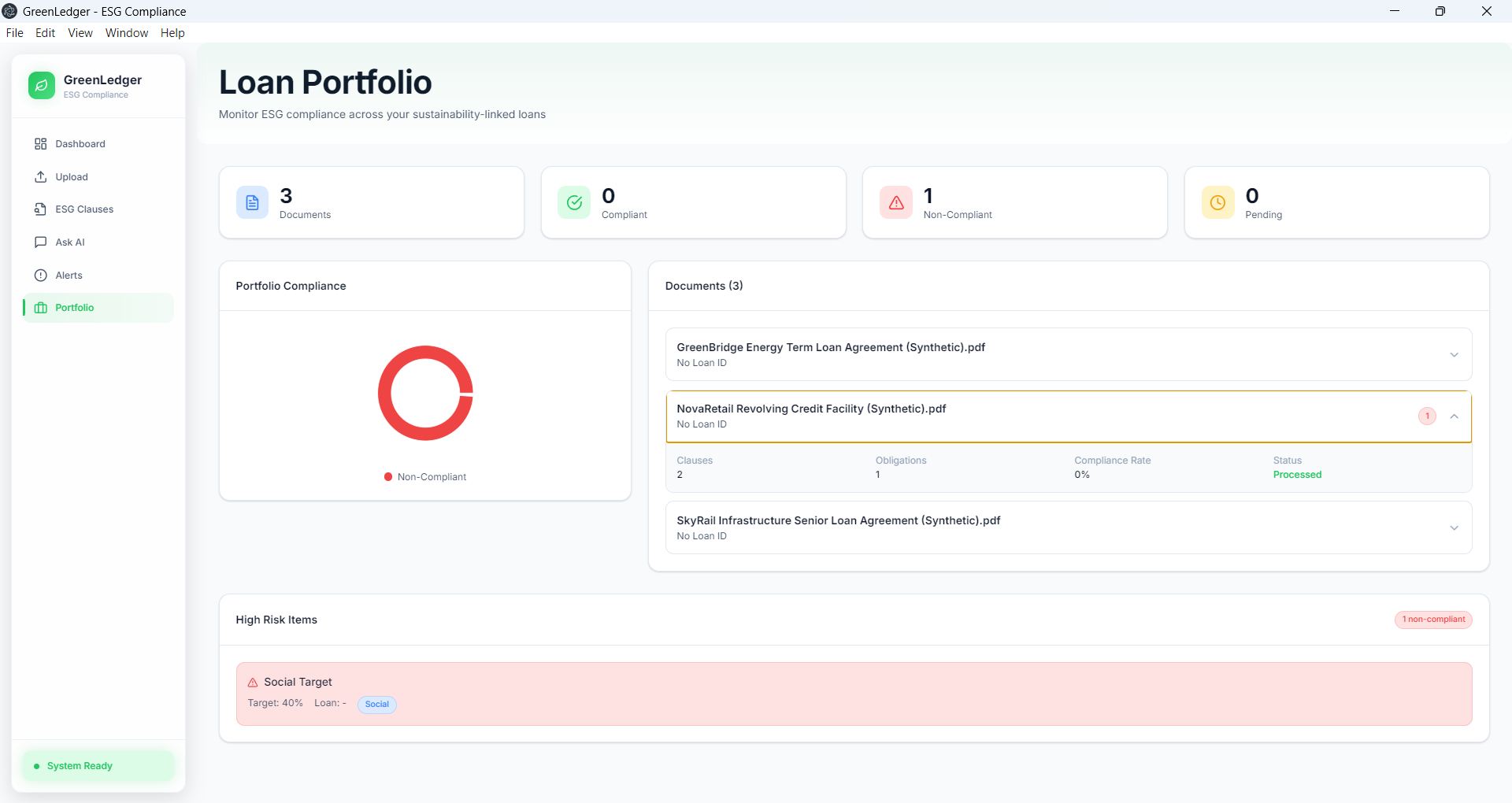
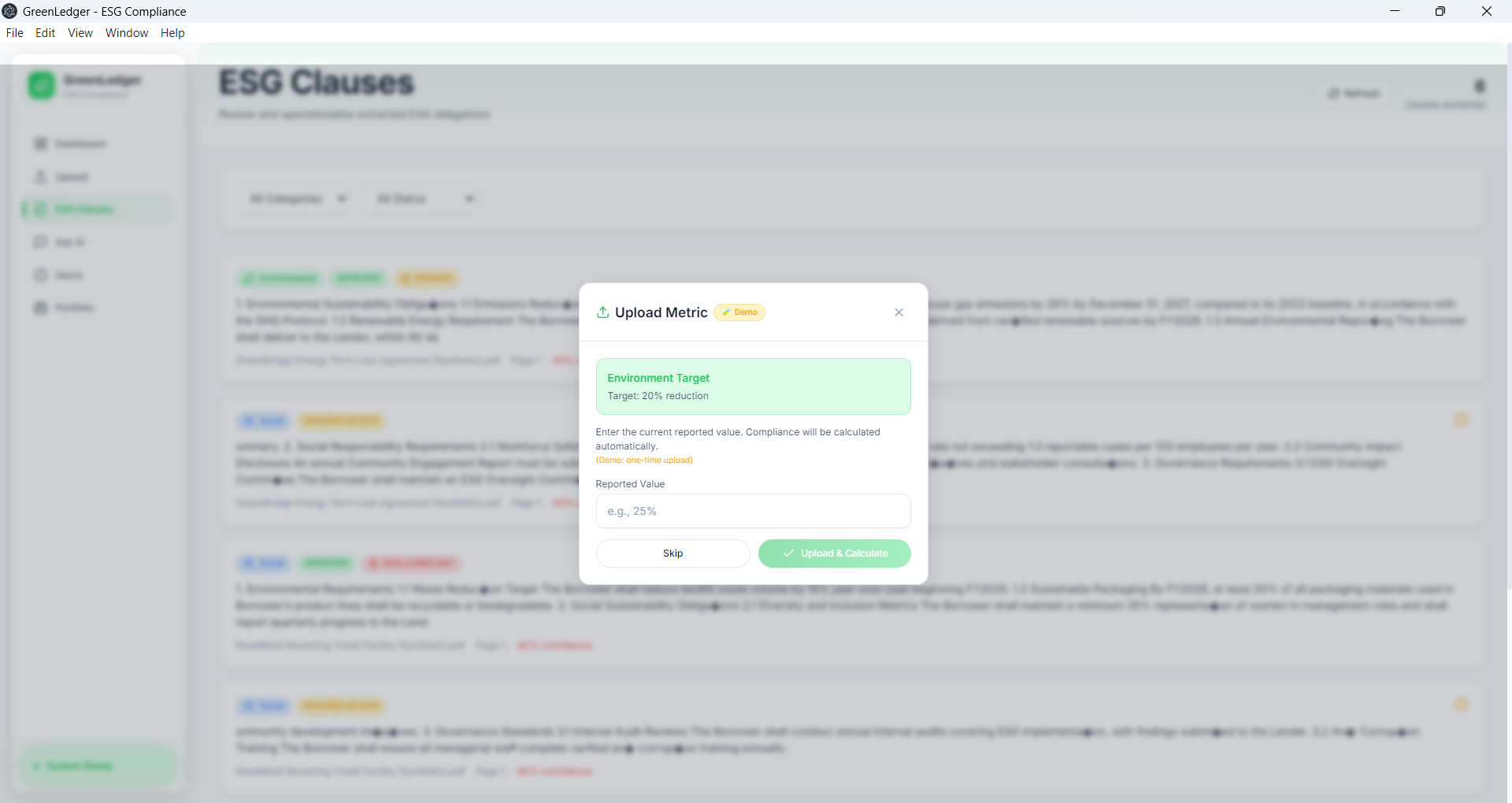
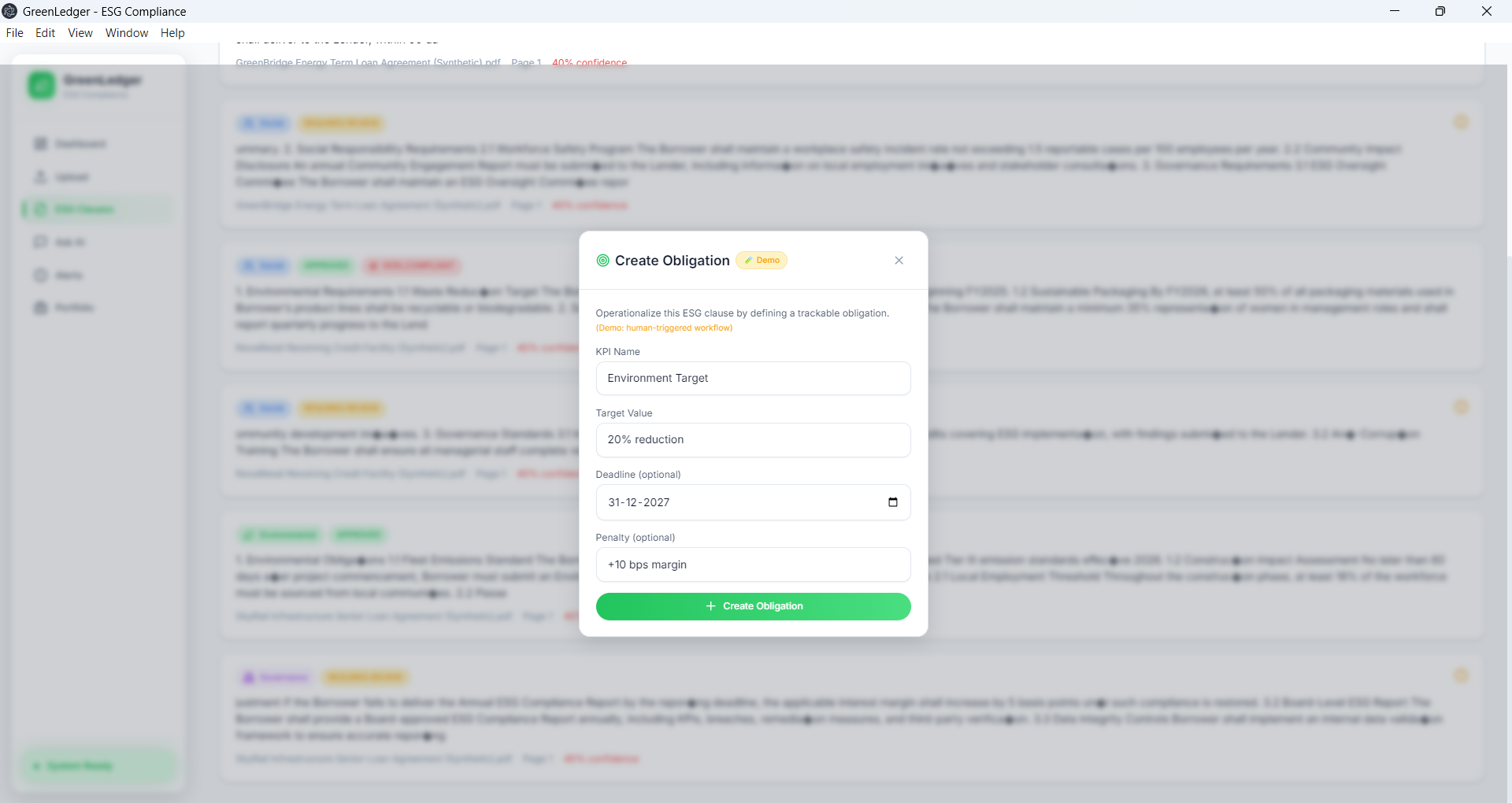
- Structured Data API: Instead of reading a PDF, bank IT systems can query my REST API to get the exact compliance status, due dates, and metric definitions for any loan in their portfolio.
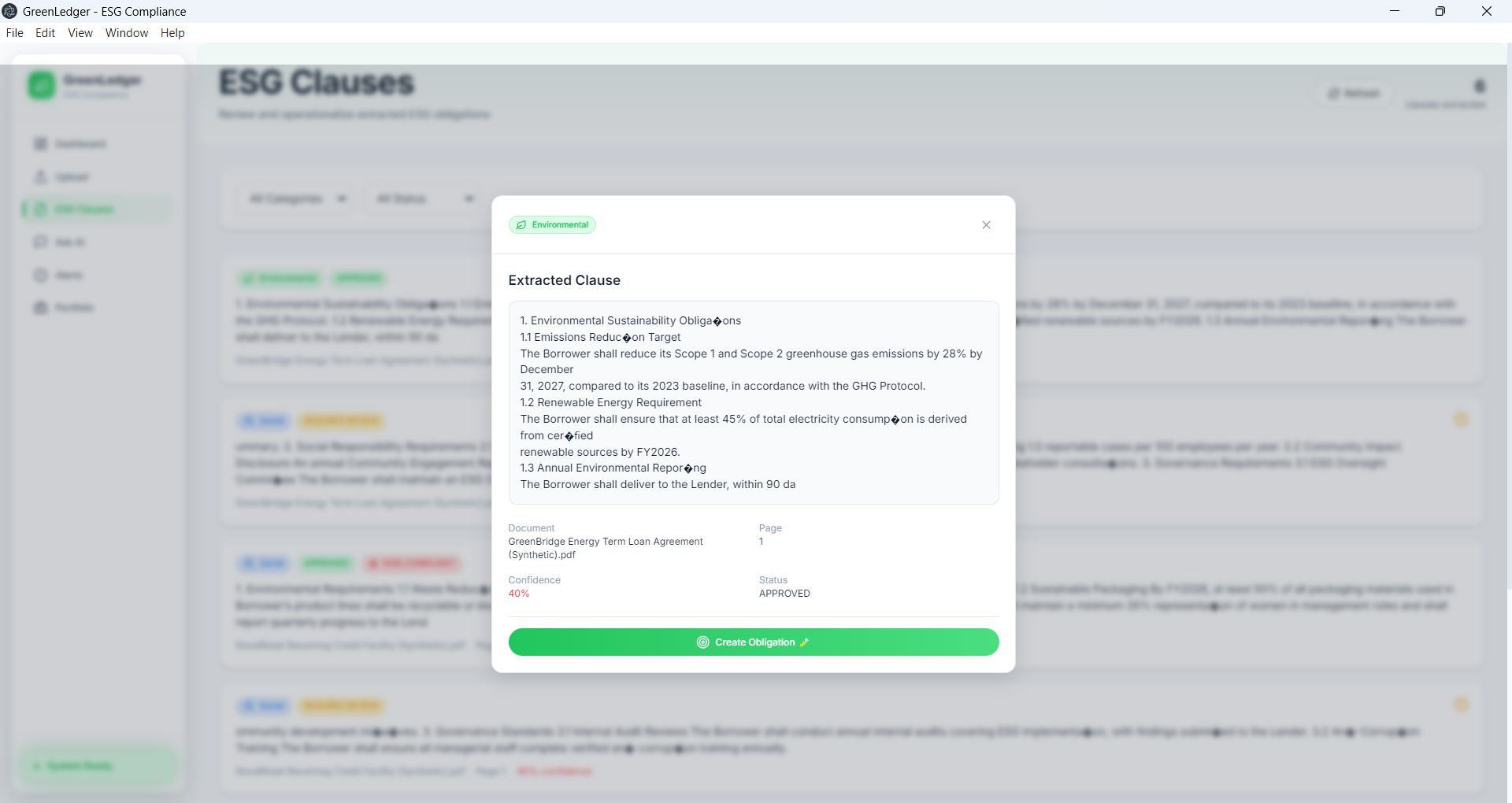
- Human-in-the-Loop Validation: I recognize that AI isn't perfect. The desktop app includes a review UI where legal experts can approve or modify AI-extracted clauses before they become active system alerts.
- Developer-First Documentation: I built a premium, intuitive documentation site to ensure that integrating GreenLedger into existing banking software is seamless for developers.
How I built it
I architected GreenLedger as a modern, three-tier solution:
The Desktop App (Frontend):
- Built with Electron and React, providing a native cross-platform experience for Windows, macOS, and Linux.
- I used TailwindCSS and Shadcn UI to create a clean, "fintech-grade" aesthetic that signals trust and professionalism.
- Framer Motion was used to add subtle interactions, making the data-heavy interface feel alive and responsive.
The Intelligence Engine (Backend):
- I used Python and FastAPI to build a high-performance REST API.
- The core intelligence is driven by a RAG (Retrieval-Augmented Generation) pipeline using LangChain and a local LLM via Ollama.
- I utilized Vector Embeddings to semantically search through massive loan documents to find relevant context for every query.
The Documentation Site:
- Built with Next.js 14, ensuring a fast, server-side rendered experience for developers exploring the API.
Challenges I ran into
- The "PDF Table" Problem: Loan agreements often contain complex, multi-page tables defining interest rate swings based on ESG performance. Standard OCR tools completely mangled this data. I had to implement custom parsing logic to preserve table structures before feeding them to the AI.
- Hallucination Risks: In finance, close enough isn't good enough. Early versions of the model would sometimes invent realistic-sounding clauses. I solved this by implementing strict citation retrieval - the model must point to the specific page and paragraph where it found the information.
- Design Balance: Creating a UI that felt rigorous enough for bankers but modern enough for developers was a tricky balance. I went through several iterations of the desktop app's dashboard and the docs site's sidebar navigation to get the information hierarchy just right.
- Packaging Complexity: Bundling a Python backend, a local LLM, and an Electron frontend into a seamless installer required careful orchestration of multiple processes on app startup.
Accomplishments that I'm proud of
- A Privacy-First Architecture: Unlike cloud-only solutions, GreenLedger runs entirely locally. Banks can process their most sensitive loan agreements without any data leaving their firewall.
- End-to-End Pipeline: I successfully went from raw PDF upload in the desktop app to a queryable JSON endpoint. Seeing the AI correctly identify a "Scope 3 Emission Target" from a dense 200-page document for the first time was a huge win.
- A Beautiful Docs Site: I didn't just dump a Swagger file. I built a custom documentation experience that stands toe-to-toe with products like Stripe or Plaid. I believe that developer experience (DX) is crucial for adoption.
- Real-World Viability: The logic I built handles the messiness of real text. It doesn't just work on perfect examples; it handles the noise of real legal documents.
What I learned
- Legal Text is structured data in disguise: I learned that loan agreements are actually highly structured programs written in English. Treating them like code allowed me to parse them more effectively.
- The importance of "Human-in-the-Loop": Total automation is scary for banks. Building a desktop UI that empowers the human operator rather than replacing them makes the tool significantly more commercially viable.
- Local AI is a differentiator: In an era of cloud-everything, offering on-device intelligence is a powerful trust signal for enterprise customers.
What's next for GreenLedger
- One-Click Installer: Bundling the Python backend and Ollama into a single
.exe/.dmgso users can run GreenLedger without any manual setup. - Blockchain Integration: I plan to hash the extracted ESG metrics onto a private ledger to create an immutable audit trail for regulators.
- Two-Way Sync: Enabling the API to not just read data, but push compliance status updates back into the bank's core loan servicing system.
- Multi-Jurisdiction Support: Training fine-tuned models on LMA standards across different regions (EMEA vs. APAC) to handle regulatory nuances.
Built With
- fastapi
- langchain
- nextjs
- python
- shadcn
- typescript
- vectordb


Log in or sign up for Devpost to join the conversation.