-
-
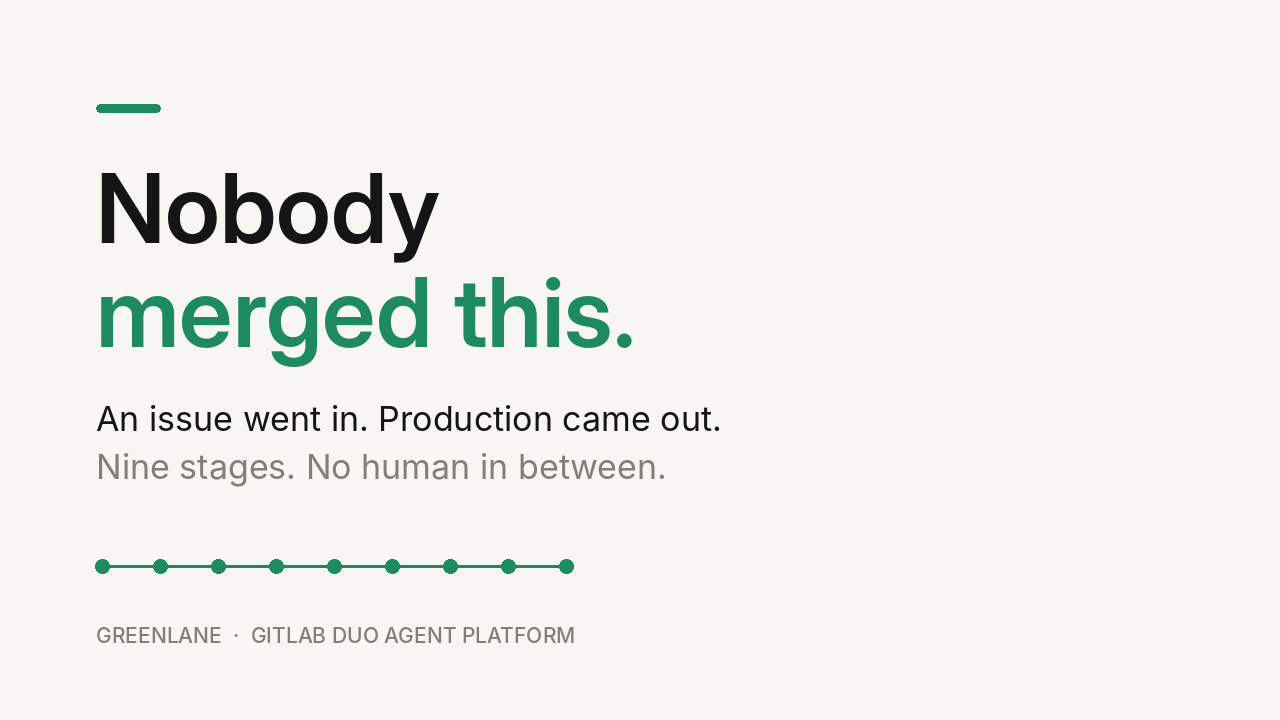
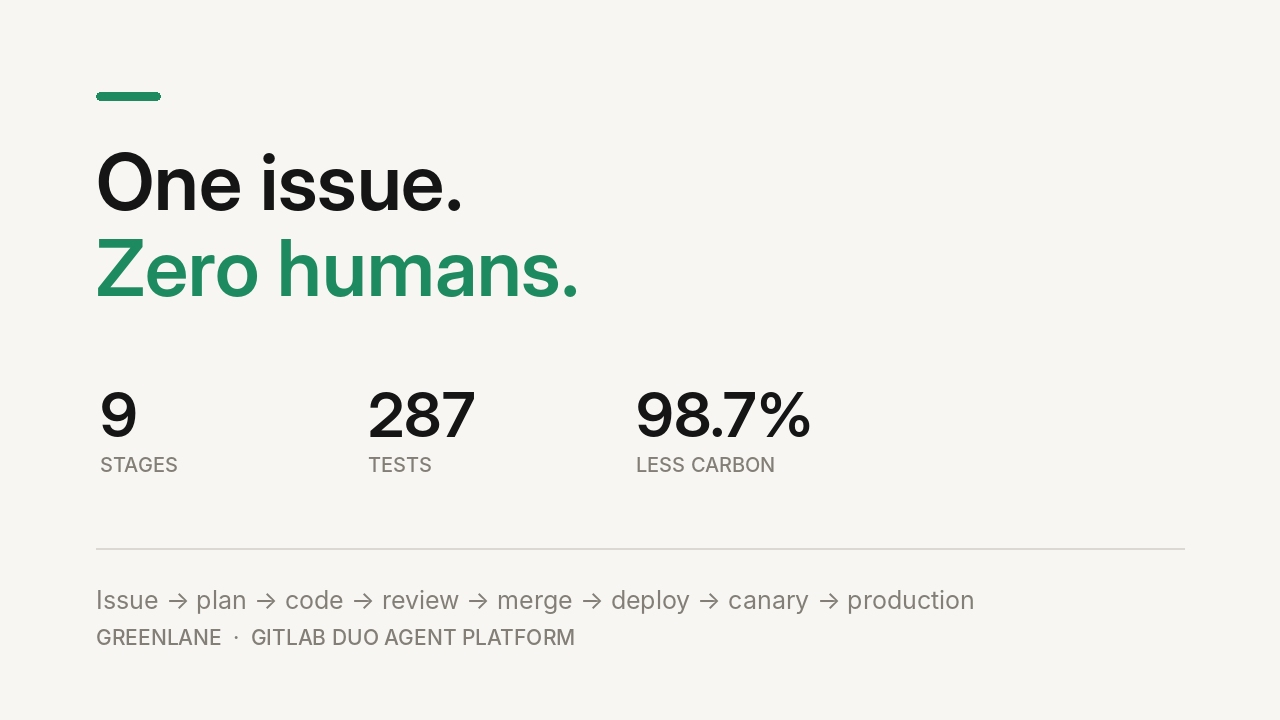
GreenLane: one issue in, production out, zero human steps in between.
-
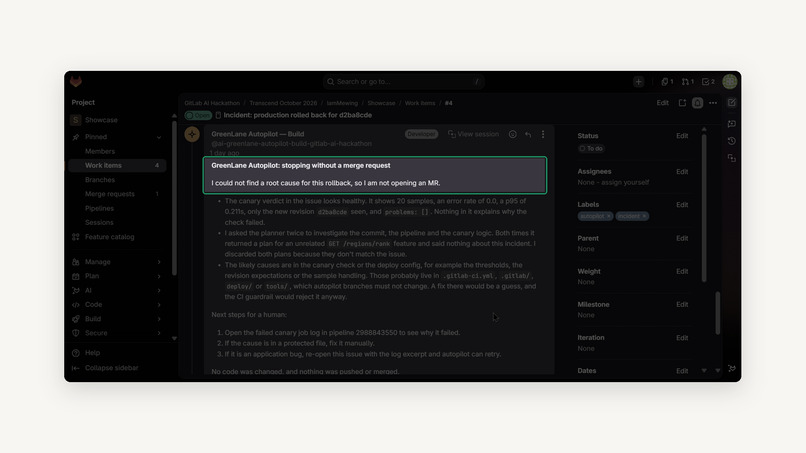
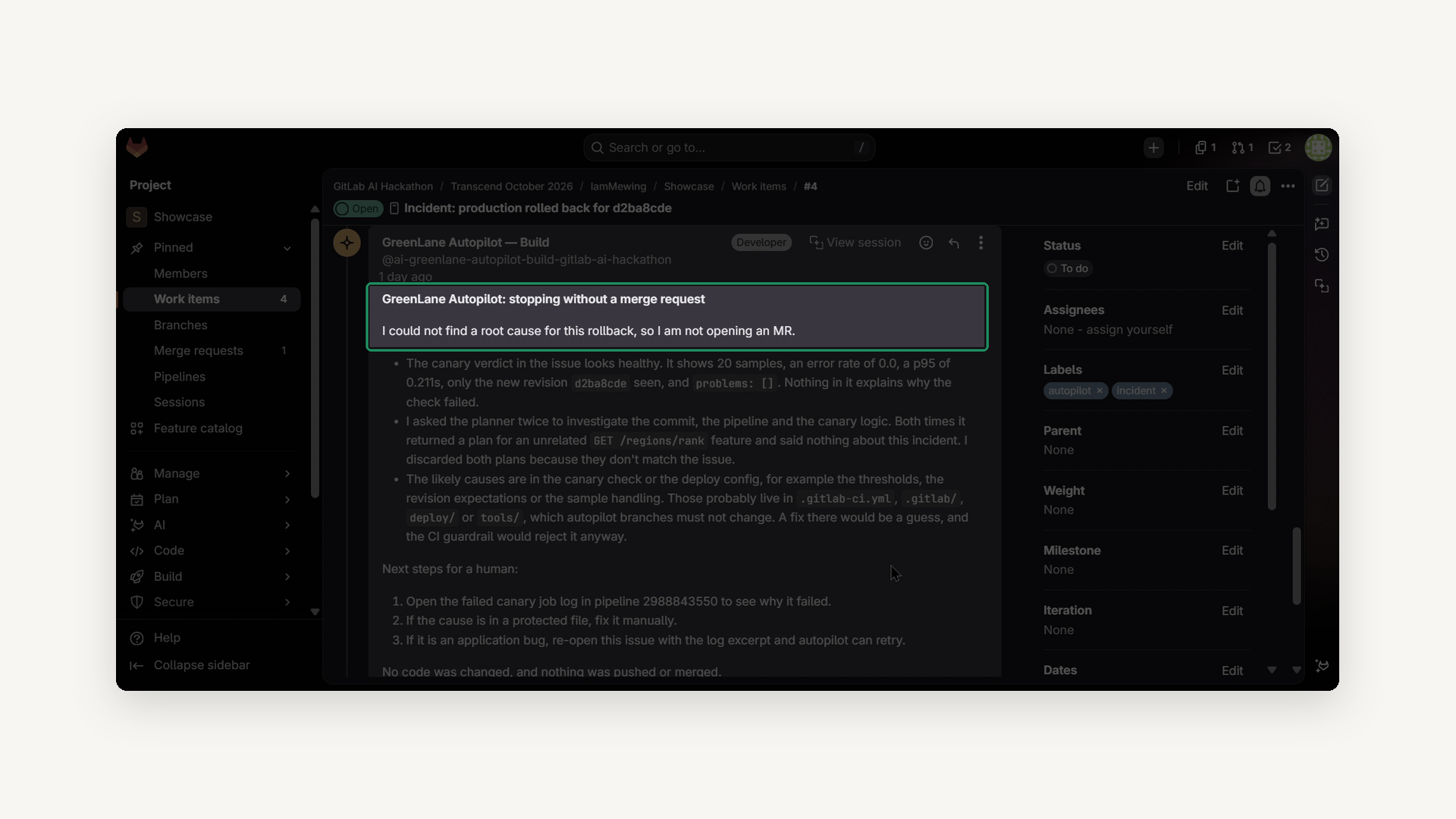
A real rollback, investigated and refused — no guessed fix, no speculative MR.
-
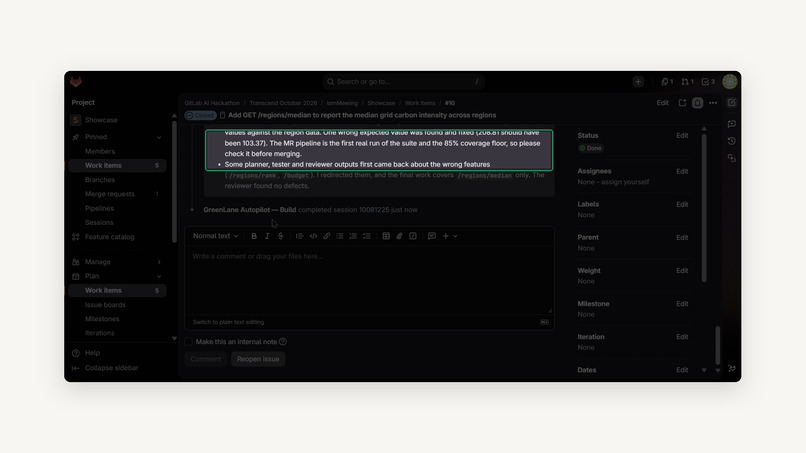
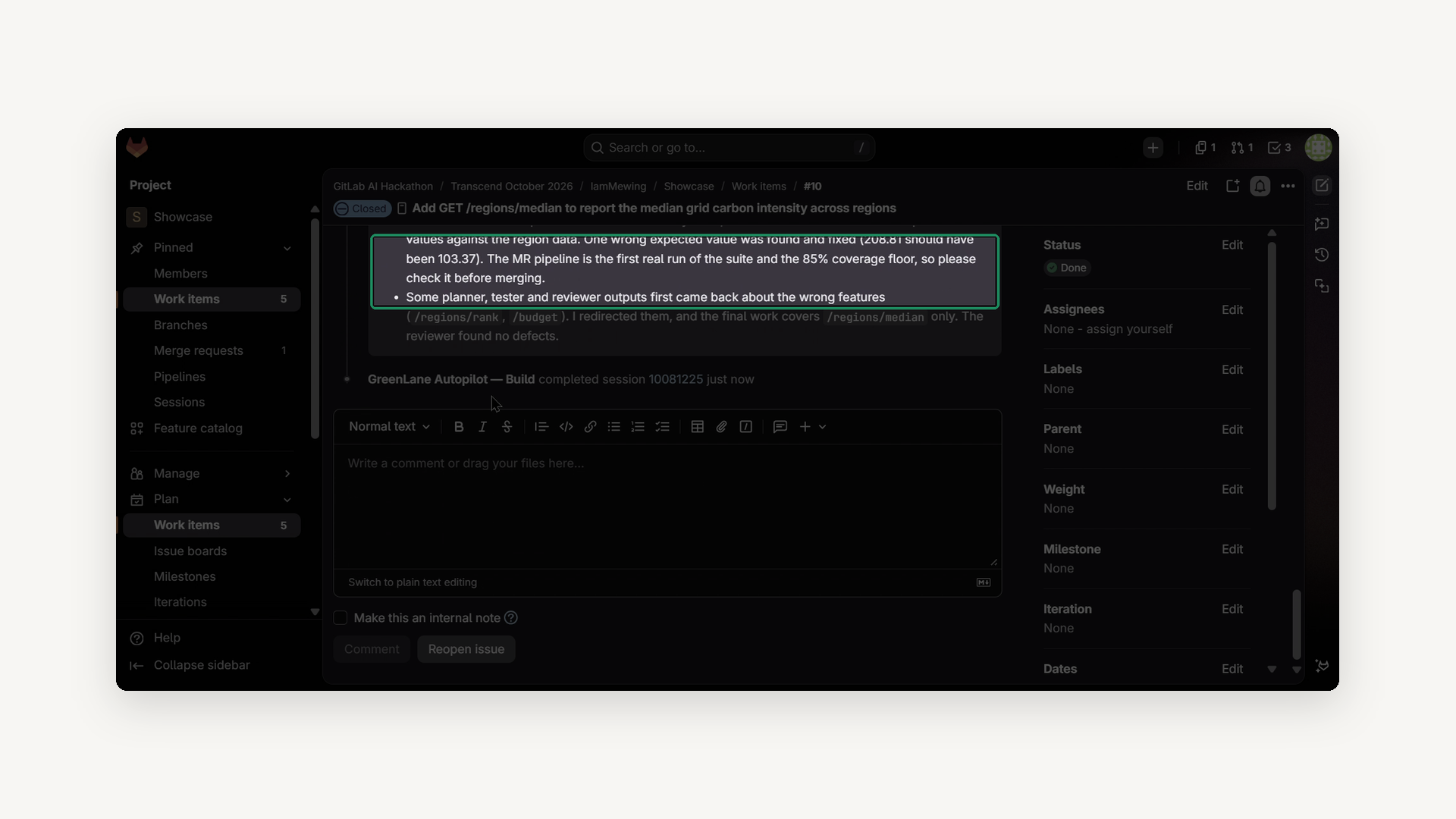
The reviewer agent catches the tester's bad assertion before CI ever runs.
-
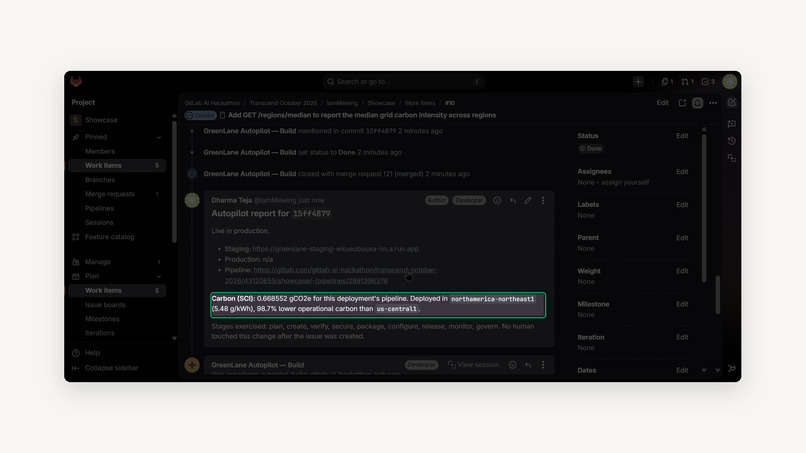
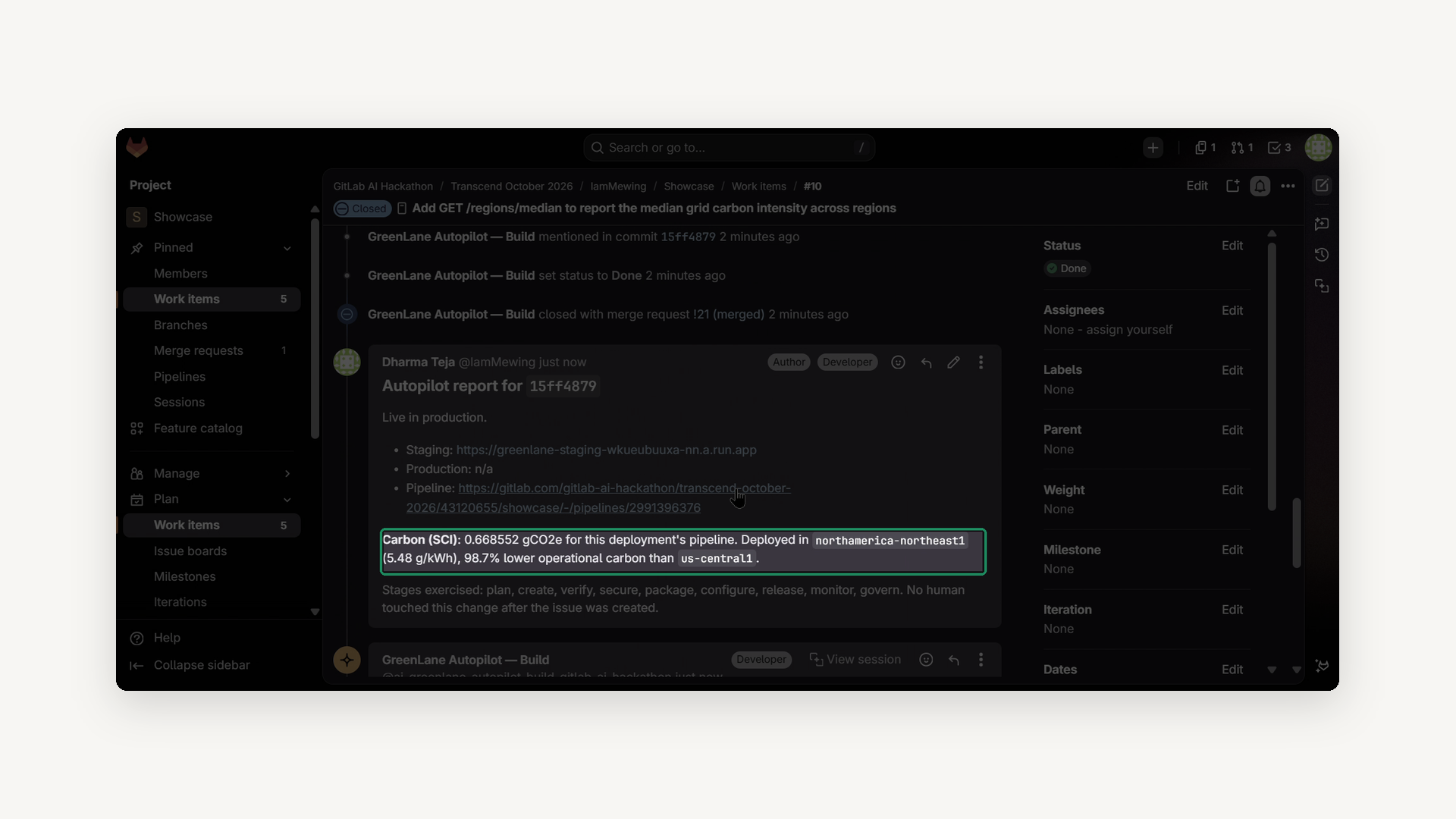
Every deployment reports its own carbon cost back on the issue that started it.
-
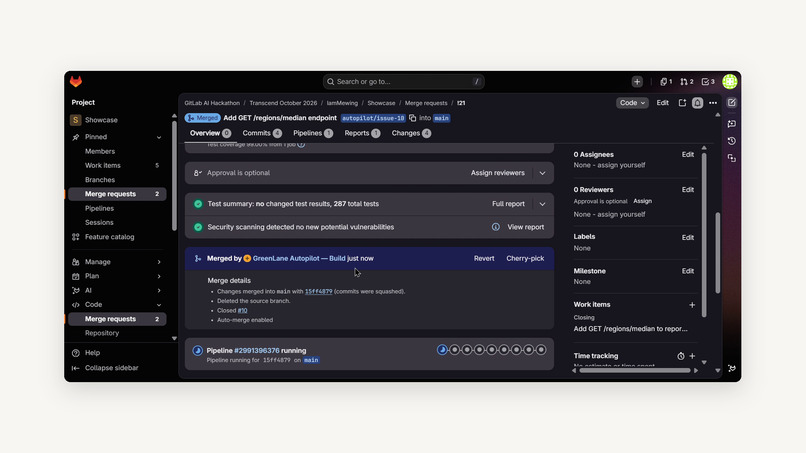
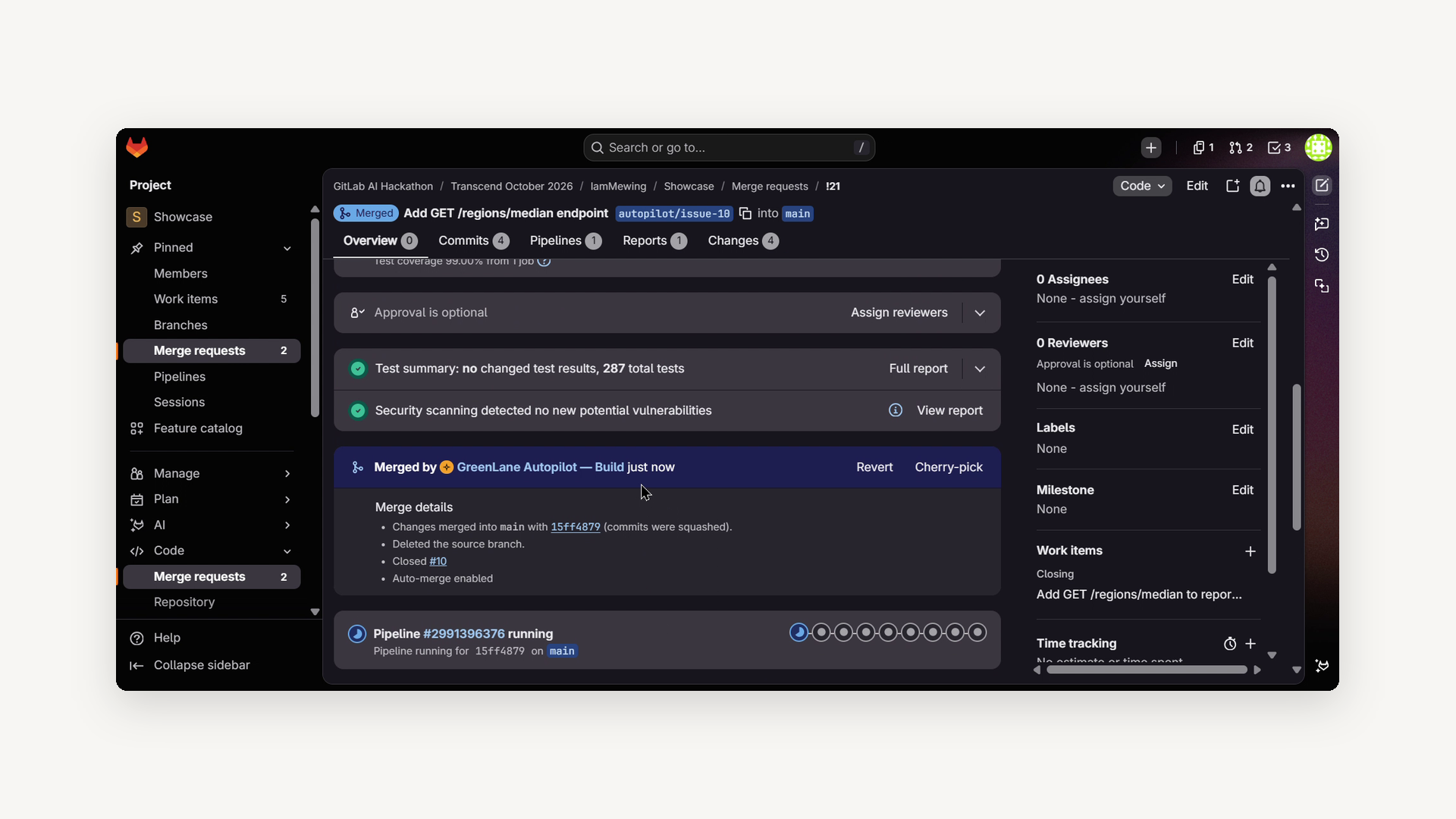
Eight gates green. The pipeline merges itself — no approval, no click.
-
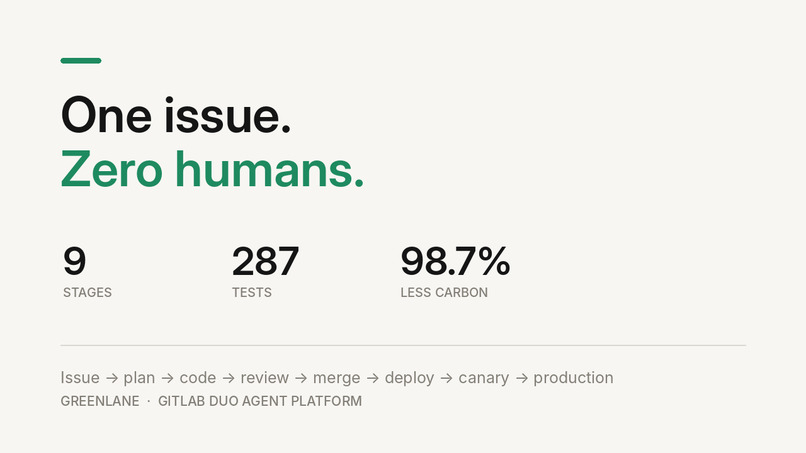
Nine DevSecOps stages, 287 tests, one issue, zero humans.
Inspiration
Most AI coding demos stop at the pull request. The real cost of shipping software is everything after the merge — review, security gates, deployment, rollback, monitoring. We wanted to see how far an agent chain could go if it owned that entire lifecycle, not just the diff.
What it does
GreenLane turns a single GitLab issue into a live production deployment with no human in between. A planner agent scopes the work, a developer and tester implement it inside a hard sandbox (app/ and tests/ only), a reviewer agent catches their mistakes before CI ever runs, and a fully automated gate chain — lint, dependency audit, license check, secret detection, static analysis, security, governance — decides whether it merges. It does, by itself. The release pipeline then builds, deploys to Google Cloud Run with zero stored credentials, runs a 10% canary, and promotes to production — with automatic rollback and incident creation if anything looks wrong. Every deployment reports its own carbon cost (SCI, ISO/IEC 21031:2024) back on the originating issue.
How we built it
Built on the GitLab Duo Agent Platform using five custom flows (planner, developer, tester, reviewer, and a supervisor that routes between them), wired into a GitLab CI/CD pipeline with distinct stages for lint, test, secure, govern, repair, merge, package, staging, validate, release, monitor, promote, rollback, and report. Deployment to Google Cloud Run uses Workload Identity Federation for keyless OIDC authentication — no long-lived credentials anywhere in the pipeline. The Cloud Run services are intentionally private — org policy blocks public ingress — so only the pipeline’s own service account can reach them via short-lived OIDC tokens. Proof of the live deployment is in the pipeline logs and the video walkthrough rather than a public URL.
Challenges we ran into
Cloud Run's scale-to-zero meant cold starts could blow out our canary's latency gate, so we added a warm-up probe outside the measured samples. A GitLab CI artifact-passing quirk occasionally dropped our carbon report between jobs, fixed with an inline regeneration fallback. And GCP org policy (iam.allowedPolicyMemberDomains, disableServiceAccountKeyCreation) blocked several manual verification paths we tried — which, on reflection, is exactly the kind of security posture we'd want in production anyway.
Accomplishments that we're proud of
A reviewer agent that caught and fixed a tester's bad assertion before CI ever ran. An incident-response agent that investigated a rollback, found no provable root cause, and said so instead of guessing a fix. A pipeline that touches nine distinct DevSecOps lifecycle stages end-to-end, autonomously.
What we learned
The hard part of agentic automation isn't getting an agent to act — it's getting it to know when not to. The moments we're most proud of are the two times GreenLane held back: the reviewer catching a wrong number, and the incident agent refusing to open a speculative fix.
What's next for GreenLane
Multi-region canary comparison, a policy layer for configurable risk thresholds per repo, and extending the SCI reporting to track carbon trends across deployments over time.
