Inspiration It was a Tuesday. I was walking through a grocery store when I saw something labeled "eco friendly." I did not think much of it at first, but later I wanted to actually see what made it different from every other product sitting next to it. I looked into it and realized there was nothing behind it. No certification, no explanation, no number, nothing I could actually check. The company had just slapped the label on with no real effect behind it. I was wasting my money on something that never actually did what it claimed, and I had no way of knowing that in the moment I picked it off the shelf. I started thinking about how many other people walk past those same words every single day and just trust them because they sound good. I did not want that to keep happening to anyone else, and I realized the real problem was not that people do not care about sustainability, it is that they have no easy way to check if a claim is actually true before they buy something.
What it does
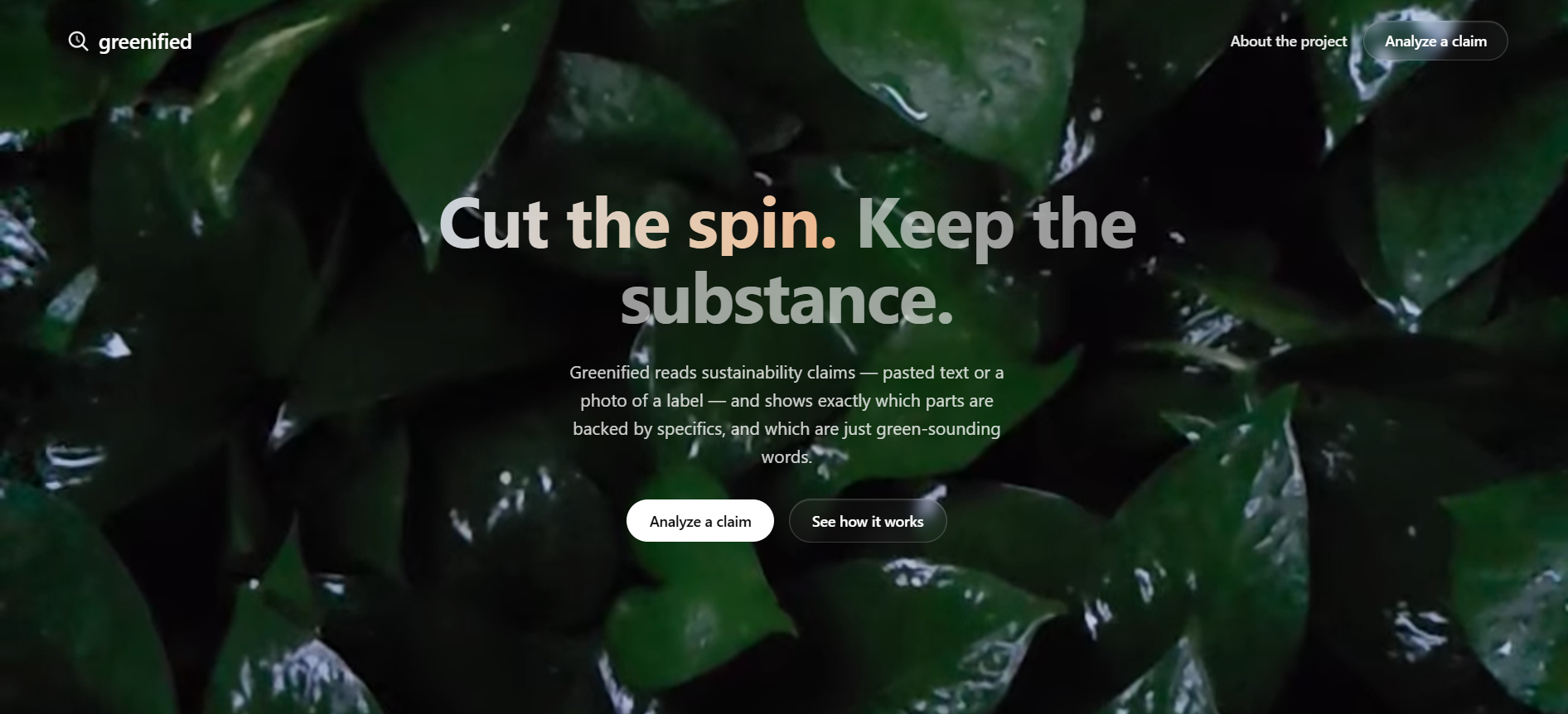
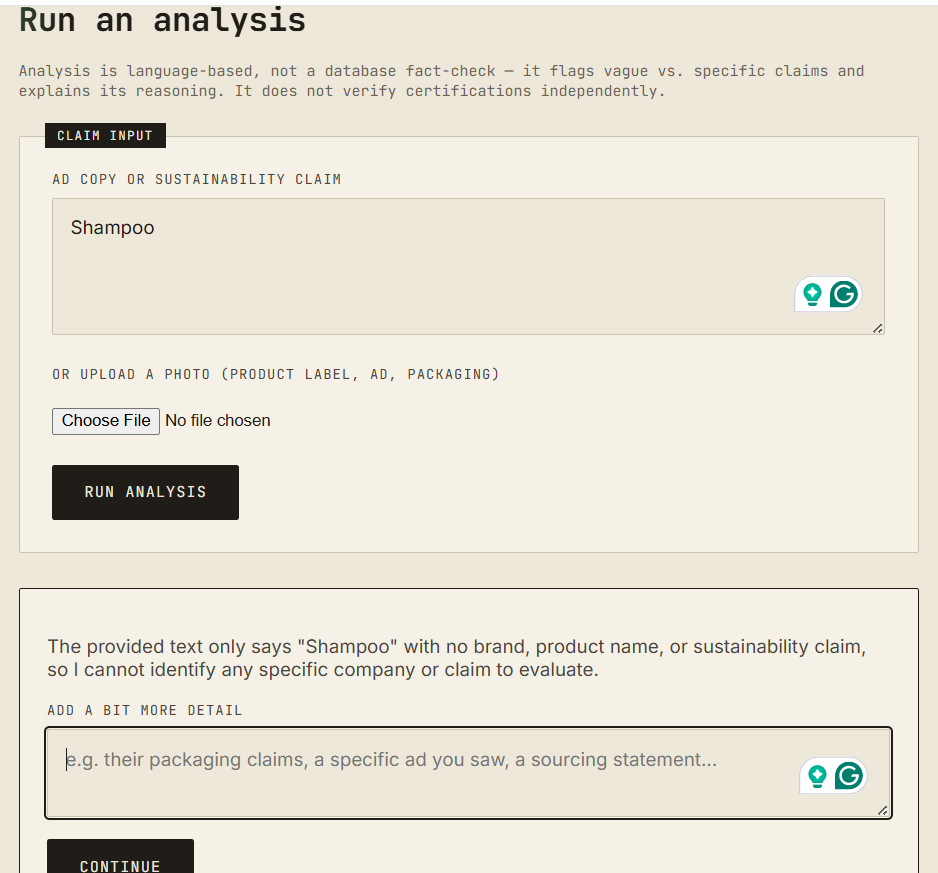
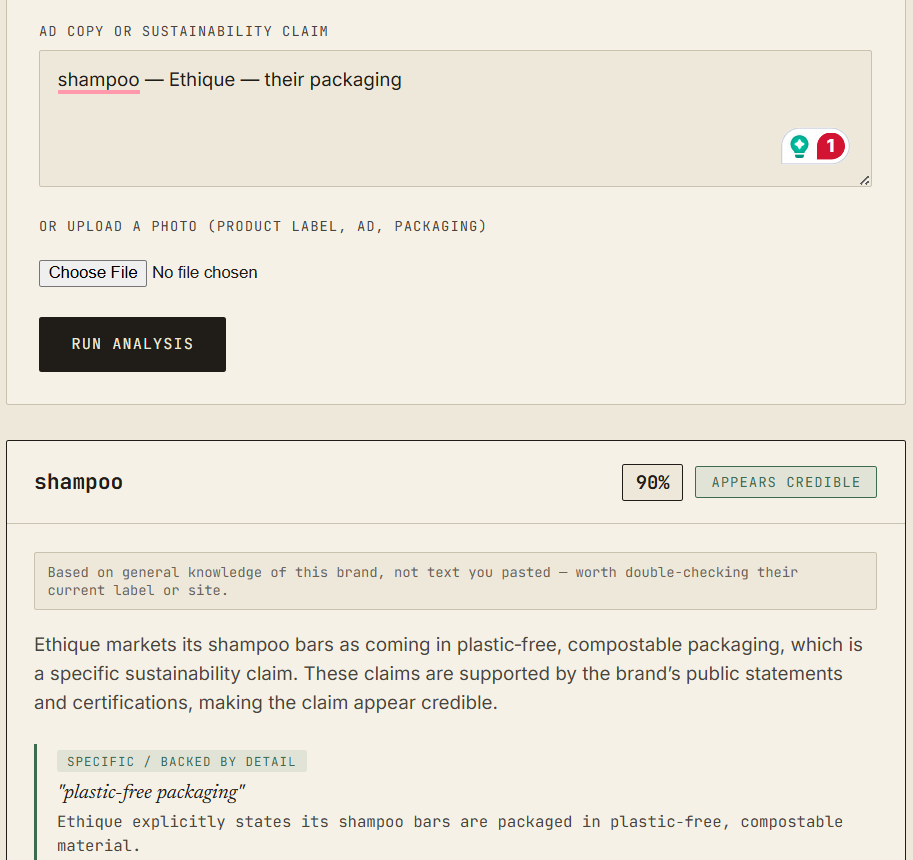
Greenified takes a sustainability claim, either pasted text or a photo of a label or ad, and breaks it down claim by claim instead of giving one vague overall opinion. Each individual claim gets tagged as specific, vague, or unverifiable, along with a plain language reason explaining exactly why it earned that tag. It also gives an overall credibility score from 60 to 100, but that score is not just a random number generated by the AI. It is anchored to fixed reference bands, so a company with mostly named certifications and hard numbers behind its claims scores very differently than one that is leaning entirely on feel good buzzwords. The tool also works on photos, so you can snap a picture of an actual product label or ad and get the same level of scrutiny as if you had typed the claim in yourself.
How we built it
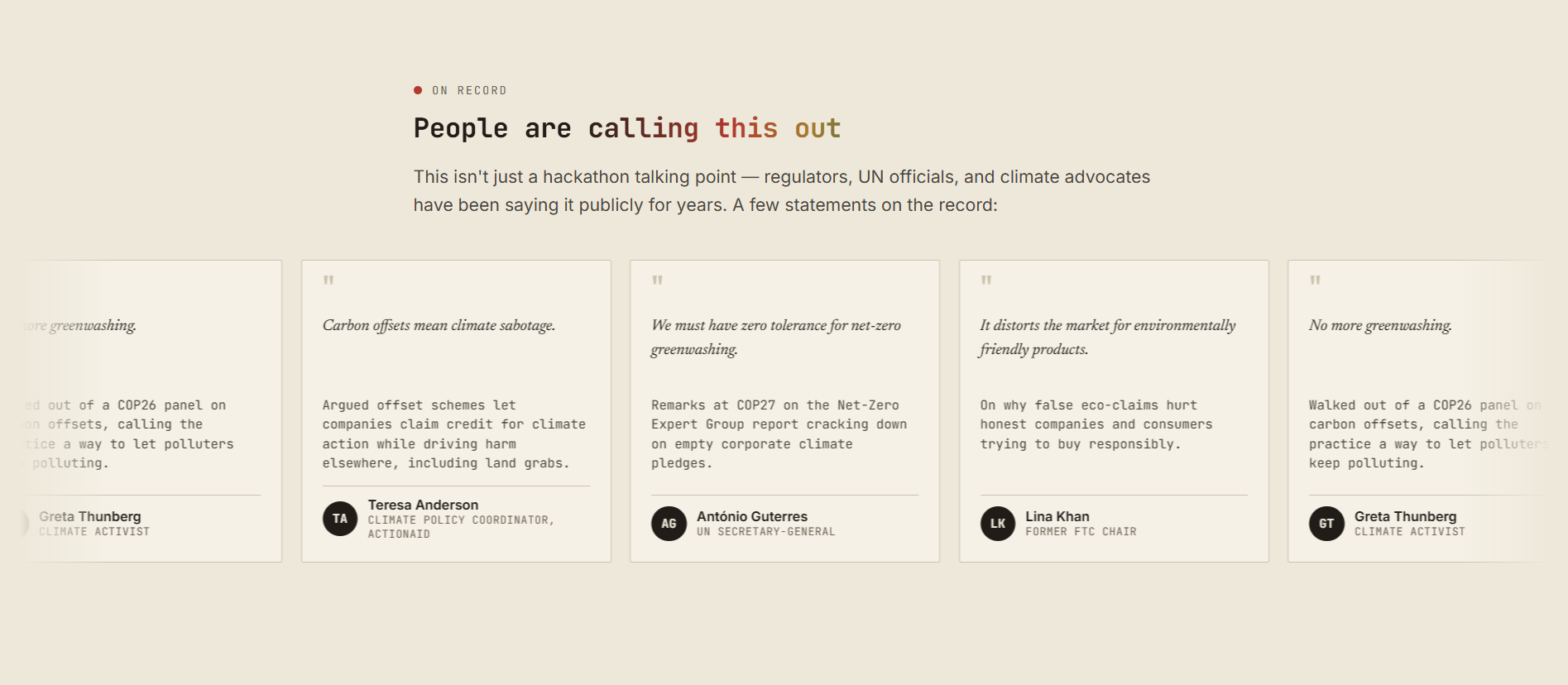
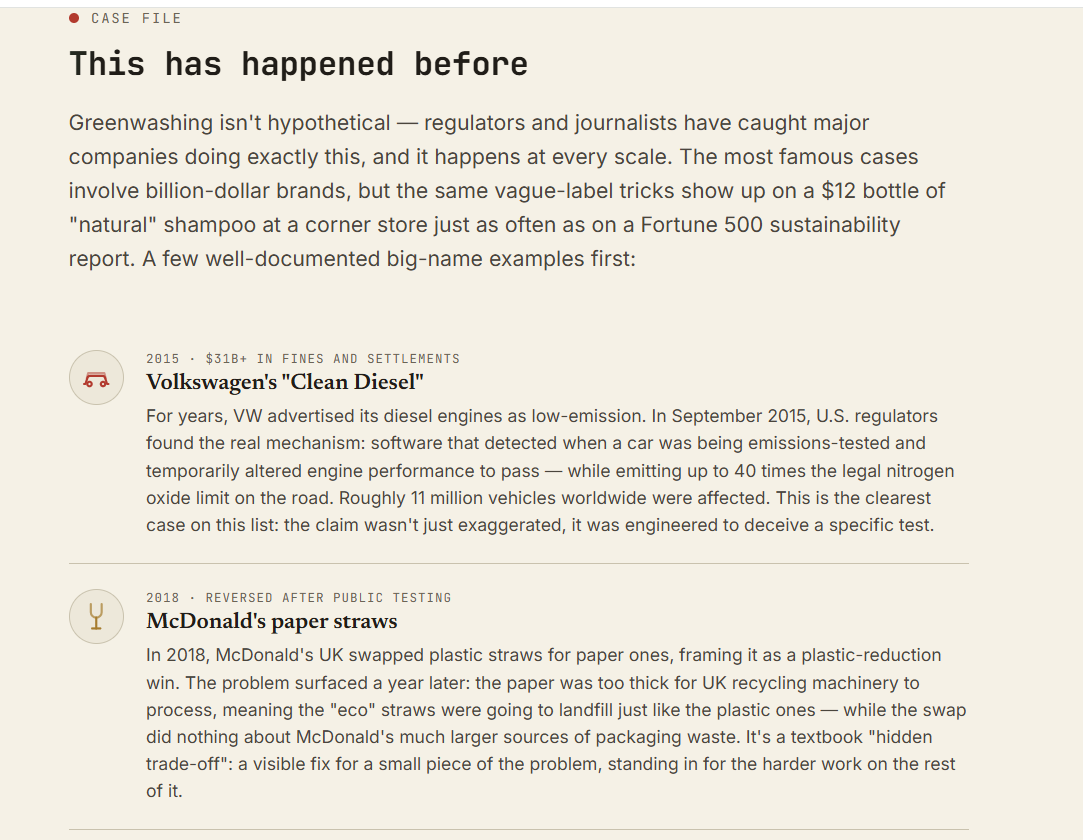
It is a single HTML file with vanilla JavaScript, no framework, calling an AI model through a structured system prompt that runs a three stage pipeline. First it figures out what the input actually is, whether that is a real product ad, an unrelated image, or something too unclear to judge. Then it tags each claim on its own instead of averaging everything into one score. Then it calculates a calibrated score based on the actual ratio of specific to vague claims, adjusted down if there is known contradicting evidence like a past scandal. I designed the whole thing around an evidence report aesthetic instead of a generic score gauge, with claim cards color coded in red, amber, and green, a case file section showing real documented greenwashing cases like Volkswagen's clean diesel scandal and the McDonald's paper straws that turned out to be unrecyclable anyway, and a marquee of real quotes from people like the UN Secretary General and a former FTC chair calling out greenwashing publicly.
Challenges we ran into
Getting the AI to give a calibrated score instead of just picking a number out of thin air was harder than I expected. I had to write explicit reference bands describing exactly what ratio of specific to vague claims should land in each range, which forced the model to actually reason through the evidence instead of guessing a vibe. I also had to switch API providers with almost no time left, which meant rewriting the request format, the response parsing, and the way images get sent to the model, then retesting the whole flow right before the deadline. Deployment turned into its own fight too. GitHub's secret scanning flagged my API key sitting exposed in the file, which taught me to move it into a server side environment variable instead. I also hit a 404 from a file naming mismatch and had to debug the difference between a static file and a serverless function on Vercel.
Accomplishments that we're proud of
I built and shipped this entirely solo, from the first line of code to a live deployed link, in the middle of a hackathon with real time pressure the whole way through. I am proud that it does not just spit out a single score and call it a day, it explains its reasoning per claim, which makes it genuinely useful instead of just another black box AI verdict that you have to blindly trust. I am also proud that it handles edge cases honestly. If it does not recognize a claim or is not confident, it tells you plainly instead of inventing an answer just to seem useful.
What we learned I learned a lot about prompting for calibrated, structured output instead of just asking an AI to rate something and hoping for consistency. I also got a crash course in deploying under real time pressure, everything from API auth headers and provider specific request formats to static site hosting quirks like file naming conventions, serverless functions, and environment variables that I had never run into before. It was a lot to learn in a short window, but I walked away with a much better sense of what it actually takes to go from a working idea to something live on the internet that anyone can use.
What's next for Greenified I would want to turn it into a browser extension so it can flag claims in real time while someone is actually shopping online, instead of requiring them to copy and paste into a separate site. Ideally it would sit quietly in the background and only speak up when it sees a sustainability claim worth double checking, right there on the product page, so the moment of doubt happens exactly when someone is deciding whether to buy something instead of after they already have.
—- HEY PLEASE SEEE THIS, I UNDERSTAND THAT I AM SUPPOSED TO ADD A YOUTUBE VIDEO LINK BUT I HAVE NO TIME PLEASE MAKE THIS DOOO! I ADDED A VIDEO AFTER THE MAIN TRY IT OUT LINK
Built With
- css
- geminigemma
- github
- html
- javascript
- opensourceapi
- vercel

Log in or sign up for Devpost to join the conversation.