Inspiration
We wanted to create a hardware hack, because we both enjoy working with embedded systems and interacting at a low level with hardware.
What it does
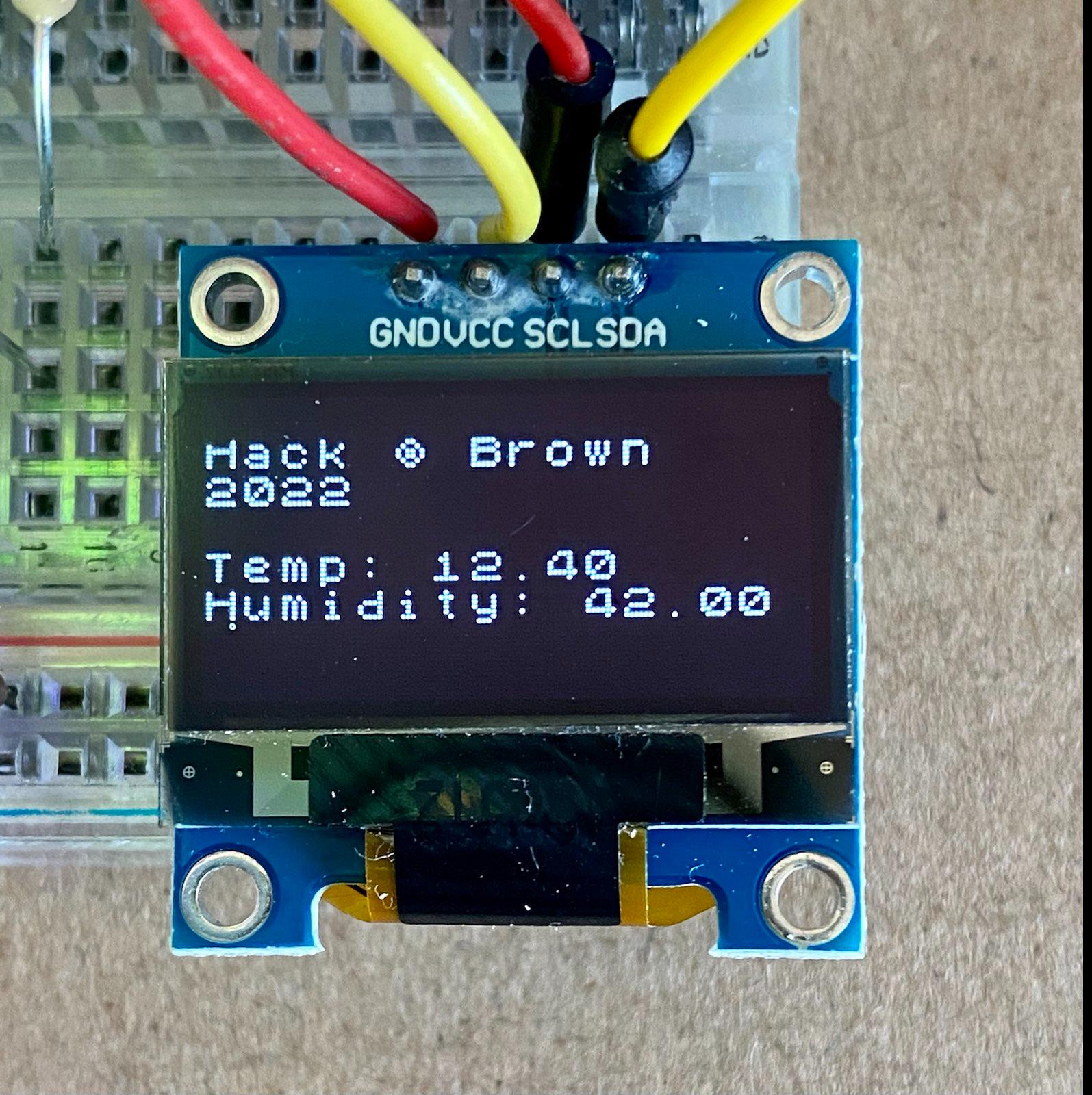
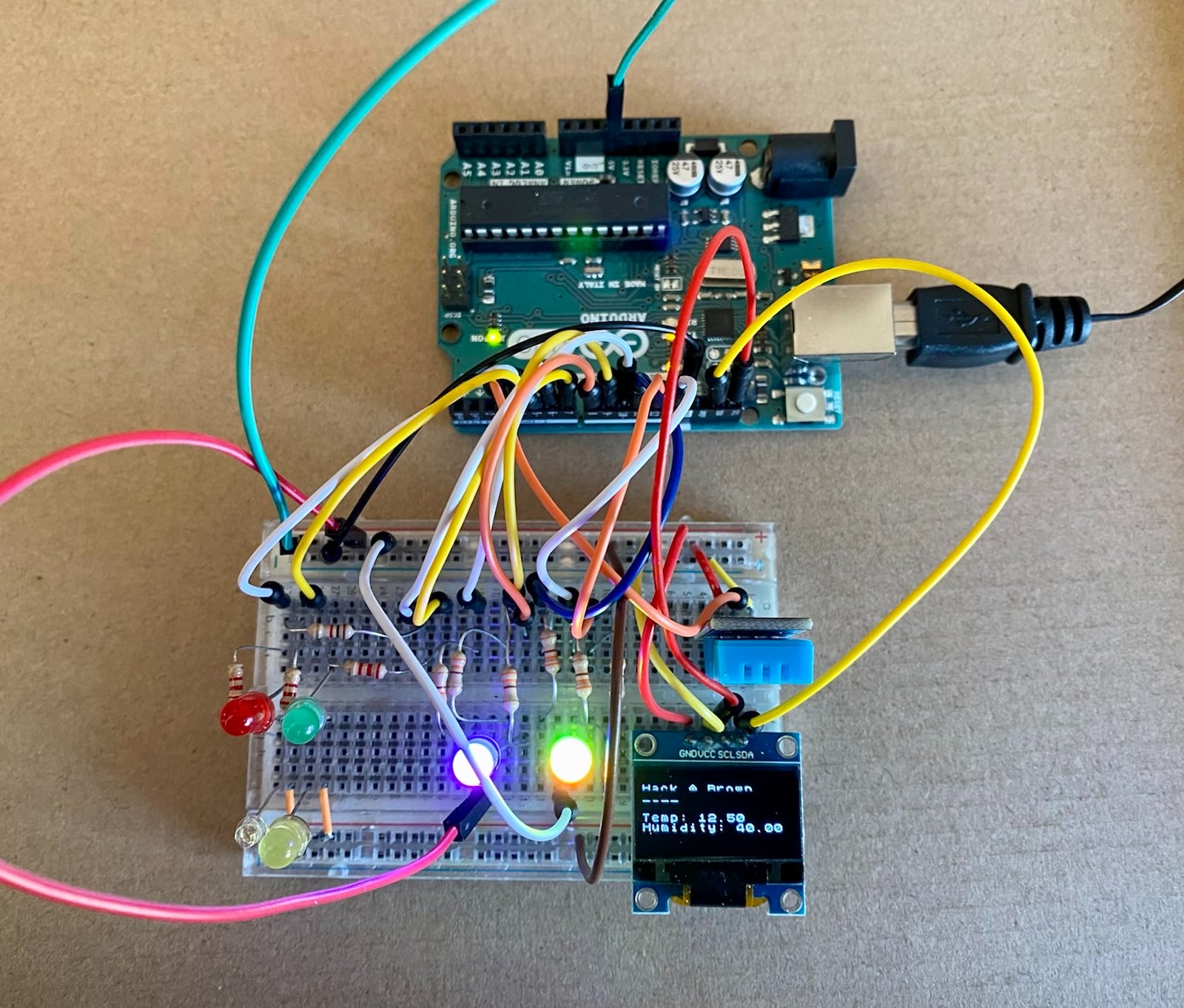
This project is a hardware hack device that will constantly monitor the current air temperature and humidity. If values are within a configurable range, an RGB led will provide a gradient between two colors to visualize how the current temp/humidity fits within your set range. eg. if max temp = 100, min temp = 0, and current temp = 90, RGB LED will be mostly red. If the current temperature/humidity is out of range, one of two other LEDs will light up to indicate if the temperature/humidity is too high or too low. eg. if max temp = 50, min temp = 0, and current temp = 75, red LED will turn on, RGB led will turn off. Current temperature and humidity data can also be read on the OLED I2C display. LED overview: 1 red led - Temperature too high 1 blue led - Temperature too low 1 green led - Humidity too high 1 yellow led - Humidity too low Red-Blue RGB gradient led - temperature is somewhere in-between min/max Green-Yellow RGB gradient led - humidity is somewhere in-between min/max
How we built it
We used an Arduino Uno, a breadboard, 128x64 white I2C OLED display, temperature/humidity sensor, 2 RGB LEDS, and 4 various single colored LEDS. The code was written in C++ using the Arduino IDE and related sensor/display libraries.
Challenges we ran into
We ran into issues with getting the RGB LEDs to work, since they used a common anode, instead of a common cathode, which took a while to debug and fix.
Accomplishments that we're proud of
We are proud that we were able to complete this hardware hack despite the blizzard, and make a successful hack despite the lack of access to additional materials and working virtually.
What we learned
We familiarized ourselves with the I2C protocol and with PWM led controls.
What's next for Greenhouse Monitor
We would like to include additional sensors, for example: light, soil moisture, and rainfall sensors (which we did not have on hand at the time). We would also like to use a small webserver to allow for remote configuration.


Log in or sign up for Devpost to join the conversation.