-
-

Logo
-

Main Analyzer Page
-
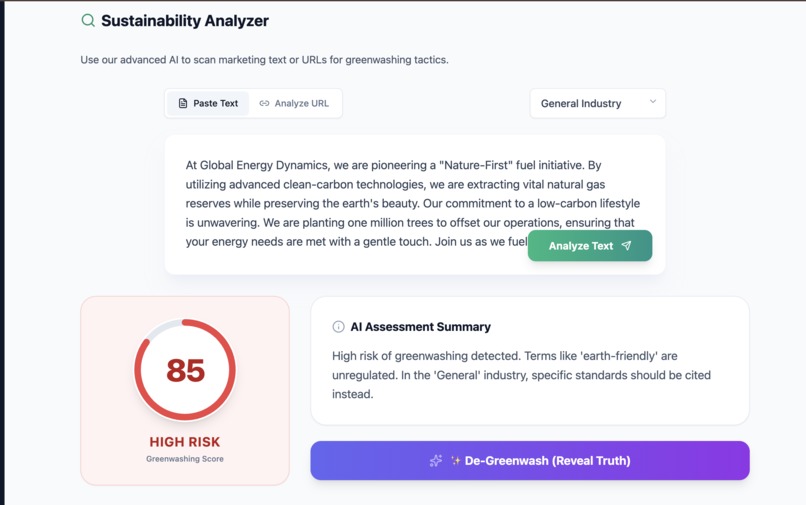
Greenwashing detection pt. 1
-
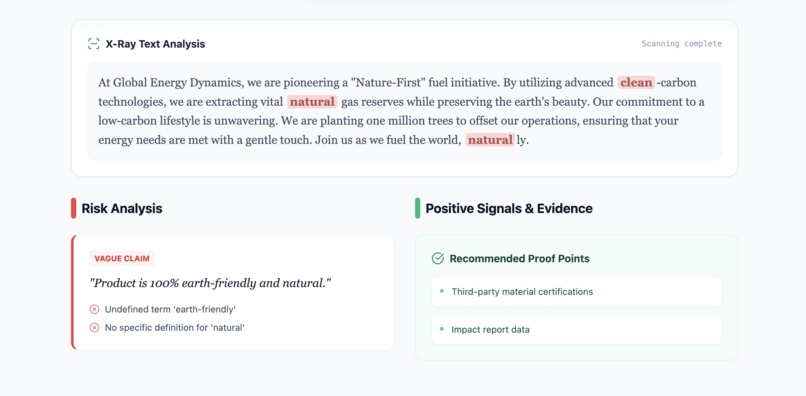
Greenwashing detection pt. 2
-
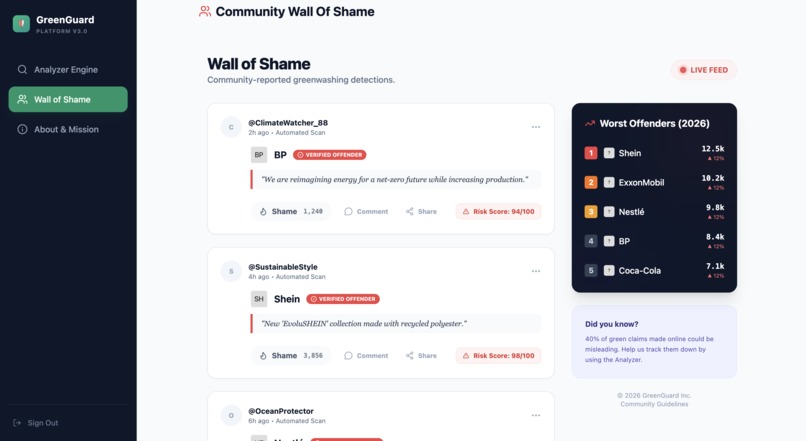
Wall of Shame
-

How it works


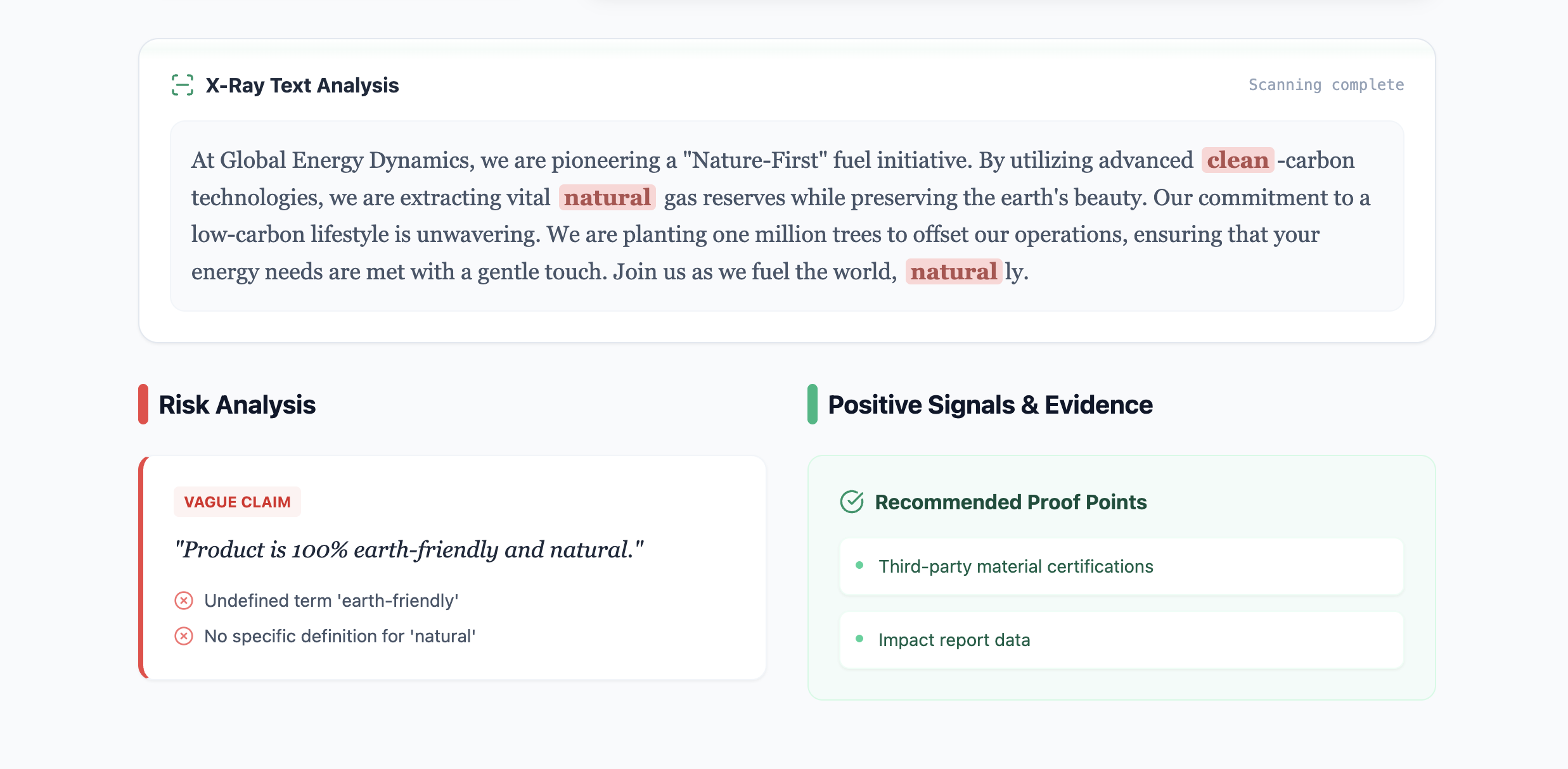

Inspiration We live in an era where every company claims to be "eco-friendly," yet carbon emissions continue to rise. As consumers, we noticed a disturbing trend: from "clean coal" campaigns to "conscious collections" in fast fashion, we are constantly bombarded with vague buzzwords and nature imagery that mask the truth. We realized there was no easy way to fact-check these claims in real-time. We built GreenGuard to be the BS-detector for the green economy—empowering users to see through the marketing spin and demand transparency.
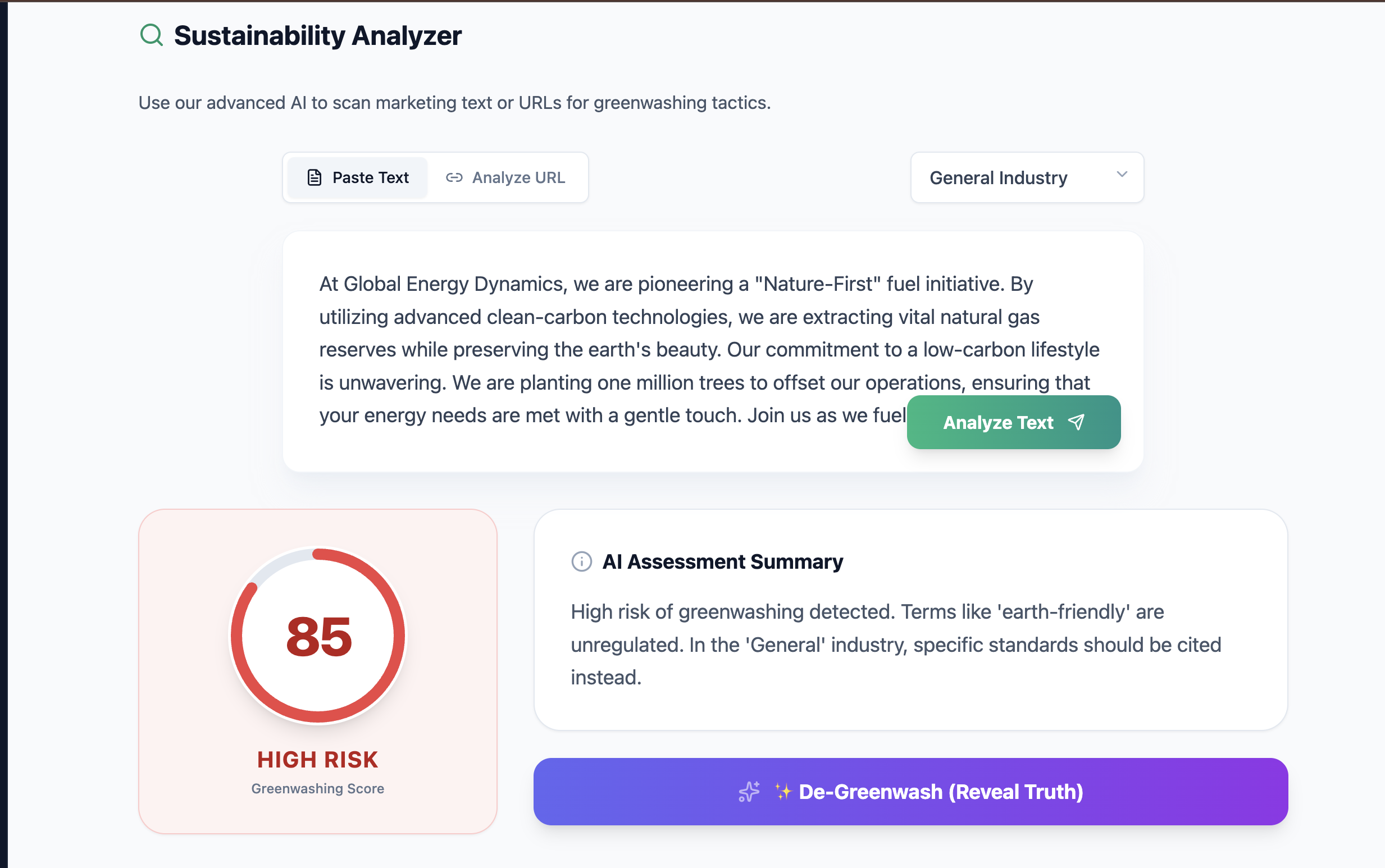
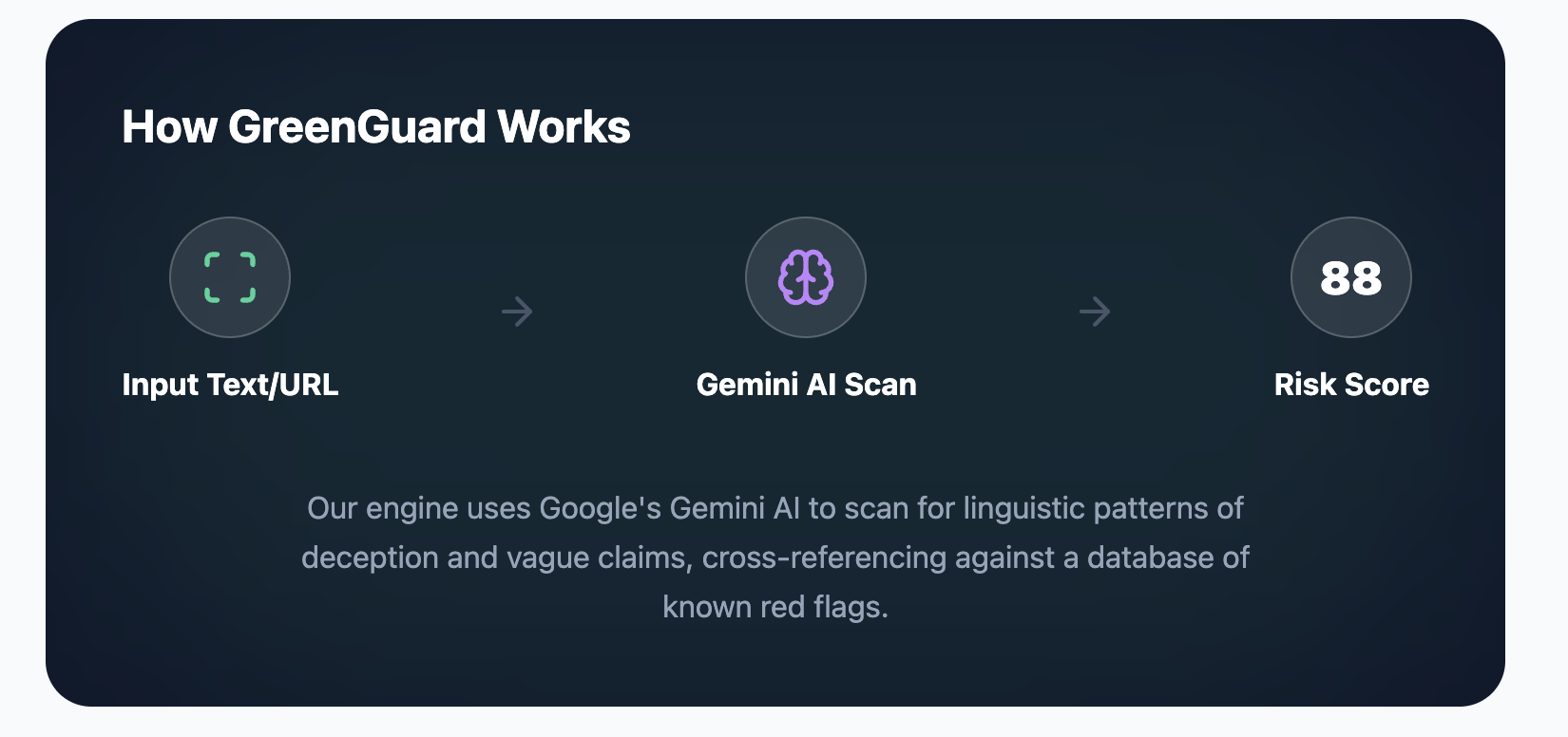
What it does GreenGuard is an AI-powered sustainability auditor that analyzes corporate marketing text, reports, and URLs to detect deceptive "greenwashing" tactics. It doesn't just tell you if a claim is bad; it tells you why.
Risk Scoring Engine: Assigns a 0-100 reliability score based on the presence of verified data vs. vague fluff.
X-Ray Mode: Instantly highlights specific red-flag keywords (e.g., "natural," "eco-friendly," "carbon-neutral") directly in the text, acting like a spell-checker for deception.
The "De-Greenwash" Button: Our generative AI feature rewrites misleading marketing copy into brutally honest, factual statements. (e.g., turning "We are committed to a green future" into "We are compliant with minimum regulations.")
Wall of Shame: A community-driven feed that tracks the worst offenders across industries like Fashion, Energy, and Automotive, creating a public record of accountability.
How we built it We built GreenGuard as a modern full-stack application:
Frontend: We used React (Vite) and Tailwind CSS to create a responsive, high-performance dashboard with a "Glassmorphism" aesthetic. The UI features real-time state management for the "X-Ray" highlighting and interactive gauges.
Backend: Our server is built on Node.js and Express. It handles API requests and serves as the bridge between the client and our AI models.
AI Integration: The core intelligence is powered by Google Gemini (1.5 Flash). We engineered custom prompts that act as "Industry Specialists" (e.g., an expert in Fashion Sustainability) to catch sector-specific nuances.
Web Scraping: We implemented Cheerio and Axios to scrape text from user-submitted URLs, stripping away ads and navigation to focus purely on the claims.
Challenges we ran into Rate Limiting: We hit the Gemini API quota early on! We solved this by implementing a smart caching system and a robust "Simulation Mode" that allowed us to test the UI without burning through our limits.
Scraping Dynamic Sites: Extracting clean text from modern, JavaScript-heavy websites was difficult. We had to write custom logic to parse HTML efficiently and handle different site structures without crashing the server.
Prompt Engineering: Getting the AI to be "brutally honest" for the rewrite feature took several iterations. We had to fine-tune the temperature and system instructions to strike the right balance between factual correction and impactful satire.
Accomplishments that we're proud of The "De-Greenwash" Feature: It’s not just analytical; it’s creative. Seeing the AI rewrite a press release to say "We are doing the bare minimum" is both hilarious and deeply impactful.
Real-time Latency: We optimized the API calls to make the "X-Ray" highlighting feel instant, creating a seamless user experience.
The UI Polish: We went beyond a simple form and built a full dashboard with data visualization, making the complex topic of sustainability accessible and engaging.
What's next for GreenGuard Chrome Extension: Bringing the detection directly to Amazon and H&M product pages so users can see the "Risk Score" while they shop.
PDF Analysis: Adding support for parsing 100+ page annual sustainability reports to find the needle in the haystack.
Verified Badge: Partnering with NGOs to offer a "GreenGuard Verified" checkmark for companies that actually tell the truth.
Built With
- axios
- cheerio
- css
- express.js
- gemini
- javascript
- node.js
- react
- tailwind
- vite

Log in or sign up for Devpost to join the conversation.