-
-
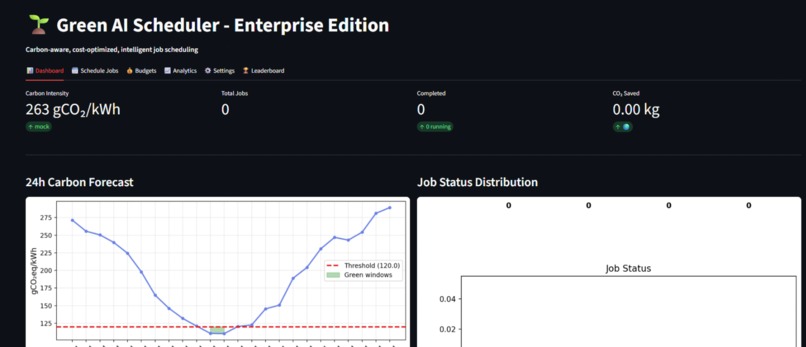
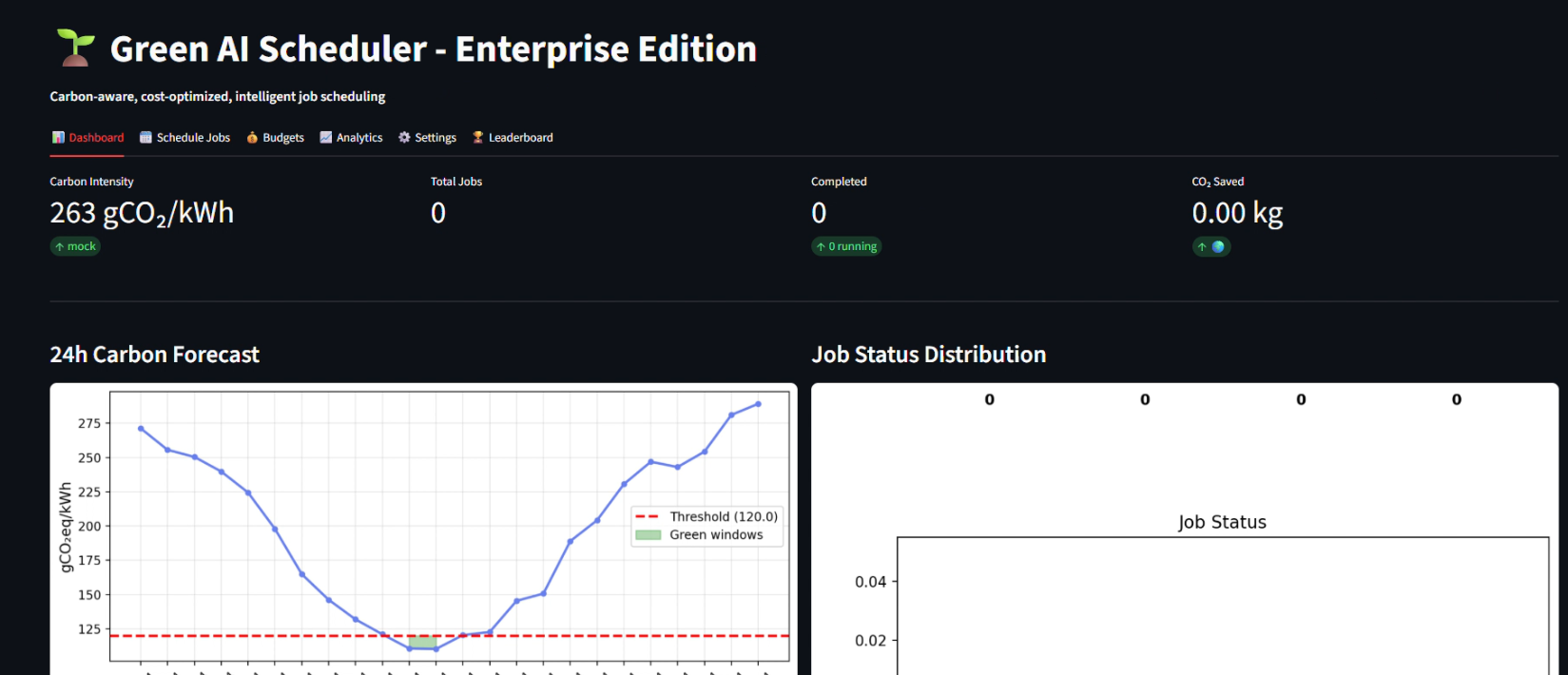
main dashboard
Inspiration
AI research consumes massive amounts of power. We wanted to make innovation sustainable by aligning AI workloads with times when renewable energy is abundant, turning computation into a climate-friendly activity.
What it does
GreenGrid AI Scheduler monitors live grid data to identify when renewable sources—like wind, solar, or hydro—dominate the energy mix. It automatically schedules LLM training or testing during those green windows, reducing carbon footprint without sacrificing performance.
How we built it
We integrated real-time grid APIs with a custom scheduler that syncs task queues to green energy periods. The backend uses Python and Node.js, while the dashboard was built with React and Tailwind for clear visualization of grid “greenness” and task timing
Challenges we ran into
Finding consistent, real-time renewable energy data across regions was tricky. We also had to optimize scheduling so that tasks didn’t pile up when green periods were short or unpredictable.
Accomplishments that we're proud of
We built a working prototype that actually shifts compute loads based on renewable availability—and visualizes the environmental impact in real time. Seeing the carbon savings accumulate felt amazing.
What we learned
Energy-aware computing is both technically challenging and urgently necessary. We discovered that even small scheduling changes can significantly reduce emissions from AI workloads.
What's next for GreenGrid AI Scheduler: Optimize Tests for Clean Energy
We plan to integrate with popular ML frameworks and cloud providers, add predictive modeling for upcoming green windows, and let organizations report verified carbon savings from their AI operations.

Log in or sign up for Devpost to join the conversation.