Worked on Problem Statement 1: Sustainable Decision Engine
Inspiration 💡
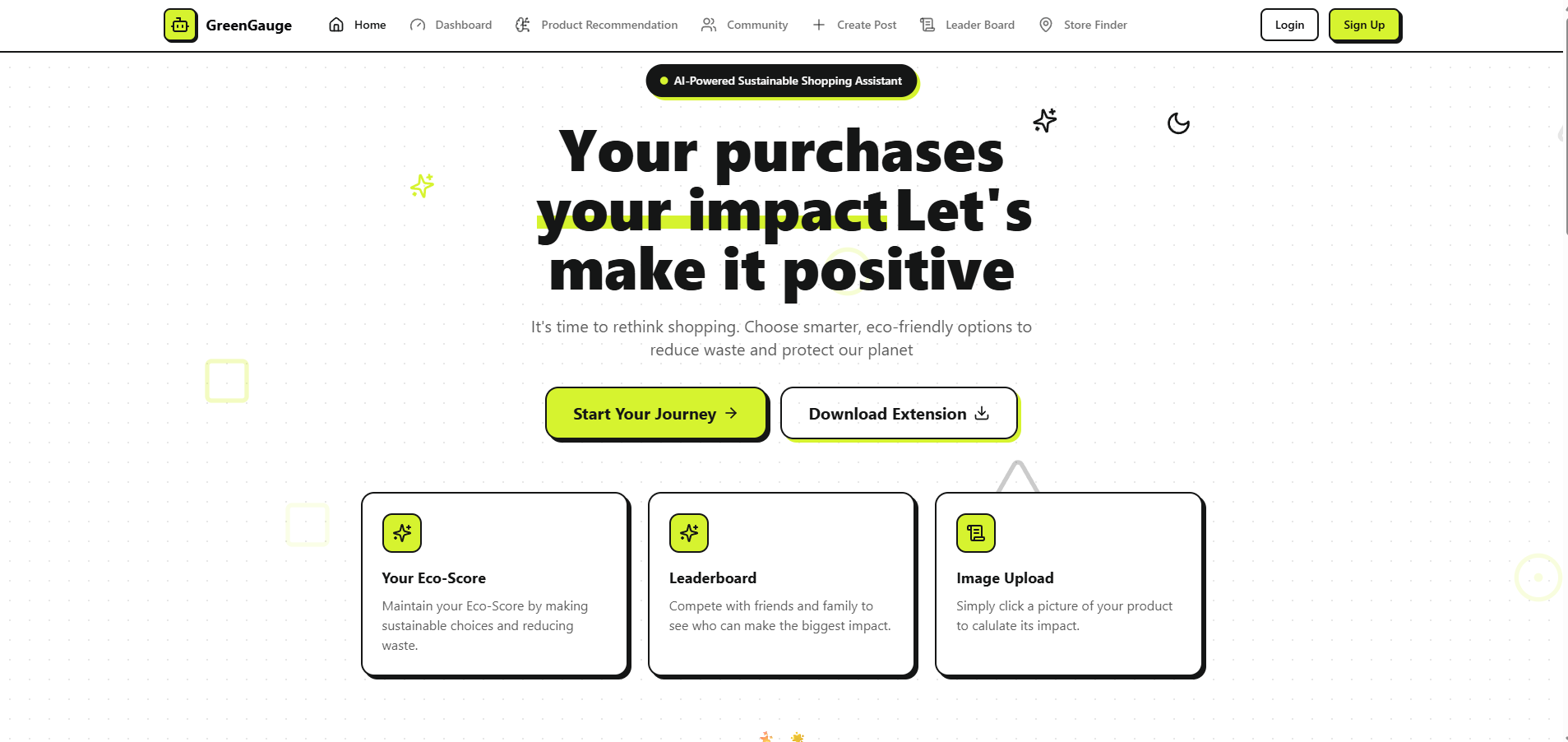
Every single day, we make dozens of seemingly insignificant choices—what to eat, what to buy, how to travel. Individually, they seem small, but collectively, they drive massive environmental impact. We realized that consumers aren't intentionally making bad choices; they are simply starved for real-time information. When you're standing in an aisle, you don't have time to research carbon footprints. We built GreenGauge to be the ultimate Sustainable Decision Engine, instantly delivering actionable intelligence to empower consumers without sacrificing convenience.
What it does ⚙️
GreenGauge is an intelligent layer over everyday consumerism that eliminates the friction between convenience and sustainability:
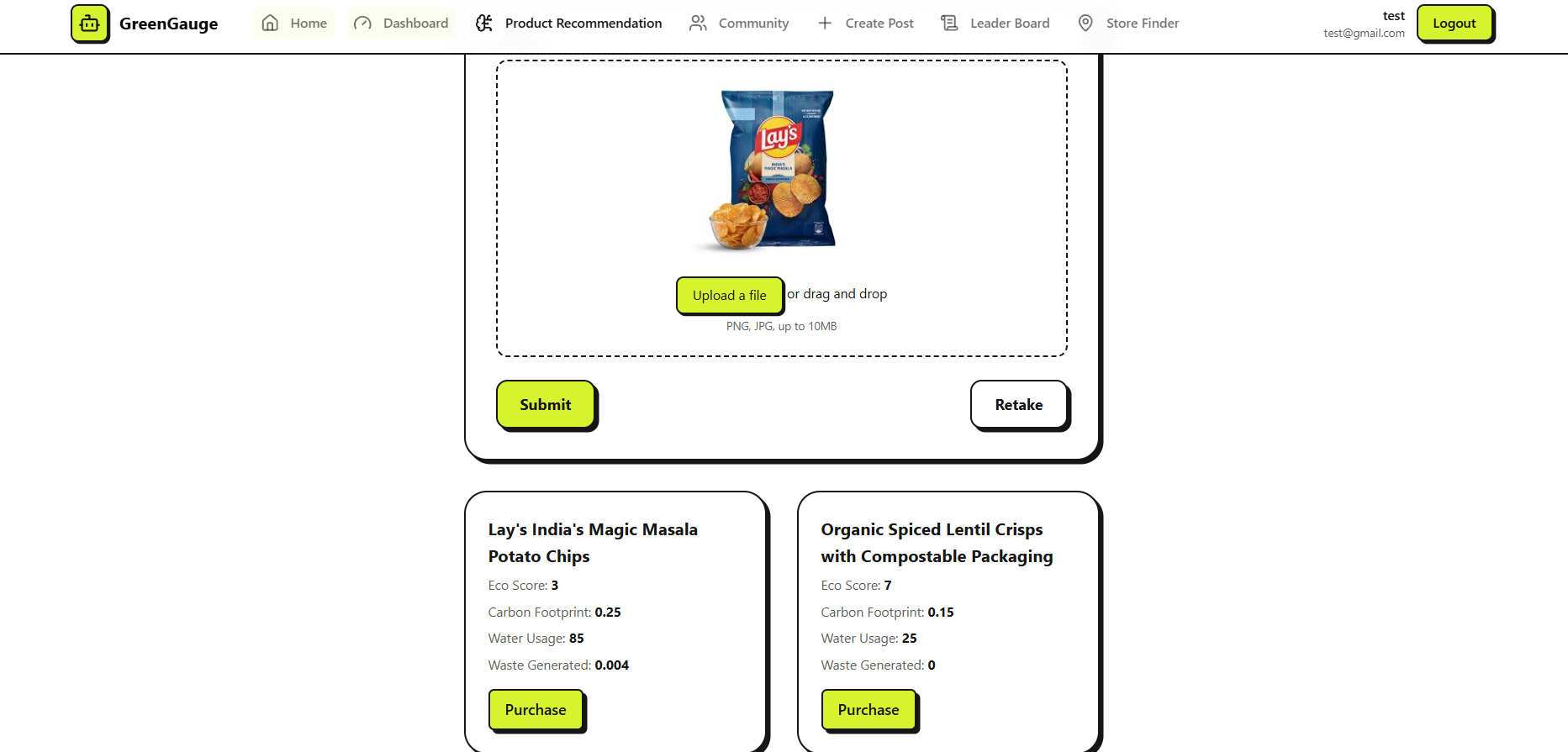
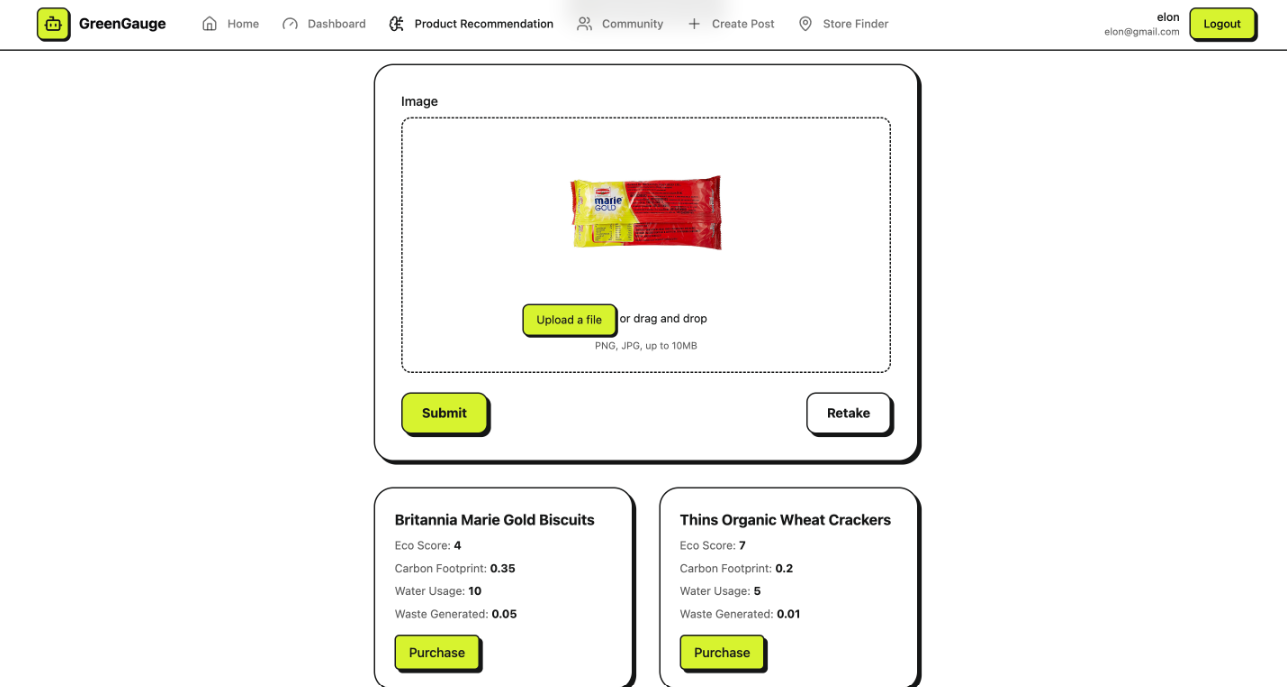
- Real-time AI Product Scanner: Users snap a photo of a product, and our system instantly calculates its
Eco-Score (1-10),Carbon Footprint,Water Usage, andWaste Generated. - Actionable Alternatives: We don't just provide passive data. The engine automatically researches and recommends a highly sustainable alternative product.
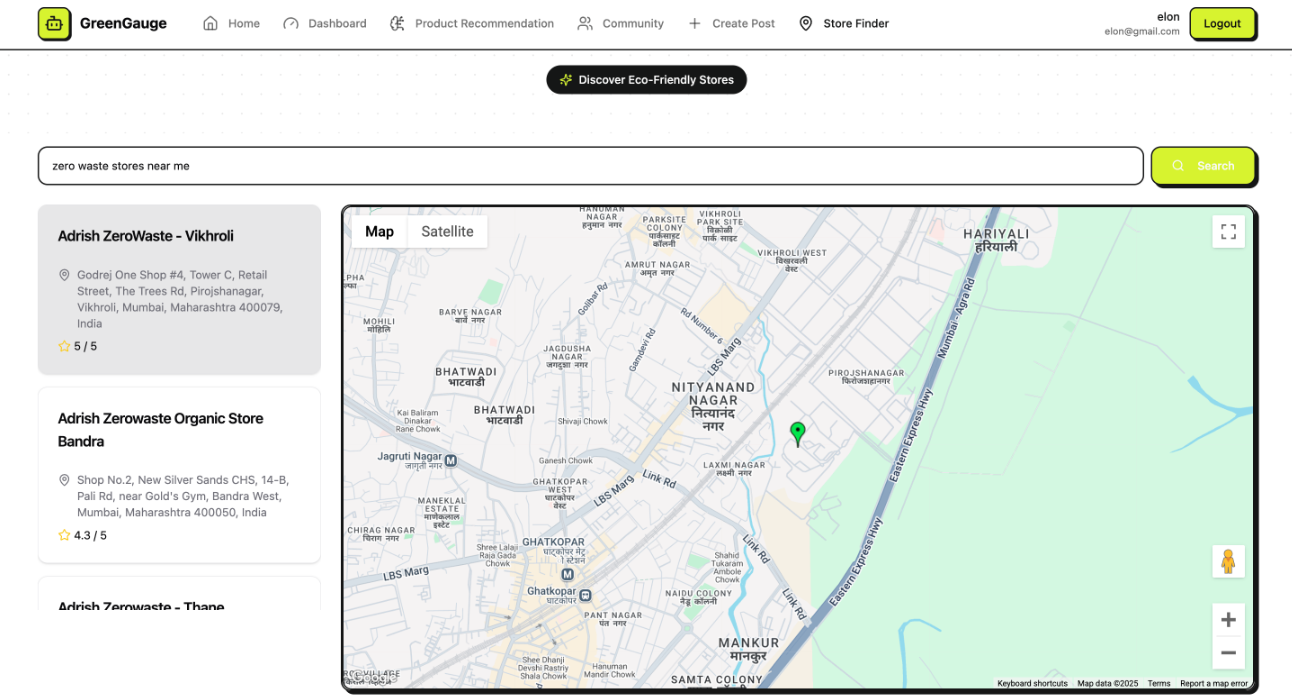
- Eco-Locator Map: Integrated with Google Maps, we dynamically route users to nearby stores that stock eco-friendly alternatives.
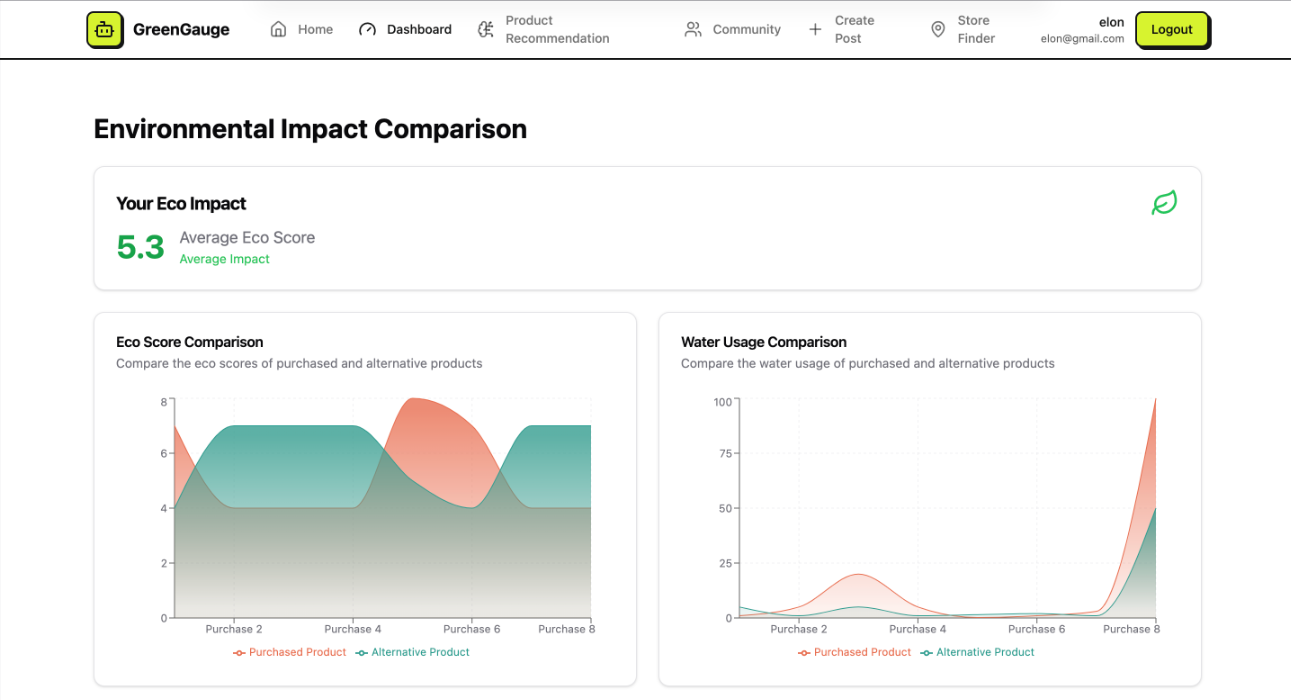
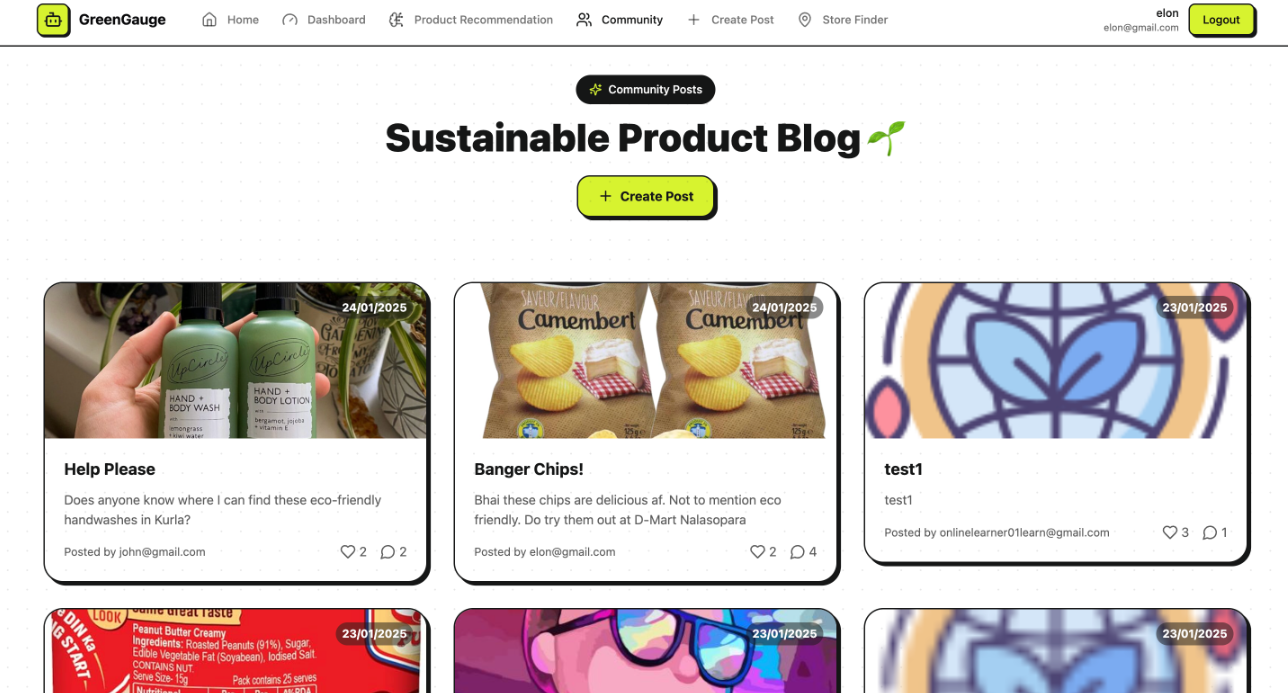
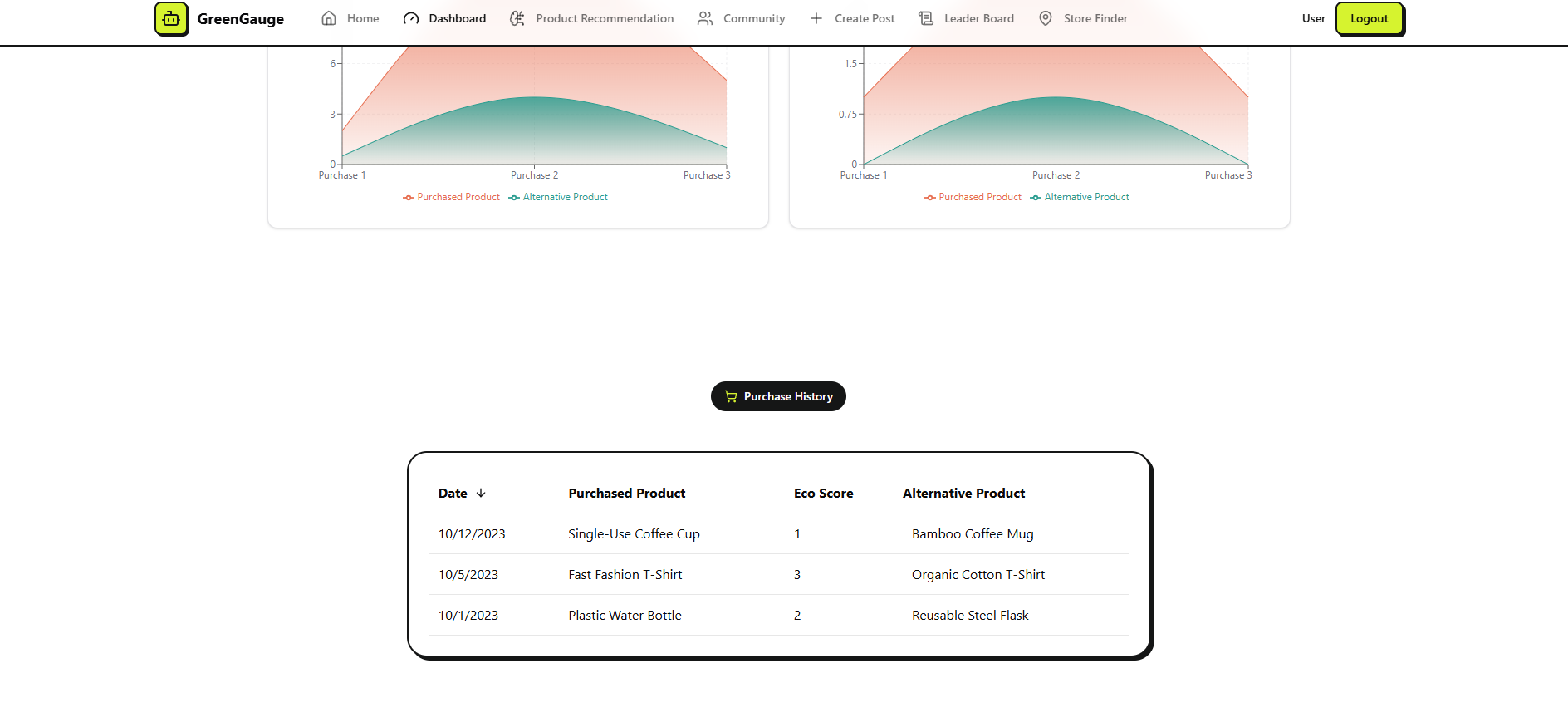
- Behavioral Nudging & Gamification: Every green purchase is logged in a personal Transaction History. Users earn points that climb a global Leaderboard, gamifying the sustainability journey through positive reinforcement.
How we built it 🏗️
We engineered a highly robust, full-stack monorepo architecture designed for speed and scalability:
- Frontend: Built with React and Vite for lightning-fast rendering, styled with modern utility classes for a highly responsive UI.
- Backend: A highly scalable Node.js/Express serverless architecture.
- Artificial Intelligence: We integrated the state-of-the-art Google Gemini 2.5 Flash API. By engineering strict multimodal prompts, the AI processes image buffers entirely in memory and returns highly structured JSON sustainability metrics with zero latency.
- Database: MongoDB Atlas handles our complex relational schemas, including secure user authentication (JWT), dynamic purchase histories, and real-time leaderboard aggregation pipelines.
- Infrastructure: Deployed entirely on Vercel Serverless infrastructure, utilizing in-memory Multer storage to guarantee high-throughput image processing on a read-only filesystem.
Challenges we ran into 🚧
Building a real-time decision engine is complex. Our biggest technical hurdles included:
- AI Hallucinations vs Structured Data: Forcing an LLM to return strictly formatted, mathematical JSON metrics (Carbon, Water, Waste) based solely on image input required advanced prompt engineering and schema validation using Zod.
- Serverless Architecture Limits: Vercel's read-only file system initially crashed our image upload pipeline. We had to completely rewrite our middleware to utilize pure memory buffers (
multer.memoryStorage()), passing base64 streams directly to the AI to achieve zero-disk-write processing.
Accomplishments that we're proud of 🏆
We successfully bridged the gap between cutting-edge AI and practical consumer behavior. Successfully implementing a full-stack, secure application that processes multimodal AI inputs and renders them instantly into a beautiful, gamified UI is a massive technical win for our team. We solved Problem Statement 1 flawlessly.
What we learned 🧠
We learned the intricacies of deploying Node.js monoliths into Serverless microservices, the power of Zod for runtime type validation, and how to effectively design user interfaces that prioritize "subtle nudges" over aggressive friction to drive behavioral change.
What's next for GreenGauge 🚀
- Retailer API Integration: Automatically pulling live inventory data from local stores to verify alternative product availability.
- Browser Extension: Injecting our eco-scores natively into Amazon and local grocery delivery sites during the checkout flow to intercept bad purchases before they happen.
Built With
- express.js
- google-gemini
- google-maps
- jwt
- mongodb
- node.js
- react
- typescript
- vercel
- vite
- zod


Log in or sign up for Devpost to join the conversation.