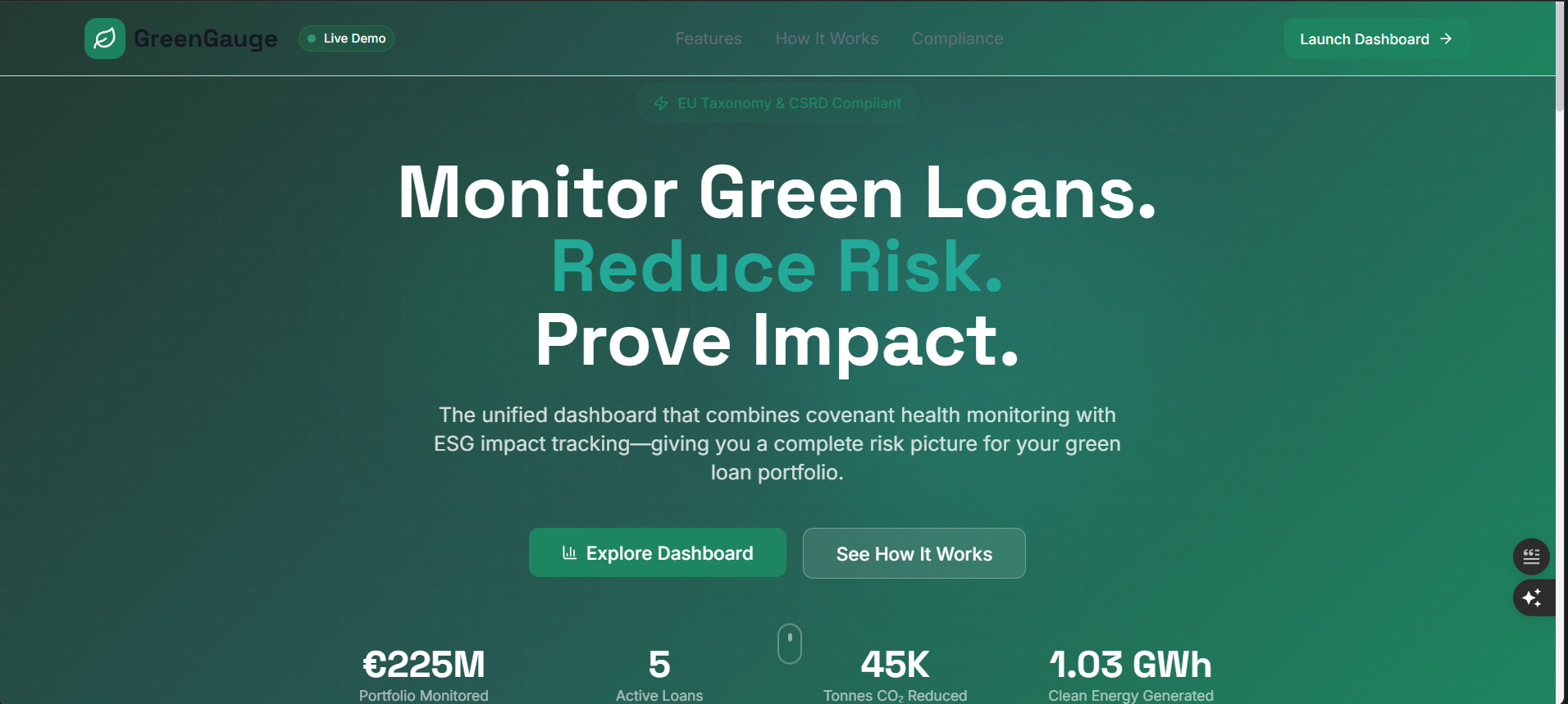
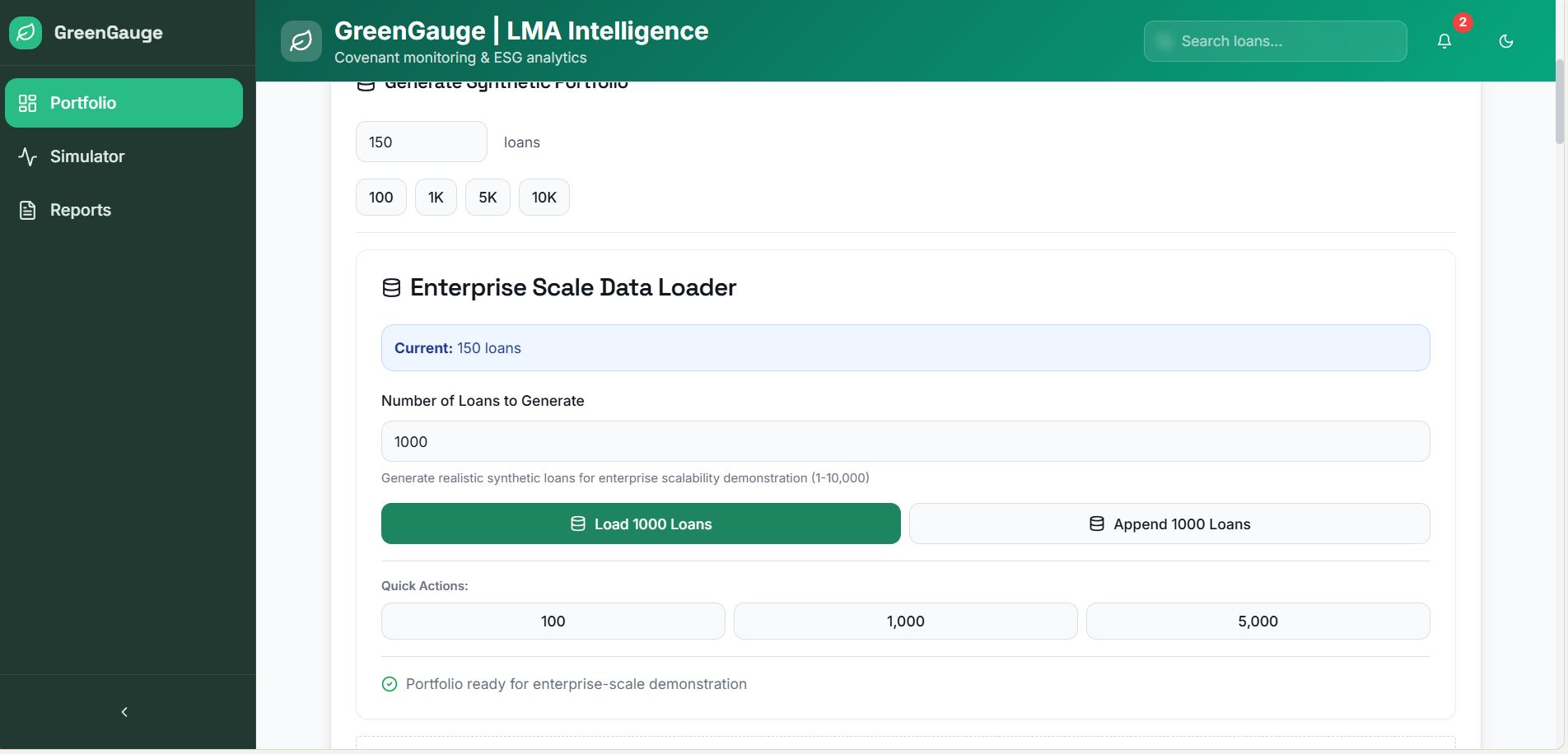
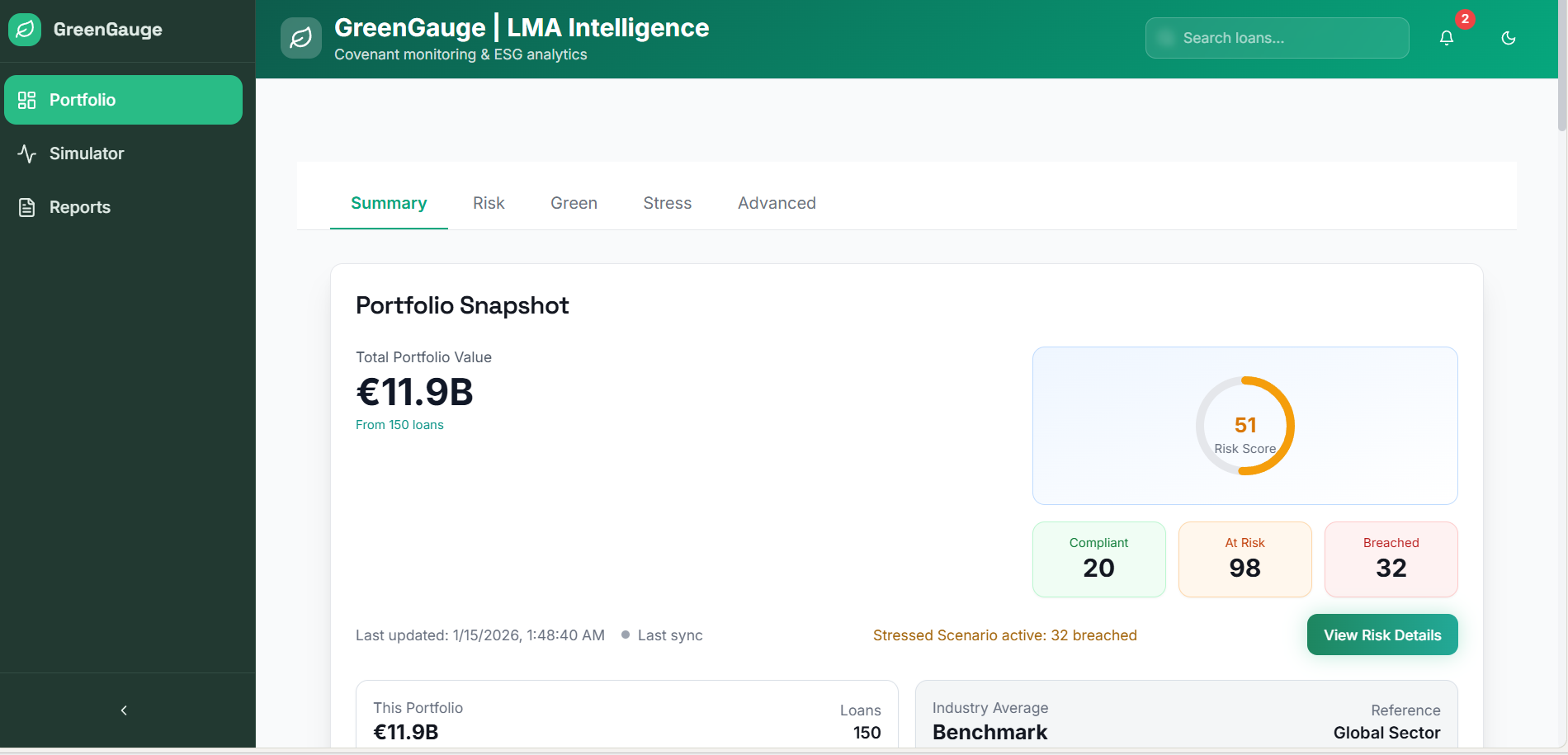
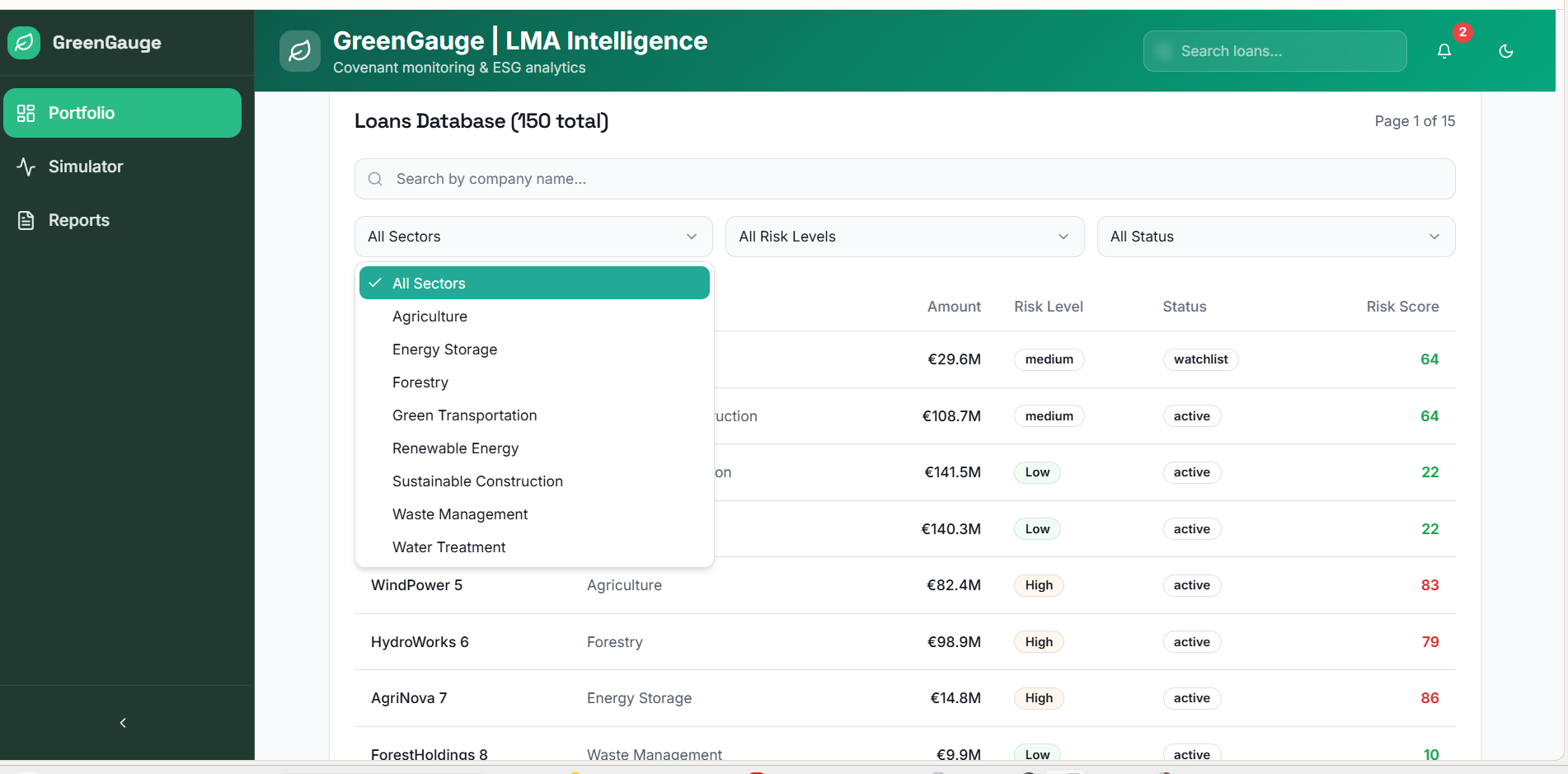
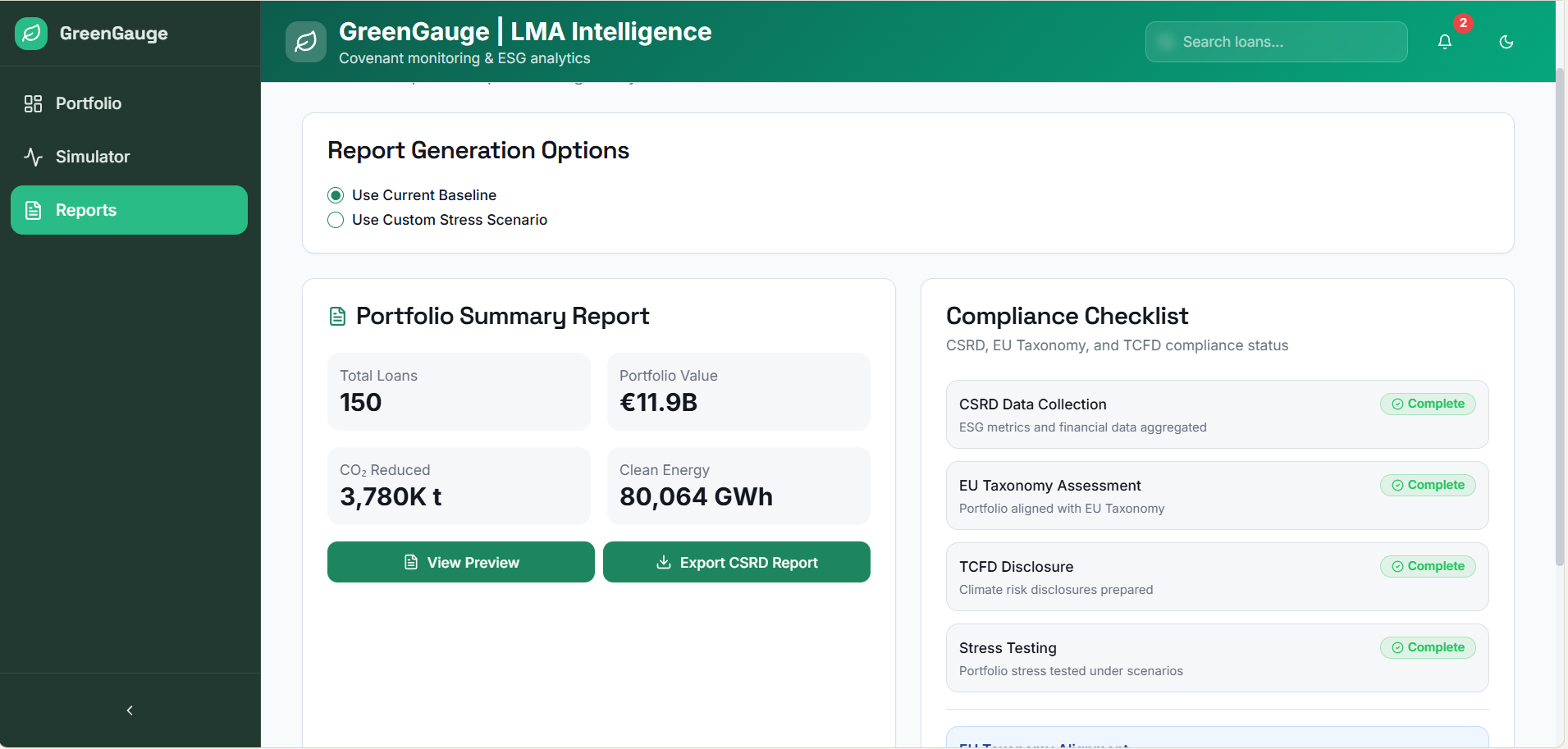
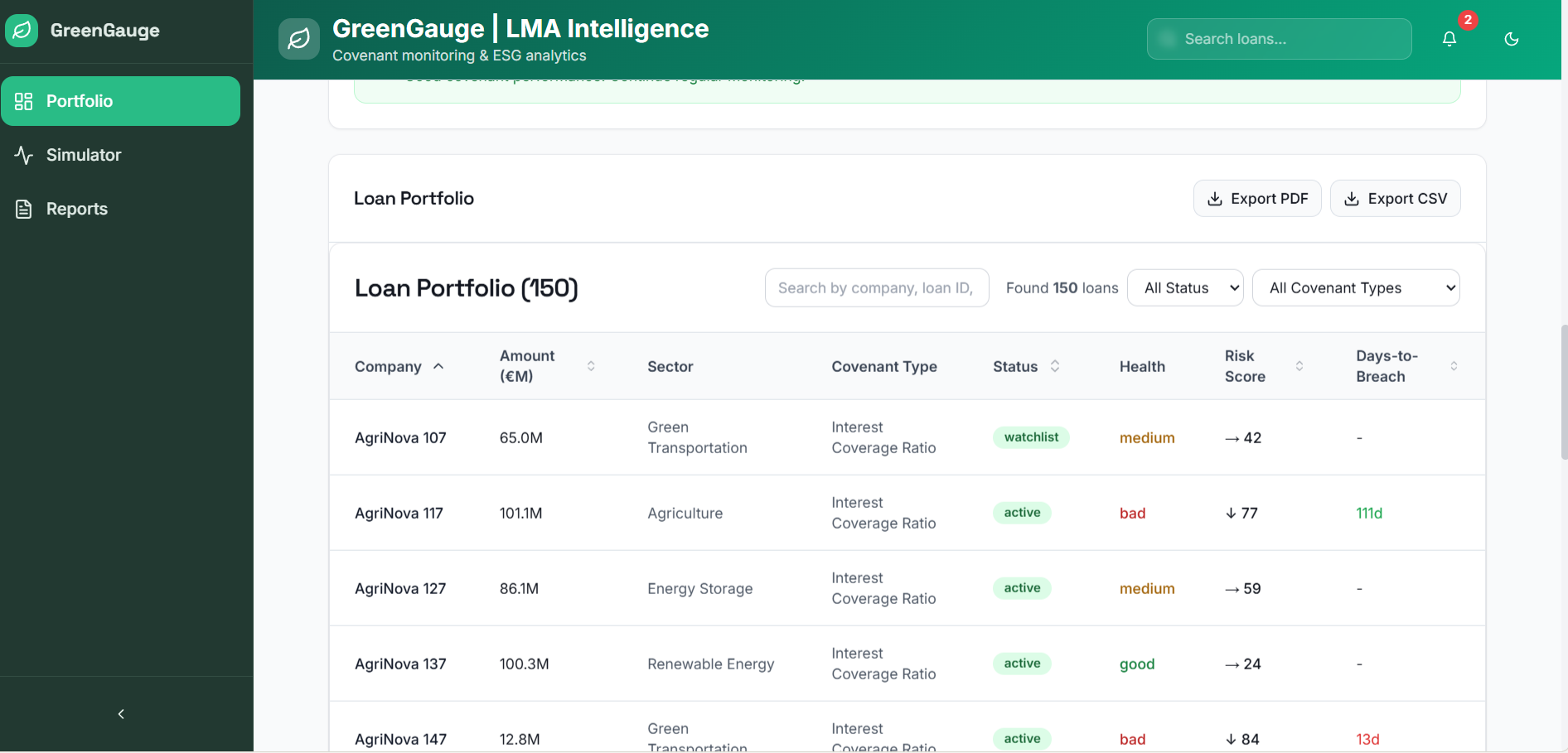
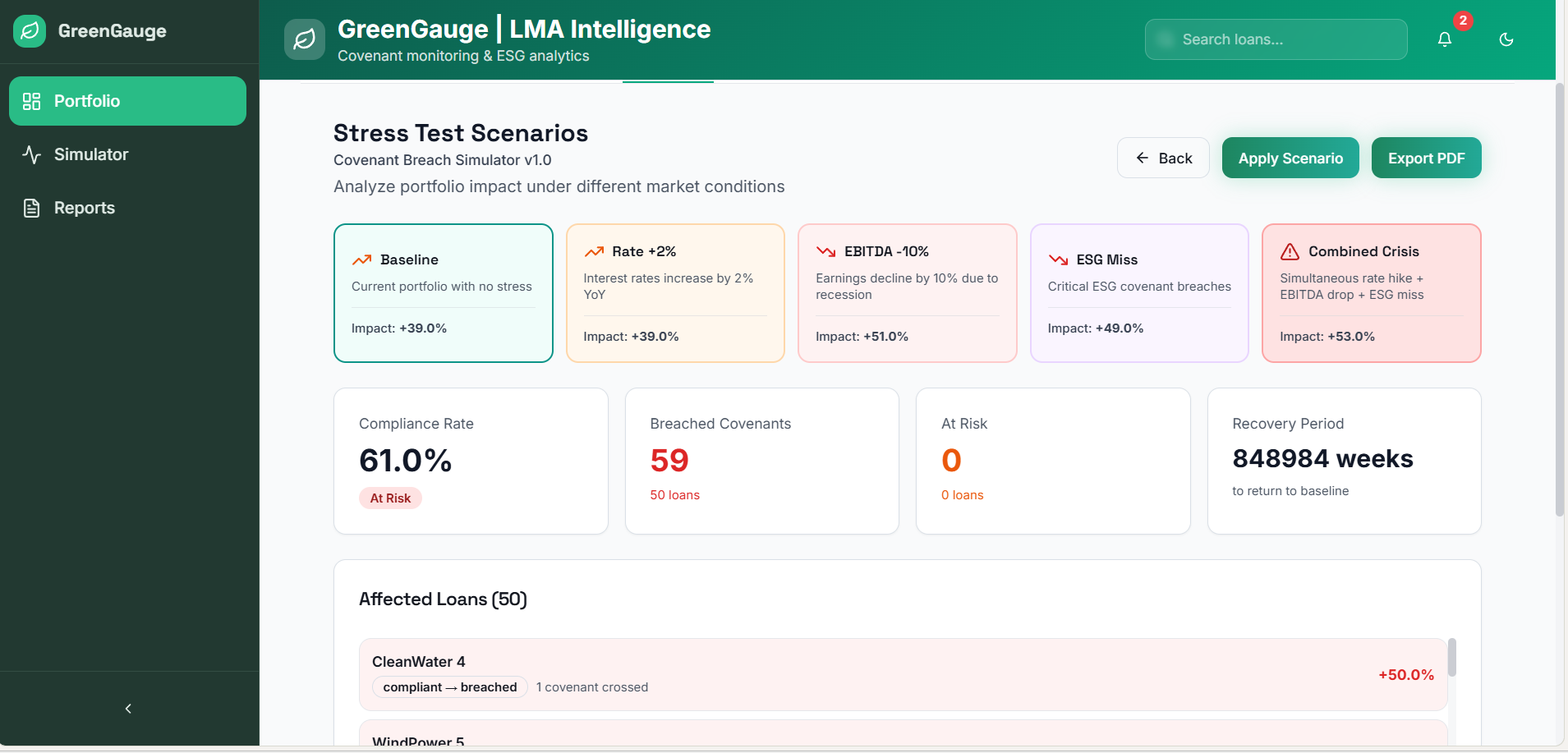
GreenGauge is a solo-built, desktop-first ESG covenant and greener lending platform that helps lenders actually use sustainability data in day‑to‑day loan monitoring instead of leaving it buried in PDFs and spreadsheets.
Inspiration
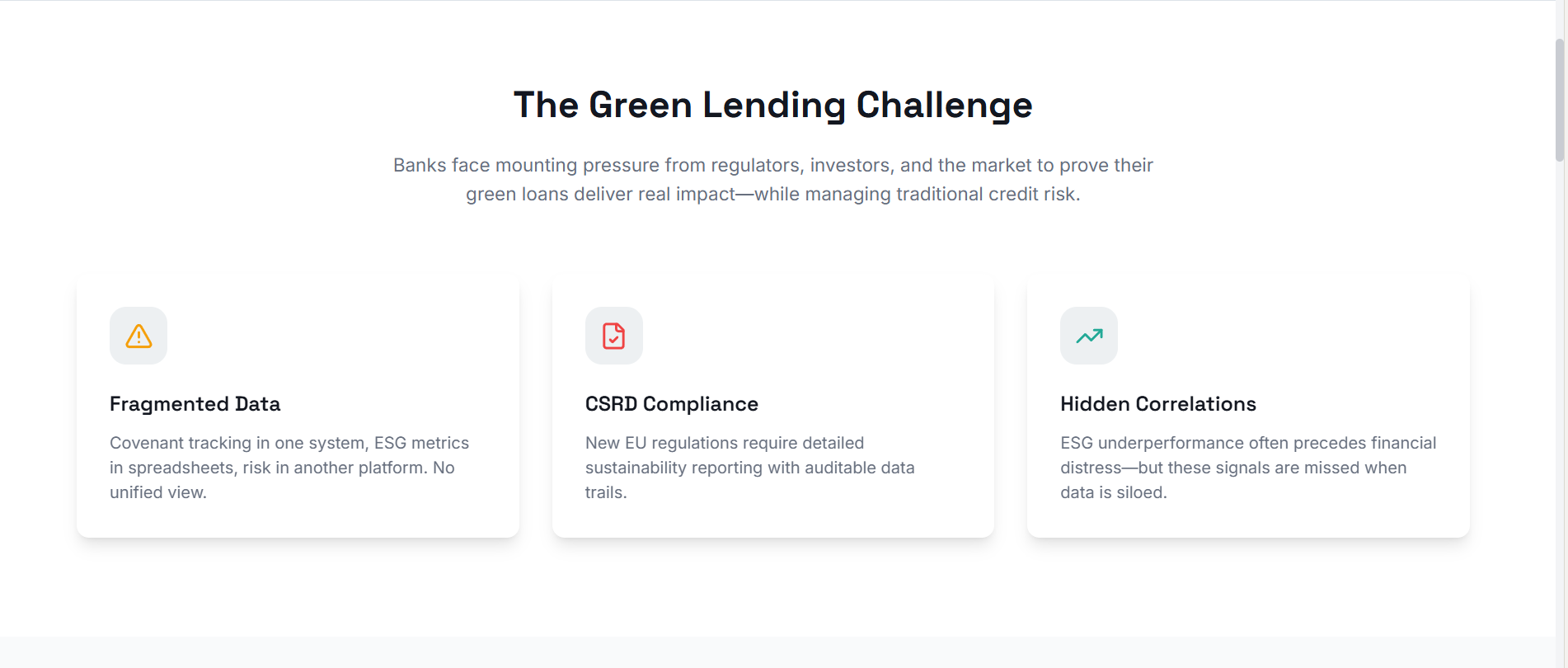
- Loan markets handle trillions, yet ESG performance for loans still lives in scattered emails, PDFs, and ad‑hoc spreadsheets, making “greener lending” more of a slogan than an operational reality.
- As a solo student developer, the goal was to prove that a single focused engineer can stitch together data, UX, and analytics into something a risk team or sustainability officer would genuinely want on their desktop.
What it does
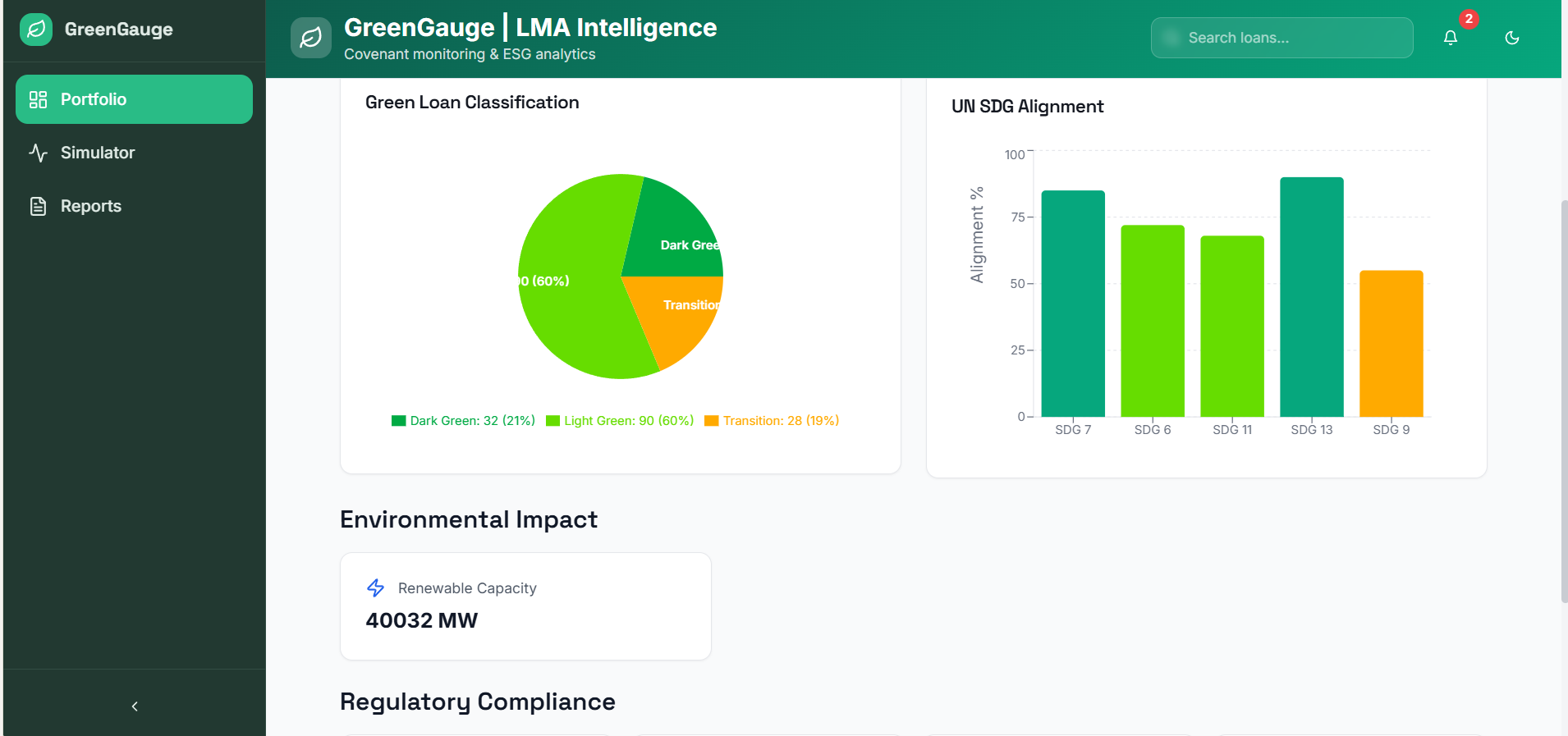
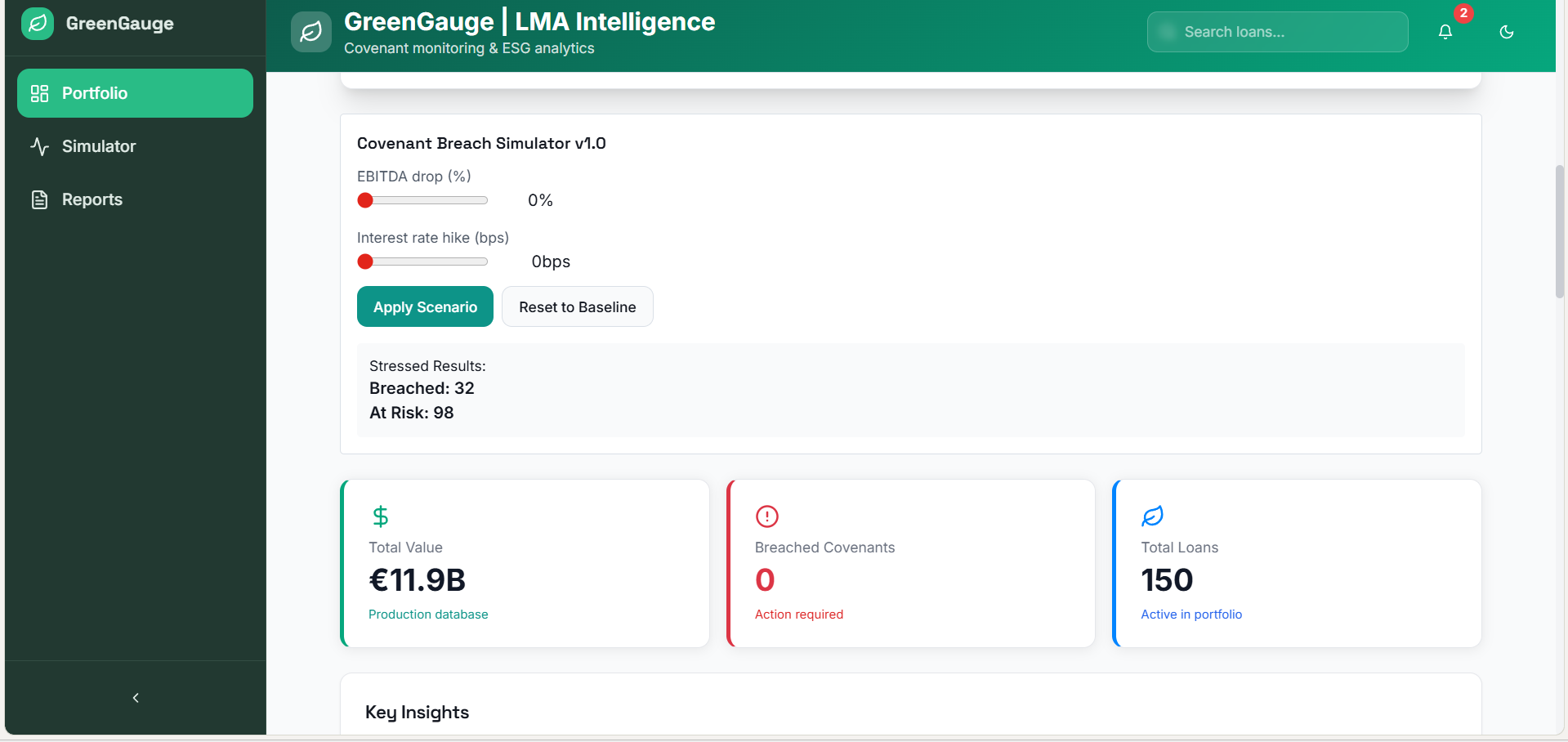
- GreenGauge ingests loan data and ESG indicators, then turns them into live covenant dashboards that flag breaches, early‑warning signals, and green performance in a way portfolio teams can act on quickly.
- It gives lenders a single place to track sustainability‑linked obligations, see which facilities are on track or at risk, and export concise reports they can share with internal committees or external stakeholders.
How I built it
- The project was built as a desktop‑style web application, with a clear navigation structure for portfolio overview, simulations, and reporting, tailored to the LMA EDGE requirement of practical, commercially viable loan tools.
- Over ~20 days, the architecture, UI flows, and feature set were driven by a detailed build plan focused on Greener Lending and Keeping Loans on Track, then refined using iterative design and developer tooling to keep everything consistent.
Challenges I ran into
- Translating complex ESG and covenant concepts into interfaces that feel intuitive for loan professionals (not just developers) was a major challenge, especially around how much detail to surface on a single screen.
- Balancing time between core functionality, polish, and storytelling as a solo builder—while ensuring the app still feels like something a real loan agent could adopt tomorrow—forced a lot of tough scope and design decisions.
Accomplishments that I’m proud of
- As a solo participant, delivering an end‑to‑end product that goes beyond a mockup and actually behaves like a working greener lending and monitoring tool for real‑world loan desks is a big milestone.
- GreenGauge manages to connect ESG performance, covenant tracking, and reporting into one coherent experience that speaks to commercial viability, not just “hackathon novelty,” which was exactly the spirit of LMA EDGE.
What I learned
- Building for loan markets is less about flashy UI and more about precision: every field, status, and metric needs to be clear enough that a risk or agency team could rely on it in their daily processes.
- Working solo on a time‑boxed challenge taught a lot about prioritization—choosing features that best demonstrate value to judges and potential users instead of trying to implement every possible idea.
What’s next for GreenGauge
- The next step is to plug GreenGauge into real data pipelines (e.g., bank data warehouses or ESG APIs) so that covenant checks and sustainability metrics update automatically instead of relying on manual inputs.
- Beyond the hackathon, the roadmap includes adding audit‑ready logs, deeper scenario analysis for greener lending structures, and packaging the tool so that loan agencies and banks can trial it on a small portfolio first.
Built With
- 18
- asgi
- backend:
- build
- charts)
- components
- css
- data
- deployment:
- fastapi
- fetching)
- framework)
- frontend:
- hosting
- management)
- orm)
- pydantic
- python
- query
- radix
- react
- recharts
- router
- routing)
- server)
- sqlalchemy
- state
- styling)
- tailwind
- tanstack
- tool)
- typescript
- ui
- uvicorn
- validation)
- vercel
- vite
- web
- with
- zustand

Log in or sign up for Devpost to join the conversation.