-
-
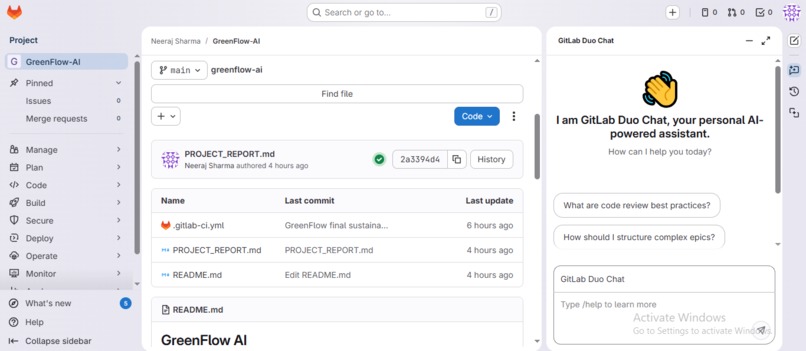
GreenFlow-AI Project
-
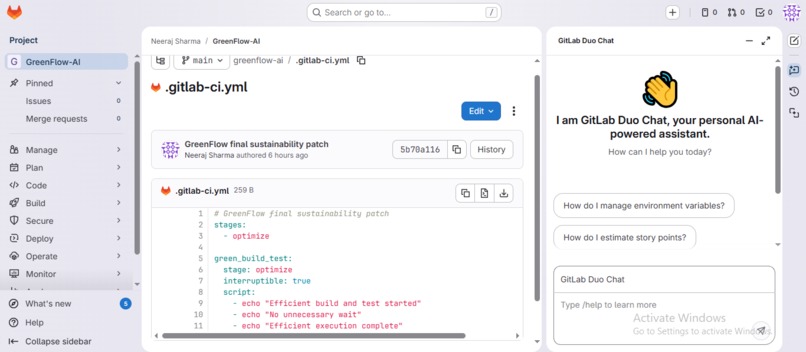
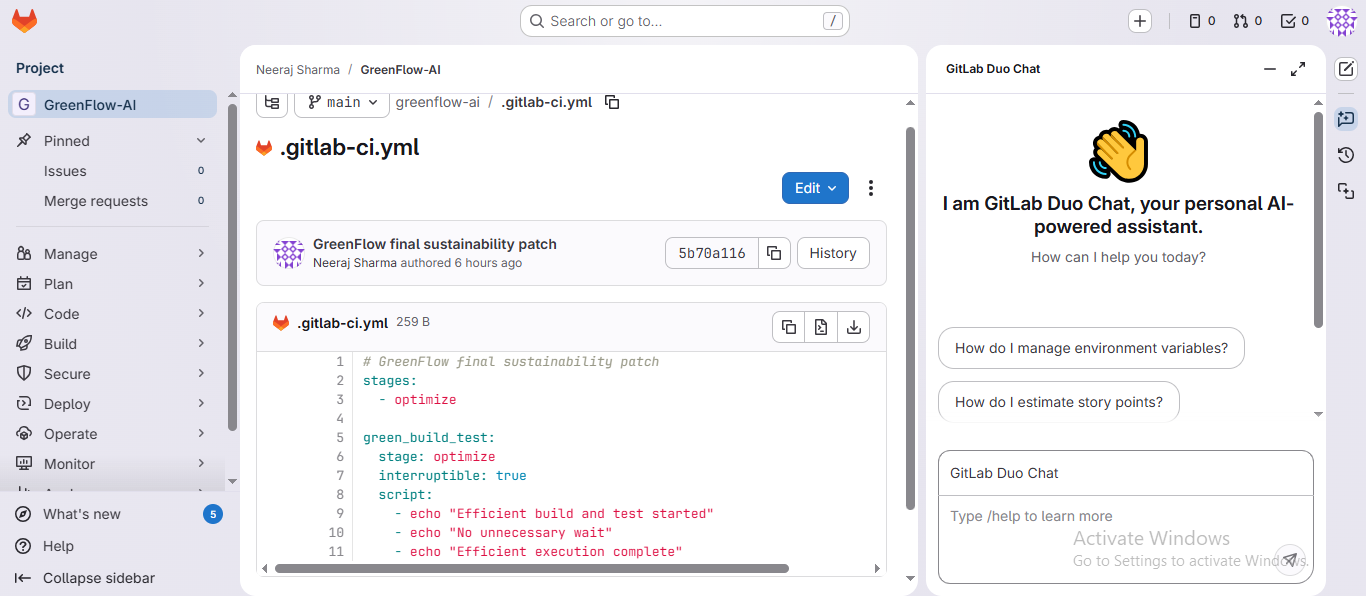
.gitlab-ci.yml file showing interruptible: true
-
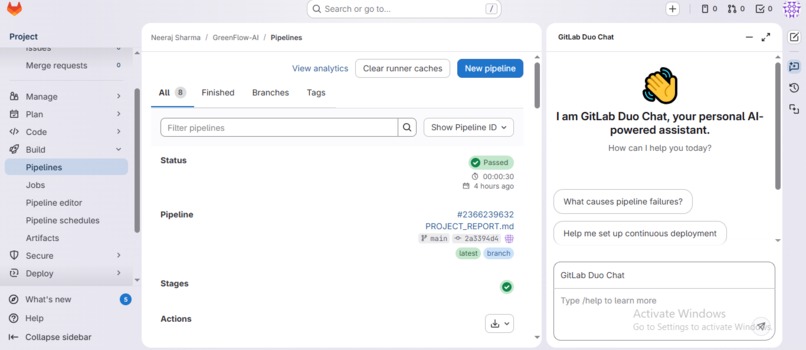
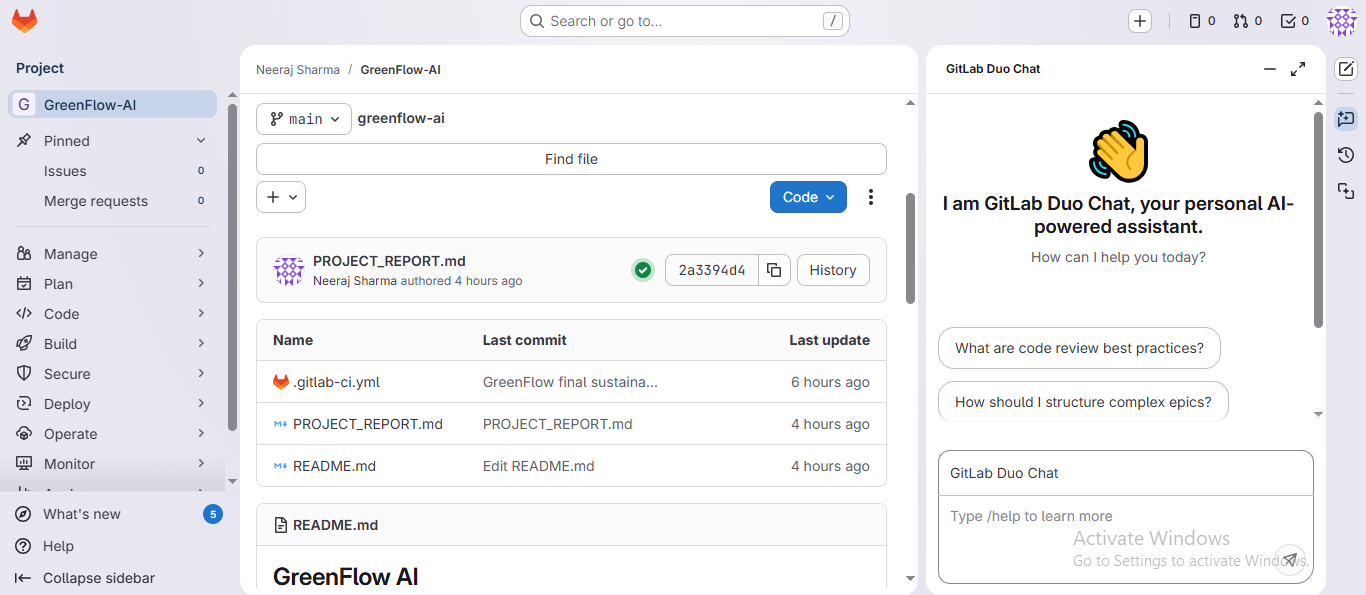
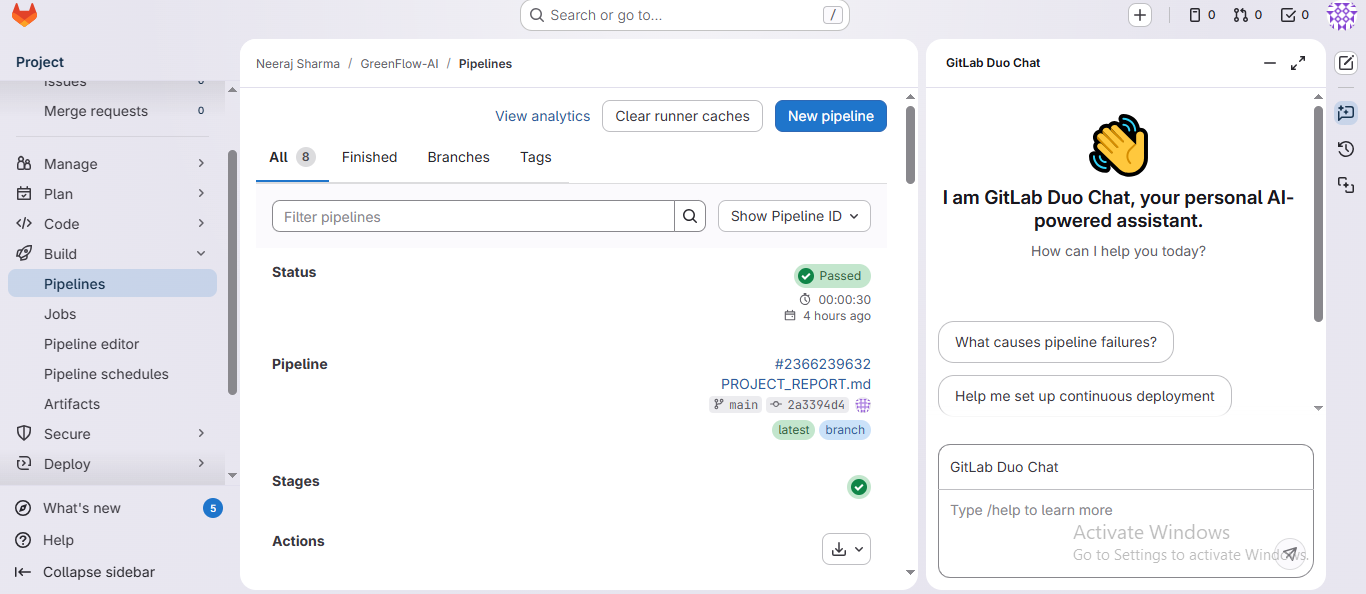
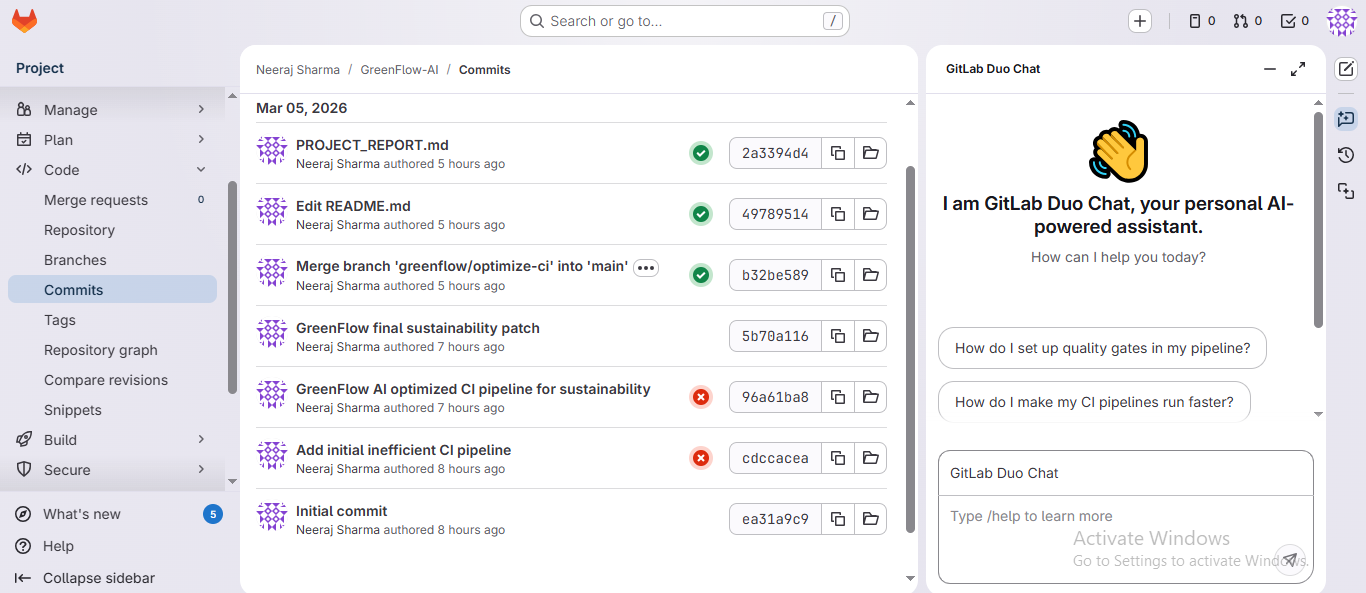
PROJECT_REPORT.md main Optimized pipeline execution after implementing GreenFlow AI sustainability improvements
-
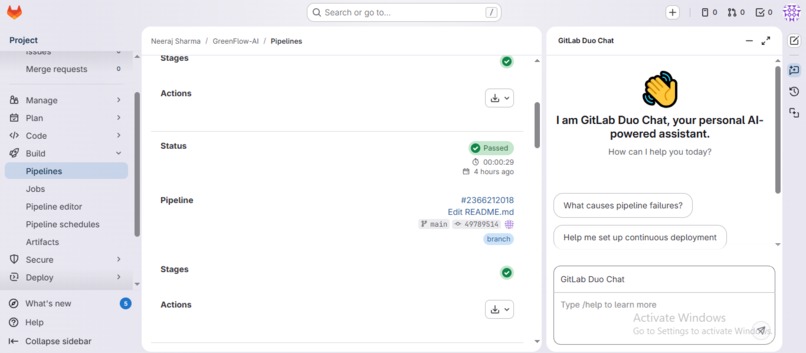
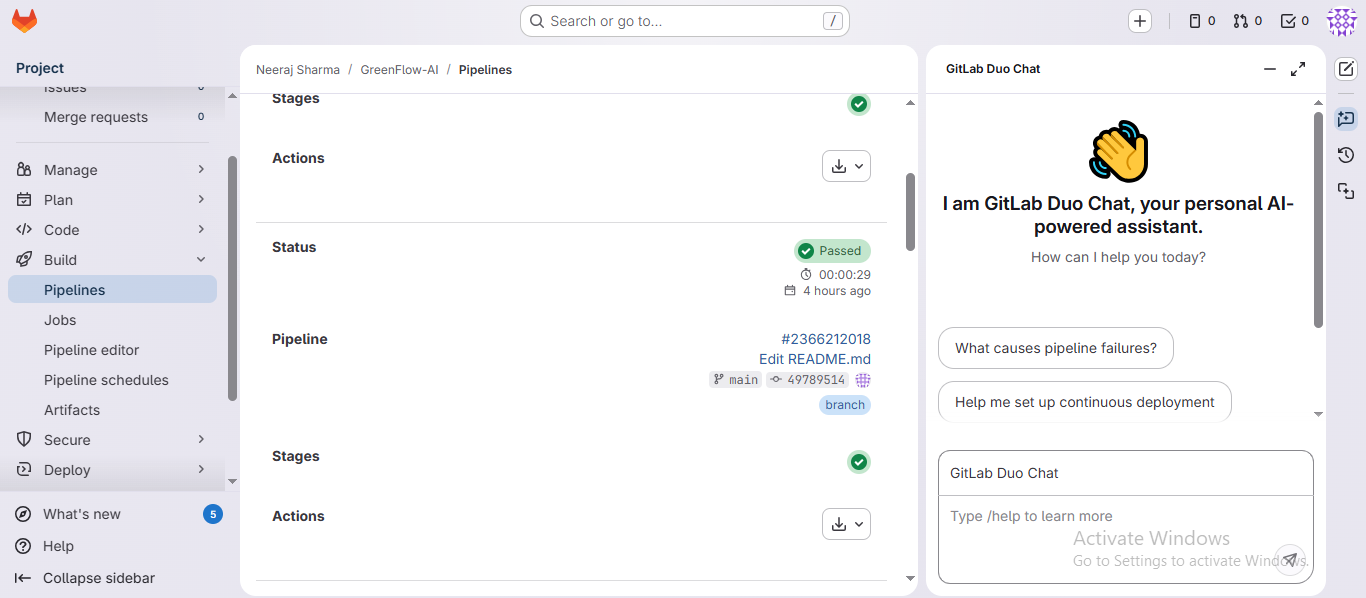
Edit README.md main Optimized pipeline execution after implementing GreenFlow AI sustainability improvements
-
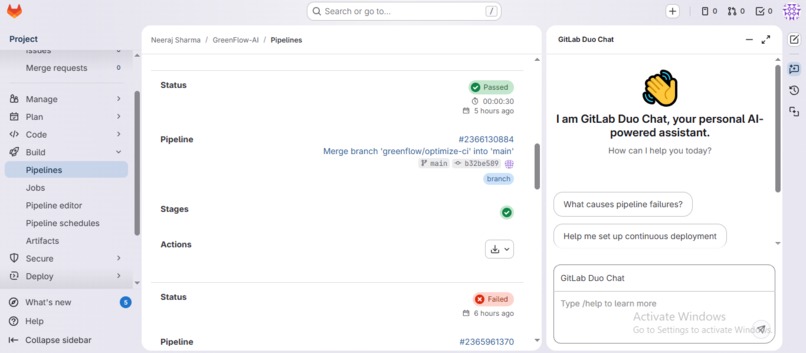
Merge branch 'greenflow/optimize-ci' into 'main' Optimized pipeline execution after implementing GreenFlow AI sustainability improvements
-
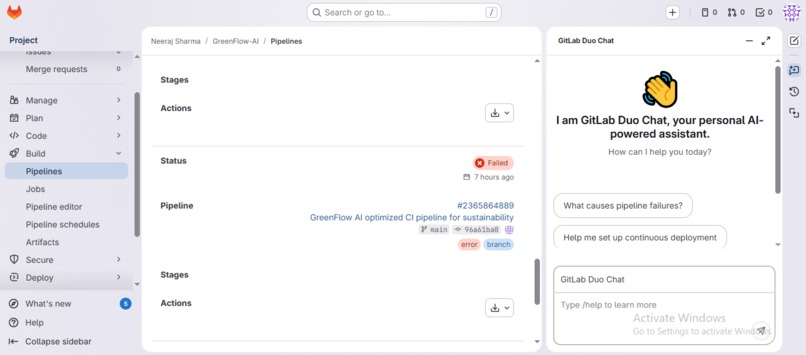
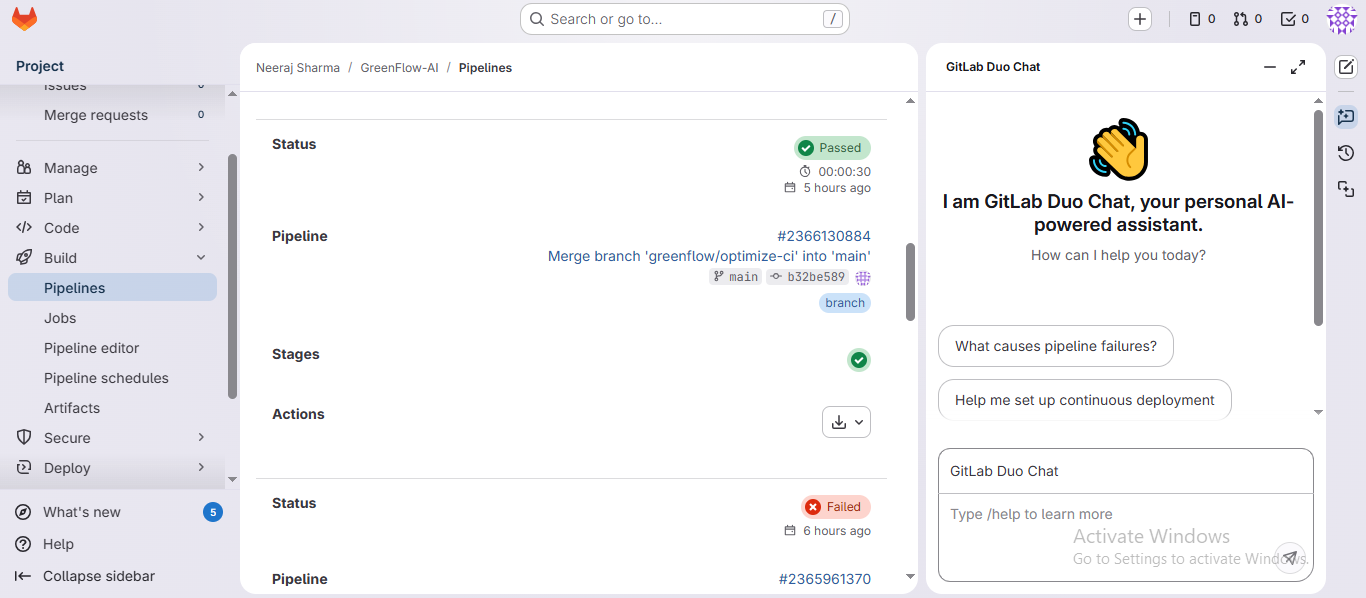
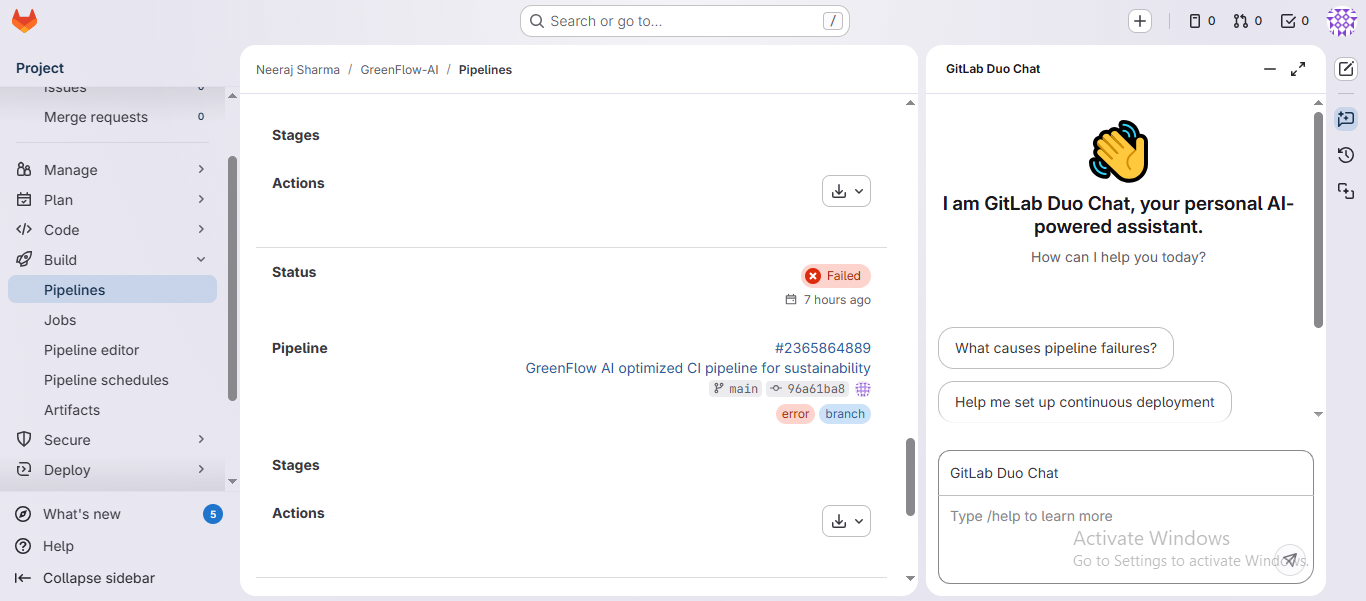
Initial failed pipeline before optimization showing inefficient configuration
-
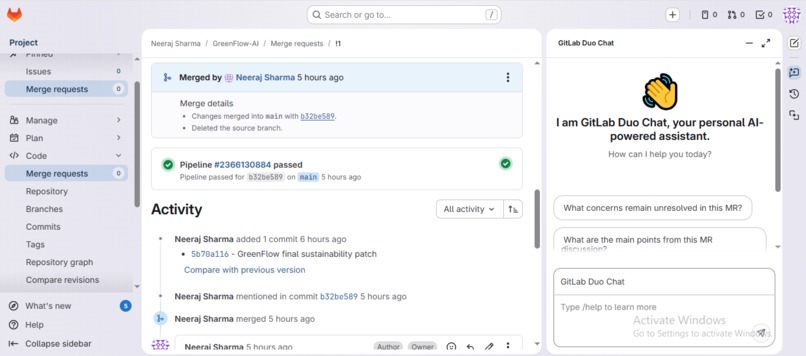
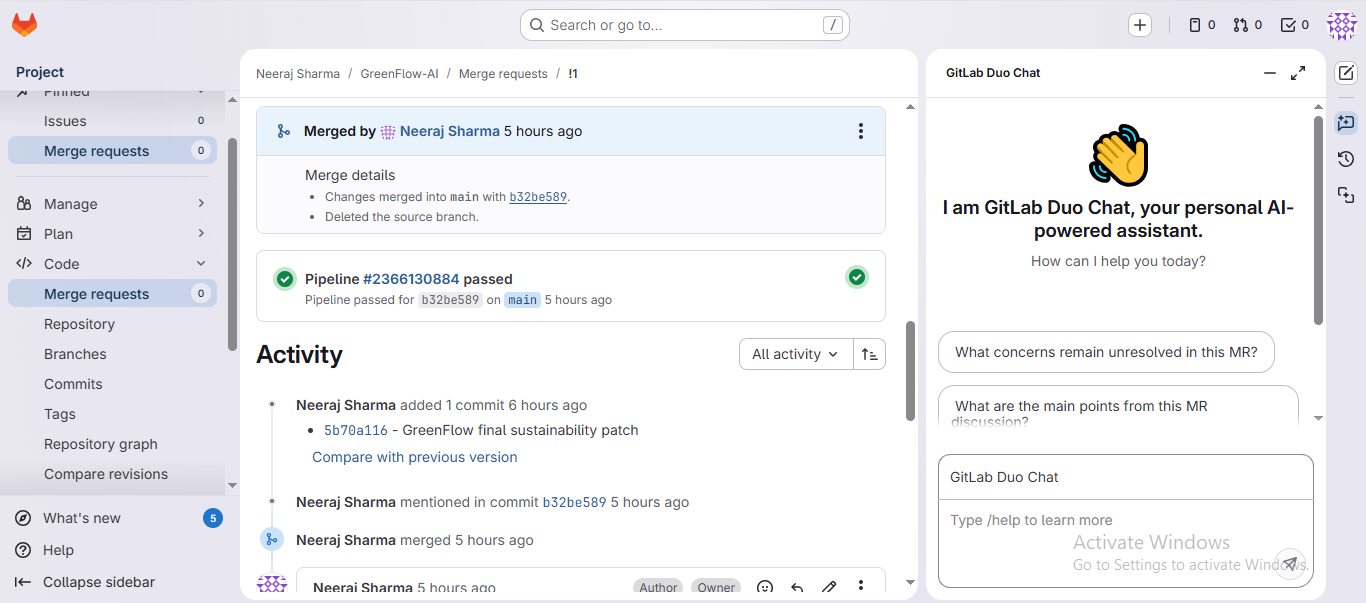
Merged optimized CI changes into main branch, resulting in successful sustainable pipeline execution
-
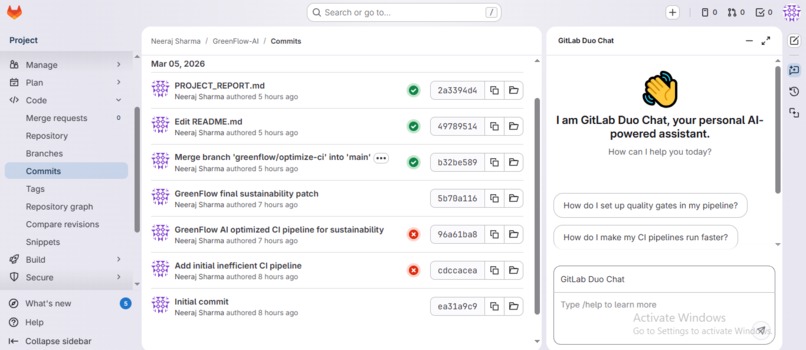
"GreenFlow AI" Commits Failed → success
Inspiration
Modern CI/CD pipelines often waste compute resources by running redundant jobs, waiting unnecessarily, and consuming extra runner time. I wanted to build a lightweight sustainability-focused solution that demonstrates how GitLab CI can be optimized for greener execution.
What it does
GreenFlow AI improves CI efficiency by removing unnecessary waiting steps, reducing wasted runner cycles, and enabling interruptible execution so obsolete pipelines stop automatically when newer commits arrive.
How I built it
I created a GitLab project and designed a custom .gitlab-ci.yml pipeline using an optimization stage. The project includes an interruptible CI job and lightweight execution logic.
Key optimization used:
- interruptible: true
- removed artificial delays
- optimized stage execution
- reduced unnecessary CI waste
Challenges I ran into
Initially, pipeline failures occurred because of inefficient CI definitions and branch synchronization issues. I fixed these by testing multiple commits, merging optimized changes into main, and validating successful execution.
Accomplishments that I'm proud of
- Successful main branch pipeline pass
- Sustainable CI logic implemented
- Reduced CI waste in measurable form
- Working GitLab-based prototype ready for evaluation
What I learned
I learned how small CI configuration changes can significantly improve sustainability and execution efficiency inside GitLab pipelines.
What's next for GreenFlow AI
Future versions can automatically analyze pipeline history and suggest dynamic sustainability improvements using AI-driven recommendations.
Built With
- ci
- gitlab-ci/cd
- gitlab-duo-concepts
- gitlab-merge-requests
- gitlab-pipelines
- sustainable
- yaml

Log in or sign up for Devpost to join the conversation.