-
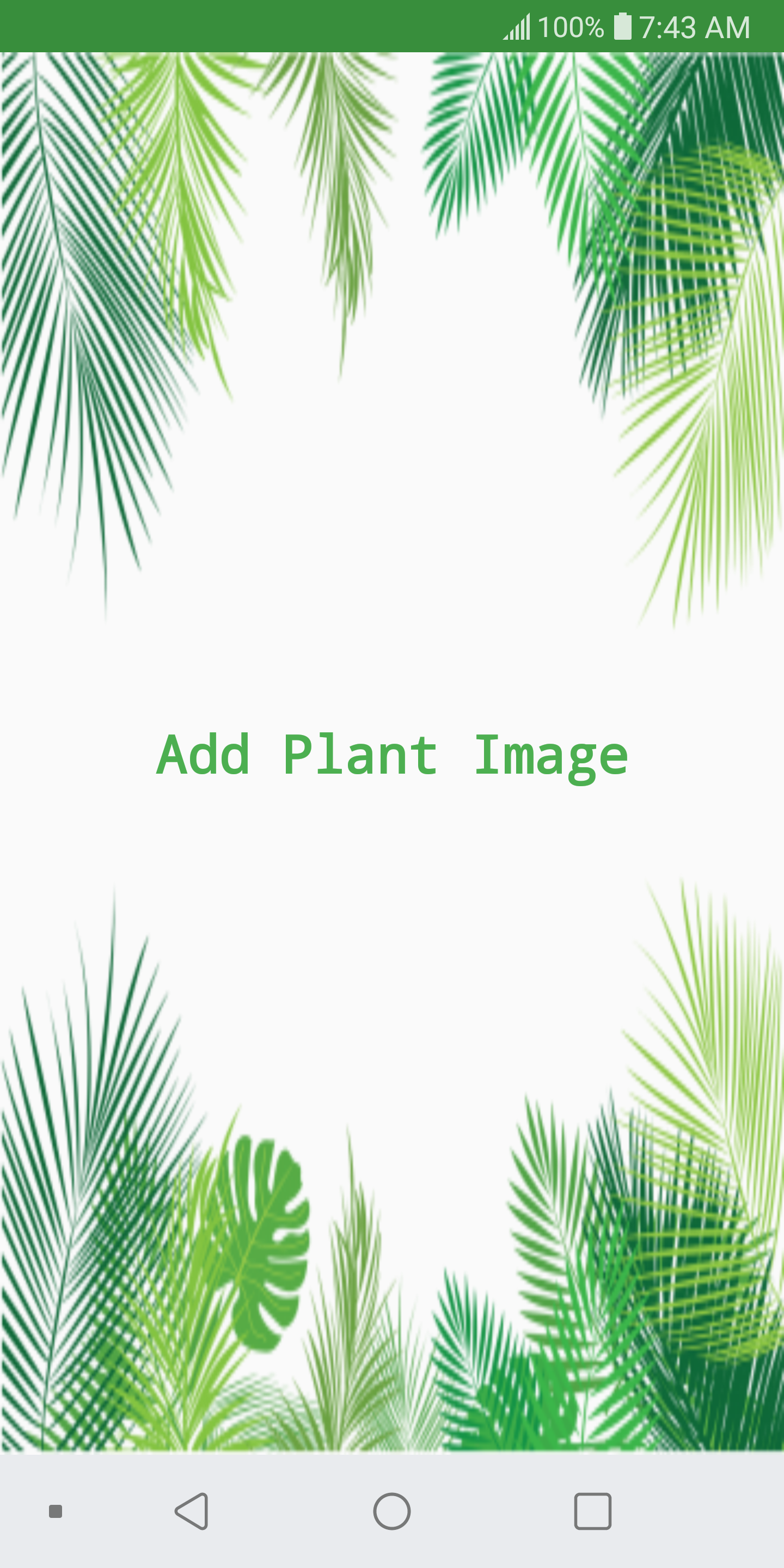
GreenDoc app
-
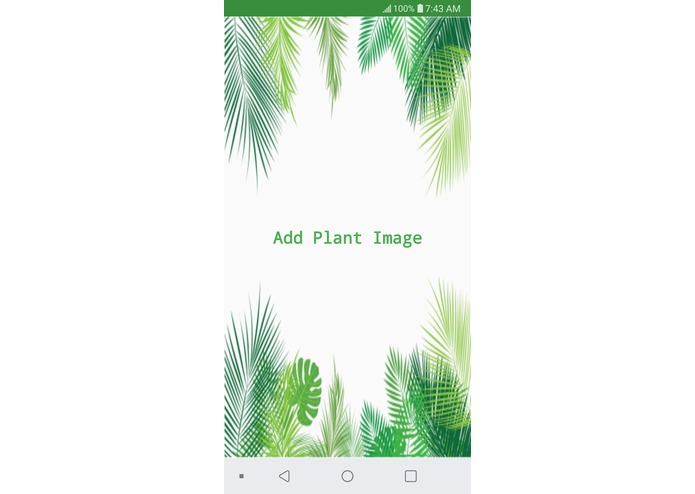
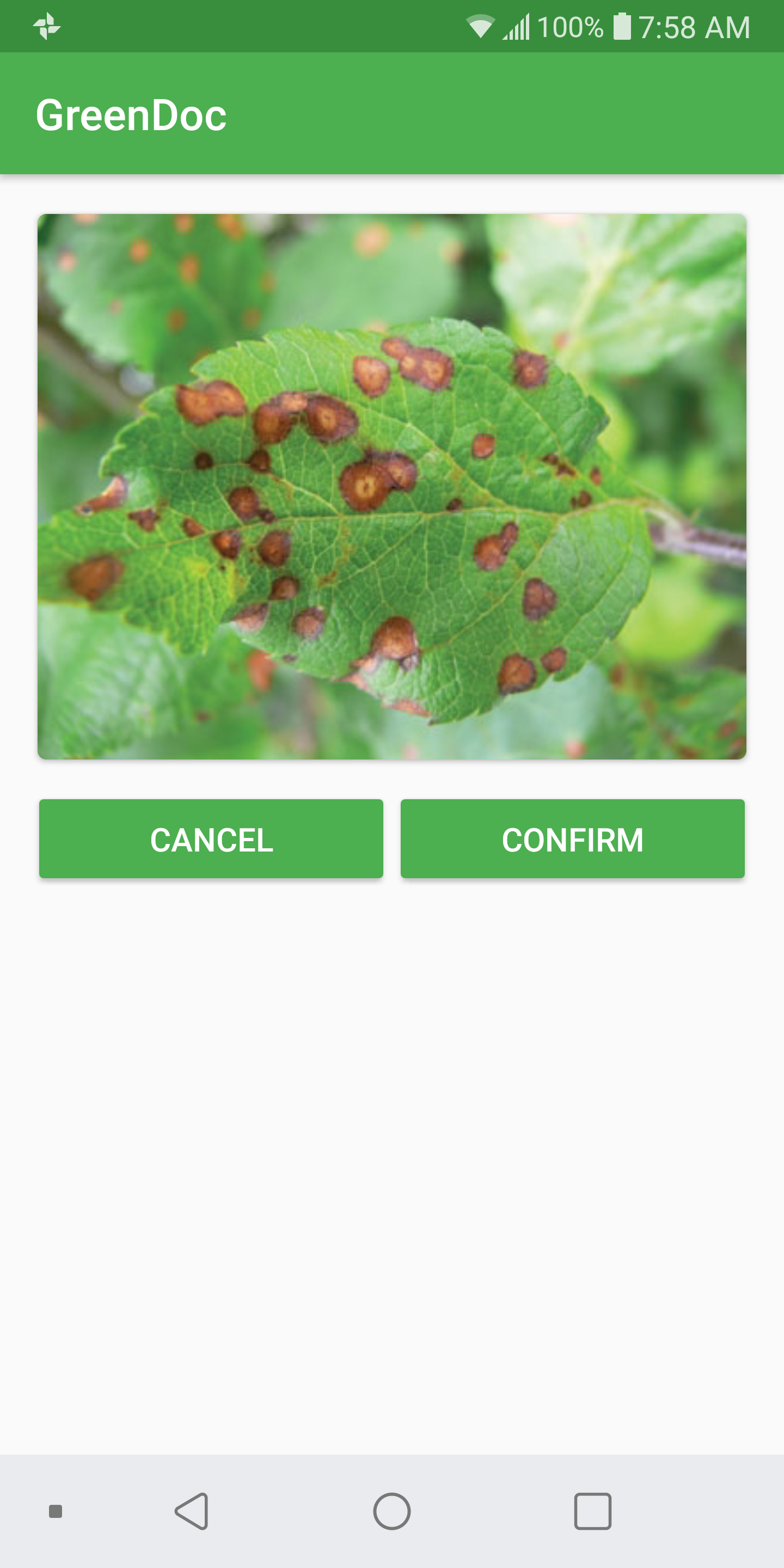
Select an image
-
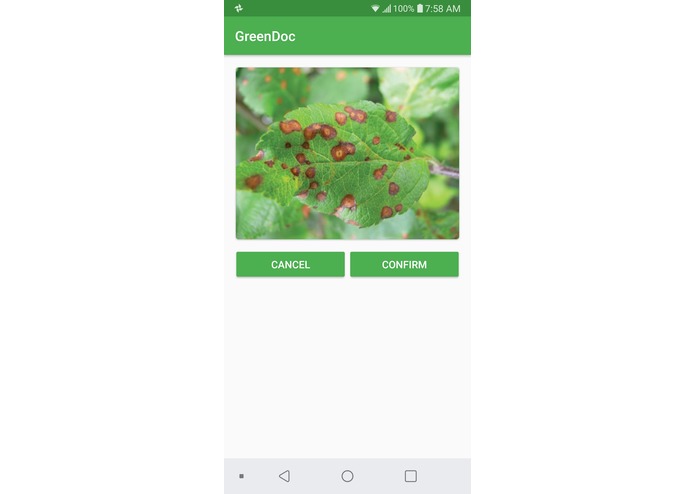
Diagnose the disease
-
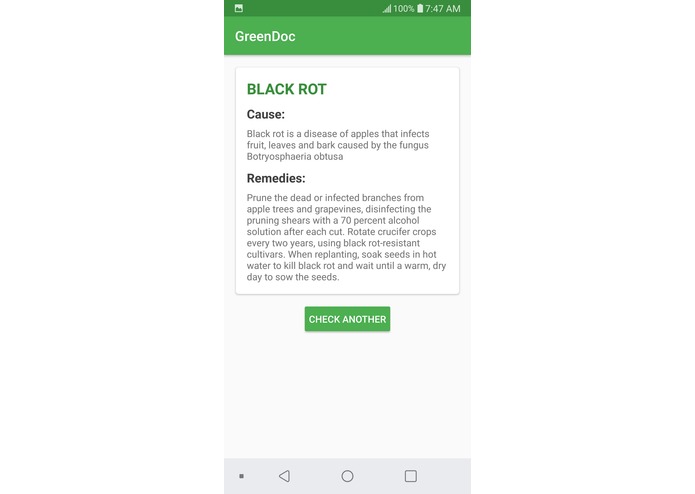
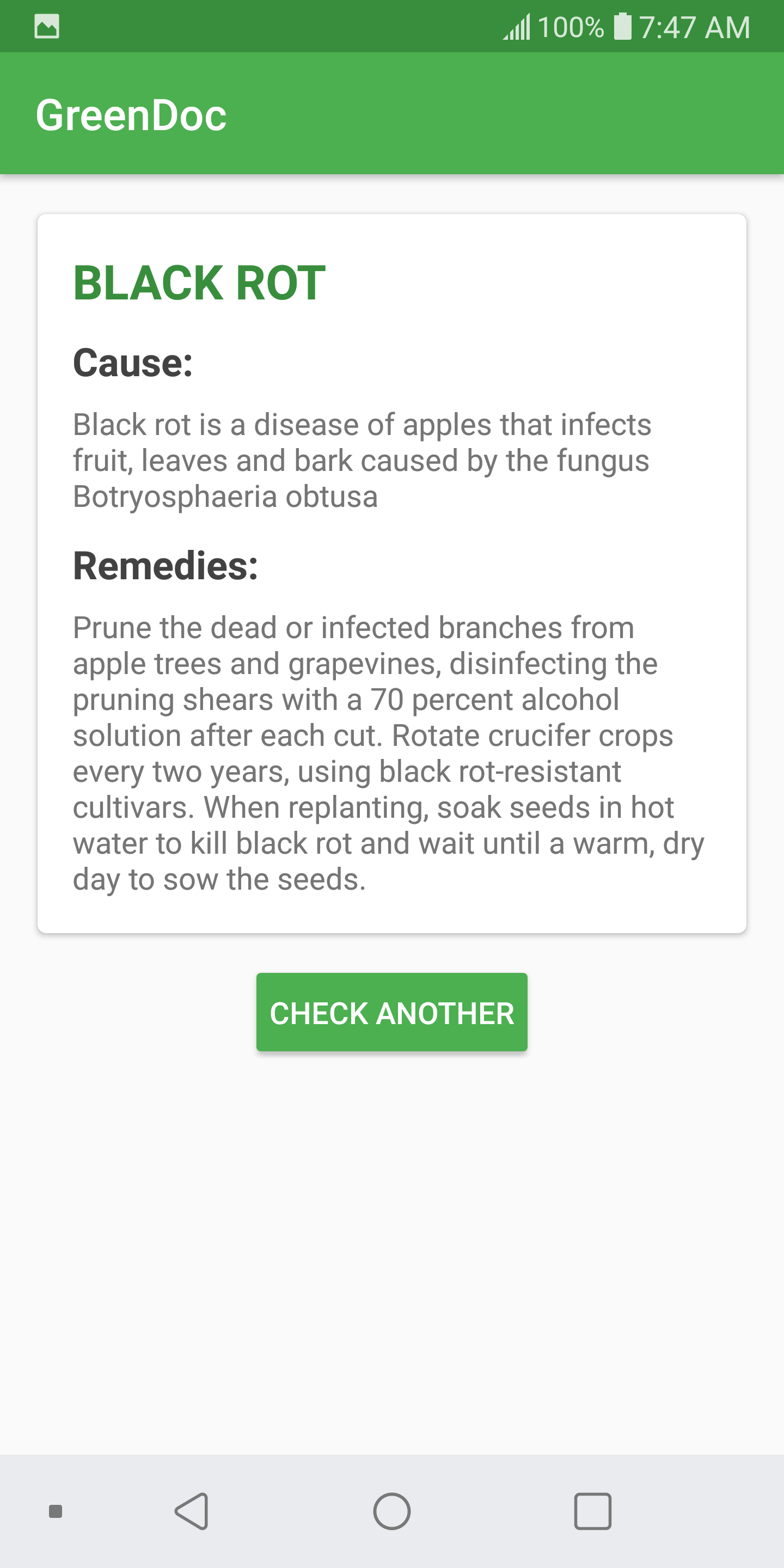
Display the result
Inspiration
The population on the globe is increasing rapidly and to support it we require enough food resources. But food production is already facing some serious problems such as Climate Change, Pollution and Plant Disease. According to Dr. David, the later one accounts for 42% loss of six major food crops on an average[1]. On the other hand, the adoption of smartphones with an active internet connection is rising. We can put these smartphones to good use by adding functionality to detect plant disease instantly and get a remedy for that, thus curing the disease if possible and avoid spreading it further. This inspired us to develop an application for plant disease detection by utilizing the existing technologies.
What it does
It detects the plant disease from the snapshot of the plant leaf. All a farmer has to do is capture the plant leaf image from our app in his mobile. The app will send this image to our AI system hosted on Google Cloud Platform. Our AI will detect the disease form the image and send back the disease name, remedies, and precautions to the farmer.
How we built it
(1). We first finalized the idea, identified the requirements and made a plan.
(2). Then, we assigned the task to each member of the team based on their expertise.
(3). The first phase included tasks like reading research papers, tutorials and download the dataset.
(4). In the second phase of the project, we started developing the platform which included developing Machine Learning model, writing scripts for the Cloud Operations and developing an Android Application.
(5). In the last phase, we Tested our system and prepared the presentation on that.
Challenges we ran into
Cloud integration, the complexity of the AI model and data processing and handling.
Accomplishments that we're proud of
We are able to classify the plant disease images successfully and won the title of "Best Data Science hack" in the hackathon.
What we learned
Technical:
(1). Working with cloud technologies.
(2). Developing an Android application.
(3). Building Deep Learning models using TensorFlow.
Non-Technical:
(1). Managing a team and working harmoniously.
(2). Develop an efficient work plan.
(3). Handling the stressful environment and failures.
(4). Rapid prototyping.
(5). Never give up!
What's next for GreenDoc
Improve the application further and publish it commercially.
References
(1). https://www.mdpi.com/journal/agriculture/special_issues/plant_disease.
(2). Data : https://github.com/spMohanty/PlantVillage-Dataset
(3). Reference Paper : https://arxiv.org/abs/1604.03169
(4). Reference Code : https://github.com/tensorflow/models/blob/master/research/slim/nets/alexnet.py
(5). Reference Code : https://github.com/tensorflow/models/blob/master/research/slim/nets/alexnet_test.py
Built With
- android
- android-studio
- data-science
- google-cloud
- java
- python
- tensorflow


Log in or sign up for Devpost to join the conversation.