-
-
Logo of our project
-
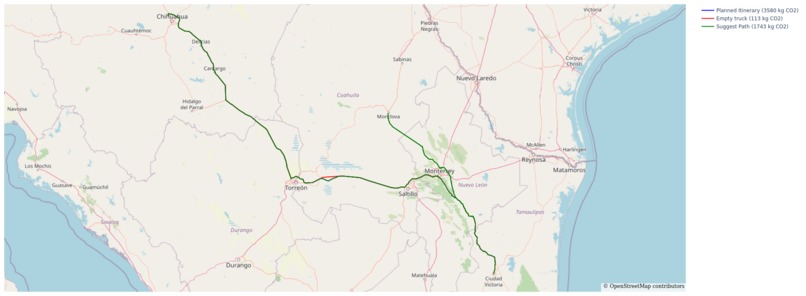
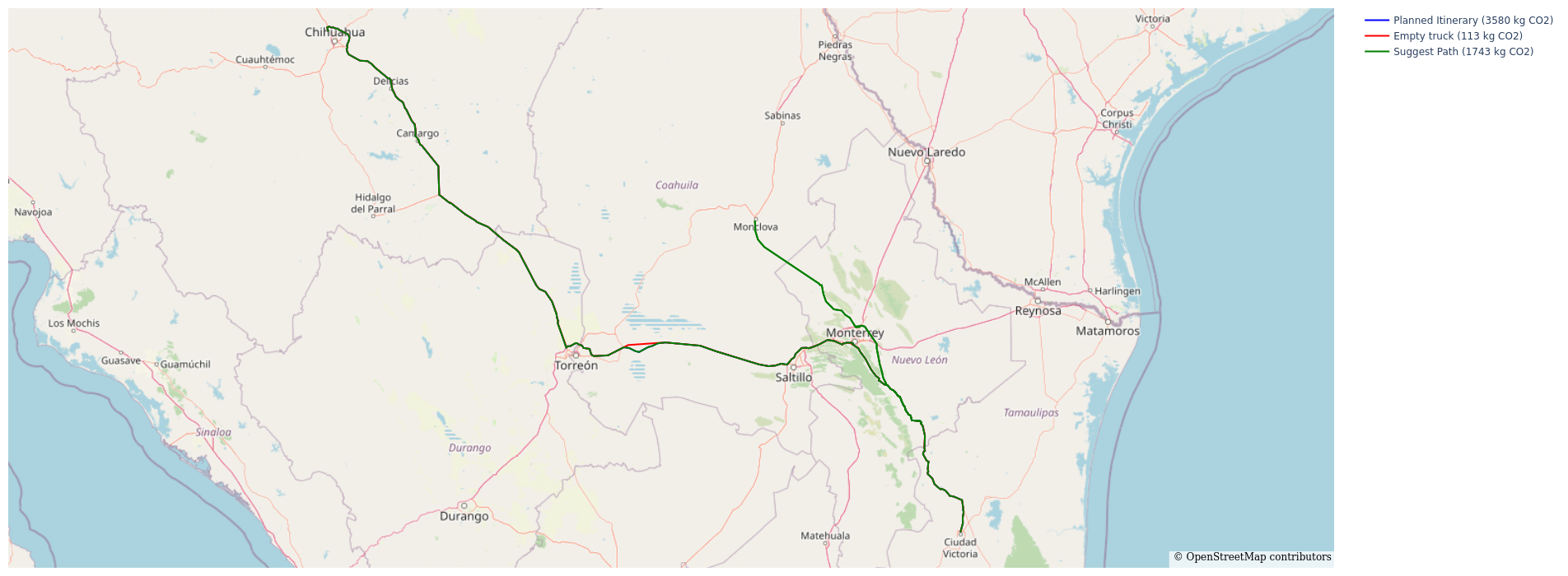
Image of the plotted routes
Introduction
Construction industry is both well-known from our daily experience and yet also not that open to outsiders, which makes it a possible good candidate for mutually beneficial technological disruption. This challenge allowed us to have a better glimpse into the logistics business processes of one of the construction companies and we strongly believe that opening these processes up to other players on the market could benefit the company, the local communities, and the overall world sustainability due to a drastic decrease in the amount of C02 emissions and associated costs.
Solution
Our application is a networking and cargo trip planner solution that allows construction companies to register their planned routes and open up the parts of itinerary where trucks go without any load to be booked by other businesses. When a construction company enters point 'A' and point 'B' addresses, the app builds the itineraries and calculates the amount of C02 emissions produced by different parts of the itineraries. Local businesses are subscribing to such events and become notified of a prospectively lucrative route being on offer. Other players may also suggest changes in the itinerary which in turn may result in a more cost- and CO2 emissions effective route for delivering products.
We believe that having this information out for other potential stakeholders can hold multiple benefits: there are going to be less empty trucks on the roads and more connectivity among businesses in the area, resulting in an overall increase in sustainability.
Techincal solution
We are using Dash (Plotly in Python) to build the actual app, the landing page is build using a static file directory and httpd. All of the services are build as transportable docker containers. The actual startup is done, by docker-compose.
For the dynamic routing, we are using the Route API from Google Cloud Services, this allows us, to give real routes and calculate the distance and time, it would take to make that trip. This also allows us the calculate the CO2-emission for each route.
Challenge we ran into
While working on the solution we discovered that Dash is a good but not the perfect solution for interactive applications, so we had to try different 'hacks' to make it work. This led to having less time than expected on building proper user interfaces for local businesses and construction companies. One example of this problem would be, that it's not possible to have two outputs, what this means for us, is that we can't hide and show elements effectively.
Next steps for GreenConcreteRouting
Next steps for our project would be to build proper user interfaces for the prospective stakeholders, and build the publish/subscribe part so the local businesses may get updates about the routes they are possibly interested in. One other way to develop it would be to identify prospectively interested businesses in the area of a planned route beforehand and automatically reach out to them with offers to buy out the empty trucks routes or to just connect via the application.
Built With
- dash
- docker
- google-cloud-services
- google-maps
- httpd
- python


Log in or sign up for Devpost to join the conversation.