Inspiration
Many businesses in Europe must comply with environmental regulations related to waste management, packaging, water usage, chemicals, and emissions. For small and medium-sized businesses, understanding these regulations can be difficult because the rules are complex and often written in legal language. We wanted to explore how AI could help make environmental compliance easier to understand and more accessible for businesses that do not have legal or environmental experts. GreenCompliance AI was created as a simple tool that helps businesses quickly identify potential environmental compliance risks in their daily operations.
What it does
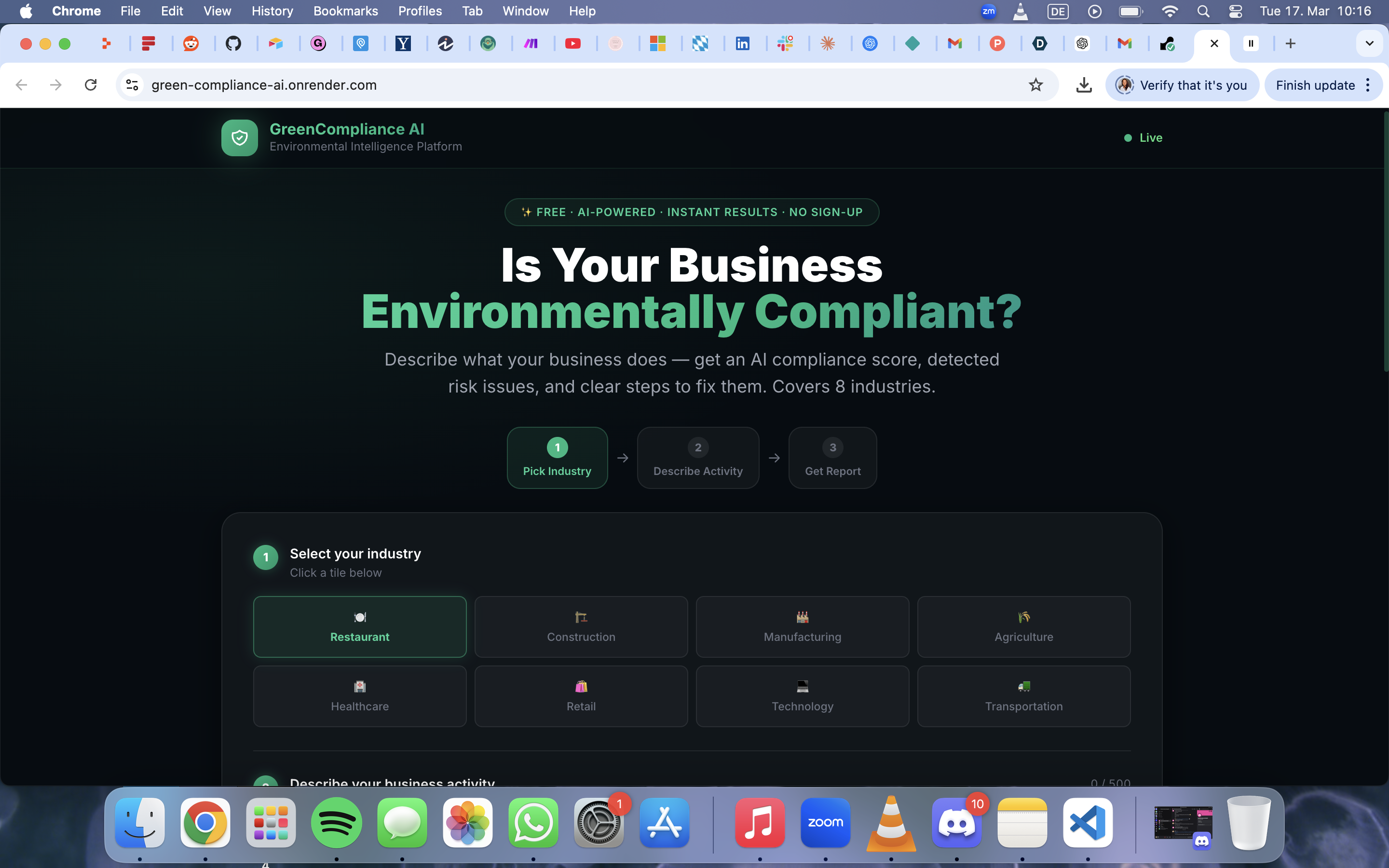
GreenCompliance AI analyzes a description of a business activity and identifies potential environmental compliance risks. The user selects an industry and describes their business operations in plain language. The system analyzes the activity and produces:
- a compliance score
- detected environmental risk issues
- practical recommendations to improve compliance The goal is to give businesses a quick overview of potential environmental risks and help them understand what actions they could take to improve their practices. This tool is intended for informational purposes only and does not replace professional legal or environmental consulting.
How we built it
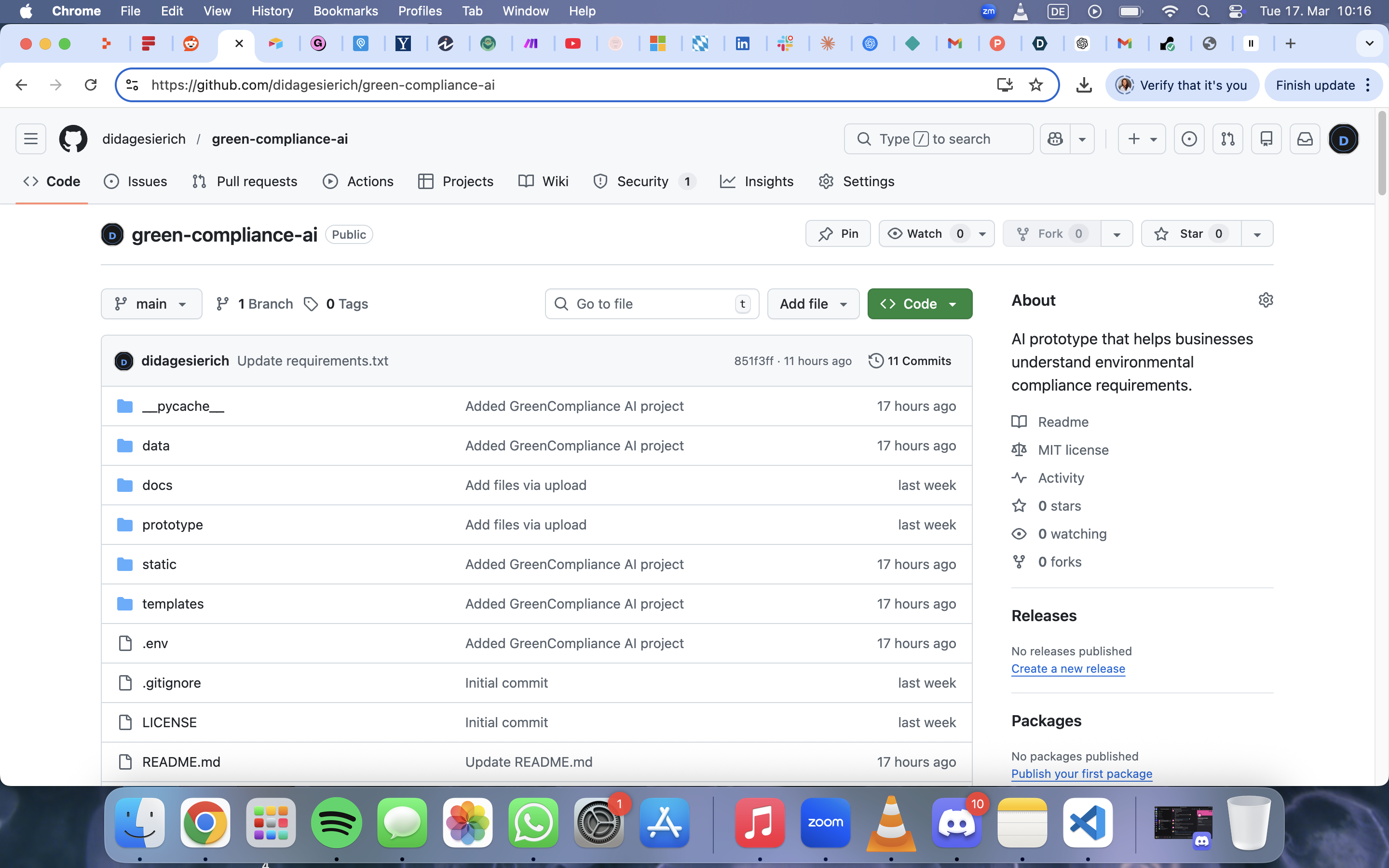
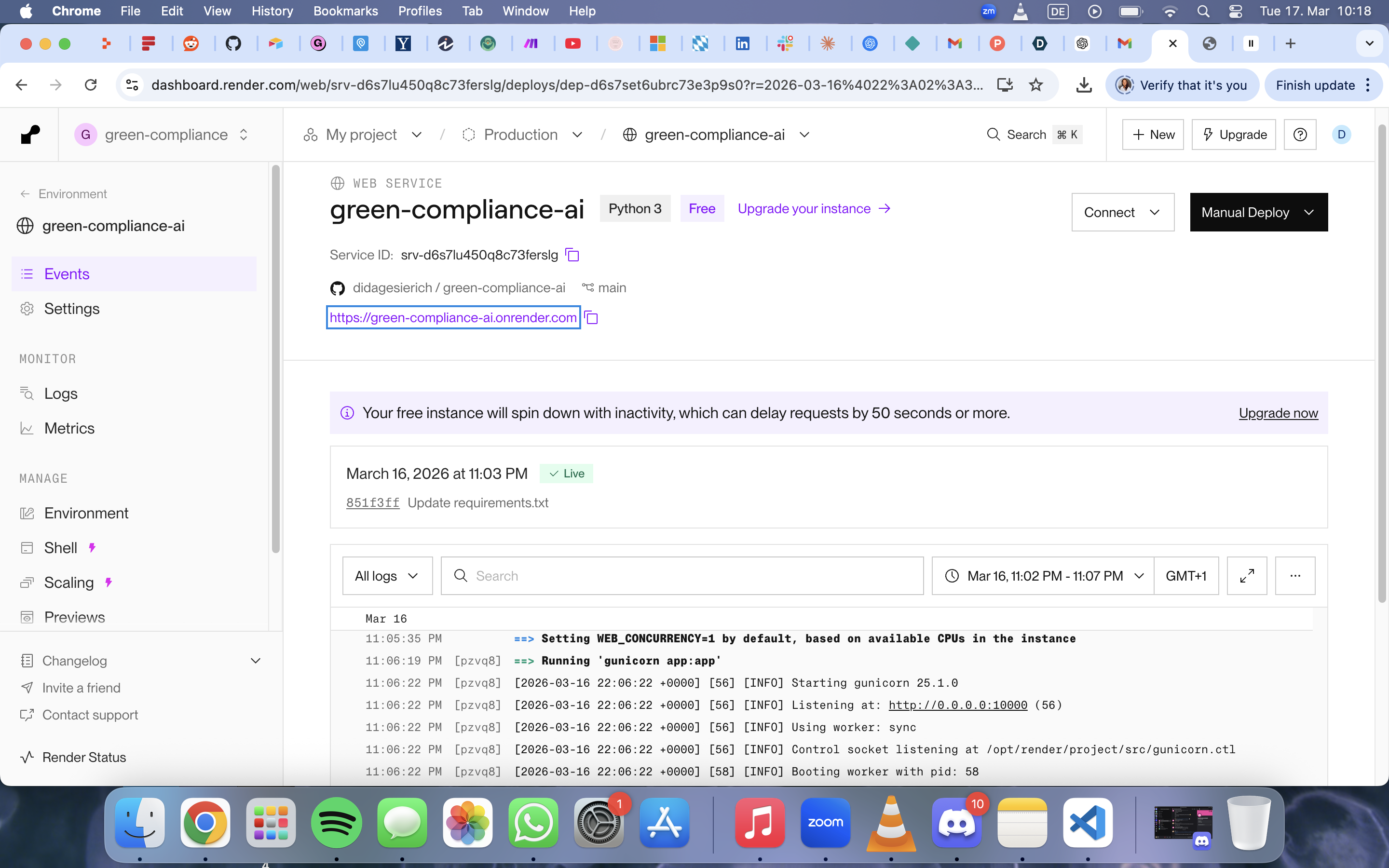
The project was built using a lightweight web architecture designed for rapid prototyping. The frontend provides a simple interface where users select their industry and describe their business activity. The backend processes the description and applies rule-based environmental risk analysis logic combined with AI-generated recommendations. The application was deployed as a live web demo to allow users to test the system directly. Technologies used include web technologies, Python-based backend logic, and cloud deployment for the live demo.
Challenges we ran into
One of the main challenges was translating complex environmental regulations into simple risk detection logic that could work across multiple industries. Another challenge was designing the system to produce meaningful recommendations from short business descriptions while keeping the interface simple for non-technical users. We also had to balance speed of development with building a working prototype that could demonstrate the idea clearly within the hackathon timeframe.
Accomplishments that we're proud of
We built a working prototype that can analyze business activities and generate a compliance score with practical recommendations. We successfully created a clean user interface that allows users to interact with the system easily without needing technical knowledge. The project demonstrates how AI could help simplify complex regulatory topics and make environmental compliance more accessible to small businesses.
What we learned
Through this project we learned more about environmental compliance challenges faced by businesses and how difficult regulatory information can be to interpret. We also explored how AI systems can assist in interpreting business activities and providing structured guidance based on regulatory concepts. The hackathon was a great opportunity to experiment with building a practical AI-driven tool in a short time.
What's next for GreenCompliance AI
Future improvements could include expanding the regulatory knowledge base, adding country-specific regulations, and integrating real environmental compliance datasets. The long-term vision is to develop a more advanced AI assistant that can continuously analyze business operations and help companies stay compliant with environmental regulations.


Log in or sign up for Devpost to join the conversation.